


How standards reduce sourcing risk and improve interchangeability
Adhering to established seal standards mitigates sourcing risks by guaranteeing dimensional interchangeability across multiple approved vendors. When procurement teams specify standard seals, they can seamlessly transition between suppliers without requiring costly modifications to pump housings or seal chambers. This interchangeability reduces reliance on OEM replacement parts, which typically carry a 30% to 50% price premium over equivalent aftermarket components manufactured to the same standard. Furthermore, standardization allows facility managers to consolidate their spare parts inventory, potentially reducing SKU overlap by 15% to 25% and lowering carrying costs while maintaining a high readiness level for maintenance and repair operations.
Which buyer priorities shape standard selection across industries
The selection of a standard is heavily influenced by the buyer’s industry, regulatory environment, and operational severity. In the chemical and water treatment sectors, buyers prioritize cost-effectiveness and broad compatibility, often leaning toward ISO or DIN standards that cover a vast majority of general-purpose centrifugal pumps. Conversely, procurement teams in the petrochemical and oil and gas industries must prioritize safety and emission containment over unit cost. These buyers gravitate toward API standards, which mandate rigorous testing protocols and specific seal face materials to handle volatile hydrocarbons. Balancing the initial unit cost against the mean time between failures (MTBF) remains the primary calculus; a standard seal costing $150 might suffice for municipal water, whereas a $2,500 API-compliant cartridge seal is mandatory for high-pressure refinery applications.
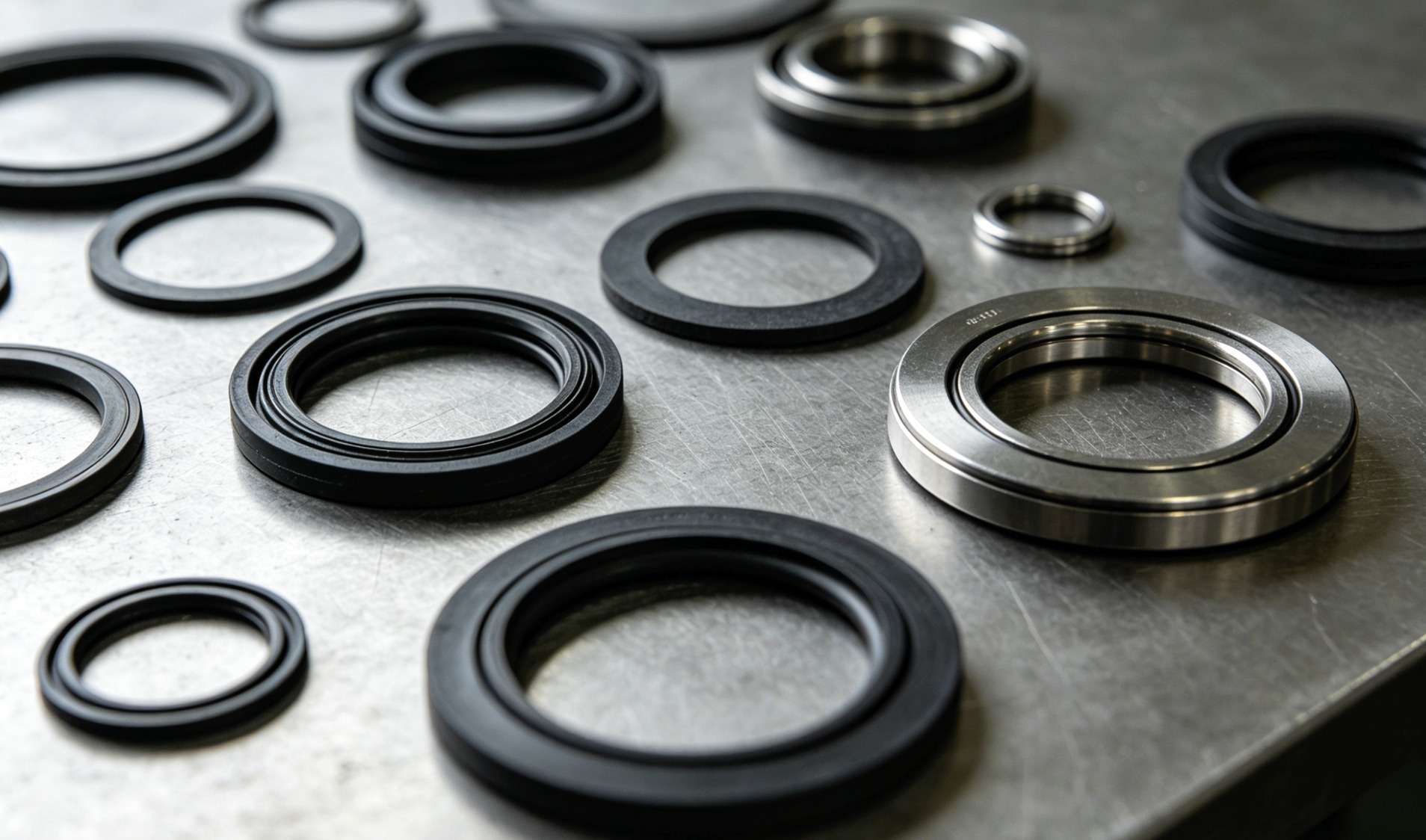
ISO vs DIN vs API Seal Standards
Understanding the technical demarcations between ISO, DIN, and API standards is critical for matching mechanical seals to the correct industrial application. Each framework was developed to address specific regional engineering practices and operational severities, resulting in distinct requirements for seal chamber dimensions, spring configurations, and gland plate designs.
What ISO standards govern for seal dimensions and materials
The International Organization for Standardization (ISO) provides a globally recognized baseline for mechanical seal dimensions and pump cavities. The primary standard, ISO 3069, defines the dimensions of the seal chamber and the operating envelope for centrifugal pumps. This ensures that seals from different manufacturers will fit into any ISO-compliant pump casing. ISO standards typically govern general industrial applications with moderate operating parameters, usually covering pressures up to 16 bar (1.6 MPa) and temperatures up to 160°C. By standardizing the shaft diameters (ranging commonly from 10mm to 100mm) and corresponding housing bores, ISO facilitates global trade and broadens the supplier base for distributors.
How DIN standards affect European compatibility and tolerances
DIN standards, specifically DIN 24960 (now largely superseded and harmonized as the European standard EN 12756), are the dominant specification framework across the European pump market. Manufacturers producing replacement seals for prominent European pump brands such as Grundfos, Alfa Laval, and Allweiler rely heavily on this standard. EN 12756 dictates critical installation dimensions, including the L1K (short) and L1N (long) working lengths, ensuring exact axial fitment. Strict adherence to DIN tolerances—often requiring machining precision within +/- 0.05mm—guarantees that elastomer bellows or multi-spring seals achieve optimal face pressure without bottoming out or operating with insufficient compression, which is vital for preventing premature leakage.
Why API standards require stricter compliance for critical applications
The American Petroleum Institute (API) standard, specifically API 682, represents the most stringent mechanical seal specification globally, designed exclusively for the hazardous and highly volatile conditions of the oil, gas, and petrochemical industries. Unlike ISO and DIN, which focus primarily on dimensions, API 682 dictates comprehensive design features, including secondary containment, flush plans, and specific material grades. API seals are engineered to withstand extreme parameters, including pressures up to 42 bar (600 psi) and temperatures ranging from -40°C to 400°C. Compliance requires rigorous qualification testing, making these seals significantly more robust, but also considerably more expensive and complex to source.
| Standard Framework | Primary Application Focus | Typical Pressure Limit | Geographic / Market Dominance |
|---|---|---|---|
| ISO 3069 | General Industrial, Water, Chemical | Up to 16 bar (1.6 MPa) | Global / Universal |
| DIN EN 12756 | Food & Beverage, Marine, HVAC | Up to 25 bar (2.5 MPa) | Europe / OEM Pump Replacements |
| API 682 | Oil & Gas, Petrochemical, Refining | Up to 42 bar (4.2 MPa) | North America / Global Energy Sector |
How Buyers Should Compare Seal Standards
For procurement professionals, evaluating seal standards extends beyond basic engineering compatibility; it fundamentally shapes the commercial strategy of the sourcing event. Buyers must analyze how different standards impact vendor availability, pricing structures, and quality assurance documentation during the Request for Quotation (RFQ) process.
How procurement teams compare ISO, DIN, and API standards
Procurement teams utilize a compliance-versus-cost matrix to compare standards during the sourcing phase. Standardized ISO and DIN seals benefit from economies of scale, allowing buyers to solicit bids from a vast network of manufacturers in global manufacturing hubs like Ningbo, China. This high competition drives down unit costs and enables aggressive price negotiation. In contrast, sourcing API 682 seals limits the approved vendor list to specialized manufacturers possessing advanced testing rigs and specific metallurgical certifications. Consequently, buyers must accept higher baseline costs and longer lead times for API components, offsetting the expense through the operational risk mitigation the standard provides.
Which criteria support RFQ reviews and approved vendor selection
During RFQ reviews, buyers must enforce strict documentation criteria to validate a supplier’s claim of standard compliance. Approved vendor selection hinges on the supplier’s ability to provide Material Test Reports (MTRs), such as the EN 10204 3.1 certificate, which traces the chemical composition and mechanical properties of metal components back to the foundry. Additionally, buyers evaluate the supplier’s capability to provide specific elastomer certifications required by the standard or application, such as FDA compliance for food-grade DIN seals or WRAS approval for ISO standard drinking water applications. Failure to provide these certifications immediately disqualifies a vendor from the shortlist.
How MOQ, customization, packaging, and traceability affect sourcing
The chosen standard significantly influences commercial terms like Minimum Order Quantity (MOQ), packaging, and supply chain flexibility. High-volume ISO or DIN replacement seals, such as standard elastomer bellows, typically carry MOQs ranging from 100 to 500 units per size, reflecting automated batch production processes. Conversely, API 682 cartridge seals are highly customized and complex, often resulting in MOQs of just 1 to 5 units. Furthermore, standard compliance affects packaging requirements; API seals require robust, custom-crated packaging with detailed installation manuals, while bulk DIN seals might utilize standardized blister packs or VCI (Volatile Corrosion Inhibitor) bags for long-term distributor shelf storage.
How to Source Mechanical Seals to the Right Standard
Executing a successful sourcing strategy for mechanical seals requires rigorous validation of the manufacturer’s technical capabilities and quality control infrastructure. B2B buyers must move beyond surface-level standard claims and implement systematic audits to ensure that the delivered products consistently meet the specified ISO, DIN, or API tolerances.
What RFQ and technical review steps verify drawings andcompliance
The technical review phase of an RFQ must involve a meticulous cross-examination of the supplier’s dimensional drawings against the specified standard. Procurement engineers should verify critical interfaces, such as the shaft diameter, housing bore, and working length, ensuring they align perfectly with DIN EN 12756 or ISO 3069 tables. For API 682 seals, the review process is more exhaustive, requiring confirmation of the required piping plans, flush port orientations, and specific face material combinations (e.g., premium grade silicon carbide versus tungsten carbide). Buyers should also mandate the submission of static pressure test reports and surface flatness measurements (typically required to be within 2 to 3 helium light bands) before approving prototype production.
How to audit factory capability and batch consistency
Auditing factory capability is crucial for guaranteeing batch consistency, especially when transitioning to an overseas manufacturer. Buyers should verify that the facility operates under a certified ISO 9001 quality management system and employs statistical process control (SPC) for critical machining operations. A capable factory should demonstrate a Process Capability Index (Cpk) greater than 1.33 for critical tolerances and maintain a target defect rate of less than 0.1% (1000 PPM). The audit must also assess the supplier’s in-house testing infrastructure, ensuring they possess the necessary hydrodynamic test rigs to simulate actual operating speeds and pressures, rather than relying solely on static air tests.
What logistics, labeling, and after-sales support buyers shouldconfirm
Post-production logistics, labeling, and after-sales support are integral to maintaining standard compliance throughout the supply chain. Buyers must specify permanent traceability protocols, such as laser-etching the standard designation, batch number, and material code directly onto the seal gland or collar. This traceability is critical for root cause analysis in the event of a premature failure. Additionally, buyers should confirm that elastomer components are stored and packaged according to ISO 2230 guidelines, which dictate temperature and light exposure limits to maximize shelf life—typically 5 to 10 years for materials like FKM or EPDM—ensuring the seals remain viable during extended warehouse storage.
Decision Framework for Selecting Seal Standards
Establishing a clear decision framework empowers procurement teams to standardize their sourcing approach, ensuring the optimal balance between initial component cost, equipment reliability, and regulatory compliance. By aligning the severity of the application with the appropriate seal standard, buyers can optimize their global supply chain strategies.
When to prioritize ISO, DIN, or API standards
The decision to prioritize ISO, DIN, or API standards should be governed by a structured assessment of the fluid properties, operating environment, and the financial impact of a pump failure. For non-hazardous fluids like cooling water or mild chemicals operating below 15 bar, ISO 3069 or DIN EN 12756 standards provide the most cost-effective and readily available solutions. However, if the media is highly toxic, flammable, or operates at extreme pressures exceeding 25 bar, API 682 becomes non-negotiable despite its 300% to 500% cost premium over standard industrial seals.
| Application Profile | Flow Media | Recommended Standard | Estimated Cost Premium | Key Sourcing Priority |
|---|---|---|---|---|
| Utility / Light Industrial | Water, Glycol, Mild Solvents | ISO 3069 / DIN EN 12756 | Baseline (1x) | Bulk Pricing, MOQ, Lead Time |
| Sanitary / Food & Beverage | Dairy, Wort, Edible Oils | DIN EN 12756 (with FDA/EHEDG) | 1.5x – 2.0x | Material Certs, Cleanability |
| Oil & Gas / Petrochemical | Crude, Hydrocarbons, Acids | API 682 | 3.0x – 5.0x+ | Testing Rigor, Containment Plans |
How to align supplier capabilities with specification requirements
Finally, aligning supplier capabilities with specification requirements is the linchpin of a secure procurement strategy. Buyers must categorize their vendor base: utilizing high-volume, automated facilities for standard ISO/DIN elastomer bellows, while reserving complex, multi-stage API cartridge seal orders for specialized engineering firms equipped with advanced metallurgical expertise and comprehensive hydrostatic testing bays capable of 1.5x design pressure validation. This tiered supplier strategy ensures that procurement teams do not overpay for general-purpose seals while guaranteeing uncompromising quality for mission-critical applications.
Key Takeaways
- Wholesale sourcing and supply-chain implications for Seal Specification Standards
- Specifications, compliance, and commercial terms buyers should validate
- Actionable recommendations for distributors and procurement teams
Frequently Asked Questions
What should buyers compare first when sourcing Seal Specification Standards?
Start with airflow/spec range, compliance requirements, installation constraints, and after-sales spare-part policy. These four factors usually determine total risk and margin quality.
How can procurement teams control landed cost for Seal Specification Standards?
Break down unit FOB, packaging volume, container utilization, duty/tax, and expected return rate. A simple landed-cost model by SKU tier helps avoid margin surprises.
Which certifications are commonly required for Seal Specification Standards in key markets?
Requirements vary by destination market; verify applicable electrical/safety and material compliance standards before PO confirmation, and keep lab reports tied to exact SKU versions.
How should distributors set MOQ and inventory targets for Seal Specification Standards?
Use channel demand split and lead time to set tiered MOQ. Keep fast-moving SKUs deeper in stock while limiting long-tail variants with slower turns and higher holding costs.
What is a practical quality-control checklist for Seal Specification Standards orders?
Define AQL, critical defect list, function tests, and packaging drop checks. Run pre-shipment inspection and keep a traceable defect feedback loop with the factory.
Post time: May-25-2026