


Introduction
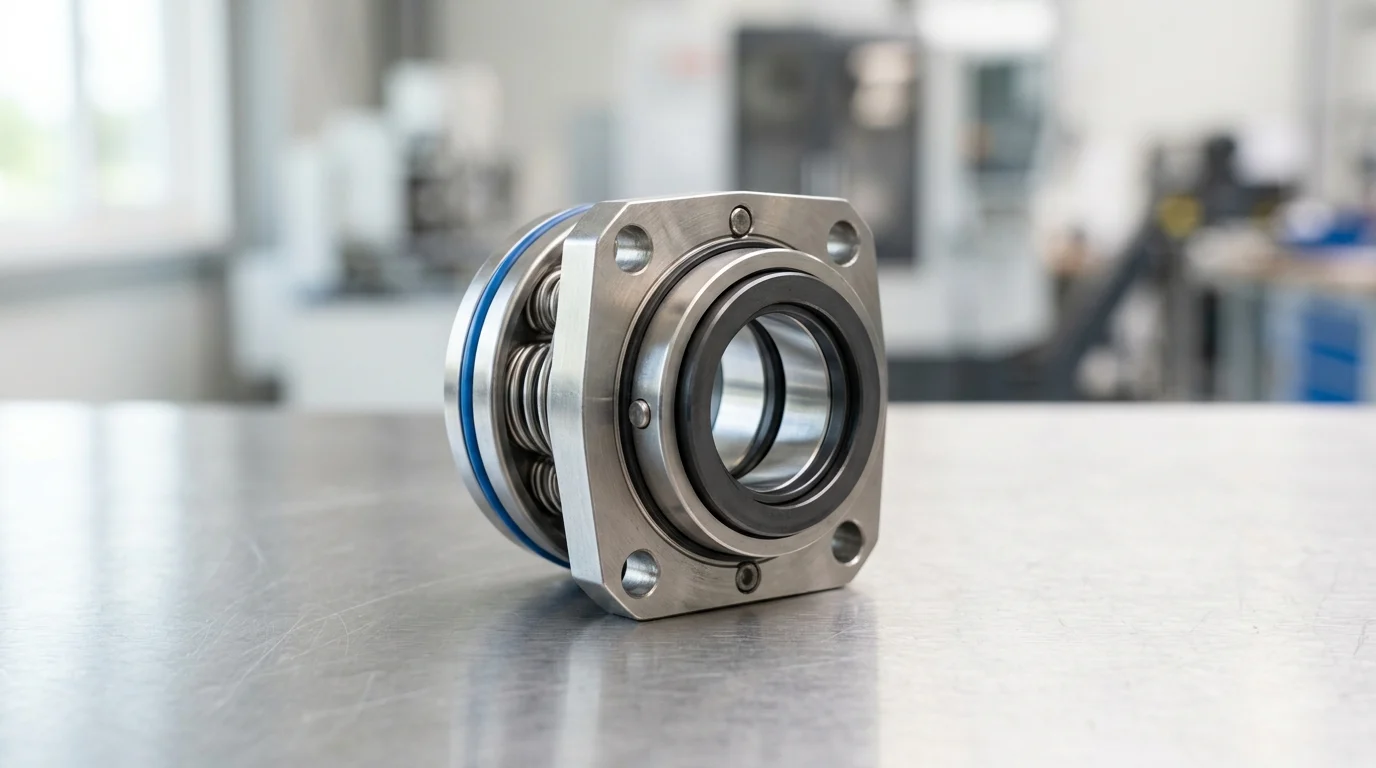
API 682 is the benchmark standard for mechanical seals and seal support systems in petroleum, chemical, and gas processing equipment, where leakage control and uptime are critical. This guide explains what the standard covers, why its requirements matter for safety, reliability, and emissions control, and how it shapes seal selection, piping plans, materials, and qualification testing. You’ll get a practical understanding of how API 682 helps engineers match seal arrangements to operating conditions, reduce premature failures, and standardize performance across facilities, providing a clear foundation for the detailed requirements and application guidance that follow.
Why API 682 Matters for Seal Reliability
The API 682 standard, currently in its Fourth Edition, serves as the definitive specification for mechanical seals and seal support systems in the petroleum, natural gas, and chemical industries. Established by the American Petroleum Institute, the standard provides a rigorous framework designed to maximize the safety, reliability, and environmental compliance of centrifugal and rotary pumps. The foundational objective of API 682 is to achieve a minimum of three years (26,280 hours) of continuous, uninterrupted service without maintenance or replacement.
By standardizing dimensions, materials, and support systems, API 682 mitigates the inherent risks of handling volatile or hazardous fluids. This standardization allows plant engineers to implement proven sealing solutions across diverse operational parameters, establishing a uniform baseline for mechanical seal performance across global facilities.
How API 682 guides seal selection
Navigating the complexities of mechanical seal selection requires a systematic approach, which API 682 provides through detailed flowcharts and operational criteria. The standard categorizes selection based on fluid properties, pressure, temperature, and environmental regulations. For example, when the process fluid exhibits a vapor pressure margin of less than 0.34 MPa (50 psi), the standard guides engineers toward specific seal chamber dimensions and flush plans that prevent fluid vaporization at the seal faces.
This deterministic methodology eliminates subjective guesswork. By matching the specific gravity, toxicity, and temperature of the pumped fluid to predefined API categories and arrangements, reliability engineers can confidently specify mechanical seals that are mathematically and empirically suited to the application.
Business risks of poor seal standard alignment
Deviating from API 682 guidelines in critical hydrocarbon applications introduces severe business and operational risks. A primary concern is the degradation of Mean Time Between Failures (MTBF). Non-compliant mechanical seals operating in harsh environments are highly susceptible to premature face wear, thermal distortion, and catastrophic blowout.
Beyond the immediate costs of hardware replacement, seal failures result in hazardous process leaks. In jurisdictions enforcing strict environmental regulations, volatile organic compound (VOC) emissions must often remain below 500 ppmv. Exceeding these limits due to substandard sealing solutions triggers severe regulatory fines. Furthermore, the resulting unplanned downtime in a high-throughput refinery or chemical plant can incur production losses exceeding $50,000 per day, dwarfing the initial capital savings of selecting a non-API compliant mechanical seal.
What API 682 Defines
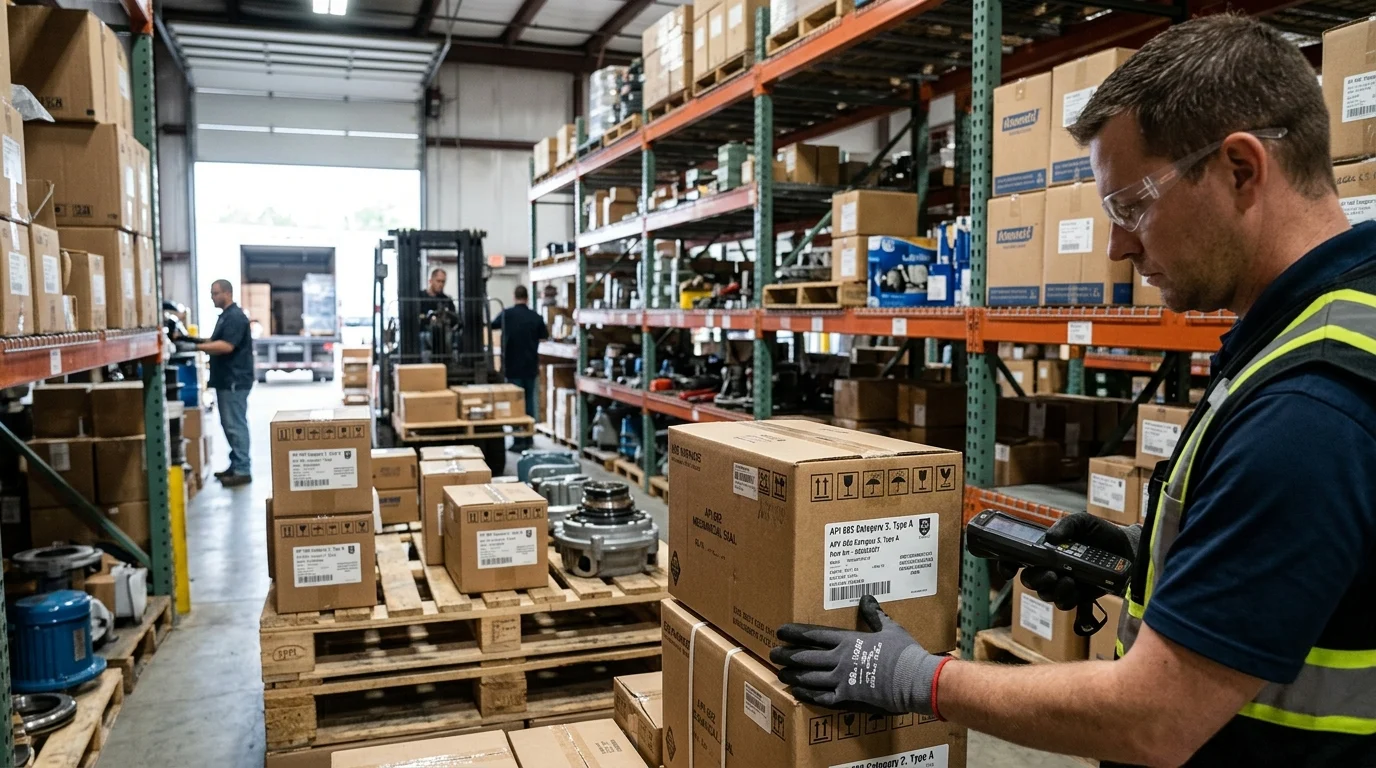
API 682 establishes a comprehensive taxonomy that categorizes mechanical seals based on pump type, operating parameters, and design configurations. The standard strictly defines seal chamber dimensions, accommodating standard shaft sizes ranging from 20 mm to 110 mm (0.75 to 4.3 inches). This dimensional standardization ensures interchangeability across different pump manufacturers and simplifies inventory management for end-users.
Seal types, categories, and qualification basics
The standard divides mechanical seals into three primary categories, dictating the level of testing, documentation, and operational limits. Category 1 seals are intended for non-API 610 pumps operating in moderate temperature ranges (-40°C to 260°C) and pressures up to 2.2 MPa (315 psi). Category 2 and Category 3 seals are engineered for API 610 pumps, handling extreme temperatures (-40°C to 400°C) and pressures up to 4.2 MPa (600 psi). Category 3 requires the most stringent documentation and material traceability.
Furthermore, API 682 classifies seals into three types based on design features. Type A features a balanced, inside-mounted, cartridge-style pusher seal with multiple springs. Type B utilizes a metal bellows design, eliminating dynamic O-rings to prevent hang-up in high-temperature or crystallizing fluids. Type C is a high-temperature bellows seal featuring stationary flexible elements. To achieve API 682 certification, vendors must subject these seal types to rigorous qualification testing, which includes 100 hours of dynamic testing under extreme baseline parameters to validate face wear and leakage rates.
| API Category | Pump Type Compatibility | Temp Range (°C) | Max Pressure (MPa) | Typical Application |
|---|---|---|---|---|
| Category 1 | Non-API 610 (ASME/ISO) | -40 to 260 | 2.2 | General chemical, water |
| Category 2 | API 610 Heavy Duty | -40 to 400 | 4.2 | Refinery, high-temp hydrocarbon |
| Category 3 | API 610 Heavy Duty | -40 to 400 | 4.2 | Critical toxic/flammable duties |
Arrangements, operating duties, and piping plans
Beyond the mechanical seal itself, API 682 defines arrangements and piping plans to manage the seal’s operating environment. Arrangements dictate the number of seals and their orientation. Arrangement 1 utilizes a single seal, while Arrangements 2 and 3 utilize dual seals in unpressurized and pressurized configurations, respectively.
To ensure these arrangements function correctly, API 682 outlines standardized piping plans. These plans dictate how flush fluid is routed to the seal chamber to control heat, remove particulate, and manage pressure. For instance, Plan 11 routes fluid from the pump discharge to the seal through an orifice, while Plan 53A utilizes a pressurized external reservoir to supply clean barrier fluid to an Arrangement 3 dual seal. Correctly matching the operating duty to the appropriate arrangement and piping plan is critical for maintaining stable fluid films across the seal faces.
How to Compare API 682 Seal Options
Selecting the optimal mechanical seal configuration requires a precise evaluation of the process fluid’s toxicity, flammability, and physical state against the three primary API 682 arrangements. The fundamental goal is to control process leakage to a safe, compliant level while managing the tribological heat generated at the seal faces.
When to use single, dual unpressurized, or dual pressurized seals
Arrangement 1 (single seal) is the most common and cost-effective configuration, deployed primarily for benign, non-hazardous fluids where minor fugitive emissions are acceptable or easily managed. However, when handling volatile organic compounds or fluids with poor lubricity, engineers must transition to dual seals.
Arrangement 2 (dual unpressurized) employs a primary inner seal and a secondary outer seal. The cavity between them contains a buffer fluid maintained at a pressure lower than the seal chamber—typically below 0.28 MPa (40 psi). This arrangement provides a safety backup; if the primary seal fails, the secondary seal contains the process fluid. Arrangement 3 (dual pressurized) is mandated for highly toxic or lethal fluids. It utilizes a barrier fluid pressurized 0.14 to 0.28 MPa (20 to 40 psi) above the seal chamber pressure, ensuring that any leakage across the inner seal faces flows into the process, guaranteeing zero outward process emissions.
Trade-offs in leakage control, heat management, and maintenance
The selection between these arrangements involves significant operational trade-offs. Arrangement 3 offers the highest level of leakage control and environmental safety, but it fundamentally relies on the reliability of its external support system. If a Plan 53 or Plan 54 barrier fluid system loses pressure, the Arrangement 3 seal will fail rapidly due to reverse pressurization.
Heat management also becomes increasingly complex with dual seals. The friction from two sets of seal faces generates substantial thermal energy, necessitating robust cooling loops. Flush flow rates must be precisely calculated, typically ranging from 4 to 15 L/min depending on shaft speed and the thermal conductivity of the face materials (e.g., silicon carbide versus carbon). Consequently, while Arrangement 3 mitigates environmental risk, it demands higher maintenance oversight, more complex instrumentation, and elevated operational expenditure compared to the simpler Arrangement 1.
Compliance, Procurement, and Inspection
Procuring a mechanical seal compliant with API 682 is a rigorous process that extends far beyond selecting a part number. The standard mandates exhaustive specification detailing, stringent vendor documentation requirements, and formalized inspection protocols to guarantee operational integrity upon installation.
Specification details and vendor documentation
The procurement cycle begins with the comprehensive API 682 data sheet. Reliability engineers must populate this document with exact process parameters, including fluid specific gravity, maximum dynamic sealing pressure, viscosity profiles, and pump casing dimensions. Omissions or estimations in the data sheet frequently lead to premature seal failure.
Vendors are required to supply a standardized Vendor Drawing and Data (VDD) package. This includes General Arrangement (GA) drawings, detailed Bills of Materials (BOMs), and schematics for the auxiliary seal support systems. Because of the stringent engineering and documentation oversight required, lead times for fully documented Category 3 mechanical seals can stretch from 12 to 16 weeks. Material traceability is also paramount; critical components often require EN 10204 Type 3.1 material certification to verify metallurgical properties against corrosive process fluids.
Testing, inspection, materials verification, and commissioning
Before a mechanical seal leaves the manufacturing facility, API 682 dictates specific testing and inspection criteria. Hydrostatic testing of the seal gland is mandatory, requiring the component to withstand 1.5 times the maximum allowable working pressure (MAWP) for a minimum of 30 minutes without deformation or leakage.
Additionally, an air test of the fully assembled mechanical seal cartridge is standard practice. The assembly is pressurized to 0.17 MPa (25 psi) to verify the integrity of the O-rings and seal face contact prior to shipment. During site commissioning, inspection protocols shift to verifying the alignment of the external piping plans, confirming that barrier fluid pressures are correctly offset from the pump’s stuffing box pressure, and ensuring that all instrumentation (such as pressure transmitters on a Plan 53B accumulator) is properly calibrated.
How to Make a Better API 682 Decision
Optimizing a mechanical seal strategy under API 682 requires a comprehensive life-cycle cost (LCC) analysis. Decision-makers must balance initial capital expenditure (CAPEX) with long-term operational expenditure (OPEX), factoring in maintenance intervals, inventory carrying costs, and the statistical probability of failure.
Practical steps to match standards to application needs
The most practical step in matching API 682 standards to application needs is to rigorously map the specific gravity and vapor pressure margin of the process fluid. Over-specifying a seal is a common and costly error. For example, defaulting to a Category 3 seal for a moderate-duty application provides unnecessary engineering overhead, as Category 3 seals often command a 25% to 40% cost premium compared to Category 2 equivalents due to extensive qualification and testing requirements.
Engineers should evaluate the true necessity of complex arrangements based on environmental regulations and fluid toxicity. Utilizing standardized data sheets ensures that vendors quote comparable solutions, allowing procurement teams to evaluate technical merits rather than just the lowest initial cost.
| Arrangement Type | Leakage Control Level | Relative Cost Multiplier | Required Support System Complexity |
|---|---|---|---|
| Arrangement 1 | Basic (Process leakage possible) | 1.0x | Low (Plan 11, 13, 21) |
| Arrangement 2 | High (Buffer fluid containment) | 1.8x – 2.2x | Medium (Plan 52) |
| Arrangement 3 | Absolute (Zero process emissions) | 2.5x – 3.5x | High (Plan 53A/B/C, 54) |
Balancing compliance, reliability, and cost
Achieving the baseline API 682 target of 26,280 hours MTBF demands a holistic view of the pumping system. While custom-engineered mechanical seals may appear necessary for edge-case applications, defaulting to standard API configurations whenever possible yields significant operational advantages. Standardized cartridge seals reduce inventory carrying costs, allow for minimum order quantities (MOQs) of a single unit, and drastically accelerate replacement lead times during unplanned outages.
Ultimately, a better API 682 decision is one that treats the mechanical seal and its support system as an integrated unit. By balancing stringent compliance requirements against the actual reliability demands of the process, industrial facilities can minimize fugitive emissions, protect rotating equipment assets, and achieve predictable, cost-effective maintenance cycles.
Key Takeaways
- The most important conclusions and rationale for Mechanical Seal
- Specs, compliance, and risk checks worth validating before you commit
- Practical next steps and caveats readers can apply immediately
Frequently Asked Questions
What is API 682 in mechanical seals?
API 682 is the main standard for mechanical seals and support systems used on pumps in oil, gas, and chemical service. It helps improve safety, reliability, and emissions control.
How does API 682 help select the right mechanical seal?
It matches seal type, arrangement, and flush plan to fluid properties, pressure, and temperature. This reduces guesswork and helps maintenance teams choose a proven seal setup.
What are the main API 682 seal categories?
Category 1 fits many non-API 610 pumps, while Categories 2 and 3 are for heavier API 610 duties. Higher categories usually require stricter testing, materials control, and documentation.
Can Victor Seals supply API 682-related replacement seals?
Yes. Victor Seals manufactures a wide range of mechanical seals and OEM-compatible replacements for many pump brands, supporting industrial pump repair and maintenance needs.
Why is API 682 compliance important for refinery and chemical pumps?
Proper compliance lowers leak risk, improves seal life, and reduces unplanned downtime. It is especially important for hazardous, flammable, or high-temperature fluids where failure costs are high.
Post time: May-29-2026