


Introduction
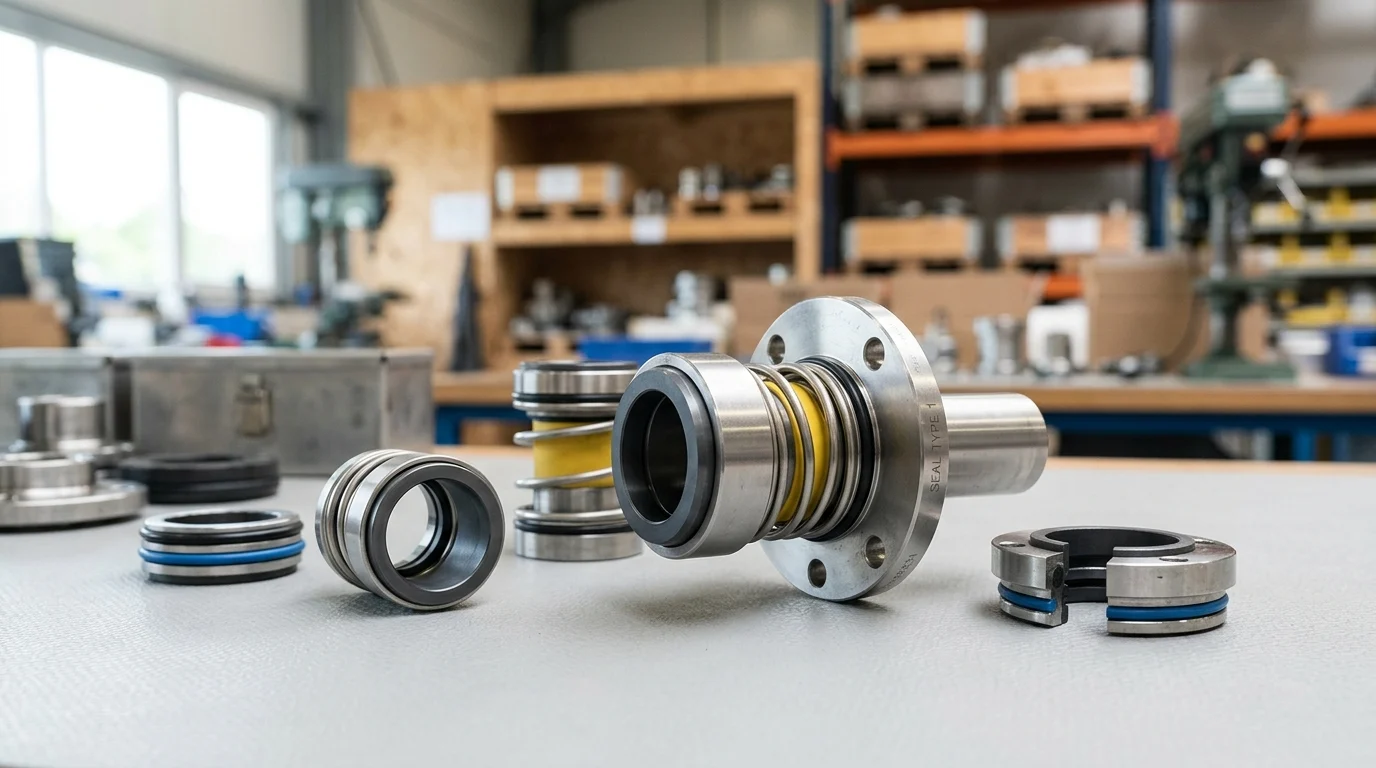
Choosing a mechanical seal supplier in 2026 means balancing technical fit, operational risk, and long-term support rather than comparing price sheets alone. For pumps, compressors, and agitators, seal performance affects uptime, emissions control, maintenance intervals, and total cost of ownership. This article explains how to assess a supplier’s engineering capability, manufacturing quality, application experience, delivery reliability, and aftermarket service, with an emphasis on evidence such as failure data, test standards, and response times. By the end, readers will have a practical framework for identifying suppliers that can meet demanding process conditions while reducing the likelihood of costly shutdowns and repeat seal failures.
Why Supplier Selection Matters
The industrial landscape of 2026 demands highly resilient procurement strategies, particularly for critical rotating equipment components. Evaluating a mechanical seal supplier is no longer simply a matter of comparing unit prices; it requires a comprehensive analysis of engineering competence, supply chain robustness, and lifecycle support. Mechanical seals are fundamental to preventing fugitive emissions and maintaining fluid containment in centrifugal pumps, agitators, and compressors. Consequently, the supplier selected directly dictates the operational availability of entire processing facilities.
Procurement professionals must navigate a complex matrix of technical specifications and commercial variables. A rigorous evaluation framework ensures that the chosen partner can meet stringent industrial demands while mitigating the risks associated with premature equipment failure or logistical bottlenecks.
Reliability and total cost of ownership
Reliability serves as the primary metric for mechanical seal performance, directly influencing the total cost of ownership (TCO) for rotating equipment. While the initial procurement cost of a standard cartridge seal may range from $1,500 to $3,000, a premature failure can trigger a catastrophic process shutdown, incurring downtime penalties that frequently exceed $50,000 per day in petrochemical or refining applications.
Evaluating a supplier requires analyzing their historical mean time between failures (MTBF) data across specific application profiles. Industry benchmarks currently target an MTBF of 36 to 60 months for API 682 compliant seals. Suppliers must demonstrate how their manufacturing tolerances and design geometries contribute to extended lifecycle durations, thereby reducing the annualized lifecycle cost of the asset.
Lead times and supply continuity
In the post-disruption era of 2026, supply continuity is as critical as mechanical reliability. Buyers must scrutinize a supplier’s raw material sourcing, specifically for specialized elastomers and technical ceramics. Historically, standard mechanical seals required a 4- to 6-week lead time, but optimized suppliers leveraging regionalized inventory models can now guarantee dispatch within 48 to 72 hours for critical spares.
Assessments should include a review of the supplier’s safety stock policies and their capacity to maintain a localized buffer of sub-components. Establishing a service level agreement (SLA) that penalizes lead times exceeding 12 weeks for highly engineered, custom seal configurations is a standard practice to ensure the supplier maintains adequate production bandwidth.
Technical and Application Capabilities
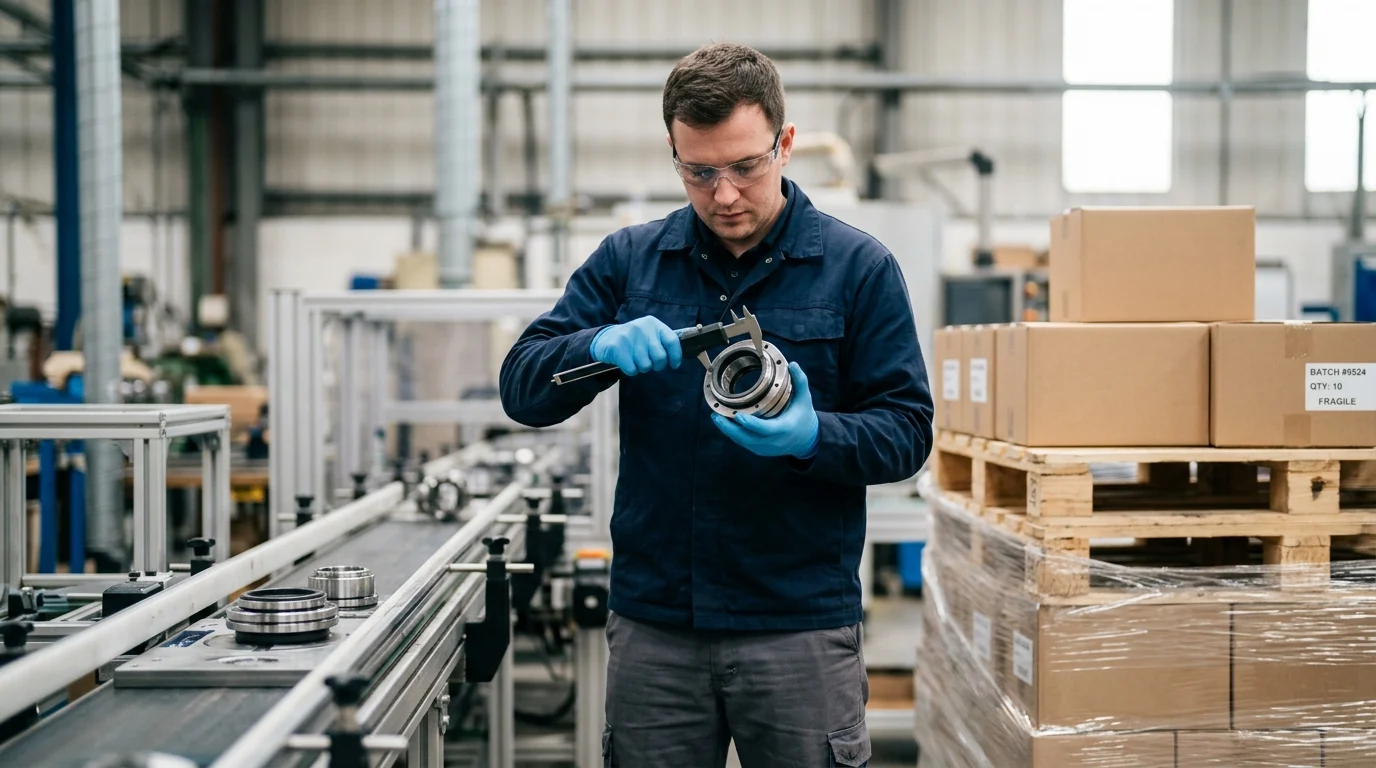
A robust evaluation must penetrate beyond commercial metrics to assess the fundamental engineering capabilities of the supplier. Industrial applications in 2026 require specialized sealing solutions capable of handling multiphase fluids, extreme temperatures, and volatile organic compounds (VOCs). The supplier’s engineering department must possess the analytical tools, such as finite element analysis (FEA) and computational fluid dynamics (CFD), to predict seal face deformation under high-pressure scenarios.
Seal design and material expertise
The mastery of tribology and material science is a non-negotiable attribute for a premier mechanical seal manufacturer. Suppliers must offer a comprehensive portfolio of seal face materials, including reaction-bonded silicon carbide (SiC), sintered alpha SiC, and various grades of tungsten carbide. Furthermore, expertise in secondary sealing elements is vital for aggressive chemical applications.
Procurement teams should verify the supplier’s access to premium perfluoroelastomers (FFKM), which are necessary for maintaining elasticity in extreme environments.
| Material Category | Common Subtypes | Max Temperature Limit | Typical Application |
|---|---|---|---|
| Seal Faces | Sintered SiC, Tungsten Carbide | 400°C+ | Highly abrasive or high-pressure fluids |
| Secondary Elastomers | FKM, EPDM | 150°C – 200°C | General water, mild chemicals |
| High-Performance O-Rings | FFKM (e.g., Kalrez®) | 327°C | Aggressive solvents, extreme heat |
| Hardware/Metallurgy | 316 SS, Alloy C-276 | N/A | Corrosive media, offshore environments |
Performance standards and testing
Technical competency is validated through rigorous adherence to international performance standards. For the oil and gas sector, the supplier must demonstrate full compliance with API 682 (4th Edition) and ISO 21049. This includes the ability to conduct dynamic testing on test rigs that simulate actual operating conditions, including shaft deflection and thermal transients.
During the evaluation, request documentation of the supplier’s hydrostatic testing protocols. Standard industry practice mandates that seal glands and pressure-containing components be hydrostatically tested at a minimum of 1.5 times the maximum allowable working pressure (MAWP). Suppliers unable to provide certified test reports or those lacking in-house dynamic testing facilities present a significant technical risk.
Quality, Cost, and Risk Evaluation
Balancing fiscal constraints with stringent quality requirements forms the crux of the commercial evaluation. Buyers must construct a comprehensive risk profile for each candidate, encompassing manufacturing defect rates, pricing volatility, and macro-level geopolitical exposures. A sophisticated supplier evaluation methodology quantifies these variables to prevent hidden costs from eroding negotiated savings.
Quality systems and traceability
A certified ISO 9001:2015 quality management system is the baseline requirement; however, advanced evaluations probe deeper into the supplier’s continuous improvement methodologies and traceability protocols. For critical applications, suppliers must provide comprehensive material test reports (MTRs) and utilize positive material identification (PMI) to ensure metallurgical integrity.
Buyers should establish strict quality KPIs during the evaluation phase. A world-class mechanical seal supplier should maintain a manufacturing defect rate of less than 0.5% (or 5,000 parts per million). Furthermore, the supplier must have a documented root cause analysis (RCA) framework, such as the 8D methodology, to address and rectify any non-conformances within a mandated 14-day window.
Pricing and commercial terms
Pricing evaluations must transcend unit costs to include tooling, engineering fees, and minimum order quantities (MOQs). While standard pump seals may be purchased individually, custom-engineered solutions often require dedicated tooling, which can range from $2,000 to $15,000 depending on the complexity of the stationary gland or bellows assembly. Buyers must clarify ownership of these tools post-production.
Commercial negotiations should also secure favorable payment terms, aiming for Net 60 or Net 90 days, while locking in pricing for a minimum of 12 to 24 months. Indexing raw material costs—specifically for volatile commodities like nickel or specialized polymers—can protect both parties from sudden market fluctuations.
Financial and geopolitical risk
In an era of shifting global trade policies, assessing geopolitical and financial risk is paramount. Procurement teams must evaluate the geographic concentration of the supplier’s tier-2 and tier-3 sub-tier network. Over-reliance on a single region for raw silicon carbide or specialized elastomers exposes the buyer to tariff fluctuations, which can arbitrarily inflate costs by 15% to 25%.
Financial health should be quantitatively assessed using tools like the Altman Z-score or equivalent credit risk models. A supplier with a high probability of insolvency poses a severe threat to long-term operational continuity. Diversification strategies, such as mandating that the supplier maintains dual-sourced supply chains for critical components, mitigate the risk of sudden production halts.
Supply Chain and Service Support
The lifecycle of a mechanical seal extends far beyond the initial installation. Consequently, a supplier’s logistical infrastructure and after-market service capabilities are critical differentiators. Evaluating the physical footprint of the supplier ensures that spare parts, technical troubleshooting, and refurbishment services are accessible within the operational timeframe required by the end-user.
Manufacturing footprint and inventory
A supplier’s manufacturing footprint dictates their ability to buffer against supply chain shocks. Evaluators must map the locations of primary manufacturing facilities against regional distribution centers. High-volume consumers should negotiate vendor-managed inventory (VMI) or consignment stock agreements, ensuring that critical spare seals are held on-site at the buyer’s facility without incurring inventory carrying costs until deployment.
The effectiveness of the supplier’s inventory management is measured by their on-time delivery (OTD) rate. A premier supplier should consistently demonstrate an OTD rate exceeding 95% for standard catalog items and 90% for engineered-to-order (ETO) seals. Failures to meet these thresholds should trigger contractual penalties.
Repair and after-sales service
Mechanical seals are highly repairable assets, and a robust refurbishment program can drastically reduce lifecycle costs. When evaluating a supplier, buyers must audit their regional repair centers. The supplier should offer a standardized repair process that includes ultrasonic cleaning, face lapping, and hydrostatic pressure testing to restore the seal to original OEM specifications.
Financially, repairing a mechanical seal typically yields a 40% to 60% cost savings compared to purchasing a new unit. The supplier must guarantee turnaround times for standard repairs, typically ranging from 7 to 14 days, and offer expedited 24-hour emergency repair services for critical path equipment.
Local versus global support
The dichotomy between global reach and local presence is a key evaluation metric. Multinational chemical and petroleum corporations require suppliers with a global footprint to ensure standardized seal designs across international facilities. However, this global capacity must be paired with localized engineering support.
The supplier must deploy regional application engineers capable of conducting on-site failure analysis and equipment vibration diagnostics. A standard service level agreement should mandate a maximum 24-hour response time for deploying technical personnel to the buyer’s site in the event of a catastrophic seal failure.
Building a Supplier Shortlist
Translating theoretical evaluation criteria into a practical procurement process requires a structured methodology. Building a shortlist of qualified mechanical seal suppliers involves systematic data gathering, rigorous scoring mechanisms, and cross-functional collaboration between procurement, reliability engineering, and maintenance departments.
Evaluation process for buyers
The evaluation process typically commences with a broad Request for Information (RFI) distributed to 6 to 8 potential suppliers, assessing basic capabilities, financial stability, and ISO certifications. This is subsequently narrowed to a Request for Proposal (RFP) for 3 to 5 suppliers, requiring detailed technical proposals for specific pump applications and commercial bids.
The final phase involves on-site facility audits for the top 2 candidates. During these audits, buyers must physically verify the supplier’s CNC machining tolerances, cleanroom assembly environments, and dynamic testing rigs. Only suppliers who pass the physical audit with a score of 85% or higher should be onboarded as approved vendors.
Weighted scorecard criteria
To eliminate subjective bias, the procurement team must utilize a weighted scorecard to rank the shortlisted suppliers. The scorecard assigns specific percentage weights to various criteria based on the organization’s strategic priorities. For example, a facility experiencing high downtime may weight reliability and technical support more heavily than initial unit price.
| Evaluation Category | Specific Metric | Suggested Weight | Minimum Acceptable Threshold |
|---|---|---|---|
| Technical Capability | API 682 Compliance, Material Options | 30% | Full API 682 4th Ed. Certification |
| Quality & Reliability | Defect Rate (PPM), Warranty Terms | 25% | < 5,000 PPM, 12-month operational warranty |
| Commercial & TCO | Unit Price, Repair Costs, Payment Terms | 20% | Transparent repair pricing structure |
| Supply Chain & Delivery | OTD Rate, VMI Capabilities | 15% | 95% OTD for standard items |
| Service & Support | Engineering Response Time, Local Footprint | 10% | 24-hour on-site response SLA |
By applying this rigorous, quantified approach, organizations ensure that the selected mechanical seal supplier possesses the requisite engineering acumen, commercial viability, and logistical infrastructure to support continuous industrial operations through 2026 and beyond.
Key Takeaways
- The most important conclusions and rationale for mechanical seal supplier
- Specs, compliance, and risk checks worth validating before you commit
- Practical next steps and caveats readers can apply immediately
Frequently Asked Questions
What should I check first when evaluating a mechanical seal supplier?
Start with application fit: media, temperature, pressure, speed, and pump model. Then verify material options, testing records, lead times, and after-sales support. For critical plants, ask for performance data on similar duties.
How can I verify a supplier’s technical capability?
Request seal drawings, material recommendations, test procedures, and case references for similar pumps or industries. A capable supplier should clearly explain face materials, elastomers, and compliance needs such as API 682 or ISO standards.
Why do lead times matter so much for mechanical seal supply?
Seal failure can stop a pump and trigger costly downtime. Choose a supplier that holds common spare parts, confirms dispatch times, and supports urgent replacements for standard and OEM-compatible seals.
Can Victor Seals support OEM-compatible replacements for major pump brands?
Yes. Victor Seals supplies replacement and OEM-compatible seals for brands including IMO, Alfa Laval, Grundfos, APV, Flygt, Fristam, Lowara, and Allweiler, helping maintenance teams reduce sourcing delays.
What makes Victor Seals a practical option for industrial buyers?
Victor Seals has operated since 1998 in Ningbo, with a broad catalog covering standard, cartridge, metal bellow, elastomer bellow, OEM seals, spare parts, and pump rotor sets for multiple industries.

Post time: Jun-25-2026