


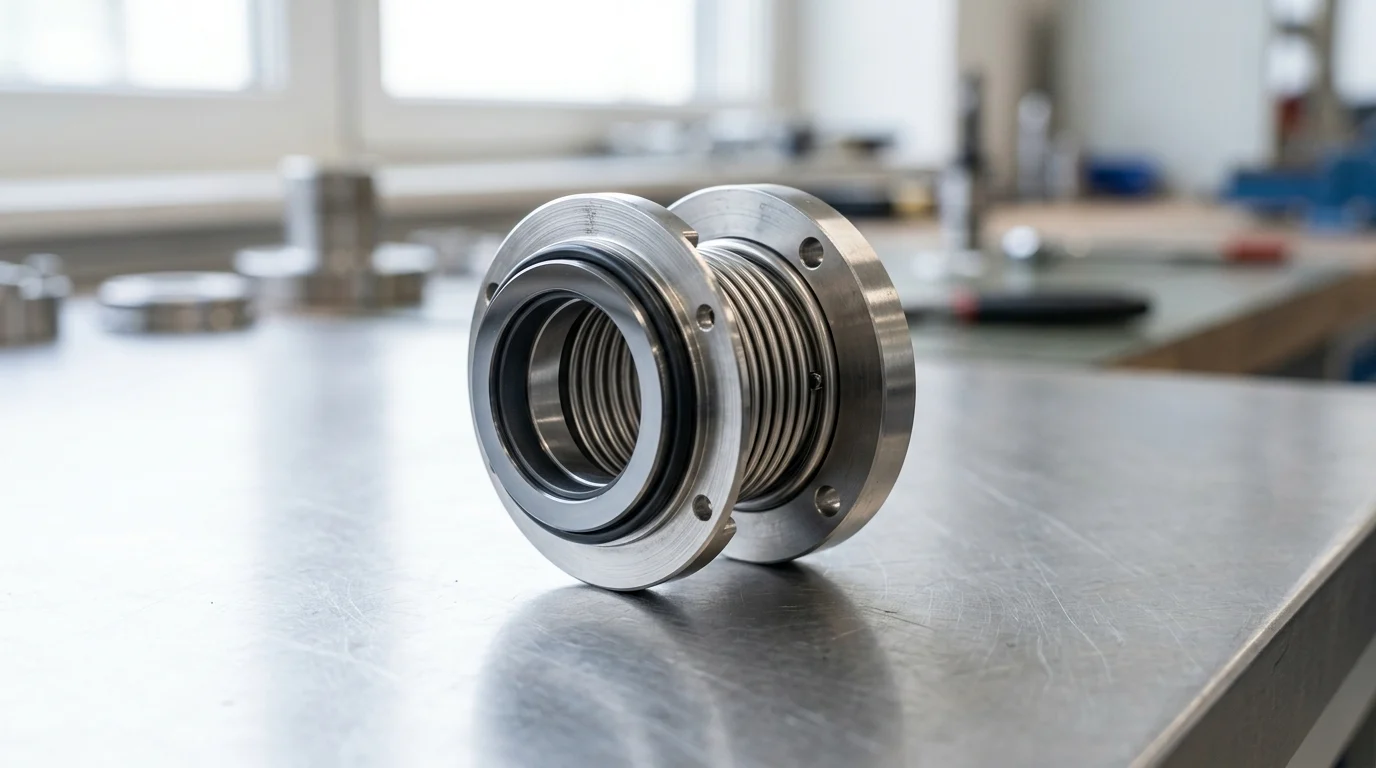
Why Dry Running Mechanical Seals Matters
Mechanical seals act as the primary containment barrier in industrial rotating equipment, preventing hazardous, costly, or environmentally damaging process fluids from escaping into the atmosphere. Contacting mechanical seals rely on a microscopic fluid layer maintained between their rotating and stationary faces. When this fluid film disappears, the seal runs dry. While this article focuses on standard contacting liquid seals in horizontal, single-stage centrifugal pumps, it is important to note that vertical pumps, mixed-flow designs, and metal bellows seals exhibit different dry-running behaviors and tolerances. Engineered solutions—such as dry gas seals, split seals, or specialized self-lubricating faces—also possess entirely different dry-running capabilities.
System integrity depends heavily on this fluid film, which provides essential hydrodynamic lubrication and localized cooling. Without it, the seal faces extreme tribological stress and degrades rapidly. Understanding the mechanics, commercial impact, and root causes of dry running helps reliability engineers optimize mean time between failures (MTBF) and reduce lifecycle costs.
Commercial impact of dry running
The financial impact of dry running extends well beyond the price of a replacement seal. Direct repair costs for a standard centrifugal pump seal failure typically range from $3,000 to $10,000 when factoring in labor, replacement parts, and decontamination protocols. However, this figure varies enormously depending on seal size, industry, geographic region, and whether the pump is a standard ANSI, heavy-duty API, or custom-engineered model.
Unplanned downtime costs significantly more. For example, a dry-run failure on a critical boiler feed pump can force a power plant to derate the unit, resulting in thousands of dollars per hour in lost generation. Catastrophic failures also risk environmental fines, hazardous material remediation, and secondary equipment damage, further multiplying the cost of a single incident.
Definition of dry running
Dry running occurs when the lubricating fluid film—typically just 1 to 3 microns thick—dissipates entirely from the seal interface, forcing the highly polished faces into direct, unlubricated contact.
While manufacturers engineer mechanical seals to handle brief boundary lubrication during startup and shutdown, sustained dry running violates these design limits. Without the liquid medium to dissipate the immense frictional heat generated by the rotating shaft, the seal rapidly fails through a cascade of thermal and mechanical damage detailed in the following sections.
Common causes in pump systems
Hydraulic anomalies and operational errors cause most dry-run events. Operators often induce dry running by starting a pump without properly venting the casing, leaving air or vapor trapped in the stuffing box. Operating a pump with a closed suction valve also completely starves the seal chamber of fluid.
Other common triggers include inadequate net positive suction head available (NPSHa) causing severe cavitation, vortexing in the suction tank, or running the pump too far from its best efficiency point (BEP).
| Root Cause | Systemic Trigger | Severity / Impact Speed |
|---|---|---|
| Unvented Casing | Air trapped in stuffing box | Rapid (Seconds to Minutes) |
| Closed Suction Valve | Zero fluid entering pump | Rapid (Seconds to Minutes) |
| Severe Cavitation | NPSHa drops below NPSHr | Cumulative (Hours to Days) |
| System Vapor Lock | Fluid flashes to gas at seal | Moderate to Rapid |
What Happens Inside a Seal During Dry Running
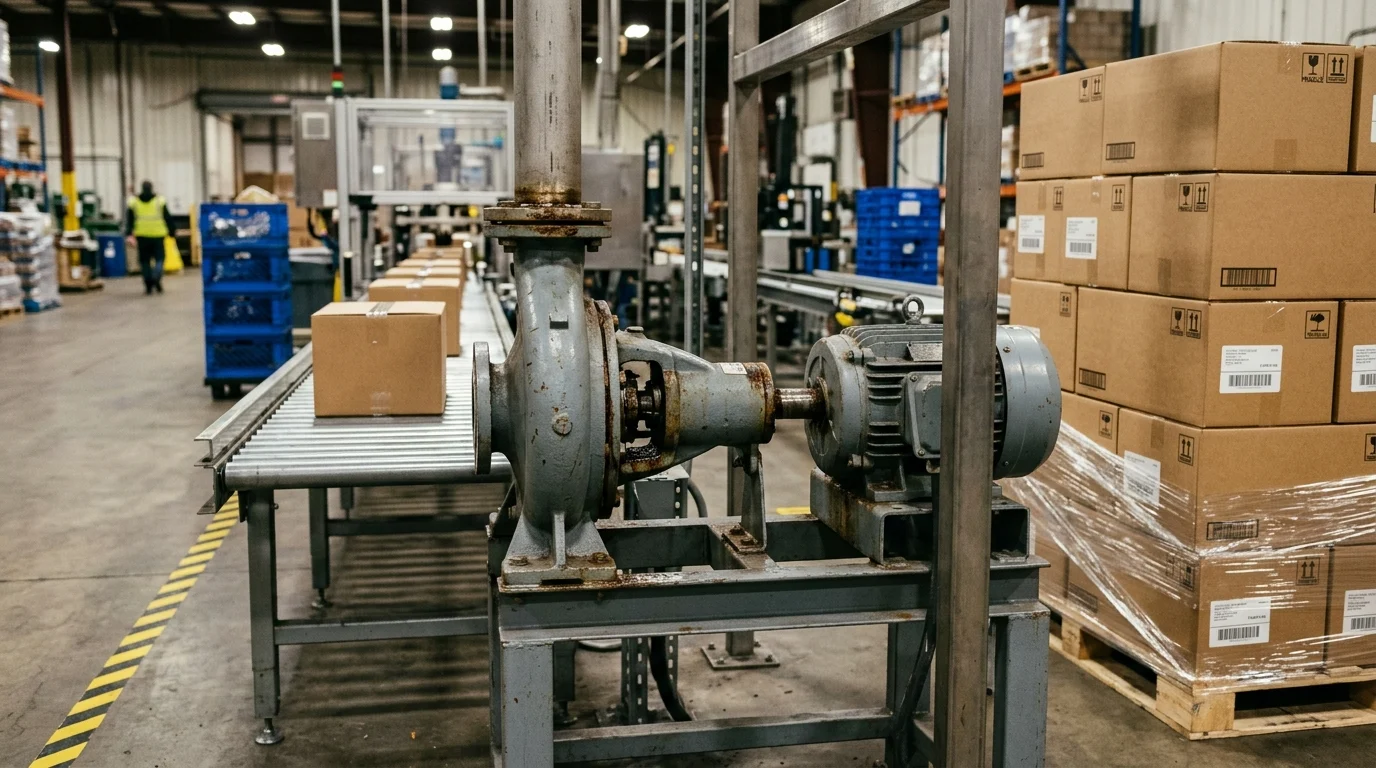
When a seal loses its fluid film, it enters a destructive feedback loop of friction, heat, and material deformation. Because seal faces are lapped to extreme flatness, direct contact creates immense shear forces. The resulting thermal energy radiates outward, damaging secondary containment components and drive mechanisms.
Lubrication film collapse
Under normal conditions, the fluid film keeps the coefficient of friction (COF) extremely low. When this film collapses, the operating regime shifts instantly to dry friction, causing the COF to spike significantly.
This massive increase in frictional resistance demands much more torque from the motor to maintain shaft rotation. Without the fluid film, microscopic asperities on the seal faces cold-weld and shear apart, quickly stripping away the specialized surface profiles that normally provide hydrodynamic lift.
Frictional heat and face damage
Elevated friction immediately generates severe localized heat. Without fluid to cool the interface, temperatures can reach damaging levels—often exceeding 300°C to 500°C for silicon carbide and carbon pairings at standard motor speeds—within seconds to minutes, depending on pressure-velocity (PV) conditions.
This intense heat causes distinct failure modes based on the face materials. Hard materials like silicon carbide or tungsten carbide experience thermal shock, expanding unevenly and developing radial micro-fractures called “heat checking.” Softer materials, such as resin-impregnated carbon, blister as their internal binders expand and erupt through the sealing surface, destroying the required micro-flatness.
Effects on elastomers, springs, and drive parts
As heat conducts outward from the seal faces, it degrades secondary components. Elastomeric O-rings degrade based on their specific thermal limits; for example, standard FKM (Viton) typically hardens and takes a permanent set above 200°C, while PTFE degrades and extrudes above 260°C.
Beyond the elastomers, dry friction transfers intense torque to the seal’s anti-rotation pins and drive mechanisms. Drive pins can shear off, or the seal sleeve may spin on the shaft and cause severe galling. Metallic coil springs and bellows also lose their temper and tension from the heat, failing to maintain the necessary closing force even if operators later restore the fluid.
How Dry-Run Damage Varies by Service Conditions
Dry-running events progress at different rates and yield different damage profiles. The severity depends heavily on the service conditions at the exact moment the pump loses its fluid film.
Fluid properties, rotational speed, and face materials all determine whether a seal survives a momentary dry-run or fails catastrophically.
Damage severity by exposure time
Exposure duration is the most critical factor in seal survivability. A transient loss of suction lasting only a few seconds might cause minor scuffing that self-heals once fluid returns.
However, sustained dry running quickly becomes fatal for standard single seals. As exposure continues, thermal expansion permanently distorts the seal faces and opens a leak path. In high-speed applications, catastrophic failure—such as shattered hard faces or melted O-rings—happens even faster due to the rapid accumulation of frictional heat.
Differences across water, chemicals, hydrocarbons, and slurries
The pumped fluid dictates the secondary effects of a dry-run event. When pumping water, a pressure drop or temperature spike causes the remaining fluid film to flash into steam. This violent volumetric expansion forcefully blows the seal faces apart, causing hammering and edge chipping.
In hydrocarbon services, the heat thermally cracks the fluid residue, depositing a hard, abrasive layer of coked carbon on the faces. In slurry applications, the liquid carrier evaporates, baking suspended solids directly onto the seal faces and springs. This locks the dynamic components and destroys the lapped surfaces.
| Fluid Category | Primary Dry-Run Symptom | Secondary Damage Mechanism |
|---|---|---|
| Boiler Feed Water | Violent flashing / popping | Face chipping and cavitation damage |
| Heavy Hydrocarbons | Coking and carbonization | Bellows clogging and face grooving |
| Chemical Solvents | Rapid elastomer degradation | O-ring melting and chemical attack |
| Mineral Slurries | Baking of suspended solids | Spring clogging and severe abrasion |
Key variables: speed, pressure, temperature, and materials
A seal’s Pressure-Velocity (PV) value defines its operational limits. High-speed, high-pressure applications have high PV values, meaning a dry-run event generates destructive heat exponentially faster than in low-PV applications.
Material selection also heavily influences dry-run tolerance. Silicon carbide (SiC) is an industry standard due to its hardness and high thermal conductivity, which helps dissipate heat. Because standard SiC is brittle and susceptible to heat checking, manufacturers often use advanced pairings like graphite-loaded silicon carbide or diamond-coated faces. These engineered surfaces reduce the dry coefficient of friction, allowing the seal to survive transient dry running slightly longer, though sustained events remain destructive.
How to Diagnose Dry-Run Seal Damage
Accurate diagnosis prevents recurring failures. When a mechanical seal fails prematurely, reliability engineers must conduct a forensic analysis to confirm dry running as the root cause, ruling out chemical incompatibility, misalignment, or abrasive wear.
This requires careful extraction, visual inspection, and metrological evaluation to trace the failure back to system-level operational conditions.
Inspection steps after suspected dry running
Diagnosis begins before technicians fully disassemble the seal. First, isolate the pump, safely drain the casing, and check for fluid in the seal chamber. Document the condition of the flush piping and environmental controls to rule out support system failures.
Once extracted and cleaned, technicians should first perform a macro-visual inspection to identify obvious damage. After visual checks, evaluate the components metrologically. Inspecting the faces under a monochromatic light source with an optical flat reveals the extent of the damage. While a healthy seal face shows parallel light bands indicating extreme flatness, a dry-run seal exhibits heavily distorted, non-parallel bands due to severe thermal warping.
Visible signs of seal failure
Field technicians typically observe stark, localized visual indicators of dry running immediately upon extraction. The most definitive signs include heat checking on hard faces and blistering or heavy grooving on carbon faces. Inspectors should also look for a heavy transfer of carbon dust inside the seal chamber.
Thermal discoloration of metallic components provides further evidence. Stainless steel sleeves or drive collars with a distinct blue tint indicate localized exposure to extreme heat. Additionally, O-rings that look charred, brittle, or have taken a square profile (compression set) confirm the seal environment far exceeded normal operating temperatures.
When to re-lap, rebuild, or replace the seal
Once you confirm dry-run damage, you must decide how to handle the seal. Technicians can sometimes remediate minor scuffing or shallow grooving on hard faces through re-lapping. However, strict dimensional tolerances apply; if restoring flatness requires removing material beyond the manufacturer’s discard threshold, you must discard the face to avoid altering the seal’s engineered spring compression.
Seals with severe thermal damage—such as macro-cracking or blued metal components—require complete replacement. If a pump shows a history of repeated dry-run failures, rebuilding the seal to exact OEM specifications is a flawed strategy. Instead, use the diagnostic evidence to justify upgrading the seal design or modifying the environmental support system.
How to Reduce Dry-Running Risk
Eliminating dry-running risks requires a proactive approach combining robust seal selection, engineered environmental controls, and continuous system monitoring.
Multi-layered defenses protect rotating equipment from transient operational errors and hydraulic anomalies, maximizing asset uptime and reducing long-term maintenance costs.
Seal type selection: single, double, and cartridge seals
Relying on a standard single mechanical seal in an application prone to dry running carries high risk. Upgrading to a dual (double) mechanical seal arrangement provides a definitive safeguard. A dual pressurized seal uses a separate barrier fluid maintained between the inner and outer seal faces.
Following industry standards, this barrier fluid is pressurized above the pump’s stuffing box pressure. Because an external reservoir supplies the barrier fluid, the inner and outer seal faces remain fully lubricated and cooled even if the pump loses its primary process fluid. While dual seals introduce higher initial costs and maintenance complexities, they prevent catastrophic dry-run failures. Transitioning to cartridge seals also helps, as factories preset their delicate face alignments and spring compressions, eliminating installation errors that mimic or exacerbate dry-running conditions.
Flush plans and monitoring systems
For single seals, implementing the correct piping plan mitigates dry-run risks. A Plan 32 flush injects a clean, cool, external fluid directly into the seal chamber, guaranteeing continuous lubrication regardless of suction conditions. For dual seals, closed-loop systems like Plan 53A, 53B, or Plan 54 provide dedicated barrier fluid circulation.
Active monitoring systems serve as the ultimate fail-safe. Installing power monitors on the pump motor is highly effective; if the pump loses prime and runs dry, the motor load drops significantly. You can program power monitors to automatically trip the motor if the load falls below a nominal threshold for a few seconds, intervening before thermal damage occurs. Vibration sensors and seal chamber temperature probes also feed early warning data to the facility’s Distributed Control System (DCS).
Upgrade decision framework
Deciding when to implement these safeguards requires a structured decision framework based on Return on Investment (ROI) and risk tolerance. If a pump experiences recurring dry-run failures, the cost of downtime and maintenance easily justifies upgrading to a dual seal or installing active power monitoring.
Reliability engineers should evaluate the Mean Time Between Failures (MTBF) against recognized industry benchmarks, such as the API 682 target of 36 to 48+ months for continuous duty pumps. If the current MTBF falls significantly below these standards due to transient dry-run events, the framework mandates an upgrade.
Rather than relying on reactive replacements, facilities should adopt a prioritized action matrix based on failure frequency and asset criticality:
- First Intervention (Low Cost / High Impact): Implement active power monitoring to automatically trip the motor during loss of prime, and review operational venting procedures.
- Second Intervention (Moderate Cost): Upgrade flush plans (e.g., Plan 32) to ensure continuous external lubrication, or switch to advanced face materials like diamond-coated silicon carbide for better transient survivability.
- Third Intervention (High Cost / Maximum Protection): For highly critical or hazardous applications, replace single seals with dual pressurized cartridge seals (Plan 53A/B or 54) to completely isolate the sealing interface from process fluid anomalies.
Key Takeaways
- Prevent dry running by confirming the pump casing and seal chamber are fully vented before startup.
- Never operate a centrifugal pump with a closed suction valve, because the seal chamber can lose lubrication within seconds to minutes.
- Treat cavitation, low NPSHa, suction vortexing, and operation far from BEP as reliability risks that can trigger seal dry running.
- Plan for dry-run failures as business-critical events, since direct repair costs can reach $3,000 to $10,000 before downtime or environmental costs are included.
- Select seal materials and designs based on the application, because standard contacting liquid seals, metal bellows seals, and dry-running engineered seals have very different damage tolerances.
Frequently Asked Questions
What does dry running mean for a mechanical seal?
Dry running occurs when the 1–3 micron lubricating fluid film between the rotating and stationary seal faces disappears, causing direct face contact, rapid heat buildup, and accelerated wear.
How quickly can dry running damage a pump seal?
Severe dry running can damage a standard contacting liquid mechanical seal in seconds to minutes, especially when the pump casing is unvented or the suction valve is closed.
What are the most common causes of dry running?
Common causes include starting an unvented pump, operating with a closed suction valve, inadequate NPSHa, cavitation, suction tank vortexing, and running the pump far from its best efficiency point.
Can a mechanical seal survive brief dry running during startup?
Many contacting seals can tolerate brief boundary lubrication during startup or shutdown, but sustained dry running exceeds normal design limits and can quickly lead to thermal cracking, face distortion, and leakage.
How much can a dry-run seal failure cost?
A standard centrifugal pump seal failure often costs $3,000 to $10,000 in direct repairs, labor, parts, and cleanup, while downtime, environmental exposure, or secondary equipment damage can cost far more.

Post time: Jul-19-2026