


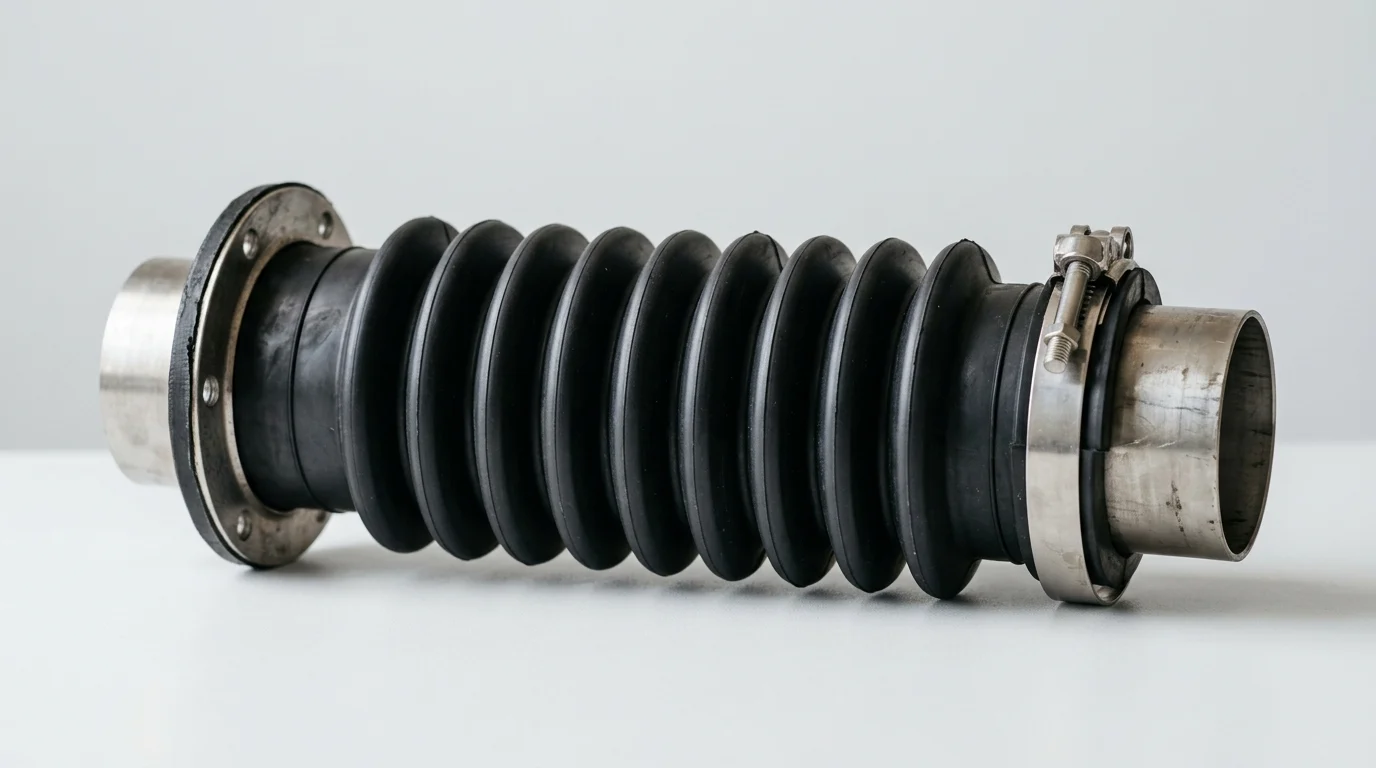
Why Rubber Bellows Seals Leak in Sewage Pumps
Wastewater facilities widely deploy rubber bellows seals in submersible and surface sewage pumps due to their cost-effectiveness and ability to absorb minor shaft misalignments. However, the harsh operating environments of wastewater treatment plants expose these mechanical seals to severe mechanical, chemical, and thermal stresses. Understanding the mechanisms behind seal failure requires analyzing the complex interactions between the elastomeric bellows, the primary sealing faces, and the pumped fluid.
In typical municipal sewage applications—where pressures can vary widely depending on the specific pump and manufacturer—seal longevity heavily depends on maintaining a stable fluid film between the rotating and stationary faces. Compromising this micro-gap accelerates leakage significantly, leading to premature pump failure, motor flooding, and costly environmental compliance violations.
How to Define Seal Leakage
Mechanical seals rely on the aforementioned fluid film for lubrication and cooling. In optimal conditions, this microscopic layer of fluid vaporizes before reaching the atmosphere, resulting in no visible leakage. Acceptable weeping for a standard rubber bellows seal in wastewater applications is generally minimal—often cited as a baseline of less than 2 milliliters per hour, though readers should always consult specific manufacturer documentation for exact thresholds.
When fluid loss exceeds this benchmark—often manifesting as a continuous visible drip or an accumulation of fluid in the atmospheric side of the seal chamber—the seal officially qualifies as leaking. Modern sewage facilities increasingly use advanced monitoring systems—incorporating vibration analysis, thermal imaging, and moisture sensors in the barrier fluid reservoir—to preempt seal failures and trigger alarms before catastrophic blow-outs occur.
Common Sewage Pump Leakage Conditions
Leakage in sewage pumps typically manifests in three distinct conditions: continuous weeping, sudden catastrophic blow-out, and secondary path leakage. Continuous weeping often indicates progressive face wear or the gradual degradation of the elastomeric bellows due to chemical attack. This condition worsens over time as abrasive particles embed themselves in the softer seal face.
Sudden catastrophic blow-out usually results from severe mechanical shock, dry running, or dead-heading the pump (operating the equipment with a closed discharge valve), which can instantly fracture brittle silicon carbide faces or rupture the rubber bellows. Secondary path leakage occurs when the fluid bypasses the primary faces entirely, often seeping underneath the bellows where it grips the shaft. Severe fretting corrosion on the shaft sleeve or a loss of elastomeric elasticity frequently causes this bypass, reducing the grip force below the threshold necessary to maintain a static seal.
Design Factors That Affect Leakage Resistance
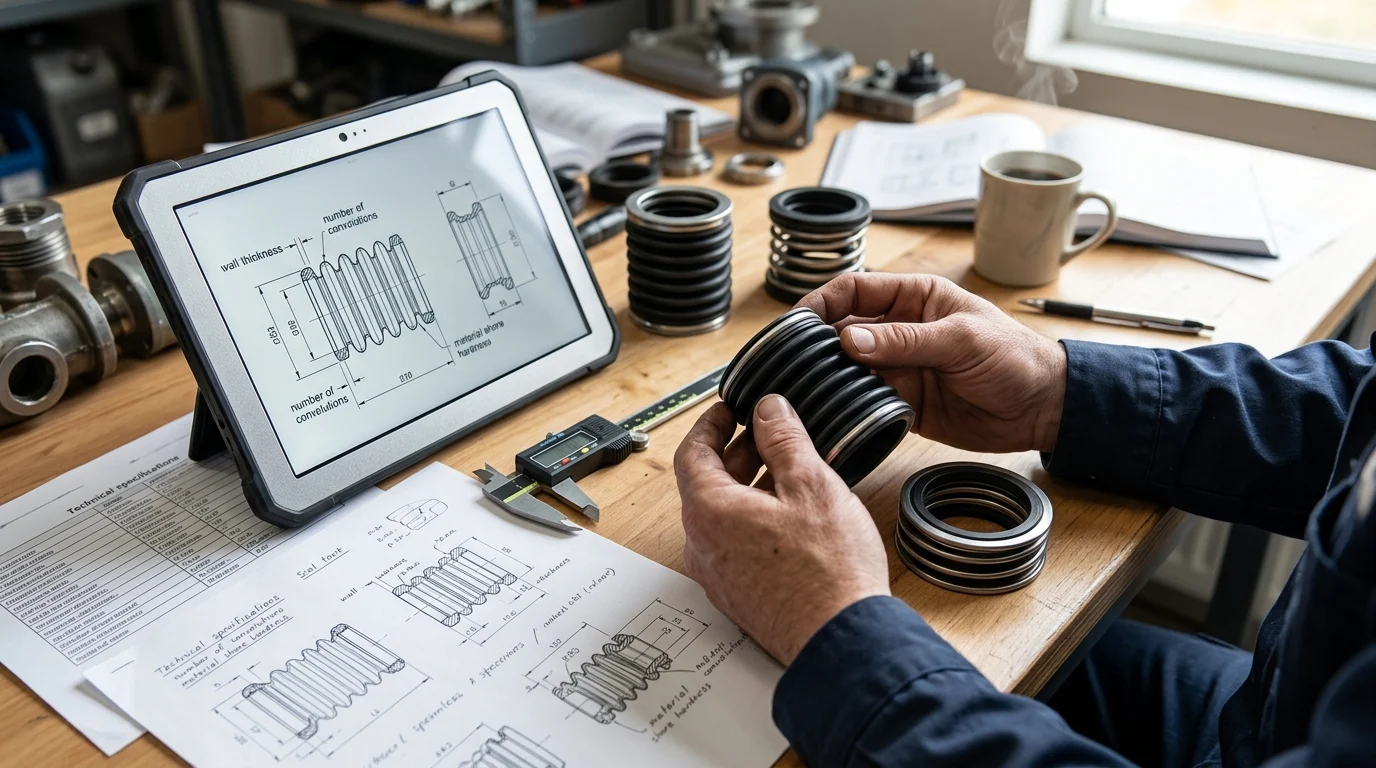
To mitigate these common leakage conditions, the fundamental architecture of a rubber bellows seal dictates its resistance to the demanding realities of sewage transport. Unlike O-ring pusher seals, the bellows design eliminates sliding elastomers on the shaft, significantly reducing shaft fretting. However, this places the burden of dynamic responsiveness entirely on the flexibility of the rubber and the precision of the integrated spring.
Evaluating the interplay of materials and geometry is essential to achieve the desired Mean Time Between Failures (MTBF). Specifying components that can withstand typical application temperatures and handle high concentrations of abrasive particulates is critical for preventing premature leakage.
Elastomer, Seal Face, Spring, and Hardware Selection
Selecting the right elastomer dictates the seal’s thermal and chemical boundaries. Nitrile (NBR) is standard for basic wastewater, while Fluoroelastomer (FKM) is required for industrial effluents reaching higher temperatures or containing aggressive hydrocarbons. The bellows must remain resilient enough to transmit torque to the rotary face without tearing under shear stress.
Standard practice pairs Silicon Carbide (SiC) with Silicon Carbide for maximum abrasion resistance in sewage containing heavy grit. Tungsten Carbide (TC) serves as a robust alternative when higher fracture toughness is required to withstand mechanical shock. The spring mechanism, often a single large-coil spring in sewage applications, must resist clogging from fibrous materials while providing consistent face loading—typically falling within a manufacturer-specific range of 15 to 30 psi.
Key Seal Specifications to Compare
Evaluating rubber bellows seals for wastewater applications requires comparing several critical specifications to ensure the chosen seal matches the hydraulic and environmental realities of the pump station. Note that the maximum operating temperatures listed below are approximate and depend heavily on the specific compound formulation, media exposure time, and manufacturer.
| Elastomer Material | Approx. Max Operating Temp (°C) | Abrasion Resistance | Typical Sewage Application |
|---|---|---|---|
| NBR (Nitrile) | 90°C | Moderate | Standard municipal wastewater, storm water |
| EPDM | 120°C | Good | Effluent with high alkalinity or hot water |
| FKM (Viton™) | 200°C | Excellent | Industrial sewage, hydrocarbon-contaminated water |
| HNBR | 150°C | Superior | Highly abrasive slurries, sour water environments |
Rubber Bellows Seals vs Cartridge Seals
Manufacturers traditionally supply rubber bellows seals as component seals, meaning technicians install the rotary and stationary elements individually. This requires precise axial positioning along the shaft, often demanding tight installation tolerances to ensure proper spring compression. Incorrect installation length remains a leading cause of face distortion and subsequent leakage.
Conversely, cartridge seals package the bellows, faces, and gland plate into a single, pre-assembled unit. While cartridge seals command a higher initial procurement cost, they simplify installation by removing the need for precise axial measurements. In critical sewage applications where downtime costs are high, this simplified maintenance process presents a viable alternative to component seals. However, for standard duties, component bellows seals remain the industry norm, with cartridge designs typically reserved for highly critical pumps or specific failure modes like repeated solids packing.
Common Operating and Installation Causes
While robust design and material selection provide a strong foundation, even the most rigorously engineered rubber bellows seals will fail if subjected to adverse operational environments or incorrect installation procedures. Sewage pumps operate in highly variable conditions where fluid composition, system pressure, and mechanical alignment fluctuate constantly.
Many premature mechanical seal failures in wastewater facilities stem from operational abuses or installation errors rather than inherent manufacturing defects. Distinguishing between these two categories is crucial for accountability and prevention. Maintaining shaft runout below manufacturer-specified limits (often around 0.05 mm) and strictly controlling the pump’s operating envelope are essential to maximizing seal life.
Damage from Solids, Grit, Rags, and Chemicals
Raw sewage routinely contains significant solid matter, including sand, grit, fibrous rags, and biological waste. Abrasive grit easily penetrates the fluid film between the seal faces, causing deep scoring and grooving that destroys the lapped surfaces and creates primary leakage paths.
Fibrous materials, such as flushable wipes and rags, present a unique threat to bellows seals. These materials can wrap around the rotating shaft, packing tightly into the seal chamber. This packing effect restricts the movement of the single-coil spring and the rubber bellows, preventing the seal faces from tracking together and resulting in immediate, heavy leakage. Additionally, unexpected chemical dumps in municipal lines can cause standard NBR bellows to swell, soften, or embrittle, leading to structural rupture.
Dry Running, Cavitation, Pressure Surges, and Heat
Dry running destroys mechanical seals rapidly. Without the lubricating fluid film, the friction between SiC faces generates extreme heat that can rapidly exceed the temperature limits of the materials. This thermal shock causes micro-cracking in the seal faces and rapidly melts or blisters the adjacent rubber bellows, completely destroying the seal’s integrity.
Cavitation, caused by operating the pump outside its Best Efficiency Point (BEP)—the flow and head parameters where the pump operates most stably—or due to inadequate Net Positive Suction Head (NPSH), induces severe high-frequency vibrations. These vibrations cause the seal faces to separate momentarily, allowing debris to enter the gap. Furthermore, sudden pressure surges from water hammer can exceed the pressure limits of the bellows, causing the elastomer to invert or tear.
Shaft Runout, Misalignment, and Improper Compression
Mechanical precision is non-negotiable. Excessive shaft runout or deflection—often caused by worn pump bearings or operating the pump at shut-off—forces the rubber bellows to absorb severe radial movement. If runout exceeds the manufacturer’s threshold, the rubber bellows cannot flex quickly enough to maintain contact during each revolution, leading to face separation and weeping.
While shaft runout often stems from operational wear, improper compression is strictly an installation error. Over-compressing the bellows increases the face load exponentially, squeezing out the lubricating film and causing rapid heat generation and wear. Under-compression fails to provide the necessary closing force, allowing system pressure to push the faces apart. Both scenarios guarantee premature leakage and necessitate complete seal replacement.
How to Diagnose and Correct Seal Leakage
When operational and installation stresses inevitably lead to failure, effective troubleshooting of a leaking sewage pump seal requires a methodical approach to differentiate between mechanical, chemical, and operational root causes. Rapid and accurate diagnosis prevents the costly mistake of replacing a seal without addressing the underlying issue.
Facilities that implement standardized diagnostic protocols often see their overall pump reliability and uptime improve dramatically. The diagnostic process must encompass visual, dimensional, and operational assessments.
Inspection Steps to Confirm Seal Failure
The diagnostic process begins before technicians fully dismantle the pump. Operators should perform a static pressure test, typically at 1.5 times the normal operating pressure, to observe the leakage path. In double seal configurations, analyzing the barrier fluid for contamination indicates whether the inboard or outboard seal failed first.
Upon disassembly, inspect the elastomeric bellows for signs of chemical attack, such as swelling, stickiness, or hardening. Use an optical flat to check the seal faces for flatness; variations greater than 3 light bands (an optical measurement of surface flatness) indicate thermal distortion or mechanical warping. Finally, measure the shaft sleeve for fretting and verify that the stuffing box bore is concentric with the shaft.
Corrective Actions by Failure Cause
Once the failure mode is identified, corrective actions should directly address the root cause to prevent recurrence. For abrasive wear and heavy grooving from grit, the standard correction is upgrading face materials to SiC/SiC and potentially implementing an API Plan 32 external flush (injecting a clean, external fluid) to provide a debris-free environment.
For thermal degradation or blistering caused by dry running, the primary solution involves installing a low-load motor sensor or a flow switch to automatically shut down the pump before heat damage occurs. When dealing with a torn bellows near the drive band—a symptom of excessive torque—corrective measures include auditing the fluid viscosity or transitioning to a seal design equipped with heavy-duty drive lugs.
When to Repair, Replace, or Upgrade the Seal
Deciding whether to repair, replace, or upgrade a failed seal involves weighing the severity of the damage, the criticality of the pump, and the historical failure rate.
| Diagnostic Finding | Recommended Action | Economic Implication |
|---|---|---|
| Minor face wear, intact bellows | Lapping faces, reuse components | Low parts cost, but requires skilled labor |
| Bellows swollen or chemically degraded | Replace seal, upgrade elastomer (e.g., NBR to FKM) | Moderate unit cost increase, offset by longer MTBF |
| Repeated solids packing and spring failure | Upgrade to engineered cartridge seal or double seal | Higher upfront cost, significantly lowers TCO |
| Severe thermal shock and shattered faces | Replace seal, install dry-run protection sensors | Moderate seal cost, plus additional expenses for sensor integration |
How to Specify and Source the Right Seal
Procuring the correct rubber bellows seal is a critical engineering decision that dictates the reliability of the entire pumping system. Relying solely on dimensional matching of the old, failed seal often perpetuates existing design flaws and leads to repeat failures.
A rigorous specification process requires capturing precise application data and vetting suppliers for quality assurance. By focusing on the Total Cost of Ownership (TCO) rather than the lowest unit price, facilities can source seals that deliver long-term operational stability.
Application Data, Dimensions, and Material Requirements
Accurate specification requires documenting the exact shaft diameter (typically ranging from 20mm to 100mm in municipal pumps), the stuffing box bore dimensions, and the required operating length.
Key Takeaways
- Treat continuous visible dripping as abnormal because a healthy rubber bellows seal should only have a microscopic lubricating film and, in many wastewater references, less than about 2 ml per hour of weeping.
- Investigate progressive leakage for face wear, abrasive particle embedding, chemical elastomer attack, or loss of bellows elasticity before the pump reaches catastrophic failure.
- Prevent dry running and dead-heading because either condition can rapidly overheat the seal, fracture hard faces such as silicon carbide, or rupture the rubber bellows.
- Check the shaft sleeve and bellows grip area when leakage bypasses the faces, since fretting corrosion or reduced elastomer tension can create a secondary leakage path.
- Use condition monitoring such as vibration analysis, thermal imaging, and moisture sensing to detect seal distress early and avoid motor flooding or compliance-related downtime.
Frequently Asked Questions
What is normal leakage for a rubber bellows seal in a sewage pump?
A properly operating rubber bellows seal should show no visible drip. Some applications cite minimal weeping below about 2 ml per hour, but the exact limit should always be verified against the pump or seal manufacturer’s documentation.
Why do rubber bellows seals leak in wastewater service?
Common causes include abrasive solids damaging seal faces, chemical attack on the elastomer, dry running, shaft sleeve wear, loss of bellows elasticity, pressure surges, and poor lubrication of the sealing faces.
How can I tell if leakage is from the seal faces or the secondary path?
Face leakage usually appears as progressive weeping or dripping from the seal area. Secondary path leakage often bypasses the faces and seeps under the bellows where it grips the shaft, commonly linked to sleeve fretting, corrosion, or weakened elastomer tension.
Can dry running destroy a rubber bellows mechanical seal?
Yes. Dry running removes the thin fluid film that cools and lubricates the seal faces, quickly causing overheating, face cracking, elastomer damage, or sudden seal blow-out.
What monitoring methods help prevent sewage pump seal failure?
Useful methods include vibration analysis, thermal imaging, seal chamber inspections, moisture sensors, and barrier fluid reservoir monitoring. These help detect abnormal heat, vibration, or leakage before pump flooding or major failure occurs.

Post time: Oct-09-2026