


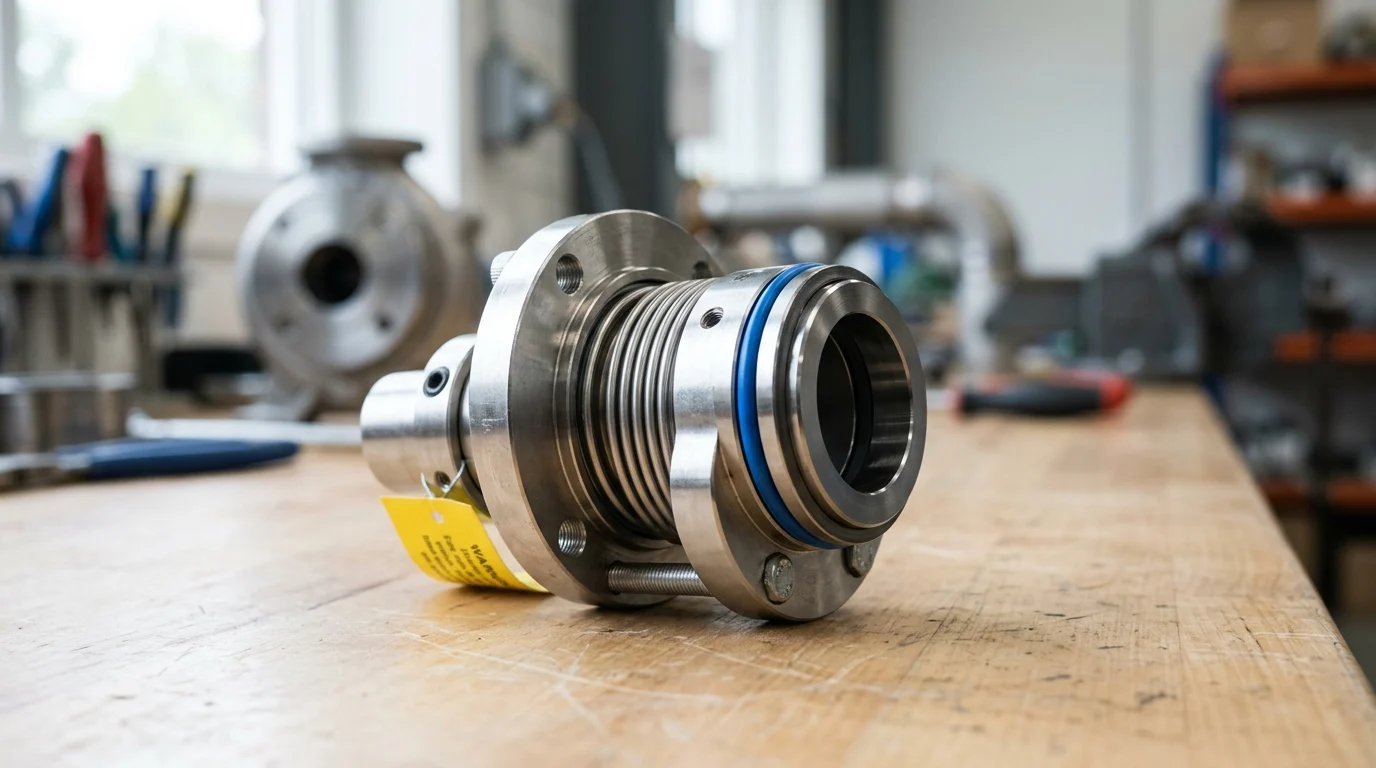
Why Reliable Mechanical Seals Matter for Pump Uptime
Continuous operation pumps are critical assets in modern processing facilities, including petroleum refineries, chemical processing plants, and power generation stations. In these high-stakes industrial environments, mechanical seals function as the primary containment barrier between highly pressurized, often hazardous process fluids and the external atmosphere. Because these specialized pumps are designed for continuous duty, the mechanical integrity and reliability of their seals directly dictate the overarching uptime of the entire plant.
A compromised mechanical seal not only forces an immediate and unplanned pump shutdown but also introduces severe safety and environmental hazards. In modern facilities, maintenance strategies have shifted from reactive repair to proactive reliability engineering. Consequently, selecting a mechanical seal is no longer viewed as a simple component replacement, but rather as a critical asset management decision that impacts overall plant productivity, safety metrics, and regulatory compliance.
How to Define Seal Reliability
Defining reliability in the context of mechanical seals requires moving beyond subjective assessments and adopting quantifiable performance metrics. The globally recognized industry standard metric for this purpose is Mean Time Between Failures (MTBF). By tracking MTBF, reliability engineers can accurately forecast maintenance intervals and evaluate the true lifespan of different sealing technologies under dynamic operational stresses.
For continuous operation pumps, operators typically target a minimum MTBF of 36 to 60 months, which directly aligns with the design life expectations outlined in heavy industry standards such as API 682. Achieving a 36-month MTBF requires the mechanical seal to operate for over 26,000 hours within acceptable leakage and wear limits.
Failure Costs That Affect Continuous Operation
The financial ramifications of mechanical seal failure in continuous operations extend far beyond the direct replacement cost of the seal hardware or the associated maintenance labor. When a primary process pump trips offline due to seal leakage, the resulting production bottleneck can be devastating. Depending on the scale and criticality of the process, illustrative industry estimates suggest facilities can experience context-dependent losses ranging from $10,000 to over $100,000 per hour in deferred or lost product yield.
Furthermore, the environmental release of volatile organic compounds (VOCs), toxic chemicals, or highly flammable hydrocarbons triggers immediate regulatory scrutiny. Environmental fines for fugitive emission limit violations can be substantial—sometimes estimated at $50,000 or more per incident—excluding the costs associated with mandatory site remediation and the deployment of emergency response teams. When factoring in the risks of secondary equipment damage, such as bearing failure induced by process fluid ingress, the economic imperative for specifying highly reliable seals becomes undeniable.
Operating Conditions to Specify Before Selection
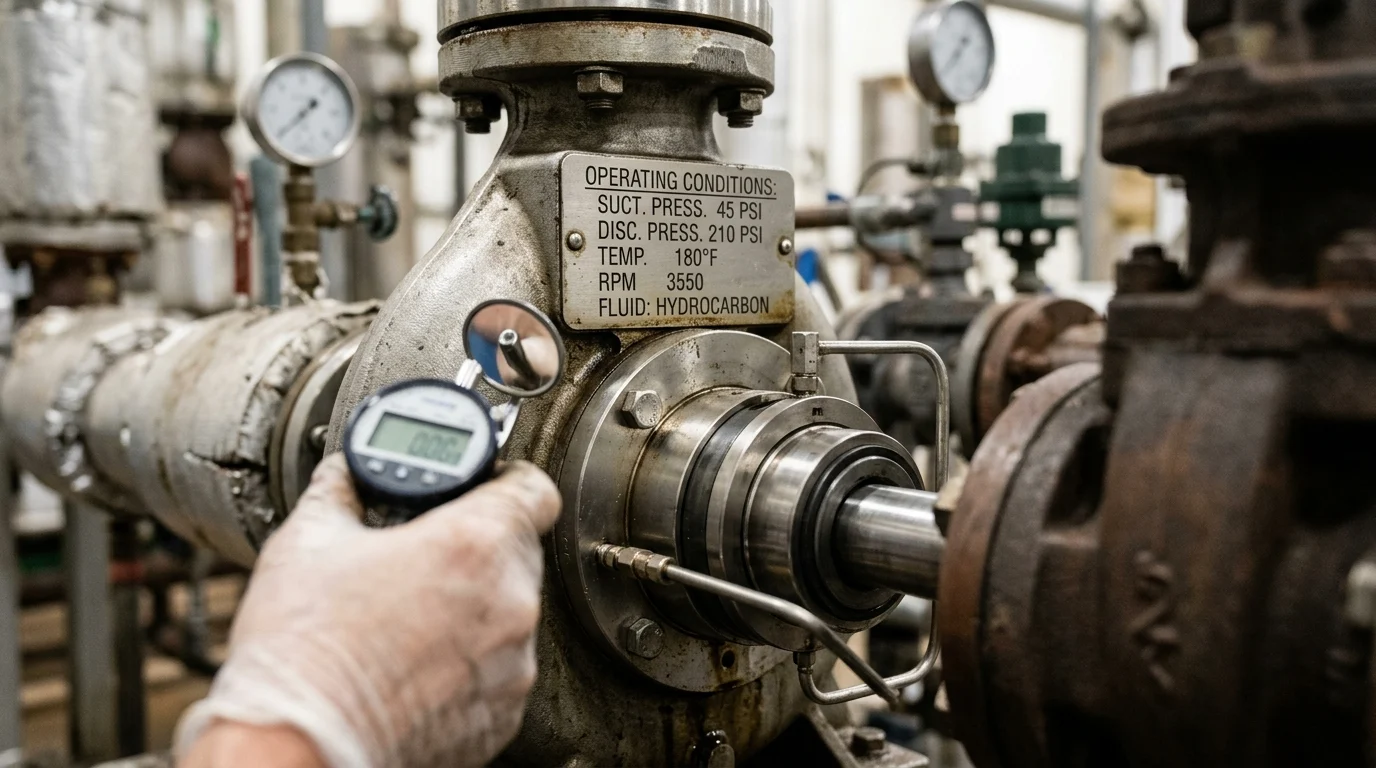
Specifying a mechanical seal relies on a precise understanding of the operating environment inside the pump’s stuffing box or seal chamber. Overlooking a single operational variable—such as a transient temperature spike during startup, off-design operation, or a minor corrosive contaminant in the fluid stream—can precipitate rapid and premature seal failure despite otherwise proper specification.
Engineers must compile a comprehensive equipment data sheet detailing the precise operating envelope before initiating the selection and procurement process. This data must reflect not only the normal steady-state running conditions but also the maximum and minimum parameters experienced during system flushes, steam-outs, and process upsets.
Pressure, Temperature, Speed, Fluid Chemistry, and Solids
The fundamental thermodynamic and kinetic parameters—specifically pressure, temperature, and shaft speed—determine the baseline mechanical requirements of the seal. High-pressure applications, which frequently exceed 40 bar (580 psi) in boiler feed or pipeline services, necessitate balanced seal designs to prevent excessive hydraulic face loading and destructive heat generation. Similarly, surface speeds exceeding 25 meters per second require specialized stationary spring designs to prevent dynamic instability and spring fatigue.
Temperature extremes dictate the selection of both elastomers and face shrink-fit tolerances. Cryogenic applications may drop to -100°C, causing standard elastomers to shatter. Conversely, hot oil refinery pumps frequently operate at 350°C (approaching the API 682 Category 3 standard limit of 400°C), requiring metallic bellows. Furthermore, fluid chemistry requires careful analysis of pH, corrosivity, and fluid lubricity. The presence of abrasive solids or suspended slurries, sometimes reaching up to 40% solids by weight, dictates the need for specialized hard-on-hard face combinations to resist deep scoring and catastrophic wear.
Single, Double, Cartridge, and Split Seal Applications
The choice between single, double, cartridge, and split configurations depends heavily on the fluid’s hazard classification, the pump’s architectural constraints, and emission regulations. Single seals are generally sufficient for benign, highly lubricating fluids where trace fugitive emissions are permissible and pose no risk to personnel. In contrast, double (dual) seals are mandatory for highly toxic, flammable, or non-lubricating fluids, providing a secondary containment barrier that guarantees zero process emissions to the atmosphere.
| Seal Configuration | Primary Application | Typical Maximum Pressure Limit |
|---|---|---|
| Single Cartridge | Non-hazardous, lubricating fluids | Up to 20 bar (290 psi) |
| Double (Dual) Cartridge | Toxic, volatile, or abrasive fluids | Up to 40 bar (580 psi) |
| Split Seal | Large shafts, difficult equipment access | Up to 10 bar (150 psi) |
Cartridge seals, which pre-assemble the faces, springs, and gland plate into a single unit, have become the undisputed standard for continuous operations due to their precise, factory-set alignment that eliminates common installation errors. Split seals, while less common in high-pressure services, are highly valued for large-diameter shafts (often exceeding 150mm) where complete equipment disassembly would require excessive and costly downtime.
Seal Support Systems and Flush Plans
Mechanical seals in demanding continuous services rarely survive without an appropriate seal support system, uniformly referred to in the industry as an API flush plan. These external piping systems manage the micro-environment directly around the seal faces by providing vital cooling, removing accumulated vapor, or supplying a clean, lubricating barrier fluid.
For dual pressurized sealing systems utilizing configurations like API Plan 53A, 53B, or 54, the barrier fluid must be carefully controlled. Engineering standards dictate that this barrier fluid must be maintained at a pressure strictly 1.5 to 2.0 bar (22 to 29 psi) higher than the maximum seal chamber pressure. This positive pressure differential ensures that any inevitable micro-leakage across the seal faces occurs inward into the process fluid, preventing hazardous process media from escaping outward into the environment.
Materials, Design Features, and Standards
The ultimate longevity of a mechanical seal is fundamentally tied to its metallurgy, face material pairings, and elastomeric composition. Continuous operation demands materials that can resist thermal distortion, aggressive chemical attack, and abrasive wear over hundreds of millions of rotational cycles.
Selecting the optimal material combination requires balancing complex tribological properties with overarching industry compliance standards. Engineers must ensure that the selected materials not only survive the chemical environment but also maintain a stable, microscopic fluid film between the rotating and stationary faces to prevent dry running and catastrophic thermal shock.
Face Materials, Secondary Seals, and Springs
Seal faces are the most critical components of the assembly, typically utilizing a softer, self-lubricating grade against a harder grade—such as carbon graphite against silicon carbide—to provide low friction and high thermal conductivity. However, in highly abrasive continuous services, hard-on-hard combinations such as Silicon Carbide (SiC) against Tungsten Carbide (WC) are frequently utilized to prevent particle embedment. Spring components, which provide the essential mechanical closing force, are typically specified in highly alloyed materials like Hastelloy C-276 or Inconel 718 to prevent stress corrosion cracking in aggressive media.
| Elastomer Material | Maximum Continuous Temperature Limit | Chemical Compatibility Profile |
|---|---|---|
| NBR (Nitrile) | 100°C (212°F) | Excellent for water, mild hydrocarbons, and general oils |
| FKM (Fluoroelastomer) | 204°C (400°F) | Broad range of heavy hydrocarbons, acids, and synthetic oils |
| FFKM (Perfluoroelastomer) | 327°C (620°F) | Universal chemical resistance, extreme heat, and severe solvents |
Secondary sealing elements, such as dynamic O-rings or V-rings, demand equal engineering scrutiny. Standard FKM (fluoroelastomer) performs exceptionally well up to 204°C, but extreme chemical environments or high-temperature refinery applications require advanced FFKM (perfluoroelastomer) compounds, which maintain their elastic memory and seal integrity up to 327°C.
API and ISO Standards for Mechanical Seals
For hydrocarbon processing, petrochemical, and heavy industrial applications, API 682 (co-published as ISO 21049) serves as the definitive global standard for mechanical seal design and testing. The standard categorizes seals based on pump type, shaft size, and operating conditions, ensuring standardized reliability across different manufacturing sites.
Category 1 seals are intended for general duty applications up to 20 bar and temperatures up to 260°C. Category 3 seals are heavily engineered for the most demanding continuous operations in the petroleum industry, safely accommodating seal chamber pressures up to 40 bar and extreme temperatures up to the standard’s 400°C limit. Adhering to these standards ensures that the chosen seal has undergone extensive qualification testing and meets strict dimensional, material, and performance criteria.
It is important to note that API 682 categories and the guidance provided apply primarily to hydrocarbon and petrochemical services. Other industries, such as water treatment, food processing, or pharmaceuticals, often follow different standards (like FDA or EHEDG guidelines) and have divergent selection priorities, such as sanitary design over extreme pressure containment.
Seal Evaluation Comparison Criteria
When comparing seal designs from competing manufacturers, engineers evaluate specific design metrics, most notably the Pressure-Velocity (PV) limit and the geometric balance ratio. The PV limit is an engineering calculation that indicates the seal’s maximum ability to handle the frictional heat generated by the combination of hydraulic face pressure and dynamic rotational speed without vaporizing the fluid film.
A properly engineered balanced seal designed for continuous operation typically features a balance ratio engineered between 0.75 and 0.85. This specific ratio effectively reduces the hydraulic closing forces acting on the seal faces. By lowering the balance ratio, manufacturers decrease interfacial heat generation, thereby extending the operational life of the fluid film, minimizing face wear, and reducing the power consumption of the pump.
Supplier Qualification and Sourcing
Procuring a reliable mechanical seal extends beyond the physical hardware; it encompasses the technical capability, quality control, and logistical reliability of the seal manufacturer. Rather than relying on generic business claims, engineers should look for concrete, verifiable criteria to qualify or disqualify vendors.
A qualified manufacturer must hold specific industry certifications, such as API Q1 for quality management, and provide documented field performance data proving their MTBF claims. Evaluating the vendor’s engineering depth and localized support capabilities is just as critical to continuous uptime as specifying the correct O-ring material or face metallurgy.
Engineering Support and Application Expertise
Evaluating a supplier’s engineering capability is critical, especially when retrofitting older, problematic pumps or addressing chronic, multi-year failure points. Capable mechanical seal manufacturers utilize tools like Finite Element Analysis (FEA) and Computational Fluid Dynamics (CFD) to predict thermal deformation and optimize flush plan flow rates within the seal chamber.
This level of application expertise is valuable when dealing with non-standard stuffing box dimensions, highly volatile fluids that operate close to their vapor pressure margins, or when custom-engineering a solution to mitigate startup thermal transients.
Questions to Assess Continuous Operation Support
Procurement and maintenance teams must ask highly targeted, technical questions to assess a vendor’s true readiness to support continuous operations. Key inquiries during the auditing process should include: “Are 100% of your assembled cartridge seals hydrostatically and dynamically tested prior to dispatch?” and “Can your engineering team provide documented, comprehensive failure analysis reports for similar applications in our industry?”
Furthermore, it is vital to ascertain whether the supplier offers localized failure analysis laboratories and authorized repair facilities. Partnering with a supplier who possesses a local footprint reduces the turnaround time when diagnosing premature wear, allowing the plant to rapidly implement corrective actions rather than waiting weeks for an overseas technical evaluation.
Spare Parts Availability and Lead Times
The immediate availability of exact spare parts is a major determining factor in minimizing a facility’s Mean Time To Repair (MTTR). While standard off-the-shelf single cartridge seals may boast rapid lead times of 1 to 2 weeks, highly engineered API Category 3 seals or custom metallurgies can suffer from extensive manufacturing lead times extending from 12 to over 16 weeks.
To proactively mitigate this supply chain risk for continuous operation pumps, plant managers must negotiate strategic inventory agreements during the sourcing phase. Suppliers should concretely demonstrate their ability to maintain dedicated local consignment stock, provide reliable exchange programs, or guarantee expedited manufacturing tracks for critical-path equipment components to ensure the plant is never left without a vital spare.
Final Selection and Decision Checklist
The final selection of a mechanical seal requires a systematic approach to prevent costly engineering oversights. By strictly adhering to a formalized selection framework and utilizing binary decision gates, reliability engineers can ensure that the chosen sealing technology will seamlessly achieve the targeted operational lifecycle.
This structured approach safeguards continuous plant operations, minimizes the risk of installation or specification errors, and maximizes the return on industrial assets without repeating the exhaustive technical evaluations performed in earlier stages.
Step-by-Step Selection Process
The selection process follows a structured, sequential path:
- Verify Operating Parameters: Review the finalized pump data sheet, carefully verifying the maximum dynamic pressures, static pressures, and extreme temperature limits.
- Determine Seal Arrangement: Select the appropriate API seal arrangement (Arrangement 1, 2, or 3) based strictly on the toxicity, flammability, and environmental regulations governing the pumped fluid.
- Select Materials: Choose specific face materials and elastomeric secondary seals via comprehensive chemical compatibility charts and thermal limits.
- Match the Flush Plan: Assign the appropriate environmental control system (flush plan) to the selected seal arrangement to guarantee adequate cooling, lubrication, and pressure management.
Total Cost of Ownership and Downtime Risk
Evaluating the Total Cost of Ownership (TCO) is paramount during the final selection phase, as the initial purchase price of a mechanical seal rarely reflects its true, long-term financial impact on the facility. Procurement teams must calculate lifecycle costs, which include barrier fluid consumption, energy losses due to face friction, and projected maintenance intervals.
For example, an engineered dual-seal system equipped with a dedicated, pressurized barrier fluid reservoir might command a higher initial capital expenditure. However, if this robust system successfully prevents a single continuous-operation pump failure, illustrative estimates suggest it can effectively avert hundreds of thousands of dollars in unscheduled downtime, emergency labor, and environmental remediation costs over a standard five-year operational lifecycle.
Pre-Purchase Decision Checklist
Before officially issuing the final purchase order, plant engineers and maintenance supervisors must execute a strict technical checklist with binary (Yes/No) gates:
- Equipment Condition Verified: Is shaft runout strictly maintained below 0.05 mm (0.002 inches), and are bearing housing vibrations within acceptable ISO limits to prevent dynamic seal tracking issues?
- Site Utilities Confirmed: Does the plant physically possess the necessary site utilities (clean nitrogen gas, cooling water, compatible barrier fluids) at the correct pressures and flow rates to support the chosen flush plan?
- Documentation Secured: Has the vendor provided all necessary compliance documentation, including certified material test reports (CMTRs), ATEX explosion-proof certifications, and factory acceptance testing (FAT) results?
- Failure Modes Addressed: Have common failure modes, such as installation errors or off-design thermal transients, been mitigated through cartridge design and proper material selection?
Ultimately, successful seal selection requires balancing key trade-offs, such as initial capital cost versus long-term reliability, and plant-wide standardization versus application-specific customization. To navigate these complexities, the selection process should never be performed in isolation; it must be a collaborative effort involving the pump manufacturer, the seal vendor, and the facility’s reliability team to ensure continuous, safe, and profitable operations.
Key Takeaways
- Define seal reliability with MTBF targets, aiming for 36 to 60 months on critical continuous operation pumps where possible.
- Treat mechanical seal selection as an asset reliability decision because failure can create production losses, safety hazards, and environmental exposure.
- Complete a detailed seal chamber data sheet before selection, including pressure, temperature, fluid chemistry, shaft speed, and transient operating conditions.
- Account for total failure cost, since downtime may range from $10,000 to over $100,000 per hour in high-criticality processes.
- Select seal designs and materials based on the full operating envelope, not only on the pump model or previous seal dimensions.
Frequently Asked Questions
What MTBF should continuous operation pump seals target?
For critical continuous-duty pumps, many reliability teams target a mechanical seal MTBF of 36 to 60 months. A 36-month target equals more than 26,000 operating hours, aligning with expectations commonly associated with heavy-duty standards such as API 682.
Which operating data is needed before selecting a mechanical seal?
Specify the seal chamber pressure, temperature range, shaft speed, fluid chemistry, solids content, viscosity, startup conditions, and off-design operation. Missing one variable, such as a temperature spike or corrosive contaminant, can cause premature seal failure.
Why are seal failures so costly in continuous operation pumps?
A failed seal can stop production, release hazardous fluids, damage bearings, and trigger environmental response. Depending on process criticality, downtime can cost from $10,000 to over $100,000 per hour, excluding fines, repairs, and cleanup.
Does Victor Seals supply mechanical seals for industrial and marine pumps?
Yes. Ningbo Victor Seals manufactures standard and OEM mechanical seals, pump shaft seals, water pump seals, cartridge seals, double seals, and replacement parts for industrial and marine pump applications.
When should a double mechanical seal be considered?
A double mechanical seal is often appropriate for hazardous, toxic, flammable, volatile, or environmentally sensitive fluids. It provides an added containment barrier and can support stricter leakage control in continuous-duty applications.

Post time: Oct-01-2026