


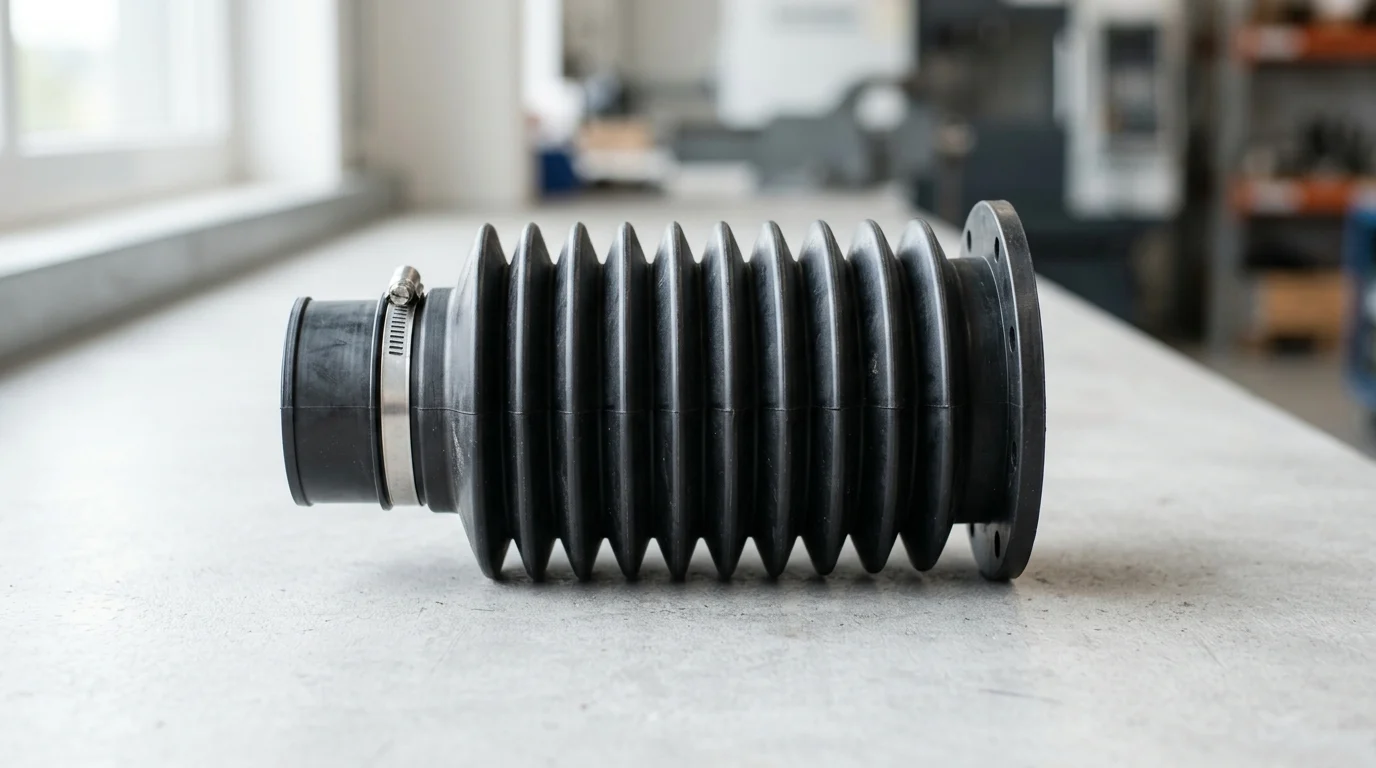
Commercial Impact of Rubber Bellows Seal Life
Rubber bellows seals represent a critical boundary component in industrial high-temperature water systems, such as boiler feed circuits, district heating networks, and large-scale HVAC infrastructure. While the initial procurement cost of these seals may appear negligible compared to the capital expenditure of the pumping equipment, their operational lifespan directly dictates the financial efficiency of the entire plant. Unplanned seal failures introduce cascading economic consequences that far exceed the price of the replacement component.
Managing the lifecycle of a rubber bellows seal requires a precise understanding of how environmental stressors degrade elastomers and face materials over time. Ultimately, translating these technical variables into tangible commercial outcomes allows plant managers to optimize maintenance budgets and maximize equipment uptime.
Downtime and Reliability Risks
The most immediate commercial impact of a premature seal failure is unplanned system downtime. In continuous process industries or municipal district heating applications, a single pump outage can halt production or disrupt service to thousands of end-users. Industry data indicates that mechanical seal failures account for nearly 60% of all centrifugal pump maintenance events.
When a pump operating at 120°C goes offline due to a ruptured bellows, the mean time to repair (MTTR) often extends beyond standard maintenance windows due to the necessary cooling and isolation procedures. The financial penalty of this downtime is severe; lost production and emergency labor can easily exceed $10,000 to $15,000 per hour, rapidly dwarfing the $100 to $300 cost of a standard replacement seal.
Energy Loss and Leakage Costs
Beyond catastrophic rupture, degraded rubber bellows seals generate insidious costs through continuous micro-leakage and thermal energy loss. High-temperature water systems operate under significant pressure, and a compromised seal face or hardened elastomer can allow continuous weeping.
A leakage rate of just 30 drops per minute in a 130°C system results in the loss of approximately 1,200 gallons of treated, heated fluid annually per pump. This is not merely a volumetric loss; it represents a substantial waste of the thermal energy used to heat the water and the chemical additives utilized for corrosion inhibition. Furthermore, leaking hot water flashes to steam, creating a hazardous environment that can degrade adjacent bearing assemblies and electrical components, compounding the overall maintenance burden.
When Proactive Replacement Pays Off
Transitioning from reactive maintenance to a proactive replacement strategy yields quantifiable financial benefits. By analyzing historical failure data and operational hours, plant managers can establish a reliable mean time between failures (MTBF) for rubber bellows seals in specific high-temperature loops.
If data shows an MTBF of 24 months under continuous 110°C operation, scheduling a proactive replacement at the 18-month mark eliminates the risk of catastrophic failure. This planned intervention allows maintenance teams to procure the seal during standard lead times, avoiding premium expedite fees. The cost of replacing a $150 seal during a scheduled shutdown is a fraction of the cost associated with a reactive replacement that requires emergency isolation, secondary damage mitigation, and unplanned production halts.
Rubber Bellows Seal Design for High-Temperature Water
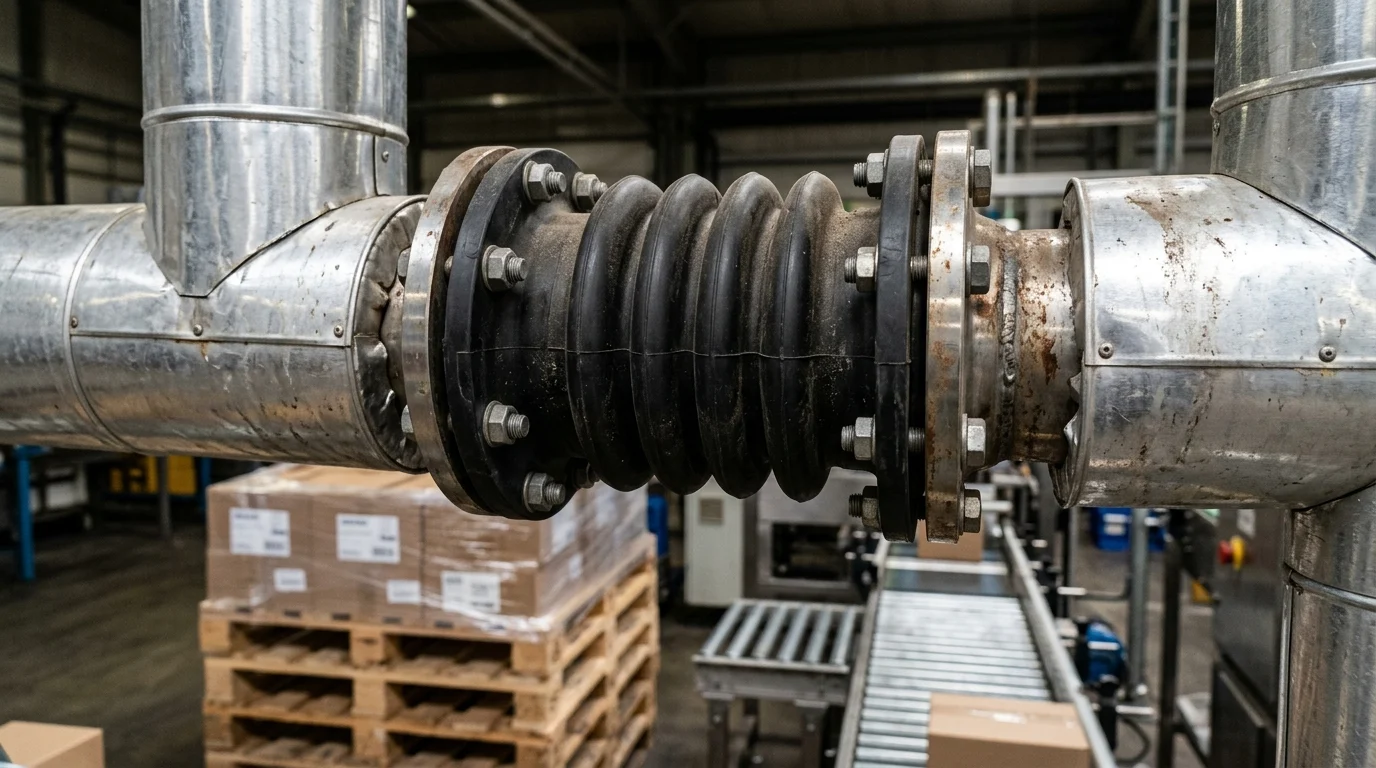
Engineering a rubber bellows seal for high-temperature aqueous environments requires a delicate balance of mechanical design and material science. Unlike pusher-type seals that rely on dynamic O-rings prone to hang-up and fretting, the non-pusher design of a rubber bellows accommodates shaft movement and face wear through the flexing of the elastomer body itself.
In high-temperature water, this design must withstand accelerated thermal degradation, pressure fluctuations, and the aggressive nature of low-lubricity hot water. The structural geometry and mechanical loading mechanisms must be specifically tailored to prevent premature fatigue.
Bellows Geometry and Elastomer Selection
The geometry of the bellows convolution is a primary determinant of the seal’s mechanical resilience. The convolutions must provide sufficient axial flexibility to compensate for up to ±2.0 mm of shaft end-play and thermal expansion without over-stressing the elastomer.
In high-temperature water systems, where thermal growth of the pump shaft is significant during startup and shutdown phases, the bellows must flex repeatedly without experiencing fatigue cracking. The thickness of the bellows wall is optimized to balance pressure resistance with flexibility; a wall that is too thick will transfer excessive stress to the seal faces, while one that is too thin risks ballooning or rupturing under system pressure spikes.
Spring Design and Face Loading
Spring design plays a critical role in maintaining optimal face loading, particularly when the elastomer begins to lose some of its natural resiliency due to thermal aging. Most rubber bellows seals utilize a robust single-coil spring rather than multiple small springs.
This single-spring design is highly advantageous in water systems where dissolved solids or scaling can occur, as it is highly resistant to clogging. The spring, combined with the hydraulic pressure of the fluid, must provide a consistent closing force on the seal faces. Standard face pressure for these applications is typically engineered between 0.1 and 0.17 MPa (15 to 25 psi). This specific loading ensures that the fluid film between the faces is maintained, preventing dry running while minimizing frictional heat generation.
Temperature, Pressure, and Shaft Speed Limits
Establishing strict operating envelopes is non-negotiable for ensuring longevity. High-temperature water presents a unique challenge due to its proximity to the vapor pressure curve. Typical rubber bellows seals are rated for pressures up to 12 to 16 bar (174 to 232 psi) and shaft speeds up to 15 meters per second.
However, as fluid temperature increases, the acceptable pressure and speed limits must be derated to prevent the fluid film from flashing to vapor at the seal faces.
| Parameter | Standard Design Limit | Derated Limit for Hot Water (>110°C) |
|---|---|---|
| Max Pressure | 16 bar (232 psi) | 10 bar (145 psi) |
| Max Shaft Speed | 15 m/s | 10 m/s |
| Face Loading | 0.17 MPa | 0.12 MPa |
Material Choices That Extend Seal Life
The operational lifespan of a rubber bellows seal in high-temperature water is fundamentally dictated by the chemical and thermal stability of its constituent materials. Water above 90°C becomes an aggressive solvent, capable of leaching plasticizers from elastomers and causing rapid hydrolysis in incompatible polymers.
Selecting the optimal combination of bellows elastomer and seal face materials is the most critical engineering decision for extending seal life. A mismatch in material properties can reduce a seal’s lifespan from several years to mere weeks.
EPDM, FKM, Nitrile, and Specialty Compounds
Not all rubber compounds perform equally in hot aqueous environments. Nitrile (NBR), while common in general water service, is strictly limited to temperatures below 90°C; exceeding this threshold causes rapid hardening and embrittlement. Fluorocarbon (FKM), despite its excellent high-temperature rating in oils (up to 200°C), is highly susceptible to hydrolysis in hot water and steam, leading to blistering and catastrophic failure.
For high-temperature water systems, Ethylene Propylene Diene Monomer (EPDM) is the undisputed industry standard. Specifically, peroxide-cured EPDM compounds offer exceptional resistance to hot water and steam, maintaining their elasticity and structural integrity at continuous operating temperatures up to 140°C, and intermittently up to 150°C.
Carbon, Silicon Carbide, and Tungsten Carbide Faces
The tribological pairing of the seal faces must manage the poor lubricating properties of high-temperature water. Carbon-graphite mated against Silicon Carbide (SiC) is the most prevalent and effective combination.
The carbon face provides excellent self-lubricating properties, which is vital during startup or transient conditions when the water film may momentarily flash to steam. Silicon Carbide offers extreme hardness and superior thermal conductivity (approximately 120 W/mK), which rapidly dissipates frictional heat away from the seal interface, suppressing localized boiling. In systems with abrasive suspended solids, a hard-on-hard pairing such as SiC against Tungsten Carbide (TC) may be required, though this necessitates stricter environmental controls.
Material Comparison by Temperature Margin and Wear
Evaluating materials based on their temperature margins and wear characteristics allows engineers to specify seals that outlast standard OEM components. A peroxide-cured EPDM bellows paired with Carbon/SiC faces provides the highest safety margin for high-temperature applications.
| Elastomer / Face Pairing | Max Continuous Temp (Water) | Hydrolysis Resistance | Primary Failure Mode in Excess Temp |
|---|---|---|---|
| NBR / Carbon vs Ceramic | 90°C | Moderate | Elastomer embrittlement and cracking |
| FKM / Carbon vs SiC | 100°C | Poor | Elastomer blistering and volume swell |
| EPDM (Peroxide) / Carbon vs SiC | 140°C | Excellent | Gradual loss of compression set |
| EPDM (Peroxide) / SiC vs SiC | 140°C | Excellent | Face galling if fluid film flashes |
Installation, Commissioning, and Maintenance
Even the most meticulously engineered and materially optimized rubber bellows seal will fail prematurely if subjected to improper installation, careless commissioning, or neglected maintenance. Precision in mechanical assembly and rigorous control of the seal’s operating environment are paramount.
Industry studies consistently reveal that over 40% of early mechanical seal failures are directly attributable to procedural errors during the installation and startup phases. Mitigating these risks requires strict adherence to mechanical tolerances and fluid quality protocols.
Shaft, Seal Chamber, and Alignment Checks
Prior to installing the seal, the mechanical condition of the pump must be rigorously verified against strict dimensional tolerances. Shaft runout must be measured using a dial indicator and should not exceed 0.05 mm (0.002 inches) Total Indicator Reading (TIR). Excessive runout forces the bellows to absorb excessive radial movement, leading to rapid fatigue.
Furthermore, the surface finish of the shaft or sleeve where the bellows seats must be smooth enough to prevent tearing during installation but possess enough friction to prevent rotational slippage; a finish of 0.8 to 1.2 µm Ra is typically specified. The seal chamber must be entirely free of burrs, sharp edges, and residual debris.
Flush, Cooling, and Water Quality Controls
Controlling the environment within the seal chamber is critical for high-temperature applications. When pumping water near its boiling point, localized frictional heat at the seal faces can cause the fluid film to vaporize, resulting in dry running and immediate face damage.
Implementing an appropriate API piping plan, such as Plan 11 (bypass flush) or Plan 21 (cooled bypass flush), ensures adequate heat removal and maintains the fluid in a liquid state. Water quality is equally critical; Total Dissolved Solids (TDS) should ideally be maintained below 500 ppm to prevent the precipitation of scale on the seal faces and the internal diameter of the bellows, which can restrict flexibility and cause the seal to hang up.
Leakage Tracking and Maintenance Steps
Effective maintenance relies on accurate monitoring of seal performance over time. A mechanical seal is designed to leak a microscopic amount of fluid to maintain face lubrication, which typically evaporates instantly in high-temperature systems. Visible liquid leakage, however, indicates a compromised seal.
Maintenance teams should establish baseline leakage rates and track deviations. A normal vapor transition might account for 2 to 5 ml per hour, whereas steady dripping signals an impending failure. Integrating predictive maintenance technologies, such as vibration monitoring, can detect the high-frequency acoustic emissions associated with face flashing or dry running before visible leakage occurs. Vibration thresholds exceeding 4.5 mm/s RMS should trigger an immediate inspection of the seal and flush system.
Selecting the Right Rubber Bellows Seal
Selecting the optimal rubber bellows seal for a high-temperature water application requires a comprehensive evaluation that extends beyond basic dimensional matching. Procurement and engineering teams must collaborate to balance technical specifications with lifecycle economics, regulatory compliance, and supply chain reliability.
A holistic selection process ensures that the chosen seal not only fits the physical envelope of the pump but also delivers the required operational longevity and return on investment.
Specification and Sourcing Criteria
The specification process begins with defining the exact operating parameters: fluid temperature, suction and discharge pressures, shaft speed, and water chemistry. Standard dimensional protocols, such as EN 12756 (formerly DIN 24960), dictate the mounting dimensions, ensuring interchangeability across various pump manufacturers.
When sourcing replacement seals, it is vital to specify the exact elastomer curing process (e.g., peroxide-cured EPDM rather than sulfur-cured) to guarantee high-temperature performance. For large-scale operations, minimum order quantities (MOQs) must be considered; while standard sizes are readily available, custom elastomer blends or non-standard face materials may require MOQs of 50 to 100 units, necessitating strategic inventory planning.
Lifecycle Cost and Availability
The true cost of a rubber bellows seal is not its initial purchase price, but its Total Cost of Ownership (TCO) over the lifespan of the pumping equipment. A standard sulfur-cured EPDM seal might cost $80 and last 12 months, while a premium peroxide-cured EPDM seal with optimized SiC faces might cost $250 but operate reliably for 36 months.
Factoring in the labor costs of replacement and the financial impact of downtime, the premium seal offers a significantly lower TCO. Furthermore, supply chain availability must be evaluated. Standard seals typically have lead times of 1 to 2 weeks, whereas specialized configurations can take 8 to 12 weeks, underscoring the need for robust vendor relationships and adequate on-site critical spares inventory.
Compliance and Application Fit
Finally, the selected seal must adhere to all relevant industry standards and regulatory compliance requirements. In systems where high-temperature water intersects with potable water networks, or in food and beverage processing facilities, the elastomer must possess specific certifications.
Materials may need to comply with WRAS (Water Regulations Advisory Scheme) in the UK, FDA guidelines in the United States, or NSF/ANSI 61 standards for drinking water system components. These certifications ensure that the elastomer does not leach harmful volatile organic compounds (VOCs) or alter the taste and odor of the water. Ensuring the manufacturer operates under ISO 9001 quality management systems guarantees material traceability and consistent dimensional accuracy across production batches.
Key Takeaways
- Treat rubber bellows seals as reliability-critical components because mechanical seal failures account for nearly 60% of centrifugal pump maintenance events.
- Compare seal replacement cost with downtime exposure, since a $100 to $300 seal can trigger losses of $10,000 to $15,000 per hour during an unplanned outage.
- Track operating hours and failure history to establish MTBF, then schedule replacement before the expected failure point, such as at 18 months for a 24-month failure pattern.
- Investigate small leaks immediately because 30 drops per minute in a 130°C system can waste about 1,200 gallons of treated heated water per pump each year.
- Select elastomer and face materials based on temperature, pressure, water chemistry, and duty cycle rather than purchase price alone.
Frequently Asked Questions
Why do rubber bellows seals fail faster in high-temperature water systems?
Heat accelerates elastomer hardening, compression set, and chemical degradation. In pressurized hot water loops, poor lubrication, thermal cycling, and water treatment chemicals can also damage seal faces and reduce service life.
How costly is an unplanned rubber bellows seal failure?
Although a standard seal may cost only $100 to $300, unplanned downtime can exceed $10,000 to $15,000 per hour when production loss, emergency labor, cooling, isolation, and secondary damage are included.
When should a rubber bellows seal be replaced proactively?
Use operating history to estimate mean time between failures. If seals typically last 24 months in a 110°C loop, replacing them around 18 months during planned shutdowns can reduce the risk of sudden failure.
Can minor leakage from a rubber bellows seal be ignored?
No. Even 30 drops per minute can waste about 1,200 gallons of treated hot water annually per pump, while also losing thermal energy and creating steam hazards near bearings and electrical components.
What operating factors most affect rubber bellows seal life?
Key factors include water temperature, pressure, pump alignment, shaft runout, seal face material, elastomer compatibility, start-stop frequency, dry running risk, and the chemistry of treated boiler or heating water.

Post time: Sep-26-2026