


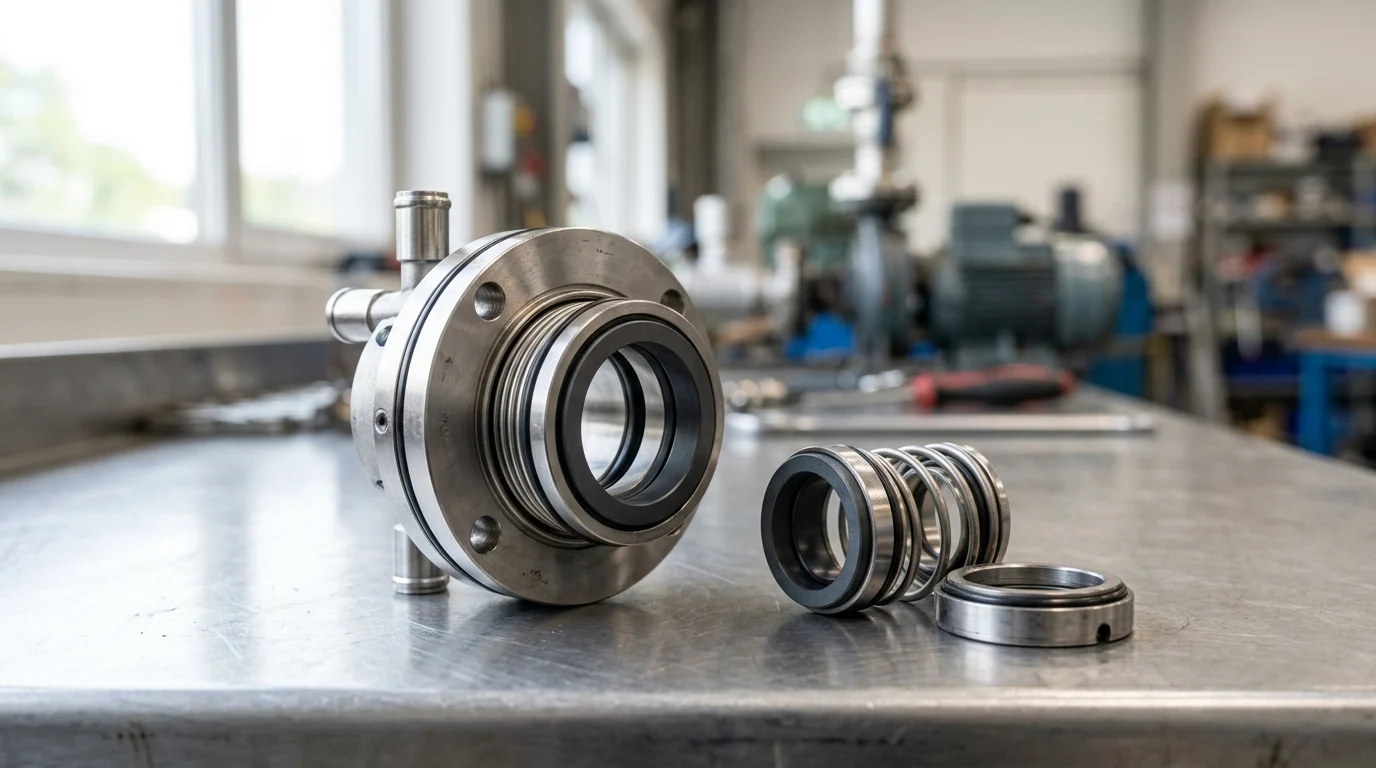
Strategic Value of Cartridge Mechanical Seals
The transition from traditional packing and component seals to cartridge mechanical seals represents an important evolution in fluid handling asset management. As continuous process plants face increasing pressure to maximize uptime and optimize operational expenditures, the mean time to repair (MTTR) has become a critical performance metric for rotating equipment. While not suitable for every application, cartridge mechanical seals are engineered specifically to address the vulnerabilities of field assembly, providing a pre-engineered, self-contained package that slides directly onto the pump shaft.
By eliminating the intricate measurements previously required at the pump volute, maintenance teams can execute more predictable pump replacements across complex industrial systems. This strategic transition minimizes equipment outage durations and elevates the baseline reliability of the pumping fleet. Understanding the value of these sealing systems requires examining their impact on downtime exposure, maintenance consistency, and operational safety.
Reducing pump outage exposure
Downtime in continuous process industries, such as petrochemical refining, pulp and paper, or power generation, carries severe financial penalties. Unplanned process interruptions can often cost operators significant sums, sometimes reaching tens of thousands of dollars per hour, depending on the plant’s throughput and commodity pricing. When a centrifugal pump fails due to catastrophic seal leakage, isolating the unit, dismantling the casing, and replacing the seal dictates the critical path of the maintenance outage.
Cartridge mechanical seals compress this exposure window. By bypassing the manual measurements and face alignment required for component seals, a cartridge unit can be installed in a fraction of the time. This reduction in mechanical labor directly translates to minimized process interruption, allowing operations to resume faster and significantly reducing the financial impact of the pump outage.
Improving maintenance consistency
The reliability of any mechanical seal is heavily dependent on the precision of its installation. Reliability estimates indicate that a significant percentage of premature component seal failures are directly attributable to human error during installation. Handling sensitive lapped seal faces in active plant environments introduces risks of particulate contamination, fingerprint oils, and microscopic scratches that compromise the fluid film.
Cartridge seals resolve this vulnerability by isolating the critical sealing components within a protective gland and sleeve assembly at the factory. Technicians do not need to touch the primary or mating faces, nor do they need to calculate spring working lengths. This modular approach reduces skill-level dependencies, ensuring that an installation performed during a night shift achieves the same operational reliability as one performed under optimal, controlled conditions.
Supporting safety and reliability goals
Modern industrial facilities operate under strict environmental and safety regulations regarding fugitive emissions. Mechanical seals are the primary defense against the release of volatile organic compounds (VOCs) and hazardous fluids into the atmosphere. Regulatory frameworks, such as the EPA Method 21 in the United States, utilize specific leak detection thresholds—frequently set at 500 parts per million (ppm) for standard hazardous air pollutants. It is important to clarify that 500 ppm is a common detection threshold rather than a universal regulatory limit; actual compliance depends on specific facility permits and the broader framework of the Clean Air Act.
Cartridge mechanical seals, particularly dual-cartridge configurations operating under API 682 guidelines, provide the containment necessary to meet these targets. By ensuring factory alignment and offering integrated environmental control ports for barrier or buffer fluids (e.g., API Piping Plans 52 or 53A), cartridge seals maintain stable fluid films. This stability prevents the erratic face loading that causes emission spikes, thereby supporting corporate safety mandates and ensuring compliance with stringent environmental legislation.
Design Features That Enable Faster Pump Maintenance
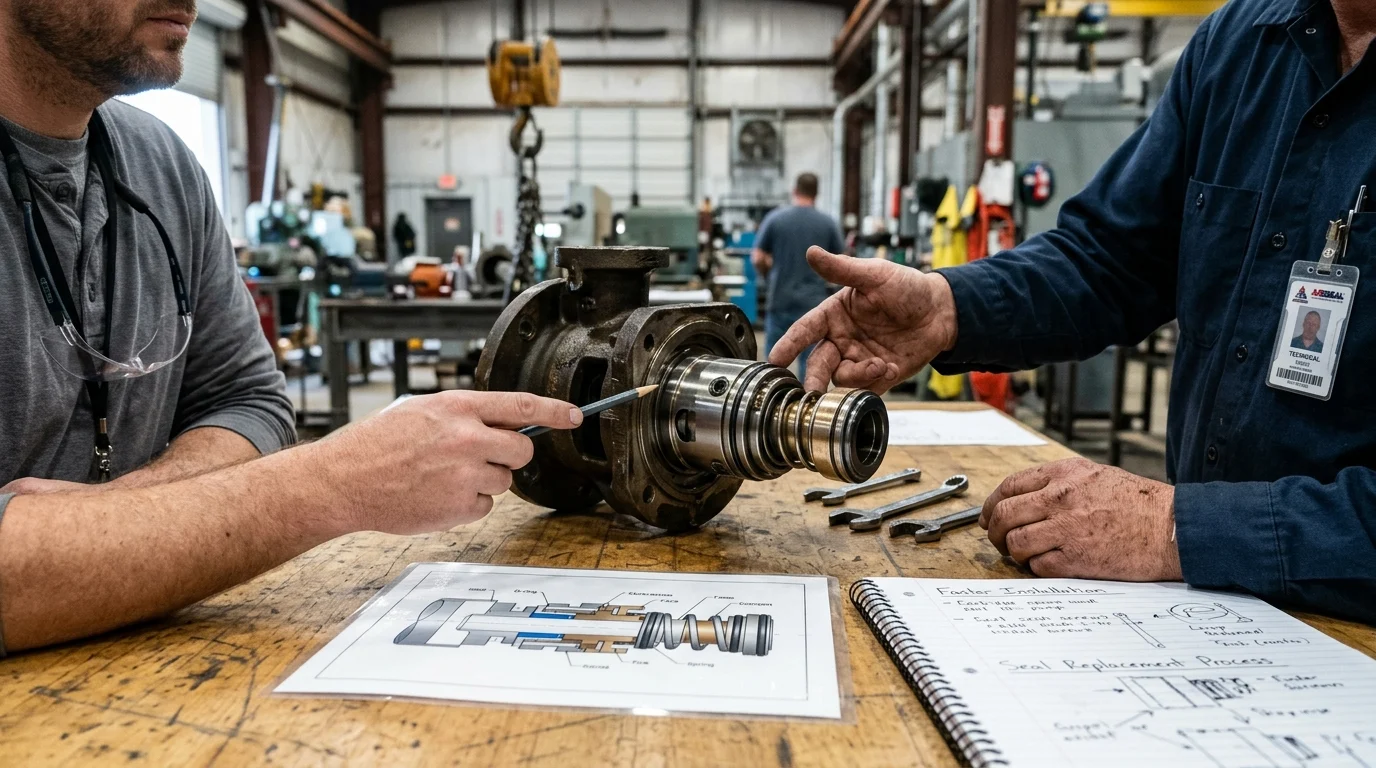
The operational advantages of cartridge mechanical seals are rooted in their integrated internal architecture. Unlike legacy sealing methods that rely on the pump’s stuffing box to house and align discrete parts, a cartridge seal functions as an independent, self-sufficient module. It integrates the primary seal faces, mating rings, secondary elastomer seals, springs, shaft sleeve, and the outer gland plate into a single cohesive unit.
This integrated design shifts the burden of precision from the field technician to the manufacturing facility. By controlling the geometric relationship between all moving parts before the seal ever leaves the factory, manufacturers can guarantee optimal performance parameters. The specific design features that enable rapid pump maintenance revolve around preassembly, fixed compression, and rigorous material optimization.
Preassembled seal construction
A traditional component mechanical seal can consist of 15 to 20 loose, individual parts that must be installed sequentially onto the pump shaft. This includes sliding on O-rings, positioning the rotary seal head, setting the spring tension, and bolting the stationary gland, all while navigating the confined space of a pump frame. While skilled technicians successfully execute these installations daily, the multi-step process carries inherent risks of component misalignment or elastomer damage.
The preassembled construction of a cartridge seal condenses these variables into a single unit. The entire assembly slides over the shaft as one cohesive block. The technician simply bolts the gland to the pump casing and tightens the drive collar set screws to the shaft. This consolidated design entirely eliminates the risk of omitting internal components or assembling them in the incorrect orientation.
Factory-set compression and alignment
Proper spring compression is the most critical variable in mechanical seal longevity. If the springs are under-compressed, the seal faces will separate under pressure, causing massive leakage. If over-compressed, the faces will generate excessive frictional heat, leading to thermal cracking and rapid failure.
Cartridge seals eliminate the need for manual field calculations through the use of factory-installed setting clips or centering blocks. These external clips lock the rotary and stationary components into perfect alignment, dictating the spring compression to within exacting manufacturing tolerances. Once the seal is bolted to the casing and secured to the shaft, the technician simply removes the clips before starting the pump. This guarantees that the face loading is mathematically precise every single time.
Material, face, elastomer, and metallurgy selection
Because cartridge seals are engineered as complete assemblies, manufacturers pre-match the internal metallurgy and face materials for specific fluid profiles. This eliminates the trial-and-error selection process during emergency replacements, allowing maintenance teams to procure and install the correct seal faster. High-performance ceramics and advanced elastomers are pre-configured to handle aggressive chemicals, abrasive slurries, and extreme temperatures.
For instance, primary faces are often constructed from Silicon Carbide (SiC) or Tungsten Carbide (TC) to resist wear, while secondary O-rings utilize FKM or FFKM (perfluoroelastomers) capable of withstanding operating temperatures up to 327 degrees Celsius (620 degrees Fahrenheit). The table below highlights the performance metrics of common cartridge seal face materials.
| Material | Hardness (Knoop) | Max Operating Temp (°C) | Thermal Conductivity (W/mK) |
|---|---|---|---|
| Carbon Graphite | 100 – 150 | 260 | 10 – 15 |
| Silicon Carbide (SiC) | 2500 – 2800 | 1400 | 120 – 130 |
| Tungsten Carbide (TC) | 1800 – 2200 | 400 | 80 – 100 |
(Note: The 1400°C maximum operating temperature for SiC reflects the thermal limit of the raw ceramic face material only. In practical cartridge seal applications, the maximum temperature is strictly constrained by the secondary elastomer limits, which generally max out between 260°C and 327°C. Readers should not expect a standard cartridge seal to operate near the raw ceramic limits.)
Cartridge Seals vs Component Mechanical Seals
When evaluating sealing technologies for industrial pumps, the debate heavily centers on the comparison between cartridge seals and component mechanical seals. While component seals have been the historical standard and remain prevalent in light-duty or highly cost-sensitive applications, modern industrial practices increasingly favor cartridge configurations for process-critical assets.
The choice between the two formats is not merely a matter of hardware preference; it dictates the facility’s entire approach to equipment maintenance, inventory management, and lifecycle cost analysis. A thorough comparison of installation complexity, shaft protection, and total cost of ownership reveals why the shift toward cartridge configurations has accelerated in recent decades.
Installation time and complexity
The disparity in installation complexity between the two seal types is significant. Installing a component seal requires the technician to dismantle the pump, clean the stuffing box, install the stationary seat, measure the exact location for the rotary unit using scribe lines, calculate the compressed length of the springs, and carefully slide the rotary unit into position. This process demands a clean environment, specialized tools, and extensive training.
While the slide-on, bolt-down methodology of a cartridge seal simplifies the process, it is important to note that preassembled cartridges are heavier and bulkier than individual component parts. In highly confined spaces, this added weight may require lifting equipment, which can temporarily offset some of the speed advantages. However, in most scenarios, bypassing complex geometry calculations turns a highly specialized procedure into a routine mechanical task. This simplicity is particularly valuable during emergency breakdowns, where the pressure to restore production can lead to rushed measurements in component seal installations.
Shaft preparation and alignment requirements
A notable drawback of component mechanical seals is their impact on the pump shaft itself. Because the dynamic O-ring of a component seal must slide back and forth slightly to compensate for face wear and shaft runout, it can cause fretting corrosion. Over time, this microscopic movement carves a groove into the pump shaft or the pump’s replaceable sleeve, adding substantial repair time and costs while requiring complete pump disassembly.
Cartridge mechanical seals inherently solve the fretting problem by utilizing their own internal shaft sleeve. The dynamic elastomer moves against the seal’s own hardened sleeve rather than the pump shaft. The entire cartridge assembly is statically sealed to the pump shaft via an O-ring that does not move dynamically. This fundamental design difference preserves the integrity of the capital equipment and eliminates the recurring delays associated with shaft metallizing or replacement.
Cost, reliability, and lifecycle trade-offs
From a pure procurement standpoint, a cartridge mechanical seal carries a higher initial purchase price. While a general industry estimate suggests a 1.5 to 3 times cost premium over an equivalent component seal, this multiplier varies significantly by manufacturer, geographic region, and required metallurgy. For procurement departments focused solely on upfront line-item costs, this premium can seem prohibitive. However, engineering and reliability teams evaluate these assets based on Total Cost of Ownership (TCO).
When factoring in the reduction in MTTR, the elimination of shaft fretting damage, and the extended Mean Time Between Failures (MTBF) achieved through standardized installation, the lifecycle cost of a cartridge seal is often lower. The breakeven point for a cartridge seal upgrade is frequently realized after the first avoided failure or the first maintenance cycle that does not require shaft repair.
| Parameter | Component Mechanical Seal | Cartridge Mechanical Seal |
|---|---|---|
| Initial Hardware Cost | Low | Moderate to High (1.5x – 3x premium) |
| Installation Time | 4 – 6 Hours | 1 – 2 Hours |
| Risk of Installation Error | High (Requires exact measurements) | Minimal (Factory pre-set) |
| Pump Shaft Fretting Risk | High (Dynamic O-ring on shaft) | None (Features internal sleeve) |
| Environmental Porting | Requires custom drilled pump casing | Integrated into seal gland |
(Note: Installation times are estimates based on standard centrifugal pump configurations and may vary depending on equipment accessibility and technician experience.)
Standardizing Cartridge Mechanical Seals Across Pump Fleets
While upgrading individual problem pumps to cartridge seals provides localized relief, progressive industrial facilities are achieving significant reliability gains by standardizing cartridge mechanical seals across their entire pump fleets. Fleet-wide standardization transforms seal replacement from a reactive troubleshooting exercise into a predictable workflow, directly accelerating individual pump repairs by ensuring the right parts and procedures are always ready.
Implementing a standardized sealing program requires strategic alignment between maintenance, engineering, and procurement departments. By systematically auditing the pump population, establishing universal piping plans, and rationalizing inventory, plants can drastically reduce complexity and build a resilient fluid handling infrastructure.
Auditing pump populations and failure history
The first step in standardizing a fleet is conducting a comprehensive audit of the existing pump population and analyzing historical failure data. Reliability engineers typically utilize a Pareto analysis to identify ‘bad actors’—specific pumps or systems that consume a disproportionate amount of maintenance resources. Pumps demonstrating a Mean Time Between Failures (MTBF) of less than 12 months are prime candidates for immediate cartridge seal upgrades.
During the audit, engineers document stuffing box dimensions, shaft sizes, fluid properties, and operating pressures across the plant. This data allows the facility to identify dimensional commonalities. Often, a plant with 200 distinct centrifugal pumps may find that a large majority can be serviced by just three or four standard cartridge seal sizes. However, this 80 percent consolidation metric is an optimistic scenario. Standardization frequently encounters practical limits; it often fails or requires exceptions when dealing with positive displacement pumps, vertical turbines, or severe service applications that demand custom-engineered sealing solutions.
Building a repeatable installation workflow
Standardization extends beyond the seal hardware to the environmental controls supporting it. Cartridge seals feature robust gland plates that can be pre-drilled and tapped for standardized API 682 piping plans. By establishing a repeatable installation workflow, a facility can dictate that every hazardous chemical pump receives a dual cartridge seal with an API Plan 52 (unpressurized buffer fluid) or Plan 53A (pressurized barrier fluid) system.
This procedural consistency means that pipefitters and mechanics execute the exact same tubing connections, flush port alignments, and quench setups regardless of the pump’s make or model. A repeatable workflow eliminates the ad-hoc piping modifications that often clutter process units, resulting in faster installations, easier operator inspections, and more reliable thermal management of the seal faces.
Managing spare seals, repair kits, and inventory
One of the most immediate financial benefits of standardizing cartridge seals is the substantial impact on warehouse inventory. Facilities utilizing component seals must stock hundreds of individual SKUs, including various sizes of springs, O-rings, faces, and set screws. If a single component is out of stock, the entire pump repair is delayed.
By transitioning to a modular cartridge seal program, plants can consolidate their spare parts. Standardizing on common shaft increments (e.g., 1.375 inches, 1.875 inches, and 2.125 inches) allows a single cartridge seal SKU to fit multiple pump models from different OEMs. This ensures that complete, ready-to-install units are always available, eliminating procurement delays and accelerating the physical replacement process while freeing up working capital.
When to Choose Cartridge Mechanical Seals
Despite their numerous advantages, cartridge mechanical seals are not a universal solution for every fluid handling application. Engineering professionals must apply rigorous selection criteria to determine where the premium cost of a cartridge seal delivers a justifiable return on investment. The decision matrix hinges on a careful evaluation of operating parameters, equipment limitations, and supply chain realities.
Proper application of sealing technology requires balancing the desired reliability outcomes against practical constraints. By understanding exactly when to deploy cartridge seals—and recognizing the specific scenarios where alternative sealing methods are more appropriate—facilities can optimize their maintenance budgets without compromising safety or production capacity.
Operating conditions that justify cartridge seals
Cartridge seals are highly effective in demanding operating conditions where failure carries high consequences. Applications involving high system pressures (typically exceeding 300 PSI), extreme temperatures, or highly volatile, toxic, and flammable fluids demand the structural integrity and perfect alignment that only a factory-assembled cartridge can provide. In these environments, the structural robustness of the cartridge gland prevents the catastrophic blowouts that can occur with improperly seated component seals.
Furthermore, process-critical pumps—such as API 610 compliant units in refinery charge applications or boiler feed pumps in power generation—are natural fits for cartridge technology. Because the downtime cost for these assets dwarfs the price of the seal, the investment in a high-performance, dual-cartridge sealing system with integrated barrier fluid management is an operational necessity rather than a discretionary expense.
When alternatives may be a better fit
Conversely, there are specific scenarios where cartridge seals may not be the optimal choice. For standard, light-duty water applications utilizing inexpensive ANSI or end-suction centrifugal pumps, the economics may not align. If the replacement cost of the entire pump and motor assembly is less than $1,000, installing a premium cartridge seal is difficult to justify financially. In these cases, a basic component seal is often the most pragmatic choice. Similarly, traditional braided packing remains highly effective and economically superior for large-diameter water transport pumps or slurry applications where minor, controlled leakage is acceptable.
Additionally, older or highly specialized equipment may present insurmountable spatial constraints. Some legacy pumps feature extremely tight stuffing boxes with radial clearances of less than 0.375 inches. A standard cartridge seal, which requires space for its internal sleeve and robust gland, simply will not fit into these dimensions without expensive, custom machining of the pump casing—a modification that may weaken the pressure boundary of the equipment.
Balancing reliability, safety, cost, and lead time
The final determination often rests on balancing reliability goals with logistical realities. Standard, off-the-shelf cartridge seals for common shaft sizes can be procured with lead times of 1 to 3 days, making them highly responsive to emergency breakdowns. However, highly customized cartridge seals requiring exotic metallurgies (such as Alloy 20 or Hastelloy) or engineered for non-standard shaft dimensions can carry lead times of 4 to 8 weeks. Plant engineers must weigh these lead times against the safety requirements of the process fluid and the historical failure rate of the asset.
Ultimately, the decision to upgrade to cartridge mechanical seals should synthesize strategic operational goals with practical maintenance realities. Rather than attempting a wholesale plant conversion, facilities should consider a phased rollout plan: begin by targeting the top 20 percent of “bad actor” pumps, establish a standardized decision checklist for engineers (weighing MTTR, fluid hazards, and shaft fretting history), and gradually expand the program as component seals naturally reach the end of their lifecycle. By systematically deploying these seals on critical assets and rationalizing inventory, industrial facilities can establish a robust foundation for sustained, efficient, and leak-free operations.
Key Takeaways
- Use cartridge mechanical seals when pump downtime is costly, because their preset design can reduce seal replacement labor and shorten outage windows.
- Specify cartridge seals for critical pumps where installation consistency matters, since factory-set components reduce errors in face handling, alignment, and spring compression.
- Evaluate seal selection against fluid properties, shaft size, pressure, temperature, and operating speed before replacing component seals with cartridge units.
- Standardize cartridge seal designs across similar pump assets to simplify spare parts planning and improve maintenance team repeatability.
- Consider cartridge mechanical seals as part of a reliability and emissions-control strategy, especially where leakage of VOCs or hazardous fluids must be minimized.
Frequently Asked Questions
How do cartridge mechanical seals shorten pump replacement time?
They arrive as pre-assembled units with the sleeve, gland, faces, and springs already set. Technicians can slide the cartridge onto the pump shaft without measuring spring compression or handling seal faces, reducing installation steps and outage duration.
Why are cartridge seals more consistent than component seals?
Cartridge seals reduce field assembly variables. Critical dimensions are preset at the factory, and the lapped faces are protected, which lowers the risk of contamination, incorrect compression, or installation damage during maintenance.
Are cartridge mechanical seals suitable for every pump application?
No. They are highly effective for many industrial pumps, but seal selection still depends on fluid, pressure, temperature, shaft size, speed, and operating environment. A supplier such as Victor Seals can help match the correct seal design.
How do cartridge seals support plant safety goals?
By improving installation accuracy and sealing reliability, cartridge seals help reduce leakage risks from hazardous or volatile fluids. This supports cleaner operation and helps facilities manage fugitive emissions requirements.
What industries benefit most from faster seal replacement?
Continuous-process industries such as petrochemical, power generation, pulp and paper, marine, and water treatment benefit strongly because every hour of pump downtime can affect production, safety, and maintenance costs.

Post time: Sep-23-2026