


Why Do Cartridge Seals Matter Strategically in Flygt Wastewater Pump
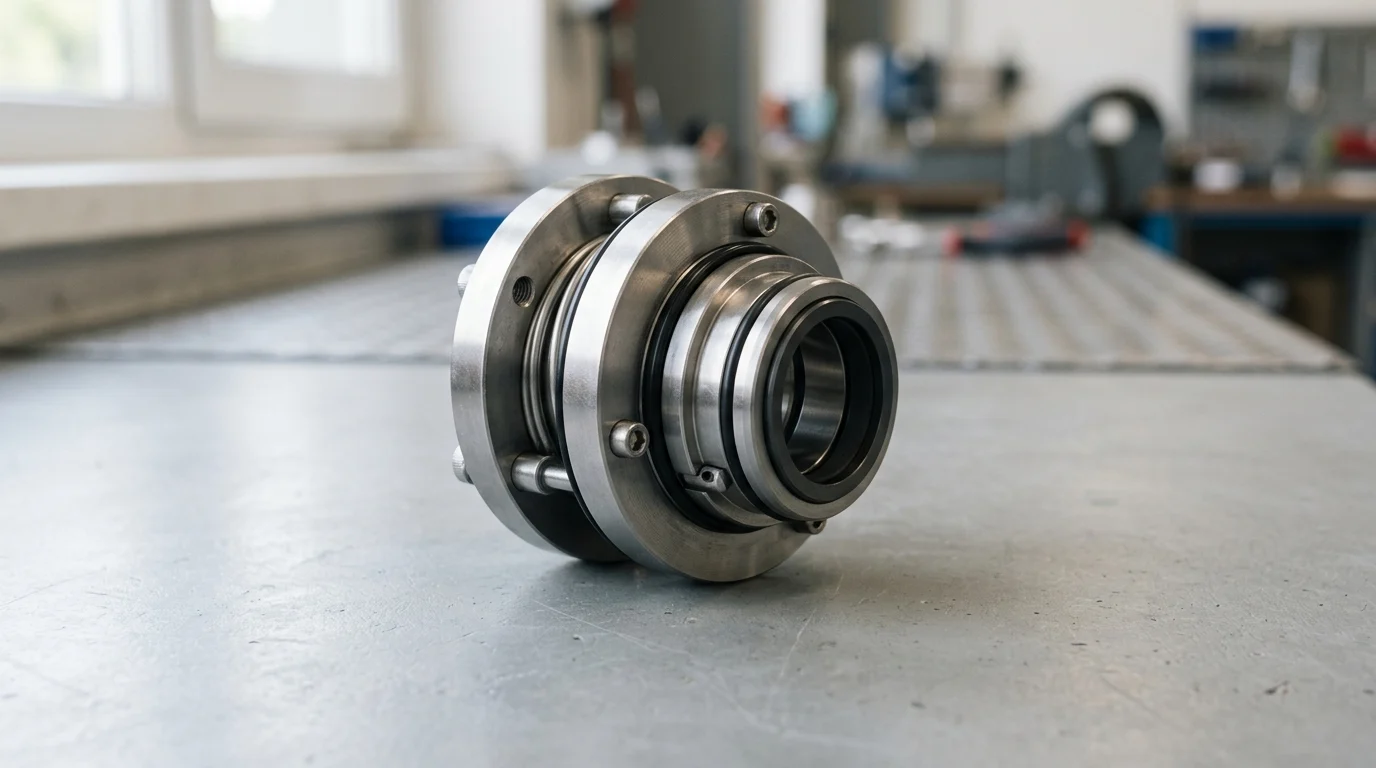
Flygt wastewater pumps operate in some of the most demanding fluid handling environments, routinely processing raw sewage, industrial effluent, and abrasive slurries. Within these submersible units, the mechanical seal acts as the primary barrier preventing the pumped media from breaching the motor housing. Given the inherent complexities of submersible pump design, cartridge seals have become the standard solution, offering a pre-assembled, pre-set unit that eliminates the need for manual setting of spring compression and face alignment.
Strategically, the reliability of a Flygt pump is inextricably linked to the integrity of its cartridge seal. Operating at pressures that can exceed 15 bar and handling fluids with high concentrations of suspended solids, these seals must maintain absolute dimensional stability. A failure in the sealing mechanism does not merely result in external leakage; it directly causes catastrophic motor flooding, stator short-circuits, and bearing destruction, transforming a routine maintenance event into a costly capital repair.
How do Cartridge Seals influence downtime, leakage risk, and
The implementation of correctly specified cartridge seals exerts a profound influence on facility uptime and overall Mean Time Between Failures (MTBF). In a standard municipal wastewater application, an optimized cartridge seal can extend the MTBF from a baseline of 4,000 hours to over 15,000 hours. By utilizing a pre-assembled cartridge, maintenance personnel eliminate installation variables such as incorrect working length or uneven spring loading, which are responsible for up to 40% of premature seal failures in field replacements.
Leakage risk is mitigated through the cartridge’s integrated design, which houses the dynamic and static faces, elastomers, and gland plate in a single unit. In submersible Flygt pumps, a compromised seal leads to moisture ingress into the buffer fluid chamber. If the secondary seal also fails, the leakage breach reaches the dielectric oil or directly into the motor windings. By standardizing on high-quality cartridge seals with dual-face configurations, operators significantly reduce the probability of volumetric efficiency drops and catastrophic stator flooding.
Which failure patterns indicate that seal selection, not only
Analyzing failure morphologies is critical for determining whether a seal failed due to end-of-life wear or incorrect initial selection. Thermal cracking or heat checking on Silicon Carbide (SiC) faces typically indicates vaporization of the fluid film, often occurring when localized temperatures spike above 150°C due to inadequate flush plans or dry-running conditions. If this pattern emerges, upgrading to a seal with enhanced heat dissipation properties or modifying the environmental controls is necessary.
Abrasive wear patterns, characterized by deep scoring or grooving on the seal faces, suggest that the chosen face materials are incompatible with the fluid’s particulate load. In applications where the slurry exceeds 5% solids by weight, standard Carbon versus Ceramic faces will deteriorate rapidly, necessitating a shift to Tungsten Carbide (TC) pairings. Additionally, elastomer extrusion—where O-rings are forced out of their grooves—signals that the operating pressure has exceeded the elastomer’s durometer rating, often requiring an upgrade from 70 Shore A to 90 Shore A materials for pressures above 10 bar.
What Should Be Defined Before Selecting Cartridge Seals for Flygt
Transitioning from reactive maintenance to a proactive reliability strategy requires rigorous specification gathering before procuring replacement cartridge seals. Blindly ordering a “like-for-like” replacement often perpetuates existing failure cycles if the original seal was improperly specified for the current operating conditions. Engineering and maintenance teams must systematically define the mechanical and environmental parameters to ensure the new cartridge seal delivers maximum operational longevity.
Which pump model, shaft size, motor rating, and installation
The foundation of seal selection begins with exact pump nomenclature and dimensional data. Flygt submersible pumps span numerous series—such as the 3000 series, including common models like the 3153, 3202, and 3301—each featuring distinct housing dimensions and shaft profiles. Shaft sizes in these units typically range from 20mm up to 90mm, frequently utilizing a stepped shaft design (e.g., a 35mm inner seal stepping up to a 45mm outer seal) to accommodate the dual-seal configuration required for submersible safety.
Motor rating (measured in kW) and rotational speed (typically 1450 RPM or 2900 RPM for 50Hz networks) dictate the peripheral speed at the seal faces. High peripheral speeds generate greater frictional heat, influencing both face material selection and the necessary clearances within the seal chamber. Furthermore, installation constraints, including the depth of the stuffing box and the orientation of the pump (vertical or horizontal), must be verified to ensure the cartridge gland plate mates perfectly with the existing bolt circle without requiring field modifications.
How should seal faces, elastomers, springs, and metal components
Material selection dictates the chemical and mechanical resilience of the cartridge seal. Seal faces must be paired based on lubricity and abrasion resistance. Silicon Carbide (SiC) paired with SiC is the industry standard for general wastewater, offering excellent hardness and thermal conductivity. However, in heavy sludge applications, Tungsten Carbide (TC) against TC is preferred due to its superior fracture toughness and resistance to brittle failure under heavy mechanical shock.
Secondary sealing elements—the elastomers—must be chemically compatible with the pumped media. Fluoroelastomers like Viton (FKM) are widely specified for their broad chemical resistance and temperature tolerance up to 200°C. For applications involving high pH caustics or specific solvents, Ethylene Propylene Diene Monomer (EPDM) or Perfluoroelastomers (FFKM) may be required. Finally, the metallurgical components, including springs and drive pins, should default to 316 Stainless Steel, though highly corrosive environments may necessitate upgrades to Hastelloy C-276 to prevent stress corrosion cracking in the spring mechanisms.
Which operating data should be collected before specifying repla
Accurate operating data acts as the definitive boundary condition for seal specification. Teams must record the maximum and normal operating pressures within the seal chamber; while typical municipal applications may operate at 2 to 5 bar, deep-well or high-head lift stations can subject the seal to pressures exceeding 12 bar. The specific gravity and dynamic viscosity (measured in centipoise, cP) of the fluid directly impact the thickness and stability of the lubricating fluid film between the seal faces.
Environmental variables such as fluid pH (typically ranging from 4.0 to 10.0 in wastewater) and operating temperature profiles must be documented. Crucially, the concentration of total suspended solids (TSS), measured in milligrams per liter (mg/L) or percentage by weight, dictates the necessity for specialized seal designs. High solids content often requires features like smooth-profiled glands to prevent material packing, or specialized spring configurations outside the fluid path to prevent clogging and subsequent loss of face tracking.
How Should Operators Compare OEM and Aftermarket Cartridge Seals for
Procurement and reliability engineers frequently face the decision of sourcing replacement cartridge seals directly from the Original Equipment Manufacturer (OEM) or from engineered aftermarket suppliers. While OEM seals guarantee precise dimensional fit and preserve initial warranty conditions, aftermarket options often present opportunities for value-added engineering and significant cost reductions. Evaluating these options requires a structured approach focused on Total Cost of Ownership (TCO) rather than mere acquisition price.
Which technical comparison table should evaluate fit, materials
To objectively evaluate seal options, maintenance teams should utilize a standardized technical comparison matrix. This prevents budget-driven decisions from compromising mechanical reliability. The evaluation must scrutinize dimensional tolerances, material grades, and logistical variables.
| Feature | OEM Specification | Engineered Aftermarket | Standard Aftermarket |
|---|---|---|---|
| Face Flatness | < 2 Helium Light Bands | < 2 Helium Light Bands | 3-4 Helium Light Bands |
| Elastomer Hardness | 70-75 Shore A | 75 Shore A (Optimized) | 65-80 Shore A (Variable) |
| Spring Metallurgy | 316 Stainless Steel | Hastelloy C / 316 SS | 304 / 316 SS |
| Typical Lead Time | 4 to 8 Weeks | 1 to 2 Weeks | Off-the-shelf |
| Typical Cost Index | 100% (Baseline) | 60% – 75% | 30% – 40% |
As demonstrated in the table, engineered aftermarket seals often match or exceed OEM specifications in critical areas like face flatness (measured in helium light bands, where 1 band equals 0.29 microns). Standard aftermarket or “budget” seals may exhibit wider tolerances, leading to microscopic leak paths and premature failure. Evaluating these parameters ensures that cost savings do not inadvertently increase the frequency of maintenance interventions.
How do OEM Cartridge Seals compare with engineered aftermarket
The distinction between OEM and engineered aftermarket cartridge seals often centers on design philosophy. OEM seals are designed for mass production and broad applicability across a wide range of standard operating conditions. They prioritize standardized components that minimize the OEM’s manufacturing complexity. In contrast, engineered aftermarket suppliers frequently utilize reverse engineering combined with finite element analysis (FEA) to identify why the original seal failed and to implement specific upgrades.
For example, if an OEM seal consistently fails due to elastomer degradation at 120°C, an engineered aftermarket provider might supply a dimensionally identical cartridge upgraded with FFKM O-rings and a modified gland plate for better heat dissipation. While aftermarket seals can represent a 25% to 40% reduction in upfront capital expenditure, their true value lies in this adaptability. However, operators must verify that the aftermarket provider possesses strict in-house machining tolerances, as a deviation of even 0.05mm in the cartridge sleeve can induce shaft fretting and rotational imbalance.
Which quality documentation, traceability records
Regardless of the sourcing channel, rigorous quality documentation is non-negotiable for critical wastewater applications. Operators should require ISO 9001 certification from the manufacturing facility to ensure standardized quality management systems are in place. For the physical seal, Material Test Reports (MTRs) must be available, providing chemical composition and mechanical property verification for all critical metal components, ensuring that the specified 316SS or Hastelloy meets international metallurgical standards.
Traceability records must extend to the testing phase. Every cartridge seal intended for a Flygt submersible pump should undergo static pressure testing prior to dispatch. A standard requirement is a hydrostatic test at 1.5 times the maximum rated working pressure (e.g., testing at 15 bar for a 10 bar rated seal) for a minimum of 15 minutes, with zero allowable pressure drop. Maintaining these records linked to the seal’s serial number allows reliability engineers to track lifecycle performance and isolate manufacturing defects from operational anomalies.
How Should Cartridge Seals Be Replaced Correctly in Flygt Wastewater
The mechanical superiority of a high-end cartridge seal is instantly negated by improper installation practices. Replacing seals in Flygt wastewater pumps requires meticulous attention to detail, as the submersible nature of the equipment means that any installation error will result in immediate fluid ingress upon submersion. Establishing standardized, step-by-step Standard Operating Procedures (SOPs) for replacement is essential to protect the equipment and ensure the safety of maintenance personnel.
What safety, isolation, cleaning, and inspection steps should be
The replacement sequence must begin with stringent Lockout/Tagout (LOTO) procedures to isolate the pump both electrically and hydraulically. Given the biological and chemical hazards inherent in wastewater, the pump must be thoroughly decontaminated to neutralize hydrogen sulfide (H2S) and bacterial risks before the casing is opened. Once the pump is secured on a stable maintenance stand, the old seal and buffer fluid must be drained and disposed of according to environmental regulations.
Inspection of the seal chamber is critical prior to introducing the new cartridge. The stuffing box bore and the shaft must be cleaned with a non-petroleum-based solvent. Technicians must use a dial indicator to measure the shaft’s Total Indicator Runout (TIR); for optimal seal life, the TIR should not exceed 0.05mm. Additionally, the shaft surface must be inspected for fretting, scoring, or pitting. Any surface irregularity deeper than 0.1mm on the sealing area will compromise the O-ring’s static seal, necessitating shaft repair or sleeving before proceeding.
Which installation steps reduce shaft damage
To prevent damage to the precision-lapped seal faces and elastomers during installation, specific handling protocols must be enforced. The cartridge seal should remain in its protective packaging until the exact moment of installation to prevent airborne dust from contaminating the faces. When sliding the cartridge onto the shaft, a compatible assembly lubricant must be used. Silicone grease or P-80 emulsion is recommended; petroleum-based lubricants must be strictly avoided if EPDM elastomers are present, as they cause rapid swelling and degradation of the rubber.
As the seal is positioned against the stuffing box, the mounting bolts must be tightened using a calibrated torque wrench. Tightening should follow a strict star or crisscross pattern to ensure the gland plate remains perfectly perpendicular to the shaft, preventing uneven face loading. Torque values typically range from 15 Nm to 25 Nm depending on the bolt size and manufacturer specifications. Only after the gland plate is fully secured and the pump assembly is functionally aligned should the setting clips (which hold the cartridge in its pre-compressed state) be removed.
What post-installation checks should confirm correct seal seatin
Validation of the installation is mandatory before the pump is returned to active service. The primary check involves an air pressure test of the buffer fluid chamber to verify the integrity of both the inner and outer seals. A low-pressure test (typically 1.0 to 1.5 bar) is applied to the chamber for 15 minutes. A successful installation will exhibit a pressure drop of less than 0.1 bar over this duration. If the pressure drops more rapidly, the installation must be aborted, and the seal reseated or inspected for pinched O-rings.
Following successful pressure validation, the buffer chamber is filled with the manufacturer-specified dielectric oil or barrier fluid. A final Megger test (insulation resistance test) should be performed on the motor windings, looking for readings exceeding 500 Megohms, to confirm that no moisture entered the motor cavity during the maintenance process. Finally, the shaft should be rotated by hand to ensure free movement without binding or metallic scraping noises, confirming that the seal faces are tracking smoothly.
How Should Maintenance Teams Decide on the Best Cartridge Seals
Optimizing the lifecycle of Flygt wastewater pumps requires maintenance teams to look beyond individual repair events and adopt a holistic asset management strategy. Deciding on the best cartridge seals involves balancing mechanical necessity with procurement logistics and inventory costs. By implementing data-driven decision frameworks, facilities can standardize their approach, reduce unplanned downtime, and optimize their maintenance budgets.
When should teams replace only the Cartridge Seals versus
A recurring dilemma for maintenance planners is determining whether to execute a seal-only replacement or to initiate a comprehensive pump overhaul that includes bearings, stators, and impellers. This decision should be governed by condition monitoring data rather than arbitrary timelines. If vibration analysis indicates that bearing frequencies are within acceptable limits (typically under 4.5 mm/s RMS for standard submersible pumps) and motor insulation resistance remains high, a targeted cartridge seal replacement is the most cost-effective intervention.
However, if the seal failure was accompanied by severe shaft deflection, or if the pump has exceeded 25,000 hours of continuous operation, replacing only the seal is a false economy. Worn bearings will induce radial runout that will rapidly destroy the new seal faces. In such scenarios, teams must mandate a full rebuild. Tracking the ratio of seal replacements to full overhauls helps reliability engineers identify systemic issues; a high frequency of seal-only replacements on a single asset often indicates an underlying alignment or hydraulic problem.
How should procurement balance inventory planning
Effective procurement of cartridge seals requires balancing the cost of carrying inventory against the financial penalty of pump downtime. OEM seals often carry lead times of 6 to 8 weeks, whereas engineered aftermarket suppliers might deliver within 1 to 2 weeks. To manage this, facilities should identify their “critical tier” pumps—those whose failure would cause immediate environmental compliance violations or halt plant production. For these assets, a minimum of one backup cartridge seal must be held in physical inventory at all times.
For non-critical or redundant systems, procurement can leverage Just-In-Time (JIT) delivery models, provided a reliable vendor relationship is established. Procurement teams must also navigate Minimum Order Quantities (MOQs). While a vendor might require an MOQ of 3 to 5 units for customized aftermarket seals, the bulk discount (often reducing unit cost by 15-20%) can offset the holding costs if the seals are standardized across multiple Flygt pumps within the facility’s fleet.
Which decision framework helps standardize Cartridge Seals selec
To eliminate guesswork and reduce dependency on tribal knowledge, maintenance departments should implement a standardized decision framework for seal selection based on application severity. This matrix ensures that every replacement is engineered for the specific fluid dynamics it will encounter.
| Application Severity | Solids Content (% by wt) | Recommended Face Pairing | Expected MTBF (Hours) | Vibration Threshold |
|---|---|---|---|---|
| Light Duty (Effluent) | < 1% | Carbon vs. SiC | > 15,000 | < 2.8 mm/s RMS |
| Medium Duty (Sewage) | 1% – 5% | SiC vs. SiC | 10,000 – 12,000 | < 4.5 mm/s RMS |
| Heavy Duty (Sludge) | > 5% | TC vs. TC | 6,000 – 8,000 | < 7.1 mm/s RMS |
By utilizing this framework, a technician evaluating a pump handling 3% solids will automatically specify a Silicon Carbide (SiC) face pairing rather than defaulting to a cheaper Carbon face that would fail prematurely. Furthermore, aligning the seal selection with expected MTBF and vibration thresholds allows maintenance planners to schedule predictive maintenance inspections accurately. This structured approach transforms cartridge seal replacement from a reactive emergency into a controlled, predictable, and highly optimized process.
Key Takeaways
- Use cartridge seals for Flygt wastewater pumps because their pre-set design reduces installation variables that cause many premature seal failures.
- Match seal face materials to the wastewater solids load, upgrading to Tungsten Carbide or Silicon Carbide when abrasive slurry causes scoring or grooving.
- Treat moisture ingress in the buffer fluid or oil chamber as an urgent warning because secondary failure can lead to motor flooding and stator damage.
- Investigate thermal cracking on Silicon Carbide faces as a sign of dry running, poor heat removal, or fluid film vaporization above critical operating limits.
- Specify replacement seals using actual pump model, shaft dimensions, pressure, temperature, media chemistry, and solids percentage rather than relying on appearance alone.
Frequently Asked Questions
Why are cartridge seals preferred for Flygt wastewater pumps?
Cartridge seals are pre-assembled and pre-set, which reduces installation errors in spring compression, face alignment, and working length. This is especially important in submersible wastewater pumps where seal failure can allow moisture into the motor housing.
What happens if a Flygt pump seal fails?
A failed seal can allow wastewater or moisture to enter the oil chamber or motor housing. This may cause bearing damage, stator short-circuits, motor flooding, and costly pump rebuilds rather than a simple maintenance repair.
How can the right cartridge seal improve pump uptime?
A correctly specified cartridge seal can reduce leakage risk and extend mean time between failures. In wastewater service, optimized seals may increase MTBF from around 4,000 hours to more than 15,000 hours when matched to operating conditions.
Which seal face materials are best for abrasive wastewater?
For high-solids wastewater or slurry service, Tungsten Carbide or Silicon Carbide faces are generally preferred over softer Carbon-Ceramic combinations. If solids exceed about 5% by weight, harder face pairings can significantly reduce scoring and grooving.
What does thermal cracking on seal faces indicate?
Thermal cracking or heat checking often indicates dry running, poor lubrication, inadequate cooling, or vaporization of the fluid film. It may mean the seal design, material selection, or operating environment needs to be changed.

Post time: Sep-21-2026