


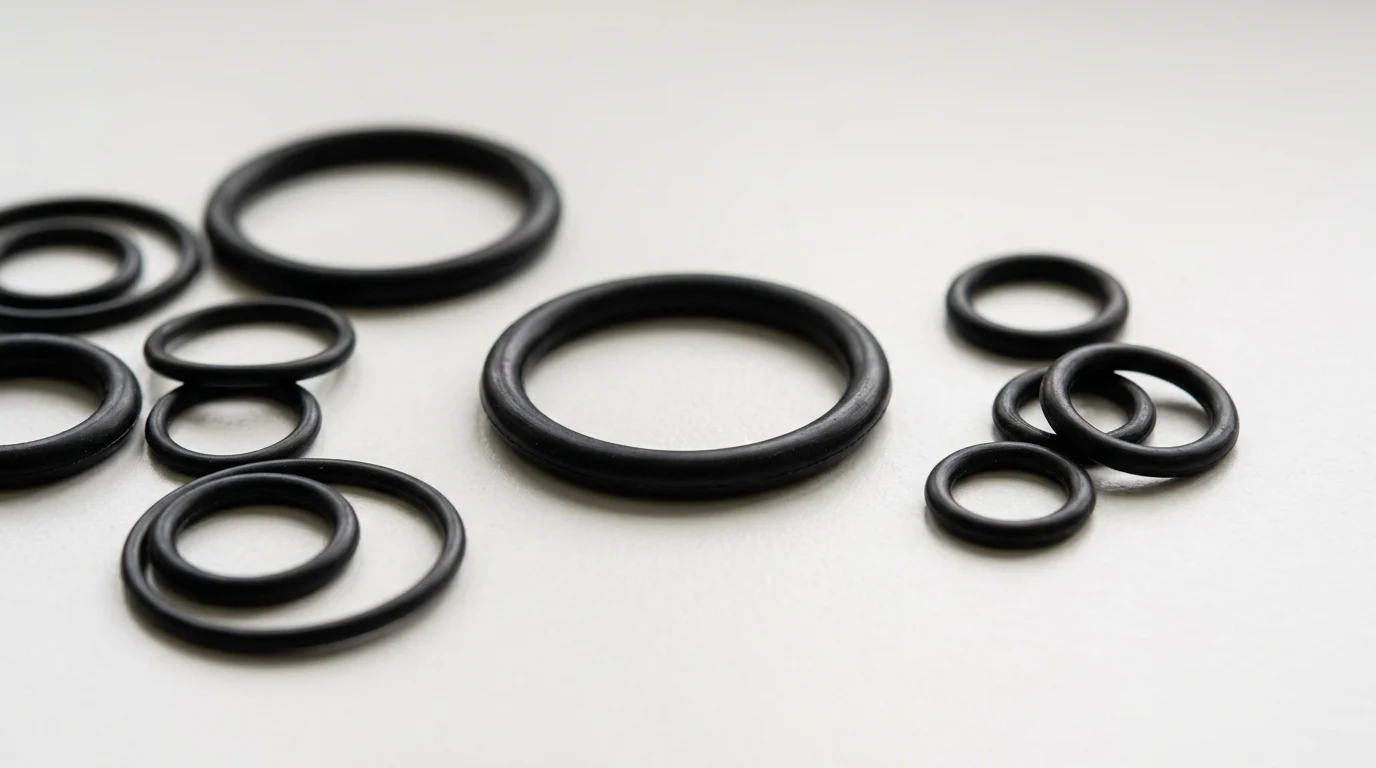
Why O-Ring Seals Fail Quickly in Wastewater Pumps
In municipal and industrial wastewater management, O-ring seals serve as a primary defense against fluid migration within centrifugal pumps, progressive cavity pumps, and submersible mixers. While O-rings are sometimes used as primary dynamic seals in simpler equipment, in heavy-duty wastewater pumps they most often function as critical secondary static seals within mechanical seal assemblies. Despite their simple geometry, these elastomeric components operate in exceptionally harsh conditions. Standard O-ring seals deployed in clean-water applications often achieve operational lifespans exceeding 24 to 36 months. However, when subjected to the realities of wastewater—including abrasive grit, chemical effluents, and severe pressure fluctuations—the lifespan of an improperly specified seal can plummet to between 3 and 6 months.
Premature seal failure is not merely a maintenance nuisance; it represents a critical vulnerability in pump systems. A degraded O-ring compromises hydraulic efficiency and exposes internal mechanical components to corrosive media. Understanding the root causes of accelerated elastomeric degradation requires examining the specific operational variables present in wastewater processing, from physical wear to chemical incompatibility.
How Seal Wear Increases Downtime and Leakage Risk
The degradation of O-ring seals initiates a cascade of mechanical failures that significantly impacts plant operations. When an O-ring loses its sealing force, wastewater bypasses containment zones, infiltrating bearing housings and motor compartments. Bearing contamination is widely cited as a leading cause of catastrophic pump failures in wastewater facilities; some industry estimates suggest it accounts for up to 50% of such incidents. Once abrasive slurry reaches the bearings, friction spikes, leading to rapid thermal expansion, metallurgical scoring, and ultimate seizure.
Consequently, seal wear dramatically increases facility downtime and operational expenditure (OPEX). Unplanned pump outages in large-scale municipal wastewater treatment plants can incur emergency costs historically estimated at over $5,000 per hour when factoring in maintenance labor, replacement parts, and environmental compliance penalties for potential sewage overflows. Furthermore, continuous micro-leakage prior to catastrophic failure reduces volumetric efficiency, forcing motors to draw higher amperage to maintain required flow rates, thereby inflating energy consumption.
Wastewater Conditions That Shorten Seal Life
Wastewater streams are highly variable, creating destructive conditions that directly attack elastomeric compounds. The primary environmental stressor is the presence of high total suspended solids (TSS). Unlike clean fluids, wastewater carries sand, silt, biological sludge, and fibrous materials. These particulates create an abrasive slurry that constantly scours the exposed surfaces of dynamic seals and the microscopic gaps around static O-rings, eroding the elastomer matrix.
Beyond physical abrasion, wastewater presents extreme chemical volatility. Influent streams frequently exhibit pH swings ranging from highly acidic (pH 3) industrial discharges to highly alkaline (pH 11) cleaning protocols or chemical dosing. Biological activity within the sludge also generates hydrogen sulfide (H2S) gas, which is notoriously aggressive toward standard nitrile elastomers, causing severe embrittlement and surface cracking. Combined with variable fluid temperatures that can exceed 140°F (60°C) during peak industrial discharge cycles, these conditions rapidly accelerate the oxidative and thermal aging of standard sealing materials.
Common Failure Mechanisms in Wastewater Pump O-Ring Seals
Identifying the precise mechanism of O-ring failure is critical for implementing effective corrective actions. Forensic analysis of failed seals in wastewater applications reveals that the vast majority of premature failures stem from environmental incompatibility and operational stressors rather than inherent manufacturing defects. The failure modes typically manifest through distinct physical changes in the elastomer’s cross-section, volume, and durometer.
Distinguishing between mechanical damage, chemical degradation, and thermo-mechanical fatigue is essential for specifying a more resilient sealing solution. These failure mechanisms rarely occur in isolation; they often act synergistically, where chemical softening accelerates abrasive wear, or thermal aging exacerbates compression set.
Abrasion from Grit, Solids, and Sludge
Abrasive wear is a prevalent mechanical failure mode, particularly when O-rings are utilized in dynamic rotary applications or exposed to fluid flow paths. As the pump shaft rotates or reciprocates, microscopic clearances between the hardware and the seal allow fine particulates—often ranging from 50 to 500 microns in diameter—to embed themselves into the elastomer. Silica sand and calcified grit are particularly destructive, acting as microscopic cutting tools against the rubber.
This continuous physical interaction leads to volumetric loss of the O-ring material, typically characterized by a flattened or heavily scored surface on the exposed side of the seal. In severe cases of abrasive wear, the elastomer exhibits a ‘nibbled’ or torn appearance. As the cross-sectional diameter decreases, the O-ring loses the necessary squeeze to maintain a positive seal, resulting in progressive fluid leakage and the eventual washout of the remaining elastomeric material.
Chemical Exposure, pH Variation, and Cleaning Agents
Chemical degradation alters the fundamental polymer chain of the O-ring. In wastewater environments, seals are routinely exposed to a cocktail of organic solvents, hydrocarbons, and aggressive cleaning agents such as sodium hypochlorite (bleach) and peracetic acid. When an elastomer is chemically incompatible with the media, it typically undergoes either severe volumetric swell or chemical embrittlement.
A volumetric swell exceeding 15% forces the O-ring out of its engineered gland, leading to extrusion and mechanical shearing. Conversely, chemical extraction occurs when the wastewater leaches plasticizers out of the elastomer. This results in the O-ring shrinking, hardening, and developing deep surface cracks. Fluctuating pH levels further accelerate the breakdown of the polymer cross-links, rendering the seal brittle and entirely incapable of conforming to the microscopic asperities of the hardware surfaces.
Heat, Pressure Cycling, Compression Set, and Extrusion
Wastewater pumps frequently experience dynamic pressure spikes, such as water hammer, where internal pressures can momentarily surge from a baseline of 150 PSI to over 300 PSI. If the clearance gap between the mating hardware exceeds tolerances (e.g., >0.005 inches), these high-pressure differentials force the elastomeric material into the gap. This phenomenon, known as extrusion, manifests as a distinct peeling or flaking of the O-ring on the low-pressure side.
Simultaneously, heat generated by mechanical friction and fluid temperature contributes to compression set. Compression set is the permanent deformation of the elastomer, measured as a percentage of the original compression. When an O-ring is exposed to elevated temperatures over prolonged periods, the polymer chains permanently realign. If the compression set exceeds 30% to 40%, the O-ring assumes a flattened, oval cross-section and loses its elastomeric memory. During thermal cycling or pressure drops, the flattened seal cannot rebound to fill the gland, creating an immediate leak path.
How to Compare O-Ring Seal Materials
Mitigating premature failure fundamentally relies on understanding the material science behind elastomeric compounds. There is no universally perfect O-ring material for wastewater; rather, the goal is to balance chemical resistance, abrasion tolerance, and thermal stability.
Comparing the molecular properties and physical performance metrics of different elastomers is essential for matching the base polymer to the specific operational profile of the pump station.
Comparing NBR, EPDM, FKM, and Silicone
The four most frequently evaluated elastomers for fluid handling are Nitrile (NBR), Ethylene Propylene Diene Monomer (EPDM), Fluorocarbon (FKM/Viton), and Silicone (VMQ). Standard NBR is the default choice for general water applications due to its excellent tear resistance and low cost, but it rapidly degrades in the presence of ozone, UV, and strong acids. EPDM offers superior resistance to polar solvents, alkalis, and outdoor weathering, making it highly effective for chemically dosed municipal wastewater, provided there is no hydrocarbon or oil contamination.
FKM (Fluorocarbon) provides exceptional broad-spectrum chemical and thermal resistance, handling temperatures up to 400°F (204°C) and resisting harsh hydrocarbons and acids. However, it is important to note that FKM’s exact temperature limits and chemical resistance depend heavily on the specific grade and fluorine content chosen. Silicone, while possessing excellent temperature ranges, has notoriously poor tensile strength and abrasion resistance, rendering it virtually useless for dynamic wastewater pump applications.
| Material Compound | Typical Temp Range (°C) | Abrasion Resistance | Chemical Resistance (Wastewater) | Relative Cost |
|---|---|---|---|---|
| NBR (Nitrile) | -30 to +100 | Excellent | Fair (Poor vs. Ozone/H2S) | Low ($) |
| EPDM | -40 to +150 | Good | Excellent (Poor vs. Oils) | Medium ($$) |
| FKM (Fluorocarbon) | -20 to +200 | Good | Excellent (Broad Spectrum) | High ($$$) |
| Silicone (VMQ) | -60 to +225 | Poor | Good | Medium ($$) |
Hardness, Compression Set Resistance, and Chemical Compatibility
Beyond the base polymer, the physical properties of the compounded elastomer dictate its survival in harsh environments. Hardness, measured on the Shore A durometer scale, is a critical specification. Standard O-rings are typically 70A durometer; however, in high-pressure wastewater pumps (>1500 PSI) or highly abrasive conditions, specifying a harder 80A or 90A durometer compound significantly increases extrusion and wear resistance.
Compression set resistance, evaluated under standards such as ASTM D395, determines the seal’s longevity under continuous mechanical load. A premium peroxide-cured EPDM, for instance, will exhibit a much lower compression set than a standard sulfur-cured EPDM, meaning it will maintain its circular cross-section and sealing force far longer when subjected to the thermal cycling typical of heavy-duty sludge pumps. Chemical compatibility must be verified against the specific effluent profile using standardized compatibility charts, focusing on the maximum concentration of aggressive agents such as hydrogen sulfide and industrial solvents.
When to Use Backup Rings or Alternative Seal Designs
In extreme wastewater applications where standard O-rings inevitably fail regardless of the elastomer selected, alternative sealing architectures become necessary. When system pressures exceed the extrusion limits of a 90A durometer elastomer, or when hardware clearances are unusually large due to equipment age, backup rings are highly recommended. Installed on the low-pressure side of the O-ring gland, PTFE (Polytetrafluoroethylene) backup rings close the clearance gap, physically preventing the elastomer from extruding.
For applications involving severe chemical cocktails that degrade even high-grade FKM, FEP-encapsulated O-rings offer a viable alternative. These seals feature a resilient elastomeric core (usually silicone or FKM) surrounded by a thin, seamless jacket of fluoropolymer (FEP or PFA), combining the chemical inertness of PTFE with the memory of rubber. Additionally, in dynamic rotary applications where O-rings tend to spiral or twist within the groove, X-rings (quad rings) provide a four-lobed profile that resists spiraling and requires less initial squeeze, thereby reducing friction and extending seal life.
Installation and Maintenance Best Practices
Even the most precisely engineered elastomeric compound will fail prematurely if subjected to improper installation or substandard maintenance practices. Human error and incorrect assembly techniques are widely recognized as leading causes of early O-ring failures in industrial fluid handling equipment.
Establishing rigorous protocols for hardware preparation, seal installation, and ongoing environmental control is essential to achieving the maximum theoretical lifespan of the O-ring.
Inspection Steps for Early Seal Failure
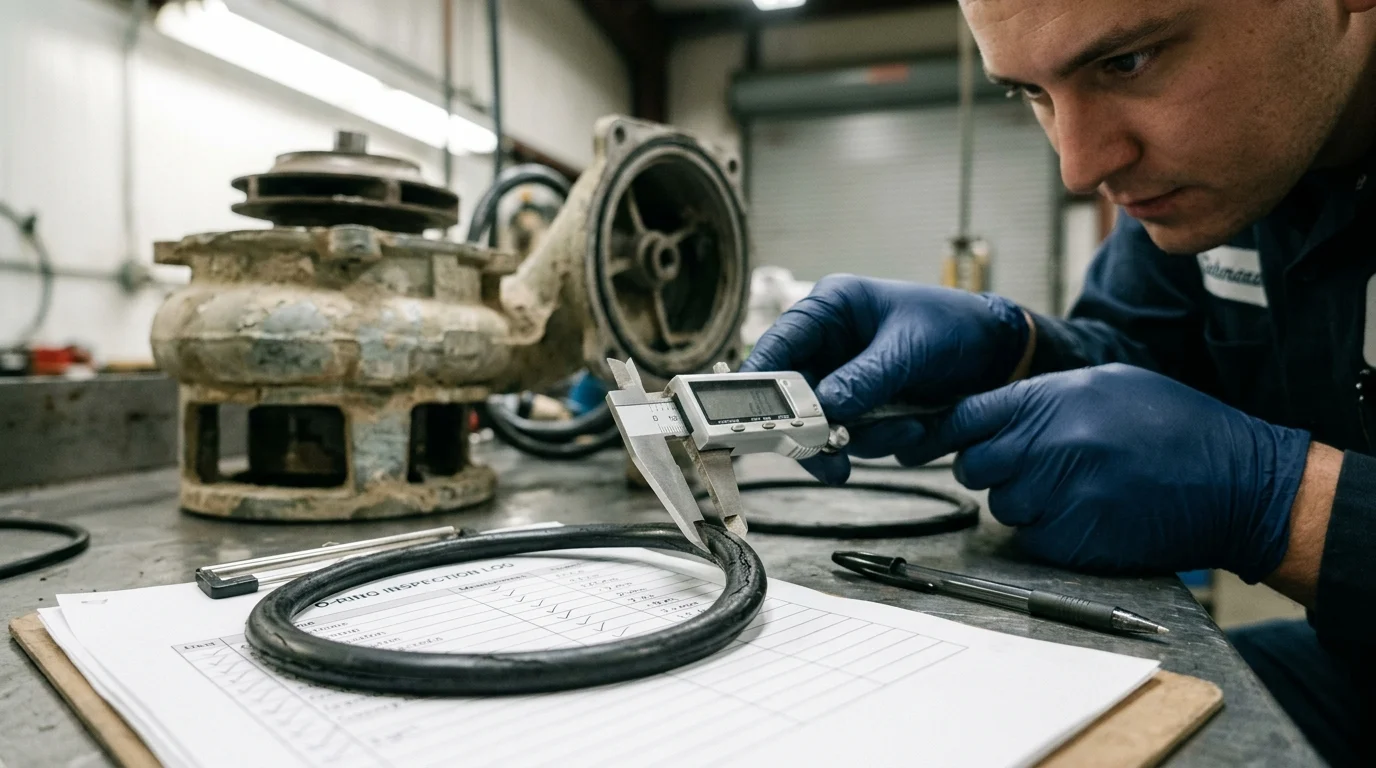
When an O-ring fails ahead of schedule, a systematic post-mortem inspection is vital to prevent recurring issues. Carefully extracting the failed seal without inducing further mechanical damage allows for examination under 10x magnification. The inspection must categorize the damage: parallel cuts suggest installation damage from sharp hardware threads; a flat profile indicates excessive compression set or thermal degradation; and a spiraled, twisted appearance points to inadequate lubrication or excessive dynamic friction.
Evaluating the mating hardware is equally important. Scoring on the pump shaft or corrosion pitting within the gland groove directly translates to accelerated seal wear. Documenting the exact location of the failure—whether on the dynamic face, the static groove floor, or the low-pressure extrusion side—provides the necessary diagnostic data to adjust the material specification or assembly procedure for the replacement seal.
Groove Design, Surface Finish, Lubrication, and Stretch
The mechanical design and surface finish of the O-ring gland dictate the wear conditions. For dynamic applications in wastewater pumps, the metallic surface finish must be maintained between 16 and 32 micro-inches Ra. A finish rougher than 32 Ra will abrade the elastomer, while a finish smoother than 16 Ra will not retain necessary lubrication, leading to dry-running friction and thermal degradation. The gland fill should typically be engineered between 75% and 85% to allow for thermal expansion and potential chemical swell without overfilling the groove.
During installation, proper lubrication is non-negotiable. The lubricant must be chemically compatible with the seal material—for example, avoiding petroleum-based greases on EPDM O-rings, which will cause immediate and severe swelling. Instead, silicone-based or synthetic barium greases are generally preferred. Furthermore, ensuring the O-ring is not over-stretched during assembly is critical. Maximum installed stretch on the inside diameter (ID) should never exceed 5%; exceeding this threshold thins the cross-section, reduces the effective squeeze, and increases the polymer’s susceptibility to environmental stress cracking.
Flushing, Filtration, and Shaft Alignment
In highly abrasive wastewater environments, protecting the seal face from direct contact with heavy solids is a critical operational strategy. Implementing external flushing arrangements, such as API Plan 32 or API Plan 54, introduces a clean, pressurized fluid (often potable water) directly into the seal chamber. While these flush plans are primarily designed for the mechanical seals themselves, they inherently protect the secondary O-rings within the assembly by acting as a hydraulic barrier, cooling the components and sweeping abrasive grit away from microscopic clearance gaps.
Filtration of the flush water is equally important; introducing contaminated flush water defeats the purpose of the system. Finally, mechanical shaft alignment must be strictly maintained. Excessive radial runout or shaft deflection (ideally kept below 0.002 inches Total Indicator Reading, or TIR) creates uneven compression on the O-ring. This eccentric movement causes the seal to cycle rapidly between high and low compression, leading to premature fatigue, localized wear, and eventual fluid bypass.
How to Select O-Ring Seals for Wastewater Service
Procuring O-ring seals for wastewater infrastructure requires transitioning from ad-hoc purchasing to a standardized, specification-driven selection process. While the previous sections outlined material properties, applying that knowledge in the field means treating O-rings as engineered components rather than generic commodities to avoid unpredictable lifespans and inflated total cost of ownership (TCO).
Aligning application data, supplier capabilities, and lifecycle cost analysis builds a robust sealing strategy.
Key Specification Criteria for Pump Operators
Specification begins with defining the exact operational envelope using the PTMS framework: Pressure, Temperature, Media, and Speed. Documenting the maximum system pressure, including transient spikes, determines the required durometer and the necessity of backup rings. Temperature ranges must account for both ambient conditions and localized frictional heat generated at the seal interface.
The media definition must go beyond ‘wastewater’ to include specific pH ranges, expected solid particulate sizes, and the presence of any dosed chemicals or stray hydrocarbons. Finally, the speed of the dynamic hardware dictates the potential for frictional heat and the necessity for specialized, low-friction seal profiles. Supply chain metrics should also be considered, such as the Minimum Order Quantity (MOQ) for custom-compounded elastomers, which frequently range from 500 to 1,000 units depending on the manufacturer’s tooling.
How to Evaluate O-Ring Seal Suppliers
The reliability of an O-ring is intrinsically linked to the quality control standards of its manufacturer. When evaluating suppliers, requiring ISO 9001 certification serves as a baseline to ensure standardized manufacturing processes. High-tier suppliers must provide full batch traceability, allowing a failed seal to be traced back to its specific polymer mix and curing cycle.
Furthermore, prioritizing suppliers with robust in-house analytical testing capabilities is highly recommended. The ability to perform Thermogravimetric Analysis (TGA) or Fourier Transform Infrared Spectroscopy (FTIR) guarantees that the delivered elastomer matches the chemical signature of the specified compound. A reliable supplier should target low defect rates, often benchmarked at fewer than 50 Parts Per Million (PPM), ensuring dimensional consistency across large procurement batches.
Selection Framework for Performance, Cost, and Reliability
To optimize both performance and budget, facilities should adopt a tiered selection framework based on application severity. This approach prevents over-specifying expensive materials for benign applications while ensuring robust protection for critical assets.
The table below synthesizes these trade-offs, providing a clear decision pathway. For standard municipal water, EPDM offers the best balance of cost and chemical resistance. In high-industrial settings with hydrocarbons, FKM becomes necessary despite the higher cost. For heavy sludge and grit, Highly Saturated Nitrile (HNBR) provides exceptional abrasion resistance, though buyers should note that HNBR availability and cost can vary significantly by region. By categorizing pump services in this manner, facilities can standardize inventory, reduce procurement complexity, and drastically minimize unplanned downtime.
| Application Severity | Media Characteristics | Recommended Material | Target Hardness | Additional Features |
|---|---|---|---|---|
| Standard Municipal | Low grit, pH 6-8, water-based | Peroxide-cured EPDM | 70A | Standard O-Ring profile |
| High-Industrial / Chemical | Variable pH, hydrocarbons, solvents | FKM (Fluorocarbon) | 75A to 80A | Consider encapsulated seals |
| Heavy Sludge / Grit | High TSS, abrasive sand, pressure spikes | Highly saturated NBR (HNBR) | 85A to 90A | PTFE Backup Rings, X-Ring profile |
Key Takeaways
- Specify O-ring elastomers for actual wastewater chemistry, because pH swings from about 3 to 11, hydrogen sulfide, and chemical dosing can rapidly crack or embrittle standard nitrile compounds.
- Treat abrasive solids as a primary design factor, since sand, silt, sludge, and fibers can erode exposed elastomer surfaces and shorten seal life from years to months.
- Inspect O-rings and mechanical seal assemblies before leakage becomes visible, because loss of sealing force can allow wastewater to contaminate bearings and motor compartments.
- Account for temperature spikes above 140°F (60°C) in industrial discharge cycles, as heat accelerates compression set, oxidation, and loss of elastomer resilience.
- Avoid choosing O-rings by size alone; verify groove condition, compression, pressure cycling, media compatibility, and mechanical seal design to reduce unplanned downtime.
Frequently Asked Questions
How long should O-ring seals last in wastewater pumps?
In clean-water service, standard O-rings may last 24 to 36 months. In wastewater pumps, poor material selection or harsh service can reduce life to 3 to 6 months because of abrasion, chemical attack, temperature spikes, and pressure cycling.
Why does wastewater wear O-rings faster than clean water?
Wastewater contains sand, silt, sludge, fibers, chemicals, and biological byproducts. These solids abrade elastomers, while pH swings, hydrogen sulfide, and elevated temperatures accelerate cracking, hardening, swelling, or loss of compression.
Are O-rings the primary seal in wastewater pump mechanical seals?
Usually not in heavy-duty wastewater pumps. O-rings often serve as secondary static seals inside mechanical seal assemblies, helping prevent leakage around sleeves, glands, and housings while the primary seal faces handle the main sealing interface.
What material is best for wastewater pump O-rings?
The best material depends on the liquid chemistry, temperature, solids load, and cleaning agents. Nitrile may be inadequate where hydrogen sulfide, oils, heat, or aggressive chemicals are present; EPDM, FKM, or other compounds may be better after compatibility review.
Can worn O-rings cause pump bearing failure?
Yes. When an O-ring loses sealing force, wastewater can enter bearing housings or motor areas. Abrasive contamination increases friction and heat, which can lead to scoring, seizure, and unplanned pump shutdown.

Post time: Oct-07-2026