


Why Sewage Pump Mechanical Seals Matter
Wastewater treatment facilities operate under relentless continuous-duty cycles, placing immense operational stress on rotating equipment. At the center of this infrastructure, sewage pump mechanical seals act as the primary barrier between highly contaminated process fluids and the external environment. A robust sealing strategy is not merely a component-level concern; it dictates the overall reliability, compliance, and operational expenditure of the entire facility. Modern municipal and industrial wastewater systems typically subject these pumps to operating pressures ranging from 50 to 150 PSI, demanding seals that can withstand both dynamic pressure fluctuations and severe chemical exposure.
What mechanical seals do in sewage pumps
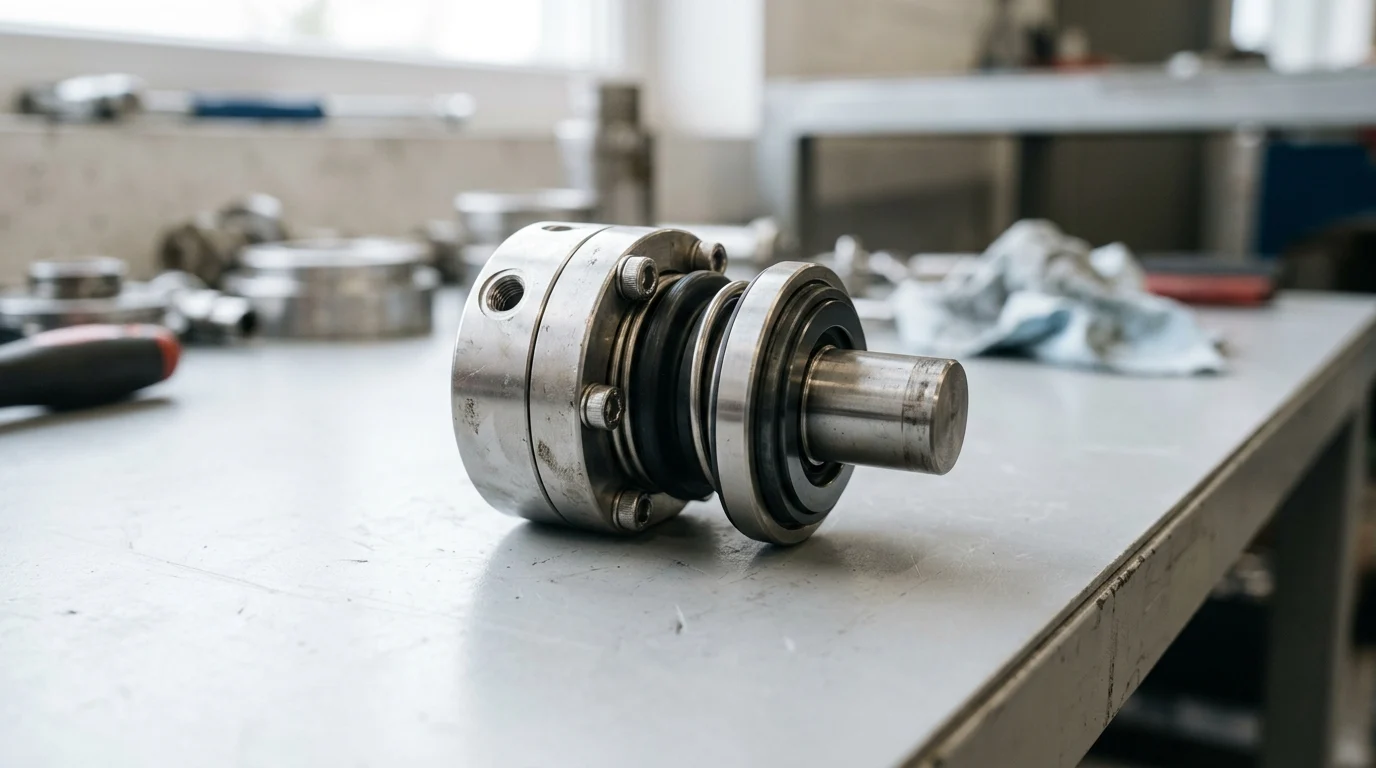
Mechanical seals in sewage pumps perform the critical function of containing pressurized fluids within the pump casing while allowing the shaft to rotate freely. Unlike traditional gland packing, which requires a controlled leakage rate to lubricate the shaft, mechanical seals utilize two highly engineered flat faces—one stationary and one rotating. These faces are pressed together by mechanical springs or bellows and are separated only by a microscopic fluid film, typically measuring between 1 and 3 microns in thickness. This hydrodynamic film provides essential lubrication and cooling to the seal faces while minimizing the escape of process media to virtually undetectable levels. The precision engineering involved ensures that the mechanical seal accommodates minor shaft deflections and axial movements without compromising the pressure boundary.
Why seal failure affects wastewater systems
When a mechanical seal fails, the consequences cascade rapidly throughout the wastewater system. Immediate impacts include the leakage of untreated or partially treated sewage into the pump station, creating severe biohazard conditions and potential environmental contamination. Depending on the scale of the facility, the financial ramifications can be staggering; unscheduled downtime in a major municipal lift station can incur costs ranging from $5,000 to $20,000 per hour when factoring in emergency bypass pumping, labor, and cleanup operations. Furthermore, regulatory bodies strictly enforce containment standards, meaning that unmitigated spills resulting from seal failures frequently trigger steep environmental fines. Beyond the immediate spill, process fluid breaching the seal chamber often infiltrates the pump bearing housing, leading to catastrophic bearing failure, motor damage, and a drastically extended repair timeline.
Common Causes of Wastewater Pump Seal Failure
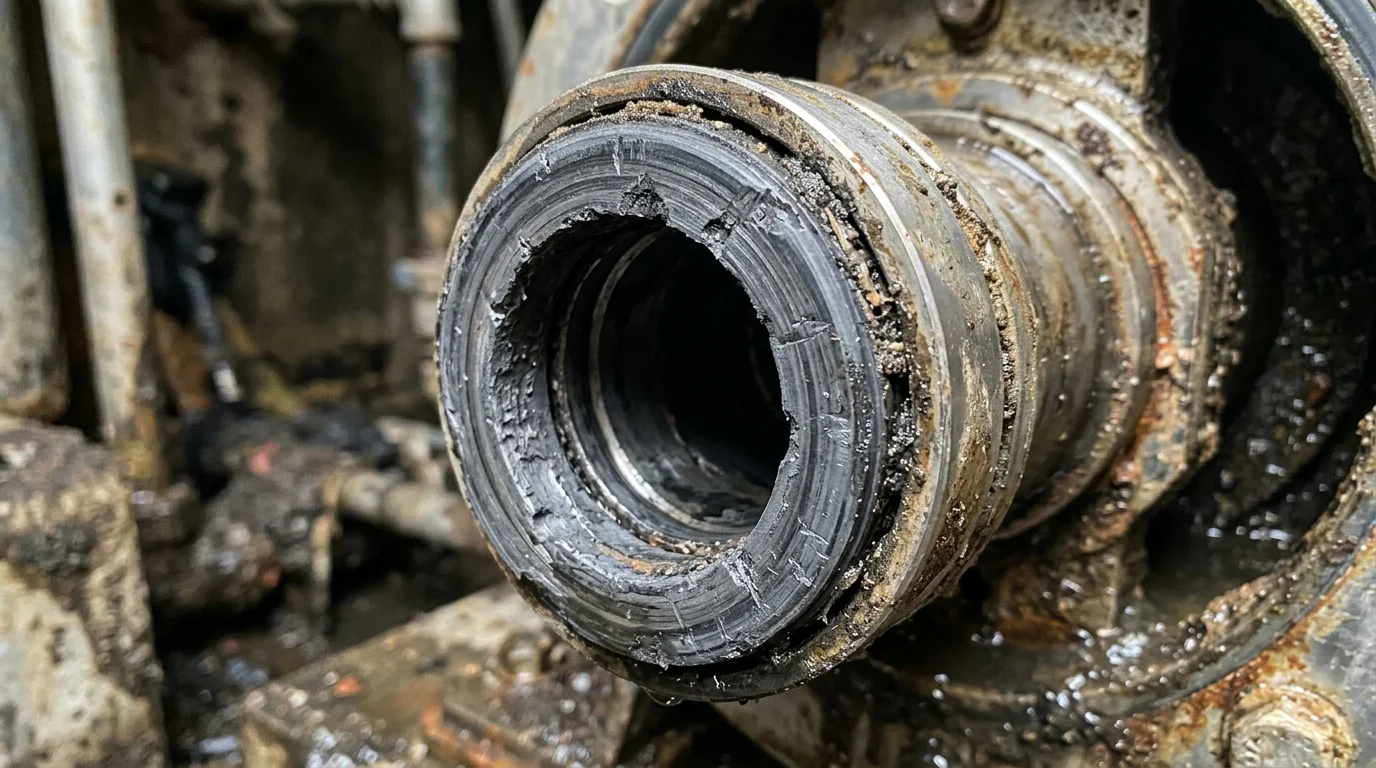
The wastewater environment is inherently hostile to precision mechanical components. Sewage pumps are tasked with moving fluids that are highly variable in composition, frequently containing unpredictable volumes of abrasives, fibrous materials, and corrosive chemicals. Understanding the specific failure modes associated with this challenging environment is the first step toward implementing effective mitigation strategies and extending equipment lifespan.
Solids, fibers, grit, and abrasive slurry
The presence of solids, fibers, grit, and abrasive slurry constitutes the most prevalent threat to mechanical seals in sewage applications. Wastewater sludge can contain solids concentrations up to 8% to 10% by weight, heavily laden with silica-based grit that acts as a grinding compound against seal faces. When particles larger than the 1-to-3-micron fluid film gap enter the interface, they cause severe abrasive wear, scoring, and radial grooving on the seal faces. Fibrous materials, commonly referred to as “ragging,” pose a secondary threat by wrapping around the rotating seal components. This entanglement can restrict the movement of springs or bellows, preventing the seal faces from maintaining proper contact pressure and leading to immediate, uncontrolled leakage.
Dry running, poor lubrication, and thermal shock
Mechanical seals rely on a stable fluid film for lubrication and heat dissipation. Dry running occurs when the pump loses prime, operates against a closed discharge valve, or experiences severe air entrainment, causing the fluid film to vaporize. Without this lubrication, the coefficient of friction between the seal faces spikes, generating intense localized heat. Temperatures at the seal interface can rapidly exceed 400°F (204°C) under dry-run conditions. This thermal overload induces thermal shock—particularly in brittle materials like ceramic or silicon carbide—causing microscopic stress fractures known as heat checking. Additionally, prolonged exposure to these elevated temperatures rapidly degrades secondary elastomeric components, such as O-rings, causing them to harden, crack, and lose their sealing capability.
Misalignment, vibration, and pressure transients
Mechanical seals demand precise operational conditions to function correctly; deviations in shaft alignment or system pressure can severely compromise seal integrity. Excessive vibration, often resulting from impeller imbalance, bearing wear, or operation outside the pump’s Preferred Operating Region (POR), forces the seal faces to open and close rapidly. Industry standards dictate that shaft runout should not exceed 0.002 inches (0.05 mm) at the seal face; exceeding this threshold accelerates wear on drive pins and flexible elements. Pressure transients, such as water hammer or sudden cavitation events, introduce violent shockwaves into the seal chamber. These fluctuations can momentarily reverse the pressure differential across the seal, potentially unseating the faces or dislodging O-rings from their grooves.
| Failure Mode | Primary Cause | Physical Symptoms on Seal | Typical Operational Trigger |
|---|---|---|---|
| Abrasive Wear | Grit/Sand in fluid | Concentric grooving on faces | Lack of environmental controls |
| Heat Checking | Dry running | Radial micro-cracks on faces | Loss of prime / Closed valve |
| Elastomer Extrusion | Over-pressurization | O-rings pushed out of glands | Severe water hammer |
| Bellows Clogging | Fibrous buildup | Springs embedded in debris | Poor pre-screening / Ragging |
How to Compare Mechanical Seals for Wastewater Pumps
Navigating the technical specifications of mechanical seals requires a thorough understanding of the pump’s operational profile and the specific characteristics of the wastewater media. Selecting the optimal seal configuration, metallurgy, and support system is critical for maximizing Mean Time Between Failures (MTBF) and minimizing lifecycle costs.
Single, double, cartridge, and split seals
The choice between single, double, cartridge, and split seals dictates both the performance threshold and the maintenance complexity of the pump. Single mechanical seals are standard for less aggressive effluent applications but offer no backup in the event of a breach. Double (dual) seals utilize two sets of faces and a barrier fluid, providing a critical fail-safe for highly toxic or heavily abrasive sludge. Cartridge seals, which pre-assemble the faces, springs, and gland into a single unit, have become the industry standard for wastewater retrofits; they eliminate the need for precise installation measurements, reducing installation-related failures by up to 30%. Split seals are deployed on large split-case or vertical pumps where dismantling the equipment is prohibitively expensive, allowing for seal replacement without removing the motor or coupling.
Seal faces, elastomers, and metallurgy
The materials selected for seal faces and secondary elastomers determine the chemical resistance and durability of the assembly. In abrasive sewage environments, Silicon Carbide (SiC) and Tungsten Carbide (TC) are the premier choices for seal faces. Silicon carbide offers exceptional hardness (typically around 2,500 Knoop) and excellent thermal conductivity, making it highly resistant to abrasive wear and thermal shock. For secondary sealing elements, standard Nitrile (Buna-N) often degrades in the presence of industrial chemicals mixed into municipal waste. Consequently, engineered elastomers like Fluorocarbon (Viton/FKM) or Ethylene Propylene Diene Monomer (EPDM) are specified, depending on the exact pH and hydrocarbon content of the fluid.
| Seal Face Material | Hardness (Knoop) | Abrasion Resistance | Thermal Shock Resistance | Relative Cost Index |
|---|---|---|---|---|
| Carbon Graphite | 100 – 300 | Low | Excellent | 1.0 (Base) |
| Ceramic (Alumina) | 2,000 | Moderate | Poor | 1.5 |
| Tungsten Carbide | 1,800 – 2,200 | Very High | Good | 3.5 |
| Silicon Carbide | 2,500 – 2,800 | Excellent | Excellent | 4.0 |
Seal chamber design, flush plans, and barrier fluids
The seal chamber environment must be actively managed to ensure longevity, which is achieved through specific flush plans and barrier fluids. In heavily contaminated sewage, an API Plan 32 is frequently utilized, injecting a clean, external flush water into the seal chamber to elevate the pressure and push abrasives away from the seal faces. For dual seal configurations, an API Plan 53A or 54 provides a pressurized barrier fluid system. To prevent wastewater from infiltrating the seal faces, the barrier fluid is typically maintained at a pressure differential of 15 to 30 PSI above the maximum pump chamber pressure. The design of the seal chamber itself—often utilizing enlarged or tapered bores—further assists in the centrifugal expulsion of solids and the dissipation of localized heat.
How to Prevent Sewage Pump Mechanical Seal Failure
Even the most highly engineered mechanical seal will fail prematurely if subjected to improper handling, poor installation, or neglected maintenance. Establishing rigorous, standardized procedures for installation and condition monitoring is essential to transition from a reactive repair model to a proactive reliability culture.
Installation, alignment, and torque control
Precision execution during installation is non-negotiable. Mechanics must ensure that the pump shaft and seal chamber are meticulously cleaned and inspected for burrs or scoring. Dimensional checks are critical; the seal chamber face must be perpendicular to the shaft axis within a tolerance of 0.001 inches per inch of shaft diameter to prevent angular misalignment. Torque control during gland tightening is equally vital. Uneven tightening of gland nuts can distort the stationary seal face, creating microscopic gaps that permit leakage. Technicians must use calibrated torque wrenches and follow a strict cross-pattern tightening sequence to ensure uniform compression of the gland gasket and perfect parallelism of the seal faces.
Inspection, lubrication, vibration, and leakage checks
Routine condition monitoring serves as the first line of defense against catastrophic failure. Maintenance personnel should conduct regular visual inspections for early signs of weeping or barrier fluid depletion. Vibration analysis, adhering to ISO 10816 standards, provides actionable data regarding bearing health, impeller balance, and shaft deflection before these issues mechanically destroy the seal. For dual seal systems equipped with barrier fluid reservoirs, monitoring the pressure gauges and fluid levels is critical; a sudden drop in barrier pressure or a change in fluid color usually indicates an inner seal face breach. Additionally, thermographic inspections of the seal gland can detect abnormal heat generation indicative of marginal lubrication or face binding.
Root-cause analysis for recurring failures
When a mechanical seal fails, simply replacing it without investigating the underlying cause virtually guarantees a repeat failure. Implementing a structured root-cause analysis (RCA) protocol involves a forensic examination of the failed components. For example, if the seal faces exhibit blistering, the RCA might point to the fluid vaporizing between the faces, indicating inadequate cooling or operation outside the specified pressure envelope. If the drive pins are sheared, the analysis would focus on severe start-up torque or dry-running conditions. By meticulously documenting failure modes, operating conditions, and maintenance logs, reliability engineers can identify systemic issues and push the Mean Time Between Failures (MTBF) benchmark from a reactive 12-month cycle to a sustainable 36 months or more.
How to Choose the Right Seal Strategy
Developing a comprehensive seal strategy goes beyond technical specifications; it requires a holistic approach to asset management, procurement, and lifecycle economics. Facility managers must balance immediate budgetary constraints with long-term reliability goals to optimize the total cost of ownership for their pumping infrastructure.
Repair, retrofit, or upgrade decisions
Equipment managers frequently face the decision of whether to repair a failed component, retrofit the pump with a different seal type, or upgrade the entire sealing system. A widely accepted industry heuristic dictates that if the cost of repairing a mechanical seal exceeds 50% of the price of a new replacement, purchasing a new unit is the more economically sound decision. However, if a specific pump experiences chronic failures—such as replacing a component seal every six months—a retrofit to a robust cartridge seal or a dual seal system with an environmental control plan is warranted. Upgrades are particularly critical when process conditions change, such as an increase in total suspended solids (TSS) or the introduction of more aggressive chemical effluents into the wastewater stream.
Balancing purchase price with lifecycle cost
Focusing solely on the initial purchase price of a mechanical seal is a common procurement error that inflates long-term operational costs. The Total Cost of Ownership (TCO) encompasses the initial capital outlay, installation labor, energy consumption, barrier fluid maintenance, and, crucially, the cost of downtime. For instance, purchasing a basic component seal for $500 might seem cost-effective compared to a $1,500 engineered cartridge seal. However, if the component seal requires exact manual measurement, leading to frequent installation errors and a $3,000 loss in downtime and emergency labor per failure, the cartridge seal yields a significantly lower lifecycle cost. Furthermore, energy-efficient seal face designs can reduce frictional drag on the motor, resulting in measurable electrical savings over a 10-year operational life.
Specification and maintenance criteria
To ensure consistency and reliability, wastewater facilities must establish rigid specification and maintenance criteria across their entire fleet. Standardization reduces inventory complexity and minimizes the training burden on maintenance staff. Specifications should clearly define acceptable materials of construction, required pressure and temperature ratings, and mandatory quality control documentation from the manufacturer. For heavy-duty municipal lift stations, engineers frequently specify seals that meet or exceed API 682 Category 1 or 2 standards, ensuring a high degree of robustness. Maintenance criteria must also mandate the use of OEM-certified parts for repairs and outline strict intervals for barrier fluid replacement and vibration baseline testing, thereby cementing a proactive approach to wastewater infrastructure management.
Key Takeaways
- Select sewage pump mechanical seals that can handle continuous-duty operation, abrasive solids, chemical exposure, and pressure ranges commonly around 50 to 150 PSI.
- Prevent dry running because mechanical seal faces depend on a 1 to 3 micron lubricating fluid film for cooling and wear control.
- Reduce grit, fibers, and sludge buildup around the seal chamber to limit face abrasion, spring clogging, and leakage.
- Investigate seal leaks immediately because wastewater entering the bearing housing can cause bearing failure, motor damage, and longer repair downtime.
- Use compatible seal face, elastomer, and spring materials for the actual wastewater chemistry to avoid corrosion, swelling, and premature failure.
- Treat unscheduled seal failure as a system-level risk because emergency bypass pumping, cleanup, and labor can cost thousands of dollars per hour.
Frequently Asked Questions
What is the most common reason sewage pump mechanical seals fail?
Abrasive grit, sludge, and fibrous solids are the most common causes. They damage seal faces, clog springs, and disrupt the thin lubricating film needed to keep the seal cool and leak-free.
How much pressure do sewage pump seals typically handle?
Many municipal and industrial wastewater pumps operate around 50 to 150 PSI, so seals must tolerate pressure fluctuations, chemical exposure, solids, and continuous-duty operation.
Why is dry running dangerous for wastewater pump seals?
Mechanical seals rely on a microscopic fluid film for lubrication and cooling. If the pump runs dry, seal faces overheat quickly, causing cracking, distortion, and rapid leakage.
Can the wrong seal material cause premature failure?
Yes. Wastewater may contain corrosive chemicals, grit, fats, and biological contaminants. Choosing incompatible face, elastomer, or spring materials can lead to swelling, corrosion, wear, and early seal breakdown.
How can facilities reduce sewage pump seal failures?
Use seals designed for wastewater service, control grit and debris where possible, maintain correct pump alignment, prevent dry running, and inspect leakage, vibration, and bearing condition regularly.

Post time: Jul-15-2026