


Introduction
Choosing a mechanical seal for a chemical pump is a safety, reliability, and cost decision as much as a component choice. The right seal must match the fluid’s corrosiveness, temperature, pressure, vapor pressure, and solids content while also fitting the pump design and operating conditions. A poor match can lead to leaks, premature wear, unplanned shutdowns, and compliance risks in hazardous service. This article explains the key factors that drive seal selection, how different seal types and materials perform in chemical applications, and what to review before specifying or replacing a seal so the pump runs longer and more safely.
Why Selecting the Right Mechanical Seal for Chemical Pumps Matters
Mechanical seals serve as the primary containment barrier in chemical processing pumps, fundamentally determining the reliability and safety of fluid transfer systems. In environments handling aggressive, toxic, or highly flammable media, the specification of these components transcends basic maintenance; it is a critical engineering imperative. An improperly selected seal not only accelerates equipment degradation but also exposes facilities to catastrophic fluid containment breaches.
The complexity of chemical processing demands a rigorous approach to seal selection. Engineers must evaluate dynamic variables ranging from complex fluid rheology to extreme thermal fluctuations. By understanding the foundational role mechanical seals play in system architecture, plant operators can mitigate unplanned downtime and optimize the total lifecycle cost of their rotating equipment.
Impact on uptime, safety, and compliance
In chemical manufacturing, seal integrity directly dictates plant uptime and operational profitability. A mechanical seal failure is the leading cause of chemical pump downtime, often necessitating immediate process interruption and costly emergency maintenance. Beyond production losses, safety and environmental compliance rely heavily on containment reliability.
Regulatory bodies enforce strict limits on fugitive emissions. For instance, the Environmental Protection Agency (EPA) frequently mandates that volatile organic compound (VOC) emissions from rotating equipment remain strictly below 500 parts per million (ppm). Achieving this stringent threshold, alongside extending the Mean Time Between Failures (MTBF) to targets exceeding 36 months, requires a precisely engineered sealing solution tailored to the specific chemical environment.
Operating conditions that increase seal failure risk
Varying operational states expose mechanical seals to elevated failure probabilities. Transient conditions, such as pump startup, shutdown, and process upsets, introduce severe mechanical and thermal stresses that steady-state calculations often overlook. Cavitation and dry running are particularly destructive, as the loss of the fluid film between the seal faces leads to rapid frictional heating and subsequent thermal cracking.
Furthermore, chemical processes frequently involve thermal shock, where temperature spikes exceeding 200°C occur within seconds. Such rapid fluctuations can cause elastomer extrusion or shatter brittle face materials like silicon carbide. Abrasive wear from crystallizing fluids or suspended particulates also drastically accelerates face degradation, necessitating specialized hard-face pairings and environmental controls to mitigate failure risks.
What Operating Data Should Be Defined Before Seal Selection
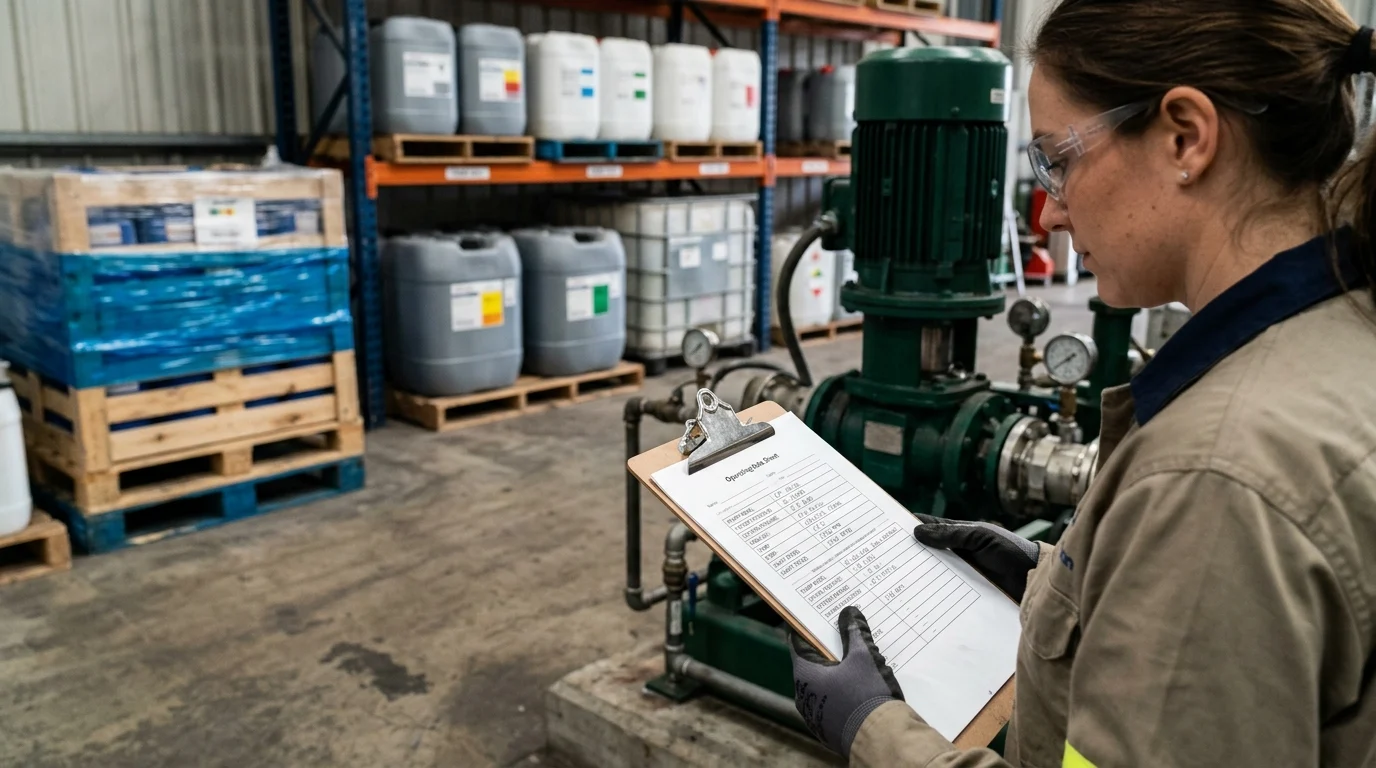
Accurate specification requires a comprehensive operational profile. Relying on nominal pump parameters without analyzing the precise conditions within the seal chamber inevitably leads to premature component failure. Engineering and maintenance teams must compile an exhaustive dataset detailing the fluid mechanics, thermal dynamics, and mechanical constraints of the application.
Fluid properties, pressure, temperature, and solids content
The physical and chemical characteristics of the pumped medium form the baseline for all seal engineering decisions. Viscosity, pH levels, specific gravity, and vapor pressure directly influence fluid film formation and face lubrication. Pumping fluids near their vapor pressure risks flashing at the seal faces, requiring targeted cooling or pressure augmentation.
Pressure and temperature parameters must encompass both normal operating ranges and maximum upset conditions. Chemical pumps frequently subject seals to stuffing box pressures up to 25 bar and extreme temperatures. Additionally, solids content dictates face material hardness and seal geometry; a solids concentration exceeding 5% by weight typically necessitates specialized flush plans or slurry seals to prevent face scoring and spring clogging.
| Operating Variable | Impact on Seal Performance | Typical Engineering Countermeasure |
|---|---|---|
| High Vapor Pressure | Fluid flashing, dry running, face damage | API Plan 11/13 flush or Plan 53 barrier |
| High Solids Content (>5%) | Abrasive wear, clogged springs | Hard face pairings (SiC/SiC), API Plan 32 |
| Extreme pH (<2 or >12) | Chemical attack on elastomers/metals | FFKM O-rings, Hastelloy C-276 metallurgy |
| High Viscosity | High torque transmission, face shearing | Heavy-duty drive pins, stationary designs |
Shaft speed, pump arrangement, and piping plan
Kinematic and structural factors significantly influence seal dynamics. Shaft speed, typically ranging from 1,450 to 3,600 RPM in standard chemical pumps, determines the peripheral velocity at the seal faces. High velocities generate substantial frictional heat, necessitating enhanced thermal conductivity in the selected face materials and optimized cooling flush plans.
The pump arrangement—whether horizontal, vertical, or inline—alters the natural venting and draining capabilities of the seal chamber. Vertical pumps, for instance, are prone to trapping air at the seal interface, requiring specific venting configurations to prevent dry running. Concurrently, the selected API 682 piping plan (such as Plan 11 for a bypass flush or Plan 53A for a pressurized barrier fluid) must be integrated seamlessly with the pump’s spatial and hydraulic constraints.
Seal face materials, elastomers, and metal components
Material compatibility dictates the longevity of the sealing interface and secondary sealing elements. The primary seal faces must balance hardness, lubricity, and chemical inertness. Silicon Carbide (SiC) is the industry standard due to its universal chemical resistance and excellent heat dissipation, though Tungsten Carbide (TC) may be selected for highly abrasive, non-corrosive slurries.
Secondary elastomers are equally critical and often represent the weakest link in chemical applications. Standard fluoroelastomers (FKM) may degrade rapidly in aggressive solvents, requiring an upgrade to perfluoroelastomers (FFKM), which offer near-universal chemical compatibility and can withstand continuous operating temperatures up to 320°C. Metal components, including springs and drive collars, must also resist corrosive attack, frequently necessitating the use of high-nickel alloys like Hastelloy C-276 or Alloy 20 instead of standard 316 stainless steel.
How to Compare Mechanical Seal Options for Chemical Pumps
Evaluating mechanical seal architectures requires balancing containment rigor with installation practicality. The chemical industry utilizes a spectrum of seal designs, each engineered to address specific risk profiles and fluid characteristics. Comparing these options systematically ensures that the selected configuration aligns with both regulatory requirements and budget constraints.
Single, dual, and cartridge seal use cases
Single mechanical seals are typically deployed in non-hazardous, non-toxic applications where minor, transient leakage into the atmosphere does not pose a safety or environmental risk. They rely solely on the pumped fluid for lubrication and are the most cost-effective solution for benign aqueous chemicals or mild solvents.
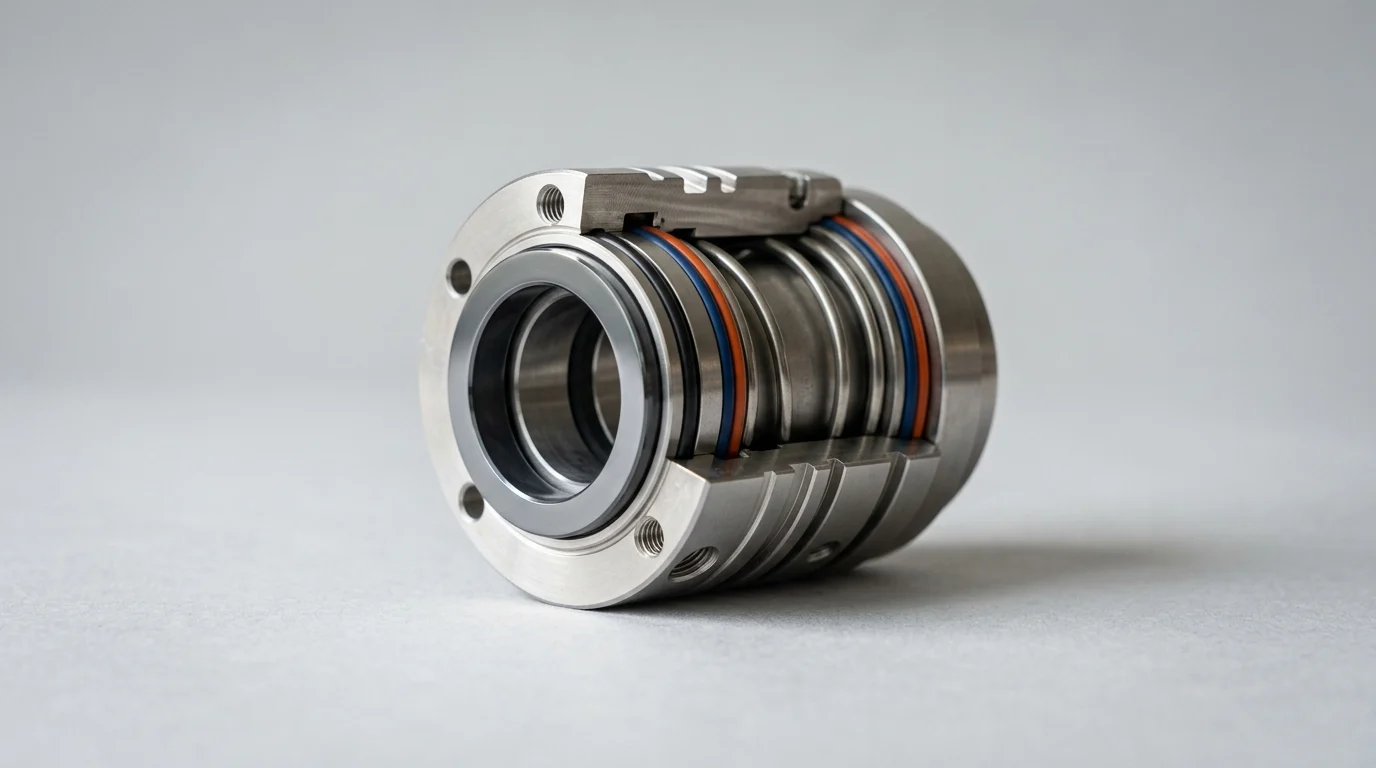
Dual seals are mandated for highly toxic, carcinogenic, or volatile fluids. Unpressurized dual seals (tandem) provide a backup containment layer, while pressurized dual seals (double) utilize a barrier fluid at a pressure higher than the pump chamber to ensure zero process emissions to the atmosphere. Cartridge seals, which package the seal faces, springs, and gland plate into a single pre-assembled unit, are widely favored across both single and dual configurations due to their precision alignment and ease of installation, significantly reducing human error during maintenance.
Key trade-offs among seal types
The selection between configurations involves distinct engineering trade-offs, primarily balancing initial capital expenditure (CAPEX) against long-term reliability and emission control. While single seals offer low upfront costs and simple installation, they provide no redundancy if the primary face fails.
Dual pressurized seals reduce fugitive emissions to near zero (often achieving leakage rates below 0.1 mg/m³), but they require complex barrier fluid support systems (such as API Plan 53A, 53B, or 54). Implementing a dual seal with its associated support system can result in a CAPEX increase of 40% to 60% compared to a single seal installation. However, for hazardous chemicals, this cost is offset by the elimination of regulatory fines and the prevention of catastrophic plant shutdowns.
| Seal Configuration | Typical Application | Relative CAPEX | Containment Redundancy | Maintenance Complexity |
|---|---|---|---|---|
| Single Component | Benign fluids, water | Low | None | High (requires manual alignment) |
| Single Cartridge | Mild chemicals, low toxicity | Moderate | None | Low (pre-assembled) |
| Dual Unpressurized | Flammable liquids, moderate risk | High | Secondary backup | Moderate (requires buffer fluid) |
| Dual Pressurized | Lethal, highly toxic chemicals | Very High | Absolute (zero emission) | High (requires barrier system) |
Standardization and interchangeability factors
Adherence to industry standards such as API 682 or ISO 21049 is crucial for ensuring standardization across a chemical facility. These standards categorize seals by shaft size, temperature range, and pressure ratings, creating a uniform framework that simplifies the specification process.
Interchangeability is a major financial factor for large-scale operations. Standardizing on a specific cartridge seal footprint across multiple pump models reduces the required inventory of spare parts. By utilizing interchangeable components, facilities can lower their warehousing costs, streamline technician training, and accelerate mean time to repair (MTTR) during unexpected equipment failures.
What Selection Process Helps Specify the Right Mechanical Seal
A formalized specification workflow mitigates the risk of catastrophic seal failure. Selecting a mechanical seal is not an isolated purchasing event; it is a collaborative engineering process that requires input from multiple facility departments. Establishing a rigorous review protocol ensures that all technical specifications align with operational realities and supplier capabilities.
Step-by-step review for engineering, maintenance, and purchasing
A multidisciplinary approach ensures all operational variables are addressed. Process engineering must first define the exact chemical composition, concentration, and thermal profile of the fluid, including any potential trace contaminants that could induce corrosion. Maintenance personnel then evaluate the proposed seal design for ease of installation, assessing whether the facility has the requisite footprint and utilities for complex support systems.
Finally, purchasing and procurement teams analyze the total cost of ownership (TCO) rather than just the initial acquisition price. This cross-functional review ensures that a technically robust seal is not value-engineered out of the project, and conversely, that an over-engineered seal is not applied to a low-risk utility pump.
Supplier testing and quality documentation
Stringent quality assurance protocols must be verified prior to procurement. Reliable suppliers should provide comprehensive documentation, including material test reports (e.g., EN 10204 3.1 certificates) to guarantee the metallurgical integrity of the wetted components and the authenticity of the elastomers.
Furthermore, factory acceptance testing is paramount. High-performance mechanical seals should be hydrostatically tested to 1.5 times the maximum allowable working pressure to verify pressure boundary integrity. Engineers should also request optical flatness reports for the seal faces, ensuring a surface flatness tolerance of 2 to 3 helium light bands (approximately 0.6 to 0.9 microns) to guarantee optimal fluid film generation and minimal leakage.
Common specification mistakes to avoid
Engineering oversights frequently compromise seal longevity. A primary mistake is failing to calculate the vapor pressure margin accurately; a minimum margin of 10°C between the operating temperature and the fluid’s boiling point at stuffing box pressure is generally required to prevent vapor locking and dry running.
Another common error is neglecting barrier fluid compatibility in dual seal arrangements. If the barrier fluid chemically reacts with the process media during a minor inboard seal leak, it can cause precipitation, fluid degradation, or explosive reactions. Finally, failing to account for pipe strain and pump misalignment during the specification phase can lead to excessive radial runout, which rapidly destroys the tracking ability of the seal faces.
How to Make the Final Mechanical Seal Selection
The culmination of the engineering evaluation requires a definitive synthesis of technical and economic variables. Making the final mechanical seal selection demands a clear framework that weighs upfront costs against long-term operational security. A structured decision matrix ensures that the chosen seal provides optimal containment without imposing unnecessary financial burdens.
Decision criteria that matter most
Final procurement decisions must transcend initial capital expenditures. Lifecycle cost (LCC) analysis, projected over a 5-to-10-year operational horizon, is the most critical decision criterion. This analysis must incorporate the cost of the seal, the expense of replacement parts, the labor required for installation, and the financial impact of anticipated MTBF intervals.
Additionally, the energy consumption and utility costs of seal support systems must be quantified. For example, the continuous cooling water requirement for a heat exchanger in an API Plan 53B system operating 8,760 hours annually can significantly impact the facility’s utility budget. The final decision rests on balancing these LCC metrics against the uncompromising requirement for environmental compliance and personnel safety.
Key Takeaways
- The most important conclusions and rationale for mechanical seal for chemical pump
- Specs, compliance, and risk checks worth validating before you commit
- Practical next steps and caveats readers can apply immediately
Frequently Asked Questions
What data should I collect before choosing a mechanical seal for a chemical pump?
Confirm fluid name, pH, viscosity, solids %, operating and upset pressure/temperature, shaft speed, pump model, and available flush plan. This data drives face, elastomer, and metal selection.
Which seal materials work best for corrosive chemical service?
For aggressive media, common upgrades are SiC/SiC faces, FFKM elastomers, and corrosion-resistant metals like Hastelloy C-276. Match materials to the exact chemical and temperature range.
How do I choose a seal for pumps handling solids or crystallizing fluids?
Use hard face pairings such as silicon carbide, avoid clog-prone designs, and add a suitable flush plan. If solids are significant, a slurry-capable or cartridge seal is often safer.
Can Victor Seals supply OEM-compatible seals for chemical pump brands?
Yes. Victor Seals provides replacement and OEM-compatible seals for brands including Grundfos, IMO, Alfa Laval, APV, Flygt, Fristam, Lowara, and Allweiler for maintenance and repair needs.
When should I use a cartridge mechanical seal for a chemical pump?
Choose a cartridge seal when you want faster installation, fewer setting errors, and more reliable maintenance. It is especially useful on critical chemical pumps where downtime and leakage risk must be minimized.

Post time: Jun-24-2026