


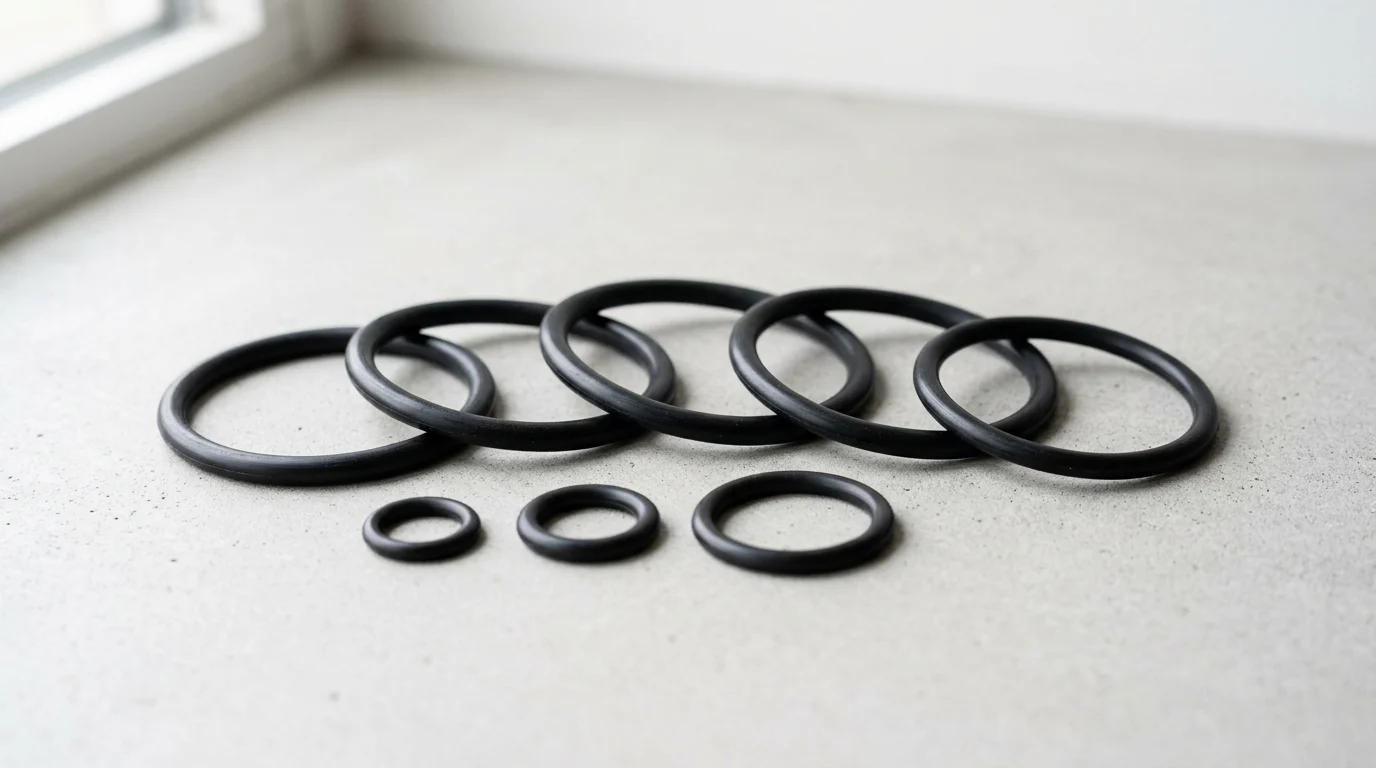
Why O-Ring Seals Become a Reliability Risk
Centrifugal pumps deployed in high-temperature processing environments rely heavily on secondary sealing elements to maintain fluid containment and pressure boundaries. While primary mechanical seal faces handle the dynamic rotational friction, elastomeric O-rings provide the critical static and semi-dynamic seals that prevent process fluid from escaping along the shaft or through the pump casing.
When subjected to extreme thermal environments, these elastomers face accelerated degradation pathways. Understanding the operational parameters that define high-temperature service is the first step in mitigating premature O-ring failure and securing the mechanical integrity of the pumping system.
Define high-temperature pump service
High-temperature pump service is generally defined by process fluid temperatures exceeding 150°C (300°F), with critical applications such as refinery bottoms, heat transfer fluids, and boiler feed water frequently operating between 200°C and 315°C (392°F to 600°F). At these elevated parameters, the thermal limits of standard industrial elastomers are quickly surpassed.
Heat transfer dynamics within the pump mean that the localized temperature at the seal gland can be significantly higher or lower than the bulk fluid temperature, depending on the presence of cooling flushes (API Plan 21, 23, or 32) or heat soak from the pump casing. Engineers must evaluate not just the nominal operating temperature, but the peak thermal excursions that occur during process upsets or pump dry-running conditions.
Identify seal locations in centrifugal pumps
Within a standard centrifugal pump architecture, O-ring seals are strategically positioned at several vulnerable junctions. The most critical locations are within the mechanical seal cartridge, including the dynamic shaft sleeve O-ring, the stationary gland plate gasket, and the semi-dynamic O-rings that allow the spring-loaded seal faces to track axial shaft movement.
Beyond the mechanical seal, O-rings are frequently utilized as casing seals between the pump volute and the back cover, as well as in bearing housing isolators to prevent the ingress of atmospheric moisture and the egress of lubricating oils. Failure at any of these nodes compromises the entire hydraulic system and can lead to immediate mechanical breakdown.
Link O-ring failure to downtime and safety
The degradation and subsequent failure of an O-ring in a high-temperature pump directly correlates to severe operational and safety consequences. From an operational standpoint, a compromised secondary seal often forces an immediate pump shutdown, negatively impacting Mean Time Between Failures (MTBF) and resulting in facility downtime that can cost tens of thousands of dollars per hour in lost production.
From a safety and environmental compliance perspective, O-ring failure leads to the leakage of hazardous or volatile organic compounds (VOCs). Regulatory frameworks, such as EPA Method 21 in the United States, mandate strict fugitive emission limits, often capping allowable leak rates at 500 parts per million (ppm). A single extruded or hardened O-ring can easily cause a pump to violate these thresholds, triggering fines and mandating immediate, costly maintenance interventions.
Common Failure Mechanisms in High-Temperature Service
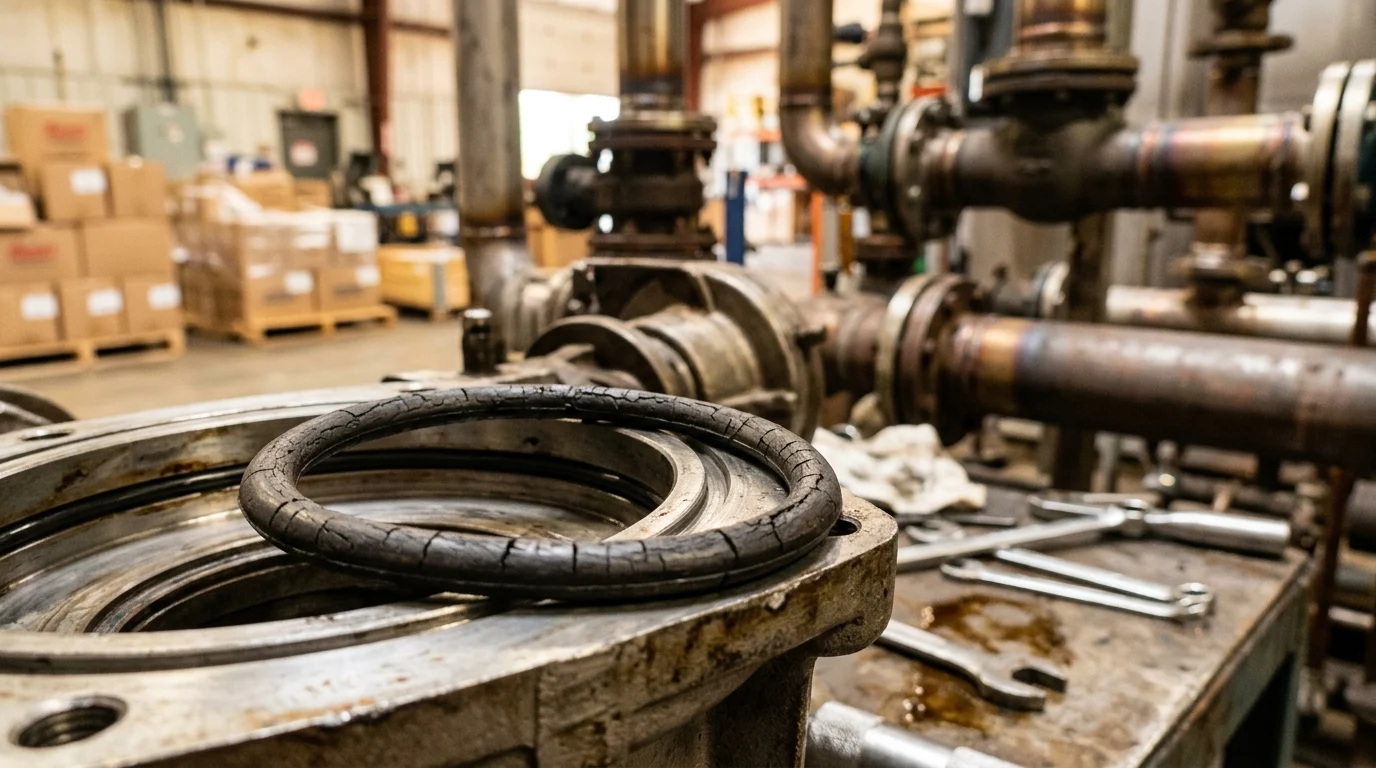
The intersection of intense thermal energy, aggressive chemical media, and mechanical forces creates a hostile environment for elastomeric compounds. High-temperature service accelerates the natural degradation mechanisms of O-rings, transforming a pliable, resilient seal into a brittle or deformed failure point.
Recognizing the physical symptoms of these failure modes allows reliability engineers to implement targeted corrective actions rather than repeatedly replacing seals with the same inadequate materials.
Heat aging, compression set, and hardening
Heat aging and compression set represent the most frequent failure mechanisms for O-rings in elevated temperature applications. As elastomers are exposed to prolonged thermal stress, the polymer chains undergo additional cross-linking, which drastically reduces the material’s elasticity. This phenomenon manifests as compression set, where the O-ring loses its ability to push back against the mating hardware.
In severe cases, an elastomer may exhibit greater than an 80% compression set, meaning it retains almost none of its original elastic memory. Concurrently, heat aging causes significant hardening; it is common for a failed high-temperature O-ring to show a Shore A hardness increase of 10 to 15 points, effectively turning a flexible seal into a rigid, non-conforming plastic ring that permits immediate fluid bypass.
Chemical attack, swelling, and shrinkage
Chemical attack is exponentially accelerated by high temperatures, governed by the Arrhenius equation which dictates that reaction rates roughly double for every 10°C increase in temperature. An elastomer that exhibits minor volume swell at ambient conditions may suffer catastrophic degradation at 200°C.
Chemical incompatibility typically presents as either excessive swelling or severe shrinkage. Swelling occurs when the O-ring absorbs the process fluid, leading to a volume increase exceeding 20%. This causes the seal to overfill its gland, leading to extrusion and friction-induced tearing. Conversely, chemical extraction of the elastomer’s plasticizers results in shrinkage and weight loss, pulling the seal away from the gland walls and eliminating the required sealing squeeze.
Pressure cycling, extrusion, and vibration
Mechanical degradation, driven by pressure cycling and vibration, is exacerbated when an O-ring has been structurally weakened by high temperatures. High-pressure differentials across the seal can force the softened elastomeric material into the microscopic diametral clearances between mating metal parts.
For instance, a diametral clearance of just 0.005 inches can induce severe extrusion if the system pressure exceeds 1,000 psi and the O-ring’s modulus has been lowered by thermal stress. The extruded material is systematically nibbled away by the dynamic vibration of the pump shaft. Furthermore, pressure cycling causes the O-ring to shift back and forth within its groove, leading to fretting wear and eventual catastrophic rupture of the seal profile.
Material Selection for O-Ring Seals
Selecting the appropriate elastomeric compound is the primary defense against premature failure in high-temperature centrifugal pumps. The specification process requires a rigorous balancing of thermal stability, chemical resistance, and commercial viability.
Relying on generic material callouts is a common pitfall; engineers must specify exact polymer grades and cure systems tailored to the unique demands of the process fluid and the thermodynamic environment.
Compare FKM, EPDM, FFKM, and other compounds
The industrial sealing market relies on several core elastomer families, each offering distinct operational envelopes. Standard Fluoroelastomers (FKM) are the workhorse of the industry, generally capable of continuous service up to 204°C (400°F). Ethylene Propylene Diene Monomer (EPDM) offers exceptional resistance to steam and hot water, with specialized peroxide-cured grades pushing temperature limits to 260°C (500°F) in specific aqueous environments. For the most extreme applications, Perfluoroelastomers (FFKM) provide nearly universal chemical resistance and thermal stability up to 327°C (620°F).
| Material Type | Continuous Temp Limit | Primary Strengths | Notable Weaknesses |
|---|---|---|---|
| FKM (Standard) | 204°C (400°F) | Excellent hydrocarbon and oil resistance | Poor resistance to steam and hot amines |
| EPDM (Peroxide Cured) | 150°C – 260°C (300°F – 500°F) | Superior steam, water, and polar solvent handling | Rapid degradation in hydrocarbon fluids |
| FFKM | 327°C (620°F) | Universal chemical compatibility, extreme heat resistance | Extremely high purchase cost, poor low-temp flexibility |
| FEPM (Aflas®) | 232°C (450°F) | Resists strong bases, amines, and sour gas (H2S) | High compression set compared to FKM |
Selecting the appropriate compound requires evaluating the specific thermal peaks of the application, rather than just the nominal operating temperature. Engineers must balance the required thermal headroom against the physical limitations of each material class.
Match materials to fluids, steam, and hydrocarbons
Matching the elastomer to the specific fluid chemistry is as critical as matching it to the temperature. Hydrocarbon processing applications generally default to FKM or FFKM, as EPDM will rapidly swell and disintegrate in the presence of petroleum-based fluids.
However, if the high-temperature application involves steam, boiler feed water, or amine-based solvents, standard FKM will undergo hydrolytic attack and fail prematurely. In such cases, FEPM or specific base-resistant FKM grades must be sourced. In mixed-stream chemical processing where both aggressive hydrocarbons and high-temperature steam are present—such as in certain petrochemical stripping columns—FFKM often becomes the only viable elastomeric solution capable of surviving the dual chemical and thermal assault.
Evaluate lifecycle cost versus purchase price
The lifecycle cost of an O-ring must be evaluated against its initial purchase price, a calculation that becomes highly skewed in high-temperature pump applications. An FFKM O-ring may carry a purchase price 10 to 50 times higher than a standard FKM equivalent.
However, when deployed in a critical refinery charge pump, a single $500 FFKM seal can prevent a catastrophic failure that would otherwise result in $50,000 per day in lost production and secondary mechanical seal damage. Procurement strategies must shift from prioritizing the lowest component cost to maximizing MTBF. A comprehensive Return on Investment (ROI) analysis should factor in replacement labor, hazardous material cleanup, and the statistical probability of process interruption when justifying premium elastomeric compounds.
Design, Installation, and Inspection Practices
The performance of a high-temperature O-ring is heavily dependent on the mechanical environment in which it is housed. Even the most advanced perfluoroelastomer will fail prematurely if the gland design is incorrect or if the seal is compromised during installation.
Precision engineering of the hardware and meticulous maintenance procedures are mandatory to ensure the sealing element achieves its maximum designed lifespan.
Set groove geometry, squeeze, stretch, and gland fill
Proper gland geometry is foundational to O-ring survival. The hardware must provide the correct amount of squeeze to maintain the seal while allowing enough void space for the elastomer to expand when heated. Because elastomers have a coefficient of thermal expansion significantly higher than that of steel, high-temperature glands must be designed with adequate volume.
| Application Type | Recommended Squeeze (%) | Maximum Gland Fill (%) | Primary Design Focus |
|---|---|---|---|
| Static (Face Seal) | 15% – 30% | 85% – 90% | Maximum compression to prevent fluid bypass |
| Dynamic (Shaft/Piston) | 10% – 15% | 80% – 85% | Balancing seal integrity with friction reduction |
| High-Temp/Vacuum | 20% – 30% | 75% – 80% | Accommodating extreme thermal expansion |
If the gland fill exceeds 90% at operating temperature, the expanding O-ring will physically rupture the surrounding metal or extrude violently, a condition known as thermal overfill. Additionally, the stretch applied to the O-ring during installation into a groove should strictly not exceed 5%, as excessive stretch causes a disproportionate reduction in the cross-sectional diameter (the Gow-Joule effect), further compromising the initial squeeze.
Prevent twisting, nicks, and contamination during installation
Installation errors account for a substantial percentage of early pump seal failures. When O-rings are rolled rather than stretched uniformly into their grooves, they can suffer from spiral twisting. In dynamic applications, this twist forces the O-ring to roll over itself, leading to deep spiral cuts and immediate leakage.
Furthermore, installing O-rings over sharp shaft splines, keyways, or unchamfered edges without the use of protective installation sleeves frequently introduces microscopic nicks. In high-temperature environments, these small stress concentrations rapidly propagate into full cross-sectional tears. Contamination from dirt or incompatible assembly lubricants—such as using a silicone-based grease on a silicone O-ring—can also initiate localized chemical breakdown or prevent the seal from seating correctly.
Use inspection findings to diagnose failure patterns
Forensic inspection of failed O-rings provides invaluable diagnostic data for preventing recurring failures. When a pump is pulled for maintenance, the condition of the elastomeric seals must be documented before disposal.
An O-ring with a flattened cross-section across its mating surfaces clearly indicates excessive compression set or severe thermal degradation. If the O-ring exhibits a frilly, chewed edge on the low-pressure side, the clearance gap is too large for the system pressure, necessitating tighter machining tolerances or the addition of anti-extrusion backup rings. Surface blisters, pockmarks, or internal ruptures point directly to explosive decompression, a phenomenon where high-pressure gas permeates the elastomer and expands violently during rapid pump depressurization.
Replace, Redesign, or Upgrade the Sealing System
When high-temperature O-rings consistently fail to meet MTBF targets, maintenance teams must transition from replacing identical parts to actively redesigning the sealing architecture.
Upgrading the system requires a structured approach to problem-solving, leveraging failure data, supplier expertise, and advanced material science to eliminate the root cause of the reliability risk.
Run root cause analysis after seal failure
Conducting a rigorous Root Cause Analysis (RCA) is the critical first step following a premature seal failure. Methodologies such as the ’5 Whys’ or Ishikawa (fishbone) diagrams help isolate the specific variables that led to the breakdown. The RCA must determine whether the failure was driven by a material limitation, a mechanical design flaw, or an operational deviation.
For example, if a pump designed for a continuous 200°C operation experiences frequent, undocumented thermal excursions up to 250°C during startup sequences, simply replacing the O-ring will not solve the issue. The RCA identifies whether the corrective action requires modifying the pump’s operational procedures, upgrading the cooling flush system, or changing the seal material.
Review supplier documentation and test data
Validating a proposed seal upgrade requires close scrutiny of supplier documentation and empirical test data. Engineers should request batch traceability and compliance certificates to ensure the material meets designated ASTM D2000 callouts.
Furthermore, standard data sheets often report physical properties at ambient temperatures, which are irrelevant for high-temperature pump service. Reliability teams must evaluate thermogravimetric analysis (TGA) data and high-temperature compression set tests—such as performance after 70 hours at 200°C. Reviewing exact chemical compatibility charts for the specific elastomer compound, rather than the general base polymer family, ensures the selected seal will perform predictably under the actual process conditions.
Choose standard, upgraded, or redesigned seals
Based on the RCA and supplier data, engineers must choose the most effective intervention. If the failure was due to an incorrect initial specification, upgrading the elastomer—such as moving from standard FKM to a high-performance FFKM—may be sufficient.
However, if the temperature consistently exceeds 327°C (the absolute limit for practical elastomers), a complete redesign of the sealing system is mandatory. This often involves retrofitting the centrifugal pump with spring-energized PTFE (Polytetrafluoroethylene) seals or flexible graphite packing rings, which offer superior thermal resistance up to 288°C and 450°C respectively, though they require different hardware configurations and tighter surface finish tolerances. Choosing between a standard replacement, a material upgrade, or a mechanical redesign ultimately dictates the long-term reliability of the pumping asset.
Key Takeaways
- Treat centrifugal pump service above 150°C (300°F) as high-temperature duty and verify that every O-ring material is rated for the actual seal-gland temperature.
- Evaluate peak thermal excursions from dry running, heat soak, and process upsets because they can damage O-rings even when normal operating temperature appears acceptable.
- Inspect O-rings in mechanical seal cartridges, gland plates, shaft sleeves, casing joints, and bearing isolators because failure at any location can compromise pump containment.
- Use properly engineered cooling or flush plans such as API Plan 21, 23, or 32 to reduce seal-chamber heat and extend elastomer life in hot services.
- Select O-ring compounds based on temperature, chemical compatibility, pressure, extrusion risk, and movement instead of relying on standard elastomers for severe applications.
- Address leakage quickly because a hardened, cracked, or extruded O-ring can reduce MTBF, force downtime, and create fugitive-emission or safety violations.
Frequently Asked Questions
What temperature is considered high-temperature service for centrifugal pump O-rings?
High-temperature pump service generally starts above 150°C (300°F). Refinery bottoms, boiler feed water, and heat-transfer fluid pumps may run between 200°C and 315°C, where standard elastomers can harden, crack, or lose sealing force.
Why do O-rings fail faster in hot centrifugal pumps?
Heat accelerates elastomer aging, compression set, chemical attack, and extrusion. Local seal-gland temperatures can also exceed the process temperature during heat soak, poor flushing, or dry-running events.
Where are O-rings used in a centrifugal pump seal system?
O-rings are commonly used in mechanical seal cartridges, shaft sleeves, gland plates, stationary seats, casing joints, and bearing housing isolators. Failure at any point can cause leakage, contamination, or shutdown.
Can cooling flush plans help prevent O-ring seal failure?
Yes. Flush or cooling arrangements such as API Plan 21, 23, or 32 can reduce seal-chamber temperature, remove heat, and improve seal reliability when correctly designed for the fluid and operating conditions.
What are the safety risks of a failed O-ring in hot pump service?
A failed O-ring can release hazardous fluids, VOCs, or hot process media. In regulated plants, leakage may exceed fugitive-emission limits such as 500 ppm and require immediate repair.

Post time: Sep-05-2026