


Why Identical Mechanical Seals Have Different Prices
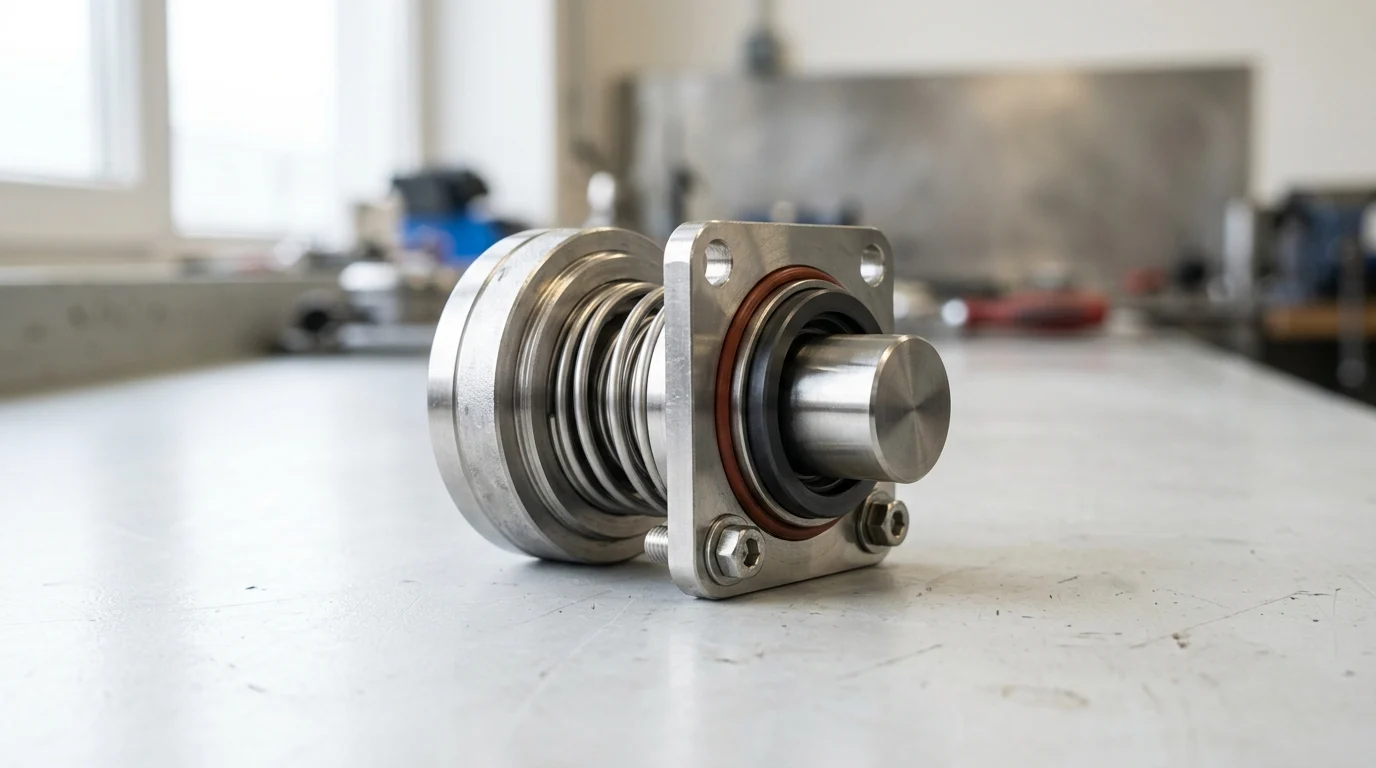
Procurement managers and reliability engineers frequently encounter a perplexing scenario: two mechanical seals that appear visually indistinguishable and share the exact same dimensional footprint carry vastly different market prices. The variance can range anywhere from a modest 20% to a staggering 300% or more. While these components are often labeled as “identical” in casual procurement discussions, this term usually just means they are dimensionally interchangeable.
Understanding the root causes of these price discrepancies requires looking beyond the raw geometry of the component. While external dimensions dictate whether a seal will fit into a pump, the hidden engineering, material science, and commercial support structures determine how long it will survive and what it truly costs the operation.
What Makes Mechanical Seals Truly Identical
The concept of identical mechanical seals usually refers to dimensional interchangeability. A seal designed to fit a standard DIN 24960 or EN 12756 pump chamber will have specific shaft diameters, typically ranging from 20mm to 100mm, and an established operating length. When two manufacturers produce a seal to these exact external specifications, the units will physically fit into the same stuffing box without modifying the pump housing or shaft.
However, dimensional parity does not equate to functional equivalence. The engineering tolerances, the internal geometry of the seal faces, and the dynamic response of the secondary elastomers under pressure are rarely identical. Even when two seals look the same to the naked eye, their performance envelopes under specific pressure-velocity (PV) limits can diverge significantly. A seal rated for 1.2 MPa at 15 meters per second may look exactly like one that will prematurely fail at 0.8 MPa.
Why Purchase Price Is Not the Full Cost
Focusing solely on the initial purchase price obscures the Total Cost of Ownership (TCO). Mechanical seals are critical wear components, and their reliability directly drives the Mean Time Between Failures (MTBF) of rotating equipment. A budget-priced seal acquired for $250 might fail after six months of operation, whereas a premium counterpart costing $800 could operate reliably for over three years.
The true cost of a mechanical seal failure extends far beyond the replacement part. In heavy industries such as petrochemical refining, pulp and paper, or power generation, pump downtime can incur costs ranging from $5,000 to over $20,000 per hour in lost production. Factoring in maintenance labor, hazardous fluid cleanup, and the potential for collateral damage to the pump shaft or bearings, the purchase price difference between two seals becomes minor compared to the financial risk of premature failure.
How Market Positioning Affects Pricing
Market positioning and brand architecture also play a substantial role in pricing structures. Top-tier manufacturers invest heavily in global engineering support, localized application engineering, and extensive research and development. These overhead costs are amortized across their product lines, resulting in a premium market price. Purchasers are not just buying a mechanical seal; they are purchasing access to failure analysis, custom engineering, and guaranteed performance metrics.
Conversely, white-label manufacturers or regional competitors often operate with significantly lower overhead. By reverse-engineering standard seal designs and utilizing established supply chains for raw materials, they can offer functionally similar seals at a fraction of the cost. While these products may perform adequately in standard applications, they lack the proprietary engineering backing and comprehensive warranty support that define premium brands, forcing the buyer to absorb a higher level of technical risk.
Specification Details That Change Seal Pricing
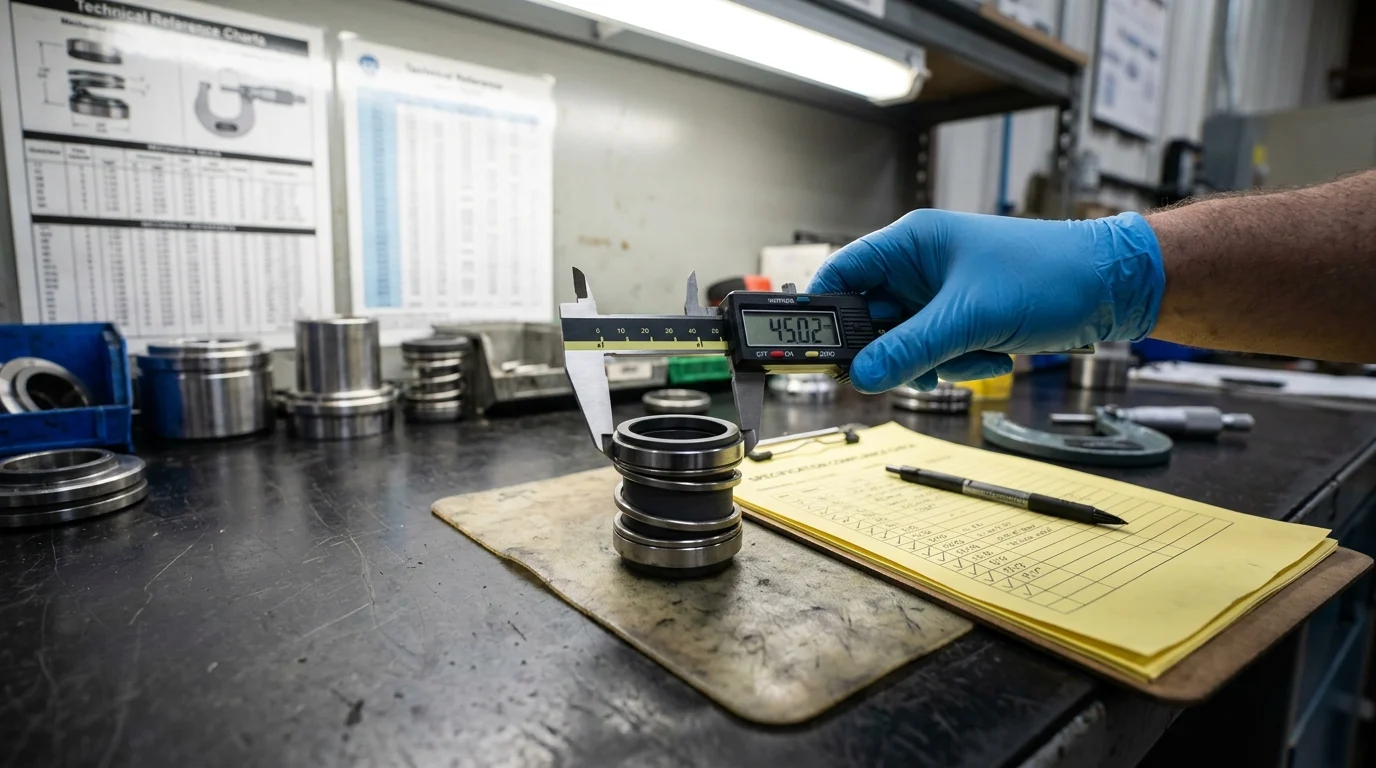
The most significant drivers of mechanical seal pricing are hidden within the bill of materials. To the untrained eye, black rubber looks like black rubber, and a polished metal face looks identical to a high-grade carbide. However, the specific grades of metallurgy, ceramic composites, and elastomeric compounds used in a seal determine its chemical compatibility, thermal limits, and ultimate market value.
Face Materials, Elastomers, and Metallurgy
The selection of face materials and secondary elastomers accounts for the largest variance in raw material costs. Standard utility seals often utilize Carbon-Graphite running against Alumina Ceramic, equipped with standard NBR (Nitrile) elastomers. This combination is highly cost-effective but limited to benign fluids and moderate temperatures.
Upgrading to Silicon Carbide (SiC) or Tungsten Carbide (WC) increases raw material costs exponentially due to the complex sintering and machining processes required. Elastomers present an even more extreme price curve. While standard FKM (Viton) is relatively inexpensive, transitioning to perfluoroelastomers (FFKM) like Kalrez for aggressive chemical resistance can apply a 10x to 20x cost multiplier to the elastomer components alone.
| Seal Configuration | Face Materials | Elastomer Grade | Relative Cost Index | Typical Application |
|---|---|---|---|---|
| Standard Utility | Carbon / Ceramic | NBR (Nitrile) | 1.0x | Clean water, low pressure (<1.0 MPa) |
| Industrial Standard | Carbon / Silicon Carbide | FKM (Viton) | 2.5x | General chemicals, oils, moderate temp |
| High-Performance | SiC / Silicon Carbide | EPDM (Peroxide Cured) | 3.8x | Hot water, caustics, abrasives |
| Severe Service | Tungsten Carbide / SiC | FFKM (Kalrez) | 12.0x – 18.0x | Highly aggressive chemicals, extreme heat |
Tolerances, Surface Finish, and Design Details
Beyond the raw materials, the dimensional tolerances and surface finishes applied during manufacturing drastically alter the cost of production. Mechanical seal faces must be exceptionally flat to prevent fluid leakage while maintaining a microscopic hydrodynamic lubricating film. Flatness is measured in helium light bands; a premium seal face is typically lapped to a flatness of 2 to 3 light bands, which equates to 0.58 to 0.87 microns.
Similarly, surface roughness (Ra) must be tightly controlled, often polished to an Ra of 0.1 to 0.2 microns. Achieving these ultra-precise tolerances requires expensive capital equipment, longer machining cycle times, and highly skilled labor. Lower-priced seals often compromise on these tolerances, leading to higher initial leakage rates, increased friction, and accelerated wear.
Standard, Upgraded, and Premium Options
Identical-looking seals may also differ in their internal design features. A standard seal might feature stamped metal components and spot-welded drive mechanisms, which are cheap to produce in high volumes. A premium alternative of the same size might utilize heavy-duty machined drive lugs, robust pumping rings for enhanced cooling circulation, or shrink-fitted seal faces rather than solid monolithic rings.
These upgraded design details are engineered to handle transient conditions, such as sudden pressure spikes, shaft deflection, or brief periods of dry running. While these features are invisible once the seal is installed in the pump, they are the exact mechanisms that prevent catastrophic failure during an operational upset, justifying the higher purchase price.
Manufacturing Quality and Testing Costs
The physical components of a mechanical seal represent only a fraction of its true cost. A significant portion of the price tag on a premium seal is attributed to the invisible standards of manufacturing quality, environmental controls during assembly, and rigorous testing protocols. These processes ensure that the seal will perform reliably straight out of the box.
Machining, Lapping, and Assembly Standards
The machining and lapping of seal faces are highly sensitive processes. Premium manufacturers operate climate-controlled lapping rooms where temperature and humidity are strictly regulated to prevent thermal expansion of the materials during polishing. Lapping a batch of Silicon Carbide faces to a 2-light-band tolerance can take several hours of continuous machine time.
Furthermore, assembly environments play a critical role in seal longevity. Microscopic particulate contamination trapped between seal faces during assembly can cause immediate scoring and premature failure upon startup. High-end mechanical seals are often assembled in cleanroom environments, utilizing ultrasonic cleaning baths for all components prior to final packaging. These stringent manufacturing standards significantly increase overhead costs compared to basic workshop assembly.
Hydrostatic, Air, and Run-In Testing
Testing is another major cost differentiator. Reputable manufacturers subject their designs to stringent validation protocols, such as those outlined in API 682 for the oil and gas industry. Even for non-API seals, premium units often undergo 100% static hydrostatic testing. A seal designed for 40 bar operation will typically be tested at 1.5x its design pressure (60 bar) to ensure structural integrity and zero leakage.
Dynamic run-in testing, where the seal is operated on a test rig under specific speeds and fluid conditions, is also utilized for highly critical applications. Air testing and helium leak detection methods are employed for gas seals. Manufacturers selling budget seals frequently rely on batch sampling or eliminate functional testing entirely, passing the risk of out-of-box failures directly to the end user.
Traceability, Batch Control, and Documentation
For highly regulated industries such as pharmaceuticals, nuclear power, and petrochemicals, component traceability is non-negotiable. Maintaining rigorous batch control and providing EN 10204 3.1 material certificates guarantees the chemical and physical properties of the metals and elastomers used in the seal.
Implementing Positive Material Identification (PMI) and maintaining lifecycle documentation can add significant administrative overhead to the cost of producing a seal. When a buyer purchases a low-cost identical seal without this documentation, they are assuming the risk of unverified metallurgy, which can result in severe galvanic corrosion or catastrophic chemical degradation in service.
Sourcing Channels and Commercial Factors
The final price paid for a mechanical seal is heavily influenced by the commercial pathway it takes from the factory floor to the plant stockroom. The supply chain tier, regulatory compliance requirements, and inventory strategies utilized by the vendor can inflate or reduce the cost of visually identical components by massive margins.
OEM, Distributor, and Aftermarket Pricing
Original Equipment Manufacturers (OEMs) of pumps often apply substantial markups to replacement mechanical seals. It is common industry practice for a pump OEM to source a seal from a specialized seal manufacturer, assign it a proprietary part number, and apply a 40% to 100% markup. Purchasers buying directly from the pump OEM are paying a premium for the guarantee of an exact fit and the convenience of single-source procurement.
Alternatively, specialized mechanical seal distributors and aftermarket manufacturers offer exact-fit replacements. By bypassing the pump OEM markup, end-users can often procure functionally identical—or even metallurgically superior—seals at a 30% to 50% discount. However, navigating the aftermarket requires technical expertise to ensure the replacement seal truly matches the application requirements.
Certifications, Compliance, and Export Controls
Regulatory compliance acts as a hidden tax on industrial components. Seals destined for food and beverage applications must utilize FDA-compliant elastomers and carbon grades. European explosive environments require ATEX certification, while the water industry demands WRAS or NSF approvals. In the oil and gas sector, NACE MR0175 compliance is mandatory for sour gas applications.
Achieving and maintaining these certifications requires expensive third-party audits, specialized material sourcing, and strict quality management systems. Two mechanically identical seals—one standard and one FDA-certified—will have different market prices because the certified version carries the amortized cost of regulatory compliance.
Lead Time, MOQ, and Inventory Strategy
Availability and inventory management directly impact pricing. Holding millions of dollars in mechanical seal inventory incurs warehousing costs, insurance, and the risk of elastomer degradation over time (shelf life). Vendors who maintain extensive local stock charge a premium for immediate availability.
Lead times and Minimum Order Quantities (MOQ) also heavily influence the price. Ordering a single custom 316L/SiC seal might cost $1,200 due to setup times, whereas ordering an MOQ of 50 units drops the unit price to $400. Furthermore, expediting a specialized seal from a standard 6-week lead time down to a 48-hour emergency delivery can easily incur a 50% to 100% expedite premium, drastically altering the market price of the component.
How Procurement Teams Should Compare Similar Seals
Faced with multiple quotes for seemingly identical mechanical seals, procurement teams and maintenance engineers must move beyond the purchase order price to make technically and commercially sound decisions. Implementing a structured evaluation process ensures that plant reliability is not compromised in the pursuit of upfront cost savings.
Practical Evaluation Criteria
Practical evaluation requires cross-referencing the physical specifications with historical performance data. Procurement teams should mandate that vendors provide detailed bills of materials, specifying exact elastomer grades (e.g., FKM vs. FFKM) and face material manufacturing methods (e.g., reaction-bonded vs. sintered SiC).
Rather than simply restating the importance of TCO, teams should evaluate vendors based on their ability to provide concrete reliability data. A supplier charging a 30% premium should be able to justify that cost through documented case studies, engineering support SLAs, and clear warranty terms that protect the end user against premature failures.
When Lower-Priced Seals Are Justified
There are distinct scenarios where purchasing a lower-priced, standard-tier mechanical seal is highly justified. In balance-of-plant applications, such as clean water transfer pumps operating at ambient temperatures and low pressures (e.g., < 0.5 MPa), the operational stress on the seal is minimal.
In these low-hazard environments, MTBF is naturally long, and the consequences of a seal leak are negligible regarding safety and production loss. Applying an expensive, highly engineered premium seal in a basic utility water pump yields diminishing returns. In these cases, opting for a reputable aftermarket equivalent with standard Carbon/Ceramic faces is the most financially prudent choice. However, this strategy still requires strict supplier qualification; buyers must ensure the lower-cost vendor maintains consistent quality controls, lest they inadvertently introduce high failure rates even in benign applications.
Decision Matrix for Seal Selection
To standardize purchasing decisions, organizations should implement a risk-based decision matrix. A common industry heuristic suggests that roughly 80% of plant applications are non-critical and can utilize standard-tier seals, while the remaining 20% of highly critical pumps account for the vast majority of potential downtime costs and demand premium engineered solutions.
By scoring applications based on fluid hazard, operating pressure, temperature, and the financial impact of downtime, procurement can assign acceptable cost premiums and sourcing tiers objectively, rather than relying on price-tag comparisons alone.
| Application Criticality | Fluid Hazard Level | Acceptable Cost Premium | Recommended Sourcing Strategy | Minimum MTBF Target |
|---|---|---|---|---|
| Low (Balance of Plant) | Non-hazardous (Water) | 0% – 15% | Standard Aftermarket / Distributor | 12 – 18 months |
| Medium (Process Support) | Moderate (Mild chemicals) | 15% – 40% | Proven Tier-2 / OEM Equivalent | 24 – 36 months |
| High (Main Process Line) | Severe (Toxic / Flammable) | 50% – 150%+ | Premium OEM / Engineered Solution | 48 – 60+ months |
Ultimately, navigating the price variance of mechanical seals requires a shift from transactional purchasing to strategic procurement. By understanding the hidden variables—from metallurgy and manufacturing tolerances to testing protocols and supply chain dynamics—organizations can align their seal selection with actual operational risks. Procurement teams that leverage this knowledge will not only optimize their maintenance budgets but also drive long-term plant reliability and safety.
Key Takeaways
- Do not treat dimensionally interchangeable mechanical seals as functionally identical without checking materials, tolerances, elastomer compatibility, and pressure-velocity ratings.
- Evaluate total cost of ownership because a $250 seal that fails in six months can cost more than an $800 seal that runs reliably for several years.
- Factor downtime into procurement decisions, since pump failures in heavy industries can cost $5,000 to more than $20,000 per hour.
- Ask suppliers for application data, material specifications, testing records, and failure support before approving a lower-cost alternative.
- Use premium or engineered seals for high-risk services where leakage, hazardous fluids, or equipment damage would outweigh the initial price saving.
Frequently Asked Questions
Are two mechanical seals identical if they have the same dimensions?
Not necessarily. Matching dimensions usually means the seals are interchangeable in the pump chamber, but materials, face geometry, tolerances, elastomers, and pressure-velocity limits can differ significantly.
Why can mechanical seal prices vary by 20% to 300%?
Price differences often reflect material grade, machining precision, testing, brand support, engineering services, inventory availability, certifications, and warranty coverage—not just the physical size of the seal.
Is the lowest-priced mechanical seal always the best purchasing choice?
No. A low purchase price can lead to higher total cost if the seal fails early, causes downtime, requires frequent maintenance, or damages pump components.
How does material quality affect mechanical seal pricing?
Premium seal faces, springs, and elastomers cost more but usually provide better resistance to heat, pressure, corrosion, and wear, especially in demanding pump applications.
What should buyers compare besides the seal price?
Buyers should compare operating limits, material specifications, MTBF expectations, testing standards, supplier experience, failure support, delivery reliability, and total cost of ownership.

Post time: Aug-20-2026