


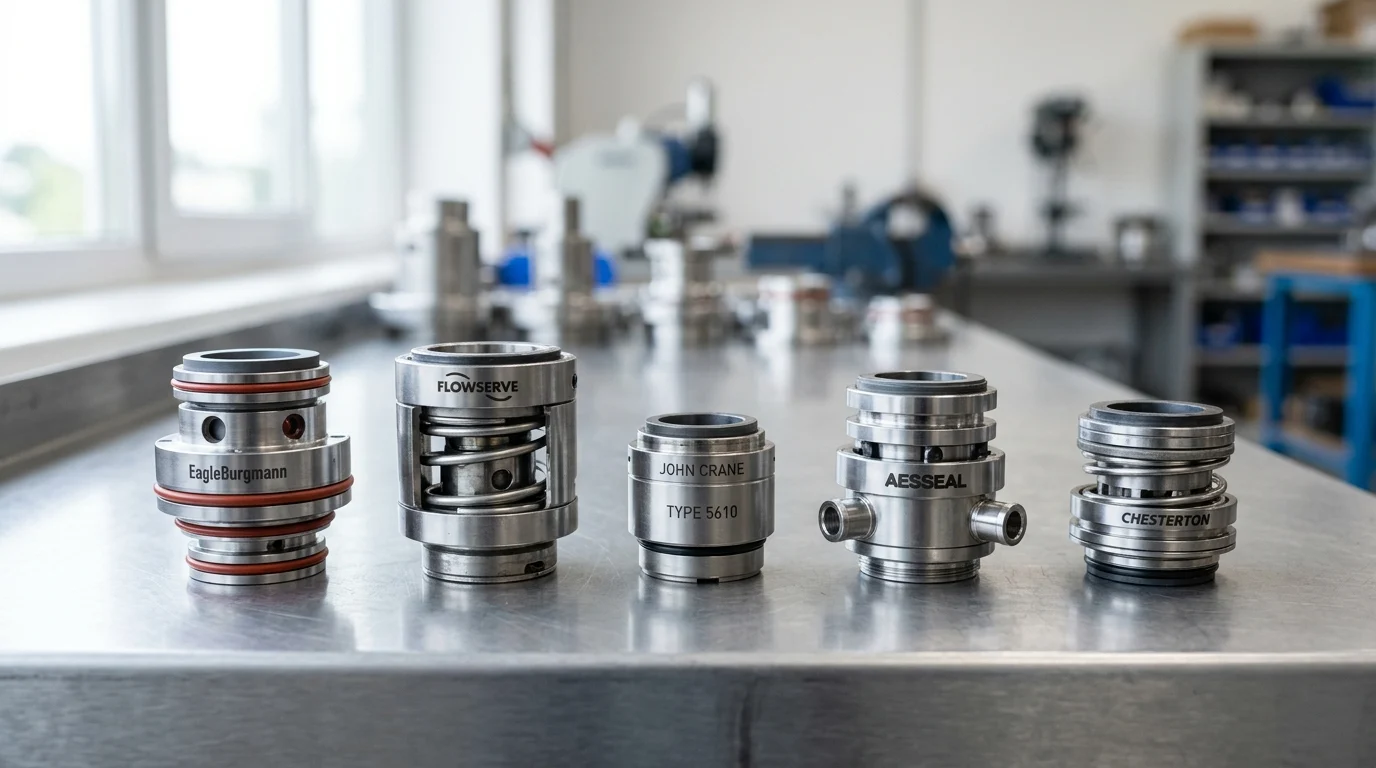
Why Top Mechanical Seal Brands Matter
Mechanical seals form the critical barrier between aggressive process fluids and the external environment in industrial rotating equipment. Selecting a premium mechanical seal manufacturer is a strategic engineering decision that dictates plant safety, environmental compliance, and overall operational efficiency.
The difference between a commodity seal and a highly engineered solution impacts the entire lifecycle of a pumping system. Rather than relying on commodity options, investing in premium seals uses advanced materials and precise geometries that reduce wear and emissions over the lifecycle of a pumping system.
Performance beyond leakage rates
Historically, a mechanical seal’s primary function was simply preventing visible fluid leakage onto the baseplate. However, modern environmental regulations have drastically shifted performance expectations. Top-tier suppliers now engineer their sealing solutions to control fugitive emissions of Volatile Organic Compounds (VOCs) well below stringent regulatory thresholds.
For instance, compliance with EPA Method 21 frequently dictates that emission levels remain strictly below 500 parts per million (ppm). Many zero-emission dual-seal designs even achieve leakage rates approaching absolute zero. Meeting these micro-emission standards requires advanced face topography, hydrodynamic grooving, and precision lapping techniques that lower-tier producers cannot consistently replicate.
Reliability, safety, and downtime impact
Because seal quality directly correlates with plant uptime, brand selection plays a critical role in risk management. A catastrophic seal failure can cause hazardous chemical spills, fires, and immediate plant shutdowns. While standard commodity seals might offer a Mean Time Between Failures (MTBF) of 12 to 18 months in moderate applications, premium solutions often target 48 to 60 months of uninterrupted service under optimal conditions.
When factoring in the cost of unscheduled downtime—which industry benchmarks suggest can easily reach tens of thousands of dollars per hour in large-scale petrochemical refining or offshore oil production—the reliability of an engineered seal often justifies its initial cost. Furthermore, advanced designs incorporate safety containment features, such as secondary backup seals or contacting containment rings, to prevent massive atmospheric releases if a primary face fails.
Where leading brands create measurable value
Top-tier suppliers create measurable financial value through operational efficiency improvements, particularly within seal support systems. When designed and optimized by industry experts, dual pressurized mechanical seals manage barrier fluid circulation with exceptional efficiency and significantly reduce flush fluid consumption.
As a hypothetical illustration, retrofitting an aging ANSI pump handling moderate-temperature water with a premium engineered seal and a closed-loop support system can reduce flush water usage by up to 2.5 gallons per minute (GPM) per pump. Scaled across a mid-sized processing facility operating 100 such pumps continuously, this type of targeted upgrade can save millions of gallons of water annually. These water savings trigger corresponding reductions in the energy required to heat, cool, or chemically treat the flush fluid, drastically shrinking the plant’s carbon footprint and utility overhead.
Top Mechanical Seal Brands to Compare
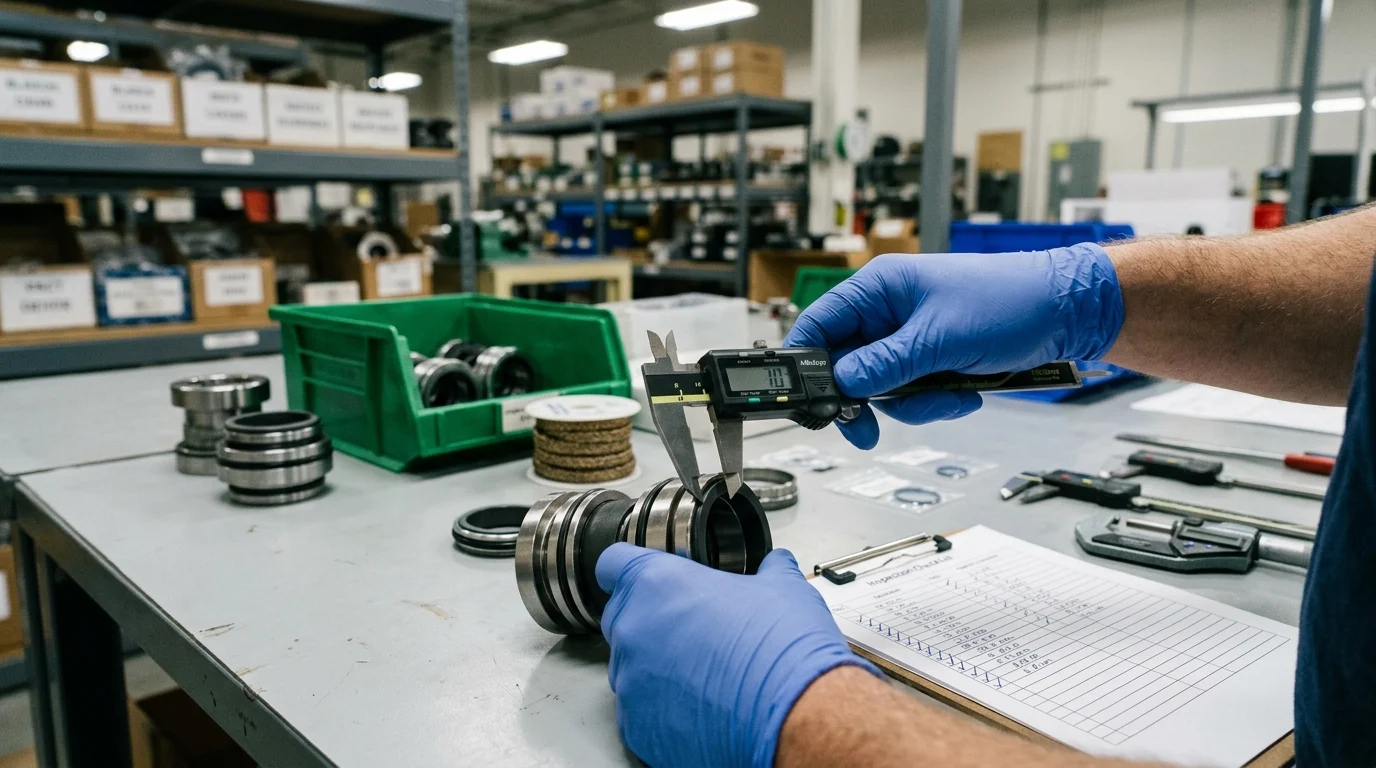
A select group of highly specialized companies dominates the global market for mechanical seals. Evaluating these suppliers requires an understanding of their historical expertise, research and development capabilities, and global support infrastructure.
Because rotating equipment operates in vastly different conditions across various industries, identifying the right manufacturing partner requires looking beyond basic product catalogs to examine the specific technological domains where each company excels.
Leading global manufacturers
Five major conglomerates—John Crane, Flowserve, EagleBurgmann, AESSEAL, and A.W. Chesterton—are among the most prominent in the global market for highly engineered industrial seals. These industry leaders operate multi-million dollar R&D facilities, continuously advancing tribology, metallurgy, and fluid dynamics.
Their prominence stems from an ability to provide comprehensive sealing solutions that encompass not just the mechanical seal itself, but the associated API piping plans, barrier fluid reservoirs, and continuous condition monitoring sensors. However, the market also relies heavily on highly specialized mid-tier and regional brands, such as Garlock and Flex-A-Seal, which offer targeted expertise in areas like high-performance elastomers and custom edge-welded metal bellows.
Brand strengths by application
While top brands are highly competitive and offer overlapping product lines, each has carved out distinct technical strengths—and corresponding limitations—based on decades of application-specific engineering. Recognizing these specializations allows procurement and reliability teams to match their exact process challenges with the manufacturer best equipped to solve them. It is also crucial to acknowledge the caveats of premium brands: they can be cost-prohibitive for basic utility applications, and their complex global supply chains sometimes result in longer lead times for custom components compared to agile regional suppliers.
| Brand | Core Technical Specialization | Primary Target Industries | Acknowledged Limitations / Trade-offs | Relative Price Tier |
|---|---|---|---|---|
| John Crane | Dry gas seals, non-contacting technologies, API 682 | Oil & Gas, Pipeline, Petrochemical | Can be over-engineered and cost-prohibitive for basic water/utility applications. | Premium / Highest |
| Flowserve | High-pressure/high-temperature engineered seals | Power Generation, Chemical Processing | Complex global supply chain can occasionally slow custom component delivery. | Premium |
| EagleBurgmann | Compressor seals, standardized modular seal ranges | Refining, Pharmaceuticals, Aerospace | Less dominant in heavy-duty mining slurries compared to specialized competitors. | Premium |
| AESSEAL | Component modularity, advanced seal support systems | Water/Wastewater, Pulp & Paper, Mining | Historically less entrenched in extreme high-pressure API 682 refinery applications. | Mid-to-Premium |
| Chesterton | Split mechanical seals, heavy-duty slurry seals | Mining, Minerals, General Manufacturing | Smaller footprint in highly specialized aerospace or dry gas compressor seals. | Mid-to-Premium |
| Garlock | High-performance elastomers, heavy-duty sealing | Chemical, Food & Beverage, Mining | Primary market dominance is in static sealing rather than dynamic API 682 seals. | Mid-to-Premium |
| Flex-A-Seal | Edge-welded metal bellows, custom cartridges | General Industrial, Chemical Processing | Smaller global support footprint compared to the top five conglomerates. | Mid-Tier |
Understanding these historical strengths helps reliability engineers match the specific demands of their rotating equipment to the brand with the deepest proprietary knowledge in that niche. For example, a plant dealing with massive slurry pumps naturally gravitates toward brands with proven split-seal and heavy-duty elastomer technologies, rather than paying a premium for a brand specializing in dry gas compressor seals.
Regional availability and installed-base fit
Even the most advanced mechanical seal becomes a liability if replacement parts or technical support remain unavailable during a critical outage. Top suppliers differentiate themselves through extensive global networks of authorized repair centers and rapid-response engineering teams.
For critical continuous-process plants, regional availability is non-negotiable. Major suppliers typically guarantee 24- to 48-hour turnaround times for seal refurbishments in major industrial hubs. Furthermore, standardizing on a brand that aligns with a plant’s existing installed base reduces inventory holding costs. Modular components and seal faces can often interchange across multiple pump sizes, minimizing the need for redundant spare parts.
Technical Criteria for Selecting Seal Brands
Selecting a mechanical seal requires rigorous evaluation of technical specifications. The chosen manufacturer must demonstrate the capability to deliver materials and designs that withstand the exact physical and chemical stresses of the target application.
Engineers must closely examine the metallurgical quality, elastomer compatibility, and certified performance envelopes that separate premium engineered products from basic commodity seals.
Face materials and elastomer compatibility
A mechanical seal’s longevity depends primarily on the tribological pairing of its primary mating faces and the chemical compatibility of its secondary elastomers. Top-tier suppliers utilize advanced grades of sintered Silicon Carbide (SiC) and Tungsten Carbide (WC) to ensure extreme hardness, blister resistance, and superior thermal conductivity.
These companies lap seal faces to exacting flatness specifications, typically within 2 to 3 helium light bands (approximately 23.2 to 34.8 microinches). For secondary sealing, premium lines offer proprietary perfluoroelastomer (FFKM) O-rings capable of resisting aggressive solvents, amines, and sour gases that rapidly degrade standard Viton or EPDM components.
Operating pressure, temperature, and speed limits
Operating limits strictly separate commodity seals from highly engineered tier-one products. When evaluating brands for severe service applications, engineers must verify the manufacturer’s proven performance envelopes and ensure the company utilizes finite element analysis (FEA) to predict face distortion under load.
| Operating Parameter | Standard Industrial Seals | Premium Engineered Seals |
|---|---|---|
| Maximum Pressure | Up to 300 PSI (20 bar) | Up to 4,000 PSI (275 bar) |
| Temperature Range | -20°F to 300°F (-29°C to 149°C) | -100°F to 800°F (-73°C to 426°C) |
| Surface Speed | Up to 3,000 FPM (15 m/s) | Up to 10,000 FPM (50 m/s) |
| Fluid Viscosity | Low to moderate (Water, light oils) | High viscosity and heavy abrasive slurries |
Industry leaders design seal faces that maintain parallel fluid films even under extreme pressure distortions and high-speed centrifugal forces. This engineering depth allows premium mechanical seals to operate safely at the absolute margins of industrial fluid dynamics.
API, ISO, FDA, and ATEX compliance
Regulatory and industry standard compliance serves as a mandatory technical criterion in specialized sectors. In the hydrocarbon processing industry, manufacturers must adhere strictly to API 682 (4th Edition) standards, which mandate rigorous qualification testing to guarantee a minimum of 25,000 hours of continuous operation without failure.
In the pharmaceutical and food and beverage sectors, brands must provide seals constructed from FDA 21 CFR 177 compliant materials with sanitary, crevice-free designs that support Clean-in-Place (CIP) protocols. Furthermore, explosive environments require ATEX certification to ensure the seal assembly will not generate surface temperatures or friction sparks capable of igniting ambient flammable gases.
Procurement and Total Cost Evaluation
Initial purchase price alone should never drive the procurement of mechanical seals. A comprehensive Total Cost of Ownership (TCO) evaluation reveals that premium mechanical seals can offer substantial long-term savings through enhanced reliability and reduced maintenance overhead.
By analyzing the seal’s complete lifecycle—from acquisition and installation to daily operation and eventual refurbishment—organizations make financially sound procurement decisions that benefit the bottom line.
Total cost of ownership drivers
Initial capital expenditure (CapEx) typically accounts for only 10% to 15% of a mechanical seal’s Total Cost of Ownership. Operational expenditure (OpEx)—including barrier fluid consumption, parasitic energy losses, and maintenance labor—drives the remaining 85% to 90%.
For example, a standard commodity seal might cost $2,000 upfront but incur $15,000 in operational costs over five years due to a 1.5 kW continuous power draw from friction and high flush-water usage. Premium designs mitigate these costs through optimized face geometries that reduce frictional heat generation, lowering continuous energy consumption and extending the lifespan of both the seal and the pump bearings. Furthermore, warranty terms and limitation-of-liability clauses vary substantially among manufacturers. A comprehensive TCO evaluation must account for these differences, as premium brands may offer extended performance guarantees that offset their higher initial costs.
Distributor and support quality
The quality of the distributor network and post-sale support proves just as critical as the hardware itself. Top brands invest heavily in localized technical support, providing on-site vibration analysis, laser alignment, and inventory optimization services.
When evaluating a brand, procurement teams must assess the local distributor’s stocking policies. Critical metrics include the Minimum Order Quantity (MOQ) for custom elastomer compounds—where specialized suppliers often accommodate single-unit orders for critical assets rather than demanding 50-piece minimums—and the availability of consignment inventory programs that place critical spares directly on the plant floor at zero initial holding cost.
Shortlisting, testing, and approval process
Transitioning to a new mechanical seal brand or upgrading an existing problematic application requires a structured testing and approval protocol. Reputable manufacturers support this process by offering comprehensive Factory Acceptance Testing (FAT) to validate performance before deployment.
For highly engineered, critical-path seals, manufacturers perform dynamic testing at 100% of the rated operating conditions—often incorporating built-in safety margins into the rating itself—providing detailed telemetry on face temperatures and leakage rates before the seal ever leaves the factory. This rigorous shortlisting and approval process ensures the selected seal meets the performance criteria established during the procurement phase.
How to Choose the Right Mechanical Seal Brand
Ultimately, choosing the right manufacturing partner requires a multidimensional decision that aligns with the specific operational realities, maintenance maturity, and budget constraints of the industrial facility.
Balancing technical capabilities against commercial realities demands a methodical approach, ensuring the final selection delivers optimum reliability without unnecessarily inflating capital budgets.
Decision matrix by industry and application
To objectify the selection process, reliability engineering teams frequently utilize a weighted decision matrix tailored to their specific industry. For a critical petrochemical charge pump, the matrix might heavily favor API 682 compliance and proven MTBF, weighting reliability at 50%, technical support at 30%, and initial cost at only 20%.
Conversely, a municipal wastewater facility dealing with non-hazardous, low-pressure applications might weigh initial cost and modular interchangeability much higher. Global conglomerates offer diverse product portfolios capable of satisfying both extremes, but mapping the brand’s specific strengths against the plant’s unique operational matrix remains essential for optimal selection.
Premium versus regional brand trade-offs
Plant managers often face the dilemma of choosing between a premium global brand and a lower-cost regional alternative. Premium global brands typically command a 40% to 60% higher initial purchase price, which buys advanced metallurgy, rigorous quality assurance, and global engineering support.
However, the choice is rarely binary. Many regional and mid-tier brands now produce fully API 682-compliant seals, secure direct OEM pump partnerships, and successfully serve high-pressure applications. These manufacturers legitimately compete and offer excellent value in standardized ANSI pump applications handling non-hazardous fluids, utility water, or low-duty cycle services where failure consequences are minimal. Conversely, while regional brands have closed the technology gap, some may still lack the extensive R&D pedigree or global failure-analysis resources required for the most volatile or highly abrasive fluids. The trade-off ultimately comes down to asset criticality: for any pump where failure results in severe process interruption, environmental fines, or safety hazards, the premium brand’s price differential often serves as a measured risk-mitigation strategy.
Final selection checklist
Before finalizing a brand selection and issuing purchase orders, engineering and procurement teams should execute a comprehensive final checklist:
- Request material certificates: Verify documentation (e.g., EN 10204 3.1) to ensure strict metallurgical traceability.
- Verify CAD availability: Confirm the manufacturer provides 3D CAD models for seamless integration into plant piping designs.
- Validate system compatibility: Ensure the seal design integrates flawlessly with the required API Plan seal support systems.
- Review warranty terms: Compare brand-specific warranty conditions and limitation-of-liability clauses.
- Confirm training support: Ensure the supplier provides comprehensive on-site installation training for maintenance personnel to prevent improper commissioning.
Ultimately, the best brand choice synthesizes these technical and commercial factors with the specific operational profile. A refinery requiring dry gas seals will naturally lean toward John Crane, while a wastewater plant prioritizing modularity might find AESSEAL to be the optimal fit. Heavy-duty mining operations often benefit most from Chesterton’s slurry expertise, whereas general chemical processing might find the perfect balance of cost and performance in mid-tier options like Flex-A-Seal or Garlock. While modern features like IoT-enabled condition monitoring are becoming valuable additions, matching the manufacturer’s core historical strength to the plant’s most critical application remains the surest path to long-term reliability.
Key Takeaways
- Select mechanical seal brands based on lifecycle reliability, emissions control, and application support rather than initial purchase price alone.
- For regulated services, verify that seal designs can support fugitive-emission targets such as EPA Method 21 limits below 500 ppm.
- Use engineered or dual pressurized seals for hazardous, high-value, or emission-sensitive fluids to improve containment and reduce plant risk.
- Premium mechanical seals can extend expected service life from typical 12–18 month commodity performance toward 48–60 months in suitable applications.
- Evaluate seal support systems because optimized closed-loop designs can reduce flush water consumption by up to 2.5 GPM per pump in retrofit scenarios.
- Consider manufacturers such as Victor Seals when standard or OEM replacement seals are needed for industrial pumps, marine equipment, and major pump brands.
Frequently Asked Questions
What makes a mechanical seal brand suitable for industrial applications?
A suitable brand offers proven leakage control, compatible materials, stable face technology, reliable supply, and engineering support for the pump, fluid, pressure, temperature, and speed conditions in your plant.
How do premium mechanical seals reduce downtime?
Premium seals use better face materials, precision lapping, optimized springs, and application-specific designs to reduce wear and vibration-related failure, helping extend service life and lower unplanned maintenance.
When should I choose a dual mechanical seal?
Choose a dual mechanical seal for hazardous, toxic, abrasive, high-value, or emission-sensitive fluids where leakage must be tightly controlled and a barrier or buffer fluid system is required.
Does Victor Seals manufacture OEM replacement mechanical seals?
Yes. Ningbo Victor Seals produces standard and OEM mechanical seals, including pump shaft seals, cartridge seals, double seals, and spare parts for brands such as Allweiler, Flygt, Alfa Laval, and Imo.
Which seal types are commonly used in marine pump applications?
Marine pumps often use rubber bellow, elastomer bellow, wave spring, unitized elastomer, cartridge, and single spring mechanical seals, depending on pump type, shaft size, and service conditions.
Post time: Aug-23-2026