


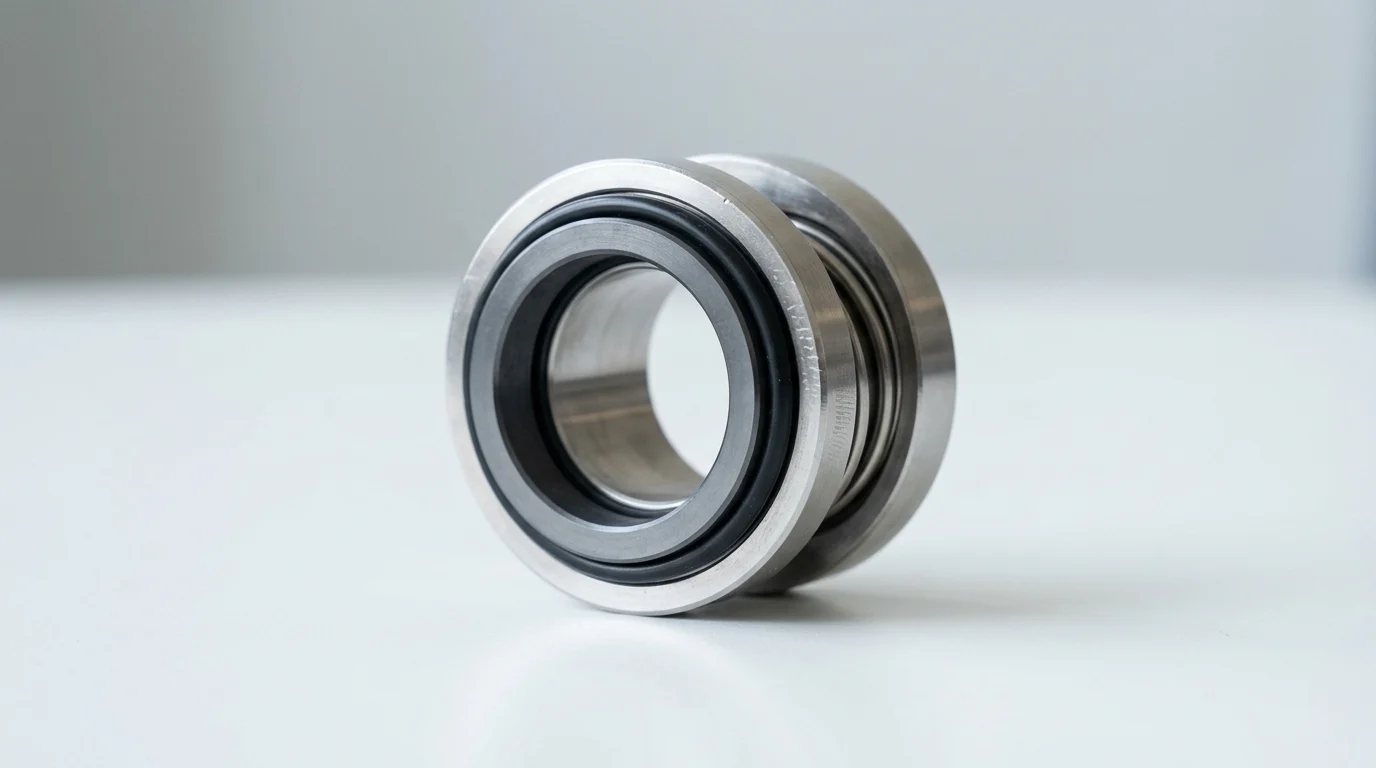
Why Aftermarket Mechanical Seals Are a Strategic Pump Option
In industrial fluid handling, mechanical seals represent a critical point of failure and a significant ongoing maintenance expense. Historically, plant operators have defaulted to Original Equipment Manufacturer (OEM) parts to guarantee compatibility and performance. However, shifting supply chain dynamics, escalating OEM pricing, and extended delivery schedules have prompted reliability engineers and procurement teams to evaluate aftermarket mechanical seals. Integrating aftermarket alternatives is increasingly viewed not merely as a cost-cutting tactic, but as a strategic approach to lifecycle management and downtime mitigation.
The decision to pivot away from OEM dependency requires a rigorous understanding of fluid dynamics, metallurgy, and reverse-engineering precision. When executed correctly, sourcing from top-tier aftermarket manufacturers allows facilities to maintain Mean Time Between Repairs (MTBR) while optimizing operating expenditures. The core challenge lies in differentiating high-fidelity engineered replacements from substandard knock-offs.
Aftermarket vs OEM Mechanical Seals
The “aftermarket” category broadly encompasses both independent seal manufacturers producing their own proprietary designs and third-party machine shops specializing in reverse-engineered replacements. The primary distinction between OEM and high-tier aftermarket mechanical seals lies in the supply chain and branding rather than the fundamental physics of the sealing mechanism. OEMs design the pump and specify the seal, but they frequently outsource the actual seal manufacturing to specialized third-party producers. Top-tier aftermarket suppliers often possess the same CNC machining capabilities, lapping equipment, and raw material access as these original producers. Consequently, high-quality aftermarket seals are reverse-engineered to match or exceed the exact dimensional tolerances and material specifications of the original components.
While OEM seals carry the brand assurance of the pump manufacturer, they also carry a substantial premium. Procurement data indicates that aftermarket mechanical seals typically offer a capital cost reduction of 30% to 60% compared to direct OEM equivalents. However, achieving parity in performance requires the aftermarket supplier to utilize identical or superior face materials, elastomeric compounds, and spring metallurgy.
Repair Economics and Downtime Risk
Pump failure economics are rarely dominated by the price of the replacement seal; the true cost driver is unscheduled downtime and lost production. OEM supply chains have become increasingly volatile, with standard mechanical seal lead times frequently stretching to 8 to 12 weeks for non-stocked items. In continuous process industries such as hydrocarbon processing or pulp and paper, waiting months for an OEM seal is highly disruptive to operations.
Aftermarket manufacturers typically operate with more agile production models, often delivering custom-machined or standard replacement seals within 1 to 2 weeks, and sometimes offering 24-to-48-hour emergency expediting. While this agility drastically reduces the downtime risk profile, operators must also weigh contractual risks. Installing non-OEM parts can void existing pump warranties or violate “OEM-only” clauses in service agreements, making it essential to review vendor contracts before switching.
| Comparison Factor | OEM Mechanical Seals | Tier-1 Aftermarket Seals |
|---|---|---|
| Initial Capital Cost | Baseline (High Premium) | 30% to 60% lower than OEM |
| Typical Lead Time | 8 to 12 weeks | 1 to 3 weeks (often stocked) |
| Design Customization | Rigid, requires engineering review | Highly flexible, easy material upgrades |
| Warranty Support | Standard manufacturer warranty | Often matches or exceeds OEM terms |
Key Specifications for Aftermarket Mechanical Seals
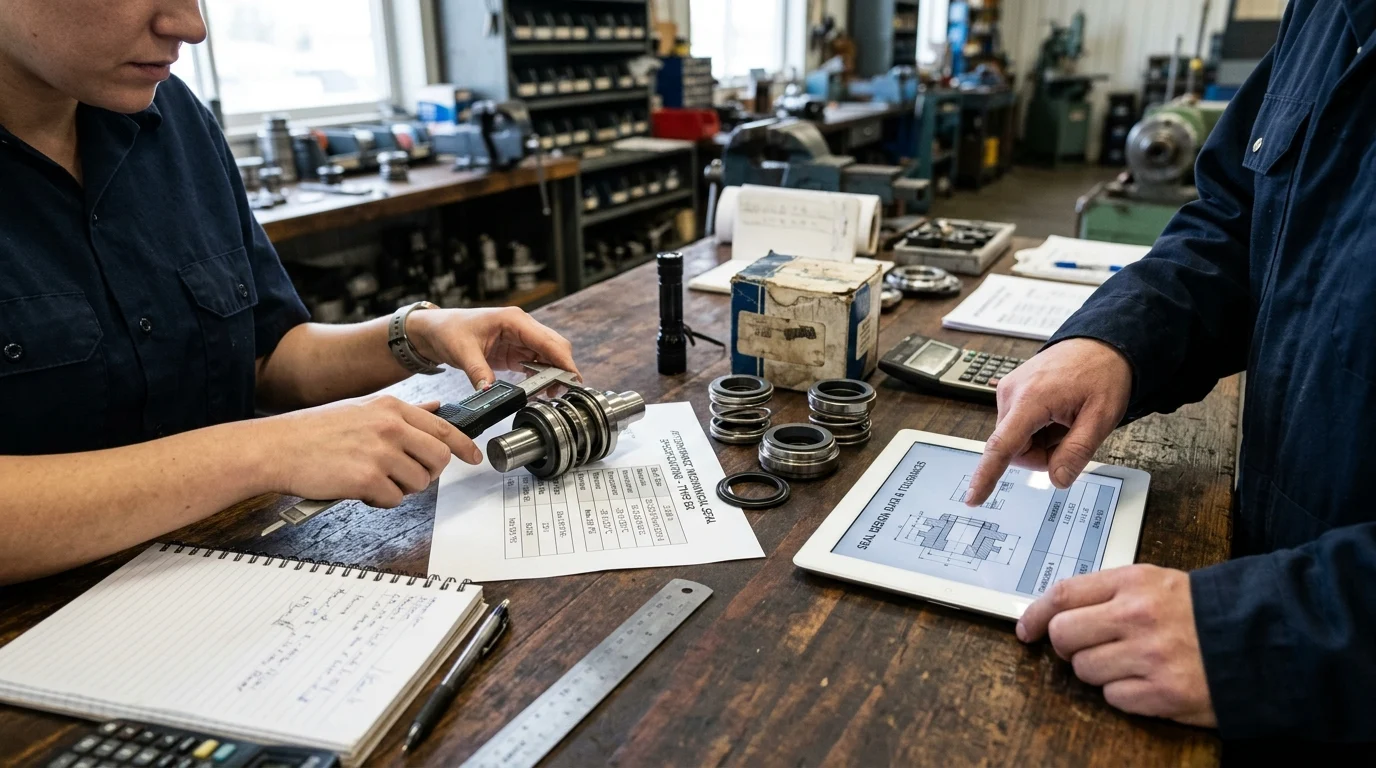
Specifying an aftermarket mechanical seal demands precise engineering alignment with the pump’s operational envelope. A seal is not a static plug; it is a dynamic, highly engineered interface that must manage pressure, temperature, and chemical compatibility simultaneously. Relying solely on a part number cross-reference is insufficient for critical applications.
Dimensional and Operating Requirements
The fundamental requirement for any aftermarket seal is absolute dimensional parity with the pump’s stuffing box or seal chamber. Critical dimensions include the shaft or sleeve outer diameter, the seal chamber inner diameter, and the available axial operating length. Standard ANSI and API pump shaft sizes typically range from 1.375 inches to 2.750 inches, but aftermarket suppliers must hold tolerances to within ±0.001 inches to ensure proper fit and prevent dynamic runout.
Beyond static dimensions, the seal must be rated for the system’s dynamic operating limits. This is quantified by the Pressure-Velocity (PV) limit—a calculation multiplying the pressure drop across the seal by the sliding velocity of the seal faces—which dictates the seal’s ability to handle the frictional heat generated at the mating surfaces. For instance, a standard aftermarket pusher seal might be rated for up to 300 PSI and a shaft speed of 3,600 RPM, whereas engineered boiler feed pump seals must withstand pressures exceeding 1,500 PSI.
Face Materials, Elastomers, Springs, and Metallurgy
Material selection dictates the seal’s chemical resistance and wear life. Aftermarket suppliers must provide direct equivalents or superior upgrades for the primary seal faces. Common pairings include carbon graphite against silicon carbide (SiC) for general service, or SiC against tungsten carbide (WC) for abrasive slurries. The metallurgy of the metal components—such as the gland plate, sleeve, and springs—must match the corrosive profile of the pumped fluid, frequently requiring 316 stainless steel, Alloy 20, or Hastelloy C-276.
Elastomeric secondary seals (O-rings and bellows) are equally critical. A high-quality aftermarket seal must specify the exact elastomer grade, whether standard FKM (Viton), EPDM for hot water, or perfluoroelastomers (FFKM) like Kalrez for aggressive chemicals and extreme temperatures, which can peak near 327°C (620°F) depending on the specific manufacturer’s grade and duration limits. Substituting a lower-grade elastomer is a common failure point in substandard aftermarket parts.
OEM vs Aftermarket Comparison Criteria
When evaluating OEM against aftermarket specifications, engineers must scrutinize the micro-tolerances. Seal face flatness is a paramount metric, typically measured using an optical flat and a monochromatic helium light source. Both OEM and acceptable aftermarket seal faces must be lapped to a flatness of 2 to 3 light bands (approximately 0.000023 to 0.000035 inches). Any deviation beyond this threshold will result in excessive leakage.
Additionally, surface finish parameters must be compared. The operational life of the seal depends heavily on the surface roughness (Ra) of the sliding components. A standard specification requires the hard faces (SiC or WC) to maintain an Ra of 0.1 to 0.2 micrometers. Rigorous aftermarket suppliers will provide documentation proving their lapping processes achieve these exacting surface finishes.
Quality and Compliance Requirements
The transition to aftermarket mechanical seals introduces variables in quality assurance that must be systematically managed. In heavy industries, a catastrophic seal failure can lead to environmental incidents, hazardous chemical exposure, and millions in lost revenue. Therefore, aftermarket providers must operate under quality management systems that are indistinguishable from those of top-tier OEMs.
Traceability and Manufacturing Controls
Robust traceability is the foundation of mechanical seal reliability. Every component of an engineered aftermarket seal must be fully traceable back to its raw material origins. This requires the supplier to operate under an ISO 9001-certified quality management system and provide certified Material Test Reports (MTRs) for all metallic components. Heat numbers must be permanently marked on glands and sleeves to verify metallurgical composition.
Manufacturing controls extend into the machining and assembly phases. Advanced aftermarket facilities utilize CNC multi-axis lathes and automated lapping machines calibrated to stringent tolerances. Statistical Process Control (SPC) should be actively employed to monitor dimensional consistency across production batches. Without these strict controls, poorly sourced aftermarket seals frequently suffer from specific failure modes. Common issues include incorrect spring loads due to reverse-engineering errors, or premature chemical degradation from unseen material substitutions in secondary components.
Pressure Testing and Performance Validation
Before an aftermarket seal is installed, it must undergo rigorous validation to ensure it will perform under designated system pressures. Static pressure testing is a non-negotiable quality control step for assembled cartridge seals. Reputable aftermarket manufacturers will hydrostatically test cartridge assemblies to at least 110% of their Maximum Allowable Working Pressure (MAWP) to verify the integrity of O-rings, gaskets, and primary faces.
For more demanding applications, dynamic performance validation may be required. This involves running the seal on a test rig that simulates the pump’s operational speed, fluid temperature, and pressure. The test measures face temperature rise, torque requirements, and leakage rates, ensuring the aftermarket unit performs strictly within the acceptable leakage thresholds (often measured in parts per million or drops per minute) prior to shipment.
Industry Standards and Hazardous-Area Requirements
In highly regulated sectors such as oil and gas, petrochemicals, and pharmaceuticals, aftermarket seals must comply with rigid industry standards. For hydrocarbon processing, API 682 (ISO 21049) is the definitive standard. If an aftermarket supplier claims to offer an API-compliant seal, they must adhere to the standard’s specific dimensional envelopes, material configurations, and qualification testing protocols, which require 500 hours of dynamic testing with specific process fluids.
Hazardous-area operations impose additional compliance burdens. Facilities operating within the European Union must ensure their equipment meets ATEX directives for explosive atmospheres. Aftermarket mechanical seals deployed in these zones must be assessed for ignition hazards, particularly regarding the maximum surface temperature generated by seal face friction. Furthermore, food and pharmaceutical applications demand compliance with FDA and USP Class VI standards for all elastomeric and carbon components to prevent process contamination.
How to Source and Validate Aftermarket Mechanical Seals
Sourcing aftermarket mechanical seals should never be reduced to a simple transactional purchase based on the lowest bid. It requires a structured validation process to assess the supplier’s technical competence, manufacturing capabilities, and quality control rigor. Establishing a standardized qualification protocol protects the facility from the inherent risks of substandard reverse-engineering.
Pre-Order Verification Steps
The procurement journey begins with comprehensive pre-order verification. Reliability engineers should request detailed engineering drawings and a Bill of Materials (BOM) from the prospective aftermarket supplier. These documents must be cross-referenced against the original pump specifications. Key verification points include verifying the flush, quench, and drain port orientations, as well as confirming the axial movement tolerances.
It is also critical to audit the supplier’s reverse-engineering methodology. If the supplier is duplicating an existing OEM seal, do they utilize 3D coordinate measuring machines (CMM) and optical comparators? The accuracy of the digital twin directly dictates the performance of the physical part. Facilities should request case studies or reference contacts from other plants utilizing the supplier’s seals in similar fluid applications.
Supplier Engineering Support
The true value of an elite aftermarket seal provider is found in their engineering support capabilities. Unlike pure catalog distributors, specialized aftermarket manufacturers employ fluid sealing engineers who can perform comprehensive failure analysis on the spent OEM seal. By analyzing wear patterns, heat checking on the faces, or elastomer extrusion, they can identify the root cause of premature failures.
This technical support enables the aftermarket supplier to recommend strategic upgrades rather than merely supplying a direct, identical replacement. For example, if a standard OEM seal repeatedly fails at 4,000 hours due to poor lubricity in a light hydrocarbon application, the aftermarket engineer might redesign the seal faces with advanced hydrodynamic grooves (micro-machined surface patterns that promote fluid film generation) or upgrade the face material to a specialized blister-resistant carbon (formulated to withstand localized fluid vaporization), thereby extending the operational lifespan.
Receiving Inspection and Installation Checks
Upon delivery, the facility’s maintenance personnel must execute a stringent receiving inspection before the aftermarket seal is authorized for installation. This includes visually inspecting the lapped faces for any handling damage, scratches, or chips, as even microscopic imperfections will compromise the fluid film. Verification of the elastomer durometer (typically ranging from 70 to 90 Shore A depending on the compound) ensures the correct secondary seals were installed.
During installation, technicians must perform crucial mechanical checks. The pump shaft runout must be measured using a dial indicator; for most standard aftermarket cartridge seals, total indicator reading (TIR) should not exceed 0.002 inches. Furthermore, the perpendicularity of the seal chamber face to the shaft must be verified to prevent angular misalignment, ensuring the aftermarket seal operates within its designed geometric envelope.
When Aftermarket Mechanical Seals Are Worth Buying
Determining whether aftermarket mechanical seals are worth the investment requires a pragmatic assessment of operational risk, lifecycle costs, and application demands. While the financial incentives are compelling, a blanket policy replacing all OEM seals with aftermarket alternatives is rarely the optimal strategy. A nuanced, application-specific approach yields the highest return on investment.
Best-Fit Pump Applications
Aftermarket seals deliver the highest value in balance-of-plant equipment and non-hazardous fluid applications. Best-fit scenarios include water and wastewater treatment, cooling tower circulation, general chemical transfer, and pulp processing. In these applications, the operating parameters (pressures typically below 300 PSI and temperatures below 150°C) are well within the standard engineering capabilities of reputable aftermarket manufacturers.
Conversely, highly toxic service or extreme high-pressure/high-temperature (HPHT) applications require intense scrutiny. While top-tier aftermarket manufacturers can produce engineered seals for these demanding environments, the margin for error is virtually zero. In such cases, facilities must ensure the aftermarket provider has an exceptionally low, rigorously documented defect rate and carries comprehensive liability insurance. In scenarios where supplier liability, strict regulatory compliance, and proven OEM track records outweigh cost considerations, aftermarket seals definitively should not be used.
Total Cost of Ownership and Lead Time
The ultimate financial justification for aftermarket seals lies in a Total Cost of Ownership (TCO) analysis. TCO encompasses not only the initial purchase price but also inventory carrying costs, maintenance labor, and the financial impact of lead-time-induced downtime. Because aftermarket suppliers frequently maintain localized inventories or rapid-machining capabilities, facilities can significantly reduce their on-site spare parts inventory while mitigating the risk of extended outages.
| Cost Component | OEM Seal Lifecycle (5 Years) | Aftermarket Seal Lifecycle (5 Years) |
|---|---|---|
| Initial Unit Cost | $4,500 | $2,800 |
| Inventory Carrying Cost | $900 (Requires dedicated sparing) | $300 (Supplier stocks components) |
| Expedite Fees / Downtime | $12,000 (8-week lead time risk) | $2,000 (1-week lead time risk) |
| Repair / Refurbishment | $2,500 per event | $1,400 per event |
| Estimated 5-Year TCO | $19,900 | $6,500 |
Final Approval Decision Framework
To formalize the transition, maintenance and procurement teams should adopt a structured final approval decision framework. This involves categorizing plant pumps based on criticality (e.g., Critical, Essential, General Purpose). General Purpose and Essential pumps should be targeted for immediate aftermarket integration, capturing the bulk of the potential cost savings and lead time reductions.
For Critical pumps, the framework should mandate a pilot program. An aftermarket seal is installed on a single redundant asset and monitored for vibration, temperature, and leakage over a defined operational period, typically 6 to 12 months. If the aftermarket seal matches or exceeds the MTBR benchmarks of the OEM seal, it can be formally approved for site-wide specification. Ultimately, while OEM seals remain preferable for certain critical applications where supplier liability and proven track records are paramount, a validated aftermarket strategy provides a viable path to optimizing plant reliability and maintenance budgets.
Key Takeaways
- Compare aftermarket and OEM seals on total repair economics, because downtime and lead time often matter more than the seal’s purchase price.
- Use qualified aftermarket seals to reduce initial part costs by 30% to 60% when compatibility and material specifications are properly verified.
- Plan around supply risk, since non-stocked OEM seals may take 8 to 12 weeks while many aftermarket suppliers can deliver in 1 to 2 weeks.
- Validate face materials, elastomers, spring metallurgy, and dimensional tolerances before approving any aftermarket mechanical seal.
- Review pump warranties and service agreements before installing non-OEM seals to avoid contractual or warranty conflicts.
- Choose experienced manufacturers that can support standard, OEM-style, and custom replacement seals for the specific pump and operating conditions.
Frequently Asked Questions
Are aftermarket mechanical seals as reliable as OEM seals?
They can be, if sourced from a qualified manufacturer using matching dimensions, face materials, elastomers, and spring metallurgy. Reliability depends more on engineering quality and application fit than on the brand label.
How much can aftermarket mechanical seals reduce repair costs?
High-quality aftermarket seals often reduce initial part costs by 30% to 60% compared with OEM equivalents, but total savings also depend on uptime, installation quality, and service life.
When should I avoid using aftermarket seals?
Avoid switching if the pump is under warranty, an OEM-only service contract applies, or the supplier cannot verify materials, tolerances, and compatibility with the pumped fluid and operating conditions.
Do aftermarket seals help reduce pump downtime?
Yes, they can. OEM lead times for non-stocked seals may reach 8 to 12 weeks, while agile aftermarket manufacturers may supply standard or custom replacements in 1 to 2 weeks, sometimes faster for emergencies.
What should I check before buying a replacement mechanical seal?
Confirm shaft size, seal chamber dimensions, rotation, pressure, temperature, fluid compatibility, face materials, elastomer grade, and whether the seal design matches the pump’s operating duty.

Post time: Aug-21-2026