


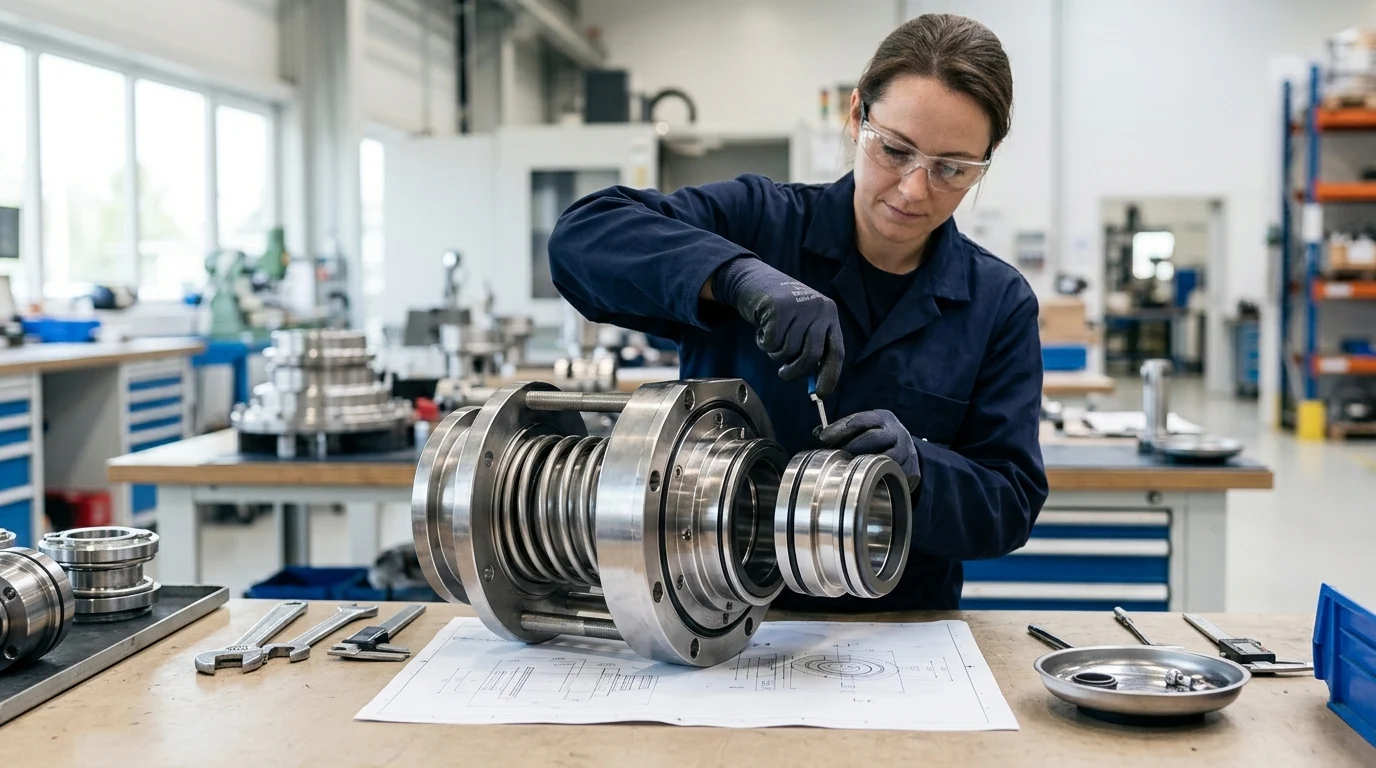
Why Mechanical Seal OEM Manufacturing Capability Matters
Procuring mechanical seals directly from an Original Equipment Manufacturer (OEM) requires rigorous validation of their manufacturing capabilities. In critical industrial applications—ranging from hydrocarbon processing to chemical synthesis—the integrity of a mechanical seal dictates the operational uptime of centrifugal pumps and agitation equipment. A single catastrophic seal failure can result in tens of thousands of dollars in downtime, fluid loss, and environmental remediation costs. Consequently, verifying that a supplier possesses genuine, in-house manufacturing capabilities rather than merely acting as an assembler or broker is a foundational imperative for procurement engineering.
Strategic value of verified OEM capability
Verified OEM capability provides a strategic bulwark against supply chain disruptions and intellectual property risks. When a manufacturer controls the entire production lifecycle, from raw material procurement to final dynamic testing, they can guarantee dimensional consistency and material provenance. This end-to-end control directly correlates with improved Mean Time Between Failures (MTBF). Facilities upgrading from generic aftermarket seals to verified OEM components frequently report MTBF extensions from a baseline of 12,000 hours to over 24,000 hours, significantly reducing total lifecycle costs and unplanned maintenance interventions.
Commercial signals of a true OEM supplier
Distinguishing a genuine mechanical seal OEM from a trading entity requires analyzing specific commercial and operational signals. True manufacturers typically reinvest 5% to 8% of their annual revenue into research and development, maintaining dedicated engineering teams rather than relying solely on external blueprints. Workforce composition serves as a critical indicator; a facility where engineering and quality assurance personnel comprise greater than 15% of the total headcount demonstrates a commitment to process control. Furthermore, verifiable OEMs possess substantial capital equipment footprints, direct purchasing agreements with primary carbide and graphite producers, and transparent supply chain architectures that easily withstand third-party audits.
How to Define OEM Mechanical Seal Manufacturing Capability
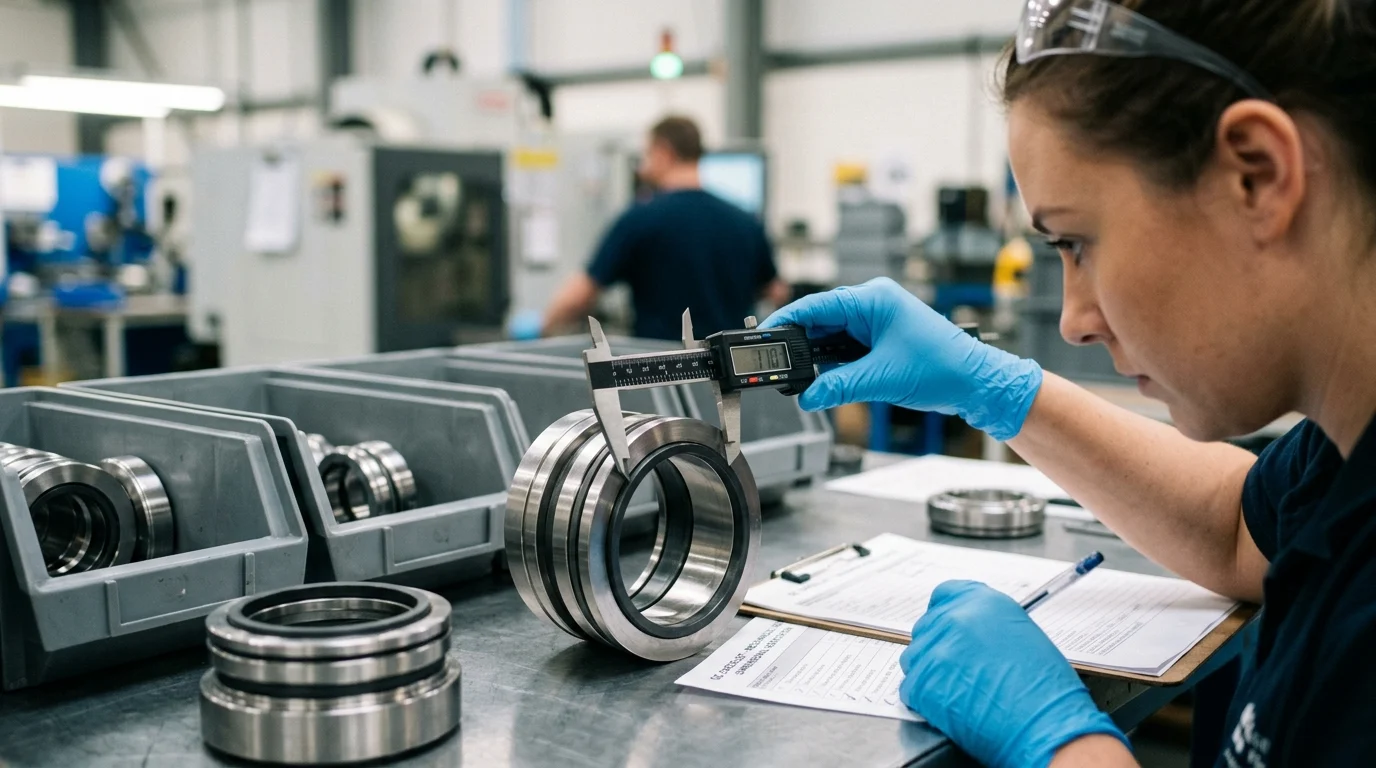
Defining mechanical seal OEM manufacturing capability requires delineating the technical boundaries of what the facility can autonomously execute. A comprehensive OEM does not merely procure finished seal faces and O-rings for localized assembly; rather, it possesses the metallurgical, ceramic, and precision machining competencies necessary to fabricate critical components from raw or semi-finished states. The capability spectrum spans from initial thermodynamic modeling to the execution of sub-micron surface finishing.
Required technical scope
The required technical scope for a top-tier mechanical seal manufacturer centers on extreme precision machining and surface finishing. Primary seal rings demand exceptional flatness and smoothness to maintain fluid films on a microscopic scale. A verified OEM must possess in-house lapping and polishing capabilities capable of achieving surface flatness within 1 to 2 helium light bands (approximately 0.29 to 0.58 microns) and a surface roughness (Ra) of 0.1 micrometers or better. The ability to consistently hold these tolerances across production batches of 500 to 1,000 units without yield degradation is the hallmark of validated manufacturing maturity.
Product families and material coverage
A comprehensive capability assessment must evaluate the manufacturer’s proficiency across diverse product families and advanced material grades. Mechanical seals operate in highly corrosive and abrasive environments, necessitating expertise in processing reaction-bonded silicon carbide (RBSiC), sintered silicon carbide (SSiC), tungsten carbide (nickel and cobalt bound), and resin-impregnated carbon graphite. Additionally, the OEM must demonstrate competency in secondary sealing elements, handling advanced elastomers like FFKM (perfluoroelastomers) and FKM.
| Seal Face Material | Typical Hardness (Vickers) | Max Temperature Limit | Primary Application Domain |
|---|---|---|---|
| Carbon Graphite (Resin) | 100 – 120 HV | 260°C (500°F) | General water, light hydrocarbons |
| Sintered Silicon Carbide | 2500 – 2800 HV | 1400°C (2550°F) | Highly corrosive, abrasive media |
| Tungsten Carbide (Ni) | 1400 – 1600 HV | 400°C (750°F) | High pressure, heavy slurry applications |
| Aluminum Oxide (99%) | 1500 – 1700 HV | 1600°C (2900°F) | Highly corrosive, low-abrasion chemicals |
Design authority versus build-to-print capability
Procurement teams must distinguish between a supplier holding design authority and one restricted to build-to-print execution. Build-to-print manufacturers require fully dimensioned drawings and material specifications, limiting their ability to solve application-specific failures. Conversely, an OEM with true design authority employs finite element analysis (FEA) to model thermal distortion and mechanical deflection under high-pressure conditions (e.g., >60 bar). These manufacturers can engineer custom face topographies, such as hydrodynamic grooves, and optimize balance ratios, transforming them from component suppliers into strategic engineering partners.
How to Audit Mechanical Seal Production Capability
Conducting a formal audit of a mechanical seal production facility bridges the gap between a supplier’s marketing claims and their actual operational reality. Whether utilizing frameworks derived from ISO 9001, API Spec Q1, or VDA 6.3, the audit must systematically evaluate the conversion of raw materials into high-precision sealing systems. This requires a physical or rigorous virtual walkthrough of the production floor, focusing on process adherence, equipment capability, and data integrity.
Key process steps to inspect
The audit must trace the complete sequence of critical process steps. Evaluators should begin at raw material quarantine and proceed through CNC turning and milling of seal housings, sintering or pressing of seal faces, and the highly critical lapping and polishing stages. Subsequent steps, including ultrasonic cleaning to remove abrasive residues and final assembly, must also be scrutinized. Cleanliness is paramount; high-performance seals, particularly those destined for aerospace or pharmaceutical applications, should be assembled in environmentally controlled areas or certified cleanrooms (ISO Class 7 or 8) to prevent particulate contamination from compromising seal face integrity.
Equipment, tooling, and production controls
Evaluating the production equipment and the associated controls provides quantifiable evidence of manufacturing capability. Auditors should look for multi-axis CNC machining centers capable of maintaining tight concentricity and perpendicularity tolerances. Automated lapping machines with integrated flatness monitoring are preferable to manual lapping processes, which introduce operator variance. Furthermore, the facility must utilize advanced metrology equipment, such as Coordinate Measuring Machines (CMM) with volumetric accuracy to 0.5 microns, and monochromatic light sources with optical flats for face inspection. Statistical Process Control (SPC) should be actively utilized on critical dimensions, with a target Process Capability Index (Cpk) consistently exceeding 1.33.
Sample traceability and documentation review
Robust traceability ensures that any field failure can be traced back to its root cause, whether it be a machining anomaly or a raw material defect. Auditors must review the facility’s Enterprise Resource Planning (ERP) system to verify that every production batch is assigned a unique serial or lot number. This documentation review should confirm that material test reports (MTRs) are permanently linked to the finished seal assemblies. A capable OEM will retain these traceability records, along with associated dimensional inspection reports and operator logs, for a minimum of 10 to 15 years, ensuring long-term accountability for capital equipment components.
How to Verify Quality Control, Compliance, and Testing
Validating a mechanical seal manufacturer’s quality control (QC) and compliance frameworks ensures that their production capabilities consistently yield reliable products. Manufacturing precision is irrelevant if the quality assurance protocols fail to detect deviations before shipment. Verifying these systems involves a deep dive into empirical testing data, third-party certifications, and the methodologies used to address non-conformances.
Inspection records and test reports
Inspection records and test reports form the empirical foundation of quality verification. Evaluators must demand documented evidence of both static and dynamic testing. For seals utilized in oil and gas applications, testing protocols should align with API 682 requirements, which may dictate static pressure testing at 40 bar (600 psi) or higher, depending on the seal category. Dynamic test rigs should be available in-house to simulate operational speeds, temperatures, and pressures while monitoring for frictional heat generation and leakage rates. The presence of helium mass spectrometry for ultra-low leak detection (frequently required for fugitive emission compliance) further validates a sophisticated QC environment.
Certifications and standards alignment
Alignment with recognized international standards provides external validation of the OEM’s internal processes. At a minimum, the facility must maintain an active ISO 9001:2015 certification audited by a reputable registrar. For specialized industries, the compliance requirements escalate; petrochemical applications demand adherence to API 682 (4th Edition) design and testing parameters, while explosive environments require ATEX directive compliance. If the OEM supplies the food, beverage, or pharmaceutical sectors, they must provide material compliance certificates proving adherence to FDA regulations, USP Class VI standards, or EHEDG guidelines for hygienic design.
Failure analysis and corrective action evidence
A manufacturer’s maturity is most accurately measured by how they respond to failures. Auditors should request examples of past failure analyses and the resulting corrective actions. The OEM should demonstrate proficiency in formalized problem-solving methodologies, such as the 8D (Eight Disciplines) approach. Evidence of advanced root cause analysis (RCA)—such as utilizing Scanning Electron Microscopy (SEM) to investigate seal face blistering, heat checking, or chemical attack—indicates a highly capable engineering department. The implementation of permanent corrective actions that update Failure Mode and Effects Analysis (FMEA) and control plans proves that the organization operates with a continuous improvement mindset.
How to Make the Final Supplier Decision
The culmination of capability definitions, process audits, and quality verifications is the final supplier selection. Transitioning to a new mechanical seal OEM carries inherent operational risks, necessitating a structured, data-driven decision-making process. Procurement and engineering teams must synthesize the gathered intelligence to objectively compare potential partners and execute a phased onboarding strategy.
Capability, cost, and risk scorecard
A formalized scorecard aligns cross-functional teams on the supplier’s overall viability. This matrix should weight technical capability, quality assurance, commercial competitiveness, and supply chain risk based on organizational priorities. By quantifying these parameters, procurement can mitigate subjective biases and establish a clear baseline for supplier performance.
| Evaluation Category | Weighting | Key Metrics & Scoring Criteria | Target Threshold |
|---|---|---|---|
| Technical & Engineering | 30% | In-house design, FEA, custom material formulation | > 85% score |
| Quality & Metrology | 30% | Cpk > 1.33, API 682 test rigs, 100% traceability | Zero critical gaps |
| Commercial & Capacity | 20% | Lead times (e.g., < 4 weeks standard), Cost variance | Top quartile pricing |
| Risk & Compliance | 20% | ISO/ATEX certifications, Financial stability index | Approved status |
Pilot orders and validation steps
Before awarding broad production contracts, the OEM must successfully navigate a pilot order and validation phase. This typically mirrors the Production Part Approval Process (PPAP), requiring the supplier to submit comprehensive documentation (Level 3 equivalent) alongside the first article components. Pilot orders should involve a statistically significant Minimum Order Quantity (MOQ)—often 20 to 50 units for standard seals, or 1 to 5 units for highly engineered cartridge seals—to verify that the manufacturer can maintain tolerances outside of a controlled prototype environment. These pilot seals are then subjected to rigorous field trials or in-house endurance testing by the buyer.
Decision rules for approval or rejection
Clear decision rules must be established to dictate the final approval or rejection of the OEM. Critical red flags that trigger immediate disqualification include the discovery of outsourced core processes (such as third-party lapping of critical seal faces without disclosure), falsified material test reports, or an inability to achieve a defect rate below the industry standard of 0.1%. Conversely, approval is granted when the supplier meets all scorecard thresholds, successfully passes pilot validation without dimensional or performance deviations, and demonstrates the scalable capacity to meet projected annual volumes. Once approved, the OEM is integrated into the approved vendor list (AVL) with a defined schedule for ongoing performance monitoring.
Key Takeaways
- Verify that the supplier controls machining, materials, assembly, and final testing in-house before treating it as a true mechanical seal OEM.
- Use precision benchmarks such as 1 to 2 helium light bands of seal face flatness and Ra 0.1 micrometers or better to assess manufacturing maturity.
- Prioritize OEMs with engineering and quality assurance teams exceeding 15% of total headcount because this indicates stronger process control.
- Check whether the manufacturer reinvests about 5% to 8% of annual revenue into R&D to confirm long-term technical capability.
- Request evidence of stable batch production across 500 to 1,000 units without yield degradation to validate repeatable seal quality.
- Choose OEM components over generic aftermarket seals when lifecycle cost and uptime matter, as verified OEM capability can help extend MTBF from 12,000 to more than 24,000 hours.
Frequently Asked Questions
Why should buyers verify a mechanical seal OEM’s in-house capability?
Verification helps confirm the supplier can control materials, machining, assembly, and testing instead of acting as a broker. This reduces failure risk, improves consistency, and can lower downtime costs in pump and rotating equipment applications.
What manufacturing tolerances indicate a capable mechanical seal OEM?
A capable OEM should demonstrate precision lapping and polishing, including seal face flatness within 1 to 2 helium light bands and surface roughness around Ra 0.1 micrometers or better.
What commercial signals suggest a supplier is a true OEM?
Look for dedicated engineering teams, quality assurance staff above 15% of headcount, direct material sourcing, substantial machining and testing equipment, and R&D investment of roughly 5% to 8% of annual revenue.
How can OEM capability affect mechanical seal service life?
Verified OEM manufacturing can improve dimensional consistency and material provenance, which supports longer MTBF. Some facilities moving from generic aftermarket seals to verified OEM components report MTBF gains from 12,000 to over 24,000 hours.
What product range should a mechanical seal OEM be able to support?
A comprehensive OEM should support standard and custom seals, pump shaft seals, cartridge seals, double mechanical seals, water pump seals, and replacement parts for common industrial pump brands.

Post time: Aug-25-2026