


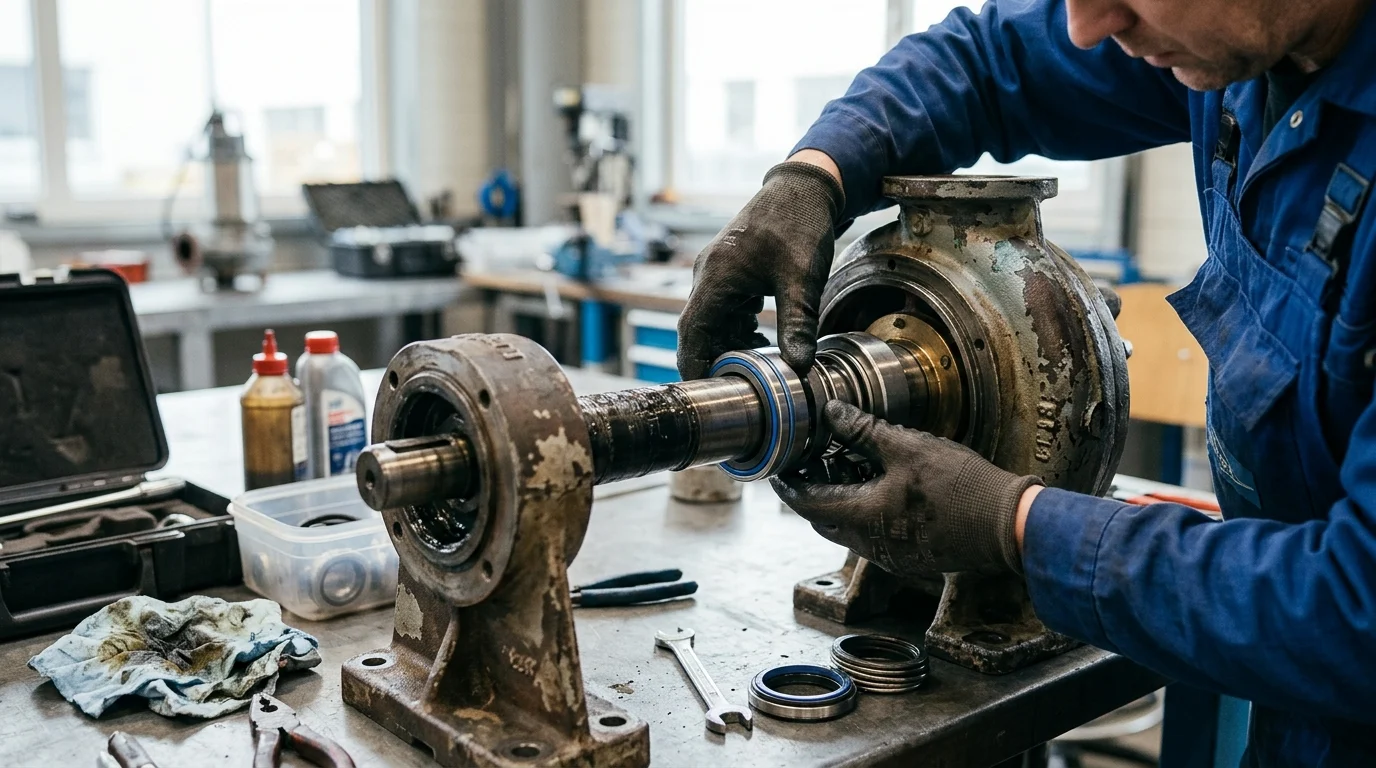
Why Flygt Mechanical Seal Replacement Matters
Submersible wastewater pumps operate in unforgiving industrial and municipal environments, constantly battling abrasive media, variable hydraulic loads, and corrosive chemicals. At the core of a Flygt pump’s defense mechanism is its mechanical seal system, designed to maintain a strict barrier between the pumped fluid and the critical electrical components housed within the motor casing. Proper and timely Flygt mechanical seal replacement is a fundamental requirement for sustaining the asset’s lifecycle and preventing catastrophic operational failures.
Typically, mechanical seals in municipal wastewater applications are engineered to deliver an operational lifespan ranging from 8,000 to 12,000 hours, depending on the concentration of suspended solids and the specific gravity of the effluent. However, variables such as dry running, cavitation, and improper initial installation can drastically truncate this timeline. Understanding the implications of seal degradation enables facility operators to transition from reactive firefighting to predictive maintenance, optimizing overall plant efficiency.
Impact on wastewater pump reliability
The reliability of a submersible wastewater pump hinges almost entirely on the integrity of its sealing mechanism. Flygt pumps utilize a tandem dual mechanical seal configuration operating within an oil buffer chamber. The primary (lower) seal interfaces directly with the wastewater, acting as the first line of defense. The secondary (upper) seal separates the oil chamber from the dry motor housing. When the primary seal begins to degrade, abrasive particulate breaches the barrier fluid, rapidly deteriorating the secondary seal faces.
Once both seals are compromised, fluid ingress into the stator housing is inevitable. This leads to immediate electrical grounding, bearing washout, and severe mechanical vibration. Monitoring systems may detect an increase in vibration signatures—often exceeding typical alarm thresholds, such as 0.25 in/s RMS on certain models—or trigger a moisture sensor alert in the stator housing. Addressing seal wear before these secondary alarms activate preserves the mechanical integrity of the rotor assembly and ensures the pump consistently meets its designed hydraulic output.
Failure costs to consider before replacement
The financial disparity between proactive seal replacement and reactive failure repair is substantial. Scheduled mechanical seal replacements generally involve the cost of the seal kit, barrier fluid, standardized labor, and minor consumables. Conversely, allowing a seal to fail completely initiates a cascade of destructive events that necessitates a full pump overhaul. This includes stator rewinding or replacement, bearing replacement, machining of the rotor shaft, and extensive decontamination procedures.
To illustrate the financial impact, consider the cost dynamics associated with a standard 15 kW to 30 kW submersible wastewater pump. The direct parts and labor for a preventative seal replacement might range between $800 and $1,500. In contrast, a catastrophic failure resulting from ignored seal degradation easily escalates repair costs to between $6,000 and $12,000, not accounting for the hidden costs of environmental compliance fines or emergency bypass pumping rentals.
| Maintenance Strategy | Average Direct Cost (15-30kW Pump) | Estimated Downtime | Secondary Damage Risk | Components Replaced |
|---|---|---|---|---|
| Preventative Seal Replacement | $800 – $1,500 | 4 – 8 Hours | Minimal | Seal kit, O-rings, buffer oil |
| Reactive Failure Repair | $6,000 – $12,000 | 2 – 4 Weeks | Severe (Motor/Bearings) | Seals, stator, bearings, shaft machining |
How to Select the Correct Flygt Mechanical Seal
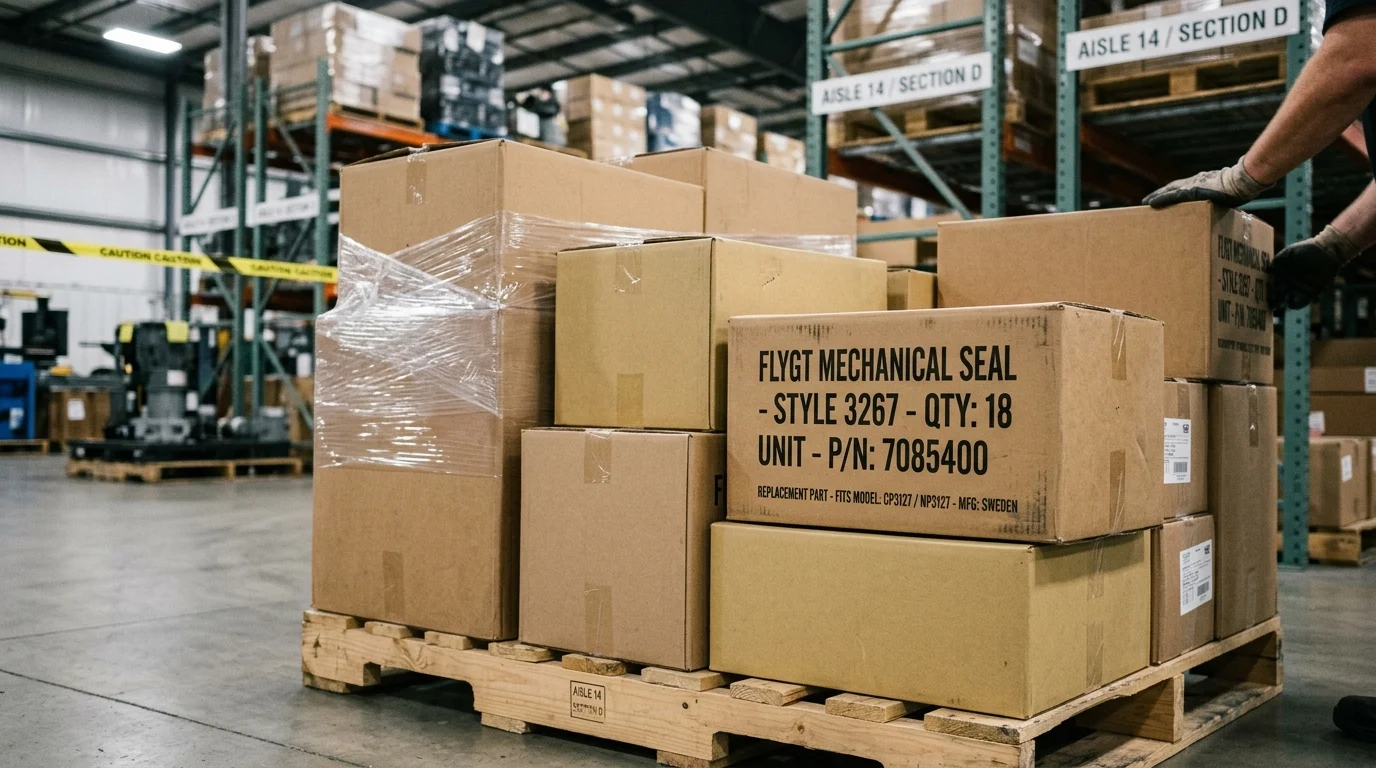
Specifying the correct replacement seal for a Flygt submersible pump requires strict adherence to the manufacturer’s technical documentation. Due to the vast array of pump series, seal configurations vary significantly in geometry, material composition, and installation methodology. Modern Flygt units often utilize the proprietary Plug-In™ seal cartridge (a registered trademark of Xylem), which integrates both the upper and lower seals into a single, pre-assembled unit, whereas older or larger models rely on traditional independent dual seals.
The selection process must begin with a comprehensive review of the pump’s data plate, specifically identifying the exact model number, serial number, and product code. Operators must also account for regional specification differences and model-year variations, as Flygt seal systems are not universally uniform. Relying solely on the pump’s kilowatt rating or discharge diameter is a critical error, as pumps with identical hydraulic performance may feature different shaft diameters or seal chamber depths depending on their year of manufacture.
Pump model, shaft size, and seal chamber requirements
The mechanical seal must perfectly match the dimensional constraints of the rotor shaft and the static seal chamber. Flygt pump shaft diameters typically range from 20mm in smaller dewatering pumps up to 90mm or more in massive municipal lift station units. Even a microscopic deviation in internal diameter tolerance can lead to improper compression of the dynamic O-ring, resulting in immediate leakage upon submersion.
Furthermore, the seal chamber requirements dictate the physical envelope of the mechanical seal. Engineers must verify the maximum allowable radial runout of the shaft—typically limited to representative tolerances like 0.05mm (0.002 inches) for many standard wastewater pumps, though this varies by model. If the shaft exhibits excessive deflection or wear beyond this threshold due to prior bearing failure, installing a new seal without machining or sleeving the shaft will result in premature failure.
Upper and lower seal arrangements
Understanding the operational dynamics of the upper and lower seal arrangements is critical for selection. The lower seal is exposed directly to the pumped media, facing highly abrasive suspended solids, fibrous rags, and fluctuating hydrodynamic pressures. It relies on a thin fluid film generated by the wastewater itself for lubrication. Therefore, the lower seal must possess exceptional hardness and resistance to thermal shock.
The upper seal, conversely, operates in a much cleaner environment, bathed in the environmentally safe barrier oil contained within the buffer chamber. Its primary function is to prevent the barrier fluid from entering the motor housing while withstanding the internal pressure generated by the thermal expansion of the oil during operation. Because the upper seal is not subjected to abrasive media, its material configuration is typically prioritized for low-friction operation and superior sealing against highly refined fluids.
Materials, elastomers, and face compatibility
Material selection for seal faces and elastomers is governed by the chemical and abrasive nature of the effluent. For the lower seal, Silicon Carbide (SiC) paired with Silicon Carbide is the industry standard for municipal wastewater, offering superior abrasion resistance. In highly abrasive applications involving heavy sand or grit, Tungsten Carbide (WC) may be specified, though it is heavier and more susceptible to chemical attack than SiC.
For the upper seal, a combination of Carbon against Aluminum Oxide (Ceramic) or Carbon against Tungsten Carbide is frequently utilized. The carbon face provides excellent dry-running characteristics and low friction, which is ideal for the clean oil environment. Elastomer selection is equally critical: standard Nitrile (NBR) O-rings are suitable for common domestic wastewater scenarios, whereas industrial effluents containing hydrocarbons or aggressive chemicals require Viton (FKM) elastomers to resist chemical degradation and higher temperatures.
Genuine Flygt Seals vs Aftermarket Kits
When procuring mechanical seal replacements for Flygt pumps, operators are consistently faced with the decision between sourcing Original Equipment Manufacturer (OEM) parts from Xylem or opting for aftermarket replacement kits. This decision impacts the immediate maintenance budget, long-term pump reliability, warranty status, and operational risk management. The mechanical seal market is saturated with third-party manufacturers claiming exact dimensional and metallurgical equivalence to genuine Flygt components.
While OEM parts provide the security of guaranteed compatibility and rigorous quality control, premium aftermarket seals have gained significant traction among municipal and industrial users seeking to optimize maintenance expenditures. Evaluating the trade-offs requires a nuanced analysis of upfront costs, supply chain logistics, material traceability, and the specific lifecycle stage of the pump in question.
Price, lead time, and availability
The most prominent driver toward aftermarket seals is the initial procurement cost. High-quality aftermarket seal kits for Flygt pumps are typically priced 30% to 50% lower than their genuine OEM counterparts. Procurement managers must ensure they are comparing equivalent materials—a low-cost aftermarket seal utilizing inferior ceramic faces instead of silicon carbide will negate any upfront savings through premature failure.
Lead time and availability also play critical roles. Genuine Flygt seals for standard pump models are generally well-stocked by authorized distributors. However, for older, obsolete, or highly specialized high-capacity pumps, OEM lead times can extend to 4 to 8 weeks. In contrast, specialized aftermarket manufacturers often maintain extensive local inventories of reverse-engineered components, offering same-day or next-day shipping to minimize critical pump downtime.
Material traceability and quality assurance
A distinct advantage of utilizing genuine Flygt seals is the assurance of stringent material traceability and quality assurance. OEM components are manufactured to exact proprietary specifications, ensuring that the elastomer Shore hardness remains strictly within the optimal range for specific compression requirements. Xylem’s quality control processes ensure that the flatness of the silicon carbide seal faces is lapped to precise tolerances (often cited as within two helium light bands, or approximately 0.58 microns, for specific models), ensuring a zero-leakage hydrodynamic film.
When utilizing aftermarket kits, operators must rigorously vet the supplier’s quality management systems. Premium aftermarket providers will hold ISO 9001 certifications and provide full material test reports (MTRs) for their metallurgy and elastomers. Utilizing unverified, low-tier aftermarket seals introduces the risk of microscopic face distortions, inferior spring tension, and rapid elastomer degradation.
When a full pump rebuild is the better option
Regardless of whether an OEM or aftermarket seal is selected, maintenance personnel must recognize when a simple seal replacement is insufficient. If a Flygt wastewater pump has surpassed typical lifecycle benchmarks (e.g., 25,000 to 30,000 operating hours), or if there is evidence of significant water ingress in the oil chamber accompanied by elevated vibration, installing a new seal without addressing other wear components is a misallocation of resources.
In such scenarios, a full pump rebuild is the technically sound option. This involves replacing the upper and lower radial bearings, verifying that bearing housing wear does not exceed maximum tolerances (such as 0.02mm), replacing all static O-rings, and installing a new cable entry gland. Attempting to run a new mechanical seal on a shaft supported by degraded bearings will induce radial play and harmonic vibration, causing the brittle silicon carbide seal faces to shatter or gall almost immediately.
| Evaluation Metric | Genuine Flygt (OEM) Seals | Premium Aftermarket Seals | Low-Tier Aftermarket Seals |
|---|---|---|---|
| Cost Premium | Highest (Baseline 100%) | Moderate (50% – 70% of OEM) | Lowest (< 40% of OEM) |
| Material Traceability | Fully Certified / Proprietary | ISO Certified / MTRs Available | Unknown / Unverified |
| Lead Time (Standard) | 1 – 3 Days | 1 – 2 Days | Variable |
| Warranty Impact | Maintains OEM Pump Warranty | May void original pump warranty | Voids original pump warranty |
Recommended Flygt Pump Seal Replacement Procedure
Disclaimer: The procedures described below are general guidelines. Performing maintenance without authorized personnel may void manufacturer warranties.
Executing a mechanical seal replacement on a Flygt submersible pump requires a high degree of technical precision, adherence to safety protocols, and a stringently clean working environment. Submersible pumps are unforgiving of poor maintenance practices; even microscopic particulate introduced during the assembly process can compromise the mechanical seal faces. The procedure varies slightly depending on whether the pump utilizes independent dual seals or the modern Plug-In™ cartridge system.
Maintenance technicians must approach the rebuild with specialized tooling, calibrated torque wrenches, and a thorough understanding of the pump’s internal geometry. The following comprehensive procedure outlines the critical phases of mechanical seal replacement, ensuring that the repaired unit will return to service with factory-equivalent reliability.
Safety, isolation, and cleaning steps
- Isolate the Equipment: Begin with strict Lockout/Tagout (LOTO) protocols to isolate the pump electrically and hydraulically.
- Decontaminate: Once safely removed from the wet well and transported to a clean maintenance bay, thoroughly power-wash the exterior of the pump to remove bio-fouling, grit, and hazardous municipal waste. Secure the pump vertically on a specialized service stand.
- Drain the Fluid: Position a clean receptacle beneath the oil housing drain plug and carefully remove the plug. A standard mid-sized Flygt pump will hold between 1 to 5 liters of barrier fluid.
- Inspect the Oil: Examine the drained oil for emulsification; a milky white appearance indicates water ingress, confirming primary seal failure. If metallic flakes are present, bearing failure should be strongly suspected, necessitating a deeper teardown.
Seal removal, installation, and lubrication
- Remove the Impeller: Use the appropriate Flygt holding wrench and puller to remove the impeller and access the seal chamber.
- Extract the Seals: For independent dual seals, carefully extract the lower seal using a specialized seal puller to avoid scoring the shaft. Remove the retaining ring, then extract the upper seal. For pumps equipped with the Plug-In™ seal, unbolt the entire cartridge and slide it off the shaft as a single unit.
- Clean the Chamber: Polish the shaft and seal chamber with emery cloth and clean with an evaporating solvent. Absolute cleanliness is mandatory.
- Lubricate Elastomers: When pressing the new seal components onto the shaft, lubricate elastomers with a non-petroleum-based assembly fluid, such as P-80 rubber lubricant or a mild soap solution. Never use petroleum grease on EPDM or standard Nitrile elastomers.
- Protect the Faces: Ensure the seal faces remain untouched by bare hands, as natural skin oils can disrupt the microscopic hydrodynamic film required for operation.
Torque checks, oil fill, and leak testing
- Apply Correct Torque: Achieve proper compression of the mechanical seal by torquing the retaining fasteners to the exact specifications outlined in the specific Flygt service manual. For example, standard M8 retaining bolts might be torqued to 24 Nm, while larger M10 bolts require 47 Nm, depending on the model.
- Refill Barrier Fluid: Fill the buffer chamber with the exact volumetric requirement of clean barrier oil, leaving a specified air gap (typically 10-15% of the chamber volume) to accommodate thermal expansion.
- Perform Pressure Test: Attach a pneumatic test rig to the oil fill port and pressurize the chamber (e.g., to a representative 0.5 bar or 7.2 psi, as dictated by the manual). Hold the pressure for a minimum of 15 minutes. A pressure drop of zero confirms the integrity of both the upper and lower mechanical seals, as well as the static casing O-rings. If the pressure drops, dismantle, inspect, and reassemble before submersion.
In-House Replacement vs Service Provider
Determining whether to execute Flygt mechanical seal replacements in-house or to outsource the task to an authorized service provider is a strategic decision that maintenance managers must evaluate continuously. This decision is influenced by the size and complexity of the pump fleet, the availability of skilled labor, and the facility’s tolerance for operational risk.
Outsourcing to a certified Xylem service center or an elite independent rotating equipment facility transfers the liability of the repair to a third party. These facilities are equipped to handle complex rebuilds, comprehensive electrical testing, and precision machining that most municipal or industrial maintenance shops cannot accommodate. Establishing a clear framework for when to keep repairs in-house versus when to outsource ensures optimal resource allocation.
Required skills, tools, and contamination control
Executing a successful mechanical seal replacement in-house requires more than basic mechanical aptitude. Technicians must be trained in precision rotating equipment assembly, capable of reading micrometers, operating arbor presses, and utilizing calibrated torque wrenches. Furthermore, the facility must possess the specific Flygt proprietary tools required for impeller removal and seal compression.
Contamination control is a significant hurdle for in-house repairs. Submersible pump seals require a clean-room-like environment during the final assembly phase. Dust particles settling on a silicon carbide seal face can cause immediate galling and thermal cracking upon startup. Most standard wastewater treatment plant maintenance shops are inherently dirty environments, making it difficult to maintain the strict environmental controls necessary for a reliable seal installation.
Downtime, logistics, and service risk
Logistics and downtime are critical factors in the outsourcing equation. Shipping a large municipal wastewater pump to a regional service center incurs significant freight costs and transit times, often adding days to the repair cycle and necessitating the use of expensive bypass pumping or reliance on backup units.
In contrast, if a facility maintains a strategic inventory of spare seal kits, a trained in-house maintenance team can pull a pump, replace the mechanical seal, perform a pressure test, and return the unit to service within hours. However, if the in-house repair fails due to improper installation, the resulting motor damage and subsequent secondary downtime will far eclipse the initial time savings, highlighting the inherent service risk assumed by the operator.
Final decision framework for operators
To navigate this complex decision, operators should adopt a tiered framework based on pump size, voltage, and operational criticality to determine the most cost-effective maintenance strategy:
- Tier 1 (Non-Critical / Small Pumps): Execute in-house. Fractional to low-kilowatt units are easier to handle, require less specialized tooling, and carry lower financial risk if a secondary failure occurs due to an installation error.
- Tier 2 (Mid-Range / Moderate Criticality): Hybrid approach. Maintain in-house capabilities for standard preventative seal replacements, but immediately outsource the repair if the barrier fluid indicates bearing wear, or if the unit lacks a redundant backup in the wet well.
- Tier 3 (Large Municipal / Highly Critical Assets): Outsource to certified service providers. The logistical challenges of moving massive units, the high cost of specialized proprietary tooling, and the severe environmental consequences of improper installation justify transferring the service risk to authorized professionals.
Key Takeaways
- Plan Flygt mechanical seal replacement around operating hours, oil condition, moisture alarms, and wastewater abrasiveness rather than waiting for complete pump failure.
- Treat the lower seal as the first defense against wastewater and the upper seal as critical protection for the motor housing in tandem seal systems.
- Replace seals proactively when contamination appears in the oil chamber to prevent bearing washout, stator damage, shaft wear, and emergency bypass costs.
- Use the correct replacement seal materials, elastomers, and dimensions for the Flygt pump model and the actual wastewater chemistry.
- After installation, verify oil fill, insulation resistance, leak tightness, vibration behavior, and sensor function before placing the pump back into service.
Frequently Asked Questions
How often should a Flygt mechanical seal be replaced?
In municipal wastewater service, seals commonly last about 8,000 to 12,000 operating hours, but abrasive solids, dry running, cavitation, or poor installation can shorten service life. Use operating hours, oil condition, leakage trends, vibration, and moisture sensor alerts to set the replacement interval.
What are the warning signs of Flygt seal failure?
Common signs include cloudy or contaminated oil in the seal chamber, moisture alarms, rising vibration, reduced hydraulic performance, overheating, abnormal noise, and visible leakage during inspection. Any moisture in the motor housing should be treated as urgent.
Why do Flygt wastewater pumps use dual mechanical seals?
Many Flygt submersible wastewater pumps use tandem dual seals with an oil buffer chamber. The lower seal protects against wastewater, while the upper seal protects the motor. This design helps delay fluid ingress, but both seals must remain in good condition.
What happens if a worn Flygt seal is not replaced?
A worn seal can allow wastewater into the oil chamber and eventually the motor housing. This may cause bearing damage, stator failure, shaft wear, grounding faults, and costly emergency repairs that far exceed the cost of planned seal replacement.
Can Victor Seals supply replacement mechanical seals for Flygt pumps?
Yes. Ningbo Victor Seals Co., Ltd. manufactures standard and OEM mechanical seals, including spare parts for brands such as Flygt. Selection should be based on pump model, shaft size, materials, elastomers, and wastewater operating conditions.

Post time: Aug-22-2026