


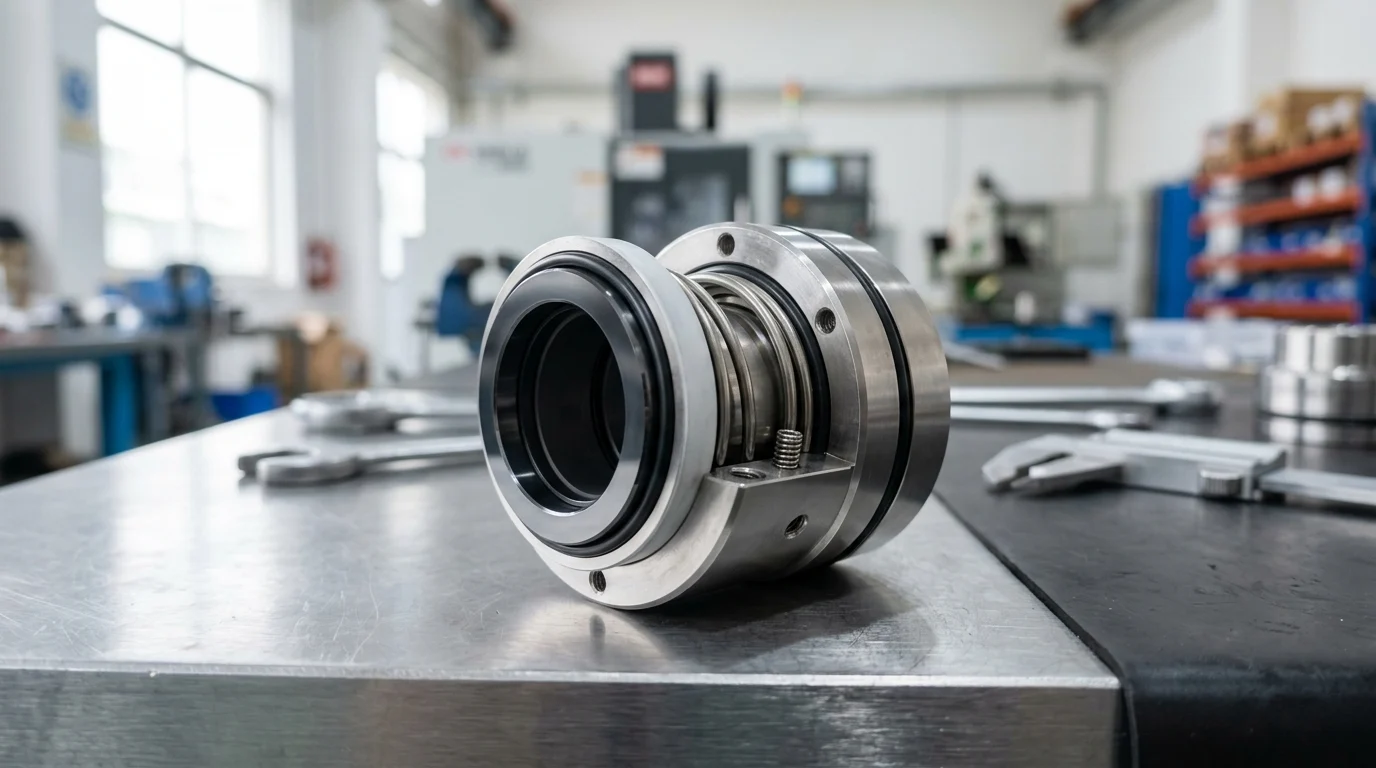
Why Chinese Mechanical Seal Manufacturers Matter
The global industrial machinery landscape relies heavily on fluid containment, making mechanical seals a critical component in rotating equipment. As the global market for mechanical seals expands, the supply chain has experienced a definitive shift eastward. Chinese mechanical seal manufacturers have evolved from producing high-volume replacement parts to engineering advanced, application-specific sealing solutions. Today, China accounts for a substantial portion of global mechanical seal exports, servicing tier-one pump OEMs, international distributors, and end-users in the petrochemical, pharmaceutical, and water treatment sectors.
For procurement professionals and engineering directors, this transition represents a strategic opportunity. Sourcing mechanical seals from China is no longer merely a cost-reduction exercise; it is a means of accessing robust vertical supply chains. With domestic access to critical raw materials like silicon carbide, tungsten carbide, and specialty elastomers, capable Chinese manufacturers offer significant scalability and production agility.
What Mechanical Seals Mean in Industrial Procurement
Mechanical seals are the primary defense against fluid leakage in centrifugal pumps, mixers, agitators, and compressors. In industrial procurement, these components carry a disproportionate weight relative to their unit cost. While a mechanical seal may represent a small fraction of a pump’s initial capital expenditure, it is often responsible for the majority of pump maintenance interventions and downtime events.
Procurement strategies must therefore balance the initial purchase price against the Total Cost of Ownership (TCO). A seal failure incurs costs related to lost production, environmental remediation, and maintenance labor. Consequently, buyers demand suppliers who can guarantee strict adherence to dimensional tolerances, material purity, and Mean Time Between Failures (MTBF) targets. The ability of a manufacturer to provide consistent face topography and secondary seal resilience dictates their viability as a long-term supply partner.
Why Global Buyers Source from China
Global buyers gravitate toward Chinese manufacturers due to a compelling matrix of cost arbitrage, material availability, and technical competence. By leveraging integrated industrial clusters in regions such as Zhejiang and Jiangsu, Chinese factories reduce dependency on imported raw materials. This localized supply chain allows manufacturers to offer competitive unit cost savings compared to Western counterparts, without compromising on metallurgical or elastomeric integrity.
Furthermore, leading Chinese facilities have heavily invested in CNC multi-axis machining and automated lapping technologies. This capital expenditure translates to high-precision manufacturing capable of meeting stringent international standards, including API 682 and EN 12756. For global buyers, the combination of advanced manufacturing infrastructure, rapid prototyping, and competitive pricing models makes China a highly viable destination for both standardized component sourcing and bespoke OEM seal development.
How Chinese Manufacturers Compare on Specifications
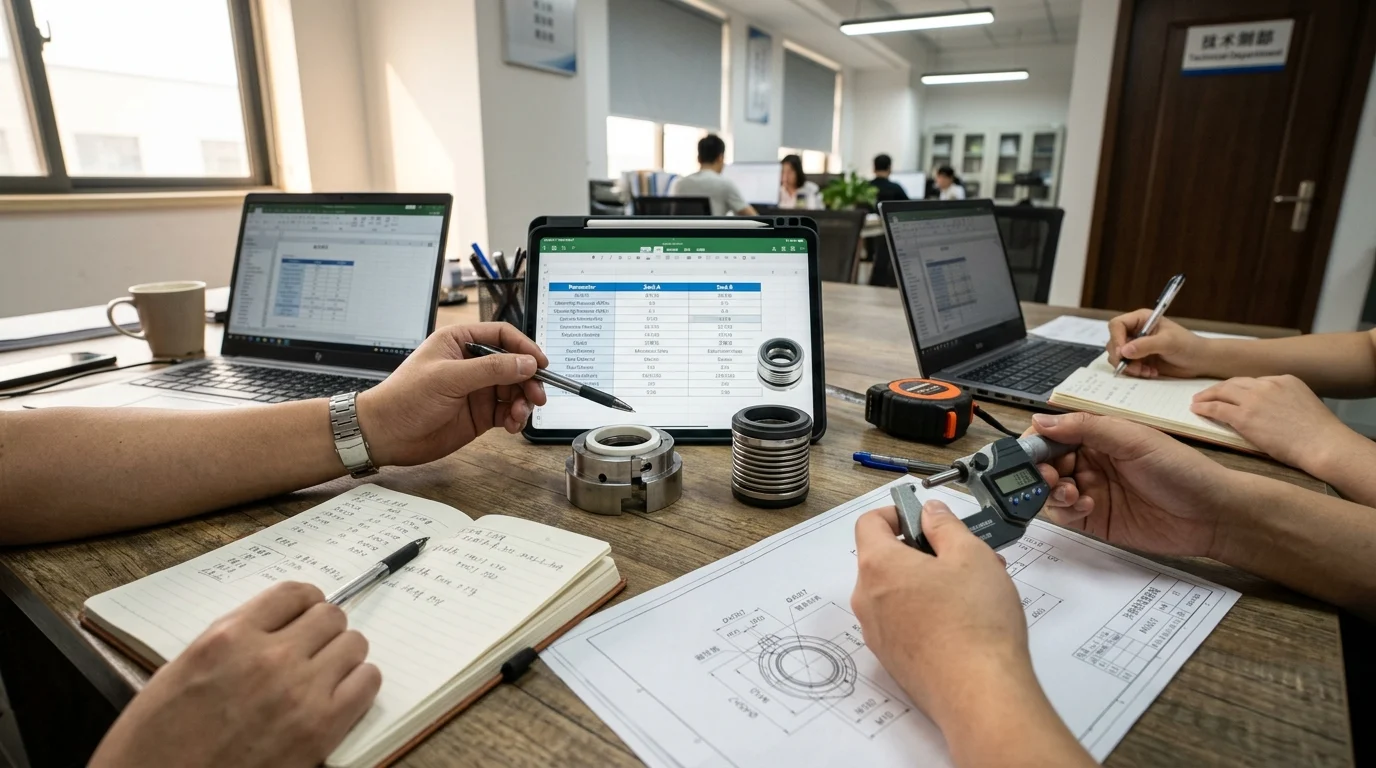
Evaluating mechanical seal manufacturers requires a deep dive into their technical specifications and material science capabilities. The transition from standard utility water seals to highly engineered solutions for volatile organic compounds (VOCs) and abrasive slurries demands rigorous engineering protocols. Top-tier Chinese manufacturers now routinely produce seals capable of operating at high pressures and shaft speeds, positioning them as alternatives for demanding API 682 Category 2 and 3 applications.
Key Seal Types and Materials
The mechanical seal taxonomy encompasses a broad spectrum of architectures, each tailored to specific operational environments. Chinese manufacturers produce elastomer bellows seals for water and wastewater applications, pusher seals featuring dynamic O-rings for general chemical processing, and sophisticated metal bellows seals designed for high-temperature refinery applications. Cartridge seals, which pre-assemble the seal faces, springs, and gland plate to eliminate installation errors, represent a rapidly growing segment of Chinese export volume.
Material selection for the primary seal faces and secondary sealing elements is paramount. Chinese factories secure high-purity Sintered Silicon Carbide (SSiC) and Nickel-bound Tungsten Carbide (TC) domestically, ensuring robust tribological properties. For secondary seals, manufacturers offer a full range of elastomers, from standard NBR and EPDM to high-performance FKM (Viton) and FFKM (Kalrez equivalents), enabling compatibility with highly aggressive media across diverse thermal gradients.
Specification Comparison Criteria
When comparing specifications, buyers must evaluate the operational limits guaranteed by the manufacturer. Critical criteria include the maximum allowable working pressure (MAWP), temperature ranges (typically spanning from -40°C to 260°C for standard engineered seals), and the maximum peripheral shaft speed. Buyers should also scrutinize the spring architecture—comparing single-coil springs for viscous fluids against multi-spring designs that offer more uniform face loading in clean fluid applications.
Additionally, the balance ratio of the seal design is a vital specification. Balanced seals, which reduce the hydraulic pressure acting on the seal faces, are essential for high-pressure applications to minimize heat generation and wear. Chinese engineering teams routinely utilize Finite Element Analysis (FEA) to optimize these balance ratios and predict thermal distortion across the seal faces under varying dynamic loads.
Where Chinese Manufacturers Add Value
Chinese manufacturers add substantial value through rapid customization and reverse engineering capabilities. When legacy pump systems require obsolete or non-standard seal dimensions, capable engineering teams can generate 3D CAD models, run fluid dynamic simulations, and produce custom prototypes efficiently. This agility prevents costly pump casing modifications and extends the lifecycle of existing capital equipment.
| Primary Face Material | Hardness (HV) | Thermal Conductivity | Typical Application Profile |
|---|---|---|---|
| Sintered Silicon Carbide (SSiC) | 2500 – 2800 | 100 – 120 W/m·K | Highly abrasive slurries, strong acids |
| Tungsten Carbide (Ni-bound) | 1400 – 1600 | ~80 W/m·K | High mechanical impact, alkaline solutions |
| Carbon Graphite (Resin Impregnated) | 80 – 120 | ~10 W/m·K | Excellent dry-running, utility water, oils |
| Aluminum Oxide (Ceramic 99.5%) | 1500 – 1700 | ~30 W/m·K | Cost-sensitive, low-pressure clean fluids |
How to Verify Quality and Compliance
Quality assurance is the crucible in which mechanical seal reliability is forged. Because a variance of mere micrometers can result in catastrophic leakage, global buyers must implement stringent verification protocols. Leading Chinese manufacturers recognize this and have adopted comprehensive Quality Management Systems (QMS). Factory acceptance testing (FAT) relies on highly calibrated metrology equipment, ensuring that critical tolerances are consistently maintained across mass production batches.
Required Certifications and Test Reports
Establishing a baseline of quality begins with verifying a manufacturer’s certifications. ISO 9001:2015 is the minimum threshold, but buyers targeting the oil and gas sector should mandate API Q1 compliance. For industries involving human consumption, secondary elastomers and carbon faces must carry FDA compliance, WRAS certification for potable water, or EU 1935/2004 approvals.
Material traceability is equally critical to prevent the infiltration of counterfeit or substandard alloys. Buyers must insist on EN 10204 Type 3.1 material test reports (MTRs) for all metallic components, particularly for duplex stainless steels (e.g., SAF 2205) or Hastelloy springs. These reports guarantee that the chemical composition and mechanical properties of the raw materials meet the specified international norms.
Leakage Performance and Face Flatness Checks
The most critical physical verification of a mechanical seal is the flatness of its mating faces. Lapping processes must achieve a face flatness measured in helium light bands. Premium Chinese manufacturers utilize monochromatic light and optical flats to verify that face topography does not exceed 1 to 2 light bands (approximately 0.3 to 0.6 microns). Any deviation beyond this threshold drastically increases the risk of hydrodynamic film collapse and subsequent leakage.
Dynamic and static pressure testing form the second pillar of performance verification. Assembled cartridge seals should undergo static hydrostatic testing at 1.5 times their maximum rated operating pressure to verify O-ring integrity and gland plate structural soundness. Advanced facilities will also offer dynamic test rigs, operating the seal under simulated shaft speeds and fluid temperatures to monitor frictional heat generation and verify zero-leakage performance over a specified run-in period.
Supplier Audit Questions
When conducting a supplier audit—whether virtually or on-site—buyers must ask highly specific, process-oriented questions to filter out inconsistent tier-2 or tier-3 workshops. Inquire about their scrap material handling, the calibration frequency of their coordinate measuring machines (CMM), and their standard operating procedures for elastomer shelf-life management. A reliable supplier should demonstrate low historical reject rates and provide transparent Corrective and Preventive Action (CAPA) reports for past non-conformances. Buyers must also remain vigilant about quality variability, ensuring that the rigorous standards seen in sample batches are maintained during full-scale production.
| Inspection Parameter | Verification Method | Acceptable Standard / Tolerance |
|---|---|---|
| Face Flatness | Optical Flat & Monochromatic Light | 1 to 2 Helium Light Bands (0.3 – 0.6 µm) |
| Surface Finish (Ra) | Profilometer | ≤ 0.15 µm for hard faces (SiC/TC) |
| Dimensional Accuracy | Coordinate Measuring Machine (CMM) | ± 0.005 mm to ± 0.02 mm (application dependent) |
| Material Composition | Positive Material Identification (PMI) | Strict adherence to EN 10204 3.1 MTRs |
| Static Pressure Integrity | Hydrostatic Test Rig | 1.5x Maximum Allowable Working Pressure (MAWP) |
Commercial and Logistics Considerations
Procuring mechanical seals involves complex commercial and logistical variables that extend far beyond the FOB unit price. A truly optimized supply chain minimizes friction from the initial tooling investment through to final delivery and lifecycle support. Chinese manufacturers have developed highly flexible commercial structures to accommodate diverse buyer profiles, from high-volume pump OEMs requiring thousands of utility seals to specialized maintenance, repair, and overhaul (MRO) facilities ordering low volumes of highly engineered API cartridge seals. Understanding the financial mechanics and inherent risks of this ecosystem is essential for calculating an accurate landed cost.
Tooling, MOQ, Pricing, Packaging, and After-Sales Support
The upfront costs associated with custom mechanical seals are generally competitive in China. Tooling costs for custom elastomer molds (such as specific bellows or complex O-ring profiles) are often a fraction of the cost found in Western markets. However, buyers must balance these savings against intellectual property (IP) risks by executing robust NNN (Non-Disclosure, Non-Use, Non-Circumvention) agreements before sharing proprietary designs. Minimum Order Quantities (MOQs) are similarly accommodating, with standard component seals requiring moderate volumes and high-value cartridge seals often negotiated down to smaller batches.
Pricing models are heavily influenced by raw material indexes and exchange rate fluctuations, but buyers can generally secure fixed-price contracts for 6 to 12 months. Packaging is a critical, often overlooked detail; highly polished seal faces are brittle and susceptible to micro-fractures during transit. Buyers must specify vacuum-sealed, individually boxed packaging with custom die-cut foam inserts. After-sales support should include clear warranty terms, typically covering 12 to 18 months from the date of installation, guaranteeing replacement for any premature failures attributed to manufacturing defects.
Lead Times and Spare Parts Availability
Lead times are a primary driver in the selection of Chinese mechanical seal partners. For standard, catalog-dimension seals, leading factories maintain extensive component inventories, allowing for prompt assembly and dispatch. Custom-engineered seals or those requiring exotic alloys (such as Titanium or Alloy 20) generally require longer lead times, factoring in specialized machining and rigorous FAT protocols.
To mitigate the risks of extended shipping times, geopolitical trade fluctuations (such as tariffs), or sudden supply chain disruptions, buyers must implement strategic spare parts management. Sea freight offers the lowest logistical cost but adds weeks to the supply cycle, whereas air freight can erode unit cost savings on heavy metallic cartridge seals. Establishing a vendor-managed inventory (VMI) agreement or holding a buffer stock of critical wear components (faces, springs, elastomers) is a standard best practice.
Direct Factory, Export Agent, and Distributor Channels
Navigating the Chinese export market requires choosing the right intermediary or direct channel. Sourcing directly from the factory offers the deepest cost savings and provides direct access to engineering teams for technical troubleshooting. However, this requires the buyer to manage complex export logistics and navigate potential language and cross-cultural communication barriers.
Alternatively, specialized export agents or trading companies can consolidate shipments from multiple specialized factories. While this adds a markup, it simplifies the procurement process for buyers lacking an on-the-ground presence in China. Master distributors in the buyer’s local region represent a third tier, offering immediate localized inventory and technical support, albeit at a price point closer to domestic Western manufacturers.
How to Choose the Right Chinese Mechanical Seal Supplier
Selecting the right Chinese mechanical seal supplier is a strategic exercise in risk management and capability alignment. The landscape is densely populated with entities ranging from rudimentary assembly workshops to state-of-the-art, vertically integrated manufacturing campuses. Identifying a partner whose operational scale, quality control rigor, and engineering acumen align with your specific procurement objectives is paramount to establishing a resilient supply chain.
Step-by-Step Sourcing Process
A robust sourcing process begins with a detailed Request for Information (RFI) to filter candidates based on factory size, core competencies, and existing export markets. This is followed by a comprehensive Request for Quotation (RFQ) accompanied by precise engineering drawings and material specifications. Once technical and commercial terms are aligned, the sampling phase is critical. Rather than relying on generic procurement checks, buyers should focus on seal-unique vetting: procuring 3 to 5 sample pieces for rigorous bench testing, specifically auditing lapping quality and face-flatness in their own facilities.
If the samples pass the initial QA/QC gates, the next phase is a pilot production run. Ordering a small batch tests the supplier’s ability to maintain consistency outside of the highly controlled sampling environment. It also validates the efficacy of their packaging and the reliability of their quoted lead times. Only after a successful pilot run should a buyer transition to mass production scheduling and long-term contract integration.
Supplier Decision Matrix
To objectify the selection process, procurement teams should deploy a weighted Supplier Decision Matrix. A standard matrix for mechanical seals allocates a significant portion of the total score to Quality and Engineering capabilities (e.g., in-house lapping, CMM availability, material traceability). Cost competitiveness and commercial terms (payment structures, MOQs) typically account for the next largest share.
The remaining weight should be divided between Logistics/Lead Time reliability and Communication/Service responsiveness. Suppliers who score highly across this matrix are those who not only offer competitive pricing but also demonstrate proactive problem-solving, transparent production tracking, and a willingness to invest in custom tooling to support the buyer’s product roadmap.
When Chinese Manufacturers Are the Best Strategic Fit
Chinese mechanical seal manufacturers offer a strong strategic fit for buyers navigating high-mix, low-volume requirements just as effectively as those driving low-mix, high-volume production. For OEMs looking to scale rapidly without heavy capital expenditure on internal machining centers, Chinese partners provide immediate elasticity. Similarly, for aftermarket distributors aiming to build comprehensive cross-reference catalogs, China offers the reverse-engineering expertise and competitive pricing necessary to capture market share.
Ultimately, the preference for Chinese manufacturers is rooted in their growing capacity to deliver reliable sealing solutions. By applying rigorous vetting protocols, demanding strict adherence to international metallurgical and dimensional standards, and fostering transparent communication, global buyers can forge profitable, long-term partnerships that drive down TCO while maintaining equipment reliability.
Key Takeaways
- Evaluate mechanical seal suppliers on total cost of ownership, not only unit price, because seal failure can drive downtime, maintenance labor, and environmental costs.
- Prioritize manufacturers with proven access to silicon carbide, tungsten carbide, and specialty elastomers to improve material consistency and delivery reliability.
- Ask Chinese suppliers to document tolerances, face quality, material traceability, and standards compliance before approving OEM or high-duty seal projects.
- Use China’s strong industrial clusters and scalable production base for both standard replacement seals and customized pump sealing programs.
- Select manufacturers with CNC machining, automated lapping, and engineering support when sourcing seals for demanding marine, petrochemical, water treatment, or pharmaceutical applications.
Frequently Asked Questions
Why do global buyers source mechanical seals from China?
Buyers choose Chinese manufacturers for competitive pricing, scalable production, access to materials like silicon carbide and tungsten carbide, and improving technical capability in CNC machining, lapping, and OEM customization.
Are Chinese mechanical seal manufacturers suitable for OEM projects?
Yes. Established suppliers such as Ningbo Victor Seals Co., Ltd. produce standard and OEM mechanical seals, including pump shaft seals, cartridge seals, double mechanical seals, and replacement parts for major pump brands.
What standards should buyers check when evaluating Chinese seal suppliers?
Buyers should confirm dimensional tolerances, material traceability, face flatness, elastomer compatibility, pressure and speed ratings, and compliance with relevant standards such as API 682 or EN 12756 where required.
Which industries commonly buy Chinese mechanical seals?
Chinese mechanical seals are widely used in marine, petrochemical, pharmaceutical, water treatment, food processing, and general industrial pump applications where reliable fluid containment is essential.
What types of mechanical seals can Victor Seals supply?
Victor Seals manufactures rubber bellow seals, elastomer bellow seals, wave spring seals, single spring seals, cartridge seals, double mechanical seals, water pump seals, and replacement models such as Type 502, Type E41, and Type 26 APV.

Post time: Aug-19-2026