


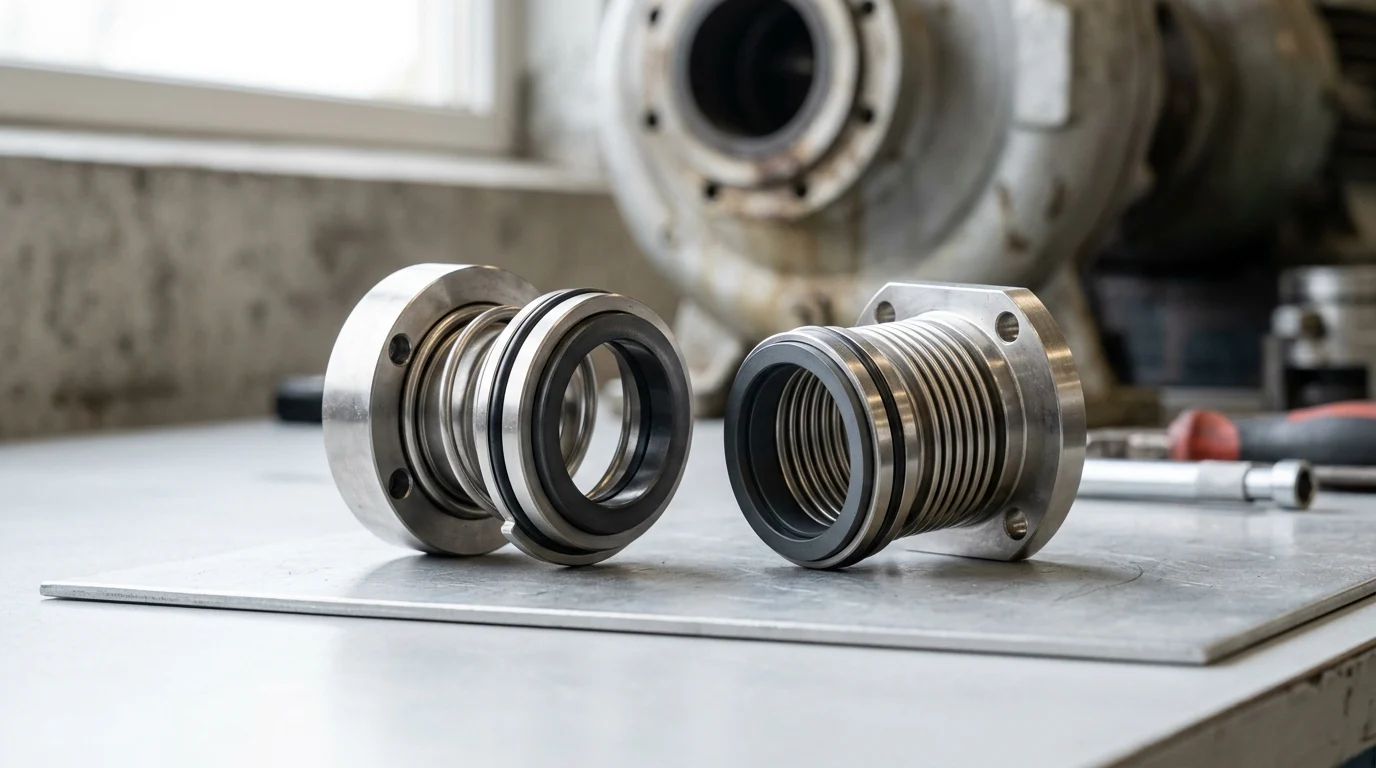
Why Seal Selection Matters
Mechanical seals represent the critical barrier between a pump’s internal fluid dynamics and the external environment. In industrial fluid processing, the integrity of this barrier dictates not only the operational efficiency of the pumping system but also the safety and environmental compliance of the entire facility. Historically, packing rings served as the primary method for sealing pump shafts, but the evolution of mechanical seals has provided a vastly superior, leak-resistant alternative. Within this domain, engineers must navigate a fundamental architectural choice: utilizing conventional pump seals (often referred to as component seals) or specifying pre-assembled cartridge seals.
The decision between these two sealing technologies extends far beyond initial procurement costs. It fundamentally alters installation procedures, maintenance schedules, and the likelihood of catastrophic failure. Because mechanical seals are subjected to continuous friction, thermal stress, and chemical exposure, selecting the appropriate seal architecture is a foundational engineering responsibility that directly influences the life cycle profitability of fluid handling assets.
Impact on reliability and uptime
In process industries, mechanical seal failures account for an estimated 65% to 70% of all centrifugal pump breakdowns. When a seal fails, the pump must be taken offline, resulting in process interruptions that can incur downtime costs ranging from $10,000 to over $50,000 per hour in high-output sectors such as petrochemical refining or power generation. Consequently, maximizing Mean Time Between Failures (MTBF) is a primary objective for maintenance and reliability engineers.
Seal selection directly impacts this MTBF. A seal that is incorrectly specified or improperly installed will suffer from premature face wear, thermal distortion, or elastomer degradation. By choosing a seal design that mitigates installation errors and aligns with the operational environment, facilities can significantly extend the continuous operational periods of their pump fleets, thereby securing higher overall equipment effectiveness (OEE) and protecting downstream processes from unexpected starvation.
Key operating conditions to evaluate
Evaluating operating conditions is a prerequisite for proper seal selection. Engineers must analyze the fluid’s specific gravity, vapor pressure, toxicity, and particulate concentration. For instance, fluids with suspended solids may require hard-face materials like silicon carbide or tungsten carbide, alongside specific seal geometries that prevent particle accumulation around the dynamic components.
Mechanical and dimensional conditions are equally critical. Shaft deflection, vibration, and runout must be strictly quantified. Industry standards, such as API 682, typically mandate that shaft deflection at the seal face must not exceed 0.002 inches (0.05 mm) to ensure optimal face tracking. Furthermore, the dimensions of the stuffing box or seal chamber dictate spatial constraints; older legacy pumps may possess narrow cross-section stuffing boxes that severely limit the physical volume available for the seal mechanism, directly influencing whether a complex modern seal can be physically accommodated.
Cartridge Seals vs Conventional Pump Seals
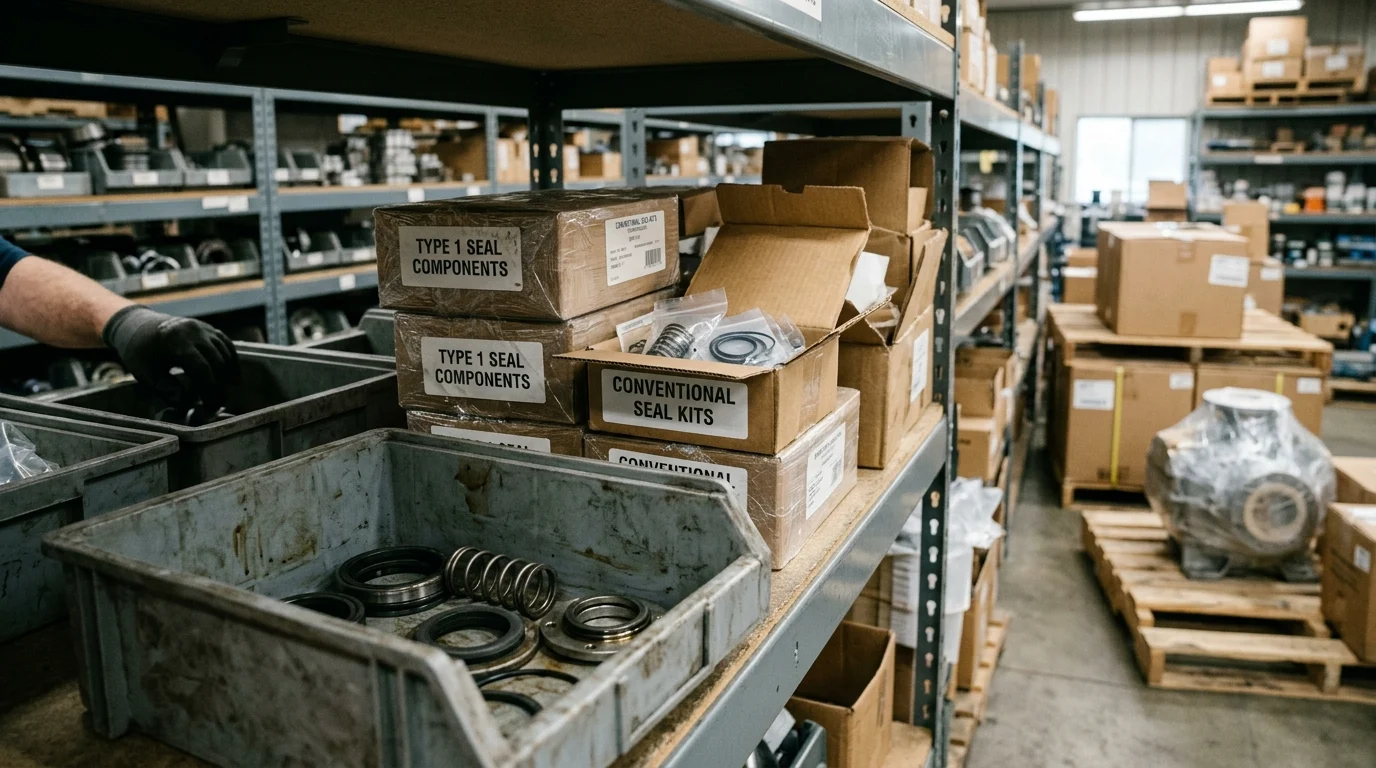
The primary distinction between conventional pump seals and cartridge seals lies in their physical construction and the methodology required for their installation. While both rely on the same fundamental physics—utilizing a precision-lapped rotating face pressing against a stationary face to create a fluid film barrier—the packaging and deployment of these components differ drastically. Understanding these structural variations is essential for evaluating their respective advantages in an industrial setting.
How conventional pump seals work
Conventional pump seals, widely known as component seals, consist of separate, discrete parts that must be individually assembled onto the pump shaft or sleeve. The primary components include the rotating seal face, the stationary seal face, secondary sealing elements (such as O-rings, V-rings, or PTFE wedges), and the mechanical loading mechanism (a single coil spring, multiple springs, or a metal bellows).
During installation, a technician must sequentially load these components into the pump’s stuffing box. The critical phase of this process is establishing the correct working length. The technician must manually calculate and set the precise axial position of the seal on the shaft—often requiring accuracy within 0.5 mm—to ensure the springs apply the exact amount of mechanical face pressure. If the compression is too low, the fluid will overcome the face pressure and leak; if the compression is too high, the faces will overheat, leading to accelerated wear, thermal cracking, and rapid failure.
How cartridge seals work
Cartridge seals are engineered to eliminate the manual assembly and measurement required by conventional seals. In a cartridge configuration, the rotating components, stationary components, springs, secondary elastomers, and the seal gland are pre-assembled at the factory into a single, cohesive unit. This assembly is housed on a proprietary sleeve that slides directly over the pump shaft.
Instead of measuring spring compression manually, the cartridge seal relies on temporary setting clips (or tabs) installed on the outside of the gland. Once the cartridge is bolted to the pump housing and the drive collar is secured to the shaft via set screws, the technician simply removes the setting clips. The removal of these clips automatically releases the internal springs, applying the exact, factory-calibrated face pressure without requiring any field calculations or specialized measuring tools.
Key design differences
The architectural differences between the two seal types dictate their operational handling and physical footprint. Conventional seals demand extensive hands-on interaction with the delicate lapped faces, increasing the risk of contamination from dirt or oil during installation. Conversely, cartridge seals encapsulate the vulnerable faces within the gland housing, protecting them from environmental contaminants and physical damage during transit and installation.
| Design Feature | Conventional Pump Seals | Cartridge Seals |
|---|---|---|
| Assembly State | Discrete, individual components | Pre-assembled, unified module |
| Installation Method | Sequential loading on shaft | Single-step sliding onto shaft |
| Spring Compression | Manually calculated and set | Factory-set, deployed via clips |
| Component Protection | Exposed during installation | Enclosed within the gland plate |
| Impeller Adjustments | Requires complete seal resetting | Accommodated without resetting |
Additionally, when maintaining pumps that require frequent impeller clearance adjustments (such as open-impeller ANSI pumps), conventional seals must be entirely unset and recalibrated after every adjustment. Cartridge seals, however, can typically accommodate axial shaft movements without requiring the seal to be dismantled, significantly streamlining routine pump maintenance.
Performance and Maintenance Comparison
The theoretical design differences between conventional and cartridge seals manifest as highly tangible variations in field performance, thermal management, and maintenance logistics. Evaluating these aspects provides engineering teams with the necessary data to justify the initial capital expenditure associated with more advanced sealing technologies.
Installation complexity
Installation complexity is the most pronounced differentiator between the two configurations. Installing a conventional pump seal is a delicate, labor-intensive procedure that demands a highly skilled millwright. The technician must use dial indicators and calipers to verify shaft runout, mark the shaft for the installation reference point, and carefully slide O-rings over shaft shoulders without shearing the elastomers. A typical conventional seal installation can take an experienced technician 2 to 4 hours, depending on the pump’s accessibility.
In contrast, cartridge seal installation is fundamentally a “plug-and-play” operation. Because the critical dimensions are established at the factory, the requirement for precision field measurements is virtually eliminated. A standard cartridge seal can often be installed in under 30 minutes. This drastic reduction in installation complexity not only saves labor costs but drastically reduces the probability of human error, which is the leading cause of early-life seal failures.
Pressure and temperature performance
Both seal types can be engineered to handle extreme operational parameters, but they achieve this through different means. Standard conventional seals are generally limited to applications below 300 psig (20 bar) and temperatures up to 400°F (204°C). Pushing conventional seals beyond these limits typically requires custom engineering and external cooling jackets integrated into the stuffing box.
Cartridge seals natively excel in demanding pressure and temperature environments. Heavy-duty engineered cartridge seals can be specified to withstand pressures exceeding 1,200 psig (82 bar) and temperatures surpassing 800°F (426°C) when utilizing high-temperature metal bellows. Furthermore, cartridge seal glands are routinely manufactured with built-in environmental control ports. These ports allow for the seamless integration of API piping plans (such as Plan 11, 21, or 32), enabling operators to inject cooling fluids, barrier fluids, or steam quenches directly into the seal chamber with optimal flow dynamics.
Maintenance requirements
Maintenance protocols diverge significantly depending on the seal architecture. When a conventional seal fails, it must be completely disassembled on-site. The maintenance technician must clean the shaft, inspect for fretting (wear grooves caused by dynamic O-rings), and replace individual faces and elastomers. This field-level repair exposes the new components to airborne particulates; a dust particle as small as 2 to 3 microns introduced between the seal faces can compromise the fluid film and induce immediate leakage.
Cartridge seals streamline the maintenance lifecycle through standardized exchange programs. Upon failure, the entire cartridge is unbolted and removed as a single unit, and a spare cartridge is immediately installed to return the pump to service. The failed cartridge is then shipped back to the manufacturer or a certified repair facility. In a controlled cleanroom environment, the cartridge is disassembled, ultrasonically cleaned, fitted with new faces and elastomers, pressure-tested, and returned to the end-user as a certified rebuild, ensuring factory-level reliability across multiple lifecycles.
Best Applications for Each Seal Type
Determining the optimal seal type requires mapping the seal’s capabilities against the specific demands of the pumping application. While industry trends heavily favor modularization, there are distinct scenarios where each technology proves to be the most practical and economically viable choice.
When to choose conventional pump seals
Conventional pump seals remain highly relevant in specific industrial contexts, primarily driven by spatial constraints and material economics. Many legacy DIN and older ANSI pumps feature narrow-cross-section stuffing boxes designed originally for braided packing. These confined spaces physically cannot accommodate the internal sleeve and robust gland plate of a modern cartridge seal. In such retrofits, conventional component seals are the only geometrically viable option.
Furthermore, component seals hold an economic advantage in highly corrosive applications that require exotic metallurgy. If an application necessitates pumping aggressive acids, manufacturing an entire solid cartridge gland and sleeve out of Hastelloy C-276 or Titanium becomes prohibitively expensive. In these scenarios, utilizing a conventional seal where only the wetted springs and faces require exotic materials, while the pump casing itself contains the fluid, offers a significantly lower capital cost.
When to choose cartridge seals
Cartridge seals are universally recommended for applications involving hazardous, toxic, or highly flammable fluids. Environmental regulations, such as the EPA’s Method 21 in the United States, mandate strict limits on Volatile Organic Compound (VOC) emissions, often requiring fugitive emissions to remain below a 500 ppm threshold. Dual cartridge seals, which utilize a pressurized barrier fluid between two sets of seal faces (API Plan 53 or 54), are essential for achieving zero-emission compliance.
Additionally, cartridge seals are the preferred choice for continuous-process industries, such as oil refineries and large-scale chemical processing plants, where equipment is subjected to API 610 standards. The ease of integrating complex flush plans directly into the cartridge gland makes them indispensable for handling fluids that crystallize, polymerize, or contain high levels of abrasives, as the controlled environment within the cartridge prevents the mechanical components from fouling.
Total cost of ownership factors
A comprehensive seal selection process must evaluate the Total Cost of Ownership (TCO) over a defined operational period, typically 5 to 10 years. The initial procurement cost of a standard cartridge seal is frequently 200% to 300% higher than an equivalent conventional component seal. However, this upfront premium is rapidly offset by operational savings.
Facilities utilizing cartridge seals consistently report a 30% to 40% reduction in maintenance labor costs due to faster installation and removal times. More importantly, the elimination of installation errors drastically reduces the frequency of seal replacements and the associated production downtime. When factoring in the cost of lost production, the ROI on a cartridge seal upgrade is often realized within the first 12 to 18 months of operation.
How to Choose the Right Pump Seal
Selecting the correct mechanical seal is a methodical process that requires synthesizing fluid properties, equipment specifications, and facility maintenance capabilities. Engineering teams must move beyond simple cost comparisons and adopt a holistic evaluation framework to ensure long-term pump reliability.
Practical selection criteria
The practical selection process begins with defining the fluid’s thermodynamic state at the seal faces. Engineers must calculate the vapor pressure margin to ensure the fluid does not flash into a gas, which would result in dry-running and immediate face destruction. Next, the physical dimensions of the pump must be audited; the shaft diameter, stuffing box bore, and depth dictate the maximum allowable seal envelope.
Chemical compatibility forms the next critical criterion. The seal faces (carbon, silicon carbide, alumina ceramic) and the secondary elastomers (FKM, EPDM, FFKM) must be chemically inert to the process fluid across the entire expected temperature range. Finally, the facility’s maintenance maturity must be assessed. If a plant lacks specialized rotating equipment mechanics or suffers from high technician turnover, the inherent error-proofing of a cartridge seal becomes a mandatory operational safeguard.
Decision matrix for engineering teams
To standardize the selection process, engineering departments often rely on decision matrices that weigh application parameters against seal capabilities. This objective scoring system prevents reliance on legacy habits and ensures that capital is deployed efficiently based on risk and regulatory requirements.
| Application Parameter | Recommended Seal Type | Primary Engineering Justification |
|---|---|---|
| Toxic/Hazardous Fluids | Dual Cartridge Seal | Regulatory compliance, zero fugitive emissions (API 682) |
| Standard Water / HVAC | Conventional Seal | Low initial capital expenditure, low risk of fluid hazard |
| Frequent Washdowns / CIP | Single Cartridge Seal | Enclosed design protects internal springs from external cleaning agents |
| Legacy Pumps / Confined Space | Conventional Seal | Geometric limitations in the stuffing box prevent cartridge insertion |
| High Abrasive Slurries | Cartridge with Flush Plan | Integrated gland ports allow for clean external fluid injection |
By utilizing this matrix, procurement and reliability teams can align on the technical necessities of the application. For API 682 Category 1 applications (standard duties), conventional or simple cartridge seals may suffice. However, as applications escalate to Category 2 and Category 3 (high pressure, high temperature, hazardous duties), the engineered cartridge seal becomes functionally indispensable.
Final recommendation
The trajectory of modern fluid processing is undeniably shifting toward modular, pre-assembled solutions. Cartridge seals have become the dominant standard in new equipment specifications, driven by their superior reliability, ease of environmental control integration, and substantial reductions in maintenance-induced failures.
However, conventional pump seals remain a vital component of the industrial ecosystem. Their spatial efficiency and cost-effectiveness in non-critical, benign fluid applications ensure they will continue to be utilized, particularly in light-duty manufacturing and commercial HVAC sectors. Ultimately, the optimal sealing strategy leverages conventional seals where budgets and geometries demand them, while deploying cartridge seals to protect critical assets, safeguard personnel, and maximize plant uptime.
Key Takeaways
- Select seal architecture based on operating conditions, pump geometry, technician skill level, and total life cycle cost rather than purchase price alone.
- Use cartridge seals when reducing installation error and shortening maintenance time are higher priorities than minimizing initial seal cost.
- Use conventional pump seals where experienced installers, simple pump layouts, or restricted legacy seal chambers make component seals practical.
- Verify shaft deflection, vibration, runout, and seal chamber dimensions before specifying any mechanical seal to prevent premature face wear.
- Specify hard seal face materials such as silicon carbide or tungsten carbide when the pumped fluid contains abrasive suspended solids.
- Treat seal reliability as a core uptime issue because mechanical seal failures are a major cause of centrifugal pump breakdowns.
Frequently Asked Questions
What is a conventional pump seal?
A conventional pump seal, also called a component seal, is supplied as separate parts that must be assembled and set on the pump shaft during installation. Correct face alignment, spring compression, and axial positioning are critical for reliable operation.
How is a cartridge seal different from a conventional seal?
A cartridge seal is pre-assembled and preset as one unit, while a conventional seal is installed component by component. Cartridge seals reduce installation error, but conventional seals can be more economical and flexible for certain pump designs.
When should I choose a conventional pump seal?
Choose a conventional seal when the pump design is simple, installation access is good, maintenance technicians are experienced, and cost control is important. It is also useful for legacy pumps with limited seal chamber space.
Why do mechanical seal installation errors matter?
Incorrect installation can cause face wear, overheating, leakage, elastomer failure, and unplanned pump shutdowns. Since mechanical seal failures account for many centrifugal pump breakdowns, proper setup directly affects uptime and maintenance cost.
What operating conditions should be checked before selecting a seal?
Check fluid properties, temperature, pressure, vapor pressure, toxicity, solids content, shaft runout, vibration, and seal chamber dimensions. Abrasive fluids may require hard faces such as silicon carbide or tungsten carbide.

Post time: Aug-17-2026