


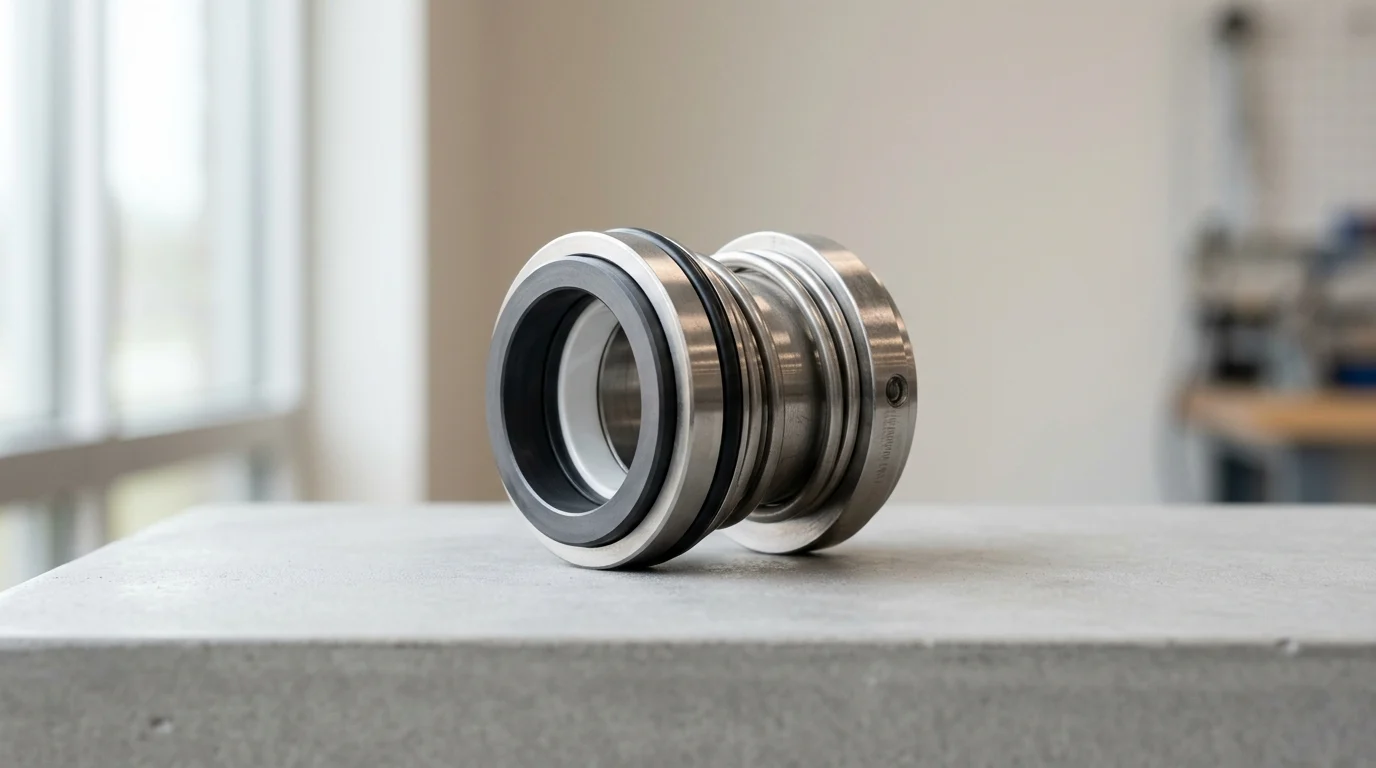
Why the Right Pump Seal Model Matters
Mechanical seals function as the primary containment barrier in centrifugal pumps. They isolate the pumped fluid from the external environment while accommodating the rotational motion of the pump shaft. Operating at the intersection of dynamic mechanical forces and complex fluid properties, seals are inherently vulnerable to process variations. Industry reliability studies consistently indicate that mechanical seal failures account for 35% to 69% of all pump outages, making them the leading cause of rotating equipment downtime.
Selecting the correct pump seal model is not merely a maintenance preference; it is a critical engineering decision that dictates the operational lifespan of the equipment. When a seal model aligns with the specific hydrodynamic and thermal demands of the process, it ensures stable fluid film generation across the seal faces. Conversely, deploying an inadequate or mismatched seal fundamentally compromises the pump’s integrity. This leads to cascading mechanical failures, significant operational costs, and uncontrolled hazardous emissions.
What Defines a Pump Seal Model
While generic classifications—such as API 682 (ISO 21049) Types (e.g., Type A pusher seals, Type B metal bellows) and Categories—define the broad architecture based on shaft size and operating parameters, a specific pump seal model refers to an OEM’s proprietary catalog design. Note that specific API categories and requirements often vary by revision year and local jurisdiction. The specific seal model dictates whether the unit is balanced or unbalanced, which directly impacts its ability to handle high stuffing box pressures without generating excessive face heat.
Furthermore, the model encompasses the exact material science applied to the components. A seal model specifies whether the primary faces are composed of reaction-bonded silicon carbide, sintered alpha silicon carbide, or tungsten carbide. Each material offers distinct hardness and thermal conductivity thresholds. The secondary sealing elements—typically elastomers like FKM, EPDM, or FFKM—are also strictly defined by the model, establishing the seal’s operational boundaries regarding chemical resistance and temperature tolerance.
Why Incorrect Seal Selection Happens
Incorrect seal selection frequently stems from a breakdown in communication between the end-user, the engineering procurement contractor (EPC), and the original equipment manufacturer (OEM). Process data sheets often capture steady-state operating conditions but fail to document transient states. For example, a Clean-in-Place (CIP) cycle might temporarily spike fluid temperatures from 60°C to 130°C, or startup conditions could cause fluid viscosity to surge from 10 cP to over 500 cP. If the seal model is specified based solely on nominal parameters, it will inevitably fail during these undocumented excursions.
Another common cause of poor selection is the prioritization of initial capital expenditure over lifecycle engineering. Procurement teams may default to legacy seal models or generic component seals because they carry a lower upfront price tag. This ignores the fact that the process fluid’s specific gravity, vapor pressure, or particulate concentration might demand a specialized cartridge seal. Additionally, a lack of deep hydrodynamic expertise at the plant level can result in the misapplication of single seals in environments that strictly require dual pressurized systems to prevent fluid flashing.
Business Risks of Choosing the Wrong Seal
The business risks associated with choosing the wrong pump seal model extend far beyond the direct cost of a replacement part. In high-throughput environments like petroleum refineries or chemical processing plants, a catastrophic mechanical seal failure can force an unplanned shutdown of a critical process unit. Depending on the facility’s output, a single day of lost production can incur substantial lost revenue, often tens of thousands of dollars per day. These downtime costs rapidly dwarf the marginal savings achieved by purchasing an underspecified seal.
Moreover, an incorrect seal model drastically reduces the Mean Time Between Failure (MTBF) for the rotating equipment. A properly specified seal operating in a clean fluid environment can achieve an illustrative industry benchmark MTBF of 36 to 60 months, though actual performance varies significantly by application, OEM, and operating environment. When an incompatible model is applied, MTBF can plummet to less than 6 months. This chronic reliability issue forces maintenance departments into a reactive posture, driving up labor costs, increasing the consumption of auxiliary components like bearings and shafts, and disrupting planned preventive maintenance schedules across the entire plant.
Technical Failures Caused by the Wrong Seal
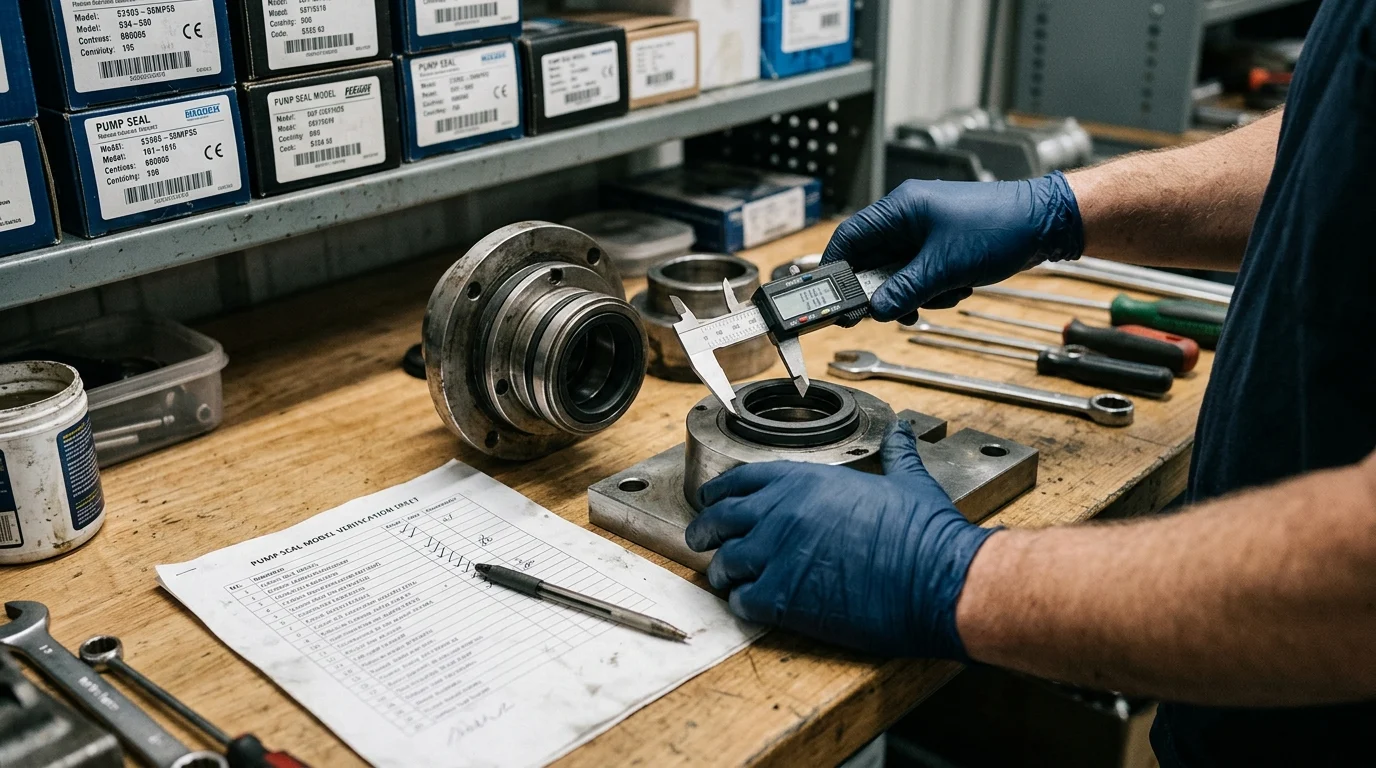
Operating a pump with an incorrectly specified seal model accelerates component degradation. The intersection of fluid dynamics and mechanical constraints dictates that a seal must operate within a precise envelope of pressure, temperature, and rotational velocity. When a selected model cannot withstand these dynamic forces, the primary sealing interface collapses.
Technical failures rarely remain isolated to the seal itself. As the seal faces degrade and secondary elastomers fail, the resulting vibration, heat generation, and fluid ingress often propagate along the pump shaft. This chain reaction can compromise the bearing housing, damage the impeller, and require a complete overhaul of the pump. Ultimately, a routine seal replacement turns into a major capital repair.
Pressure, Temperature, Speed, and Shaft Movement Issues
Every mechanical seal model possesses a strictly defined Pressure-Velocity (PV) limit. This represents the maximum load and sliding speed the seal faces can endure before the fluid film vaporizes and dry running occurs. Unbalanced seal models, for example, are typically restricted to stuffing box pressures below 150 psig (10 bar). If an unbalanced seal is mistakenly selected for a high-pressure boiler feed pump operating at 300 psig (20 bar), the excessive hydraulic closing force will crush the fluid film, leading to rapid thermal fracturing of the seal faces.
Temperature and shaft movement also play critical roles in mechanical stability. A seal model must possess the correct internal clearances and spring mechanisms to accommodate thermal expansion and radial deflection. If the chosen model cannot handle excessive shaft deflection, the dynamic O-ring will hang up, causing the seal faces to separate. Similarly, applying a standard elastomer-bellows seal in a high-temperature application will cause the bellows to melt or char, immediately destroying the seal’s flexibility and tracking ability.
Material Compatibility and Component Failures
Material incompatibility is a leading cause of premature technical failure in misapplied seal models. The secondary sealing elements—typically O-rings or gaskets—must be chemically inert to the process fluid across all temperature ranges. If an FKM (Viton) O-ring is chosen for an application involving steam or hot amines above 300°F (149°C), the elastomer will undergo rapid chemical reversion, hardening, and explosive decompression. The seal will lose its ability to flex, resulting in immediate leakage.
| Elastomer Type | Common Trade Name | Max Continuous Temp | High-Risk Incompatibilities |
|---|---|---|---|
| Nitrile (NBR) | Buna-N | 212°F (100°C) | Ozone, Ketones, Strong Acids |
| Fluorocarbon (FKM) | Viton™ | 400°F (204°C) | Steam, Amines, Hot Water, Ammonia |
| Ethylene Propylene (EPDM) | N/A | 300°F (149°C) | Petroleum Oils, Hydrocarbon Solvents |
| Perfluoroelastomer (FFKM) | Kalrez® | 600°F (315°C) | Fluorinated Solvents, Extreme Alkali |
Component failures also extend to the primary seal faces. Selecting a model with dual carbon faces for a fluid containing high concentrations of abrasive particulates will result in severe scoring and grooving within hours of operation. In such applications, the seal model must specify hard-on-hard face combinations, such as Silicon Carbide against Tungsten Carbide, to resist the cutting action of the suspended solids. Failure to match the metallurgy and face materials to the fluid’s abrasiveness guarantees rapid mechanical destruction.
Single vs. Double Seal Selection Problems
A fundamental architectural error in seal selection is deploying a single seal in an application that physically demands a dual (double) mechanical seal. Single seals rely entirely on the pumped fluid to lubricate the seal faces. If the chosen model is a single seal handling a fluid that crystallizes upon contact with the atmosphere, abrasive crystals will form on the atmospheric side of the seal faces. This cuts the carbon face and destroys the O-rings.
Conversely, selecting a dual seal but applying the wrong internal configuration—such as choosing a face-to-back tandem arrangement when a back-to-back double pressurized arrangement is required—can be equally disastrous. If a dual unpressurized seal (API Plan 52) is mistakenly used for a highly toxic or flashing fluid instead of a pressurized dual seal (API Plan 53A), the process fluid will migrate into the barrier fluid system. This not only contaminates the support system but causes the inner seal faces to pop open when the process fluid flashes to vapor, leading to total containment loss.
Safety and Compliance Risks
Beyond mechanical degradation and production downtime, the deployment of an inappropriate pump seal model introduces significant safety and environmental liabilities. Mechanical seals are frequently the last line of defense preventing hazardous, toxic, or highly flammable fluids from escaping into the plant atmosphere. When this barrier is compromised due to poor specification, the consequences extend into the realm of regulatory violations and personnel hazards.
In modern industrial operations, environmental compliance is strictly monitored, and permissible exposure limits are continually shrinking. A seal model that functions adequately from a purely mechanical standpoint might still fail to meet the stringent emissions thresholds required by local and federal environmental protection agencies. This exposes the operating company to substantial legal and financial risks.
Leakage, Emissions, and Hazardous Fluid Exposure
Facilities processing volatile organic compounds (VOCs) or hazardous air pollutants (HAPs) are strictly regulated by environmental standards, such as the U.S. EPA Method 21. These regulations typically limit fugitive emissions from rotating equipment to 500 parts per million by volume (ppmv). However, emission thresholds vary significantly by jurisdiction and revision year, and can be as low as 50 ppmv in severe-service regions. Selecting a standard single component seal for a light hydrocarbon application will almost certainly breach these limits. Older or basic single seal designs may allow microscopic vapor leakage to lubricate the faces, whereas modern advanced single seals or dual pressurized systems are required to reliably meet stringent zero-emission targets.
When an incorrect seal model results in gross leakage, the physical safety of plant personnel is directly threatened. Exposure to toxic fluids like hydrogen sulfide (H2S), hydrofluoric acid, or high-temperature thermal fluids can cause severe injury or fatalities. Furthermore, the leakage of flammable hydrocarbons creates an immediate fire and explosion hazard. Regulatory bodies frequently levy substantial fines for documented containment breaches, making the selection of a low-emission, highly engineered dual seal model a mandatory compliance measure rather than an optional upgrade.
Flush Plans, Barrier Fluids, and Installation Errors
Even the most advanced mechanical seal model will fail if it is paired with an incorrect environmental control system, commonly referred to as an API piping plan. The seal model and the flush plan must be engineered as a cohesive unit. For example, implementing an API Plan 11 (discharge recirculation) on a seal model handling a fluid with high suspended solids will inject abrasives directly into the seal chamber. The correct approach would require specifying a seal model compatible with an API Plan 32, which injects a clean, external flush fluid to isolate the seal faces from the harsh process media.
In dual seal applications, barrier fluid management is critical. A common installation error occurs when a dual pressurized seal model is selected, but the barrier fluid pressure is not maintained at the required margin above the maximum seal chamber pressure. If the barrier pressure drops below the process pressure, the inner seal faces can open, allowing hazardous process fluid to contaminate the barrier reservoir. Selecting a seal model with reverse-pressure capabilities can mitigate this risk, but failure to specify this feature leaves the system highly vulnerable to operational fluctuations.
Warning Signs of Repeated Seal Failure
Operators must be trained to recognize the forensic evidence of repeated seal failure, which often points directly to an incorrect model specification rather than random wear. One of the primary warning signs is excessive heat generation. Thermal imaging or contact pyrometers may reveal a localized temperature rise significantly above the process fluid temperature at the seal gland. This indicates that the seal faces are operating with inadequate lubrication, either because the fluid is flashing or the seal model’s PV limit has been exceeded.
Other physical warning signs include the rapid accumulation of black carbon dust around the seal gland, which signifies dry-running of a carbon face against a hard face. Additionally, in dual seal systems, an excessive consumption of barrier fluid—requiring frequent top-offs well beyond normal operational baselines—indicates that the inner or outer seal faces are failing to maintain a proper fluid film. When these symptoms appear repeatedly, maintenance teams must stop replacing the seal in-kind and initiate a comprehensive engineering review. Documenting these forensic warning signs provides the exact baseline data needed to evaluate and select a more robust pump seal option.
How to Evaluate Pump Seal Options
Building on the forensic data gathered from previous failures, preventing future issues requires a systematic evaluation of pump seal options long before a purchase order is issued. A rigorous engineering evaluation requires looking beyond the basic pump data sheet to understand the dynamic operating environment, the chemical composition of the fluid, and the physical constraints of the equipment.
Successful seal selection is a multidisciplinary process. It requires synthesizing complex hydrodynamic data with practical maintenance realities and commercial constraints. By establishing a structured evaluation matrix, industrial facilities can eliminate the guesswork from seal specification, ensuring that the chosen model delivers optimal reliability, regulatory compliance, and cost efficiency over its intended lifecycle.
Key Process, Pump, and Site Data to Review
The foundation of evaluating any pump seal model is a comprehensive analysis of the process fluid and the pump’s operating parameters. Engineers must review the fluid’s specific gravity, viscosity at minimum and maximum operating temperatures, and particulate concentration. Crucially, the vapor pressure of the fluid must be plotted against the stuffing box pressure and temperature. To prevent the fluid from flashing (boiling) across the seal faces, a sufficient vapor pressure margin must be maintained. If this margin cannot be met, a customized seal model utilizing multipoint injection or a dual pressurized configuration is mandatory.
Site-specific equipment data is equally vital. The seal model must physically fit within the dimensional constraints of the pump’s seal chamber (stuffing box). Evaluators must measure the radial space, axial depth, and the distance to the first obstruction. Furthermore, the mechanical condition of the pump—specifically shaft runout, end play, and concentricity—must be assessed. If a pump exhibits significant radial shaft deflection due to operation far from its Best Efficiency Point (BEP), a highly rigid cartridge seal model with heavy-duty bearings may be required to survive the dynamic forces.
How Engineering, Maintenance, and Procurement Should Align
A major hurdle in selecting the correct pump seal model is the misalignment of departmental priorities. Procurement departments are typically incentivized to minimize initial capital outlay, often favoring a low-cost standard component seal. However, maintenance and reliability engineering teams bear the brunt of the operational consequences. When an underspecified seal fails prematurely, the maintenance department absorbs a repair event that costs substantially more in labor, crane rental, replacement parts, and hazardous waste disposal.
To evaluate options effectively, these departments must align around a lifecycle reliability framework. Engineering must clearly define the technical minimums—such as requiring specific API 682 Category seals for volatile units—to prevent procurement from substituting technically inferior alternatives. Meanwhile, maintenance must provide historical MTBF data to justify the transition from labor-intensive component seals to pre-assembled cartridge seals. Cartridge models, while carrying a higher initial purchase price, eliminate the installation errors associated with setting spring compression manually, thereby drastically reducing early-life failure rates.
Decision Matrix for Comparing Seal Models
To streamline the evaluation process, facilities should utilize a formalized decision matrix that plots the technical capabilities of different seal models against the specific demands of the application. This matrix allows cross-functional teams to objectively compare the trade-offs between single component seals, single cartridge seals, and dual cartridge systems based on fluid hazards, required MTBF, and total cost.
| Seal Model Category | Typical Initial Cost | Target MTBF Benchmark | Best Application Profile | Emissions Control |
|---|---|---|---|---|
| Component Seal | Low | 12 – 24 Months | Clean water, non-hazardous fluids, tight budgets | Poor (Not for VOCs) |
| Single Cartridge | Moderate | 36 – 48 Months | General chemicals, light slurries, standard operations | Moderate (< 1000 ppm) |
| Dual Unpressurized (Tandem) | High | 48 – 60+ Months | Toxic fluids, high vapor pressure, low-emission needs | Excellent (< 500 ppm) |
| Dual Pressurized (Double) | Premium | 48 – 60+ Months | Highly toxic or lethal service (per API 682), heavy abrasives | Absolute Zero |
By applying this matrix, decision-makers can quickly eliminate unsuitable options. For example, if the application involves a fluid designated as a hazardous air pollutant with a strict zero-emissions mandate, the matrix immediately disqualifies component and single cartridge seals, regardless of their initial cost advantages. The evaluation then narrows to comparing different dual pressurized models from various OEMs, focusing on secondary features like barrier fluid pumping ring efficiency and specialized face topographies.
How to Approve the Best Pump Seal Model
The final approval of a pump seal model must bridge the gap between technical suitability and commercial viability. Once the engineering evaluation identifies the viable candidates, plant leadership must validate the selection against broader operational strategies, such as inventory management and long-term financial modeling. Approving a seal model is not just about fixing a single pump; it is about establishing a reliable standard for the facility.
A rigorous approval protocol ensures that the selected seal will perform as specified under actual site conditions. By shifting the focus from the initial purchase order to the Total Cost of Ownership (TCO) and demanding stringent quality assurance documentation, organizations can significantly reduce the risk of premature failure and secure a higher return on their rotating equipment investments.
When Seal Standardization Makes Sense
While highly specialized applications require bespoke seal models, approving a unique seal for every pump in
Key Takeaways
- Mechanical seal failures account for 35% to 69% of pump outages, so seal model selection should be treated as a reliability-critical engineering decision.
- Always verify transient conditions such as CIP temperature spikes, startup viscosity changes, and shutdown pressure variations before specifying a pump seal model.
- Match the seal model’s balance, face materials, and elastomers to the pump’s pressure, temperature, chemical exposure, and fluid properties.
- Avoid selecting a seal based only on upfront price, because premature leakage, downtime, and equipment damage can quickly exceed the initial savings.
- Use accurate pump and process data sheets when working with OEM or replacement seal suppliers to reduce the risk of dimensional or material mismatch.
Frequently Asked Questions
Why does choosing the wrong pump seal model cause pump failure?
A mismatched seal may not handle the pump’s pressure, temperature, speed, fluid chemistry, or transient conditions. This can disrupt the seal-face fluid film, generate excess heat, damage elastomers, increase leakage, and lead to bearing or shaft damage.
How often are mechanical seals linked to pump outages?
Industry reliability studies commonly attribute 35% to 69% of pump outages to mechanical seal failures, making seal selection one of the most important decisions for rotating equipment reliability.
What data is needed to select the correct pump seal model?
Key data includes pump model, shaft size, pressure, temperature, speed, fluid type, viscosity, solids content, vapor pressure, operating cycles, cleaning cycles, and chemical exposure. Transient conditions such as startup, shutdown, and CIP are especially important.
Can I replace a seal with a lower-cost generic model?
Only if the generic model matches the original seal’s dimensions, balance, materials, operating limits, and application requirements. A lower upfront price can lead to higher lifecycle costs if the seal fails prematurely.
What role do seal face and elastomer materials play?
Face materials such as silicon carbide or tungsten carbide affect wear resistance and heat handling. Elastomers such as FKM, EPDM, or FFKM determine chemical and temperature compatibility. Wrong materials can swell, crack, wear, or leak.

Post time: Sep-03-2026