


Why Mechanical Seal Selection Matters
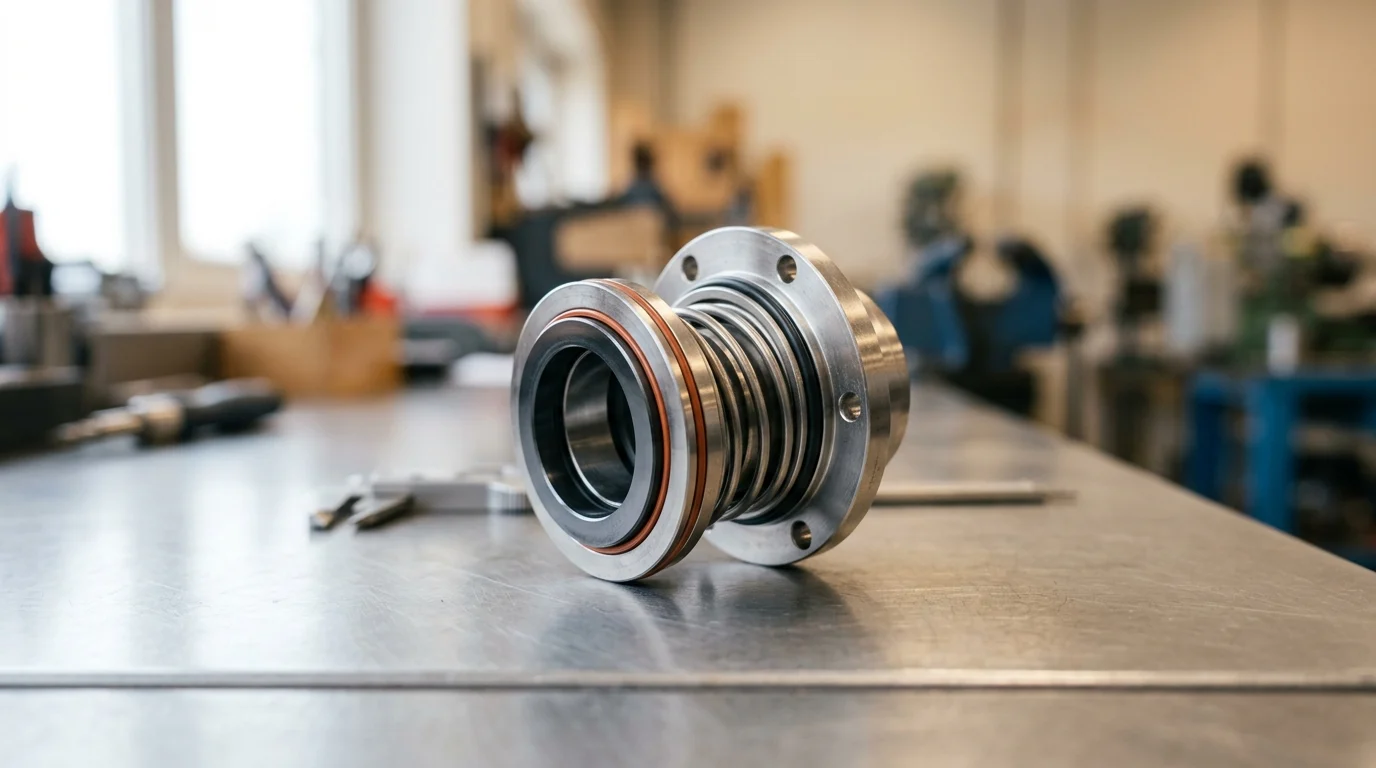
Mechanical seals are critical components in industrial pump systems, serving as the primary dynamic barrier between the process fluid and the external atmosphere. While they often represent a relatively small fraction of the initial capital expenditure for pumping equipment, their operational impact is disproportionately large. Industry estimates suggest that approximately 70% of centrifugal pump failures are initiated by mechanical seal degradation, leakage, or catastrophic failure. Consequently, the engineering and procurement decisions surrounding seal selection—specifically the choice between Original Equipment Manufacturer (OEM) components and aftermarket alternatives—dictate long-term plant stability and maintenance budgets.
The selection process is not merely a purchasing exercise but a critical engineering function. Plant managers and maintenance engineers must evaluate complex tribological factors, fluid dynamics, and supply chain constraints. Operating a pump with an improperly specified seal can lead to severe shaft wear, environmental contamination, and unplanned downtime that costs thousands of dollars per hour. Understanding the deep technical implications of seal selection is the first step toward moving a facility from a reactive maintenance posture to a predictive, highly optimized operational state.
Impact on uptime and energy efficiency
The functional integrity of a mechanical seal directly influences both pump uptime and overall energy consumption. Optimal face loading and precise flatness minimize friction, which in turn reduces the parasitic power draw of the pump shaft. Conversely, pump engineering guidelines indicate that excessive friction from poorly specified face materials, incorrect spring tension, or inadequate lubrication can increase power consumption by 10% to 15% in specific high-speed centrifugal applications. Over time, this inefficiency translates into substantial electrical costs and elevated operating temperatures that degrade secondary elastomers.
Furthermore, fugitive emissions and volumetric leakage rates must be strictly controlled to maintain hydraulic efficiency and meet environmental compliance standards. A continuous weepage rate of just 60 drops per minute wastes over 70 gallons of process fluid monthly. In applications involving hazardous or high-value chemicals, this leakage not only degrades system performance but also exposes the facility to severe regulatory fines and safety incidents.
Warranty and reliability risks
Selecting non-OEM mechanical seals introduces complex variables regarding equipment warranties and lifecycle performance metrics. Most major pump manufacturers stipulate that utilizing unauthorized aftermarket components during the active warranty period—typically 12 to 24 months post-commissioning—will void hydraulic and mechanical performance guarantees. For newly commissioned capital projects, this risk often mandates the exclusive use of OEM seals to protect the initial investment.
Beyond the warranty period, the primary maintenance concern shifts to Mean Time Between Failures (MTBF). Top-tier industrial facilities typically target a mechanical seal MTBF of 36 to 48 months for standard continuous-duty applications. Achieving this benchmark requires an exact match of seal metallurgy, face topography, and elastomer compatibility to the specific process conditions. Deviating from the original OEM design intent without rigorous engineering validation exposes the system to premature failure. However, when an OEM seal chronically fails to meet the 36-month MTBF target due to inherent design flaws relative to the specific process fluid, engineered aftermarket solutions often become the most viable path to restoring operational stability.
OEM vs Aftermarket Mechanical Seals
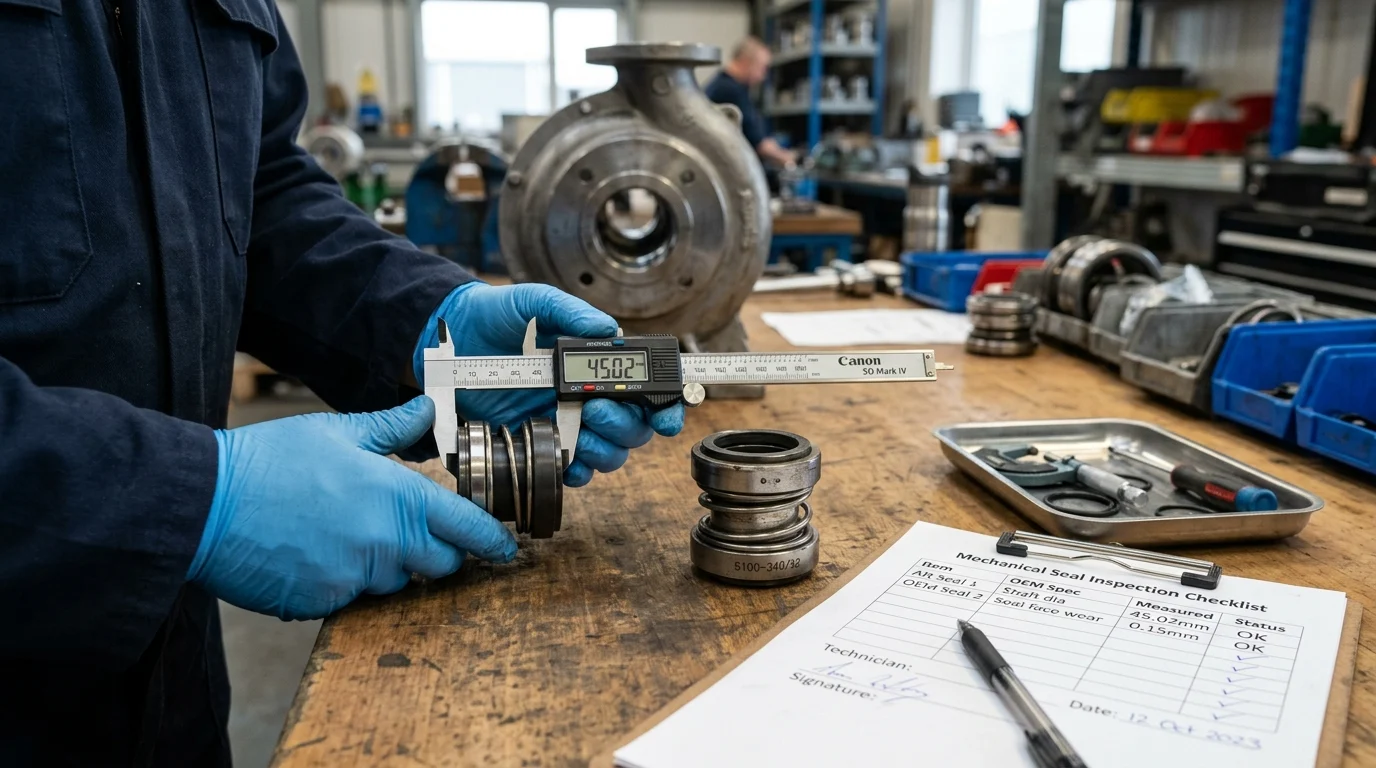
The dichotomy between OEM and aftermarket mechanical seals is frequently framed purely in terms of unit cost, but the technical reality is far more nuanced. OEM seals are designed in tandem with the pump housing and shaft dynamics, ensuring seamless integration and predictable baseline performance within the specified operating envelope. They carry the backing of the original equipment designer and guarantee exact dimensional compliance. Aftermarket manufacturers, however, occupy a broad spectrum ranging from low-cost dimensional duplicators to highly specialized engineering firms capable of significantly upgrading the original design.
Navigating this landscape requires a precise understanding of manufacturing tolerances, material science, and reverse-engineering capabilities. Relying exclusively on OEM parts guarantees compatibility but can limit a facility’s ability to innovate or overcome chronic failure modes. Conversely, utilizing aftermarket parts requires a robust internal vetting process to ensure the third-party manufacturer possesses the metallurgical expertise and machining precision necessary to meet or exceed the original specifications.
Key differences in specifications
The most critical distinction between OEM and aftermarket mechanical seals lies in the manufacturing processes and adherence to original dimensional tolerances. OEM components are manufactured using proprietary engineering blueprints that dictate micro-tolerances, often specifying face flatness to within one to two helium light bands (approximately 0.000011 to 0.000022 inches, or 0.28 to 0.56 µm). This extreme flatness is critical for maintaining the microscopic fluid film between the rotating and stationary faces.
While premium aftermarket suppliers possess the lapping equipment to match these tolerances, budget-tier alternatives may allow flatness deviations up to 0.0005 inches (0.013 mm). In high-speed or high-pressure applications, this deviation is sufficient to cause premature face wear, thermal distortion, or immediate blistering. Additionally, OEMs utilize specific, highly controlled material grades that may possess proprietary grain structures or resin impregnations. An aftermarket seal might match the basic material category, but subtle differences in porosity or thermal conductivity can drastically alter the seal’s performance under boundary lubrication conditions.
Engineered and reverse-engineered replacements
Aftermarket mechanical seals generally fall into two distinct categories: direct reverse-engineered replicas and engineered upgrades. Reverse engineering relies on sophisticated metrology, such as precise 3D scanning and surface profiling, to map an OEM seal’s physical geometry with an accuracy down to 0.001 mm (0.00004 inches). This ensures exact fit and prevents leakage. However, a critical pitfall of reverse engineering is that scanning a worn or deformed seal can inadvertently replicate degradation rather than the original design intent. Furthermore, reverse-engineered seals may lack OEM spring load validation and thermal distortion testing under actual pump operating conditions—important safety gaps that must be evaluated.
Conversely, engineered aftermarket replacements involve a fundamental redesign of the seal to correct inherent OEM flaws or adapt to severe service conditions. For instance, an aftermarket design engineer might replace a standard multi-spring OEM design—which is prone to clogging in slurries—with a heavy-duty single-spring or stationary metal bellows configuration. While aftermarket providers can act as strategic partners by modifying seal architecture to extend operational lifespans, OEMs offer the distinct advantage of rigorous, system-wide design validation. OEM engineering ensures that any seal modifications do not inadvertently disrupt other pump dynamics or compromise overall equipment integrity.
Critical Comparison Criteria
A rigorous comparison between OEM and aftermarket mechanical seals necessitates an exhaustive evaluation of the physical components and their behavioral characteristics under operational stress. Plant engineers cannot rely solely on part numbers; they must assess materials of construction, susceptibility to common failure modes, and the precision required during installation. In high-stakes environments, such as hydrocarbon processing or aggressive chemical manufacturing where fluid pressures can exceed 1,200 PSI (82 bar), component evaluation must be uncompromising.
Both OEM and aftermarket options must be scrutinized against the specific demands of the process fluid, including viscosity, vapor pressure, and abrasive content. By breaking down the mechanical seal into its constituent parts—faces, elastomers, and hardware—maintenance teams can make objective, data-driven comparisons that isolate the true value and risk associated with each sourcing pathway.
Materials, face combinations, and elastomers
The longevity of any mechanical seal is fundamentally dictated by its tribological face combinations and secondary sealing elastomers. Standard OEM offerings typically provide a reliable baseline combination, such as carbon graphite running against ceramic or reaction-bonded silicon carbide. However, severe applications demand specialized materials. Upgrading to sintered silicon carbide or solid tungsten carbide provides superior abrasion resistance in slurry applications.
Elastomer selection is equally critical to prevent catastrophic chemical attack. Standard FKM (Viton) O-rings may degrade rapidly in aggressive solvents or amines, requiring an upgrade to Perfluoroelastomers (FFKM). Premium FFKM compounds offer near-universal chemical resistance and maintain thermal stability up to 327 degrees Celsius (620 degrees Fahrenheit). Aftermarket suppliers frequently excel in this area by offering custom material combinations and rapid elastomer upgrades that OEMs might restrict to bespoke, high-cost, extended-lead-time orders.
Failure modes and installation tolerances
Understanding failure modes is essential when comparing seal options. Industry studies indicate that approximately 40% of mechanical seal failures are attributed to installation errors and operational deviations rather than inherent design flaws. Parameters such as shaft runout, which should strictly not exceed 0.002 inches (0.05 mm) Total Indicator Reading (TIR), and shaft end-play, limited to 0.003 inches (0.076 mm), are critical thresholds for both OEM and aftermarket seals.
If an aftermarket seal possesses a less forgiving spring rate or a stiffer elastomer package than the OEM original, it may be significantly more vulnerable to thermal distortion or face blistering when subjected to marginal shaft deflections. Conversely, some engineered aftermarket seals utilize self-aligning stationary faces or enlarged internal clearances to accommodate greater angular misalignment and radial runout than the original OEM specification, making them more forgiving in older, highly worn pump casings.
OEM vs aftermarket comparison table
The following table provides a high-level comparison of the typical attributes associated with OEM versus premium aftermarket mechanical seals across various operational and procurement criteria. This matrix serves as a baseline for evaluating the trade-offs inherent in seal sourcing.
| Evaluation Criteria | OEM Mechanical Seals | Premium Engineered Aftermarket Seals |
|---|---|---|
| Initial Capital Cost | Baseline standard (100%) | Typically 30% to 50% lower than OEM |
| Dimensional Tolerance | Exact to proprietary OEM prints | Matched via 3D scanning (± 0.001 mm) |
| Material Customization | Limited to standard catalog offerings | Highly flexible (e.g., rapid FFKM upgrades) |
| Design Optimization | Standardized for broad global use | Can be custom-engineered for specific flaws |
| Warranty Implications | Maintains active pump warranty | May void active OEM equipment warranty |
While the table highlights general trends, the actual performance of an aftermarket seal is entirely dependent on the quality control standards of the specific manufacturer. Procurement teams must use these criteria not as absolute rules, but as focal points for supplier audits and technical reviews.
Sourcing, Compliance, and Cost Factors
The procurement of mechanical seals extends beyond engineering specifications into the complex realms of supply chain logistics, regulatory compliance, and overall financial strategy. Maintenance departments are frequently caught between the immediate need to restore critical pumping capacity and the long-term mandate to control maintenance, repair, and operations (MRO) budgets. Additionally, the prevalence of counterfeit or substandard aftermarket products in global supply chains poses a significant risk. Relying exclusively on one supply channel can expose a facility to unacceptable vulnerabilities.
Balancing these competing priorities requires a thorough analysis of lead times, certification requirements, and the Total Cost of Ownership (TCO) associated with each sourcing pathway. A localized aftermarket supplier might solve an immediate crisis, but if their products lack the necessary material traceability required by industry regulators, the long-term liability could far outweigh the short-term operational gains.
Lead times and emergency availability
In industrial manufacturing, downtime is the ultimate cost driver, often calculated in tens of thousands of dollars per hour of lost production. OEM mechanical seals, particularly for legacy equipment or highly specialized multistage pumps, can suffer from extended supply chain bottlenecks. It is not uncommon for OEM lead times on complex, engineered cartridge seals to extend from 12 to 16 weeks, forcing plants to carry massive inventories.
In stark contrast, agile aftermarket manufacturers often operate localized machining centers that can reverse-engineer, manufacture, and ship a fully functional replacement within 24 to 48 hours. While this rapid emergency availability makes aftermarket sourcing an indispensable strategy for facilities lacking extensive onsite inventory, it is crucial to ensure these fast-turnaround parts undergo the same rigorous quality control and pressure testing as OEM components. By leveraging vetted local aftermarket capabilities, maintenance teams can bypass catastrophic downtime scenarios and restore production while waiting for long-term OEM stock to replenish.
Certifications, traceability, and standards
Regulatory compliance and material traceability form the bedrock of mechanical seal specification in highly regulated sectors. In the petrochemical and refining industries, seals must strictly adhere to API 682 standards, which mandate rigorous qualification testing, specific clearance requirements, and flush plan compatibility for Category 2 and 3 seals. Similarly, pharmaceutical and food processing applications require FDA-compliant materials and, in some regions, WRAS, USP Class VI, or EHEDG certifications.
OEMs inherently provide comprehensive Material Test Reports (MTRs) and guaranteed compliance documentation straight from the factory. When utilizing aftermarket seals in these critical applications, procurement teams must rigorously audit the supplier to ensure they can provide equivalent, unbroken traceability for all metallurgy, carbon grades, and elastomers. Failure to maintain this documentation can result in severe regulatory penalties, failed safety audits, and compromised plant integrity.
Total cost of ownership
Evaluating the Total Cost of Ownership (TCO) requires moving past the initial purchase order. While aftermarket mechanical seals frequently offer an upfront cost reduction of 30% to 50% compared to OEM equivalents, TCO encompasses installation labor, operational lifespan, energy consumption, process fluid loss, and inventory carrying costs.
If a cheaper aftermarket seal requires replacement every 14 months, whereas the premium OEM seal reliably meets the 36-month target, the labor costs, crane rentals, and production losses associated with the additional changeouts will rapidly eclipse the initial procurement savings. Conversely, if an engineered aftermarket seal resolves a chronic OEM failure mode—such as upgrading to a robust bellows design that extends the lifespan by 50%—the TCO advantage shifts heavily in favor of the aftermarket solution. True cost analysis must always prioritize runtime over purchase price.
How to Choose the Right Seal Option
Determining the optimal sourcing strategy for mechanical seals requires a structured, data-driven approach rather than relying on impulsive buying or legacy habits. Maintenance and engineering teams must collaborate to assess the operational context of each pump, categorizing equipment based on its criticality to the overall production process and its historical failure rates.
By implementing a standardized evaluation framework, facilities can safely leverage the cost and lead-time advantages of aftermarket seals while reserving premium OEM procurement for highly sensitive, regulated, or warranty-bound applications. This strategic bifurcation ensures that maintenance budgets are deployed efficiently without compromising plant safety or environmental compliance.
Evaluation steps for maintenance teams
The evaluation process must begin with a comprehensive root cause analysis (RCA) of previous seal failures. Maintenance teams should inspect the degraded seal faces for heat checking or blistering, analyze the process fluid for unexpected abrasives, and verify the operating envelope. Vibration analysis should confirm that the pump is operating within acceptable dynamic parameters, typically maintaining vibration levels below 0.1 in/sec (2.54 mm/sec) RMS for general-purpose centrifugal equipment.
If the RCA reveals that the OEM seal failed due to standard wear and tear after a long, predictable lifecycle, a direct aftermarket replica may be highly suitable and cost-effective. However, if the failure was premature and driven by aggressive fluid dynamics, cavitation, or excessive shaft deflection, simply replacing the seal with an identical OEM or aftermarket part will yield the same poor result. In these instances, the team must evaluate whether an engineered aftermarket upgrade or a higher-tier OEM solution is required to fundamentally alter the failure trajectory.
Decision matrix for critical applications
A decision matrix aids in standardizing the selection process across a facility by weighing application criticality against procurement variables. The table below outlines a typical framework for assigning mechanical seal sourcing strategies based strictly on pump classification and operational risk.
| Pump Classification | Application Characteristics | Recommended Sourcing Strategy | Key Considerations |
|---|---|---|---|
| Tier 1 (Critical) | API 682, Hazardous fluids, High pressure (>1,000 PSI / 69 bar) | Phased: OEM during warranty, transitioning to Highly Vetted Engineered Aftermarket | Strict MTRs required; zero tolerance for leakage or emissions. |
| Tier 2 (Essential) | ANSI standard, Continuous operation, Moderate temp | Premium Aftermarket | Focus on reliability improvement, material upgrades, and cost reduction. |
| Tier 3 (Balance of Plant) | Water, Non-hazardous, Intermittent use, Low pressure | Standard Aftermarket | Prioritize lowest initial cost, rapid availability, and ease of installation. |
Applying this matrix prevents over-engineering simple applications and under-engineering critical ones. It empowers procurement teams to confidently route purchase orders based on predefined technical criteria rather than subjective preference.
Procurement and reliability recommendations
To optimize long-term equipment health, procurement teams should establish strategic partnerships with a select group of vetted aftermarket suppliers rather than constantly chasing the lowest bidder on the open market. Vendor qualification should include physical audits of the supplier’s machining capabilities, lapping equipment, quality control protocols, and dedicated engineering support structure.
Additionally, facilities should implement a smart stocking strategy to mitigate supply chain volatility. A best practice is to maintain a 20% buffer stock of critical seal components and complete cartridge assemblies for all Tier 1 and Tier 2 pumps onsite. By treating mechanical seal selection and inventory management as an ongoing asset management initiative rather than a routine buying task, industrial plants can achieve maximum hydraulic uptime and minimize lifecycle costs. To execute this effectively: first, audit existing failure modes; second, tier your pump criticality; and third, qualify a maximum of two trusted suppliers to balance risk and availability.
Key Takeaways
- Treat mechanical seal selection as an engineering decision because seal degradation is associated with roughly 70% of centrifugal pump failures.
- Use OEM seals during active warranty periods when unauthorized components could void pump performance guarantees.
- Evaluate aftermarket seals by matching face materials, elastomers, metallurgy, dimensions, spring loading, and process conditions rather than by price alone.
- Target a mechanical seal MTBF of 36 to 48 months for standard continuous-duty service by validating seal design against the application.
- Investigate leakage quickly because a weepage rate of 60 drops per minute can waste more than 70 gallons of process fluid per month.
- Account for energy impact because excessive seal friction can increase power consumption by 10% to 15% in some high-speed centrifugal pump applications.
Frequently Asked Questions
What is the main difference between OEM and aftermarket mechanical seals?
OEM seals are supplied or specified by the original pump manufacturer, while aftermarket seals are produced by independent manufacturers. The best choice depends on warranty status, process conditions, material compatibility, lead time, and whether the aftermarket seal is engineered to match the original design.
Can aftermarket mechanical seals match OEM performance?
Yes, if they are correctly specified for face materials, elastomers, metallurgy, dimensions, and operating conditions. Reputable manufacturers such as Victor Seals produce standard and OEM-style replacement seals for industrial pumps, marine equipment, and brands including Allweiler, Flygt, Alfa Laval, and Imo.
Will using a non-OEM seal void a pump warranty?
It can. Many pump manufacturers require authorized components during the warranty period, often 12 to 24 months after commissioning. Before installing an aftermarket seal, review the pump warranty terms and obtain approval if the equipment is still covered.
When is an OEM mechanical seal the safer choice?
OEM seals are often safer for new equipment under warranty, critical services with limited engineering data, or applications where the pump maker’s original performance guarantees must be preserved. They reduce specification risk but may cost more or have longer lead times.
When should a plant consider an aftermarket mechanical seal?
Aftermarket seals are worth considering for mature equipment, urgent replacements, cost reduction programs, discontinued OEM parts, or when a qualified supplier can provide a dimensionally and materially equivalent seal with proper technical support.

Post time: Aug-18-2026