


Mechanical Shaft Seal vs Packing Seal Overview
Industrial fluid handling relies heavily on centrifugal pumps, agitators, and rotary compressors. The point at which the rotating shaft exits the stationary casing presents a critical vulnerability for fluid containment. To manage this boundary, engineers primarily utilize two distinct technologies: mechanical shaft seals and compression packing seals.
The decision between these two sealing mechanisms dictates the operational baseline of the equipment. While both serve the same fundamental purpose—restricting the escape of process fluids along the shaft—their operational principles, lifecycle costs, and performance metrics diverge significantly. Packing seals represent a legacy technology rooted in controlled leakage, whereas mechanical seals offer a modern, highly engineered solution designed for near-zero emissions.
Selecting the appropriate sealing method requires a deep understanding of fluid dynamics, regulatory constraints, and maintenance capabilities. As industrial facilities increasingly prioritize energy efficiency and strict environmental compliance, the traditional reliance on packing seals has shifted, though they remain indispensable in specific rugged applications.
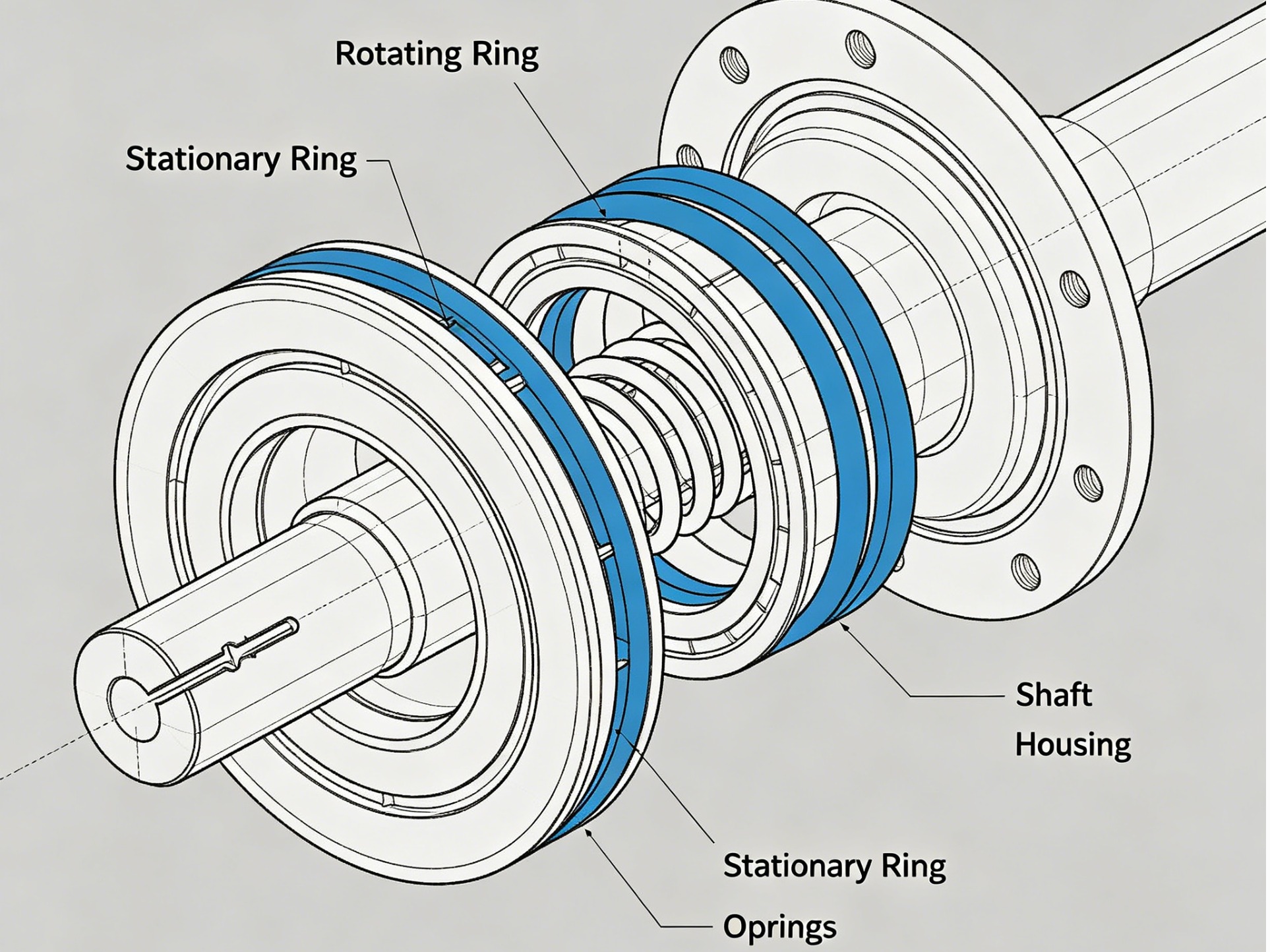
Key differences in sealing method
Mechanical seals utilize two extremely flat lapped faces (one rotating with the shaft, one stationary in the housing) pressed together by a spring or bellows mechanism to create a microscopic fluid film barrier. This highly engineered interface prevents fluid escape while minimizing friction. In contrast, packing seals rely on braided fibrous materials compressed around the shaft within a stuffing box. A gland follower physically forces the packing against the shaft, choking the fluid path through brute radial pressure rather than relying on precision-machined flat faces.
Leakage, maintenance, and uptime impact
Packing inherently requires continuous, controlled leakage—typically calibrated to 10 to 60 drops per minute—to lubricate the braided rings and dissipate friction-induced heat. Because the packing material wears away over time, it necessitates frequent manual tightening of the gland follower by maintenance personnel. Mechanical seals, however, operate with virtually undetectable leakage (often measured in parts per million or milliliters per hour) and require no routine adjustment. This lack of required intervention dramatically increases the mean time between failures (MTBF) and overall equipment effectiveness (OEE).
Energy, product loss, and environmental factors
The mechanical friction generated by packing seals consumes substantial power; engineering studies indicate that mechanical seals can reduce power consumption at the stuffing box by up to 80% compared to tight packing. Furthermore, the deliberate leakage of packing results in continuous product loss. When handling volatile organic compounds (VOCs) or hazardous chemicals, this leakage introduces severe environmental compliance risks. Regulatory bodies, such as the U.S. Environmental Protection Agency (EPA), enforce strict emissions standards that essentially mandate the use of mechanical seals for hazardous fluid containment.
How Mechanical Seals and Packing Seals Work
Understanding the distinct operational mechanics of both sealing types is essential for specifying the correct technology for a given industrial application. The sealing interface dynamics dictate not only the containment efficiency but also the required auxiliary infrastructure, such as cooling lines and barrier fluid reservoirs.
Both systems operate within the pump’s stuffing box or seal chamber, but they utilize the available space in fundamentally different ways. The tribological interaction between the sealing elements and the rotating shaft determines the thermal generation, wear rates, and ultimate longevity of the installation.
Engineers must account for the physical forces at play. Packing relies on macroscopic compression and deformation of soft materials, while mechanical seals rely on microscopic fluid dynamics and precise metallurgical alignment to maintain integrity.
How a mechanical seal controls leakage
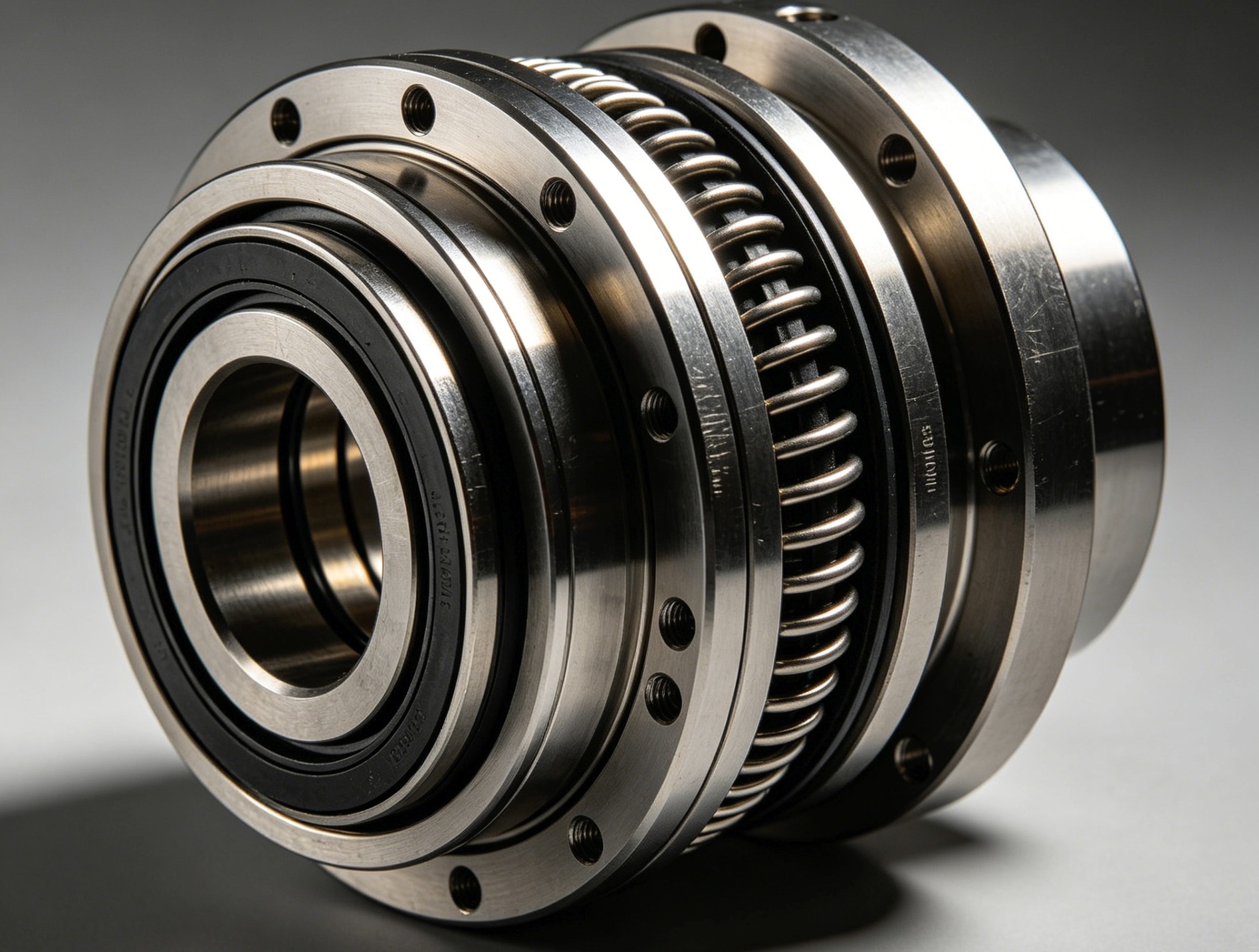
A mechanical seal assembly consists of a rotating primary ring affixed to the shaft and a stationary mating ring secured to the pump casing. These faces are machined to an exceptional flatness, typically within 2 to 3 light bands (approximately 0.6 to 0.9 micrometers). Springs, metal bellows, and hydraulic pressure provide the closing force. The process fluid itself, or an external barrier fluid, permeates the microscopic gap between the faces to provide hydrodynamic lubrication. This prevents dry running and catastrophic face damage, while secondary elastomers (O-rings or V-rings) seal the static gaps between the seal components and the pump hardware.
How a packing seal creates sealing force
Compression packing involves wrapping multiple rings of braided material—such as PTFE, flexible graphite, or aramid fibers—around the shaft. A mechanical gland follower is tightened to compress these rings axially. Because the packing material is somewhat elastomeric, this axial compression forces the rings to expand radially, pressing outward against the stuffing box bore and inward against the rotating shaft or shaft sleeve. This radial pressure creates a tortuous path that restricts fluid egress, though it inherently causes mechanical friction and wear on the shaft sleeve over time.
Materials, shaft conditions, and support systems
Mechanical seals demand stringent shaft conditions; radial runout must typically be kept below 0.05 mm (0.002 inches) to maintain face alignment. Their faces are constructed from hard-wearing materials like silicon carbide or tungsten carbide, often requiring API 682 standard piping plans (e.g., Plan 11, Plan 53A) for cooling. Packing seals are highly tolerant of shaft deflection and misalignment. They utilize softer braided materials and generally require simpler support systems, such as a lantern ring connected to a clean water flush, which provides lubrication and keeps abrasive particulates away from the packing interface.
How to Compare Mechanical Seals and Packing Seals
A rigorous comparison between mechanical seals and packing requires analyzing the operational environment, regulatory constraints, and financial parameters of the specific facility. Engineers must evaluate both the upfront capital expenditure and the long-term operational expenditures to make an informed decision.
To facilitate this comparison, industrial operators often utilize a total cost of ownership (TCO) model. This model accounts for energy consumption, fluid reclamation costs, maintenance labor, and component replacement frequencies over a standard 5-to-10-year lifecycle, revealing that the initial purchase price is only a fraction of the actual cost.
| Comparison Metric | Mechanical Shaft Seal | Compression Packing Seal |
|---|---|---|
| Leakage Rate | Near-zero (measured in ppm or ml/hr) | Controlled leakage (10-60 drops/min) |
| Initial Capital Cost | High ($500 – $5,000+) | Low ($20 – $200) |
| Power Consumption | Low (minimal friction) | High (significant friction on shaft) |
| Maintenance Frequency | Low (run-to-failure, no adjustments) | High (frequent gland adjustments) |
| Shaft Wear | None (wears on replaceable faces) | High (grooves the shaft/sleeve) |
| Tolerance to Misalignment | Very Low (requires rigid shafts) | High (absorbs vibration/deflection) |
Performance criteria for side-by-side comparison
When evaluating these seals side-by-side, critical performance indicators include maximum pressure limits, shaft speed tolerance, and acceptable leakage rates. Mechanical seals can handle extreme pressures exceeding 200 bar (2,900 psi) and shaft surface speeds above 25 meters per second. Packing seals are generally limited to lower pressures (typically up to 30 bar) and slower surface speeds, as excessive velocity generates unmanageable frictional heat that rapidly degrades the braided fibers and scores the shaft.
Fluid, pressure, temperature, and solids considerations
The nature of the process fluid heavily influences the comparison. For toxic, flammable, or expensive fluids, mechanical seals are mandatory to prevent hazardous exposure and economic loss. However, in applications involving heavy slurries or high particulate concentrations (such as mining tailings or pulp and paper processing), packing can sometimes be advantageous. The continuous flush in a packing arrangement pushes solids away, whereas mechanical seal faces can be quickly destroyed if abrasive particles penetrate the microscopic fluid film, unless specialized hard faces and complex barrier fluid plans are implemented.
Total cost of ownership and installation factors
Packing seals boast a low initial procurement cost and straightforward installation that does not require dismantling the pump casing. However, their TCO is often higher due to the costs associated with continuous fluid leakage, shaft sleeve wear, higher energy consumption, and frequent maintenance interventions. Mechanical seals require a high initial investment and precise installation by skilled technicians. Despite this, they yield a substantially lower TCO in continuous-duty applications by eliminating routine maintenance, reducing motor power consumption, and preventing valuable product loss.
How to Choose the Right Seal for Your Application
Selecting the optimal sealing technology is a critical engineering decision that directly affects plant reliability, safety, and profitability. The selection process must be systematic, moving from hard constraints (like chemical compatibility and emissions regulations) to variable preferences (like budget constraints and maintenance schedules).
Industry standards, particularly those established by the American Petroleum Institute (API) and the International Organization for Standardization (ISO), provide rigorous frameworks for seal selection. Adhering to these methodologies ensures that the chosen seal will perform reliably within the specified operating window.
Plant managers must also align the sealing strategy with the facility’s overall maintenance philosophy, determining whether the plant is better suited for high-skill precision equipment or robust, low-tech solutions.
Step-by-step selection process
The selection protocol begins with characterizing the process fluid: determining its vapor pressure, specific gravity, toxicity, and particulate content. Next, engineers map the operating conditions, including normal and maximum temperatures, suction and discharge pressures, and shaft speed. If the fluid is hazardous, explosive, or strictly regulated, a mechanical seal (often a dual seal configuration with a barrier fluid) is automatically mandated. If the fluid is benign, such as cooling water or non-toxic slurry, the decision shifts to an economic evaluation comparing the ongoing cost of packing maintenance against the capital cost of a mechanical seal.
Supplier quality and procurement checks
Sourcing reliable sealing components requires vetting suppliers for metallurgical traceability, precision machining capabilities, and robust quality assurance programs. For mechanical seals, buyers should verify that the manufacturer conforms to ISO 9001 standards and can provide comprehensive testing documentation, including hydrostatic and dynamic face pressure tests. For packing, consistency in the braiding process, the purity of the base materials (e.g., avoiding low-grade graphite that causes galvanic corrosion), and the quality of the impregnating lubricants are critical procurement checkpoints.
Retrofit, standardization, and operator skill factors
Upgrading from packing to a mechanical seal is a common retrofit in modernizing facilities. This process often requires machining the stuffing box or utilizing customized cartridge seals that bolt directly onto existing equipment without complex measurements. Plant managers must also consider their maintenance workforce; packing requires frequent, albeit low-skill, adjustments, whereas mechanical seals require high-skill, precision installation but demand zero ongoing adjustment. Standardizing on a specific cartridge seal design across multiple pump assets can significantly reduce inventory costs and mitigate installation errors.
Final Selection Guidelines
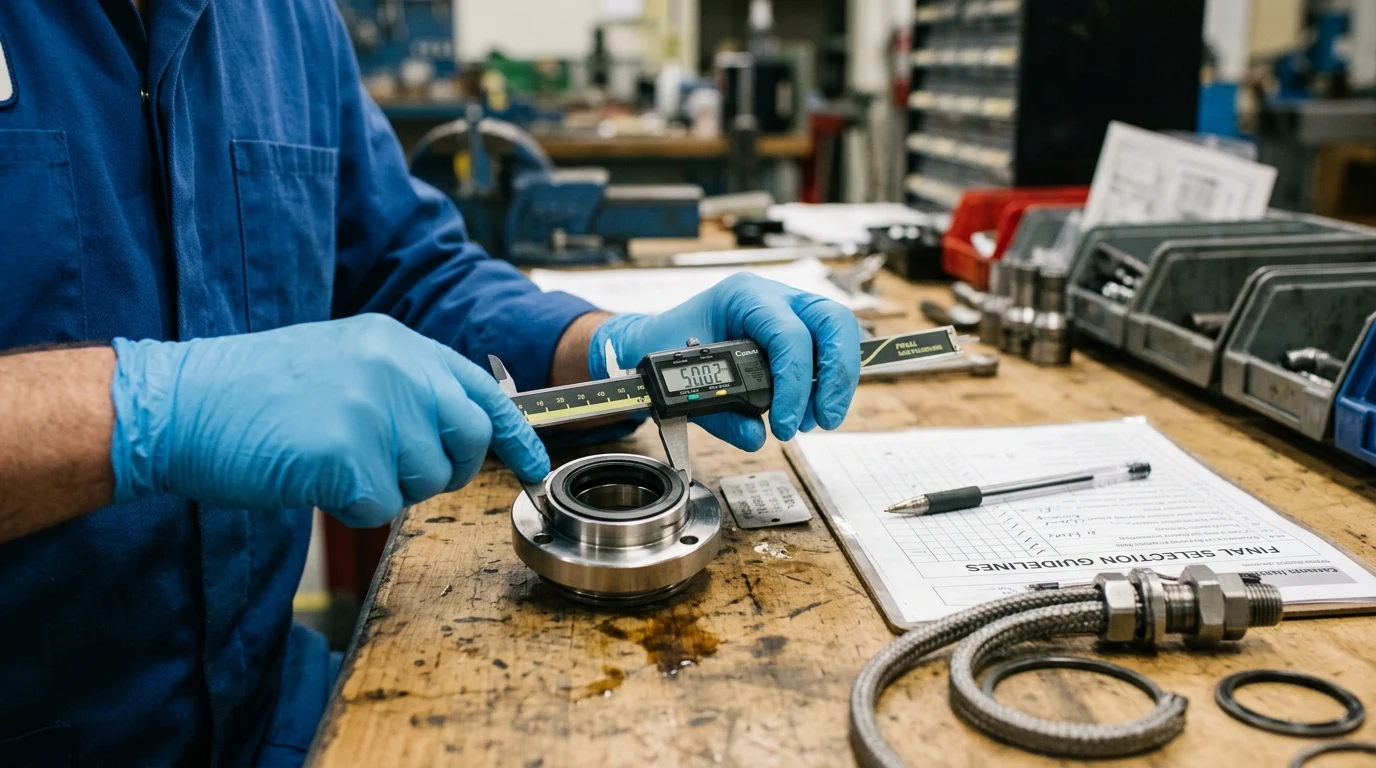
The ultimate decision between a mechanical shaft seal and a packing seal hinges on aligning the technology’s capabilities with the facility’s operational priorities. There is no universally superior choice; rather, there is an optimal choice for each specific set of operational parameters and fluid characteristics.
By synthesizing performance data, regulatory requirements, and lifecycle cost analysis, plant engineers can establish clear procurement guidelines. The following matrix and strategic considerations serve as a final framework for specifying sealing systems across various industrial applications.
| Application Profile | Recommended Seal Type | Primary Justification |
|---|---|---|
| Hydrocarbons / VOCs | Mechanical Seal (Single/Dual) | Strict emissions compliance, safety |
| High-Pressure Boiler Feed | Mechanical Seal | High pressure/temperature tolerance |
| Abrasive Mining Slurries | Packing Seal (with flush) | High tolerance for solids and shaft deflection |
| Clean Water / HVAC | Mechanical Seal | Long MTBF, zero maintenance, energy efficiency |
| Large Diameter Agitators | Packing Seal | Accommodates extreme shaft runout and vibration |
Best choice for low leakage or low cost
When absolute containment, emissions compliance, and minimal product loss are the primary objectives, mechanical seals are the definitive choice. They are non-negotiable for handling hydrocarbons, aggressive chemicals, and high-value pharmaceuticals. Conversely, if the primary constraints are initial capital expenditure, ease of field replacement without equipment teardown, and the process fluid is entirely benign (e.g., wastewater or raw water), modern compression packing remains a highly viable and cost-effective solution.
How to balance reliability, compliance, and budget
Achieving the optimal balance requires evaluating the hidden costs of downtime and environmental
Key Takeaways
- The most important conclusions and rationale for Mechanical Shaft Seal vs Packing Seal: What’s the Difference?
- Specs, compliance, and risk checks worth validating before you commit
- Practical next steps and caveats readers can apply immediately
Frequently Asked Questions
When should I choose a mechanical shaft seal over packing?
Choose a mechanical seal when you need near-zero leakage, lower maintenance, and better efficiency, especially for chemicals, oil, water, and regulated services.
Why does packing seal leak by design?
Packing needs a small, controlled leak to lubricate the shaft and remove heat. Without leakage, packing can overheat, wear quickly, and damage the shaft sleeve.
Is a mechanical seal more cost-effective than packing?
Usually yes in continuous-duty pumps. Mechanical seals reduce product loss, power use, and adjustment time, which often lowers total operating cost despite a higher initial price.
Can Victor Seals provide replacement seals for OEM pump brands?
Yes. Victor Seals supplies OEM-compatible and replacement mechanical seals for brands such as Grundfos, Alfa Laval, IMO, Flygt, Lowara, APV, Fristam, and Allweiler.
Which industries benefit most from mechanical seals?
Chemical, mining, oil and gas, petrochemical, power, pulp and paper, marine, and water treatment plants benefit most where leakage control, uptime, and compliance are critical.
Post time: May-06-2026