


Why Marine Pump Seals Matter for Procurement
Marine pump seals represent a critical procurement category where component failure directly translates to severe operational and financial disruption. Operating continuously in aggressive saline environments, these mechanical seals protect vital fluid handling systems aboard commercial vessels, offshore platforms, and coastal desalination plants.
Cost of failure, downtime, and lifecycle impact
The financial impact of a seal failure extends far beyond the replacement cost of the component itself. In commercial shipping and offshore oil and gas operations, unplanned vessel downtime can incur penalties ranging from $15,000 to over $50,000 per day. Furthermore, premature seal degradation leads to fluid leakage, which can result in environmental non-compliance fines and secondary damage to pump bearings or motor housings. Procurement teams must evaluate the Total Cost of Ownership (TCO) over a targeted Mean Time Between Failures (MTBF) of at least 15,000 to 25,000 operating hours, prioritizing high-grade metallurgy over initial unit savings.
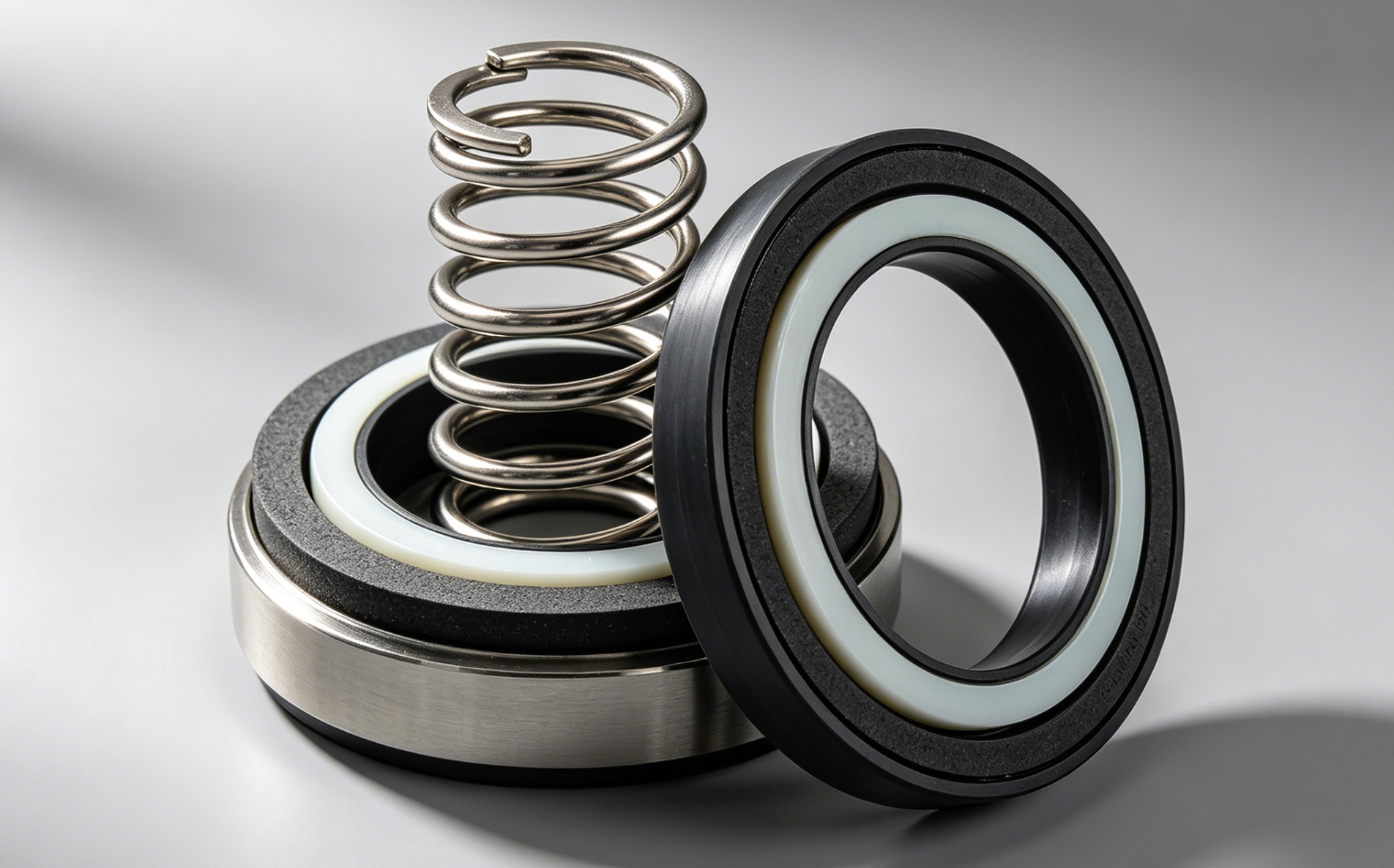
Operating conditions in marine and offshore applications
Seawater applications expose mechanical seals to extreme dynamic conditions. Salinity levels averaging 35,000 parts per million (ppm) create a highly corrosive environment that rapidly degrades standard industrial metals. Additionally, marine pumps frequently handle abrasive suspended solids, such as sand and silt, while operating under varying pressure profiles from 5 bar in standard cooling loops to over 25 bar in high-pressure ballast or boiler feed systems. Temperature fluctuations, ranging from near-freezing ambient seawater to 150°C in engine cooling circuits, demand elastomers and face materials capable of maintaining dimensional stability without thermal cracking or extrusion.
Key Material and Design Specifications
Specifying the correct materials and architectural design for marine pump seals is paramount for mitigating galvanic corrosion and abrasive wear. Procurement specifications must align precisely with the fluid dynamics and chemical exposure of the targeted pump system.
Seal face materials, elastomers, and corrosion resistance
Seal face metallurgy and secondary elastomer selection dictate the operational lifespan of the component. Silicon Carbide (SiC) is the industry standard for marine environments due to its exceptional hardness and resistance to both chemical attack and abrasive wear. For elastomers, Fluorocarbon (FKM/Viton) is widely specified for its broad thermal range and resistance to petroleum-based contaminants often found in bilge water, though EPDM remains necessary for specific hot water applications where oil is absent. Duplex stainless steels (such as SAF 2205) or Titanium are frequently mandated for metal components to prevent chloride-induced pitting.
| Component | Preferred Marine Material | Key Advantage | Typical Temperature Limit |
|---|---|---|---|
| Seal Faces | Silicon Carbide (SiC) | High abrasion and corrosion resistance | Up to 200°C |
| Secondary Seals | FKM (Viton) | Resistance to oils, fuels, and seawater | -20°C to 200°C |
| Metal Parts | Duplex Stainless Steel | Superior pitting resistance equivalent (PREN > 35) | N/A |
| Springs | Hastelloy C-276 | Immunity to chloride stress corrosion cracking | N/A |
Seal designs for different pump and vessel requirements
The architectural configuration of the seal impacts both installation efficiency and operational reliability. Cartridge seals are highly favored in marine settings because they are pre-assembled, pre-set, and pressure-tested at the factory, eliminating installation errors in confined shipboard engine rooms. For hazardous or highly critical fluids, double seal arrangements (either pressurized back-to-back or unpressurized tandem) provide a secondary containment barrier. Conversely, component seals (such as single spring or wave spring designs) remain standard for auxiliary centrifugal pumps where space is limited and upfront costs are tightly controlled.
Specification comparison criteria for buyers
Buyers must standardize their specification criteria to ensure accurate cross-referencing between suppliers. Critical data points include the exact shaft diameter (typically ranging from 20mm to 150mm for marine pumps), the required Pressure-Velocity (PV) limit, and the specific pump brand compatibility. Procurement teams should mandate that suppliers provide dimensional drawings that confirm exact fitment for OEM equipment, ensuring that replacement seals match the housing bore and operating length of the original installation.
How to Evaluate Suppliers
Identifying a qualified manufacturing partner requires assessing their production infrastructure, quality management systems, and ability to engineer seals that meet or exceed OEM specifications. Strategic sourcing in this category relies heavily on supplier transparency and technical capability.
Manufacturing capability and OEM compatibility
A capable supplier must demonstrate robust machining and lapping capabilities to achieve seal face flatness within 2 to 3 light bands (approximately 0.0006mm to 0.0009mm). Established manufacturers with decades of experience, such as those operating 3,000+ square meter facilities with dedicated engineering teams, often provide extensive OEM-compatible portfolios. These suppliers can supply direct replacements for major marine pump brands like IMO, Alfa Laval, Grundfos, APV, Flygt, and Allweiler. This capability allows procurement teams to consolidate their vendor base while securing replacement parts that match the exact tolerances of the original equipment.
MOQ, sampling, packaging, and spare parts support
Commercial terms vary significantly based on the supplier’s production model. For standard OEM-compatible marine seals, Minimum Order Quantities (MOQs) typically range from 10 to 50 units. However, for custom-engineered cartridge seals or specialized rotor sets, buyers should negotiate lower MOQs (1 to 5 units) to support pilot testing and prototyping. Comprehensive spare parts support is also critical; suppliers should offer repair kits encompassing O-rings, springs, and faces. Sampling policies should allow buyers to subject initial units to bench testing before committing to volume contracts.
Supplier qualifications, factory profile, and export experience
Vendor qualification must include a rigorous review of factory certifications and export history. ISO 9001:2015 certification is a mandatory baseline for quality management. For marine applications, suppliers with experience fulfilling orders that require marine classification society approvals (such as DNV, ABS, or Lloyd’s Register) demonstrate a higher tier of manufacturing discipline. Furthermore, a proven track record of exporting to major maritime hubs in Europe, the Americas, and Southeast Asia indicates that the supplier understands international trade compliance, customs documentation, and global logistics standards.
Quality Control, Compliance, and Logistics
Rigorous quality control (QC) and proper logistics planning are non-negotiable when sourcing critical sealing components. The marine environment leaves no margin for error, making comprehensive inspection and protective packaging essential stages of the fulfillment process.
Inspection, dimensional checks, and material traceability
In-process and final inspections guarantee that each seal will perform under rated pressures. Leading manufacturers implement 100% static pressure testing on cartridge seals prior to dispatch. Dimensional checks using Coordinate Measuring Machines (CMM) verify that shaft sizes and housing fits adhere to tolerances of ±0.01mm. Additionally, Positive Material Identification (PMI) using X-ray fluorescence (XRF) analyzers is crucial to verify the elemental composition of metal components, ensuring that standard 304 stainless steel has not been substituted for specified Duplex or Hastelloy alloys.
| Inspection Phase | Methodology / Tool | Acceptance Criteria |
|---|---|---|
| Material Verification | PMI / XRF Analysis | Exact match to alloy specification (e.g., SAF 2205) |
| Dimensional Audit | Coordinate Measuring Machine (CMM) | Tolerances within ±0.01mm of engineering drawing |
| Face Flatness | Optical Flat & Monochromatic Light | 2 to 3 helium light bands maximum |
| Leakage Testing | Static Pneumatic/Hydrostatic Test | Zero pressure drop over a 15-minute hold period |
Compliance documents and application data review
Traceability mitigates risk in industrial procurement. Buyers must require Material Test Reports (MTRs) complying with EN 10204 Type 3.1, which certify the chemical and mechanical properties of the raw materials used. Application data reviews conducted jointly by the buyer’s technical team and the supplier’s engineers ensure that the selected seal faces and elastomers are chemically compatible with the specific fluid, whether it is raw seawater, treated boiler water, or heavy fuel oil.
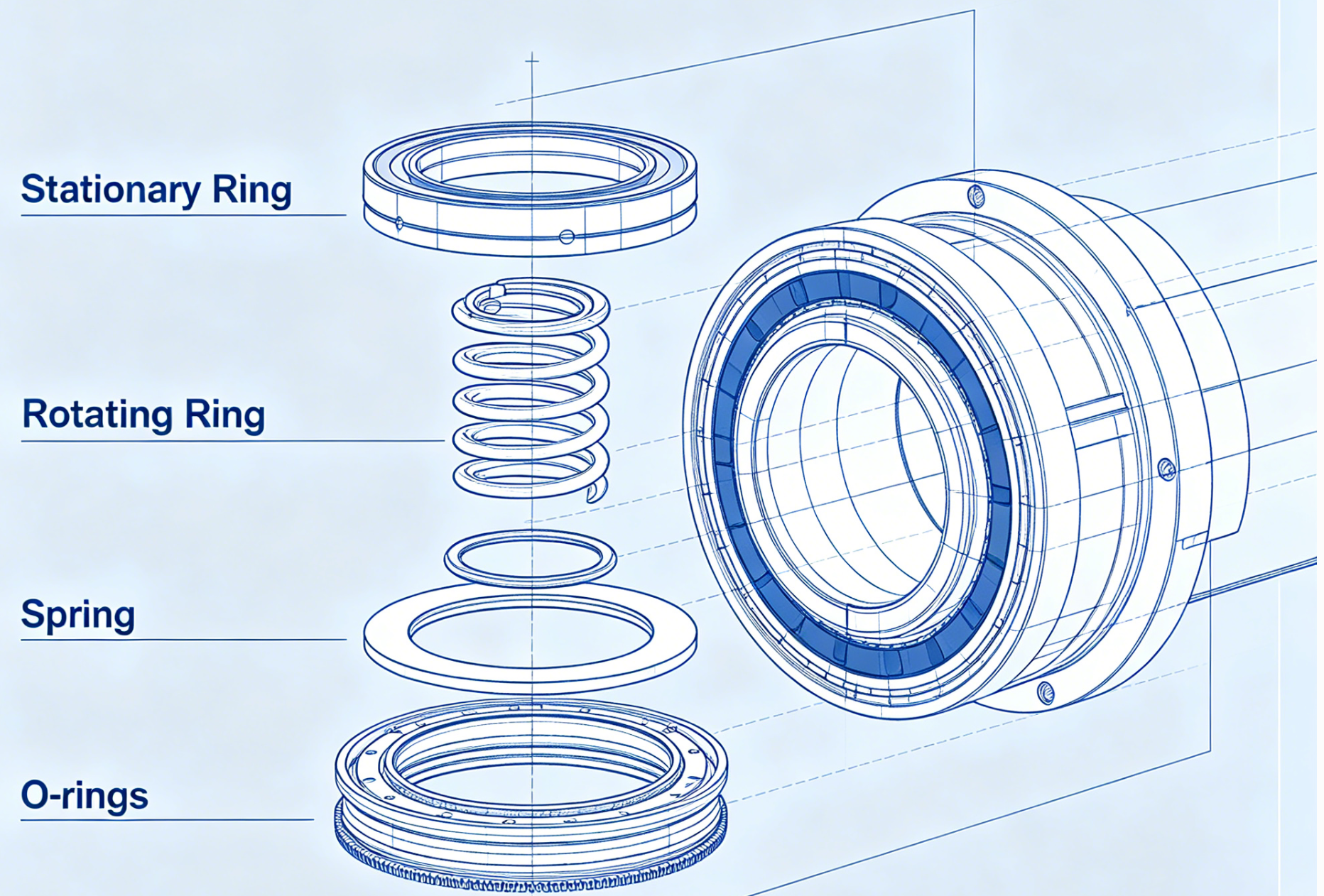
Export packaging and corrosion protection
The logistics of shipping marine seals require specialized packaging to prevent transit damage and atmospheric corrosion. Precision-lapped seal faces are highly susceptible to scratching and must be individually wrapped in non-abrasive, lint-free materials. Because shipments often travel via ocean freight, exposing the cargo to high humidity and salt air, suppliers must utilize Volatile Corrosion Inhibitor (VCI) bags and desiccants. Robust, heat-treated wooden crating (ISPM 15 compliant) is necessary for heavy multi-spring or cartridge seals to prevent deformation during handling and storage.
Buyer Decision Framework
Structuring a systematic procurement framework enables buyers to select marine pump seals that deliver long-term reliability without inflating maintenance budgets. This requires a balanced approach to technical validation and commercial negotiation.
Step-by-step evaluation process
The evaluation process begins with a comprehensive technical audit of the current pump systems, documenting shaft dimensions, operating pressures, and historical failure modes. Next, buyers should issue a Request for Quotation (RFQ) that explicitly details the required MTBF, material grades, and OEM cross-reference numbers. Following the receipt of proposals, procurement teams must conduct a vendor capability assessment, evaluating the supplier’s production capacity, quality certifications, and lead times. The final step involves procuring sample seals for destructive and non-destructive testing, validating the manufacturer’s claims before scaling up to fleet-wide or plant-wide implementation.
Balancing price, lead time, compatibility, and risk
Successful procurement hinges on balancing unit price against systemic risk. While standard component seals may offer a lower initial cost, investing in premium cartridge seals often yields a lower total cost of ownership by reducing installation time and preventing catastrophic leaks. Buyers must also weigh lead times; reliable suppliers typically offer 2 to 4 weeks for standard OEM replacements, whereas custom alloys or specialized designs may require 8 to 12 weeks. Maintaining a strategic inventory of critical spares, supported by a supplier with consistent quality and strong export capabilities, ensures continuous operational readiness and shields marine operators from the severe financial penalties of unplanned downtime.
Key Takeaways
- Wholesale sourcing and supply-chain implications for Marine Pump Seals
- Specifications, compliance, and commercial terms buyers should validate
- Actionable recommendations for distributors and procurement teams
Frequently Asked Questions
What should buyers compare first when sourcing Marine Pump Seals?
Start with airflow/spec range, compliance requirements, installation constraints, and after-sales spare-part policy. These four factors usually determine total risk and margin quality.
How can procurement teams control landed cost for Marine Pump Seals?
Break down unit FOB, packaging volume, container utilization, duty/tax, and expected return rate. A simple landed-cost model by SKU tier helps avoid margin surprises.
Which certifications are commonly required for Marine Pump Seals in key markets?
Requirements vary by destination market; verify applicable electrical/safety and material compliance standards before PO confirmation, and keep lab reports tied to exact SKU versions.
How should distributors set MOQ and inventory targets for Marine Pump Seals?
Use channel demand split and lead time to set tiered MOQ. Keep fast-moving SKUs deeper in stock while limiting long-tail variants with slower turns and higher holding costs.
What is a practical quality-control checklist for Marine Pump Seals orders?
Define AQL, critical defect list, function tests, and packaging drop checks. Run pre-shipment inspection and keep a traceable defect feedback loop with the factory.
Post time: May-26-2026