


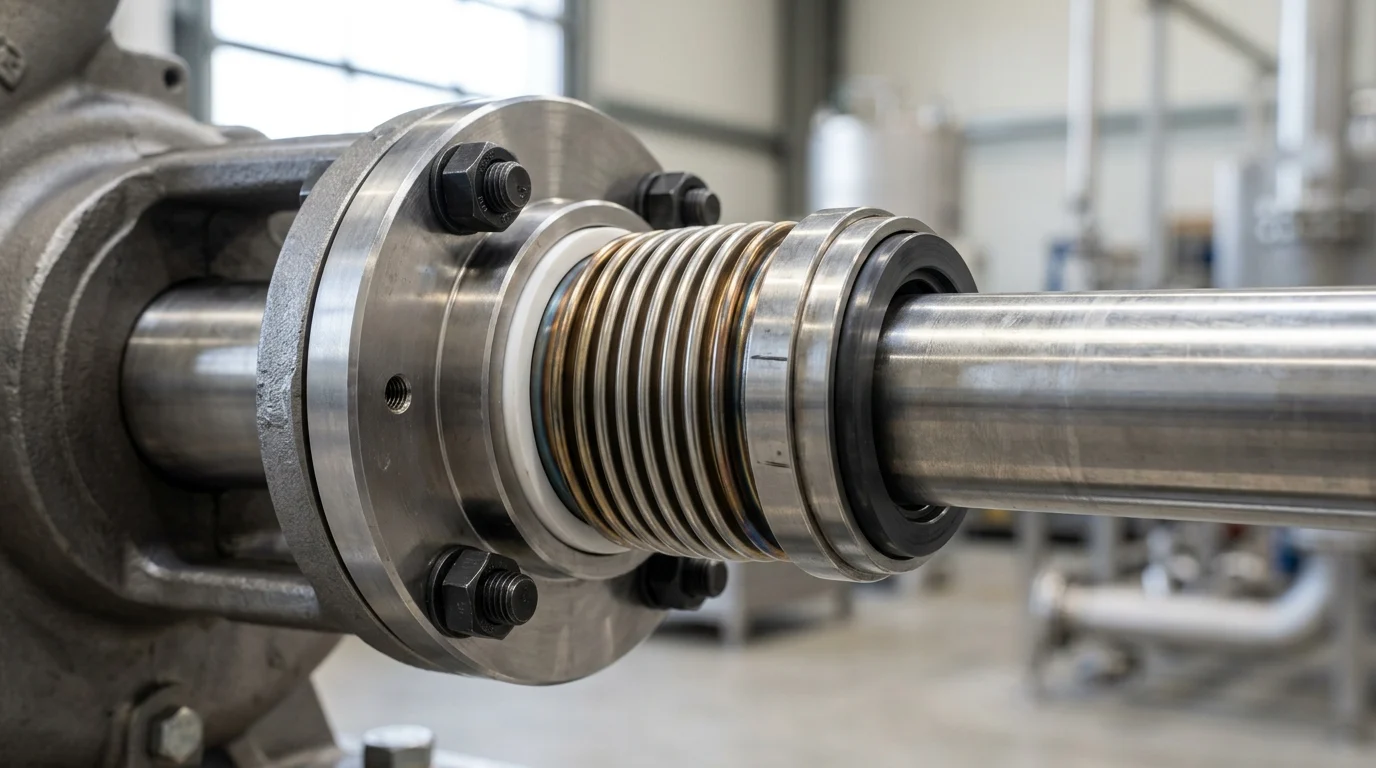
Why Metal Bellows Mechanical Seal Service Life Matters
Industrial fluid handling relies heavily on the integrity of mechanical seals to maintain process efficiency and environmental safety. Among the various sealing technologies available, the metal bellows mechanical seal stands out for its ability to operate reliably in extreme environments without the use of dynamic elastomers. Because these seals are routinely deployed in high-temperature, highly corrosive, or cryogenic applications, maximizing their service life is a fundamental objective for plant reliability engineers. The mean time between failures (MTBF) for a properly specified and installed metal bellows seal should typically range from 36 to 60 months, depending on the severity of the operational envelope.
Commercial Risks of Premature Seal Failure
The financial implications of premature seal failure extend far beyond the replacement cost of the seal itself. In continuous process industries such as petroleum refining or chemical manufacturing, unexpected pump downtime can incur production losses ranging from $10,000 to over $50,000 per hour. Furthermore, fugitive emissions resulting from seal leakage pose significant regulatory compliance risks. Under strict environmental frameworks like EPA Method 21, volatile organic compound (VOC) emissions must often be maintained below a threshold of 500 parts per million (ppm). A compromised seal that breaches this limit can trigger mandatory operational shutdowns, rigorous auditing procedures, and substantial financial penalties.
Assets That Benefit Most From Longer Seal Life
While standard pusher seals are adequate for benign fluids, specific critical assets derive immense value from the extended lifespan of metal bellows mechanical seals. High-temperature boiler feed pumps, hot oil transfer pumps, and vacuum distillation bottoms pumps operate in thermal ranges (often between 200°C and 400°C) where traditional elastomeric O-rings harden, crack, or degrade. Similarly, cryogenic expanders and pumps handling liquefied natural gas (LNG) at temperatures approaching -196°C require the elastomeric-free design of a metal bellows seal to prevent low-temperature embrittlement. In these high-value assets, eliminating the dynamic secondary seal removes the primary failure point associated with shaft fretting and thermal degradation, directly extending the operational life of the entire pumping system.
Key Design Features of Metal Bellows Mechanical Seals
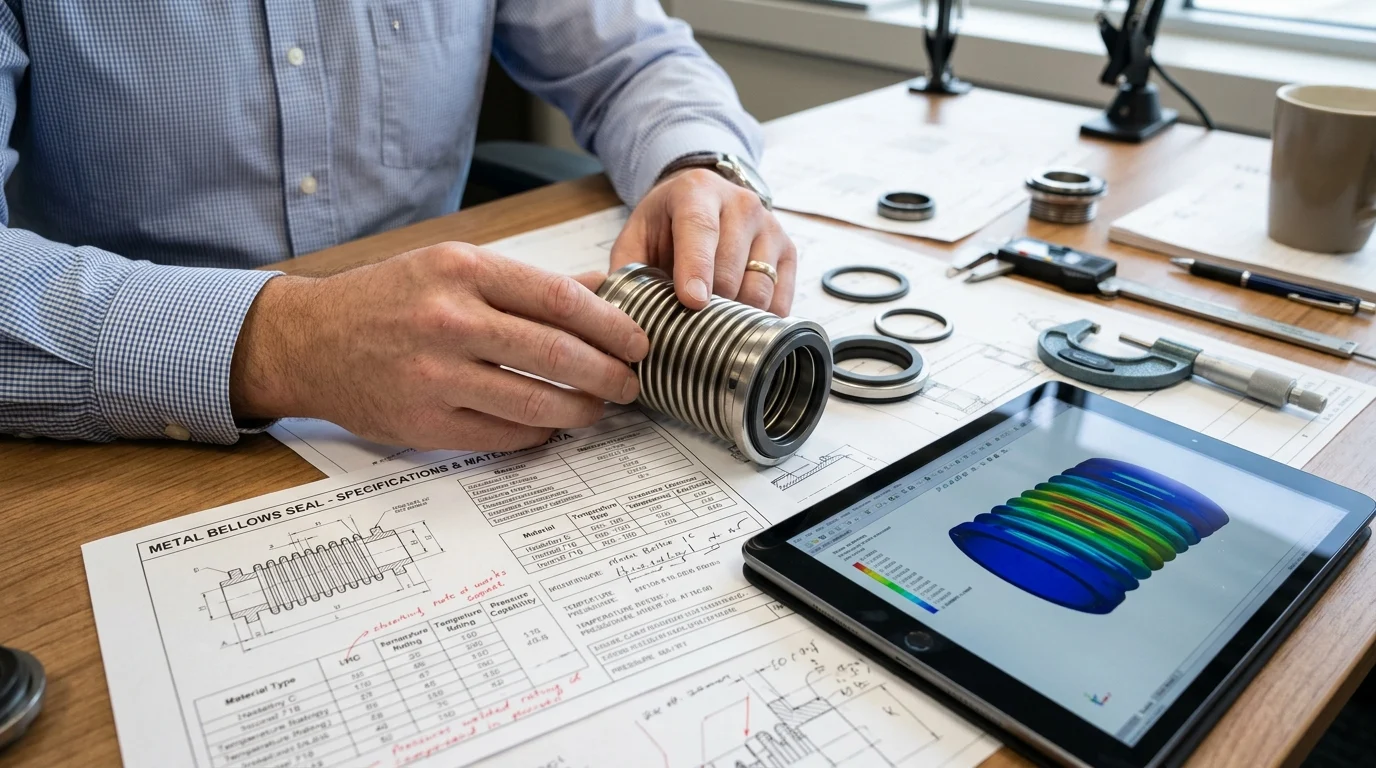
The architectural advantage of a metal bellows mechanical seal lies in its consolidation of multiple functional components into a single, dynamic unit. By replacing the traditional spring mechanism and dynamic O-ring with a flexible metallic core, the design inherently resists clogging and eliminates shaft fretting. The precise engineering of these components dictates the seal’s mechanical resilience, thermal tolerance, and ultimate service life.
Welded Bellows, Formed Bellows, and Seal Face Design
The construction of the bellows core fundamentally influences its flexibility and pressure limits. Edge-welded bellows are fabricated by joining stamped, contoured metallic diaphragms at their inner and outer diameters. This design yields high axial flexibility and a longer stroke per convolution, making it highly effective for accommodating thermal expansion in high-temperature applications. Conversely, formed (hydroformed) bellows are manufactured from a single metallic tube shaped under high hydraulic pressure. While formed bellows exhibit lower flexibility and require higher spring rates, their thicker cross-section provides superior resistance to high-pressure environments, often withstanding differential pressures exceeding 60 bar. The interface between the bellows and the seal face is equally critical; faces can be shrink-fitted into a metallic holder or constructed as a solid monolithic piece to prevent distortion under thermal stress.
| Feature | Edge-Welded Bellows | Formed (Hydroformed) Bellows |
|---|---|---|
| Flexibility / Stroke | High (longer stroke per convolution) | Low to Moderate |
| Pressure Rating | Up to 25 bar (single ply) | Up to 60+ bar |
| Material Thickness | 0.10 mm to 0.20 mm | 0.30 mm to 0.50 mm |
| Primary Application | High temperature, petrochemical | High pressure, heavy duty slurry |
Material Choices for Corrosion and Temperature Resistance
Material selection dictates the seal’s ability to resist both chemical attack and thermal fatigue over its service life. Standard applications frequently utilize AM350 stainless steel, which offers excellent fatigue strength and a functional temperature limit of approximately 315°C (600°F). For more aggressive environments, high-nickel alloys such as Inconel 718 or Hastelloy C-276 are mandated. Inconel 718 maintains its mechanical integrity and spring rate at temperatures up to 425°C (800°F) while providing superior resistance to sulfide stress cracking. Hastelloy C-276 is typically specified for highly corrosive media with low pH values or high chloride concentrations, owing to its exceptional pitting resistance equivalent number (PREN) of over 45.
Essential Terminology for Seal Specification
Accurate specification requires a firm understanding of specialized terminology that defines bellows performance. The ‘spring rate’ (measured in N/mm or lbs/in) denotes the force required to compress the bellows; a rate that is too high can cause excessive face wear, while a rate that is too low may result in face separation during pressure transients. ‘Nesting’ refers to the ability of the individual ripples or convolutions to interlock when compressed, which protects the bellows from physical damage during extreme pressure spikes. ‘Pitch’ defines the distance between convolutions, directly impacting the self-cleaning capability of the seal when operating in fluids with suspended particulates.
Operating Conditions That Affect Seal Service Life
The actual service life of a metal bellows mechanical seal is heavily dictated by the thermodynamic and kinematic environment within the seal chamber. Operating outside the engineered envelope accelerates component degradation, leading to premature face wear or fatigue failure of the bellows core.
Temperature, Pressure, Speed, and Shaft Movement
The dynamic forces acting on the seal interface include temperature, pressure, rotational speed, and shaft movement. Single-ply welded bellows are typically rated for maximum pressures of 20 to 25 bar, whereas multi-ply configurations can handle up to 60 bar. Rotational speeds exceeding 25 meters per second (m/s) at the seal face require stationary bellows designs to prevent centrifugal forces from distorting the convolutions. Furthermore, while metal bellows can accommodate some axial shaft movement—typically up to +/- 1.5 mm—excessive axial play or radial deflection will induce severe cyclic stress, leading to premature fatigue cracking at the weld seams.
Fluid Properties, Crystallization, and Solids
The physical and chemical characteristics of the pumped fluid pose distinct challenges to seal longevity. High-viscosity fluids generate significant shear forces at the seal faces, requiring robust drive mechanisms to prevent the bellows from twisting (torsional failure). Fluids prone to crystallization, or hydrocarbons that experience coking at elevated temperatures, can pack the spaces between the bellows convolutions. This packing restricts the axial flexibility of the seal, effectively freezing the bellows and causing the seal faces to separate. When handling media with suspended solids exceeding 5% by weight, hard-on-hard face combinations, such as Silicon Carbide against Silicon Carbide, are required to resist abrasive wear.
Service-Life Risk by Application
Different industrial applications carry unique risk profiles that directly impact the expected MTBF of the seal. Understanding these application-specific risks allows reliability engineers to implement appropriate environmental controls and select optimal materials.
| Application Environment | Primary Risk Factors | Typical Face Material | Target MTBF |
|---|---|---|---|
| Hot Oil / Heat Transfer | Fluid coking, thermal distortion | Carbon vs. Silicon Carbide | 36 to 48 months |
| Cryogenic Fluids | Embrittlement, poor lubrication | Carbon vs. Tungsten Carbide | 48 to 60 months |
| Asphalt / Bitumen | High viscosity, heavy solids | Silicon Carbide vs. SiC | 24 to 36 months |
| Corrosive Chemicals | Pitting, stress corrosion cracking | High-Purity Alumina / SiC | 36 to 60 months |
Installation, Commissioning, and Maintenance Practices
Even the most robustly engineered metal bellows mechanical seal will experience premature failure if improperly installed or operated outside its intended environmental controls. Rigorous attention to mechanical alignment during installation, coupled with precise fluid control strategies, forms the foundation of long-term reliability.
Alignment and Installation Best Practices
Mechanical precision during installation is non-negotiable. Shaft runout must be meticulously measured and kept below 0.05 mm (0.002 inches) Total Indicator Reading (TIR) to prevent cyclic deflection of the bellows during rotation. Additionally, the perpendicularity of the seal chamber face relative to the shaft axis should not exceed 0.0005 inches per inch of shaft diameter. Misalignment forces the bellows to flex continuously with every shaft revolution, rapidly accelerating metal fatigue and drastically reducing the operational lifespan from years to mere weeks.
API 682 Seal Plans, Barrier Fluids, and Quench Systems
To mitigate harsh operational environments, API 682 piping plans are frequently employed to control the fluid film between the seal faces. For high-temperature services prone to coking, an API Plan 62 quench system is highly effective; introducing low-pressure steam (typically at 3 to 5 psig) to the atmospheric side of the seal prevents hydrocarbon oxidation and clears away debris. In highly toxic or volatile applications, dual seal arrangements utilizing API Plan 53A, 53B, or 53C provide a pressurized barrier fluid. The barrier fluid pressure is generally maintained at least 1.5 to 2.0 bar (22 to 29 psi) above the seal chamber pressure, ensuring that any leakage across the primary faces consists of clean barrier fluid rather than the abrasive or hazardous process media.
Inspection Signs of Normal Wear and Early Failure
Routine teardown inspections provide critical diagnostic data regarding the seal’s operating conditions. Normal wear is characterized by a uniform, 360-degree polished track on the softer carbon face, indicating stable fluid film lubrication. Conversely, an uneven or tapering wear track suggests thermal distortion or mechanical misalignment. Inspection of the metallic core is equally important; intergranular corrosion appears as microscopic pitting along the weld seams, while torsional fatigue typically manifests as a 45-degree angular tear across the convolutions, indicating that the seal was subjected to excessive breakaway torque during pump startup.
How to Select the Right Metal Bellows Mechanical Seal
Selecting the optimal metal bellows mechanical seal requires a systematic evaluation of the pumping system’s hydraulic parameters and the specific demands of the process fluid. A well-executed selection strategy bridges the gap between operational demands and capital expenditure, ensuring maximum return on investment through extended equipment uptime.
Decision Criteria for Seal Design Selection
The primary decision criteria revolve around the balance of pressure capability, chemical compatibility, and thermal limits. Engineers heavily rely on the Pressure-Velocity (PV) factor to determine the suitability of face materials. For instance, applications generating PV values exceeding 50,000 bar·m/s demand specialized, highly thermally conductive face materials like reaction-bonded silicon carbide to dissipate frictional heat effectively. Furthermore, the choice between a rotating bellows and a stationary bellows is dictated by shaft speed; rotating designs are generally limited to lower speeds, while stationary bellows are mandatory for high-speed centrifugal compressors and high-energy pumps to eliminate centrifugal distortion.
Standard Versus Engineered Seal Options
The market offers both standard catalog seals and highly engineered, custom-built solutions. Standard seals are designed to fit common ANSI or DIN pump standards with standard shaft bore sizes ranging from 25 mm to 100 mm. These units are cost-effective and readily available for general-purpose applications. Engineered seals, however, are specifically tailored for heavy-duty API 610 pumps operating under extreme conditions. These engineered options often feature custom metallurgy, multi-ply bellows construction, and optimized convolution profiles designed to survive aggressive pressure pulsations and aggressive chemical attacks that would destroy a standard seal.
Specification Practices That Improve Service Life
To guarantee optimal service life, specification practices must be rigorous and comprehensive. Procurement datasheets should detail not only the normal operating conditions but also the transient states, including maximum startup torque, minimum ambient temperatures, and fluid vapor pressure margins. Specifying compliance with API 682 Category 2 or 3 standards ensures that the seal has undergone rigorous qualification testing. By providing seal manufacturers with accurate data regarding the fluid’s specific gravity, vapor pressure at operating temperature, and anticipated cleaning cycles (such as CIP/SIP protocols), facilities can procure a metal bellows seal precisely calibrated for decades of reliable service.
Key Takeaways
- Specify metal bellows seals for high-temperature, corrosive, vacuum, or cryogenic services where dynamic elastomers are likely to fail.
- Target a service life of 36 to 60 months by matching bellows material, face combination, and secondary sealing design to the actual process conditions.
- Control vibration, shaft runout, misalignment, and dry running because mechanical instability can quickly damage seal faces and bellows welds.
- Use proper flush, cooling, or barrier systems when fluids are hot, abrasive, crystallizing, or prone to coking at the seal faces.
- Treat premature seal leakage as a reliability and compliance risk, especially where VOC emissions limits or unplanned downtime costs are significant.
Frequently Asked Questions
How long should a metal bellows mechanical seal typically last?
A well-specified, correctly installed metal bellows seal can often reach 36 to 60 months of service, depending on temperature, pressure, fluid properties, lubrication, and operating stability.
Why are metal bellows seals used in high-temperature pumps?
They eliminate dynamic elastomers that can harden, crack, or lose flexibility at elevated temperatures, making them suitable for hot oil, boiler feed, and refinery pump applications.
What causes premature failure in metal bellows mechanical seals?
Common causes include incorrect material selection, poor installation, shaft misalignment, vibration, dry running, thermal shock, abrasive particles, and operation outside the seal’s pressure or temperature limits.
Are metal bellows mechanical seals suitable for cryogenic service?
Yes. Their elastomer-free dynamic design helps prevent low-temperature embrittlement, making them useful for LNG, cryogenic pumps, and other extremely cold fluid services.
How can plants extend metal bellows seal service life?
Use compatible materials, maintain stable operating conditions, control vibration, ensure proper flushing or cooling, follow installation procedures, and inspect pumps for shaft runout or bearing issues.

Post time: Sep-16-2026