


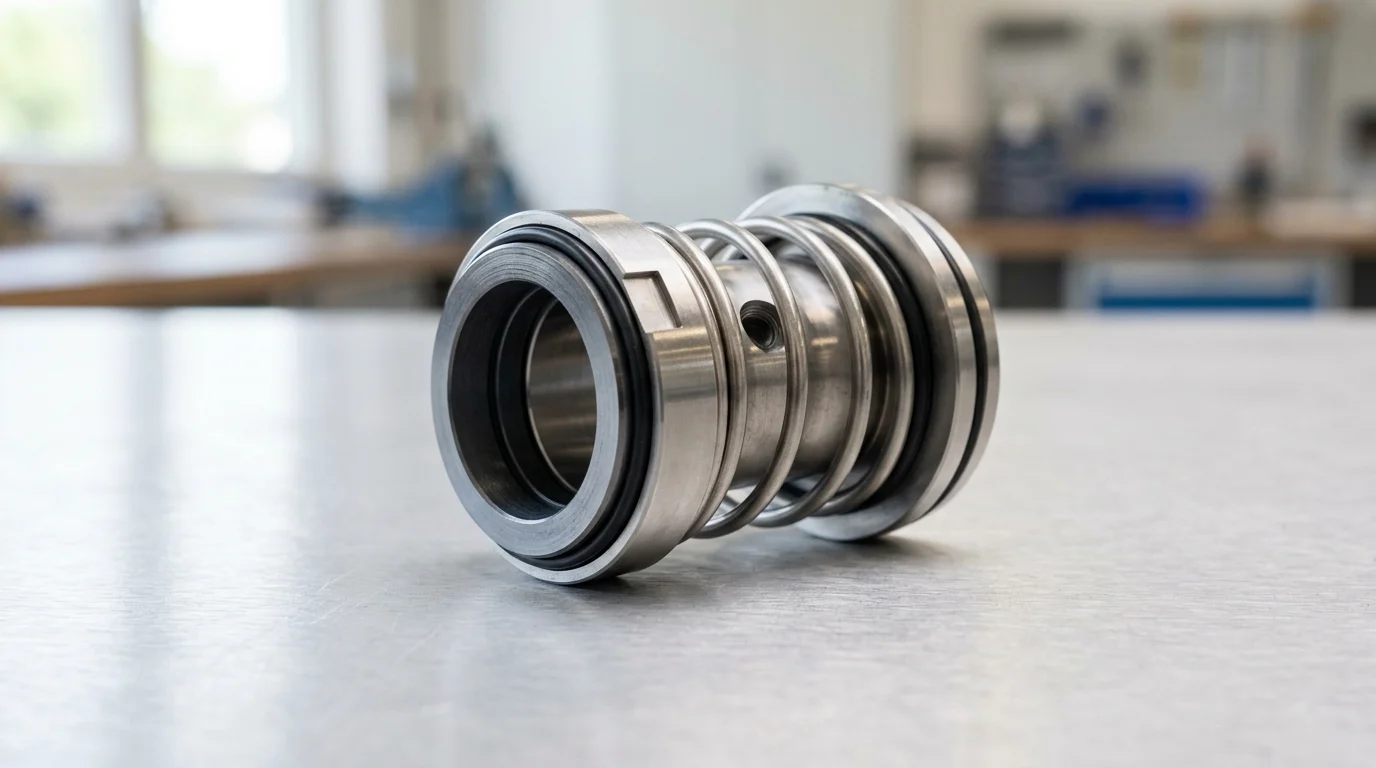
Why Early Mechanical Seal Replacement Matters
Mechanical seals serve as the primary containment barrier in rotating fluid machinery, preventing process fluids from escaping into the environment while maintaining internal system pressures. In industrial pumping applications, these precision-engineered components operate under extreme tribological conditions, relying on a microscopic hydrodynamic fluid film between the stationary and rotating faces. When this delicate balance is disrupted, the seal begins to fail. Identifying this transition early is critical to maintaining operational integrity.
Industry standards establish stringent reliability targets for mechanical seals, often demanding years of continuous duty. However, operational realities—such as off-design pump operation, transient cavitation, or particulate ingress—frequently compress this lifecycle. Recognizing the early indicators of mechanical seal degradation allows maintenance teams to transition from reactive firefighting to predictive asset management, ultimately safeguarding both the equipment and the broader production process.
How Mechanical Seals Protect Uptime and Product Quality
A healthy mechanical seal maintains a controlled, nearly imperceptible level of fluid weeping to lubricate the seal faces. By preserving this tight containment, the seal protects the mechanical integrity of the pump and ensures that the process fluid remains free from external contaminants.
When a seal begins to fail, excessive leakage compromises product quality and operational uptime. You risk losing expensive process fluids, introducing atmospheric oxygen or moisture into sensitive chemical reactions, and forcing unexpected pump shutdowns. Replacing the seal early ensures that the containment barrier remains robust, preventing batch contamination and eliminating the unplanned downtime that occurs when a seal fails catastrophically during a critical production run.
Commercial Risks of Delayed Mechanical Seal Replacement
Delaying the replacement of a deteriorating mechanical seal introduces severe commercial and operational risks that extend far beyond the cost of the seal itself. A compromised seal allows process fluid to migrate along the pump shaft, which can breach the bearing housing. Once process fluid or barrier fluid contaminates the bearing lubricating oil, bearing failure often follows, potentially leading to shaft deflection, impeller-to-casing contact, and severe damage to the pump’s rotating assembly.
The financial disparity between a planned seal replacement and a reactive overhaul is substantial. A proactive replacement requires only the cost of the seal cartridge and scheduled labor. Conversely, a run-to-failure event often necessitates complete pump rebuilding, environmental remediation, and regulatory fines for hazardous emissions, alongside the massive opportunity cost of lost production.
| Intervention Strategy | Direct Repair Costs | Production Downtime | Secondary Equipment Damage Risk |
|---|---|---|---|
| Early Planned Replacement | Base cost of seal + scheduled labor | Minimal (Scheduled during turnaround) | Low (assuming proper installation) |
| Late/Reactive Replacement | Base cost + expedited shipping + overtime | Moderate (12-48 hours unplanned) | 30-50% (Bearings, sleeves) |
| Catastrophic Run-to-Failure | 3x to 10x seal cost (Pump overhaul) | High (Days to weeks) | High (Potential for bearing, shaft, or casing damage) |
Mechanical Seal Warning Signs to Watch
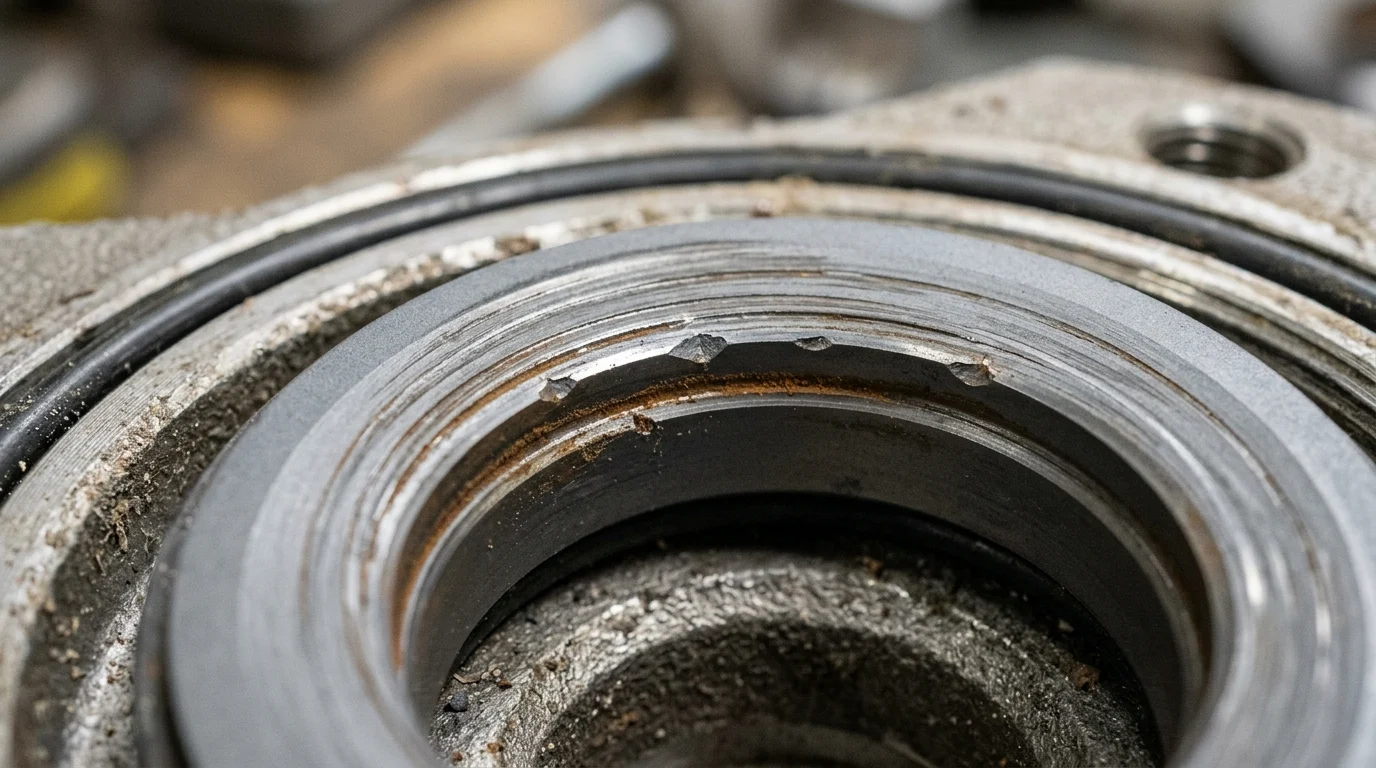
Transitioning from theoretical lifecycle targets to practical asset management requires rigorous condition monitoring. Mechanical seals rarely fail without offering physical or operational warning signs. By establishing baseline metrics, reliability engineers can detect the subtle deviations that precede a loss of containment. The key is distinguishing between normal transient behaviors and sustained degradation patterns.
Leakage, Weeping, and Seal Flush Changes
The most direct indicator of mechanical seal health is visible leakage. While minor vapor emissions are normal, liquid droplets, pooling around the pump baseplate, or crystalline deposits on the gland plate indicate a problem. Replace the seal when you observe a sustained visible leakage rate that exceeds your facility’s acceptable safety and environmental thresholds (often cited as 5 drops per minute, though this varies heavily by application and fluid toxicity).
For dual seal arrangements utilizing API flush systems, monitoring the barrier or buffer fluid is equally critical. An unexplained drop in barrier fluid pressure or a sudden increase in barrier fluid consumption serves as a primary warning sign. Additionally, if the barrier fluid exhibits discoloration or viscosity changes, the inner seal face has likely been breached, allowing process fluid to contaminate the flush system.
Vibration, Heat, Noise, and Power Draw
Changes in the mechanical and thermal signature of the pump assembly frequently point to impending seal failure. Increased friction translates directly into elevated localized temperatures. If inspections reveal a seal chamber temperature significantly above the historical baseline, the seal is likely experiencing dry running or inadequate flush flow, leading to thermal distortion of the faces.
Vibration and acoustic emissions provide another critical warning. While pumps vibrate due to various hydraulic and mechanical factors, a sharp increase in high-frequency acoustic noise often indicates fluid flashing between the faces. Furthermore, if overall pump vibration exceeds acceptable limits, the resulting shaft deflection will rapidly destroy the mechanical seal. Monitoring motor power draw can also reveal increased parasitic drag caused by failing seal faces, presenting as an unexplained increase in motor amperage.
Process-Side Symptoms of Seal Face Damage
Process-side anomalies often mirror the mechanical degradation occurring within the seal chamber. When a mechanical seal begins to fail, it can alter the hydraulic dynamics of the entire pumping circuit. Operators may notice localized pressure fluctuations or a gradual loss of suction pressure, particularly if the seal failure allows atmospheric air to be drawn into a pump operating under vacuum conditions.
In highly sensitive applications, such as pharmaceutical manufacturing or food processing, the first symptom of seal face damage might manifest as product contamination. Microscopic particles sheared from degrading seal faces can enter the process stream, leading to rejected batches. If routine quality control sampling detects particulate matter that matches the seal face metallurgy, or if chemical analysis reveals traces of barrier fluid in the final product, isolate and replace the mechanical seal immediately.
How to Diagnose Mechanical Seal Failure Early
Accurate early diagnosis requires a systematic approach that combines visual inspections, process data analysis, and an understanding of tribological failure modes. While the previous section covered the symptoms operators observe, this phase focuses on how technicians confirm the root cause. This analytical approach informs whether the current seal design is appropriate for the application.
Inspection Steps for Early Seal Failure Detection
Effective early detection begins with a structured inspection protocol executed during routine operator rounds. Technicians must look for fretting corrosion, crystallized product buildup, or paint peeling near the seal chamber, which indicates localized overheating.
Non-destructive testing tools elevate the accuracy of early detection. While infrared thermography is highly effective for scanning the seal gland and flush piping, keep in mind that inspecting running seals closely can be unsafe or impractical in tight installations. When safe to do so, look for a thermal gradient showing the flush outlet temperature significantly higher than the inlet, which indicates excessive face friction. Additionally, analyzing samples of the barrier fluid using spectrometry can reveal wear metals or process fluid ingress long before the inner seal completely fractures.
Operating Data to Compare Against Baseline
Diagnostic accuracy relies heavily on comparing real-time operating parameters against established baseline data. (Note that many facilities lack perfect commissioning data; in these cases, compare current readings against identical pumps or historical averages). Monitor the seal flush flow rates; a significant variance from the piping plan design specifications indicates a restriction in the flush lines or a worn throat bushing, both of which will rapidly accelerate seal failure.
Seal chamber pressure is another critical metric. In a healthy system, the seal chamber pressure should remain relatively stable above the pump suction pressure. If this pressure drops unexpectedly, it may indicate severe wear of the pump wear rings or a failure of the seal’s secondary O-rings. Correlating these pressure and flow deviations with motor load and vibration data provides a comprehensive diagnostic picture that points conclusively to seal distress.
Common Mechanical Seal Failure Modes
Understanding common failure modes enables technicians to interpret diagnostic data accurately. Dry running frequently causes premature failure, occurring when the fluid film vaporizes due to inadequate heat removal or loss of suction. This manifests as severe heat checking—microscopic radial cracks—on hard faces like tungsten carbide, or blistering on carbon faces.
Chemical attack and elastomer degradation represent another major failure category. If the process fluid composition changes, or if cleaning-in-place (CIP) temperatures exceed the limits of the secondary seals, O-rings can swell, harden, or extrude. For example, standard elastomers may swell significantly if exposed to incompatible aggressive solvents, causing the seal to hang up and fail to track the rotating face. Additionally, thermal distortion caused by rapid temperature fluctuations can warp the seal faces out of their strict flatness tolerance, leading to immediate and heavy leakage.
When Replacement Beats Mechanical Seal Repair
Once you identify a deteriorating mechanical seal, you face the decision of whether to repair the existing cartridge or replace it entirely. While repairing a seal is traditionally viewed as a cost-saving measure, the total cost of ownership (TCO) and operational downtime often dictate that a complete replacement—or an upgrade—is the superior commercial and technical choice.
Lifecycle Cost and Downtime Exposure
The decision to repair versus replace hinges on lifecycle cost thresholds, downtime exposure, and the root cause of the failure. A common industry heuristic suggests purchasing a new seal if repair costs exceed 60% to 70% of a new unit’s price, though this depends heavily on the application. Repair makes sense for standard wear on expensive engineered seals. However, if a seal fails prematurely due to systemic issues, simply repairing it without addressing the root cause guarantees a repeat failure.
Downtime exposure heavily influences this equation. A factory repair of a complex engineered seal can carry a lead time of several weeks. If the facility lacks a critical spare, the lost production revenue during this period will dwarf the capital cost of a new seal. Replacing a failing unit with a new, pre-tested cartridge from inventory allows the pump to return to service in a matter of hours, minimizing operational disruption.
Material, Design, and Compatibility Limits
Mechanical seals often fail prematurely because their materials of construction or fundamental design are pushed beyond their operational limits due to process changes. If diagnostic teardowns reveal severe pitting, leaching, or corrosion on a standard stainless steel seal gland, replacing the unit with one manufactured from higher-grade alloys, such as Hastelloy or Titanium, is necessary to achieve acceptable reliability.
Similarly, compatibility limits frequently compromise elastomeric components. If a process temperature is permanently increased to improve yield, standard elastomers may exceed their thermal degradation points. Upgrading to perfluoroelastomers (FFKM), which can withstand extreme temperatures and resist aggressive chemical attack, requires a complete replacement of the seal assembly to ensure dimensional compatibility with the new O-ring shrinkage rates.
When to Upgrade Seal Design
Early seal failure often serves as a catalyst for a broader engineering upgrade rather than a simple replacement. If a single mechanical seal consistently fails due to the crystallization of the process fluid upon atmospheric contact, upgrading to a dual mechanical seal arrangement with a pressurized barrier fluid (API Plan 53A) may be the best long-term solution.
However, be aware that dual seal upgrades often require capital approval cycles and modifications to auxiliary piping, making “immediate replacement” unrealistic. Plan these upgrades for scheduled turnarounds.
| Scenario / Condition | Recommended Action | Primary Justification | Typical TCO Impact |
|---|---|---|---|
| Standard wear, standard fluid, < 50% new cost | Repair | Economical restoration of standard wear parts | Low capital outlay, high labor ratio |
| Repair cost > 65% of new, critical process | Replace | Mitigates risk of hidden fatigue, resets warranty | Moderate capital, eliminates downtime risk |
| Recurring chemical attack / metallurgy failure | Upgrade Material | Prevents repeated short-MTBF cycles | High initial capital, massive long-term savings |
| Hazardous emissions limits tightening | Upgrade to Dual/Gas Seal | Regulatory compliance, zero-emissions mandate | High capital, eliminates regulatory fines |
How to Decide and Document Replacement
Executing a planned replacement requires a formalized decision-making framework to remove subjectivity from maintenance operations. By establishing clear, quantitative criteria and meticulously documenting the condition of the removed asset, reliability teams can continuously refine their predictive maintenance models.
Decision Criteria for Planned Seal Replacement
A robust decision matrix for planned seal replacement relies on crossing defined operational thresholds. Establish clear triggers: for instance, mandate intervention when barrier fluid consumption exceeds a specific daily limit, or when visible leakage surpasses acceptable safety thresholds. Utilize a computerized maintenance management system (CMMS) to track these variables and generate work orders before catastrophic failure occurs.
The decision criteria must also weigh the operational criticality of the equipment. For an unspared, Tier 1 process pump, the threshold for intervention should be significantly tighter than for a redundant, non-critical utility pump. Schedule the replacement during the next available production window, ensuring that all necessary hardware, flush plan components, and safety permits are staged in advance to minimize the mean time to repair (MTTR).
Recording Findings to Improve Future Reliability
The physical replacement of a mechanical seal is only half of the reliability equation; documenting the failure and taking prioritized action prevents recurrence. Instead of ending the job when the pump is running, follow a clear hierarchy of actions:
- Immediate Action: If you observe active liquid leakage, abnormal heat, or barrier fluid contamination, isolate the pump and switch to a redundant spare immediately.
- Short-Term Diagnosis: Within 24 hours of removal, inspect the degraded seal. Photograph the primary rings, secondary elastomers, and springs.
- Documentation: Record the condition using standardized failure codes in your CMMS.
- Root Cause Analysis: If documentation reveals a recurring issue (e.g., dry-running damage to the silicon carbide faces), investigate systemic suction issues, inadequate NPSH, or improper venting procedures.
By feeding these findings back into your maintenance plans, you transform early replacement from a reactive task into a strategic reliability initiative.
Key Takeaways
- Treat any increase beyond normal light seal weeping as an early warning and inspect the pump before leakage reaches the bearing housing.
- Plan mechanical seal replacement during scheduled downtime to avoid the 12 to 48 hours of unplanned downtime often associated with reactive repairs.
- Do not run a deteriorating seal to failure, because catastrophic events can raise repair costs to 3 to 10 times the seal cost and may require a pump overhaul.
- Check bearing oil for process fluid or barrier fluid contamination, since contamination often precedes bearing failure and shaft damage.
- Investigate cavitation, off-design operation, and particulate ingress when a seal degrades early, because replacing the seal without fixing the cause can repeat the failure.
Frequently Asked Questions
What is the earliest sign that a mechanical seal may need replacement?
The most common early sign is leakage that increases beyond normal light weeping. Also watch for seal face heat, vibration, unusual noise, contaminated bearing oil, or process fluid tracking along the shaft.
Is any leakage from a mechanical seal normal?
A very small, controlled film is normal because seal faces need lubrication. Visible dripping, spray, pooling, or a sudden change in leakage rate usually indicates degradation and should be investigated promptly.
What can happen if a failing mechanical seal is not replaced early?
Leaking fluid can enter the bearing housing, contaminate lubricating oil, damage bearings, and cause shaft deflection or pump internal contact. This can turn a seal change into a major pump overhaul.
How much downtime can reactive seal replacement cause?
Reactive replacement may cause 12 to 48 hours of unplanned downtime. A catastrophic run-to-failure event can stop production for days or weeks if bearings, shafts, sleeves, or casings are damaged.
Why is planned seal replacement usually cheaper than waiting?
Planned replacement typically requires the seal and scheduled labor. Waiting can add overtime, expedited parts, environmental cleanup, lost production, and secondary equipment damage that may cost 3 to 10 times more.

Post time: Jul-27-2026