


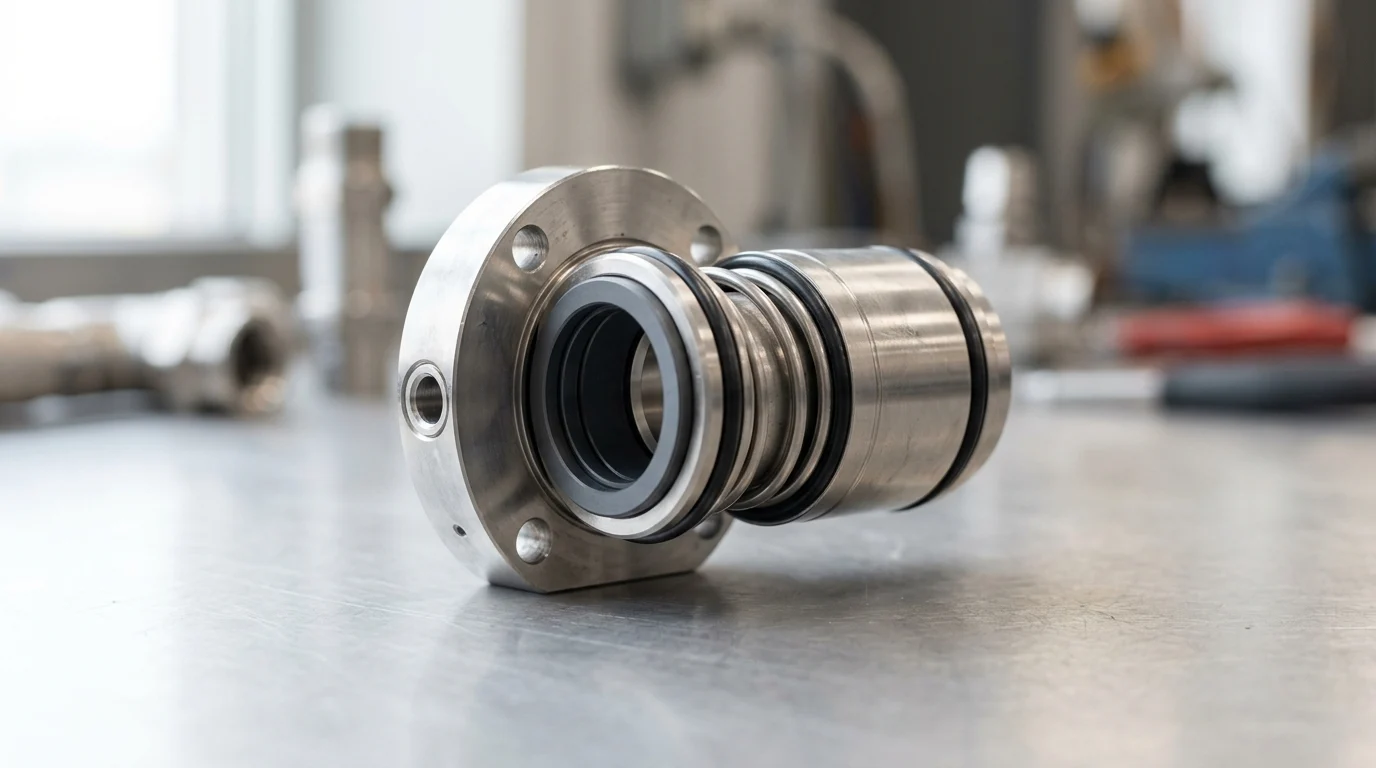
How to Find Fully Compatible Mechanical Seal Replacements
Procuring a fully compatible mechanical seal requires careful engineering evaluation to ensure seamless integration into existing pump architectures. As the primary barrier against fluid leakage in rotating equipment, mechanical seals operate under dynamic stresses, demanding exact alignment with the physical and operational parameters of the host machinery. Industrial facilities increasingly seek alternative or upgraded seals to improve mean time between failures (MTBF), which industry benchmarks often target at a minimum of 36 months for continuous-duty pumps.
Navigating the transition from an original equipment manufacturer (OEM) seal to an engineered equivalent or an upgraded design is a detailed technical exercise. It involves reverse-engineering or thoroughly auditing the stuffing box geometry, metallurgical requirements, and environmental controls. A superficial approach to sourcing a replacement can compromise the entire rotating assembly, making a deep understanding of compatibility essential for reliability engineers and procurement specialists.
Why Compatibility Matters
The fundamental requirement for compatibility stems from the critical role seals play in maintaining system integrity and environmental compliance. Modern industrial processes are governed by strict emission regulations. For instance, the API 682 standard dictates maximum allowable leakage rates in the petrochemical sector, often capping fugitive volatile organic compound (VOC) emissions below 500 parts per million (ppm) in many facilities. Achieving and maintaining this threshold requires the replacement seal to meet precise specifications.
Furthermore, compatibility dictates the thermodynamic stability of the seal faces. When a seal is properly matched to the equipment and the process fluid, it maintains an optimal fluid film between the rotating and stationary faces. This microscopic film, often measuring less than 1 micron in thickness, provides necessary lubrication and cooling. If a replacement seal’s spring tension, balance ratio, or face topography is incompatible with the operational pressure profile, this fluid film will either vaporize or collapse, leading to rapid dry running and premature seal failure.
Common Costs of a Poor Match
The financial implications of deploying a poorly matched mechanical seal extend beyond the initial purchase price of the component. A primary consequence is unplanned operational downtime. In continuous process industries such as petroleum refining or pharmaceutical manufacturing, the cost of halted production can sometimes range from $10,000 to over $100,000 per hour. A seal that fails prematurely directly triggers these financial penalties.
Secondary mechanical damage is another frequent cost associated with improper seal selection. If a seal is dimensionally incompatible, it may induce radial or axial runout, transferring excessive vibration to the pump shaft. Over time, this vibration accelerates the degradation of radial and thrust bearings. An incorrect seal profile can also cause shaft fretting or score the seal chamber sleeve, necessitating expensive metallurgical repairs or complete shaft replacement.
What Fully Compatible Means
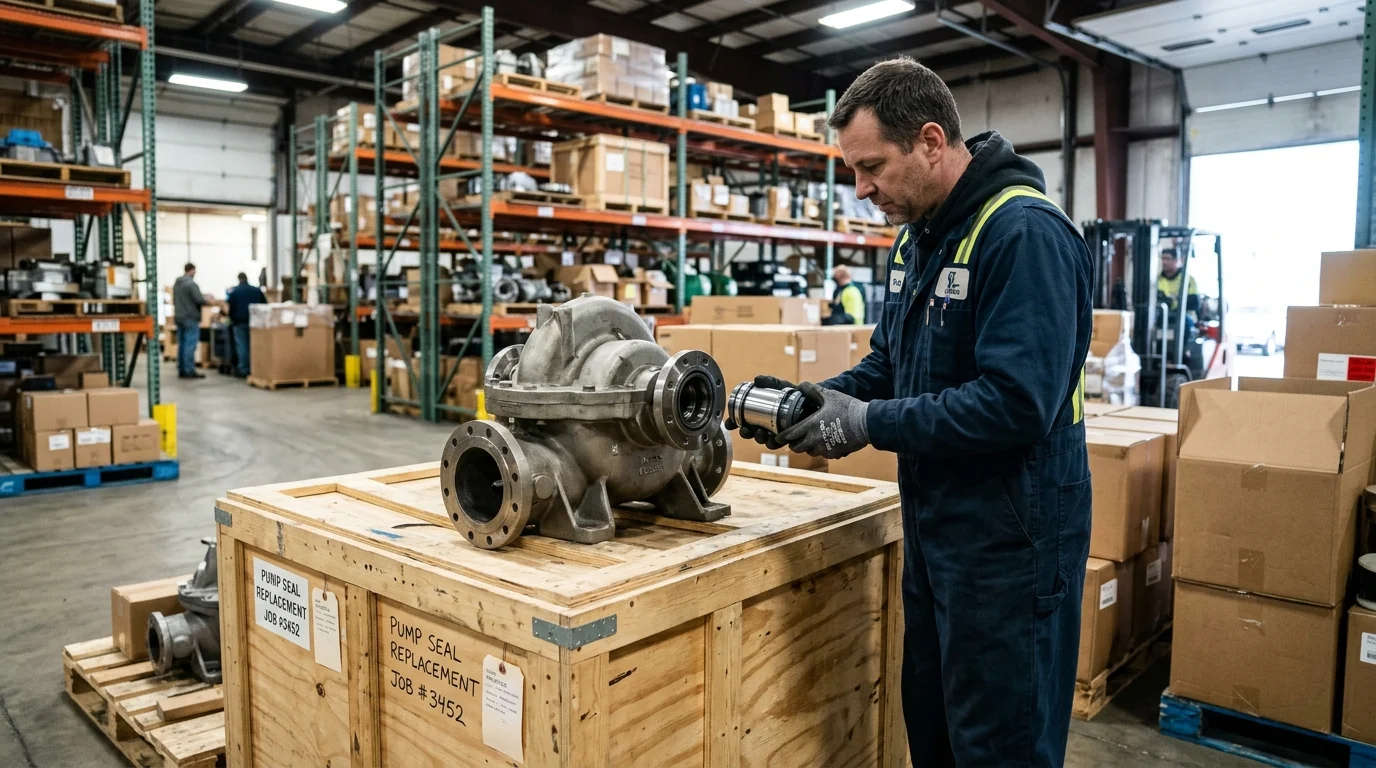
Defining a mechanical seal as “fully compatible” implies congruence across mechanical, hydraulic, and chemical dimensions. It is a common misconception that matching the shaft diameter is sufficient for interchangeability. True compatibility requires that the replacement unit mimics or exceeds the performance characteristics of the original seal without requiring modifications to the pump casing, shaft, or auxiliary support systems. To ensure precision (where shaft tolerances often require dimensional accuracy within ±0.002 inches or 0.05 mm), compatibility is typically evaluated across three core areas:
- Dimensional Fit: Exact alignment with the stuffing box geometry and operating length.
- Hydraulic Fit: Capacity to handle the system’s specific pressure and velocity dynamics.
- Material Compatibility: Chemical resistance to the process fluid and operating temperatures.
Dimensional and Hydraulic Fit
Dimensional fit encompasses the exact volumetric and spatial requirements of the pump’s stuffing box or seal chamber. A compatible replacement must align with the shaft diameter, the outer diameter of the seal chamber, and the critical operating length (L1 dimension). If the operating length is mismatched, the seal springs or bellows will experience incorrect compression. Under-compression leads to leakage and face separation, while over-compression accelerates face wear and increases frictional heat generation.
Hydraulic fit refers to the seal’s ability to withstand the specific pressure and velocity dynamics of the application. Engineers evaluate the Pressure-Velocity (PV) limit, a critical metric defining the seal’s operational threshold. A compatible replacement must feature a balance ratio and face geometry capable of handling the system’s maximum PV value, which can exceed 100,000 psi-ft/min in high-energy boiler feed pumps. Additionally, the seal’s internal clearances must allow for adequate fluid circulation to dissipate heat without inducing cavitation.
Materials, Elastomers, and Face Pairs
Material compatibility is essential when dealing with aggressive chemicals, extreme temperatures, or abrasive slurries. The metallurgy of the seal components (such as 316L Stainless Steel, Alloy 20, or Hastelloy C-276) must resist corrosion from the process fluid. Similarly, secondary sealing elements—elastomeric O-rings or gaskets—must be chemically inert to the pumped medium. Swapping a standard FKM (Viton) O-ring into a solvent application that requires FFKM (Kalrez) will typically result in elastomer swelling and seal failure.
The selection of primary seal face pairs dictates the wear life and friction coefficient of the assembly. Compatible replacements must utilize face combinations that match the lubricity and particulate load of the fluid.
| Face Material | Typical Vickers Hardness | Max Temperature Limit | Primary Application Profile |
|---|---|---|---|
| Carbon Graphite | 100 – 150 HV | 260°C (500°F) | Excellent lubricity; used in clean, non-abrasive fluids as a mating face. |
| Silicon Carbide (SiC) | 2500 – 3000 HV | 1400°C (2550°F) | High thermal conductivity; universal standard for chemical and abrasive resistance. |
| Tungsten Carbide (TC) | 1500 – 2000 HV | 400°C (750°F) | Extreme toughness; preferred for high-torque and heavy slurry applications. |
| Alumina Ceramic | 1200 – 1500 HV | 200°C (392°F) | Cost-effective hard face; commonly used in standard water and light duty pumps. |
Seal Arrangement, Flush Plan, and Gland Design
The seal arrangement dictates how the mechanical seal interacts with the environment and the process fluid. A compatible replacement must mirror the original configuration—whether it is a single internal seal, a double pressurized arrangement (back-to-back or tandem), or a concentric dual seal. Altering the arrangement without a comprehensive engineering review can violate environmental containment protocols or cause failure if the existing barrier fluid system is inadequate.
Furthermore, the replacement seal’s gland design must align with the existing environmental control infrastructure, known as the flush plan. If the original seal utilized an API Plan 53A pressurized barrier fluid system, the replacement gland must feature matching porting orientations, thread sizes, and internal flow deflectors to ensure the barrier fluid circulates correctly. A mismatch in gland porting can restrict cooling flow, leading to thermal distortion of the seal faces.
Key Comparison Points
Evaluating cross-brand interchangeability necessitates a side-by-side analysis of design specifications. When transitioning away from an OEM seal, engineers should look beyond marketing claims of “drop-in replacement” capability. The evaluation process systematically dissects the seal’s identification data, cross-references it against real-world operating conditions, and uncovers proprietary design nuances. With process operating temperatures frequently scaling up to 400°C (750°F) in hydrocarbon processing, overlooking variables can have severe safety and operational consequences. Note: For critical services—such as high-pressure systems, hazardous fluids, or API 682 compliance—third-party engineering validation or OEM consultation is often legally or contractually mandatory.
Seal Identification Data
The critical first step in comparison is parsing the existing seal’s identification data. This involves locating the OEM part number, the bill of materials (BOM) code, and any drawing revision numbers typically stamped on the seal gland or provided in the equipment dossier. Because manufacturers update seal designs to address field issues, relying on an outdated part number can result in procuring a legacy design.
Engineers should request a detailed general arrangement (GA) drawing from the prospective replacement supplier to compare against the original OEM drawing. Key verification points include the bolt circle diameter (BCD), gland outer diameter, and the specific locations of flush, quench, and drain ports. Discrepancies in the BCD will render the seal difficult or impossible to mount on the pump casing without field modifications.
Operating Conditions and Process Fluid
A seal is only compatible if it is engineered for the specific fluid dynamics of the application. Process fluids exhibit varying degrees of viscosity, specific gravity, and vapor pressure. For example, pumping heavy crude oil with a viscosity approaching 3,000 centistokes (cSt) requires a robust seal drive mechanism, such as heavy-duty drive pins, rather than standard set screws which might shear under high torque loads.
Vapor pressure margin is another comparative metric. The replacement seal must maintain a stable fluid film without allowing the fluid to flash into vapor across the seal faces. Industry guidelines often suggest maintaining at least a 50 psi margin above the fluid’s vapor pressure at the operating temperature. If a replacement seal alters the pressure distribution across the faces, it could inadvertently induce flashing and dry running.
Hidden Differences Between Interchangeable Seals
Many interchangeable seals appear identical on the surface but harbor mechanical differences that impact longevity. One hidden difference is the spring rate and design. A replacement seal might use a single coil spring instead of a multiple-spring or welded metal bellows design. While a single spring might fit dimensionally, it can be more susceptible to clogging in viscous or crystallizing fluids.
Another variable involves dynamic O-ring behavior. In pusher-type mechanical seals, the dynamic O-ring must flex and slide along the shaft to compensate for face wear. If the replacement seal features an O-ring groove machined with incorrect tolerances, the O-ring may experience extrusion under high pressure. Cross-referencing the elastomer durometer and the groove geometry between the original and replacement seals helps ensure continuous face tracking.
Practical Replacement Process
Transitioning from a legacy mechanical seal to a new, compatible unit benefits from a standardized procedural framework to mitigate risk. Haphazard procurement strategies often result in incorrect specifications, leading to extended equipment downtime. A structured replacement process involves systematic data gathering, supplier qualification, and pre-installation verification. Given that minimum order quantities (MOQ) for custom-engineered seals are often 1 to 5 units with lead times spanning 4 to 8 weeks, accurate initial specification is critical for inventory efficiency.
Build a Verified Seal Record
The foundation of a successful replacement is a verified seal record, which acts as the single source of truth for the application. Building this record requires a physical audit of the pump rather than relying solely on maintenance logs. Personnel should utilize calibrated instruments to measure the shaft outer diameter, the seal chamber bore, and the depth of the stuffing box, accounting for any previous machining or sleeving.
The verified record must also capture the operational history and failure mode of the previous seal—whether chemical attack, thermal cracking, or abrasive wear. If the previous seal failed prematurely due to abrasive slurry erosion, the replacement process should include an upgrade to the face materials or a modification to the flush plan, rather than simply ordering a structurally identical unit.
Qualify Replacement Seal Suppliers
Qualifying a replacement seal supplier requires auditing their manufacturing capabilities, quality control protocols, and engineering support. A reputable supplier should hold relevant certifications (such as ISO 9001) and be capable of providing material traceability, including EN 10204 3.1 material certificates for wetted metallurgical components.
Furthermore, the supplier must demonstrate application engineering expertise. Their engineering team should review the verified seal record, analyze the fluid properties, and confirm PV limits and thermal dissipation rates. Suppliers offering localized repair facilities and field engineering support add value by ensuring swift post-installation troubleshooting.
Bench-Check and Trial-Fit Before Installation
Before a newly procured replacement seal is committed to the pump, it should undergo a bench-check and trial-fit protocol. Cartridge mechanical seals should be subjected to a static pressure test to verify the integrity of the internal O-rings and face mating. A common standard protocol involves a static air test at 25 psi (1.7 bar) for 5 minutes; pressure decay indicates an internal flaw or shifting during transit.
Following the pressure test, a physical trial-fit on the unpowered pump assembly ensures that the gland bolts align with the casing and that the shaft rotates freely without binding. This step prevents the discovery of a dimensional mismatch after the pump has been fully reassembled.
| Inspection Step | Tool / Method | Acceptance Criteria |
|---|---|---|
| Visual Inspection | Magnifying loupe / Flashlight | Zero chips, scratches, or fractures on SiC/TC faces; elastomers free of nicks. |
| Dimensional Verification | Calibrated Vernier Calipers | Gland bore, BCD, and shaft sleeve ID match GA drawing within ±0.05 mm. |
| Static Pressure Test | Pneumatic hand pump with gauge | Hold 25 psi (1.7 bar) for 5 minutes with zero measurable pressure drop. |
| Rotational Check | Manual shaft rotation (post-install) | Smooth, unimpeded rotation; no metallic scraping or excessive resistance. |
How to Choose the Best Replacement
The final selection phase balances technical compliance with economic viability and long-term reliability. Plant managers and reliability engineers frequently choose between remaining with the OEM or pivoting to an alternative seal manufacturer. While OEM units carry brand assurance, they often command price premiums over engineered equivalents. Making the optimal choice requires shifting the procurement focus from the initial capital outlay to the total cost of ownership.
OEM vs. Engineered Equivalent
The debate between OEM seals and engineered equivalents hinges on intellectual property, availability, and cost. OEMs design mechanical seals specifically for their pump models, ensuring a guaranteed fit, though this can sometimes lead to higher pricing and extended lead times. Engineered equivalents, produced by specialized mechanical seal manufacturers, offer a compelling alternative. By utilizing reverse engineering and advanced finite element analysis (FEA), reputable alternative suppliers can produce fully compatible seals that match or exceed original specifications.
| Decision Factor | OEM Mechanical Seals | Engineered Equivalents |
|---|---|---|
| Compatibility | Guaranteed factory fit | Requires verification, but often matches/exceeds specs |
| Cost | Typically higher (premium pricing) | Generally more cost-effective |
| Lead Time | Can be extended depending on stock | Often faster due to specialized production focus |
| Design Updates | Tied to standard pump lifecycles | Can incorporate custom modern enhancements |
Lifecycle Cost vs. Purchase Price
Evaluating a replacement seal based solely on its purchase price ignores the broader economic impact of rotating equipment reliability. The lifecycle cost includes the initial purchase, installation labor, energy consumption, barrier fluid usage, and the annualized cost of MTBF. A poorly designed budget seal may save capital upfront but increase maintenance expenditures over its operational life.
For example, a standard replacement seal priced at $1,000 that fails every 8 months incurs continuous labor and downtime costs. In contrast, investing $2,500 in an engineered equivalent featuring upgraded silicon carbide faces and an optimized flush plan might extend the MTBF significantly. Factoring in the elimination of replacement cycles and avoided downtime, the higher-priced seal often delivers a lower total lifecycle cost.
Final Approval Criteria
The final approval of a replacement mechanical seal should be governed by criteria agreed upon by maintenance and procurement departments. First, the seal must receive formal engineering sign-off, confirming that dimensional, metallurgical, and hydraulic parameters have been verified against operational data. The supplier should provide finalized GA drawings, installation manuals, and material certificates prior to issuing the purchase order.
Secondly, commercial terms should include robust warranty protections. A common industry benchmark is a 12-month operational warranty or an 18-month warranty from the date of shipment, protecting against premature failures caused by manufacturing defects. Enforcing these criteria helps facilities confidently integrate compatible mechanical seals, ensuring maximized pump uptime and optimized maintenance budgets.
Key Takeaways
- Verify more than shaft diameter by checking stuffing box geometry, working length, gland fit, rotation, pressure, temperature, speed, and fluid chemistry before approving a replacement seal.
- Target reliability should be evaluated against the application duty cycle, with many continuous-duty pump programs aiming for at least 36 months of seal MTBF.
- Confirm face, elastomer, and metal compatibility because the seal depends on a lubricating fluid film that may be less than 1 micron thick.
- Use OEM part numbers, drawings, photos, and operating data to help suppliers such as Victor Seals cross-reference standard, OEM, or engineered replacement units accurately.
- Avoid low-cost mismatches because unplanned downtime in continuous process industries can range from $10,000 to more than $100,000 per hour.
- For regulated petrochemical and similar services, select replacements that support applicable leakage and emissions requirements, including API 682-related expectations where relevant.
Frequently Asked Questions
Is matching shaft diameter enough to choose a replacement mechanical seal?
No. You must also verify stuffing box dimensions, working length, face materials, elastomers, spring arrangement, pressure, temperature, speed, and fluid chemistry before treating a seal as compatible.
What information should I provide to source a compatible seal?
Provide pump model, shaft size, seal chamber dimensions, rotation direction, operating pressure and temperature, fluid data, current seal drawings or photos, and any OEM part numbers or brand references.
Can Victor Seals supply replacements for OEM mechanical seals?
Yes. Ningbo Victor Seals manufactures standard and OEM mechanical seals, cartridge seals, double seals, pump shaft seals, and replacement units for brands and styles including Allweiler, Flygt, Alfa Laval, Imo, APV, and John Crane Type 502.
Why does material compatibility matter so much?
Seal faces, elastomers, and metal parts must resist the process fluid, temperature, pressure, and cleaning chemicals. A wrong elastomer or face pairing can swell, crack, overheat, or destroy the sealing film.
What are the risks of using a poorly matched replacement seal?
A poor match can cause leakage, dry running, vibration, shaft fretting, bearing damage, unplanned downtime, and environmental non-compliance. In continuous processes, downtime may cost tens of thousands of dollars per hour.

Post time: Aug-30-2026