


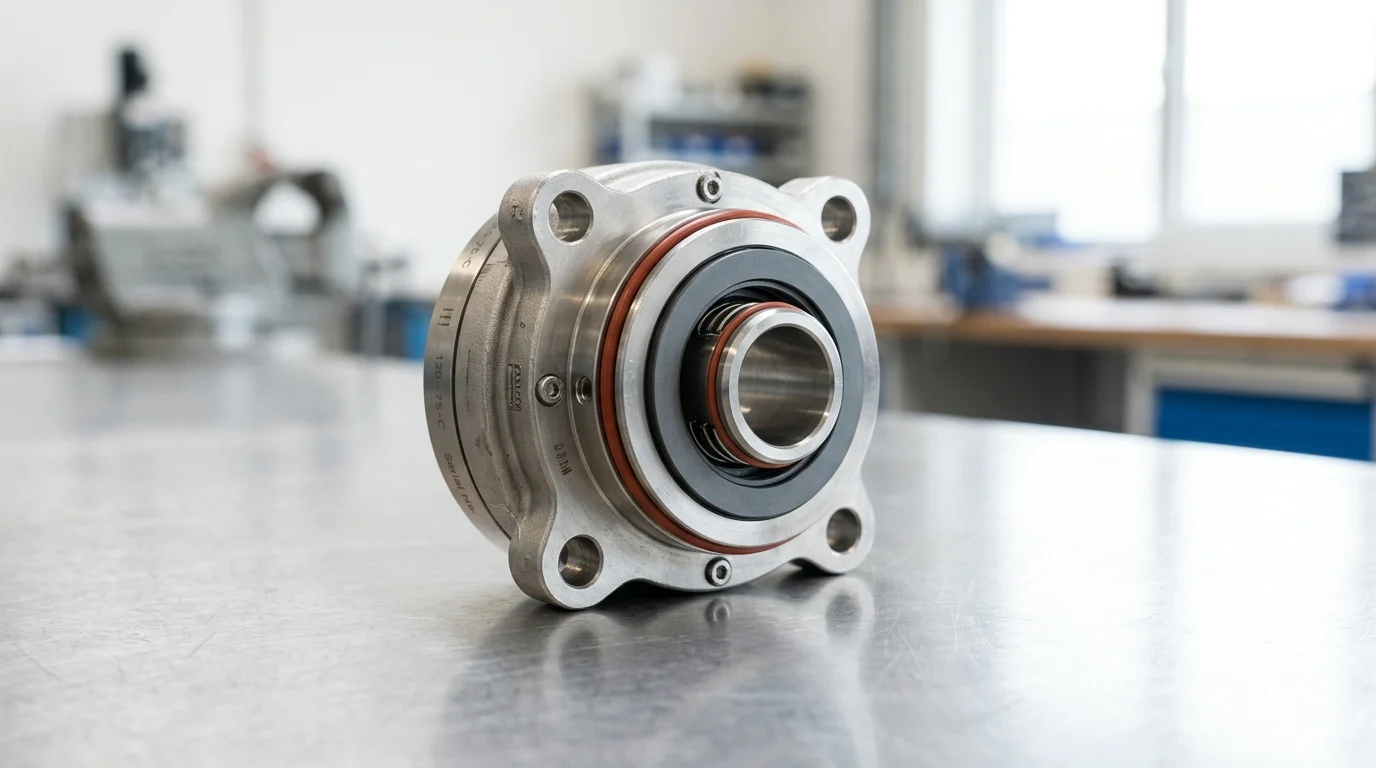
Why Mechanical Seal Contamination Matters
Mechanical seals maintain fluid containment in process pumps by utilizing two extremely flat faces—one rotating and one stationary—separated by a microscopic hydrodynamic fluid film. The thickness of this lubricating film typically ranges from 0.5 to 1.5 microns. Because this gap is a fraction of the diameter of a human hair, even sub-micron particulate matter can breach the interface. When foreign material infiltrates this critical clearance, the fundamental operating principles of the seal are compromised.
In industrial processing environments, fluid purity is rarely guaranteed. Consequently, contamination remains one of the leading drivers of premature pump failure. Understanding how and where these contaminants attack the mechanical seal assembly is the foundational step in improving equipment reliability and extending operational lifespan.
How contamination leads to seal failure
The primary mechanism of contamination-driven failure is the disruption of the hydrodynamic fluid film. Particulates that enter the seal interface act as lapping compounds. Rather than gliding on a near-frictionless liquid barrier, the seal faces grind against the trapped solids. This abrasive friction generates excessive localized heat, often elevating face temperatures by 50°C to 100°C above the bulk fluid temperature.
The resulting thermal distortion warps the seal faces, breaking the fluid film entirely and initiating a runaway failure loop of dry running and thermal cracking. In severe slurry or heavily particulate-laden applications, the expected Mean Time Between Failures (MTBF) can plummet from an industry standard of 36 to 60 months down to less than three months if contamination is not mitigated.
Where contamination causes the most damage
While the primary sealing faces are the most obvious victims of contamination, secondary sealing elements and mechanical loading mechanisms are equally vulnerable. The dynamic O-ring, which must slide axially along the shaft or sleeve to compensate for microscopic face wear, is highly susceptible to particulate buildup. When solids pack into the O-ring groove, they restrict this vital movement—a condition known as hang-up.
Furthermore, small coil springs designed to apply closing force to the seal faces frequently become clogged with sludge, heavy organics, or crystalline deposits. When these springs lock up, the seal faces are unable to track each other during pressure fluctuations or shaft deflection, allowing significant leakage of the process fluid into the atmosphere.
Common Contamination Types in Process Pumps
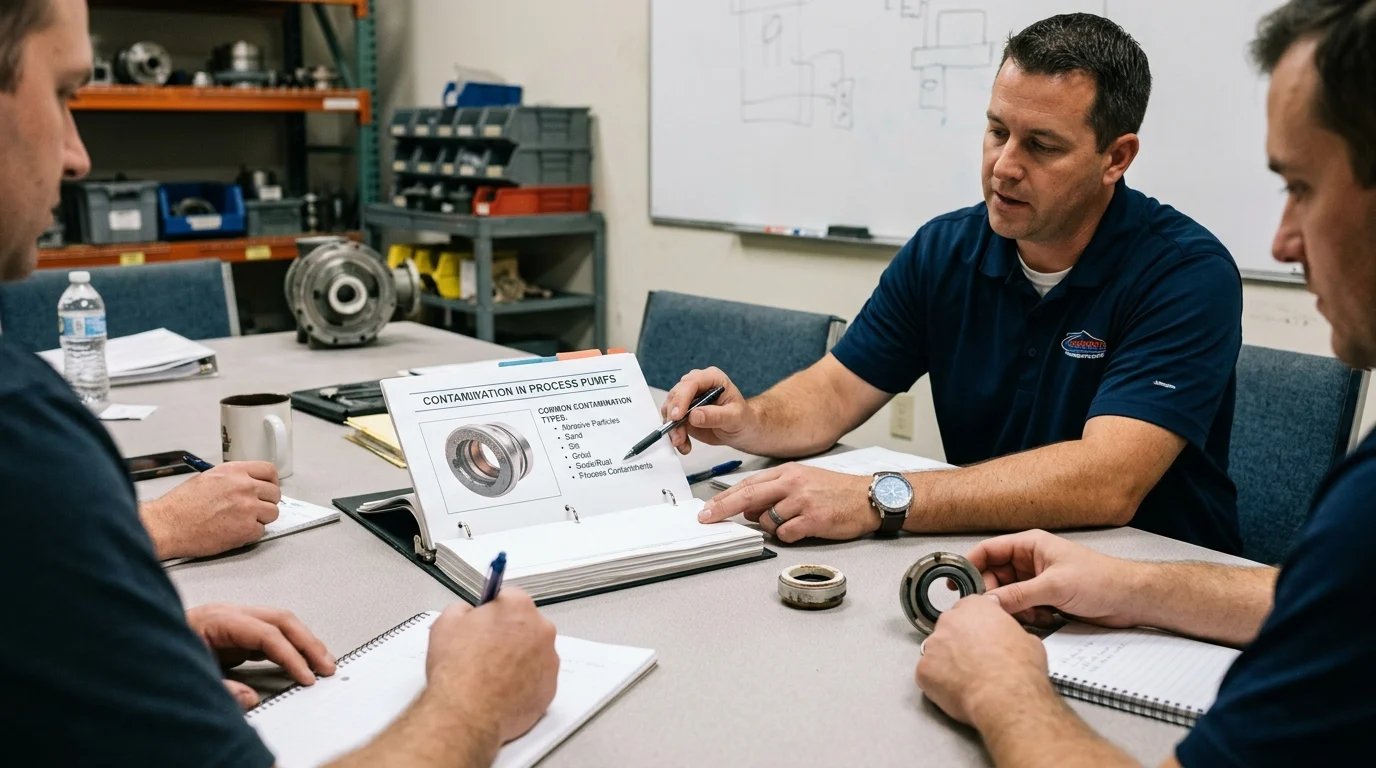
Process pumps encounter a vast array of fluid conditions, and the contaminants present within these systems are equally diverse. Identifying the specific type of contamination is the first step in engineering a reliable sealing solution. Contaminants generally fall into three categories: solid particulates, fluid impurities, and phase-change anomalies.
Recognizing these types is critical for reliability engineers, as particles larger than 1.0 micron are fully capable of lodging between the seal faces and initiating catastrophic mechanical wear.
Abrasive solids, crystals, and scale
Hard particulates such as silica sand, pipe scale, rust, and catalyst fines are the most aggressive physical contaminants. When these solids enter the seal chamber, their destructive potential is dictated by their hardness relative to the seal face materials. For instance, quartz sand possesses a Vickers hardness of approximately 1000 HV. If the seal utilizes a standard carbon graphite face (hardness ~100 HV), the sand will rapidly gouge the softer material.
Conversely, Silicon Carbide (SiC) boasts a hardness of up to 2800 HV, offering substantial resistance to such abrasives. Beyond suspended solids, dissolved solids can precipitate out of solution when the fluid cools or evaporates at the atmospheric side of the seal. These precipitating salts form sharp, abrasive crystals that physically tear elastomeric secondary seals and score the shaft sleeve.
Dirty flush fluids and failed filtration
In many pump installations, external flush systems (such as API Plan 32) or bypass lines (API Plan 11) are utilized to cool and clean the seal chamber. However, if the upstream filtration system fails, these flush lines inadvertently become high-pressure delivery mechanisms for contamination.
Cyclone separators, commonly used in API Plan 31 arrangements to remove solids from the flush stream, require a specific pressure differential—typically between 1.5 and 2.0 bar—to effectively separate heavier solids via centrifugal force. If pump operating parameters shift and this pressure differential drops, the separator’s efficiency plummets, allowing dirty fluid to bypass the centrifuge and directly bombard the mechanical seal faces.
Vapor bubbles, entrained gas, and water ingress
While often overlooked, gaseous and liquid impurities are severe forms of contamination that alter the physical state of the fluid film. Entrained air or vapor bubbles disrupt the continuous liquid film required for seal face lubrication. When these bubbles collapse between the faces, they cause micro-pitting similar to pump impeller cavitation.
Furthermore, if the Net Positive Suction Head available (NPSHa) does not exceed the required (NPSHr) by an adequate margin—ideally 1.5 meters or more—flashing can occur inside the seal chamber. In lubricating oil systems and barrier fluids, water ingress acts as a severe liquid contaminant. Even a water concentration as low as 0.1% (1000 ppm) in barrier fluids can degrade the oil’s load-carrying capacity, leading to boundary lubrication and accelerated face wear.
How Contamination Damages a Mechanical Seal
The physical degradation of a mechanical seal follows predictable patterns depending on the nature of the contaminant. Understanding these degradation pathways allows reliability engineers to implement targeted countermeasures. A systematic review of damaged components often reveals exactly what type of contamination breached the system.
| Contaminant Type | Primary Affected Component | Damage Mechanism | Typical Consequence |
|---|---|---|---|
| Hard Particulates | Primary Seal Faces | Abrasive grooving and scoring | Rapid leakage, high friction |
| Precipitating Salts | Dynamic Elastomers | Fretting and abrasive tearing | O-ring hang-up, loss of face tracking |
| Sludge / Heavy Organics | Coil Springs / Bellows | Clogging and mechanical binding | Loss of closing force, face separation |
| Entrained Gases | Primary Seal Faces | Loss of lubrication film | Dry running, thermal cracking |
Lubrication film disruption and face wear
The primary faces rely on a mixed-lubrication regime, where the fluid film supports the majority of the closing load while allowing microscopic asperities to share the friction. When contamination displaces this film, the faces enter a state of boundary lubrication or outright dry contact. This localized friction generates extreme heat and mechanical stress.
In carbon/silicon carbide pairings, abrasive slurries can increase the wear rate to over 0.1 mm per 1,000 hours of operation—a rate that far exceeds acceptable tolerance limits. As the faces wear unevenly, the fluid film thickness becomes erratic, leading to phonographing (concentric grooving) and the eventual structural failure of the primary sealing interface.
Damage to O-rings, elastomers, and springs
Elastomeric O-rings are particularly vulnerable to abrasive contamination. As the dynamic O-ring micro-slides against the shaft sleeve to accommodate face wear and axial shaft movement, trapped particles act like sandpaper. This causes fretting corrosion on the metal sleeve and physical tearing of the elastomer itself.
In extreme cases, the O-ring groove fills with hardened debris, completely freezing the seal assembly. Metal bellows and multi-spring designs face similar threats; when solids accumulate between spring coils, the spring rate increases artificially. This overloads the seal faces until they fracture, or conversely, locks them in an open position resulting in immediate and catastrophic blowout.
Contamination sources and failure symptoms
Contamination originates from either internal process streams or external environmental factors. Internal sources include pipe scale left over from construction, chemical precipitates from the process media, and abrasive solids inherent to the pumped product. External sources often involve contaminated barrier fluids, airborne dust entering through atmospheric vents, or improper handling during installation.
Symptoms of contamination-driven failure usually include a steady, worsening weep rather than a sudden catastrophic blowout, accompanied by increased power consumption. High friction from contaminated faces can dramatically increase the seal’s torque requirements, sometimes drawing 10% to 15% more power from the motor and triggering high-temperature alarms in the seal chamber.
How to Prevent Mechanical Seal Contamination
Eliminating contamination entirely is rarely feasible in heavy process industries. Instead, reliability engineering focuses on mitigating its effects through strategic seal selection, environmental controls, and optimized flush plans.
By investing in robust contamination control, industrial facilities can dramatically reduce lifecycle costs. Proper implementation often achieves a Return on Investment (ROI) within 12 to 18 months through avoided downtime, reduced product loss, and lower maintenance expenditures.
Practical contamination control steps
The most immediate defense against contamination is upgrading the upstream filtration and environmental controls. Implementing absolute-rated filters capable of capturing particles down to 10 microns ensures that any external flush fluid remains exceptionally clean.
For metallic contaminants, magnetic separators installed in the flush line can capture abrasive iron and steel particles before they reach the seal chamber. Furthermore, establishing strict cleanliness protocols during seal installation—such as assembling seals in a controlled environment rather than on a dirt-prone shop floor—prevents the introduction of external particulates prior to commissioning.
Seal and flush plan selection
Selecting the correct API flush plan is paramount for handling contaminated fluids. API Plan 32 utilizes a clean, external fluid to flush the seal chamber, actively pushing abrasive process media away from the seal faces. When handling hazardous or highly abrasive slurries, dual mechanical seals supported by an API Plan 53 or 54 are highly recommended.
In a Plan 54 arrangement, a pressurized external barrier fluid is circulated between the inner and outer seals. This barrier fluid must be maintained at a pressure 10% to 15% (or at least 1.5 bar) higher than the pump’s stuffing box pressure. This positive pressure differential ensures that any microscopic leakage occurs inward, effectively blocking process contaminants from entering the seal faces.
Decision guidance for long-term reliability
When configuring a pump for a highly contaminated environment, material selection is the final line of defense. Upgrading from standard Carbon/SiC face pairings to hard-on-hard combinations, such as Silicon Carbide against Silicon Carbide (SiC/SiC) or Tungsten Carbide (TC/TC), provides maximum abrasion resistance.
Engineers must also consider the mechanical loading design; stationary metal bellows seals are highly preferable to rotating multi-spring seals in sludgy applications. Bellows designs are inherently self-cleaning, less prone to clogging, and eliminate the need for a dynamic sliding O-ring. While hard faces and dual seal configurations carry a higher initial capital cost, their ability to push MTBF past the 48-month mark makes them the most cost-effective choice for long-term reliability in contaminated processing environments.
Key Takeaways
- Protect the seal faces because the lubricating film is only 0.5 to 1.5 microns thick and can be disrupted by particles larger than 1 micron.
- Treat abrasive particles such as silica, rust, scale, and catalyst fines as high-risk contaminants because they grind seal faces and accelerate leakage.
- Investigate contamination when seal face temperatures rise sharply, since trapped solids can increase localized heat by 50°C to 100°C above bulk fluid temperature.
- Prevent O-ring hang-up and spring clogging by controlling sludge, crystals, and particulate buildup around secondary sealing elements.
- Use filtration, flush systems, barrier fluids, or contamination-tolerant seal designs to avoid reducing MTBF from 36–60 months to less than three months in dirty services.
Frequently Asked Questions
Why are mechanical seals so sensitive to contamination?
Mechanical seals rely on a fluid film only about 0.5 to 1.5 microns thick between the faces. Particles that enter this gap can scratch the faces, increase heat, disrupt lubrication, and trigger leakage or rapid seal failure.
What contaminants most often damage pump mechanical seals?
Common contaminants include silica sand, rust, pipe scale, catalyst fines, crystallized solids, sludge, heavy organics, and incompatible fluids. Hard particles cause abrasion, while sticky or crystallizing materials can clog springs and restrict O-ring movement.
How does contamination cause seal face failure?
Particles trapped between the seal faces act like a lapping compound. They grind the faces, generate localized heat, distort the sealing surfaces, and can lead to dry running, thermal cracking, and sudden leakage.
What is O-ring hang-up in a mechanical seal?
O-ring hang-up occurs when solids collect around the dynamic O-ring or groove, preventing it from moving axially. Without that movement, the seal cannot compensate for face wear or shaft movement, increasing leakage risk.
Can contamination reduce pump seal service life?
Yes. In severe slurry or dirty services, contamination can reduce mechanical seal MTBF from a typical 36 to 60 months to less than three months if no protective measures are used.

Post time: Jul-30-2026