


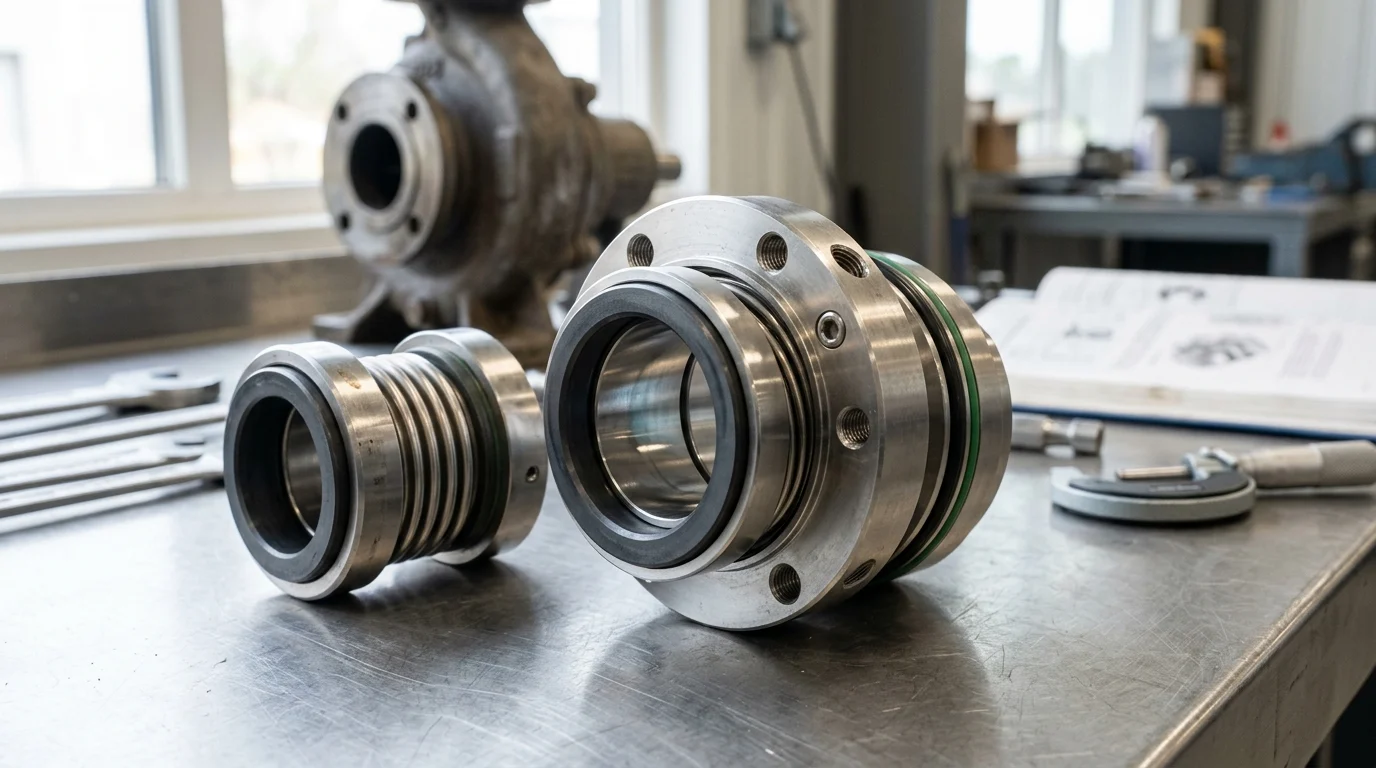
How to Define the Best Mechanical Seals for Wastewater Pumps
Wastewater treatment environments subject pumping equipment to extreme operational stress, combining abrasive particulates, corrosive chemicals, and highly variable hydraulic loads. In these demanding applications, the mechanical seal serves as the primary defense against fluid leakage, environmental contamination, and catastrophic pump failure. As environmental regulations tighten and maintenance budgets face increased scrutiny, identifying and deploying the optimal sealing technology is no longer a secondary consideration but a core operational imperative.
Defining the best mechanical seals for wastewater applications requires a rigorous understanding of fluid dynamics, particulate suspension, and the specific operational duty cycle of the facility. A seal that performs flawlessly in secondary effluent may suffer rapid destruction when exposed to the harsh realities of primary sludge or grit removal. Consequently, engineers and procurement teams must move beyond generic specifications and evaluate mechanical seals based on precise empirical data and operational thresholds.
Key selection criteria for wastewater operators
Operators must prioritize Mean Time Between Failures (MTBF) as the ultimate metric of seal success. For heavy municipal wastewater and industrial effluent applications, MTBF targets should ideally exceed 15,000 to 20,000 hours to align with standard preventive maintenance turnarounds. Achieving this longevity requires evaluating the mechanical seal’s tolerance to the specific percentage of total suspended solids (TSS), which frequently ranges from 1% to 10% by weight in municipal sludge applications.
Furthermore, the selection process must account for the dynamic nature of pump operations. Frequent start-stop cycles, typical in lift stations and clarifier underflow pumps, induce severe torsional stress on seal faces and drive mechanisms. Operators must specify seals featuring robust drive mechanisms—such as heavy-duty drive pins or monolithic face designs—that can withstand these repetitive torque spikes without suffering premature fatigue or face fracture.
Wastewater pump conditions that affect seal choice
The chemical and physical nature of the influent dictates the mechanical stresses exerted on the sealing components. Raw sewage contains abrasive grit, fibrous materials, and biological solids that readily erode standard seal faces and clog internal springs. When fibrous materials wrap around the pump shaft, they can impede the dynamic movement of internal seal components, leading to face separation and immediate leakage.
Additionally, wastewater streams frequently exhibit fluctuating pH levels, typically ranging from pH 4 (acidic industrial discharge) to pH 10 (highly alkaline treatments). This variability demands broad chemical compatibility from all wetted seal components, particularly the secondary elastomers. Dry running conditions present another critical operational threat. Often caused by a loss of suction, vapor locking, or air entrainment in the pump volute, dry running can destroy a conventional mechanical seal within 60 to 120 seconds due to rapid thermal expansion and the subsequent shattering of brittle seal faces.
Best Seal Designs for Wastewater Treatment Pumps
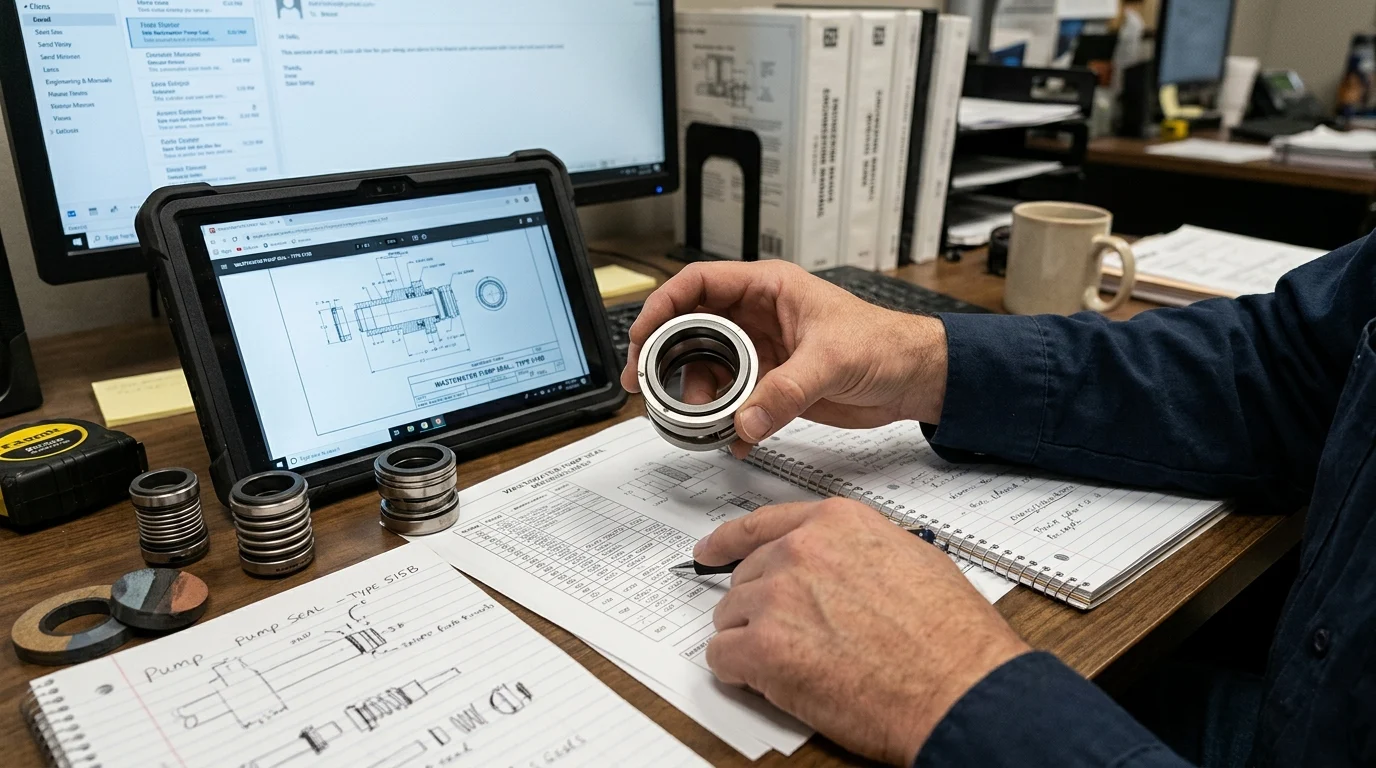
Selecting the optimal design geometry is fundamental to maximizing seal lifespan in wastewater applications. The mechanical architecture determines how effectively the seal mitigates heat, resists abrasion, and prevents particulate accumulation within the stuffing box.
Engineers must evaluate the physical construction of the seal against the realities of the fluid being pumped. The transition from clean water sealing to wastewater sealing generally involves moving away from basic component seals toward highly engineered, unitized cartridge designs that isolate critical mechanisms from the process fluid.
Single vs. double mechanical seals
Single mechanical seals are widely deployed in clean water, storm drainage, or secondary effluent pumps where particulate concentrations remain below 1% by weight. They rely on the pumped fluid itself for lubrication and cooling. However, for primary sludge, digester recirculation, or highly abrasive slurries, double (dual) mechanical seals become a mandatory specification to ensure reliable operation.
Double seals utilize a pressurized barrier fluid, typically maintained at 1.5 to 2.0 bar (20 to 30 psi) above the maximum seal chamber pressure. This clean barrier fluid lubricates the seal faces, dissipates heat, and ensures that any minor leakage occurs inward into the pump rather than allowing hazardous wastewater to escape into the atmosphere.
| Feature | Single Mechanical Seals | Double (Dual) Mechanical Seals |
|---|---|---|
| Primary Application | Clean effluent, low-solids water | Raw sewage, heavy sludge, toxic fluids |
| Barrier Fluid Required | No | Yes (Pressurized or Unpressurized) |
| Solids Handling Limit | Poor to Moderate (< 1% by weight) | Excellent (Handles heavy abrasive loads) |
| Installation Complexity | Low | High (Requires external piping plan) |
| Relative Cost | Lower initial cost | Higher upfront, but lower TCO in harsh conditions |
Balanced vs. unbalanced seal designs
The balance ratio of a mechanical seal dictates its ability to handle high-pressure environments without generating excessive face friction. Unbalanced seals are generally restricted to low-pressure applications, typically failing or wearing rapidly when subjected to stuffing box pressures above 10 bar (145 psi). In these designs, the full hydraulic force of the process fluid acts upon the closing area of the seal face, generating significant heat.
In contrast, balanced seals are geometrically altered to reduce the hydraulic closing force acting on the seal faces. This design modification allows them to operate reliably at pressures exceeding 20 bar (290 psi) while minimizing heat generation and energy consumption. For deep lift stations, high-head effluent pumps, or systems prone to pressure surges, balanced seals are critical to preventing premature fluid film vaporization and thermal cracking of the seal faces.
Pusher vs. non-pusher seal designs
Pusher seals rely on a dynamic secondary elastomer (typically an O-ring) that must move axially along the pump shaft or sleeve to compensate for incremental seal face wear. In wastewater applications, abrasive solids and biological matter frequently accumulate along the shaft, causing this dynamic O-ring to “hang up” or stick. Once the O-ring is immobilized, the seal faces separate, leading to rapid and catastrophic leakage.
Non-pusher designs, specifically elastomer bellows or metal bellows seals, eliminate this dynamic O-ring entirely. Bellows seals accommodate face wear and thermal shaft expansion through the inherent flexing of the bellows unit itself. Because there is no sliding elastomer to hang up on a dirty shaft, non-pusher seals are vastly superior for wastewater environments. High-quality elastomer bellows seals can routinely handle up to 5% solids concentrations without requiring an external clean water flush.
Materials and Specifications That Matter
The longevity of a mechanical seal is inextricably linked to the metallurgical and polymeric properties of its components. Material specification must be approached with empirical precision, matching face combinations and elastomers to the specific chemical, thermal, and abrasive profile of the wastewater stream.
Relying on standard materials suitable for potable water will inevitably result in premature failure when exposed to the grit, hydrogen sulfide, and variable pH environments inherent to municipal and industrial effluent processing.
Seal face, elastomer, spring, and metal materials
Silicon Carbide (SiC) and Tungsten Carbide (TC) are the premier choices for seal faces in abrasive wastewater. SiC offers exceptional hardness (measuring approximately 2500 to 2800 Vickers) and excellent thermal conductivity, making it highly resistant to abrasive grit wear. Tungsten Carbide, while slightly less hard, offers superior fracture toughness, making it preferable for applications subject to mechanical shock or heavy vibration.
Elastomer selection must account for both temperature and chemical exposure. FKM (Viton) is standard for general chemical resistance up to 200°C, while EPDM provides superior performance in highly alkaline environments up to 150°C, provided no hydrocarbons are present. Spring and hardware metallurgy should default to 316L Stainless Steel for standard municipal waste. However, industrial streams containing high chlorides or severe acidity necessitate high-nickel alloys like Hastelloy C-276 to prevent stress corrosion cracking.
| Material Category | Recommended Options | Key Properties & Limitations |
|---|---|---|
| Seal Faces | Silicon Carbide (SiC) | Extreme hardness (2800 HV); excellent thermal conductivity; brittle. |
| Seal Faces | Tungsten Carbide (TC) | High toughness; resists mechanical shock; slightly lower hardness than SiC. |
| Elastomers | EPDM | Excellent for hot water and alkalis; strictly incompatible with hydrocarbons. |
| Elastomers | FKM (Viton) | Broad chemical resistance; poor performance in hot amines or steam. |
| Hardware/Springs | 316L SS / Hastelloy C-276 | 316L for standard waste; Hastelloy for high chloride/corrosive streams. |
Operating data needed before specification
Procurement and engineering teams must compile comprehensive operating data before finalizing a seal specification. Essential parameters include shaft rotational speed (typically ranging from 900 to 3600 RPM), seal chamber pressure variations, and the maximum and minimum operating temperatures. Failure to define the maximum temperature can lead to elastomer extrusion or fluid vaporization.
Fluid viscosity, measured in centipoise (cP), and the specific gravity of the sludge must be meticulously documented, as highly viscous sludge alters the fluid film thickness between the seal faces and increases torque loads. Furthermore, characterizing the particulate load—specifically identifying the maximum particle size in microns and the Mohs hardness of the suspended grit—is critical for selecting the appropriate hard-face material combinations and determining the necessity of environmental flush plans.
Relevant standards and environmental requirements
While API 682 is predominantly utilized in the oil, gas, and petrochemical sectors, its rigorous testing methodologies and robust design principles are increasingly adopted for heavy-duty industrial wastewater applications to ensure maximum reliability. Specifying seals that align with API 682 Category 1 or 2 standards guarantees a baseline of heavy-duty construction suitable for punishing environments.
Additionally, mechanical seals must comply with regional environmental regulations regarding fugitive emissions. Facilities processing industrial wastewater containing volatile organic compounds (VOCs) are often mandated to maintain leakage rates below 1000 parts per million by volume (ppmv). Adherence to ISO 21049 (pump shaft sealing systems) provides a standardized, internationally recognized framework for evaluating seal performance, ensuring that the specified equipment meets stringent environmental containment protocols and occupational safety mandates.
Selection, Installation, and Maintenance Best Practices
The operational success of highly engineered mechanical seals relies entirely on the precision of their installation and the rigor of subsequent maintenance protocols. A premium, metallurgy-optimized mechanical seal will fail just as rapidly as a budget alternative if subjected to severe misalignment, improper flushing, or neglected condition monitoring.
Facility managers must ensure that maintenance personnel treat mechanical seals as precision instruments rather than bulk hardware. Establishing standardized operating procedures for installation and lifecycle management is critical to realizing the full return on investment.
Step-by-step seal selection process
The specification process must follow a deterministic sequence to eliminate operational variables. First, engineers must execute a comprehensive fluid property analysis, detailing chemical composition, abrasiveness, and thermal thresholds. Second, the appropriate seal arrangement—single, double, or tandem—is determined based on the fluid’s toxicity, particulate load, and environmental containment requirements.
Third, specific materials for seal faces, elastomers, and metallurgy are matched to the fluid profile to prevent chemical degradation and abrasive wear. Finally, the system design must integrate the correct environmental controls. This involves specifying the appropriate piping plan to regulate the temperature, pressure, and cleanliness of the fluid interacting with the seal faces, ensuring a stable micro-environment for the seal to operate within.
Installation, alignment, and flushing practices
Mechanical seals operate with fluid film clearances measured in micro-inches; therefore, equipment tolerances must be strictly enforced during installation. Radial shaft runout must not exceed 0.05 mm (0.002 inches) Total Indicator Reading (TIR), and axial shaft end play must be kept rigidly below 0.08 mm (0.003 inches). Deviations beyond these dimensional thresholds induce destructive vibration, face separation, and rapid elastomer wear.
Proper flushing practices are equally critical for survival in wastewater. Implementing an API Plan 32 provides a clean, external water flush at a higher pressure than the stuffing box to keep abrasive grit away from the seal chamber. For double seals, a Plan 53A utilizes a pressurized reservoir to maintain barrier fluid integrity. Operators must ensure barrier fluid pressure is constantly maintained at least 1.5 bar above the maximum process pressure to prevent wastewater from breaching the inner seal faces and contaminating the support system.
Condition monitoring and failure analysis
Proactive condition monitoring transitions maintenance strategies from reactive to predictive, drastically reducing downtime. Vibration analysis should be conducted regularly on the pump bearing housings, with overall velocity limits maintained below 4.5 mm/s RMS to protect seal integrity. Thermographic inspections can detect localized heat build-up around the seal gland, providing early indication of poor face lubrication or a failing flush system.
When failures do inevitably occur, a formal root cause analysis (RCA) is imperative. Examining the damaged seal faces for heat checking (fine radial cracks caused by severe thermal shock), blistering (often associated with carbon faces in viscous fluids), or deep abrasive grooving provides definitive physical evidence of operational anomalies. Identifying whether a seal failed due to dry running, chemical attack, or mechanical misalignment ensures that the underlying system flaw is corrected prior to installing a costly replacement.
How Buyers Should Compare Mechanical Seals
Transitioning from technical specification to procurement requires a comprehensive financial and operational evaluation. Buyers must analyze mechanical seals not merely as consumable maintenance components, but as critical plant assets that dictate the overall availability, safety, and profitability of the wastewater treatment facility.
Evaluating procurement options strictly through the lens of initial purchase price is a fundamentally flawed strategy in fluid handling. A holistic approach utilizing Total Cost of Ownership (TCO) metrics is required to identify the most cost-effective sealing solution over the lifecycle of the pump.
Upfront cost vs. downtime and repair costs
The disparity between capital expenditure and operational expenditure is stark when evaluating mechanical seals. A standard single component seal may carry an initial procurement cost of $500 to $1,500, whereas a fully engineered double cartridge seal complete with a barrier fluid reservoir system can easily exceed $3,500 to $6,000. However, municipalities and industrial plants must weigh this initial delta against the exorbitant cost of unplanned downtime.
A single catastrophic pump failure in a primary lift station or critical transfer pump can incur emergency repair costs, environmental containment fines, and operational losses ranging from $10,000 to $30,000 per event. In heavily abrasive or highly critical applications, investing in the higher-tier double seal routinely yields a positive return on investment within the first 12 months simply by preventing a single failure and repair cycle.
Decision matrix for ranking seal options
To objectify the procurement process and remove institutional bias, buyers should utilize a weighted decision matrix when evaluating vendor proposals. A standard, highly effective matrix allocates 40% of the total scoring weight to empirical reliability, judging the seal’s expected MTBF, material suitability, and tolerance to known process upsets such as dry running.
Initial capital cost should be weighted at no more than 20%, reflecting its relatively minor role in the total lifecycle expense. Maintenance ease, specifically the availability of unitized cartridge designs that eliminate manual spring setting and reduce installation errors, accounts for another 20%. The final 20% should evaluate vendor support capabilities, scrutinizing the supplier’s ability to provide localized inventory, rapid refurbishment programs, and on-site technical troubleshooting within a strict 24- to 48-hour window.
Final guidance for matching seals to applications
Ultimately, achieving sealing excellence in wastewater treatment requires a strategic alignment of mechanical technology, inventory management, and operational reality. Facilities should strive to standardize seal designs across their pump fleets wherever hydraulically feasible. Standardizing on a specific cartridge seal platform across multiple pump sizes drastically reduces the required minimum order quantities (MOQ) for spare parts, minimizes warehouse holding costs, and simplifies training requirements for maintenance personnel.
By rigorously matching the mechanical seal’s design architecture and material composition to the precise hydraulic and chemical realities of the wastewater stream, operators can mitigate the root causes of premature failure. This strategic approach to procurement and specification transforms aging pumping infrastructure from a chronic maintenance burden into a highly reliable, continuous-duty asset capable of meeting the demands of modern wastewater processing.
Key Takeaways
- Specify wastewater pump seals around the actual service conditions, including solids content, pH range, start-stop frequency, and dry-running risk.
- Use MTBF as a primary performance metric, with heavy wastewater applications ideally targeting 15,000 to 20,000 operating hours.
- Account for municipal sludge solids loads that can range from 1% to 10% by weight when selecting seal geometry and face materials.
- Choose chemically compatible elastomers because wastewater streams may fluctuate from about pH 4 to pH 10.
- Protect seals from dry running, as conventional mechanical seals can be destroyed in as little as 60 to 120 seconds without proper lubrication and cooling.
- Select robust drive mechanisms, such as heavy-duty drive pins or monolithic face designs, for pumps exposed to frequent start-stop cycles.
Frequently Asked Questions
What makes a mechanical seal suitable for wastewater pumps?
A suitable seal resists abrasion, chemical attack, clogging, and frequent start-stop torque. For wastewater service, prioritize hard seal faces, compatible elastomers, robust drive mechanisms, and designs that prevent solids from collecting around springs or seal faces.
How long should mechanical seals last in wastewater treatment systems?
For heavy municipal or industrial wastewater service, operators should target an MTBF of 15,000 to 20,000 hours when conditions, installation, and pump alignment are properly controlled.
Which wastewater conditions damage mechanical seals fastest?
Abrasive grit, fibrous solids, variable pH, dry running, and frequent pump cycling are the biggest threats. Dry running is especially severe because a conventional seal can fail within 60 to 120 seconds.
Are single mechanical seals enough for wastewater applications?
Single seals can work in cleaner effluent or moderate-duty service, but abrasive sludge, hazardous fluids, or dry-running risk may require cartridge or double mechanical seals with proper flush or barrier support.
What materials are best for wastewater mechanical seal faces?
Hard, wear-resistant faces such as silicon carbide are commonly preferred for abrasive wastewater. The best pairing depends on solids load, lubrication, heat generation, and chemical exposure.

Post time: Sep-13-2026