


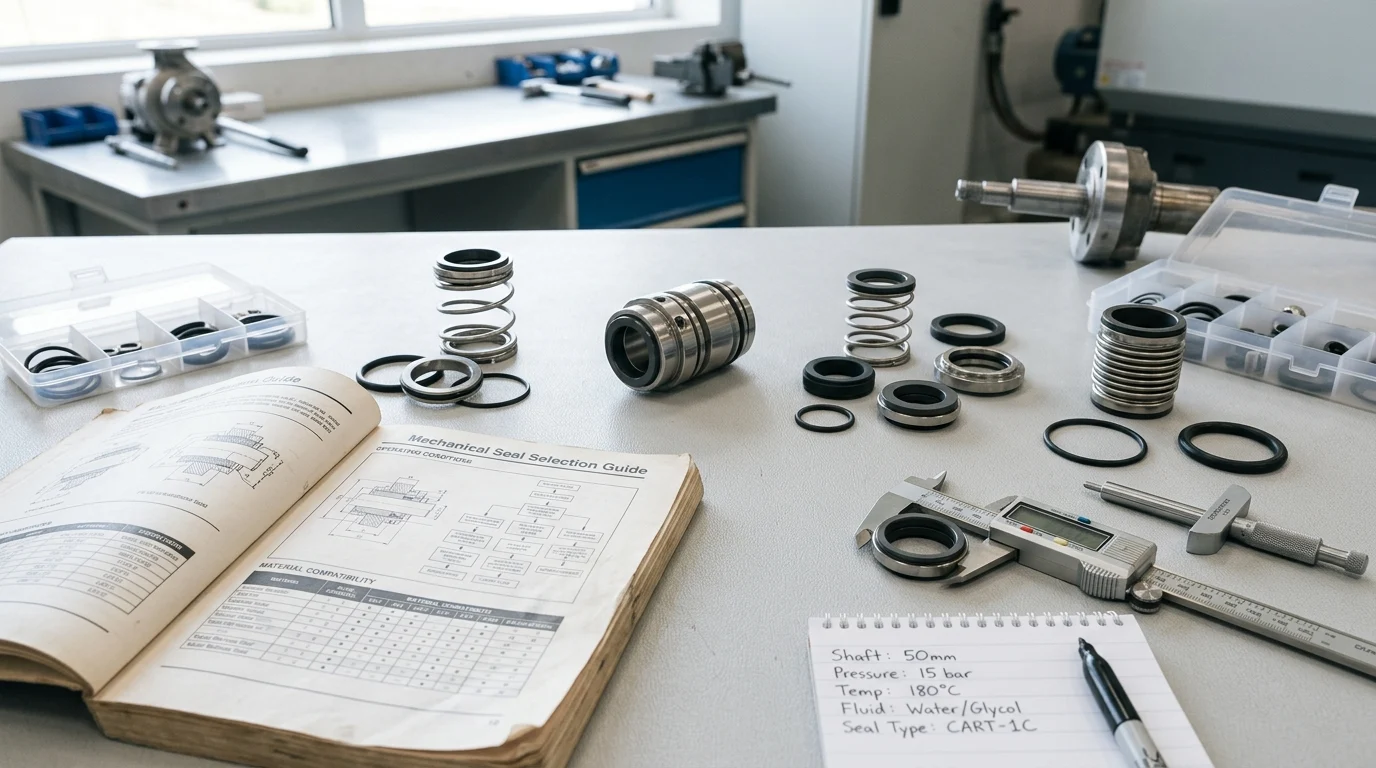
How Pump OEMs Should Use a Mechanical Seal Selection Guide
Original Equipment Manufacturers (OEMs) in the fluid handling industry face a continuous optimization challenge: while mechanical seals typically represent only 5 to 10 percent of a standard centrifugal pump’s total Bill of Materials (BOM) cost, they are implicated in up to 70 percent of all unplanned pump failures. A comprehensive mechanical seal selection guide is not merely a technical reference; it is a strategic procurement and engineering tool that bridges the gap between hydraulic performance and commercial viability.
By standardizing the evaluation process, engineering teams can navigate the complex matrix of fluid dynamics, metallurgical compatibility, and supply chain constraints. Implementing a structured selection methodology allows manufacturers to specify sealing solutions that enhance overall equipment effectiveness, maximize Mean Time Between Failures (MTBF), and protect the brand’s reputation from the fallout of premature equipment breakdowns.
Why Seal Selection Affects Pump Warranty Risk
Warranty reserves for pump manufacturers typically range from 2 to 4 percent of gross revenue. However, when mechanical seals are misapplied, premature leakage or catastrophic face damage can quickly inflate warranty claims, potentially pushing these reserves above critical profitability thresholds. The mechanical seal acts as the primary barrier between the process fluid and the atmosphere, making it the component most vulnerable to variations in operating conditions, system upsets, and improper installation.
If a seal fails before the industry-standard threshold of 8,000 hours of continuous operation, the financial burden of replacement parts, field service labor, and potential environmental non-compliance penalties falls heavily on the manufacturer. Frequent seal failures erode the end-user’s confidence in the pump’s reliability, directly impacting future sales and maintenance contract renewals. Utilizing a rigorous selection framework mitigates this risk by ensuring the specified seal possesses an adequate performance margin to handle transient operational spikes—such as temporary dry running, dead-heading, or cavitation—without compromising the integrity of the primary tribological interface.
Key Commercial and Engineering Decisions Before Selection
Before delving into specific technical specifications, establishing clear commercial parameters is necessary to dictate the scope of seal selection. The primary decision often revolves around the dichotomy of standardization versus customization. Standard catalog seals offer the distinct advantage of low Minimum Order Quantities (MOQs)—often between 10 and 50 units—and highly predictable lead times suitable for Just-In-Time (JIT) manufacturing environments. Conversely, highly engineered or custom-dimensioned seals may require MOQs of 500 to 2,000 units to offset dedicated tooling, mold creation, and CNC setup costs. It is important to note that for small-batch or highly specialized OEMs, reaching these high MOQs is often unfeasible, making modular or standard catalog seals a practical necessity regardless of customization desires.
Engineering and procurement teams must collaboratively weigh the initial unit cost against the total lifecycle cost and assembly overhead. For instance, a standard component seal ranging from $15 to $150 places the burden of precision installation and length-setting entirely on the assembly line. The selection process must align with production volume, target profit margins, and the technical maintenance capabilities of the target end-user market. A strategic guide forces an evaluation of whether the fractional savings on a component seal justify the increased labor and higher defect rates during pump assembly.
Operating Conditions That Define Seal Requirements
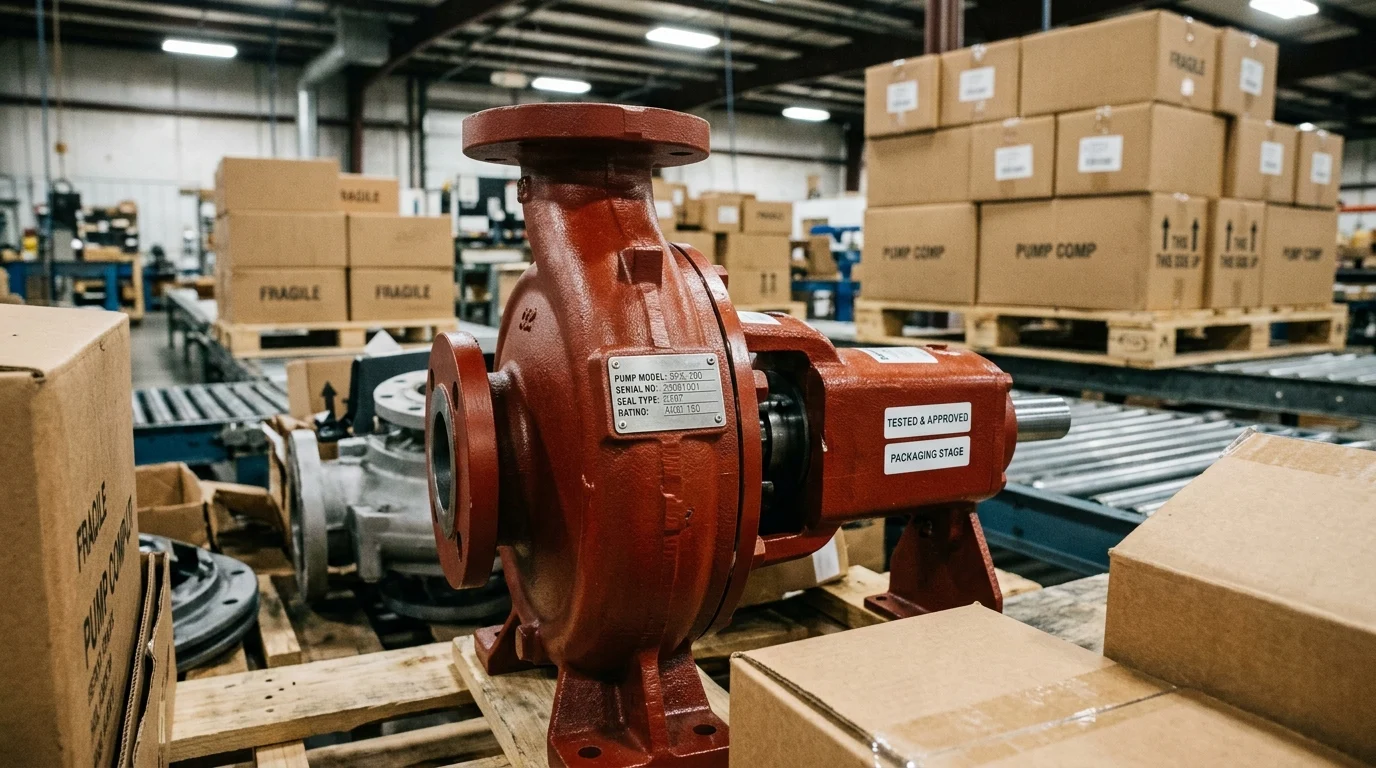
The cornerstone of mechanical seal selection lies in a precise, quantitative understanding of the dynamic operating environment. Evaluating the exact parameters under which the equipment will function is essential, as these variables directly dictate the required seal face loading, cooling mechanisms, and material compatibility. Ignoring transient conditions or worst-case scenarios during this phase inevitably leads to premature seal degradation.
Pressure, Temperature, Speed, and Fluid Properties
Pressure, velocity, and temperature are the foundational metrics that define the operational limits of any mechanical seal. The Pressure-Velocity (PV) limit dictates the maximum load the seal faces can endure before the hydrodynamic fluid film vaporizes, leading to dry friction, thermal checking, and rapid failure. Standard unbalanced mechanical seals are typically limited to stuffing box pressures of approximately 1.2 MPa (175 psi). For high-pressure applications exceeding this threshold, balanced seals are mandatory; these designs can operate reliably at pressures up to 4.0 MPa (580 psi) or higher by geometrically reducing the hydraulic closing force acting on the seal faces.
Shaft rotational speed also heavily influences design architecture. Surface speeds exceeding 25 meters per second (m/s) generally require stationary spring designs to prevent centrifugal forces from distorting the dynamic components and causing spring fatigue. Furthermore, fluid temperature dictates elastomer and secondary seal selection. Standard Nitrile (NBR) degrades rapidly above 90°C, whereas Fluoroelastomers (FKM) can withstand continuous exposure up to 200°C. For extreme thermal environments reaching 320°C, Perfluoroelastomers (FFKM) or flexible graphite secondary seals become mandatory, despite their significant cost premium. Finally, fluid properties such as specific gravity and vapor pressure margin must be calculated to ensure the fluid remains in a liquid state across the seal face interface.
Pump Types and Service Environments
The specific architecture of the pump and the nature of the industry it serves impose distinct constraints on seal selection. Centrifugal pumps operating in the municipal water or HVAC sectors often rely on high-volume, single component seals due to cost sensitivities and relatively benign fluid properties. In stark contrast, pumps destined for the petrochemical and refining sectors must adhere strictly to API 682 (4th Edition) standards, which categorize seals into specific arrangements (Category 1, 2, or 3) and types (Type A, B, or C) based on the severity of the service, temperature profiles, and fugitive emission regulations.
Positive displacement pumps, which frequently handle highly viscous fluids like resins, polymers, or crude oil, require seals with rugged drive mechanisms—such as heavy-duty drive pins or cast drive bands—capable of transmitting high torque without shearing the secondary elastomers. Service environments involving abrasive slurries, commonly defined as fluids containing greater than 10 percent solids by weight, necessitate hard-on-hard seal face combinations, such as Silicon Carbide against Tungsten Carbide. Additionally, these environments often require non-pusher seal designs, like elastomer bellows, to prevent the dynamic O-ring from hanging up on a shaft heavily scored by abrasive particulate. In cases where zero-emission requirements or fluid hazards exceed standard mechanical seal capabilities, OEMs may also evaluate sealless architectures, such as magnetic drive or canned motor pumps, as alternative solutions.
Shaft Size, Seal Chamber Geometry, Runout, and Vibration
Mechanical seals operate with fluid film clearances measured in microns (typically 0.5 to 1.5 µm), making them highly susceptible to dimensional inaccuracies and dynamic instability within the pump housing. The dimensions of the seal chamber, often dictated by standards like ANSI B73.1 or ISO 2858, limit the radial and axial space available for the seal package. A critical metric is the shaft stiffness ratio (L3/D4); a ratio exceeding 0.002 indicates a flexible shaft prone to deflection, which severely limits seal life.
API 610 standards require that maximum shaft deflection at the primary seal faces must not exceed 0.05 mm (0.002 inches) under the most severe dynamic conditions. Additionally, radial runout must be strictly controlled, typically limited to a Total Indicator Reading (TIR) of 0.08 mm. Excessive vibration or shaft whip accelerates elastomeric hysteresis and wear on the dynamic O-ring, leading to fretting damage on the shaft sleeve. Ensuring that the pump’s bearing frame, shaft diameter, and overall rigidity are adequate to support the specified seal is critical, particularly when utilizing heavy double cartridge seals that extend further along the shaft overhang.
Mechanical Seal Types and Material Choices
Translating operating conditions into a physical sealing solution requires a deep understanding of available seal architectures and metallurgical properties. The optimal mechanical seal is a highly engineered assembly where the physical form factor and the chemical composition of each component are precisely tailored to the application. Misalignment in either area compromises the integrity of the pump system.
Single, Double, Cartridge, and Component Seals
The architectural configuration of the seal dictates its installation complexity, safety profile, and total cost of ownership. Single seals consist of one set of mating faces and are suitable for non-hazardous fluids where minor vapor emissions (typically less than 1000 PPM) are acceptable. Double seals utilize two sets of faces and an external barrier fluid system (e.g., API Plan 53A or 54) to ensure zero process emissions to the atmosphere, making them legally mandatory for toxic, carcinogenic, or highly flammable media.
Beyond the number of faces, the delivery mechanism is crucial. Component seals are supplied as loose parts—springs, faces, and O-rings—requiring skilled technicians to set the correct working length and concentricity on the pump shaft. Cartridge seals, conversely, are pre-assembled, pressure-tested, and preset on a sleeve with a gland plate. While cartridge seals command a price premium of 300 to 500 percent over equivalent component seals, they reduce installation errors by up to 50 percent, eliminate the need for measuring installation dimensions, and significantly decrease assembly time on the production floor.
Seal Face, Elastomer, Spring, and Metal Materials
Material selection determines the chemical resistance, thermal stability, and tribological performance of the seal. For the primary seal faces, resin-impregnated Carbon Graphite is widely used against a harder mating ring due to its excellent self-lubricating properties; however, it is vulnerable to blistering in highly viscous services or rapid wear in abrasive media. Silicon Carbide (SiC) offers exceptional hardness (approximately 2500 HV) and superior thermal conductivity, making it ideal for high-PV applications. Tungsten Carbide (WC) provides unmatched fracture toughness, which is essential for high-impact or heavy slurry duties where SiC might shatter.
Secondary sealing elements, primarily O-rings, V-rings, or bellows, must resist chemical attack and thermal degradation over years of service. Options range from standard EPDM for hot water and steam, to highly specialized FFKM for aggressive solvents and harsh chemicals. The structural metal components, including coil springs, wave springs, and gland plates, are typically machined from 316L Stainless Steel. However, highly corrosive environments like seawater desalination or acidic processing frequently necessitate the use of Duplex stainless steels, Titanium, or Hastelloy C-276 to prevent chloride stress corrosion cracking and pitting.
Seal Type Comparison Table
To streamline the decision-making process, comparative matrices help evaluate the trade-offs between different seal architectures. The following table illustrates typical operational and commercial boundaries for standard mechanical seal configurations.
| Seal Configuration | Typical Assembly Time | Relative Cost Index | Maximum Pressure Limit | Primary Application Profile |
|---|---|---|---|---|
| Single Component | 15 – 30 minutes | 1.0x (Baseline) | 1.2 MPa (175 psi) | Clean water, light chemicals, high-volume OEM pumps |
| Single Cartridge | 5 – 10 minutes | 3.5x – 5.0x | 2.5 MPa (360 psi) | Industrial process pumps, ANSI standard dimensions |
| Double Component | 30 – 45 minutes | 2.5x – 4.0x | 1.5 MPa (220 psi) | Toxic fluids in space-constrained stuffing boxes |
| Double Cartridge | 10 – 15 minutes | 8.0x – 12.0x | 4.0+ MPa (580+ psi) | API 682 petrochemical, hazardous zero-emission duties |
Selecting the right configuration requires balancing the initial Cost Index against the total value delivered through reduced assembly time, expanded pressure capabilities, and diminished warranty risks. For high-value process pumps, the investment in a double cartridge seal is often justified by the elimination of fugitive emissions and simplified field maintenance.
How Pump OEMs Should Evaluate Seal Quality and Suppliers
A mechanical seal is only as reliable as the manufacturing processes and quality control systems of the supplier producing it. Establishing rigorous vetting protocols ensures that seal partners can deliver consistent quality, advanced technical backing, and supply chain stability. Treating mechanical seals as mere commodities rather than engineered sub-assemblies introduces massive operational risks.
Standards, Test Records, and Traceability
Validating a supplier’s quality control begins with their adherence to international manufacturing standards, such as ISO 9001 and environmental standards like ISO 14001. For critical applications, full material traceability should be required, typically documented via EN 10204 3.1 Material Test Reports (MTRs). These reports ensure that the metallurgy of the gland plates and the chemical composition of the elastomers strictly meet the specified requirements, mitigating the risk of catastrophic corrosion.
Production testing records are equally vital. High-quality suppliers conduct static hydrostatic pressure testing on a statistical sample—or 100 percent of cartridge assemblies—typically at 1.5 times the design pressure, to verify O-ring integrity and seal face flatness. Flatness is measured in helium light bands, typically requiring tolerances within 2 to 3 light bands to meet standard leakage criteria. Furthermore, for environmental compliance in hazardous regions, suppliers should provide empirical data demonstrating that their seal designs meet stringent emission standards, such as maintaining leakage rates below 5.6 grams per hour for volatile organic compounds in accordance with EPA Method 21 or ATEX directives.
Supplier Engineering Support
The complexity of modern fluid handling applications requires seal suppliers to act as seamless extensions of the core engineering department. Strong supplier engineering support is characterized by the ability to perform advanced computational modeling prior to physical manufacturing. Finite Element Analysis (FEA) is essential to predict how seal faces will deform under high thermal and pressure gradients, ensuring the fluid film remains stable and parallel under load. Computational Fluid Dynamics (CFD) is frequently utilized to optimize the flow of barrier fluids within double seal chambers, preventing localized boiling and heat buildup.
Responsiveness during the prototyping and testing phase is a critical metric for speed-to-market. OEMs should verify a supplier’s capability to deliver physical, testable prototypes within realistic timeframes, avoiding partners who overpromise on complex custom designs. For demanding applications—particularly API 682 Category 3 seals requiring exotic materials—development requires rigorous validation. Capable suppliers should also possess in-house dynamic testing rigs to simulate exact duty cycles, providing rotor-dynamics and tribological wear data before the seal is ever installed in a production pump.
Unit Price, Tooling Cost, Lead Time, and Reliability Trade-Offs
Procurement teams face the continuous challenge of balancing upfront component costs with long-term reliability and total cost of ownership (TCO). Negotiating unit prices must be contextualized by tooling investments; for example, developing a custom molded elastomer bellows or a stamped metal drive band can incur NRE (Non-Recurring Engineering) and tooling costs ranging from $2,000 to $10,000. If the annual production volume does not justify amortizing this cost over thousands of units, standard catalog components remain the financially prudent choice.
Lead time is another crucial factor that impacts inventory carrying costs. Standard component seals typically command lead times of 2 to 4 weeks, whereas heavily engineered API cartridge seals may require 10 to 14 weeks due to exotic material sourcing and complex multi-axis CNC machining. Ultimately, the trade-off calculation must prioritize reliability metrics. Mandating that seal suppliers maintain a defect rate of less than 500 Parts Per Million (PPM) is a common industry target. The logistical and reputational costs of resolving field failures, deploying technicians, and managing warranty claims far outweigh fractional percentage savings on the initial unit procurement price.
Final Mechanical Seal Selection Process
With operating parameters defined, material options evaluated, and a qualified supply chain in place, a structured final selection process brings the project to completion. This phase consolidates all theoretical calculations and commercial data into a definitive engineering specification, ready for procurement, production integration, and final testing.
Application Data Collection and Shortlisting
The final selection process begins with the rigorous collection of specific application data, transitioning from general operating ranges to exact fluid properties at the intended duty point. Engineers must document the fluid’s precise viscosity (in centistokes or centipoise), specific gravity, and vapor pressure curve at the maximum operating temperature. It is also critical to evaluate the Net Positive Suction Head available (NPSHa) to ensure sufficient vapor margin exists to prevent cavitation near the seal faces.
This data is fed into proprietary seal selection software or standardized engineering formulas to calculate the exact heat generation at the seal faces in watts or BTU/hr. Based on these thermal calculations, the engineering team typically shortlists two to three distinct seal configurations. For instance, the shortlist for a high-temperature boiler feed pump might include a single balanced cartridge seal with an API Plan 11 bypass flush as the baseline option, and a secondary option featuring an API Plan 23 circulation system with a dedicated magnetic separator and heat exchanger, depending on the final thermal dissipation requirements.
Decision Matrix for Performance Margin and Cost
To objectively choose between the shortlisted options, a weighted decision matrix balances performance safety margins against the total cost of ownership. The goal is to select a seal that provides an adequate safety buffer without drastically over-engineering the solution and pricing the pump out of the competitive market.
| Evaluation Criteria | Weight (%) | Option A: Single Balanced (Plan 11) | Option B: Single Balanced (Plan 23) |
|---|---|---|---|
| PV Safety Margin | 30% | Marginal (10% above max duty) | Excellent (35% above max duty) |
| Relative Unit Cost | 25% | 1.0x (Baseline) | 1.3x (Premium) |
| Ancillary System Cost | 20% | Low (Piping only) | High (Piping and Heat Exchanger) |
| Expected Lifespan | 25% | 12,000 hours | 24,000+ hours |
| Weighted Score | 100% | 68 / 100 | 82 / 100 |
In this scenario, while Option A offers a significantly lower upfront cost, Option B achieves a higher overall score. The superior PV safety margin and extended operational lifespan provided by the dedicated cooling plan justify the higher ancillary system cost for critical continuous-duty applications. This matrix ensures that procurement decisions are driven by data and lifecycle value rather than purely by initial component acquisition cost.
Final Recommendation and Selection Checklist
The culmination of the selection process is the final recommendation and the execution of a comprehensive selection checklist. This checklist ensures that no critical parameter has been overlooked before the pump’s BOM is locked for production.
Key Takeaways
- Treat the mechanical seal as a reliability-critical component because a low-cost seal decision can drive a disproportionate share of unplanned pump failures.
- Define the fluid, temperature, pressure, speed, materials, and upset conditions before comparing seal types or supplier quotations.
- Use standard catalog seals when low MOQ, predictable lead time, and simplified procurement are more important than dimensional customization.
- Evaluate total lifecycle cost, not only unit price, because installation time, field failures, warranty claims, and end-user maintenance all affect profitability.
- Select seals with enough performance margin to tolerate transient operating events such as cavitation, dead-heading, or short-term dry running.
Frequently Asked Questions
Why is mechanical seal selection so important for pump OEMs?
Mechanical seals may be a small share of pump BOM cost, but they are linked to a large portion of unplanned pump failures. Correct selection helps reduce leakage, warranty exposure, downtime, and end-user dissatisfaction.
What operating data should OEMs confirm before choosing a seal?
OEMs should define fluid type, temperature, pressure, shaft speed, solids content, chemical compatibility, duty cycle, and possible upset conditions such as dry running, cavitation, or dead-heading.
When should an OEM choose a standard catalog seal?
A standard seal is usually best for lower volumes, faster lead times, low MOQs, and JIT production. It can also simplify sourcing when the pump design can accommodate common dimensions and materials.
When does a custom mechanical seal make sense?
Custom seals make sense when the pump has unique envelope dimensions, demanding operating conditions, or brand-specific performance requirements. OEMs should confirm tooling cost, MOQ, testing needs, and long-term demand before committing.
How can Victor Seals support pump OEM projects?
Victor Seals manufactures standard and OEM mechanical seals, cartridge seals, double seals, water pump seals, and replacement seals for industrial and marine pump applications, supporting OEMs with selection and supply options.

Post time: Sep-14-2026