


Introduction
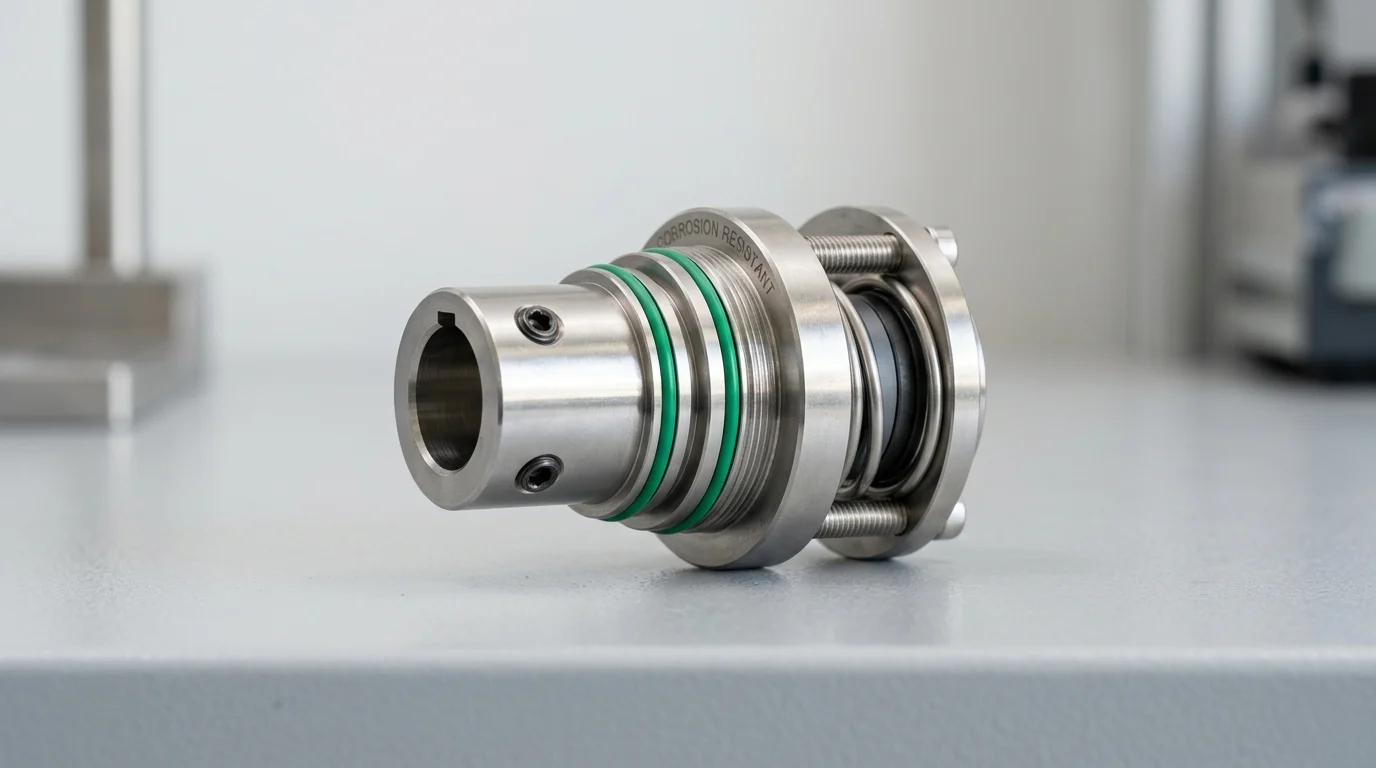
In chemical processing, refining, and other fluid-handling systems, seal failure often starts with corrosion long before a visible leak appears. A corrosion resistant mechanical seal is designed to keep sealing surfaces, metal parts, and elastomers stable when exposed to acids, solvents, hydrocarbons, and abrasive media. Its value goes beyond longer service life: it helps control fugitive emissions, protects equipment reliability, and reduces the risk of unplanned shutdowns or safety incidents. The discussion below explains how these seals limit leakage, what materials make them effective in harsh environments, and why they are essential for both compliance and operating efficiency.
Why Corrosion-Resistant Mechanical Seals Matter
In aggressive chemical and hydrocarbon processing environments, the integrity of a rotating equipment system is heavily dependent on its sealing mechanisms. A corrosion-resistant mechanical seal is engineered to withstand the degrading effects of harsh process fluids, serving as the primary barrier against fugitive emissions and catastrophic fluid loss. Unlike standard seals, which may rapidly degrade when exposed to acids, bases, or abrasive slurries, corrosion-resistant variants maintain precise face topography and structural integrity under extreme chemical attack.
The industrial mandate for these specialized seals is driven by stringent environmental regulations and the high cost of unplanned downtime. For instance, facilities subject to EPA Method 21 must maintain fugitive emission thresholds strictly below 500 parts per million (ppm), a metric impossible to achieve if seal components are actively dissolving or pitting. By utilizing advanced metallurgy and high-performance elastomers, corrosion-resistant seals ensure that processing plants meet compliance standards while safeguarding personnel from volatile or toxic chemical exposure.
How corrosion-resistant seals reduce leakage
The fundamental operating principle of a mechanical seal relies on maintaining a microscopic fluid film between two highly polished seal faces. To prevent leakage, these faces must remain flat to within 2 to 3 helium light bands (approximately 0.000023 to 0.000035 inches). When a seal lacks chemical compatibility with the process fluid, uniform or localized corrosion alters this critical topography. Pitting corrosion creates microscopic channels across the seal faces, while crevice corrosion attacks the O-ring grooves, allowing process fluid to bypass the secondary dynamic sealing elements.
Corrosion-resistant mechanical seals mitigate these failure modes through the use of inert materials that do not react with the pumped medium. By preserving the precise lapped finish of the primary faces and maintaining the dimensional tolerances of the metal hardware, these seals sustain the optimal fluid film thickness. This prevents the transition from boundary lubrication to dry friction, thereby eliminating the thermal distortion and blistering that typically precede catastrophic leakage.
Which operating environments require corrosion resistance
The necessity for superior chemical resistance spans multiple heavy industries, particularly where extreme pH levels or high halide concentrations are present. In the chlor-alkali sector, equipment frequently handles wet chlorine gas, sodium hypochlorite, and concentrated sodium hydroxide at pH levels exceeding 13. Standard 300-series stainless steels suffer rapid chloride stress corrosion cracking under these conditions, necessitating exotic alloys.
Similarly, offshore oil and gas platforms routinely process sour crude containing high levels of hydrogen sulfide (H2S) and abrasive sand. Pulp and paper mills rely on black liquor and chlorine dioxide bleaching stages, environments notorious for inducing severe uniform corrosion. In these applications, the fluid chemistry dynamically strips away the passive oxide layers of standard metals, making engineered corrosion-resistant seals an absolute operational requirement to maintain a Mean Time Between Failures (MTBF) acceptable for continuous production.
What Defines a Corrosion-Resistant Mechanical Seal

A corrosion-resistant mechanical seal is defined by the synergistic chemical compatibility of its three main component groups: the primary rotating and stationary faces, the metallic structural components, and the secondary elastomeric seals. A mechanical seal is only as robust as its most vulnerable component; a highly resistant silicon carbide face is rendered useless if the supporting O-ring swells or the metal gland plate dissolves.
Which face, metal, and elastomer materials affect corrosion resistance
The selection of materials dictates the seal’s operational lifespan in aggressive media. For primary faces, Sintered Alpha Silicon Carbide (SiC) is the industry standard for broad-spectrum chemical resistance, maintaining stability across a pH range of 0 to 14. In highly caustic applications where SiC may experience grain boundary attack, specialized grades or tungsten carbide (WC) with a nickel binder—rather than a corrosion-prone cobalt binder—are utilized.
Metallic components, including the gland, sleeve, and springs, often require upgrades from standard 316SS. High-nickel alloys such as Hastelloy C-276, titanium, or Alloy 20 are deployed to combat pitting and stress corrosion cracking in chloride-rich or sulfuric acid environments. For secondary sealing, elastomers must resist chemical swelling and extrusion. Perfluoroelastomers (FFKM) provide near-universal chemical compatibility, outperforming standard FKM or EPDM options in harsh solvent applications.
| Component Category | Standard Material | Corrosion-Resistant Upgrade | Typical Environment / Limitation |
|---|---|---|---|
| Seal Faces | Carbon vs. Ceramic | Sintered SiC vs. SiC | Highly abrasive/corrosive; pH 0-14 |
| Metallurgy | 316 Stainless Steel | Hastelloy C-276 / Titanium | High chlorides, sulfuric acid |
| Elastomers | FKM / EPDM | FFKM (Perfluoroelastomer) | Aggressive solvents, amines, >200°C |
How chemistry, temperature, pressure, and shaft speed influence performance
Chemical resistance is not a static property; it is highly dependent on operational variables. The Arrhenius equation dictates that the rate of chemical reactions—including corrosion—roughly doubles for every 10°C (18°F) increase in temperature. A metal or elastomer that demonstrates excellent resistance to a 10% sulfuric acid solution at ambient temperature may degrade rapidly at 90°C. Therefore, thermal parameters must be strictly evaluated alongside fluid chemistry.
Pressure and shaft speed further compound corrosion risks by inducing mechanical stress and localized heat generation. High-pressure applications, often exceeding 1,200 psig in heavy-duty pumps, accelerate crevice corrosion by forcing aggressive fluids deeper into micro-fissures. High shaft speeds increase the shear rate of the fluid film, raising the face temperature and locally accelerating chemical attack on the seal faces, a phenomenon known as thermo-chemical degradation.
How to distinguish corrosion failure from wear and dry running
Accurate failure analysis is critical to preventing repeated breakdowns. Distinguishing corrosion from mechanical wear or dry running requires examining the specific damage morphology. Corrosion typically manifests as pitting, generalized thinning of metal components, or chemical leaching. For example, when the cobalt binder in tungsten carbide faces is chemically leached, the face appears dull and feels rough to the touch, resulting in a porous surface that cannot maintain a fluid film.
In contrast, dry running produces distinct thermal damage, such as heat checking (fine radial cracks on the seal face) or severe blistering on carbon graphite faces. Abrasive wear presents as deep, concentric grooving along the mating surfaces. If an O-ring fails due to chemical incompatibility, it will exhibit swelling, embrittlement, or extrusion, whereas thermal degradation typically leaves the O-ring hardened with a squared-off cross-section. Identifying these specific markers ensures that subsequent seal upgrades address the correct failure mode.
How to Compare Corrosion-Resistant Mechanical Seal Options
Procuring the correct seal requires evaluating both the materials of construction and the mechanical configuration. The physical design of the seal dictates how the internal components are exposed to the process fluid, meaning that a strategic configuration choice can sometimes mitigate the need for the most expensive exotic alloys.
Which comparison criteria buyers should use
Buyers and reliability engineers must evaluate corrosion-resistant mechanical seals using a matrix of technical and commercial criteria. The primary metric is the Life Cycle Cost (LCC), which balances the initial capital expenditure against the projected Mean Time Between Failures (MTBF). A premium seal may cost three times as much upfront but can extend the MTBF from 6 months to over 36 months, drastically reducing long-term costs.
Compliance with industry standards, such as API 682 (for oil, gas, and chemical industries), is another critical criterion. Buyers must specify the appropriate Category (1, 2, or 3) based on pump size and temperature, and select the correct seal arrangement. Furthermore, assessing supplier capabilities—such as their ability to provide EN 10204 3.1 material traceability certificates—ensures that the specified corrosion-resistant alloys meet the exact metallurgical requirements necessary for the application.
How single, double, cartridge, and split seals differ
The choice between single, double, cartridge, and split configurations fundamentally alters how the seal interacts with the corrosive environment. Single seals rely on the pumped process fluid for lubrication; therefore, every component must be fully chemically compatible with the media. While single seals have lower initial costs, they offer no secondary containment if the primary fluid film fails.
Double (dual) seals utilize a pressurized or unpressurized barrier fluid between two sets of seal faces. By maintaining the barrier fluid at a higher pressure than the process media, the inner seal faces are lubricated by the clean, non-corrosive barrier fluid rather than the aggressive process chemical. This configuration isolates the delicate springs and internal metallurgy from the corrosive environment, effectively preventing chemical attack and ensuring zero hazardous emissions.
Cartridge seals are pre-assembled units containing the seal, gland, and sleeve. They eliminate the need for precise installation measurements, greatly reducing human error during maintenance—a critical factor when handling hazardous chemicals. Split seals allow for installation without dismantling the pump casing or motor, which is highly advantageous for large equipment. However, split seals typically have lower pressure limitations (often capped around 150 psig) and are less suited for highly toxic corrosive fluids due to the inherent split lines in their elastomeric components.
| Seal Configuration | Primary Advantage | Pressure Limit (Typical) | Best For… |
|---|---|---|---|
| Single Component | Low initial cost | Up to 300 psig | Mildly corrosive fluids with low toxicity |
| Single Cartridge | Easy installation | Up to 400 psig | General chemical processing, MTBF extension |
| Double (Dual) Cartridge | Zero emissions, face protection | Up to 1,200 psig | Highly toxic, volatile, or polymerizing acids |
| Split Seal | Maintenance without equipment teardown | Up to 150 psig | Large horizontal split-case pumps, mixers |
How to Select and Protect the Right Seal
Even the most advanced corrosion-resistant mechanical seal will fail prematurely if misapplied or subjected to hostile operating conditions beyond its design limits. Successful implementation requires rigorous data collection during the procurement phase, followed by strict adherence to environmental control practices during operation.
Which application data engineering and procurement teams need
To specify an optimal seal, engineering and procurement teams must compile comprehensive application data. The fluid composition must be detailed completely, including trace elements and transient conditions, as a mere 1% concentration of hydrofluoric acid or chlorides can radically alter material compatibility. Specific gravity, vapor pressure, and viscosity at operating temperatures (which can frequently exceed 400°F / 204°C in chemical processing) must be documented.
Mechanical equipment data is equally critical. Teams must provide the pump shaft speed (RPM), stuffing box dimensions, and equipment condition tolerances. For a high-performance seal to function properly, the pump shaft runout should typically not exceed 0.002 inches Total Indicator Reading (TIR), and shaft endplay should be kept under 0.005 inches. Failure to provide accurate equipment data leads to seal designs that suffer from excessive vibration, negating the benefits of corrosion-resistant materials.
How testing, standards, and supplier support affect selection
Supplier support and adherence to rigorous testing standards validate the reliability of the chosen seal. Reputable manufacturers subject their seals to hydrostatic testing, typically at 1.5 times the maximum design pressure, to ensure the integrity of the metallic components and O-ring grooves under stress. Qualification testing per API 682 guidelines simulates dynamic operating conditions, providing empirical proof of the seal’s leakage rates and thermal stability.
Furthermore, supplier engineering support is vital for navigating complex material trade-offs. A knowledgeable supplier will not simply sell a high-cost alloy but will analyze the system to determine if a design change—such as shifting from a single seal to a dual seal with a specific barrier fluid—might offer better protection and longer life than relying solely on exotic metallurgy.
Which installation, flushing, and monitoring practices extend seal life
The operational lifespan of a corrosion-resistant seal is vastly extended by utilizing appropriate API Piping Plans to control the seal’s micro-environment. For single seals handling corrosive fluids with suspended solids, an API Plan 32 provides a continuous flush of a clean, compatible external fluid, pushing the aggressive media away from the seal faces and springs.
For double seals handling highly toxic or corrosive media, an API Plan 53A, 53B, or 53C is deployed to supply a pressurized barrier fluid.
How to Justify Investment in a Corrosion-Resistant Mechanical Seal
Key Takeaways
- The most important conclusions and rationale for corrosion resistant mechanical seal
- Specs, compliance, and risk checks worth validating before you commit
- Practical next steps and caveats readers can apply immediately
Frequently Asked Questions
What makes a mechanical seal corrosion resistant?
It uses chemically compatible face materials, metal parts, and elastomers. Common upgrades include SiC faces, Hastelloy or titanium hardware, and FFKM or suitable elastomers matched to the pumped fluid.
When do I need a corrosion resistant mechanical seal?
Use one for acids, caustics, chlorides, sour fluids, solvents, or abrasive slurries. It is especially important in chemical, oil and gas, mining, pulp and paper, marine, and water treatment pumps.
How does corrosion resistance reduce seal leakage?
It prevents pitting, crevice attack, and elastomer damage that disturb the seal faces. That helps maintain the thin fluid film, reduce heat buildup, and keep leakage and emissions under control.
Which materials are commonly selected for harsh chemical service?
SiC is widely used for seal faces. Metal parts may need Hastelloy C-276, Alloy 20, or titanium, while FFKM, FKM, or EPDM are chosen based on actual chemical and temperature exposure.
Can Victor Seals supply corrosion resistant replacements for OEM pump seals?
Yes. Victor Seals provides OEM-compatible and replacement mechanical seals for brands such as IMO, Alfa Laval, Grundfos, APV, Flygt, Fristam, Lowara, and Allweiler for maintenance and repair needs.

Post time: Jun-18-2026