


Introduction
As emission limits tighten across chemical processing, refining, and power generation, sealing technology has become a critical factor in achieving zero-emission performance. Metal bellows seals are gaining attention because they remove common failure points found in conventional pusher designs, especially those tied to dynamic elastomers and shaft movement. This article explains how their construction supports lower fugitive emissions, stronger reliability, and better long-term sealing in demanding services. It also outlines the operating conditions and compliance pressures that make metal bellows seals a practical choice when containment, safety, and maintenance intervals all matter.
Why Metal Bellows Seals Are Becoming the Preferred Choice
The transition toward zero-emission industrial facilities has fundamentally altered the specification parameters for rotating equipment. As regulatory frameworks tighten around fugitive emissions, operators are increasingly moving away from traditional sealing technologies that rely on dynamic secondary elastomers. Metal bellows seals have emerged as the definitive solution for high-stakes fluid handling, eliminating the inherent vulnerabilities of sliding O-rings.
In chemical processing, refining, and power generation, the mechanical seal acts as the primary defense against atmospheric contamination. By utilizing an edge-welded metallic core to provide both face loading and secondary sealing, metal bellows configurations inherently bypass the hysteresis and shaft fretting that frequently degrade pusher seals over time.
How emission limits and reliability targets are changing demand
Environmental agencies globally are compressing acceptable volatile organic compound (VOC) emission thresholds. Historically, leakage rates of 10,000 parts per million (ppm) were tolerated in legacy industrial plants. Modern mandates, driven by protocols such as EPA Method 21 and European TA-Luft standards, now frequently cap permissible VOC emissions at 500 ppm, with critical toxic services requiring strict containment below 100 ppm.
To meet these rigorous zero-emission targets, reliability engineers require sealing mechanisms that maintain absolute integrity over an extended mean time between failures (MTBF). Because metal bellows seals lack a dynamic sliding elastomer, they do not suffer from O-ring compression set or thermal degradation under dynamic cycling. This static secondary sealing approach ensures that the emission containment profile remains flat and predictable throughout the seal’s operational lifespan, directly supporting plant-wide reliability and compliance metrics.
Where metal bellows seals deliver the most value
The structural advantages of metal bellows seals translate into maximum operational value in environments where elastomeric components fail prematurely. High-temperature applications, such as hot oil pumps operating at up to 400°C (750°F), represent a primary deployment zone, as these thermal loads instantly compromise conventional FKM or FFKM O-rings.
Cryogenic services also benefit significantly. At temperatures plunging to -75°C (-103°F) and below, elastomers undergo glass transition, becoming brittle and incapable of maintaining a seal. Metal bellows preserve their modulus of elasticity and flexural dynamics across these extreme thermal gradients. Furthermore, in the presence of suspended solids or fluids that tend to polymerize and coke upon atmospheric contact, the absence of a sliding secondary seal prevents the “hang-up” that typically forces the seal faces open, thereby averting catastrophic emission releases.
What Makes Metal Bellows Seals Suited for Zero-Emission Service
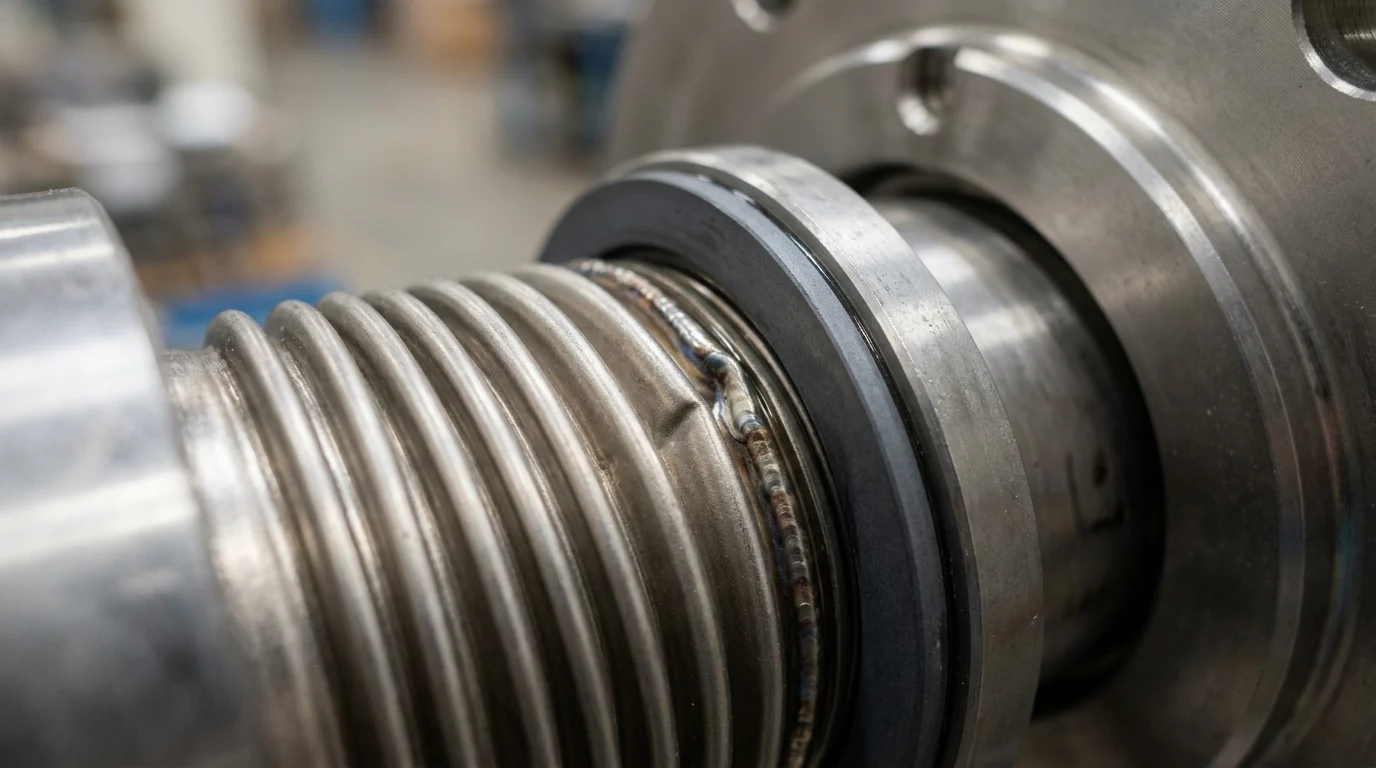
The fundamental architecture of a metal bellows seal replaces the multiple components of a conventional pusher seal—specifically the springs, dynamic O-ring, and sliding sleeve—with a single, highly engineered welded metallic core. This unified assembly serves simultaneously as the spring element applying mechanical closing force to the seal faces and as an impenetrable secondary boundary against the process fluid.
How metal bellows seals work and key design features
A metal bellows core is constructed by welding together a series of precision-stamped metallic diaphragms, or leaflets, at their inner and outer diameters. This edge-welded design provides a specific, uniform spring rate that ensures parallel face loading regardless of minor shaft axial movement. Because the bellows assembly is hydrostatically balanced by design, process fluid pressure acts on the effective diameter of the bellows convolutions rather than forcing a step in the shaft or sleeve.
Key design features also include self-cleaning dynamics. As the bellows unit rotates, centrifugal forces expel particulate matter away from the convolutions. This prevents the accumulation of debris that would otherwise restrict axial movement, a common failure point in multi-spring pusher designs. The static nature of the secondary seal—typically a static gasket or Grafoil ring—means the entire assembly can track face wear or thermal expansion instantly without overcoming the friction of a dynamic O-ring.
Which operating conditions, materials, and face combinations matter
Specifying the correct metallurgical composition is critical for zero-emission service, as the thin leaflets (often 0.10 to 0.15 mm thick) are highly susceptible to corrosive attack. Standard operations frequently utilize AM350 stainless steel, but aggressive environments demand advanced alloys. For high-temperature or highly corrosive services, Alloy 718 (Inconel) and Alloy 276 (Hastelloy) are standard upgrades. Face combinations typically pair premium Silicon Carbide against either Carbon Graphite (for lubricity) or Tungsten Carbide (for abrasive resistance).
| Bellows Material | Typical Temp Limit | Yield Strength | Optimal Application Profile |
|---|---|---|---|
| AM350 Stainless | 315°C (600°F) | High | General hydrocarbon, moderate temp |
| Alloy 718 | 425°C (800°F) | Very High | High-temperature refining, severe thermal cycling |
| Alloy 276 | 400°C (750°F) | High | Highly corrosive acids, sour water, chemical processing |
What failure modes and performance limits to consider
Despite their robust nature, metal bellows seals possess specific performance limits that engineers must respect. Standard single-ply bellows are generally rated for maximum operating pressures of 20 to 25 bar (300 to 360 psi). In applications exceeding these pressures, the thin leaflets are vulnerable to pressure-induced distortion or “squirm.” Multi-ply designs can extend this limit to 60+ bar, but at the cost of increased spring rate stiffness.
Failure modes in bellows seals differ markedly from pusher seals. Torsional shear can occur if the fluid viscosity spikes or if the seal faces run dry and bind, twisting the delicate welded leaves. Fatigue cracking is another risk if the shaft exhibits excessive radial vibration. Finally, while bellows resist coking better than pusher seals, severe accumulation of hardened hydrocarbons between the convolutions can solidify the bellows, necessitating steam quenches in heavy oil applications.
How Metal Bellows Seals Compare with Other Seal Types
Selecting the appropriate mechanical seal requires a rigorous comparative analysis of how different architectures respond to process stressors over time. While metal bellows seals offer distinct advantages in harsh environments, understanding their exact competitive positioning against pusher seals and elastomeric bellows is essential for optimizing plant reliability and achieving zero-emission mandates.
Which criteria best measure zero-emission performance
Evaluating a seal’s capability for zero-emission service relies on three primary criteria: dynamic leakage rates, thermal bandwidth, and long-term MTBF (Mean Time Between Failures). Dynamic leakage is typically quantified in milliliters per hour (ml/hr) for liquids or parts per million (ppm) for volatile gases. To qualify for zero-emission service, a seal must consistently demonstrate leakage below 500 ppm under API 682 testing protocols.
Thermal bandwidth measures the technology’s ability to maintain face tracking during rapid temperature fluctuations without secondary seal degradation. Finally, MTBF evaluates sustained performance; a premium zero-emission seal should operate reliably for upwards of 25,000 hours (roughly three years) before requiring overhaul, assuming stable process conditions.
How metal bellows seals compare with pusher and elastomer bellows seals
When measured against alternative designs, metal bellows seals occupy the premium tier for severe service. Pusher seals utilize dynamic O-rings that must slide along the shaft to compensate for face wear. This sliding action causes hysteresis—a lag in face tracking—and results in fretting, which physically grooves the shaft or sleeve, eventually creating a secondary leak path. Elastomer bellows eliminate fretting but are strictly limited by the chemical compatibility and thermal limits of the rubber (typically failing above 150°C).
| Feature/Metric | Metal Bellows Seal | Pusher Seal (Multi-Spring) | Elastomer Bellows Seal |
|---|---|---|---|
| Dynamic Secondary Seal | None (Static) | O-ring / PTFE Wedge | Elastomer |
| Standard Temp Range | -75°C to 425°C | -40°C to 200°C | -20°C to 150°C |
| Shaft Fretting Risk | Zero | High | Zero |
| Dynamic Hysteresis | None | High (O-ring friction) | Low |
| Max Standard Pressure | 25 bar (Single-ply) | 40+ bar | 15 bar |
Which Practices Maximize Metal Bellows Seal Performance
Achieving zero-emission performance is not solely a matter of purchasing a metal bellows seal; it requires adherence to rigorous engineering, installation, and operational protocols. Integrating these seals into a high-reliability framework ensures that the theoretical advantages of the bellows architecture are realized in actual field conditions.
Which standards and compliance requirements apply
The governing standard for mechanical seals in the oil, gas, and petrochemical sectors is API 682 (ISO 21049). Under this standard, metal bellows seals are classified as Type B (rotating bellows) or Type C (stationary bellows). For zero-emission compliance in hazardous VOC services, operators typically specify Category 2 or Category 3 dual seal arrangements (Arrangement 2 or 3).
Arrangement 3 configurations, utilizing pressurized barrier fluids, guarantee that any leakage across the primary seal faces consists of the benign barrier fluid rather than the hazardous process medium. Compliance with regional environmental mandates, such as the EPA’s Maximum Achievable Control Technology (MACT) standards, heavily relies on deploying these API 682-compliant dual-bellows systems.
What installation and specification steps prevent early failure
Premature failure of metal bellows seals is most frequently traced to installation errors or incomplete specification. Because the bellows leaflets are highly sensitive to mechanical distortion, technicians must verify that shaft runout does not exceed 0.05 mm (0.002 inches) Total Indicator Reading (TIR). Excessive runout forces the bellows to flex at high frequencies, accelerating metal fatigue and weld fracture.
During the specification phase, engineers must account for fluid behavior at atmospheric pressure. For heavy hydrocarbons that oxidize or coke when exposed to air, specifying an API Plan 62 steam quench is vital. The steam blanket prevents the formation of abrasive coke deposits on the atmospheric side of the bellows leaflets, which would otherwise restrict axial movement and induce leakage.
How to monitor condition and plan maintenance
Continuous condition monitoring is the final pillar of zero-emission reliability. For dual metal bellows seals, this involves implementing API Plan 52 (unpressurized tandem) or Plan 53 (pressurized double) piping configurations. In a Plan 53A setup, the barrier fluid must be maintained at a pressure of 1.5 to 2.0 bar (22 to 30 psi) above the maximum seal chamber pressure.
Operators must monitor barrier fluid pressure and reservoir levels continuously. A sudden drop in barrier pressure or a rapid depletion of the reservoir fluid indicates primary or secondary face degradation. By integrating these fluid monitoring systems with plant DCS (Distributed Control Systems), maintenance teams can transition from reactive emergency repairs to predictive maintenance, overhauling the seal before environmental thresholds are breached.
How Buyers Should Decide When to Use Metal Bellows Seals
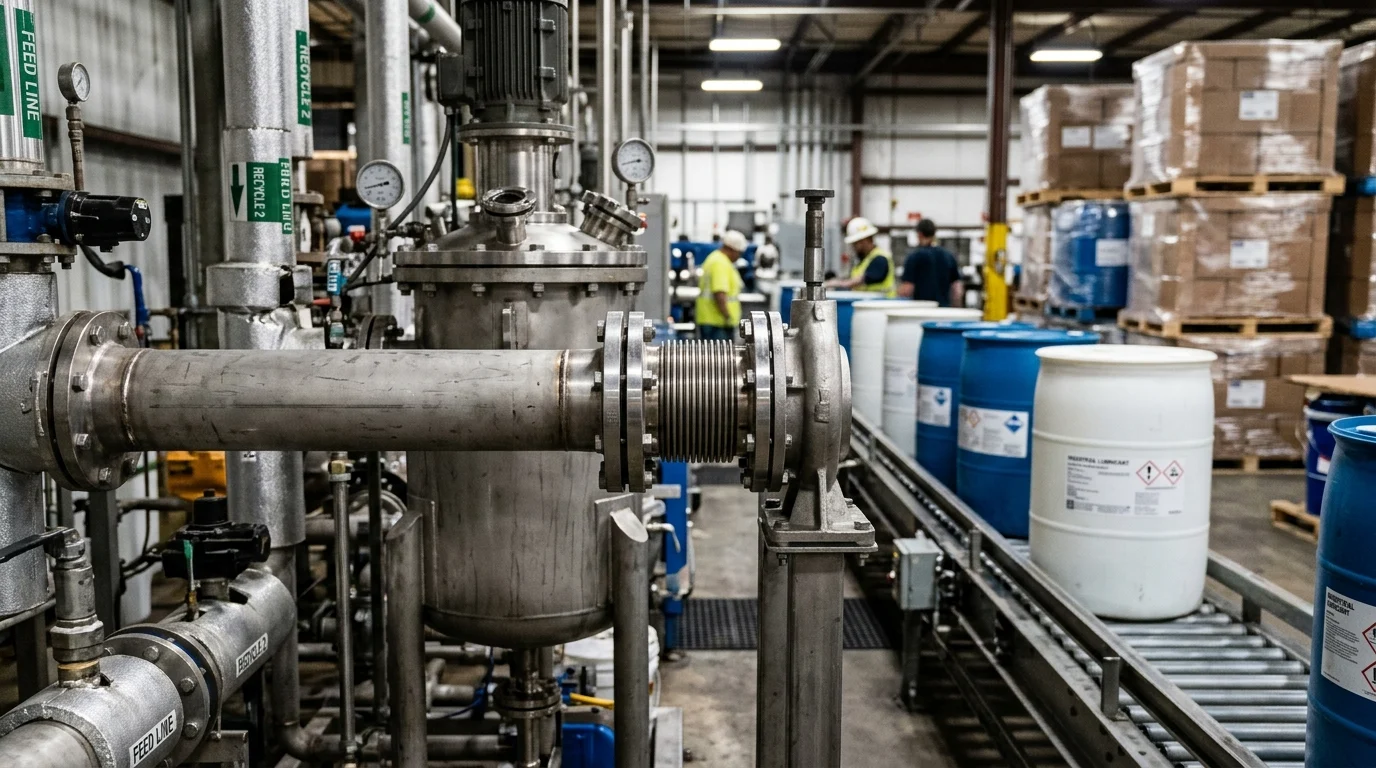
Transitioning to metal bellows seals represents a significant capital and engineering commitment. Procurement and reliability teams must navigate a calculated decision-making process to ensure that the higher initial investment is justified by the application’s demands and the resulting lifecycle returns.
Which application checklist should guide selection
To standardize the selection process, engineering teams should utilize a strict application checklist. Metal bellows seals should be mandated if the application meets one or more of the following criteria:
- Pumping temperatures exceed 200°C (400°F) or fall below -40°C (-40°F).
- The process fluid contains strict VOC emission limits requiring <500 ppm atmospheric containment.
- The fluid has a high propensity to polymerize, crystallize, or coke upon atmospheric exposure.
- Historical maintenance records indicate frequent pusher seal failures due to dynamic O-ring hang-up or shaft fretting.
If the application involves clean, low-temperature water or non-hazardous fluids operating under 150°C at moderate pressures, a standard pusher or elastomer bellows seal may suffice. However, for any service classified as hazardous, toxic, or extreme-temperature, the metal bellows seal is the technically sound choice.
How to weigh upfront cost against lifecycle value
The upfront procurement cost of a fully engineered metal bellows seal is typically 1.5x to 2.5x higher than an equivalent multi-spring pusher seal. However, evaluating the technology solely on initial capital expenditure ignores the profound impact on Total Cost of Ownership (TCO).
By completely eliminating shaft and sleeve fretting, metal bellows seals save facilities between $2,000 and $5,000 per pump overhaul in replacement hardware and machining costs.
Key Takeaways
- The most important conclusions and rationale for Metal Bellows Seals
- Specs, compliance, and risk checks worth validating before you commit
- Practical next steps and caveats readers can apply immediately
Frequently Asked Questions
Why are metal bellows seals better for zero-emission pumps?
They eliminate the dynamic O-ring, reducing leakage risk from wear, heat, and shaft fretting. This helps plants meet stricter VOC emission limits with more stable long-term sealing.
Which applications benefit most from metal bellows seals?
They work best in high-temperature, cryogenic, polymerizing, coking, and solids-containing services where elastomer-based pusher seals often fail or hang up.
Can Victor Seals supply OEM-compatible metal bellows seals?
Yes. Victor Seals provides metal bellows seals and OEM-compatible replacements for many industrial pump maintenance needs, including selected major pump brands.
How do metal bellows seals improve reliability in harsh service?
The welded bellows provides both spring force and secondary sealing, so there is no sliding elastomer to stick, harden, or wear. This supports longer MTBF and steadier sealing performance.
What should buyers check before selecting a metal bellows seal?
Confirm fluid type, temperature range, pressure, shaft size, face materials, and metallurgy. For hazardous service, also verify emission targets and pump model compatibility with your seal supplier.
Post time: Jun-03-2026