


Introduction
Tighter emissions limits and stricter reliability targets have made sealing technology a central issue in pumps, mixers, and other rotating equipment. Metal bellows seals stand out because their welded construction removes the dynamic secondary seal found in many conventional designs, reducing common leak paths and improving performance in high-temperature, corrosive, and volatile services. This article explains how that design supports near-zero fugitive emissions, where it outperforms traditional mechanical seals, and what engineers should consider when selecting it for compliance, safety, and longer operating life.
Why Metal Bellows Seals Matter for Zero-Emissions Goals
In the modern process industry, fluid handling systems are under unprecedented scrutiny to eliminate fugitive emissions. As environmental regulations tighten and corporate sustainability goals become non-negotiable, the mechanical seals utilized in centrifugal pumps, mixers, and reactors represent a critical line of defense. Traditional sealing technologies, while effective for general service, often fall short in applications requiring absolute containment over extended lifecycles. Metal bellows seals have emerged as the premier solution for these zero-emissions mandates.
By eliminating the dynamic secondary seal—a common point of failure in conventional designs—metal bellows seals remove the primary pathways for volatile organic compound (VOC) leakage. This inherent design advantage not only ensures regulatory compliance but also significantly elevates the mean time between failures (MTBF) in aggressive chemical and high-temperature environments.
Fugitive emissions, regulations, and ESG drivers
The push toward zero emissions is heavily driven by stringent environmental frameworks. Under regulations such as the U.S. Environmental Protection Agency’s (EPA) Method 21 and various regional clean air acts, the permissible threshold for fugitive emissions has plummeted. While historical leak definitions allowed up to 10,000 parts per million (ppm), modern standards frequently mandate thresholds of 500 ppm, with some local jurisdictions enforcing limits as strict as 100 ppm for highly hazardous VOCs.
Simultaneously, Environmental, Social, and Governance (ESG) drivers require process facilities to proactively report and reduce their carbon and toxic footprints. Metal bellows seals provide the hermetic reliability necessary to meet these sub-500 ppm requirements continuously, ensuring facilities avoid costly fines, prevent hazardous atmospheric releases, and satisfy both investor and regulatory ESG demands.
Where metal bellows seals are used in pumps and reactors
Metal bellows seals are strategically deployed in critical equipment where leakage poses severe safety, environmental, or operational risks. In petroleum refineries, they are standard in API 610 process pumps handling high-temperature hydrocarbons, bottom-of-the-barrel slurries, and heat transfer fluids. Because these fluids often exceed the thermal limits of traditional elastomers, the all-metal construction of the bellows is indispensable.
Beyond pumps, metal bellows seals are heavily utilized in chemical reactors and agitators. In top-entry reactor mixers, vapor-phase leakage is a persistent threat. The ability of a metal bellows seal to maintain uniform face loading without the risk of elastomer hang-up makes it the optimal choice for containing toxic precursors, lethal service chemicals, and highly volatile solvents operating under deep vacuum or elevated pressures.
How Metal Bellows Seals Differ from Conventional Seals

The fundamental distinction between metal bellows seals and conventional mechanical seals lies in how they manage axial movement and secondary sealing. All mechanical seals require a mechanism to maintain contact between the rotating and stationary seal faces as wear occurs and as the shaft undergoes thermal expansion or vibration. How this compensation is achieved dictates the seal’s susceptibility to leakage and failure.
Design features that support low emissions
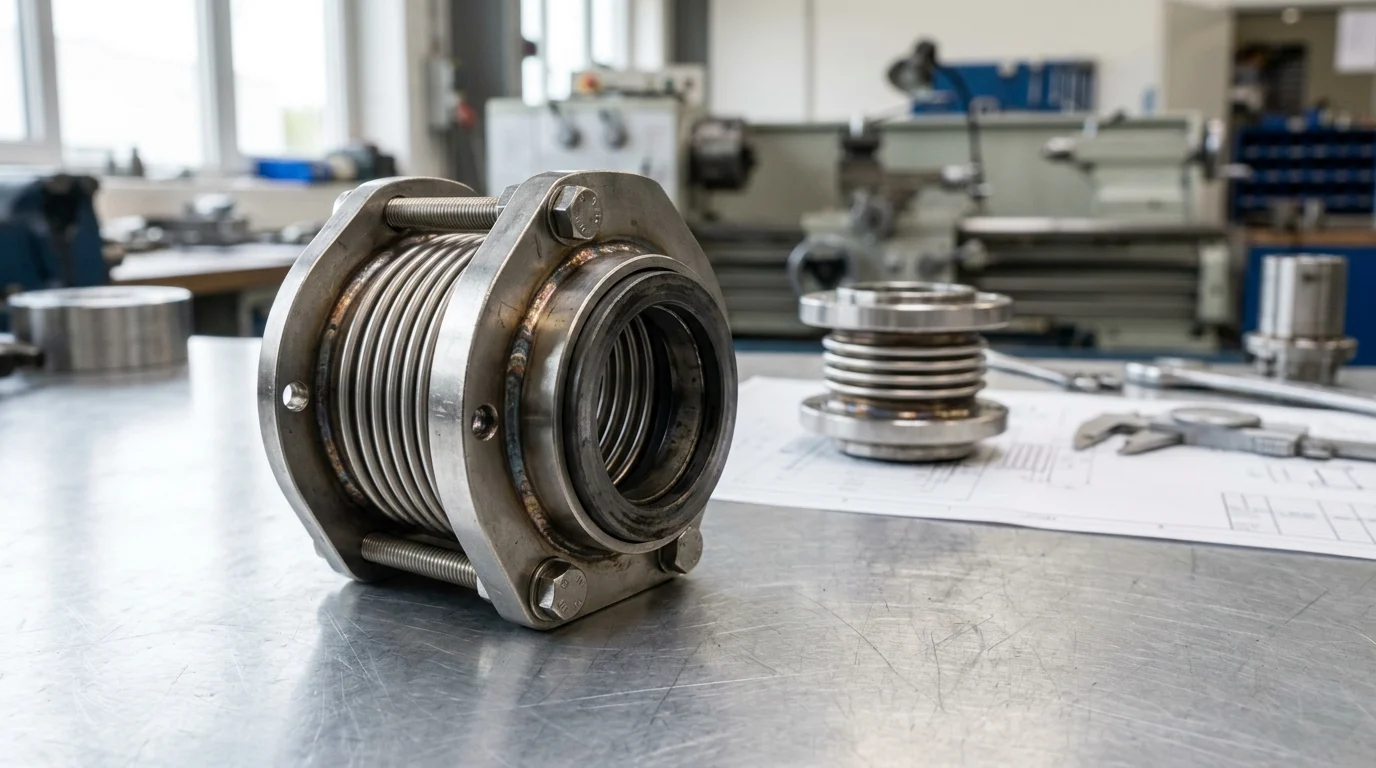
Metal bellows seals utilize a series of thin metal diaphragms, typically edge-welded together, to form a flexible, accordion-like cylinder. This core component serves a dual purpose: it acts as the spring element providing the necessary closing force on the seal faces, and it acts as the secondary seal itself. The individual convolution plates are precision-engineered, generally ranging from 0.10 mm to 0.25 mm in thickness, allowing for optimal flexibility without sacrificing structural integrity.
Because the bellows unit is continuously welded and metallurgically joined to the seal hardware, there is no sliding elastomer required to seal the shaft. Furthermore, the centrifugal action of the rotating bellows naturally throws off suspended solids, creating a self-cleaning effect that prevents the accumulation of debris—a major advantage in zero-emissions containment where particulate interference could separate the seal faces.
Metal bellows seals vs. pusher seals
Conventional pusher seals rely on coil springs to load the seal faces and a dynamic secondary seal (such as an O-ring or V-ring) that must slide axially along the shaft or sleeve to compensate for wear. This sliding action creates two critical vulnerabilities: elastomer hang-up (where the O-ring sticks due to heat, chemical attack, or debris, causing the seal faces to open) and shaft fretting (where the sliding O-ring wears a groove into the metal shaft, creating a permanent leak path).
Metal bellows seals eliminate both issues entirely. Without a dynamic O-ring, there is zero risk of hang-up and zero shaft fretting. This static secondary sealing approach is what guarantees the long-term containment required for zero-emissions targets.
| Feature | Metal Bellows Seals | Conventional Pusher Seals |
|---|---|---|
| Secondary Sealing | Static (welded core) | Dynamic (sliding O-ring/V-ring) |
| Face Loading Mechanism | Inherent bellows tension | Coil or wave springs |
| Shaft Fretting Risk | None | High (requires hardened sleeves) |
| Elastomer Hang-up Risk | None | High (in viscous/dirty fluids) |
| Typical Max Temperature | Up to 400°C (750°F)+ | Limited by elastomer (usually <200°C) |
How Metal Bellows Seals Improve Reliability and Compliance
Deploying metal bellows seals directly translates to enhanced operational reliability and sustained environmental compliance. By removing the weakest links of traditional sealing—namely, temperature-sensitive elastomers and clogging-prone springs—facilities can achieve a more predictable maintenance lifecycle while locking in zero-emissions performance.
Operating conditions where they perform best
These seals excel in extreme operating environments that cause rapid degradation in conventional seals. High-temperature applications are the most prominent; edge-welded metal bellows can comfortably operate in fluid temperatures up to 400°C (750°F), and even higher with specialized cooling arrangements. Conversely, they are equally effective in cryogenic services down to -75°C (-100°F), where standard elastomers would become brittle and shatter.
They also demonstrate superior performance in fluids that tend to crystallize, coke, or polymerize. In services like asphalt, heavy vacuum gas oil (HVGO), and caustic soda, the static nature of the bellows prevents the seal from freezing in place, ensuring continuous face tracking and zero vapor escape.
Performance trade-offs for temperature and service
While metal bellows seals offer unmatched temperature resilience, they do present specific pressure trade-offs. Standard edge-welded single-ply bellows are typically limited to operating pressures of around 20 to 25 bar (300 to 360 psi). In applications exceeding these pressures, the thin bellows plates risk deformation or rupture.
To mitigate this, engineers must specify dual-ply or nested ripple bellows designs, which increase pressure capabilities but reduce axial flexibility. Therefore, when specifying for zero emissions in high-pressure services (e.g., boiler feed pumps or high-pressure injection), a careful engineering balance must be struck between the metallurgical thickness required for pressure containment and the flexibility required for optimal seal face tracking.
Emissions, maintenance, and lifecycle cost comparison
The lifecycle economics of metal bellows seals heavily favor their adoption in zero-emissions programs. Because they do not fret shafts or sleeves, maintenance teams can eliminate the recurring cost of replacing expensive hardened pump sleeves during overhauls.
From a compliance standpoint, a properly specified metal bellows seal can extend the MTBF from an industry average of 18 months (for pusher seals in difficult services) to well over 48 months. This tripling of the operational lifespan drastically reduces the frequency of seal-related emission events, lowers routine maintenance labor, and minimizes the hazardous waste generated by frequent seal replacements.
How to Specify and Implement Metal Bellows Seals
Achieving zero emissions requires meticulous attention to the specification and implementation phases. A metal bellows seal is only as reliable as its metallurgical compatibility with the process fluid and the precision of its installation.
Key material and metallurgy criteria
The core of the specification process lies in selecting the correct alloy for the bellows leaflets. General-purpose high-temperature seals frequently utilize AM350 stainless steel, which offers excellent fatigue strength. However, in aggressive chemical environments, AM350 is susceptible to stress corrosion cracking.
For highly corrosive or toxic zero-emissions services, engineers must upgrade to advanced metallurgies. Alloy 276 (Hastelloy C) is widely specified for its broad chemical resistance, while Alloy 718 (Inconel) is the premier choice for high-strength, high-temperature applications. Furthermore, if the process involves sour gas (H2S), the selected metallurgy must strictly comply with NACE MR0175 standards to prevent catastrophic sulfide stress cracking.
| Bellows Material | Primary Advantage | Typical Max Temp | Common Applications |
|---|---|---|---|
| AM350 SS | High fatigue strength | 315°C (600°F) | General hydrocarbons, heat transfer fluids |
| Alloy 20 | Sulfuric acid resistance | 200°C (392°F) | Acid processing, chemical plants |
| Alloy 276 | Extreme corrosion resistance | 400°C (750°F) | Toxic chemicals, halogens, severe corrosives |
| Alloy 718 | High mechanical strength | 425°C (800°F)+ | High-temp refinery services, NACE compliance |
How engineering, procurement, and maintenance should validate selection
Validation requires cross-departmental alignment. Engineering must ensure the seal meets API 682 Category 2 or 3 testing protocols, which dictate rigorous qualification testing for hazardous duties. Procurement must supply exact fluid properties—including trace contaminants—to the seal manufacturer, as minor impurities can drastically alter metallurgical compatibility.
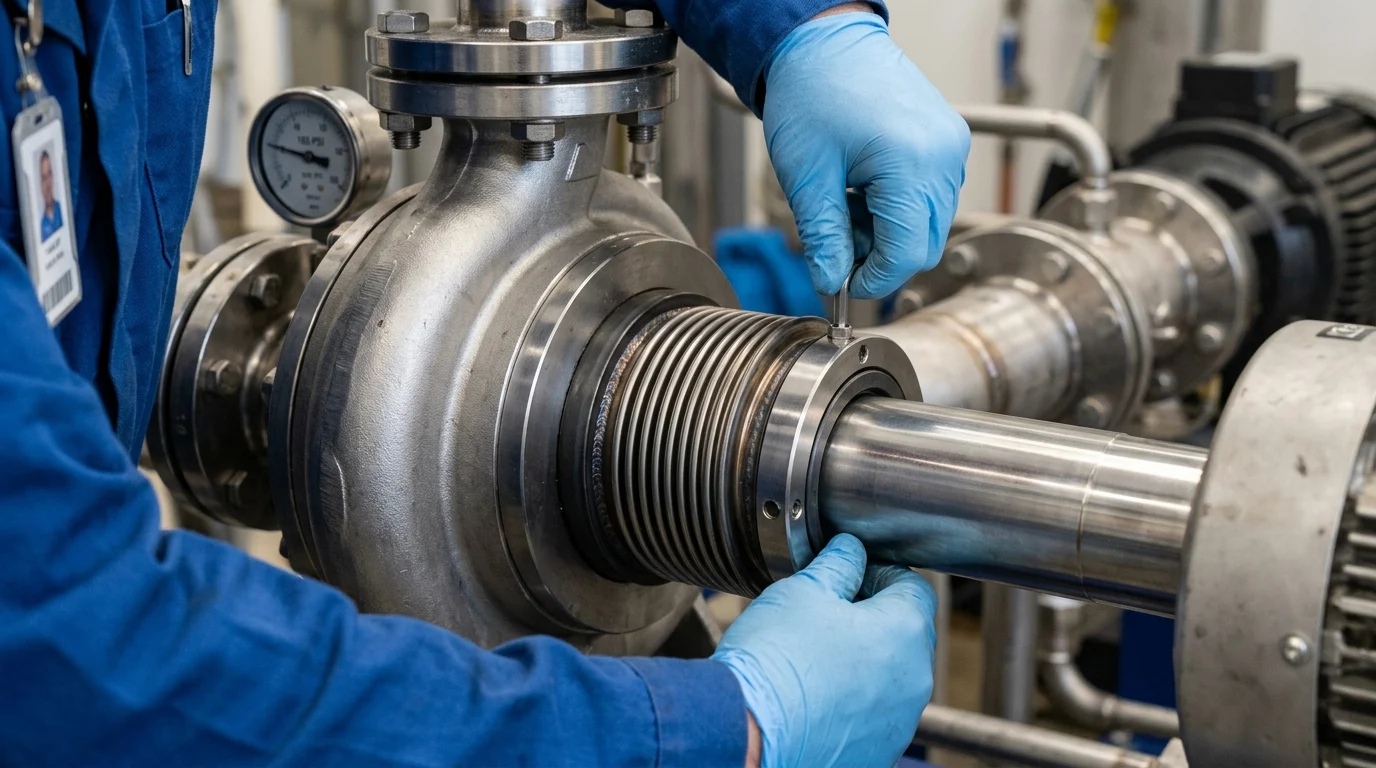
Maintenance teams play the final critical role during implementation. Metal bellows seals are highly sensitive to improper installation lengths. If the seal is over-compressed or under-compressed outside its working height tolerance—typically a narrow window of 3.0 mm to 5.0 mm—the bellows will experience premature fatigue failure. Utilizing pre-assembled cartridge seal designs ensures the factory-set working height is maintained, eliminating installation errors and guaranteeing zero-emissions performance upon startup.
How to Decide When Metal Bellows Seals Are the Right
Upgrading an entire facility’s fluid handling infrastructure to metal bellows seals is a significant undertaking. Decision-makers require a robust framework to identify which assets will yield the highest return on investment in terms of emissions reduction and reliability.
A selection framework for seal choice
A practical selection framework begins with analyzing historical failure data and regulatory exposure. If a specific pump or reactor handles fluids governed by sub-500 ppm VOC limits, it is an immediate candidate for a bellows upgrade. Additionally, maintenance records should be audited; if more than 40% of seal failures on a particular asset are attributed to elastomer degradation, O-ring hang-up, or shaft fretting, pusher seals are fundamentally inadequate for that service.
Temperature and fluid viscosity are the next gating criteria. Any service operating continuously above 200°C (392°F) or handling fluids that solidify at ambient temperatures should be standardized on metal bellows seals to ensure reliable, leak-free operation.
How to balance emissions, reliability, and cost
While the operational advantages are clear, cost remains a factor. The initial capital expenditure (CAPEX) for an edge-welded metal bellows seal is typically 20% to 30% higher than an equivalent conventional pusher seal, primarily due to the complex manufacturing and exotic alloys required.
However, when balancing emissions compliance against cost, the operational expenditure (OPEX) analysis overwhelmingly favors the bellows design. By eliminating sleeve replacements, preventing regulatory fines for fugitive emissions, and extending the MTBF by years, the break-even point for the higher initial CAPEX frequently occurs within 12 to 14 months. For facilities committed to a genuine zero-emissions strategy, metal bellows seals represent not just a compliance tool, but a sound lifecycle investment.
Key Takeaways
- The most important conclusions and rationale for Metal Bellows Seals
- Specs, compliance, and risk checks worth validating before you commit
- Practical next steps and caveats readers can apply immediately
Frequently Asked Questions
Why are metal bellows seals preferred for zero-emission applications?
They remove the dynamic O-ring leak path, reducing fugitive VOC emissions and improving reliability in demanding pump and reactor service.
How do metal bellows seals perform better than pusher seals?
They avoid elastomer hang-up and shaft fretting, while maintaining stable face loading during heat, pressure, and vibration changes.
Where are metal bellows seals commonly used?
They are widely used in API process pumps, chemical reactors, agitators, and hot hydrocarbon or solvent services where leakage control is critical.
When should I choose a metal bellows seal instead of an elastomer bellows seal?
Choose metal bellows for high temperatures, aggressive chemicals, vacuum duty, or VOC service where elastomers may harden, swell, or fail.
Can Victor Seals supply OEM-compatible metal bellows seals for industrial pumps?
Yes. Victor Seals provides metal bellows and OEM-compatible replacement seals for many pump brands used in chemical, oil and gas, marine, and power applications.
Post time: Jun-04-2026