


Introduction
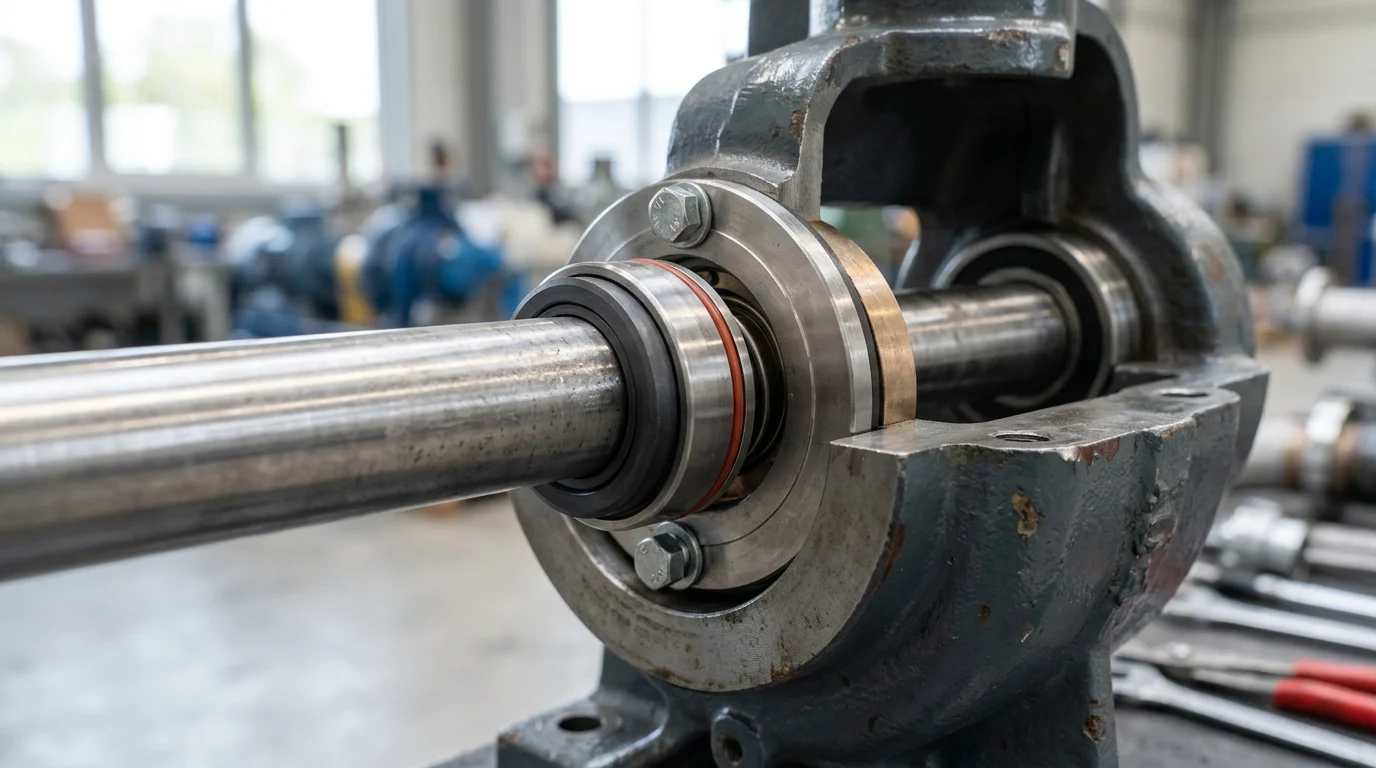
Choosing the best mechanical shaft seal material in 2026 means balancing pressure, temperature, media compatibility, wear resistance, and total lifecycle cost rather than looking for a single universal winner. Material performance now directly affects leakage control, uptime, energy use, and compliance in increasingly demanding rotating equipment. This article explains how common seal face and elastomer options compare under real operating conditions, where each material performs well or fails, and which tradeoffs matter most for pumps, mixers, and other continuous-duty systems. With that context, the material rankings and application guidance in the body will be easier to evaluate and apply.
Why Mechanical Shaft Seal Material Selection Matters
The optimization of rotating equipment relies heavily on the tribological performance of the mechanical shaft seal. As industrial processes push toward higher efficiency and stricter emission controls in 2026, selecting the appropriate seal face and elastomer materials is no longer a peripheral maintenance decision but a core operational strategy. The interface between stationary and rotating seal rings dictates fluid containment, directly influencing overall plant reliability and safety.
Operating pressure, uptime, and lifecycle demands
Modern fluid handling systems frequently operate under extreme parameters, where pressure and velocity exceed legacy equipment thresholds. High-pressure applications, such as boiler feed pumps or pipeline injection systems, regularly subject seals to dynamic pressures exceeding 1,200 PSI (82 bar). Under such forces, inadequate face materials suffer from mechanical deflection, compromising the microscopic fluid film and leading to catastrophic dry running. Plant engineers now target a Mean Time Between Failures (MTBF) of 36 to 48 months for continuous duty cycles, a metric unachievable without specifying materials with a high modulus of elasticity and superior wear resistance.
Failure costs, compliance, and energy impact
The financial implications of premature seal failure extend far beyond the cost of replacement parts. In the petrochemical and refining sectors, unexpected pump downtime can incur production losses exceeding $10,000 per hour, alongside significant maintenance labor costs. Furthermore, regulatory frameworks governing fugitive emissions are increasingly stringent. Compliance with standards such as API 682 4th Edition mandates Volatile Organic Compound (VOC) leakage rates strictly below 500 ppm. Utilizing advanced seal face topographies and optimized material pairings reduces boundary friction, which not only ensures environmental compliance but can also yield a 2% to 5% reduction in the mechanical energy absorbed by the pump system.
Mechanical Shaft Seal Materials by Service Condition

The tribological pairing of a mechanical shaft seal typically involves a harder material rotating against a relatively softer stationary face, though hard-on-hard combinations are prevalent in highly abrasive services. The exact service conditions—encompassing fluid viscosity, particulate concentration, and operating temperature—dictate the optimal material matrix.
Carbon, silicon carbide, tungsten carbide, ceramic, and PTFE
Primary seal face materials fall into several distinct categories, each engineered for specific failure modes. Carbon graphite remains the industry standard for soft faces due to its inherent self-lubricating properties and low coefficient of friction, making it ideal for clean, non-abrasive fluids. Silicon Carbide (SiC) offers extreme hardness and excellent thermal conductivity, capable of withstanding temperatures up to 400°C (750°F) in highly aggressive chemical environments. Tungsten Carbide (TC) provides superior fracture toughness compared to SiC, making it the preferred choice for high-torque applications and fluids with heavy particulate loads. High-purity Alumina Ceramic (typically 99.5% purity) serves as a cost-effective alternative for less demanding aqueous applications, while Polytetrafluoroethylene (PTFE) is utilized primarily for secondary sealing components or specialized bellows due to its near-universal chemical inertness.
Material performance comparison by application
Selecting the optimal face combination requires analyzing the specific operational environment. A carbon versus ceramic pairing is ubiquitous in light-duty domestic water pumps, whereas a SiC versus SiC configuration is mandatory for highly abrasive slurries to prevent rapid grooving of the seal faces.
| Material | Hardness (Knoop) | Max Continuous Temp (°C) | Primary Strength | Typical Application |
|---|---|---|---|---|
| Carbon Graphite | 100 – 150 | 250°C | Self-lubrication, low friction | Clean water, light hydrocarbons |
| Alumina Ceramic | 2,000 | 200°C | Cost-effectiveness | Domestic water, light chemicals |
| Silicon Carbide (SiC) | 2,500 – 2,800 | 400°C | Extreme hardness, thermal shock resistance | Abrasives, strong acids/bases |
| Tungsten Carbide (TC) | 1,500 – 1,800 | 400°C | Fracture toughness, high torque capacity | High-viscosity fluids, heavy slurries |
Seal type fit: single, double, cartridge, and split
The physical properties of the chosen material must align with the mechanical design of the seal. Single seals are typically sufficient for non-hazardous fluids where minor vapor leakage is acceptable and easily managed. However, highly toxic or volatile fluids necessitate double (dual) seals, which utilize a pressurized barrier fluid to guarantee zero process emissions. This barrier fluid must be chemically compatible with both the inner and outer seal materials. Furthermore, the adoption of cartridge seals continues to rise; these pre-assembled units eliminate the need to manually set spring compression on the shaft, thereby mitigating installation errors that historically account for up to 30% of premature seal failures. Split seals, while utilizing similar carbon and SiC faces, offer significant maintenance advantages on large-shaft equipment by allowing installation without dismantling the heavy pump casing.
Technical and Commercial Selection Criteria
Bridging the gap between theoretical material science and practical procurement requires a comprehensive evaluation of both technical specifications and commercial realities. Engineers must balance idealized performance metrics with supply chain constraints to ensure uninterrupted plant operations and budget adherence.
Hardness, thermal conductivity, friction, and chemical resistanc
e
The Pressure-Velocity (PV) limit is a critical technical metric determining a material combination’s ability to withstand the heat generated by friction before the vital fluid film vaporizes. A premium pairing like carbon versus SiC can comfortably operate at PV limits exceeding 500,000 psi-ft/min. Thermal conductivity is equally vital; SiC possesses a thermal conductivity of approximately 120 W/m·K, allowing it to rapidly dissipate frictional heat into the surrounding flush fluid. This drastically reduces the risk of thermal shock compared to Alumina Ceramic, which offers a thermal conductivity of only ~30 W/m·K. Chemical resistance profiles must also be rigorously verified against the process fluid across the entire expected temperature range to prevent leaching, blistering, or structural degradation of the faces.
Cost, lead time, support, and supplier reliability
Commercial viability frequently dictates the final specification, particularly when managing strict maintenance budgets. While a solid silicon carbide face may cost up to three times more than an equivalent carbon face, its implementation in an abrasive application can extend the seal’s operational life by a factor of five, easily justifying the initial capital expenditure. However, specialized materials introduce supply chain complexities. Lead times for custom-machined tungsten carbide components can stretch from 12 to 16 weeks globally. Additionally, high-performance secondary elastomers, such as perfluoroelastomers (FFKM), often carry Minimum Order Quantities (MOQs) of 50 to 100 units, necessitating strategic inventory management to avoid prolonged downtime during unforeseen equipment failures.
Common material selection mistakes
One of the most prevalent engineering errors is over-specifying face materials while neglecting the secondary sealing elements. Utilizing a standard fluoroelastomer (FKM) O-ring in a high-temperature steam application (exceeding 150°C) will result in rapid elastomer hardening and extrusion, causing seal failure regardless of how robust the SiC faces are. Another common mistake is deploying a hard-on-hard face combination in fluids with marginal lubricity, which exponentially increases the risk of heat checking (micro-cracking) and acoustic ringing.
| Elastomer Type | Max Continuous Temp (°C) | Chemical Resistance Profile | Relative Cost Multiplier |
|---|---|---|---|
| Nitrile (NBR) | 100°C | Good for oils, poor for ozone/UV | 1x (Baseline) |
| EPDM | 150°C | Excellent for steam/water, poor for oils | 1.5x |
| Fluoroelastomer (FKM) | 200°C | Broad chemical resistance, poor for steam | 5x |
| Perfluoroelastomer (FFKM) | 320°C | Near-universal chemical resistance | 50x – 100x |
How to Choose the Best Mechanical Shaft Seal Material
Finalizing the specification for a mechanical shaft seal requires a methodical, data-driven approach that synthesizes fluid dynamics, metallurgical properties, and lifecycle economics. Adhering to a structured selection framework ensures that the chosen seal maximizes reliability and minimizes the total cost of ownership over the equipment’s lifespan.
Step-by-step selection process
The specification process begins with a comprehensive fluid characterization, documenting the fluid’s specific gravity, vapor pressure margin, pH level, and the precise size and concentration of entrained solids. The second phase involves mapping the operational envelope, strictly defining the maximum dynamic pressure, shaft rotational speed, and temperature fluctuations. Following this, engineers select the primary face materials based on the required PV limits and lubricity constraints. Finally, secondary elastomers and metallurgical components (such as Hastelloy or 316 stainless steel for springs and bellows) are matched to the chemical composition of the process fluid to prevent galvanic corrosion and direct chemical attack.
Trials, failure analysis, and supplier validation
Theoretical selection must be validated through rigorous empirical testing and historical failure analysis. When upgrading materials on critical assets, implementing a 90-day pilot program allows reliability engineers to monitor vibration signatures and flush fluid temperatures under actual process conditions. Analyzing failed seals provides critical diagnostic data; for instance, blistering on a carbon face indicates fluid vaporization between the faces, suggesting a need for a material with higher thermal conductivity or an upgraded API environmental control plan. Furthermore, supplier validation is crucial. Premium manufacturers must guarantee surface flatness lapped to within 2 to 3 helium light bands (approximately 0.00003 inches or 0.8 microns) to ensure an adequate initial seal upon startup.
Decision framework for final material choice
The ultimate decision framework balances initial Capital Expenditure (CAPEX) against long-term Operational Expenditure (OPEX). Engineers should utilize Total Cost of Ownership (TCO) modeling projected over a standard 5-year equipment lifecycle. This model must account for the initial purchase price, anticipated installation labor, projected energy consumption based on frictional losses, and the statistical probability of downtime events. By quantifying these variables, plant managers can objectively determine whether the premium investment in advanced materials, like sintered silicon carbide and FFKM elastomers, represents a mathematically sound strategy for their specific operational demands.
Key Takeaways
- The most important conclusions and rationale for mechanical shaft seal
- Specs, compliance, and risk checks worth validating before you commit
- Practical next steps and caveats readers can apply immediately
Frequently Asked Questions
Which mechanical shaft seal material is best for abrasive slurry service in 2026?
Silicon carbide vs. silicon carbide is usually the top choice for abrasive slurries because it resists grooving and handles high heat well. For impact-heavy duty, tungsten carbide can be a better fit.
When should I choose carbon graphite seal faces?
Use carbon graphite for clean, non-abrasive fluids where low friction and self-lubrication matter, such as clean water or light hydrocarbons. It is common in standard pump applications and helps reduce dry-running damage.
Is ceramic still a good low-cost option for pump shaft seals?
Yes, alumina ceramic remains a practical budget option for domestic water and light chemical service. It works best in less demanding, cleaner applications, not in heavy slurry or severe thermal shock conditions.
What elastomer or secondary seal material works best with aggressive chemicals?
PTFE is a strong choice for secondary sealing components when broad chemical resistance is needed. It is often selected for aggressive media where standard elastomers may swell, harden, or fail early.
Can Victor Seals supply OEM-compatible mechanical shaft seals for major pump brands?
Yes. Victor Seals provides OEM-compatible and replacement seals for brands like Grundfos, Alfa Laval, IMO, Flygt, Lowara, APV, Fristam, and Allweiler, supporting industrial maintenance and repair needs.
Post time: Jun-21-2026