


Introduction
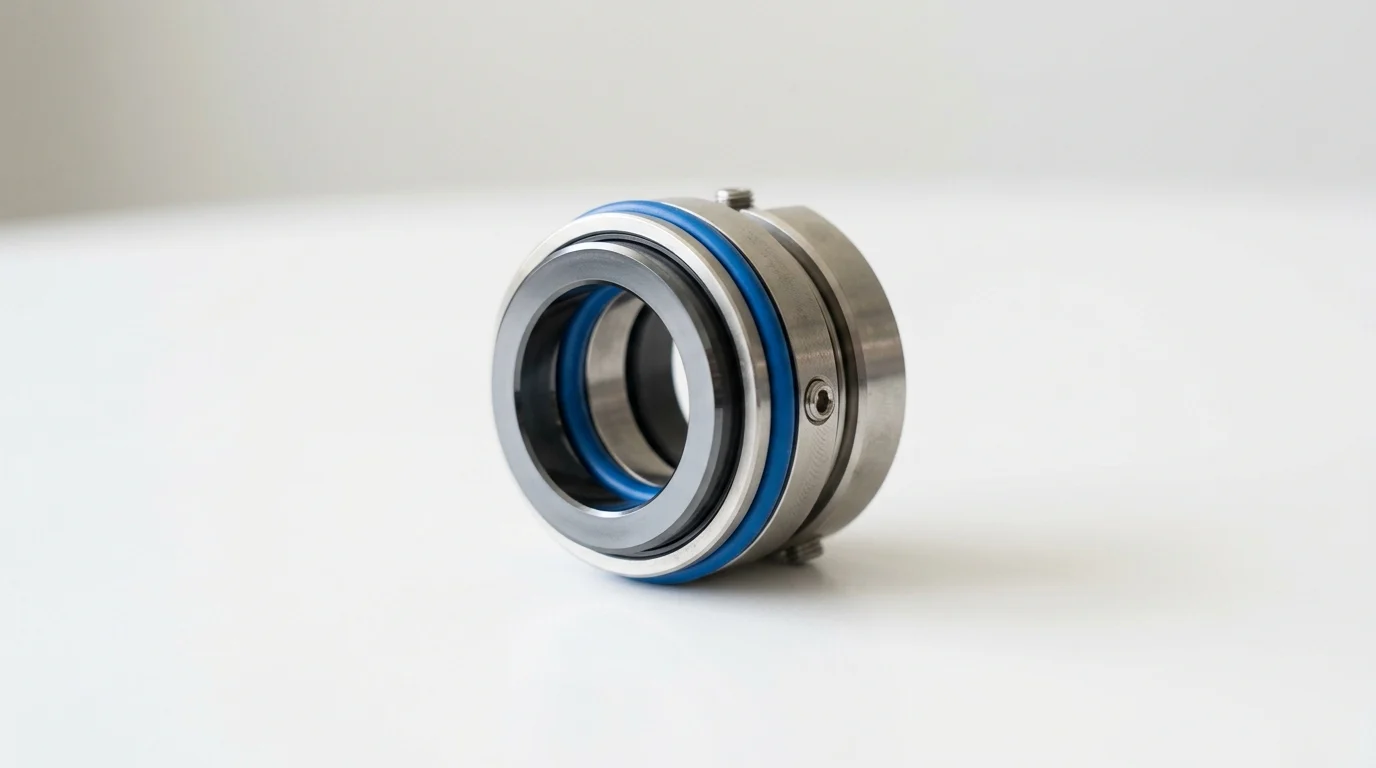
Choosing a seal material for a food-grade pump affects far more than leak prevention. The right elastomer or face material must withstand cleaning chemicals, temperature swings, product chemistry, and sanitary design requirements without shedding particles, swelling, or creating places where bacteria can grow. A poor match can shorten service life, increase downtime, and introduce contamination risks that are costly to detect and correct. This article explains the key material properties to compare, the operating conditions that drive selection, and the trade-offs between common options so you can choose a food grade pump seal that supports both reliable performance and regulatory compliance.
Why Food Grade Pump Seal Material Selection Matters
In sanitary fluid handling systems, the mechanical seals and static gaskets within a pump represent a negligible fraction of the initial capital equipment cost. However, these components are disproportionately responsible for process disruptions, accounting for a vast majority of pump failures and unplanned maintenance downtime. Selecting the correct food grade pump seal material is a critical engineering decision that directly impacts operational efficiency, regulatory compliance, and brand protection.
Unlike industrial applications where seal leakage primarily presents an environmental or mechanical hazard, sanitary applications carry the compounding risk of biological contamination. A compromised seal in a food processing environment does not merely lose product; it creates a microscopic harbor for pathogens, jeopardizing entire production batches and risking catastrophic consumer health incidents.
Contamination and product safety risks
The primary mandate of any food grade pump seal is to maintain a hermetic barrier between the process media and the external environment, while also preventing internal crevices where product can stagnate. Microscopic surface imperfections, elastomer degradation, or chemical incompatibility can lead to material shedding, introducing foreign particulates directly into the food stream.
Furthermore, degraded elastomers can develop micro-fissures that harbor biofilms. For sanitary compliance, wetted surfaces, including seal faces and elastomers, typically require a surface finish roughness not exceeding 0.8 µm Ra (32 µin). When a seal material is improperly specified and degrades, its surface roughness increases drastically, allowing bacteria such as Listeria or Salmonella to colonize areas that standard cleaning protocols cannot reach. The resulting product recalls and regulatory penalties far outweigh the initial cost of specifying a premium seal material.
Operating conditions that cause seal failure
Seal longevity is dictated by the mechanical and thermal stresses of the specific processing environment. Common culprits of premature failure include dry running, cavitation, thermal shock, and abrasive wear. Centrifugal and positive displacement pumps often experience transient dry running conditions during system startup or tank emptying phases.
Dry running a mechanical seal can cause seal face temperatures to spike by over 150°C (300°F) within 60 seconds. This rapid thermal excursion leads to the immediate blistering of standard elastomers and the thermal cracking of hard faces like alumina ceramic or silicon carbide. Additionally, pumping highly viscous media or liquids with high particulate loads (such as fruit slurries or crystalized sugars) introduces severe abrasive wear, requiring hard face materials that can withstand continuous mechanical scouring without losing their precise flatness.
Food Grade Pump Seal Materials and Options
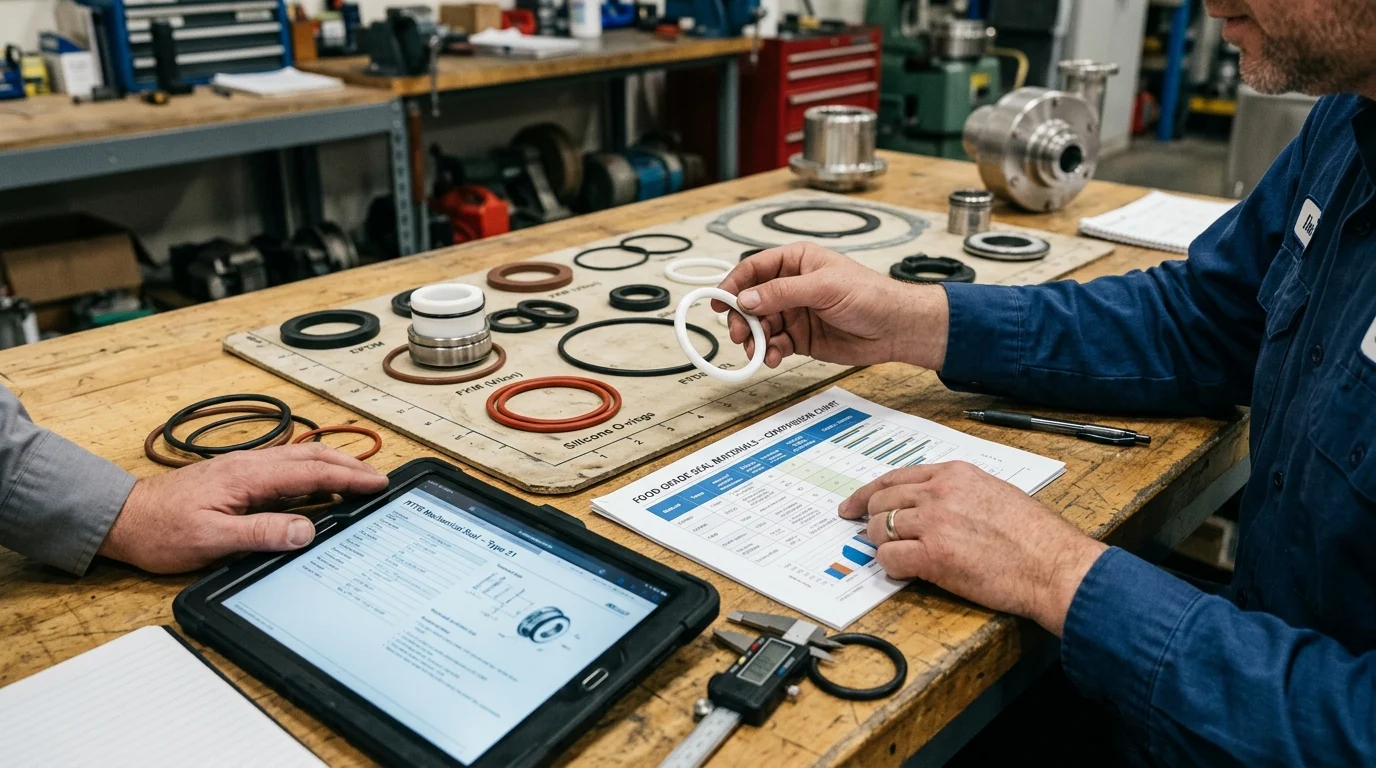
Sanitary pump seals rely on a combination of flexible elastomers for static sealing (such as O-rings, bellows, and gaskets) and rigid materials for dynamic mechanical seal faces. The optimal configuration depends on balancing the mechanical properties, thermal limits, and chemical resistance of these materials against the process demands.
Common elastomers: EPDM, FKM, and NBR
Elastomers provide the necessary flexibility to maintain a seal under varying pressures and temperatures. Ethylene Propylene Diene Monomer (EPDM) is the most widely utilized elastomer in the food and beverage industry due to its exceptional resistance to hot water and steam, routinely handling continuous temperatures up to 150°C (302°F). However, EPDM is highly susceptible to degradation when exposed to animal fats, vegetable oils, and petroleum-based lubricants, making it unsuitable for dairy or edible oil processing.
Fluorocarbon rubber (FKM), commonly known by brand names like Viton, offers superior resistance to fats, oils, and a broad spectrum of chemicals, functioning reliably up to 200°C (392°F). Its primary limitation is a vulnerability to prolonged exposure to hot alkaline cleaning solutions and pure steam. Nitrile Butadiene Rubber (NBR), or Buna-N, serves as a cost-effective alternative for oil and fat applications but is constrained by a lower maximum operating temperature of approximately 100°C (212°F), restricting its use in high-temperature sterilization processes.
Hard materials: PTFE, UHMW-PE, carbon, silicon carbide, and stainless steel
Dynamic mechanical seal faces require materials engineered for extreme flatness, hardness, and minimal friction. Polytetrafluoroethylene (PTFE) and Ultra-High-Molecular-Weight Polyethylene (UHMW-PE) offer excellent chemical inertness and low friction, but they lack the structural rigidity required for high-pressure or highly abrasive rotary applications.
For demanding rotary seals, Carbon Graphite, Silicon Carbide (SiC), and Tungsten Carbide (TC) are the industry standards. Carbon graphite provides excellent self-lubricating properties, making it forgiving during brief dry-run conditions, though it is vulnerable to abrasive media. Silicon Carbide is extremely hard and highly resistant to abrasion and chemical attack, but its brittle nature makes it susceptible to mechanical and thermal shock. Stainless steel (typically 316L) is frequently used for rotary components and housings due to its durability, though it is rarely used as a primary wearing seal face against another metal due to the risk of galling.
| Material | Max Continuous Temp | Primary Advantage | Key Limitation |
|---|---|---|---|
| EPDM | 150°C (302°F) | Excellent steam & water resistance | Rapidly degrades in animal fats and oils |
| FKM | 200°C (392°F) | Superior fat & oil resistance | Vulnerable to prolonged hot alkaline CIP |
| Silicon Carbide (SiC) | 1400°C (2550°F) | Extreme hardness and wear resistance | Brittle under mechanical or thermal shock |
| Carbon Graphite | 260°C (500°F) | Excellent self-lubricating properties | Lower abrasive resistance than SiC |
How to Compare Food Grade Pump Seal Materials
Selecting the correct material requires a comprehensive evaluation of both the physicochemical environment of the pump and the strict regulatory frameworks governing food contact materials. A material that performs flawlessly from a mechanical standpoint may still be disqualified if it lacks the necessary certifications to ensure consumer safety.
Key criteria for material selection
The fundamental criteria for seal material selection revolve around chemical compatibility, thermal stability, and mechanical durability. Engineers must evaluate the entire spectrum of media the seal will encounter, which includes not only the primary food product but also the aggressive chemicals used during sanitation. Seal faces and elastomers must routinely withstand Clean-in-Place (CIP) alkaline solutions with pH levels ranging from 11 to 13, as well as acidic neutralizers, without undergoing chemical degradation or volumetric swelling.
Pressure-Velocity (PV) limits are another crucial mechanical criterion. The PV value represents the relationship between the pressure acting on the seal faces and the rotational speed of the pump shaft. Exceeding the PV limit of a given material combination (e.g., Carbon vs. Stainless Steel) results in excessive frictional heat, leading to premature vaporization of the fluid film between the seal faces and rapid catastrophic failure.
Relevant standards: FDA, EC 1935/2004, USP Class VI, and 3-A
Regulatory compliance is non-negotiable in food and beverage applications. In the United States, the FDA dictates material safety through the Code of Federal Regulations. Specifically, FDA CFR 21.177.2600 mandates that extraction limits for rubber articles intended for repeated use in contact with aqueous foods must not exceed 20 milligrams per square inch during the first 7 hours of extraction. Materials must be formulated using only approved ingredients to prevent toxic leaching.
In Europe, EC 1935/2004 establishes overarching requirements for food contact materials, emphasizing strict traceability throughout the supply chain. For highly sensitive applications, such as biopharmaceuticals or specialized nutraceuticals, USP Class VI certification is often required, involving rigorous in-vivo biological reactivity testing. Additionally, 3-A Sanitary Standards (widely recognized globally) dictate not just the material composition, but the hygienic design of the seal, ensuring it is free of dead legs and can be reliably cleaned in place.
How Process Conditions and Maintenance Affect Material Choice
The operational lifecycle of a food grade pump seal is rarely dictated by the steady-state pumping of the food product itself. Instead, the most severe material stresses occur during the transition phases, specifically during the aggressive cleaning and sterilization protocols mandated by food safety programs.
Matching materials to temperature, media, and cleaning cycles
Clean-in-Place (CIP) and Sterilize-in-Place (SIP) regimens introduce harsh thermal cycling and potent chemical oxidizers into the pump housing. An SIP cycle typically exposes internal seals to saturated steam at 121°C (250°F) for 30 to 45 minutes. This requires elastomers with exceptional thermal stability and a low compression set; otherwise, the O-rings will permanently flatten, losing their radial sealing force once the pump cools down.
Furthermore, the media itself dictates the tribological pairing of the mechanical seal faces. Highly viscous or sticky media, such as heavy syrups or liquid chocolates, can cause seal faces to adhere to one another when the pump is idle. Upon startup, the breakaway torque can shatter brittle carbon faces. In these scenarios, a hard-on-hard face combination, such as Silicon Carbide versus Silicon Carbide (SiC/SiC), is often specified to withstand the high torque and abrasive nature of the media.
Balancing seal life, cleanability, and cost
Facility managers must balance the upfront procurement cost of premium seal materials against the total cost of ownership, which includes maintenance labor, replacement parts, and lost production time. While standard materials may suffice for low-intensity applications, continuous processing environments demand robust solutions to extend Mean Time Between Failures (MTBF).
| Process Condition | Recommended Elastomer | Recommended Seal Faces | Average Maintenance Interval |
|---|---|---|---|
| Dairy (High Fat, Hot CIP) | FKM or FFKM | SiC vs. Carbon | 12 – 18 months |
| Brewing (Abrasive Mash, CIP) | EPDM | SiC vs. SiC | 9 – 12 months |
| Syrups (High Viscosity, Sugar) | EPDM | SiC vs. SiC | 6 – 12 months |
| Edible Oils (High Temp, Fat) | FKM | Tungsten Carbide vs. SiC | 18 – 24 months |
By strategically matching the material to both the product and the cleaning cycle, plants can optimize cleanability without sacrificing seal life. Upgrading to a harder face material or a more chemically inert elastomer often yields a rapid return on investment by eliminating just one unplanned maintenance intervention per year.
How to Choose and Validate the Right Seal Material
Finalizing the seal material specification is only part of the engineering challenge. Procuring authentic, compliant materials and validating their installation are equally critical steps to ensure process integrity and audit readiness.
When premium materials are justified
While EPDM and standard FKM cover the majority of food processing needs, certain extreme applications justify the investment in premium materials like Perfluoroelastomers (FFKM). FFKM O-rings can cost 10 to 20 times more than their standard EPDM equivalents, representing a significant upfront expense. However, they are engineered to withstand temperatures up to 327°C (620°F) and offer nearly universal chemical compatibility.
In continuous processing lines where unplanned downtime can cost upwards of $10,000 per hour in lost yield and wasted product, the high initial cost of FFKM or specialized diamond-coated Silicon Carbide faces is easily justified. These premium materials are typically deployed in high-temperature rendering, aggressive aseptic packaging lines, or processes utilizing highly concentrated peracetic acid sanitizers that rapidly degrade lesser elastomers.
Purchasing and validation checks before installation
The supply chain for sanitary components is susceptible to material substitution and counterfeit parts. Before installation, maintenance and quality assurance teams must execute rigorous validation checks. This begins with demanding Certificates of Compliance (CoC) and material test reports from the supplier, confirming that the specific batch of elastomers or seal faces meets FDA, 3-A, or EC 1935/2004 standards.
Validation protocols require facilities to retain these batch certificates for a minimum of 3 to 5 years, depending on regional food safety mandates, to ensure full traceability in the event of an audit or product recall. Additionally, physical verification upon receipt—such as durometer (hardness) testing of elastomers and visual inspection of seal face flatness under monochromatic light—ensures that the components have not been compromised during manufacturing or transit. Proper validation guarantees that the engineered safety margins of the food grade pump seal are fully realized in the production environment.
Key Takeaways
- The most important conclusions and rationale for food grade pump seal
- Specs, compliance, and risk checks worth validating before you commit
- Practical next steps and caveats readers can apply immediately
Frequently Asked Questions
Which elastomer is best for hot water and steam in food pumps?
EPDM is usually the best choice for hot water, steam, and CIP up to about 150°C. Avoid it in edible oil or high-fat service, where it can degrade faster.
Should I choose FKM for dairy or edible oil applications?
FKM is often better than EPDM for fats, oils, and many chemicals. However, check exposure to hot alkaline cleaners and pure steam, which can shorten FKM life.
What seal face material works best for abrasive food products?
Silicon carbide is a strong option for abrasive media like fruit slurries or crystallized sugar. It offers high hardness, wear resistance, and stable performance in demanding sanitary pumps.
How do I know if a food grade pump seal is sanitary compliant?
Confirm the wetted materials meet your required food-contact standards and that surface finish is suitable for hygiene, typically around 0.8 µm Ra or better. Also verify compatibility with your cleaning cycle.
Can Victor Seals supply OEM-compatible food pump seals?
Yes. Victor Seals provides OEM-compatible and replacement mechanical seals for many pump brands, helping maintenance teams match seal materials to food process conditions and service requirements.

Post time: Jun-24-2026