


Introduction
Choosing a material for a corrosion resistant mechanical seal is not about finding one universally “best” option, but about matching seal faces, elastomers, and metal parts to the fluid, temperature, pressure, and operating conditions. The wrong combination can accelerate wear, trigger chemical attack, and shorten seal life, leading to leakage, downtime, and safety risks. This article explains how common material choices such as silicon carbide, tungsten carbide, Hastelloy, PTFE, and specialty elastomers perform in corrosive service, and how to evaluate them based on process chemistry so you can identify the most suitable seal construction for your application.
Why Material Choice Matters for Corrosion Resistant Mechanical Seals
Specifying a corrosion-resistant mechanical seal is one of the most critical engineering decisions in fluid handling systems. Mechanical seals serve as the primary barrier between aggressive process fluids and the external environment, preventing hazardous emissions and protecting internal pump components. When processing highly corrosive media—such as strong acids, caustic alkalis, or aggressive solvents—the margin for error is virtually nonexistent. Material degradation can occur rapidly, leading to loss of containment, environmental hazards, and severe equipment damage.
The selection process requires a comprehensive understanding of metallurgy, tribology, and elastomer chemistry. A mechanical seal is not a monolithic component; it is an assembly of rotating and stationary faces, secondary sealing elements, and metallic hardware. Each of these components must independently withstand the chemical environment while maintaining precise mechanical tolerances under varying pressures and temperatures. Failing to match the correct materials to the specific fluid chemistry drastically reduces the Mean Time Between Failures (MTBF) and escalates operational risks.
Process chemistry, leakage risk, and downtime impact
Process chemistry dictates the rate and mechanism of material degradation. Industrial fluids can exhibit extreme pH levels, ranging from highly acidic (pH < 1) to highly alkaline (pH > 13), each attacking materials differently. For example, oxidizing acids like nitric acid can passivate certain stainless steels but rapidly destroy standard carbon seal faces. Furthermore, trace contaminants, which are often overlooked in bulk fluid specifications, can act as catalysts for localized corrosion mechanisms such as pitting or crevice corrosion.
The leakage risk associated with incorrect material selection extends beyond a simple mechanical failure. In chemical processing and petrochemical refining, volatile organic compounds (VOCs) and hazardous air pollutants must be strictly contained. Environmental Protection Agency (EPA) regulations frequently mandate that pump seal emissions remain below a 500 parts per million (ppm) threshold. A corrosion-induced breach in the seal face or elastomer degradation can cause immediate regulatory violations, necessitating emergency shutdowns and triggering mandatory environmental reporting.
Failure costs linked to poor material compatibility
The financial consequences of poor material compatibility far exceed the initial procurement cost of the mechanical seal itself. When a seal fails prematurely due to chemical attack, the direct replacement costs are compounded by the labor required for pump extraction, decontamination, and reinstallation. More significantly, the indirect costs associated with unplanned downtime can be staggering. In high-throughput continuous processing facilities, an unexpected pump failure can halt a production line, incurring downtime costs ranging from $10,000 to over $50,000 per hour depending on the industry and product value.
Additionally, corrosive leakage can cause collateral damage to surrounding equipment. A compromised seal allows aggressive chemicals to attack the pump shaft, bearings, and motor housings. What initially begins as a localized seal failure can quickly escalate into a catastrophic pump failure requiring a complete bearing frame rebuild or shaft replacement. Investing in appropriate corrosion-resistant materials upfront—even if it increases the initial component cost by 200% to 300%—yields a significantly higher Return on Investment (ROI) by extending the MTBF from a few months to several years.
Material Options for Corrosion Resistant Mechanical Seals
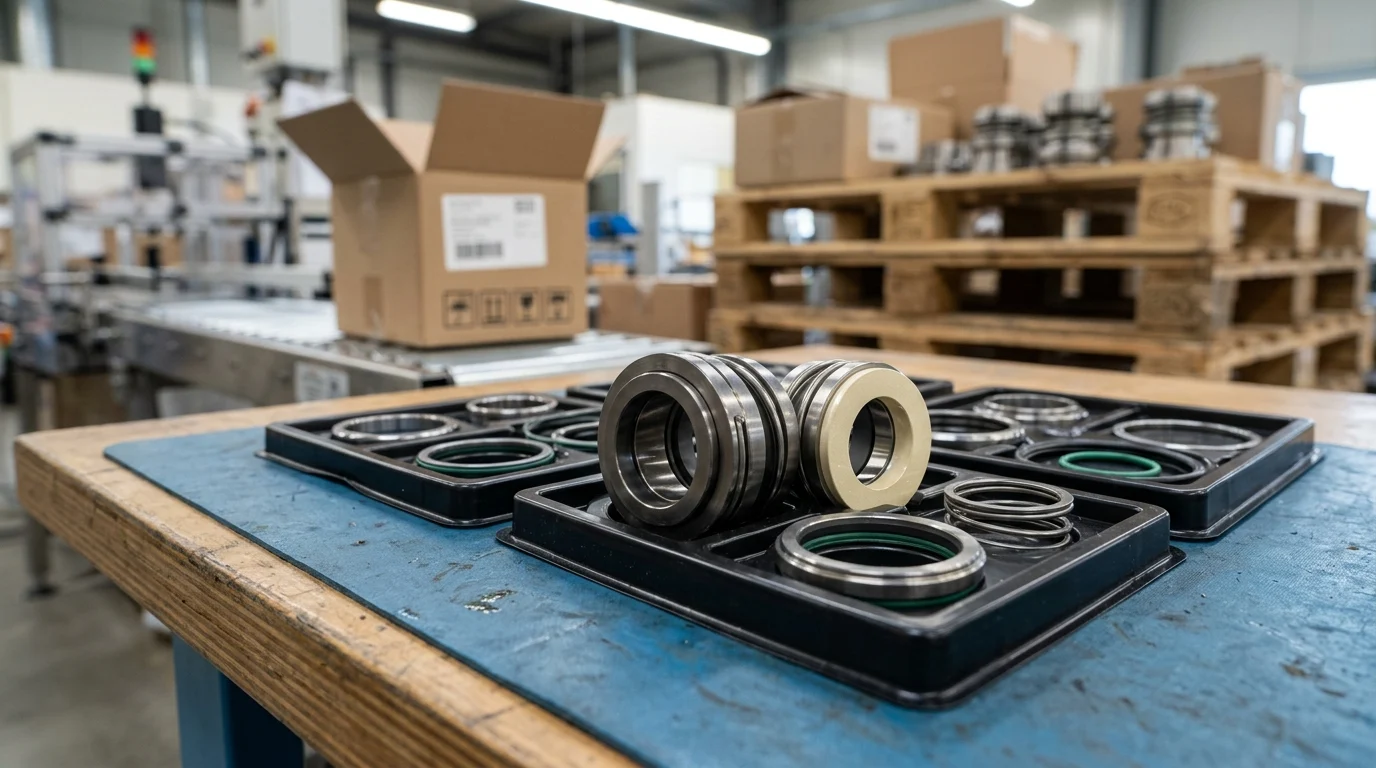
Constructing a corrosion-resistant mechanical seal requires selecting specialized materials for three distinct zones: the primary seal faces, the metallic hardware (springs, drive pins, and glands), and the secondary sealing elements (O-rings and gaskets). Each zone faces unique operational stresses, meaning a material that performs exceptionally well as a static O-ring may be entirely unsuitable for a dynamic, heat-generating seal face.
Seal face materials such as silicon carbide
The primary seal faces are the most critical components, as they maintain a microscopic fluid film while rotating against each other. Silicon carbide (SiC) is widely regarded as the premier seal face material for severe chemical service. Specifically, direct-sintered (alpha) silicon carbide offers near-universal chemical resistance across a pH range of 0 to 14 and can withstand operating temperatures up to 300°C (572°F). Unlike reaction-bonded silicon carbide, which contains free silicon that can be leached out by strong caustics or hydrofluoric acid, alpha-sintered SiC remains structurally stable in almost all aggressive media.
Other face material options include tungsten carbide (WC) and various grades of carbon. Tungsten carbide is highly durable and impact-resistant, making it suitable for abrasive slurries, but its chemical resistance is heavily dependent on its binder. Nickel-bound tungsten carbide is generally preferred over cobalt-bound variants in corrosive environments, though it still falls short of SiC in strong acids. Antimony-impregnated or resin-impregnated carbon faces are frequently used as the mating ring against SiC due to their excellent self-lubricating properties, provided the process fluid does not contain strong oxidizing agents that attack the carbon structure.
Corrosion resistant metals and alloys
The metallic components of the seal, including the gland plate, sleeve, and springs, must resist both uniform corrosion and localized attacks such as pitting and stress corrosion cracking (SCC). While 316 stainless steel is the industry standard for general service, it is highly susceptible to chloride-induced pitting. For aggressive environments, engineers must specify higher-grade alloys based on their Pitting Resistance Equivalent Number (PREN). A PREN above 40 is typically required for severe chloride or acidic service.
Hastelloy C-276 (PREN > 45) is one of the most versatile nickel-molybdenum-chromium alloys, offering exceptional resistance to wet chlorine gas, hypochlorites, and a wide range of organic and inorganic acids. Titanium Grade 2 is frequently selected for oxidizing media and seawater applications due to its stable, protective oxide film, though it is vulnerable to dry chlorine. Alloy 20 is another common choice, engineered specifically to resist sulfuric acid attack at elevated temperatures and concentrations.
Elastomers and secondary sealing elements
Secondary sealing elements, typically O-rings, provide the static seal between the mechanical seal assembly and the pump casing. Elastomer selection is often the limiting factor in a seal’s chemical and thermal performance. Fluoroelastomers (FKM), commonly known by the brand name Viton, are standard for many mild acids and petroleum-based fluids but degrade rapidly in ketones, amines, and strong alkalis.
For extreme corrosion resistance, perfluoroelastomers (FFKM), such as Kalrez or Chemraz, are required. FFKM compounds offer chemical resistance nearly identical to PTFE but maintain the elastic memory necessary for dynamic sealing. They can withstand aggressive solvents, strong acids, and bases at continuous operating temperatures up to 327°C (620°F). When budget constraints prevent the use of full FFKM, PTFE-encapsulated FKM or silicone O-rings provide a cost-effective alternative, offering the chemical inertness of a PTFE jacket with the mechanical resilience of an elastomer core.
| Elastomer Type | Max Continuous Temp | Chemical Resistance Profile | Relative Cost Multiplier |
|---|---|---|---|
| FKM (Fluoroelastomer) | 204°C (400°F) | Good for oils, mild acids; Poor for ketones | 1x (Baseline) |
| EPDM | 150°C (300°F) | Good for caustics, hot water; Poor for oils | 0.8x |
| PTFE-Encapsulated | 204°C (400°F) | Excellent universal resistance; Prone to cold flow | 3x to 5x |
| FFKM (Perfluoroelastomer) | 327°C (620°F) | Near-universal resistance; Highest purity | 15x to 30x |
How to Evaluate Seal Materials for Service Conditions
Evaluating seal materials requires moving beyond basic chemical compatibility charts and analyzing the dynamic conditions of the operating environment. A material that is chemically inert at room temperature may suffer rapid degradation when subjected to the frictional heat generated at the seal faces or when fluid concentrations fluctuate during process upsets. Engineers must evaluate the entire thermodynamic and chemical envelope of the application.
Operating variables such as concentration, chlorides, and temperature
Temperature, concentration, and the presence of specific ions drastically alter corrosion rates. For example, 316 stainless steel is perfectly acceptable for ambient temperature water, but if chloride concentrations exceed 1000 ppm and temperatures rise above 60°C (140°F), the material becomes highly susceptible to stress corrosion cracking (SCC) and rapid pitting. Consequently, applications involving hot brine or seawater frequently demand super duplex stainless steels or titanium.
Acid concentration is equally critical. Sulfuric acid exhibits a non-linear corrosion profile: dilute sulfuric acid is highly corrosive to many metals, requiring Hastelloy or Alloy 20, whereas concentrated sulfuric acid (>90%) can sometimes be handled by standard carbon steels at ambient temperatures due to the formation of a passivating sulfate film. However, if the concentrated acid absorbs moisture from the air, the localized dilution will immediately initiate severe corrosive attack on the seal hardware.
Material trade offs and comparison factors
Selecting the ideal material often involves balancing competing mechanical and chemical properties. While alpha-sintered silicon carbide provides unparalleled corrosion resistance, it is extremely brittle. If the pump experiences severe cavitation or shaft deflection, SiC faces can fracture catastrophically. In applications where mechanical shock is a primary concern alongside corrosion, engineers may compromise by using a more resilient, though slightly less chemically inert, tungsten carbide face.
Thermal conductivity is another vital comparison factor. Seal faces generate significant frictional heat, which must be dissipated into the process fluid to prevent the fluid from flashing to vapor. SiC has excellent thermal conductivity, drawing heat away from the seal interface much faster than alumina ceramic or carbon. This capability reduces the risk of thermal shock and extends the life of the secondary elastomers.
| Face Material | Vickers Hardness (kg/mm²) | Thermal Conductivity (W/m·K) | Corrosion Resistance | Brittleness / Fracture Risk |
|---|---|---|---|---|
| Carbon Graphite | 150 – 250 | 10 – 15 | Moderate to Good | Low |
| Tungsten Carbide (Ni binder) | 1400 – 1600 | 80 – 90 | Good | Moderate |
| Alpha-Sintered SiC | 2500 – 2800 | 120 – 130 | Excellent (Universal) | High |
| Alumina Ceramic (99.5%) | 1800 – 2000 | 25 – 35 | Very Good | Very High |
When a single material upgrade is not enough
In certain extreme applications, upgrading the metallurgy and face materials of a single mechanical seal is insufficient to guarantee reliability. When a fluid is exceptionally hazardous, toxic, or prone to polymerizing upon contact with atmospheric oxygen, the application requires a dual mechanical seal arrangement. Dual seals utilize two sets of seal faces and introduce a barrier or buffer fluid between them.
Under the American Petroleum Institute (API) standard piping plans, such as API Plan 53A or 54, a pressurized barrier fluid is circulated between the inboard and outboard seals. This fluid is maintained at a pressure roughly 10% to 15% (typically 1.5 to 2.0 bar) higher than the pump stuffing box pressure. Because the barrier fluid is at a higher pressure, any leakage across the inboard seal faces flows into the process, ensuring that the corrosive process fluid never contacts the outboard seal components or escapes into the atmosphere. This strategy allows the outboard seal hardware to be constructed from standard, less expensive materials.
Procurement and Compliance Factors in Material Selection
Procuring corrosion-resistant mechanical seals involves navigating complex supply chains, managing extended lead times for exotic materials, and ensuring strict adherence to industry compliance standards. The failure to properly document and verify material compositions can lead to catastrophic failures and severe legal liabilities, particularly in heavily regulated sectors such as oil and gas, pharmaceuticals, and chemical processing.
Standards, documentation, and traceability
High-risk applications require stringent documentation to verify that the specified materials were actually used in the seal’s construction. In the petrochemical industry, mechanical seals must frequently comply with API 682 4th Edition standards, which dictate specific material categories for different service conditions. For applications involving hydrogen sulfide (H2S), metallic components must comply with NACE MR0175 / ISO 15156 to prevent sulfide stress cracking.
To guarantee traceability, procurement engineers often require Material Test Reports (MTRs) for all wetted metallic parts. Furthermore, facilities may perform Positive Material Identification (PMI) testing upon receipt of the seal. PMI utilizes X-ray fluorescence (XRF) analyzers to non-destructively confirm the elemental composition of the alloys, ensuring that a supplier did not inadvertently substitute 304 stainless steel for the requested Hastelloy C-276.
Supplier capability and sourcing risks
The sourcing of exotic alloys and high-performance elastomers carries inherent risks.
How to Choose the Best Material Combination
Key Takeaways
- The most important conclusions and rationale for corrosion resistant mechanical seal
- Specs, compliance, and risk checks worth validating before you commit
- Practical next steps and caveats readers can apply immediately
Frequently Asked Questions
What seal face material is usually best for a corrosion resistant mechanical seal?
Alpha-sintered silicon carbide is often the best all-around choice because it handles many acids, alkalis, and high temperatures better than standard carbon faces.
When should tungsten carbide or carbon faces be avoided?
Avoid standard carbon in strong oxidizing or highly corrosive fluids. Use caution with tungsten carbide where chemical attack is possible; verify fluid compatibility before selection.
Are all silicon carbide seal faces equally corrosion resistant?
No. Alpha-sintered SiC generally offers better chemical resistance than reaction-bonded SiC, especially in strong caustics and some aggressive chemical services.
What other seal parts must resist corrosion besides the faces?
Check metal parts and elastomers too. Springs, glands, and O-rings must match the process fluid, temperature, and pressure or the seal can fail even with premium faces.
Can Victor Seals help match corrosion resistant seals to OEM pump models?
Yes. Victor Seals supplies OEM-compatible and replacement mechanical seals for many industrial pump brands, helping maintenance teams choose suitable materials for corrosive duties.
Post time: Jun-13-2026