


Introduction
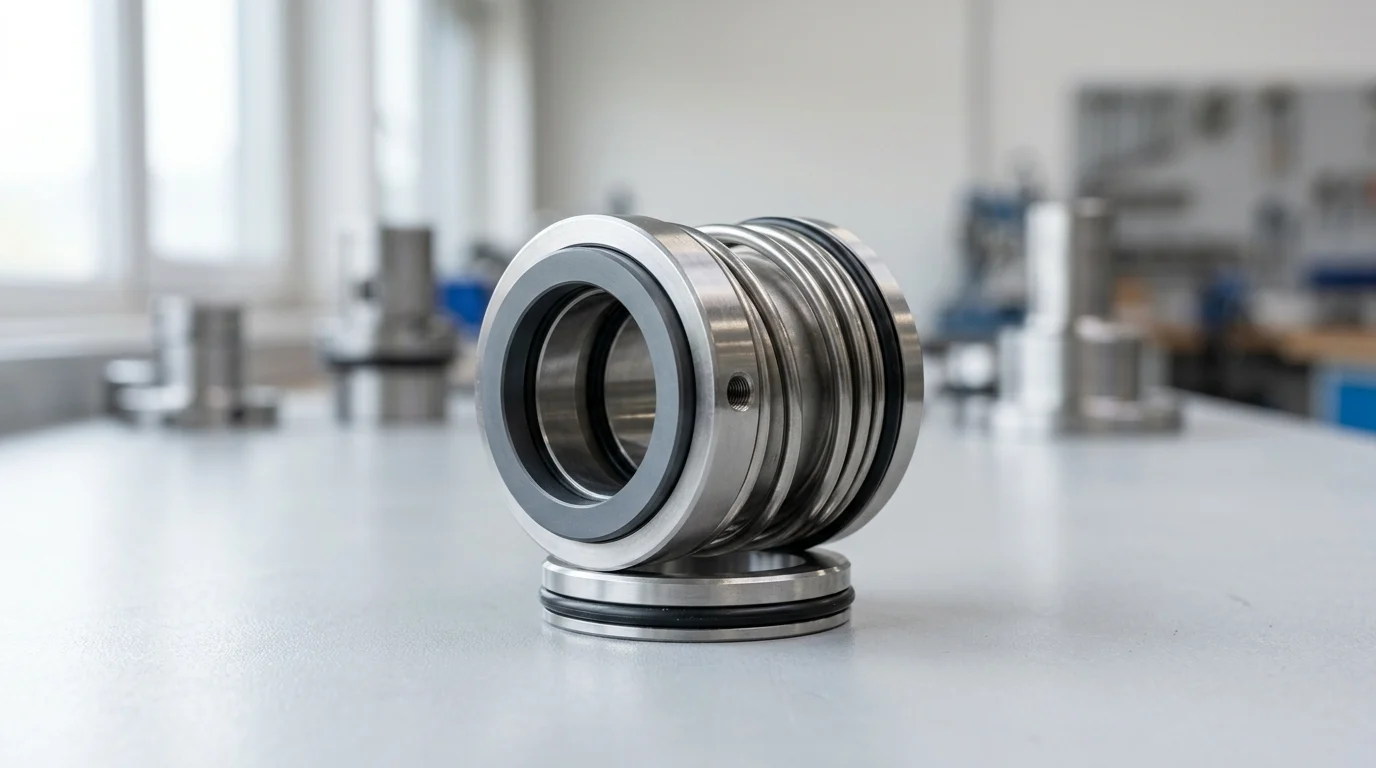
DIN 24960 is a long-standing dimensional standard for mechanical seals used in centrifugal pumps, created to make seal and pump interfaces predictable across manufacturers. Understanding it helps explain why certain seals are interchangeable, what installation dimensions matter, and how pump stuffing box geometry is standardized in practice. This article outlines what DIN 24960 covers, including its dimensional envelope, typical seal configurations, and operating context, then clarifies how it relates to modern European standards and why the designation still appears frequently in engineering specifications, catalogs, and replacement decisions.
What Is DIN 24960 and What Does It Cover
The DIN 24960 standard represents a foundational engineering framework in fluid handling. It historically served as the primary German specification for the installation dimensions and operating envelopes of mechanical seals in centrifugal pumps. Developed by the Deutsches Institut für Normung (DIN), this standard was created to harmonize the geometries of pump stuffing boxes and the mechanical seals that fit within them, enabling predictable integration between rotating equipment and sealing components.
Although formally superseded by broader European standards, DIN 24960 remains deeply embedded in industrial engineering nomenclature. It dictates the spatial boundaries a seal must occupy, ensuring that mechanical seals from different manufacturers can be interchanged without requiring machining or modification to the pump housing.
Scope, seal types, and dimensional envelopes
The core scope of DIN 24960 is defining the dimensional envelopes for single-acting, unbalanced, and balanced mechanical seals. It establishes standard cavity dimensions within the pump’s seal chamber, directly dictating the maximum outer diameter of the seal, the required bore of the stuffing box, and the axial space needed for proper spring compression. The standard categorizes seal lengths into specific designations, most notably L1K (short working length) and L1N (normal working length). By adhering to these strict volumetric boundaries, equipment manufacturers ensure that standard component seals fit precisely within the designated housing.
Shaft sizes and installation dimensions
A critical feature of DIN 24960 is its systematic progression of shaft sizes, which typically range from 10 mm to 100 mm in standardized increments. For each shaft diameter (d1), the standard specifies the corresponding stuffing box bore (d3), the seat outer diameter (d7), and the precise axial lengths (L1K and L1N) required for installation. This creates a predictable matrix for engineers when designing pump shafts and seal chambers.
| Shaft Size (d1, mm) | Seat Outer Dia (d7, mm) | Working Length L1K (mm) | Working Length L1N (mm) |
|---|---|---|---|
| 20 | 35 | 37.5 | 42.5 |
| 30 | 45 | 42.5 | 47.5 |
| 40 | 58 | 45.0 | 55.0 |
| 50 | 70 | 47.5 | 60.0 |
These dimensional constraints ensure that the rotating seal head and the stationary seat maintain the correct compression ratio when the pump is fully assembled. This prevents both excessive face wear from over-compression and leakage from inadequate spring force.
What DIN 24960 does not define
While DIN 24960 is highly specific regarding spatial dimensions, it is equally important to understand what falls outside its scope. The standard does not dictate the materials of construction for the seal faces, elastomers, or metallurgy. It also omits specific performance limitations, such as maximum pressure, temperature thresholds, or shaft speed limits, although it is historically aligned with PN16 (16 bar) pump designs. Furthermore, DIN 24960 does not define internal seal geometries. Manufacturers are free to utilize single springs, multiple springs, or wave springs, provided the complete assembly fits within the standard L1K or L1N envelope.
Why DIN 24960 Still Matters
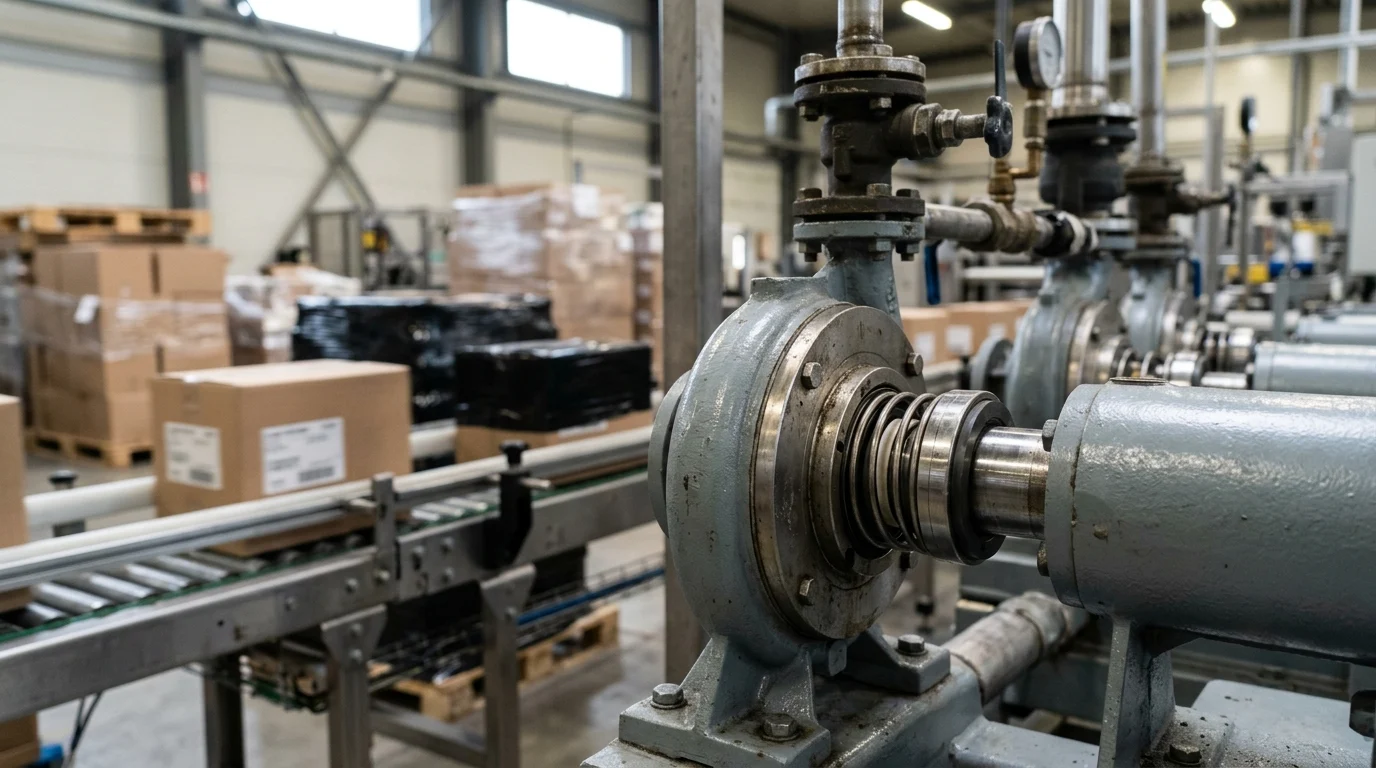
Despite being officially replaced by European norms, the DIN 24960 designation remains heavily utilized in procurement, maintenance, and facility engineering. Its enduring relevance is tied to the massive installed base of legacy equipment and the global supply chain’s reliance on established, universally understood dimensional shorthand.
How it improves interchangeability
The primary value of DIN 24960 lies in its ability to facilitate seamless component interchangeability. In industrial plants utilizing hundreds of centrifugal pumps, standardizing on DIN 24960-compliant seals allows maintenance departments to source replacement components from multiple vendors without fear of dimensional mismatch. This interchangeability effectively commoditizes standard component seals, fostering competitive pricing and reducing supply chain bottlenecks. Facilities transitioning to standardized DIN dimensions frequently report a reduction in mechanical seal inventory SKUs by 30% to 40%, as a single seal design can service numerous pump models across the plant.
Where the standard is still referenced
DIN 24960 is still widely referenced in conjunction with standard chemical pumps, particularly those built to ISO 2858 and DIN 24256 specifications. These pumps, designed for a nominal pressure of 16 bar, feature seal chambers engineered specifically to accept DIN 24960 seals. Beyond Europe, manufacturers in Asia and the Americas frequently use “DIN standard” as a marketing and engineering descriptor to assure buyers of compatibility with metric-designed rotating equipment. Consequently, engineering drawings, pump datasheets, and OEM manuals worldwide continue to specify DIN 24960 to guarantee structural compatibility.
How DIN 24960 Compares with EN 12756
In the late 1990s, the European Committee for Standardization (CEN) introduced EN 12756 to unify mechanical seal standards across European member states. This standard effectively absorbed DIN 24960, meaning the two are fundamentally intertwined, though nuanced differences exist in their application and nomenclature.
Key differences and similarities
EN 12756 is essentially the modern, pan-European iteration of DIN 24960. The physical dimensions—including the critical L1K and L1N working lengths, the d1 shaft increments, and the d7 seat diameters—remain identical between the two standards. A seal manufactured to DIN 24960 will physically fit into a cavity designed for EN 12756, and vice versa.
| Standard Feature | DIN 24960 | EN 12756 | Impact on Interchangeability |
|---|---|---|---|
| Dimensional Envelopes | Defined L1K, L1N | Identical to DIN | 100% physically interchangeable |
| Designation Codes | Legacy material codes | Updated alphanumeric nomenclature | Requires cross-referencing in ERP systems |
| Geographic Scope | Originally German national | Pan-European / Global adoption | Broader vendor compliance under EN |
Why dimensional compliance is not full compatibility
While DIN 24960 and EN 12756 guarantee that a seal will physically fit into a designated space, dimensional compliance does not equate to operational compatibility. Two standard-compliant seals from different manufacturers may have vastly different spring rates, elastomer compression sets, or Pressure-Velocity (PV) limits. For instance, one DIN-compliant seal might utilize a material combination with a PV limit of 20 MPa·m/s, while another reaches 50 MPa·m/s. If a procurement team swaps these seals based solely on dimensional fit, the lower-rated seal may suffer rapid thermal degradation and premature failure when subjected to high-viscosity fluids or elevated shaft speeds.
When to choose standardized seals
Standardized seals compliant with DIN 24960 or EN 12756 are the optimal choice for roughly 80% of general utility applications, including water treatment, mild chemical transfer, and low-pressure hydrocarbon processing. Engineers should specify these standardized components when the operating conditions fall within moderate parameters (typically under 16 bar and below 150°C) and where minimizing the total cost of ownership through inventory consolidation is a primary objective. Conversely, for highly toxic, abrasive, or extreme-temperature fluids, custom-engineered cartridge seals often supersede standard component seals.
How to Apply DIN 24960 in Purchasing and Maintenance
Procuring and maintaining mechanical seals under the DIN 24960 standard requires stringent quality control and precise verification protocols. Because the standard only dictates dimensions, the burden falls on procurement and maintenance engineering to validate material quality and exact manufacturing tolerances.
How to verify compliance
Verifying compliance with DIN 24960 involves rigorous dimensional inspection upon receipt of the components. Maintenance technicians must utilize calibrated micrometers and calipers to measure the critical dimensions: the inner diameter of the rotating assembly, the outer diameter of the stationary seat (d7), and the uncompressed axial length. These measurements must be cross-referenced against the standard’s allowable tolerances. Additionally, verifying the correct installation length (L1K or L1N) during assembly is critical. Technicians typically scribe the shaft to ensure the seal is compressed to the exact millimeter specified by the standard, preventing catastrophic face-loading errors.
Common sourcing and quality risks
The most common sourcing risk associated with DIN 24960 seals is the influx of low-cost, non-compliant aftermarket clones. While these seals may nominally match the standard’s macro-dimensions, they frequently suffer from poor micro-tolerances. Substandard face flatness is a primary cause of leakage; high-quality seal faces must be lapped to a flatness of 2 to 3 helium light bands (approximately 0.6 to 0.9 µm). Furthermore, counterfeit or low-grade elastomers may exhibit incorrect Shore hardness, leading to extrusion under pressure or failure to provide adequate secondary sealing. Procurement must audit suppliers to ensure metallurgy and elastomers match the chemical compatibility requirements of the specific pumped fluid.
Required documentation and tolerances
To mitigate operational risks, purchase orders for DIN 24960 seals should mandate specific documentation, including EN 10204 3.1 material test certificates for metallic components and batch traceability for elastomers. The standard relies on strict machining tolerances within the pump housing itself. The stuffing box bore typically requires an H8 tolerance, while the pump shaft should be machined to an h6 or h8 tolerance. Furthermore, the surface finish of the shaft where the dynamic O-ring rests must be maintained at a maximum roughness of Ra 1.6 µm to prevent abrasive wear on the elastomer during microscopic axial movements.
How to Decide When to Use DIN 24960
Determining whether to specify a DIN 24960 component seal or opt for an engineered cartridge seal is a critical decision that impacts a facility’s reliability metrics and maintenance budget. This decision must balance upfront costs, installation complexity, and long-term operational stability.
Decision criteria for engineering and procurement
Engineering and procurement teams must evaluate the specific hydraulic and environmental conditions of the pump. DIN 24960 unbalanced seals are generally limited to pressures below 16 bar, while balanced versions conforming to the same dimensional envelopes can operate up to 25 bar. Temperature limits are largely dictated by the chosen elastomers, typically ranging from -20°C to 200°C for standard FKM or EPDM compounds. If the application exceeds these thresholds, or if the fluid is a hazardous volatile organic compound (VOC) requiring API 682 compliance and dual-seal arrangements, standard DIN 24960 component seals are insufficient, and more robust, specialized sealing systems must be deployed.
How to balance standardization, inventory, and performance
Balancing standardization against performance requires a Total Cost of Ownership (TCO) analysis. DIN 24960 standard component seals generally cost 40% to 60% less upfront than pre-assembled cartridge seals. However, component seals require meticulous handling and highly skilled labor to install correctly, with a typical installation taking 2 to 4 hours to ensure proper setting of the working length and prevention of face contamination. Facilities with highly trained maintenance crews and a mandate to keep inventory costs low will benefit immensely from standardizing on DIN 24960. Conversely, plants suffering from high turnover or those prioritizing rapid mean-time-to-repair (MTTR) may find that the higher initial cost of cartridge seals is offset by their plug-and-play installation, rendering the dimensional strictures of DIN 24960 less relevant to their specific operational model.
Key Takeaways
- The most important conclusions and rationale for DIN 24960 Mechanical Seal Standard
- Specs, compliance, and risk checks worth validating before you commit
- Practical next steps and caveats readers can apply immediately
Frequently Asked Questions
What does DIN 24960 standardize for mechanical seals?
It standardizes installation dimensions and working lengths for pump seal chambers, so seals can fit interchangeably without modifying the pump housing.
Does DIN 24960 define seal materials or pressure limits?
No. It mainly covers dimensions, not face materials, elastomers, metallurgy, or exact pressure, temperature, and speed ratings.
What are L1K and L1N in DIN 24960?
They are standard working lengths: L1K is the short version, and L1N is the normal version. Matching the correct length is essential for proper fit and compression.
Why is DIN 24960 still important for pump maintenance?
Many legacy pumps still use it. Following DIN 24960 helps maintenance teams replace seals faster and reduce compatibility issues across mixed pump fleets.
Can Victor Seals supply DIN 24960-compatible replacement seals?
Yes. Victor Seals provides standard and OEM-compatible mechanical seals for industrial pump maintenance, helping buyers match DIN-sized seals for many pump applications.

Post time: Jun-19-2026