


Introduction
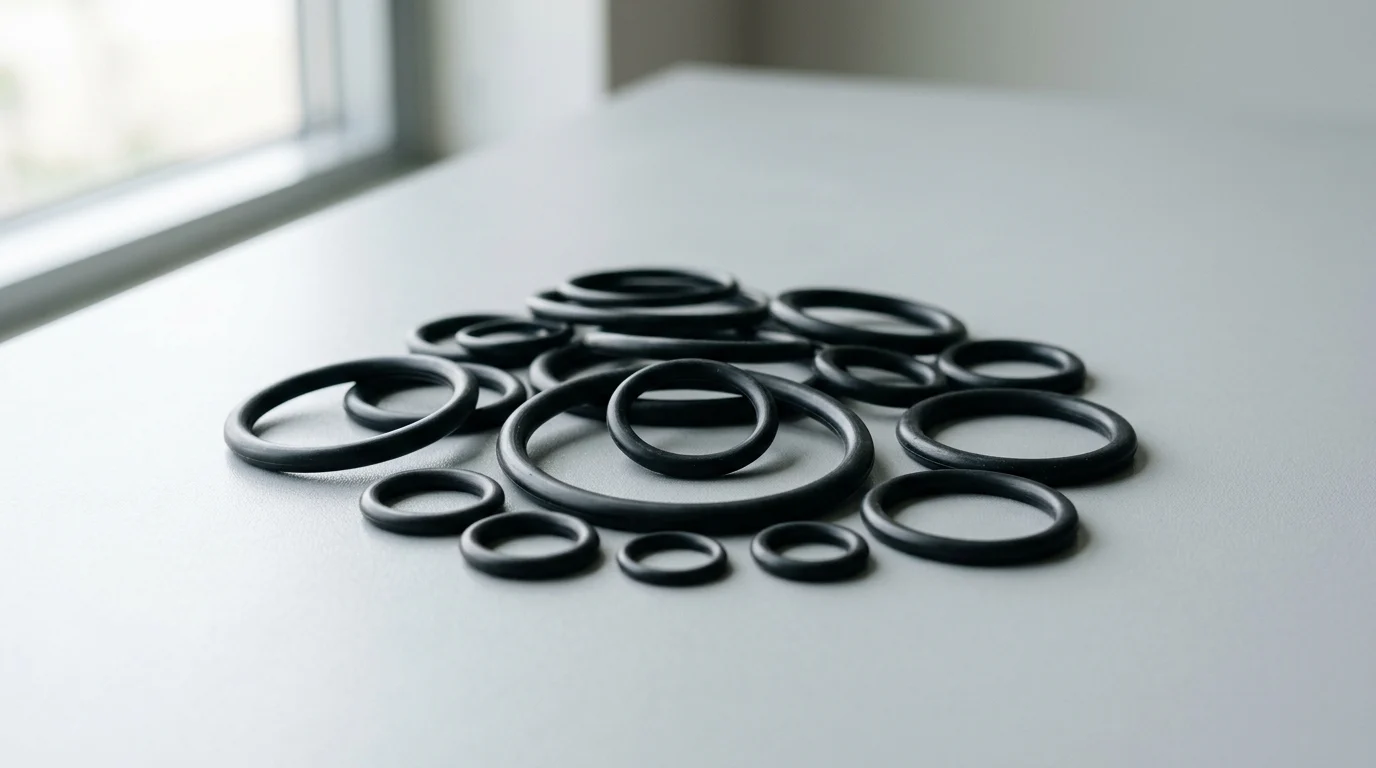
Choosing between PTFE and Viton seals affects far more than basic fit: it determines how well a system withstands chemicals, heat, pressure, and long operating cycles. For applications involving aggressive media, Viton is often considered for its strong chemical and thermal resistance, but its performance depends on the exact fluid, temperature range, and mechanical demands. This article explains where Viton seals perform well, where PTFE may be the safer choice, and which tradeoffs matter most in real-world service. By the end, readers will have a clearer basis for comparing compatibility, durability, and failure risk before moving into detailed material selection criteria.
Why PTFE vs. Viton Seals Matter
In critical industrial applications, the specification of sealing materials directly dictates system reliability, safety, and operational longevity. Engineers tasked with fluid control must frequently evaluate the comparative advantages of fluoropolymers and fluoroelastomers, specifically when dealing with aggressive media and extreme thermal conditions. The decision between PTFE and Viton seals is not merely a matter of chemical compatibility; it is a complex engineering choice that impacts overall system architecture.
Selecting the incorrect sealing material can lead to catastrophic leakage, environmental contamination, and profound financial losses. Understanding the fundamental material properties and mechanical behaviors of these two industry-standard polymers ensures that fluid handling systems operate within their designed safety margins.
Media compatibility, temperature, and uptime
Media compatibility and temperature tolerance are the primary drivers in seal specification. When seals are exposed to incompatible chemicals, they undergo volumetric swell, embrittlement, or dissolution, compromising the sealing interface. Similarly, operating outside a material’s thermal envelope accelerates polymer degradation. In the chemical processing industry, unplanned downtime due to seal failure can easily incur costs exceeding $10,000 per hour, highlighting the critical nature of material selection.
Maximizing uptime requires aligning the seal material’s resilience with the operational environment. A seal must maintain its integrity through continuous exposure to the primary fluid, as well as during aggressive cleaning cycles or system flushes, which often introduce highly reactive solvents or high-temperature steam that stress the polymer network.
Performance and cost trade-offs
The procurement of industrial seals involves balancing initial component costs against the total cost of ownership (TCO). Standard Viton seals generally present a lower barrier to entry, often costing 15% to 30% less to manufacture in high volumes compared to precision-machined PTFE alternatives. However, this upfront saving is rapidly negated if the operational environment dictates frequent, labor-intensive replacement cycles.
Performance trade-offs extend beyond pricing. While Viton offers superior elastic recovery and easier installation without specialized tooling, its chemical limitations may force engineers to specify costlier perfluoroelastomers (FFKM) if standard FKM fails. Conversely, PTFE requires specific hardware design considerations, such as tighter tolerances and energized spring mechanisms, which can increase the overall complexity and cost of the sealing assembly.
PTFE and Viton Seal Basics
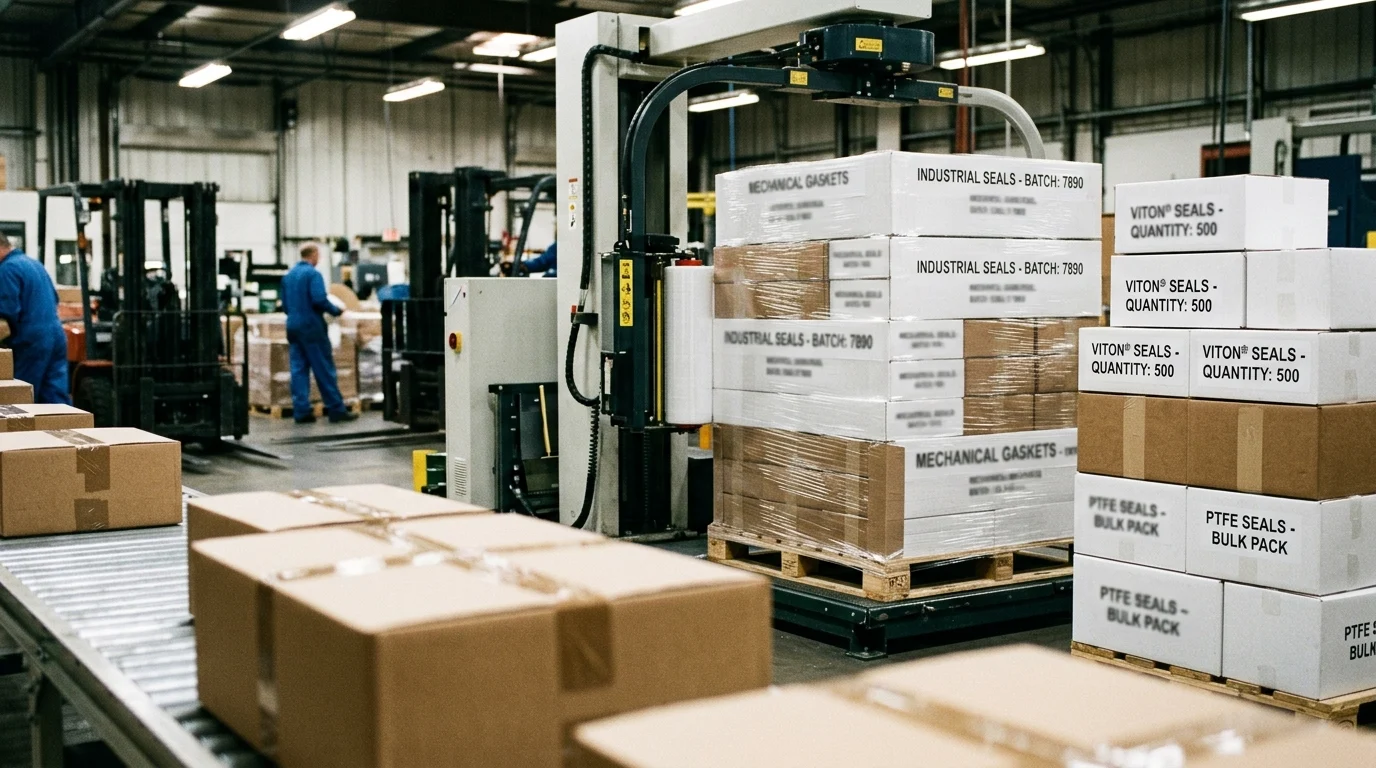
Both polytetrafluoroethylene (PTFE) and fluoroelastomers (FKM, widely recognized by the brand name Viton) are engineered to withstand rigorous industrial environments. Despite their shared reliance on strong carbon-fluorine bonds, their distinct molecular architectures yield entirely different mechanical and chemical behaviors.
Recognizing the structural differences between a thermoplastic fluoropolymer and a thermoset elastomer is essential for predicting how each material will respond to compressive forces, thermal expansion, and fluid immersion over extended operational lifecycles.
PTFE structure and chemical inertness
PTFE is a highly crystalline fluoropolymer characterized by a carbon backbone completely shielded by fluorine atoms. This dense molecular structure prevents chemical reagents from attacking the carbon chain, rendering virgin PTFE virtually inert to almost all industrial chemicals, with the exception of molten alkali metals and elemental fluorine at high temperatures.
Thermally, PTFE boasts an exceptional operating range, functioning reliably from cryogenic temperatures of -200°C up to +260°C. Furthermore, its coefficient of friction is remarkably low—typically between 0.05 and 0.10—making it the premier choice for dry-running applications or dynamic systems where minimizing stick-slip behavior and reducing actuator wear is critical.
Viton chemistry and fluid resistance
Viton is a synthetic fluoroelastomer, typically synthesized from copolymers of vinylidene fluoride (VDF) and hexafluoropropylene (HFP). Unlike the rigid crystalline structure of PTFE, Viton features an amorphous, cross-linked polymer chain. This cross-linking grants the material its rubber-like elasticity, allowing it to deform under pressure to fill microscopic hardware imperfections and then return to its original shape.
Standard Viton formulations offer excellent resistance to aliphatic and aromatic hydrocarbons, petroleum oils, and UV degradation. Its thermal operating window generally spans from -20°C to +200°C, with specialized grades capable of withstanding intermittent exposures up to 225°C. However, the presence of hydrogen atoms in its polymer chain makes it vulnerable to chemical attack from certain aggressive, polar solvents.
Chemical Resistance and Performance Comparison
The practical application of PTFE and Viton seals hinges on their respective responses to specific chemical families and mechanical stresses. While PTFE offers near-universal chemical compatibility, Viton excels in applications requiring dynamic memory and robust sealing force under compression.
Engineers must evaluate the exact chemical composition of the media, including trace additives and cleaning agents, alongside the mechanical demands of the hardware to determine the optimal seal material.
Best-fit chemicals, fluids, and cleaners
When specifying seals for broad-spectrum chemical resistance, PTFE is unparalleled. It is the default choice for handling strong acids (such as concentrated sulfuric or nitric acid), aggressive bases, and highly polar solvents like ketones and esters. PTFE maintains its structural integrity even during clean-in-place (CIP) and sterilize-in-place (SIP) procedures involving harsh caustics and steam.
Viton seals perform exceptionally well in environments dominated by petroleum-based fluids, silicone oils, and transmission fluids, making them ubiquitous in automotive, aerospace, and heavy hydraulic applications. However, Viton is fundamentally incompatible with low-molecular-weight esters, ethers, and ketones. Exposure to solvents like acetone or methyl ethyl ketone (MEK) will cause standard Viton to experience volumetric swelling exceeding 100%, leading to immediate extrusion and catastrophic failure.
Compression set, friction, and pressure limits
Compression set—the permanent deformation of a material after a compressive load is removed—is a critical metric for static and dynamic seals. Viton exhibits an exceptionally low compression set, often retaining less than 15% deformation after 70 hours at 200°C. This elastic memory ensures a continuous, leak-free barrier without external energizing forces.
Conversely, PTFE is susceptible to cold flow, or creep, under continuous load. To counteract this, PTFE seals are frequently paired with metallic energizing springs (such as helical or V-springs) to maintain constant sealing pressure against the hardware. When reinforced with fillers like glass fiber, bronze, or carbon, energized PTFE seals can withstand extreme system pressures, frequently exceeding 3,000 psi in high-performance hydraulic and pneumatic cylinders.
Key comparison table
A direct comparison of these materials highlights their distinct operational envelopes. The following table summarizes the primary performance attributes of standard virgin PTFE and standard FKM (Viton) seals to aid in initial material screening.
| Performance Metric | PTFE (Virgin) | Viton (Standard FKM) |
|---|---|---|
| Temperature Range | -200°C to +260°C | -20°C to +200°C |
| Chemical Resistance | Excellent (Universal) | Good (Oils, Hydrocarbons) |
| Compression Set | Poor (Requires Energizer) | Excellent (<15% at 200°C) |
| Coefficient of Friction | 0.05 – 0.10 (Very Low) | 0.60 – 0.80 (High) |
| Pressure Limit (Static) | >3,000 psi (Filled/Energized) | Up to 1,500 psi (Standard O-ring) |
| Elasticity | Very Low (Rigid) | High (Elastomeric) |
Selection Factors and Compliance
Beyond base material properties, the selection process must account for dynamic operating variables, rigorous industry compliance standards, and the economic realities of manufacturing and maintenance.
A holistic approach to seal specification evaluates not only whether a material can survive an environment, but whether it meets the stringent regulatory requirements of the target industry while remaining economically viable over the equipment’s lifespan.
Operating variables to evaluate
Dynamic sealing applications require a careful analysis of Pressure-Velocity (PV) limits, which define the maximum combination of pressure and surface speed a material can withstand before generating excessive frictional heat. Virgin PTFE generally has a modest PV limit of approximately 1,000 psi-fpm. For higher-speed rotary applications, engineered PTFE blends containing graphite or molybdenum disulfide are required to dissipate heat and reduce wear.
Viton seals, due to their higher coefficient of friction, are more prone to heat generation in high-speed rotary applications. They are best suited for static applications, low-speed oscillation, or linear reciprocating environments where lubrication is present. Evaluating hardware finish is also critical; PTFE requires a highly polished mating surface (typically 8 to 12 micro-inches Ra) to prevent rapid abrasive wear, whereas elastomers can conform to slightly rougher finishes.
FDA, USP Class VI, and industry compliance
In the pharmaceutical, biotechnology, and food processing sectors, material compliance is non-negotiable. Both materials offer grades compliant with FDA 21 CFR 177.1550 (for perfluorocarbons) and 177.2600 (for rubber articles). However, the specific demands of high-purity environments often dictate the final material choice.
PTFE is heavily favored for USP Class VI applications due to its absolute chemical inertness and lack of extractables. In bioprocessing, where extractable limits must often remain below 0.1 mg/in² to prevent contamination of sensitive biologic drugs, virgin PTFE provides a zero-risk profile. Viton, while available in high-purity grades, inherently contains curing agents and plasticizers that require rigorous post-curing and validation to meet similar high-purity standards.
Cost, manufacturing, and service life
The manufacturing processes for these materials significantly influence procurement strategies. Viton seals are typically injection or compression molded. This process requires a high initial investment in steel tooling but results in an exceptionally low unit cost at scale, making it ideal for standard O-rings with minimum order quantities (MOQs) exceeding 1,000 units.
PTFE seals are typically CNC machined from billet tubes or rods. This eliminates tooling costs and allows for rapid prototyping and custom geometries, but results in a higher per-unit cost. Regarding service life, the higher initial investment in an energized PTFE seal is frequently justified in aggressive chemical applications, where it can outlast an elastomeric equivalent by a ratio of 5-to-1, drastically reducing maintenance interventions and associated labor costs.
How to Choose Between PTFE and Viton Seals
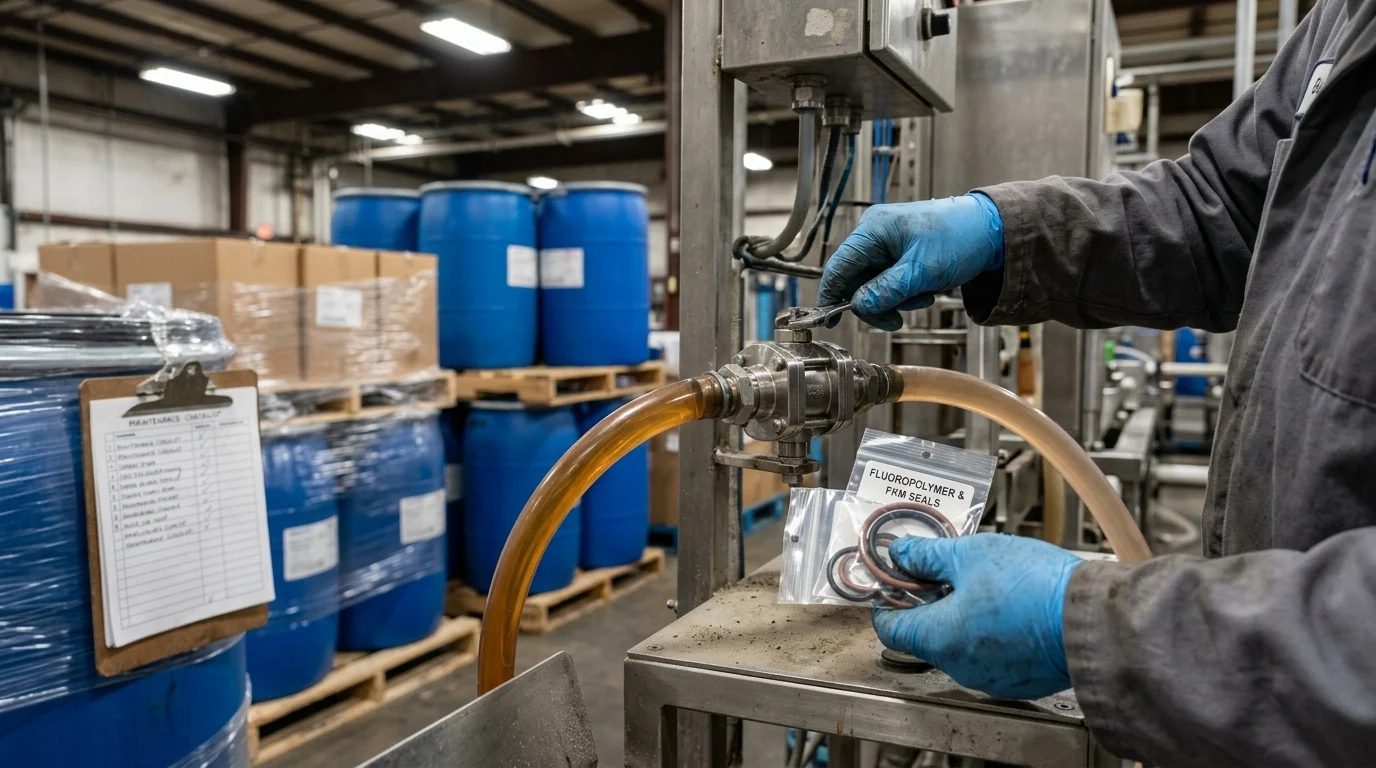
Determining the optimal sealing solution requires translating theoretical material science into a structured engineering decision. By systematically evaluating application parameters against material capabilities, engineers can specify a seal that ensures maximum reliability and cost-efficiency.
The following methodologies provide a clear framework for selecting between PTFE and Viton based on empirical data, operational constraints, and lifecycle economics.
Step-by-step selection workflow
A rigorous selection workflow begins with a comprehensive chemical audit. Document every fluid the seal will encounter, including primary media, secondary lubricants, and intermittent cleaning solvents. Next, define the thermal envelope, noting both continuous operating temperatures and short-term thermal spikes. If system temperatures drop below -20°C or exceed +200°C, PTFE becomes the mandatory choice.
The third step is assessing mechanical and dynamic requirements. Determine whether the seal is static or dynamic, and evaluate the hardware’s surface finish and available installation space. Finally, conduct a lifecycle cost analysis. Compare the annualized cost of replacing a standard Viton seal—including labor and planned downtime—against the higher initial cost but extended lifespan of a custom-machined PTFE spring-energized seal.
When to choose PTFE vs. Viton
As a general engineering guideline, specify Viton seals for applications involving standard hydraulic fluids, engine oils, and general-purpose chemical sealing where hardware constraints demand high elasticity and easy installation. Viton remains the industry standard for cost-effective, reliable sealing in the automotive and heavy machinery sectors.
Conversely, specify PTFE seals for environments characterized by extreme temperatures, highly aggressive chemical mixtures, or dry-running conditions where low friction is paramount. PTFE is the definitive choice for the chemical processing, semiconductor, and biopharmaceutical industries where material failure is not an option.
| Application Scenario | Recommended Material | Primary Justification |
|---|---|---|
| Cryogenic Fluid Handling | PTFE | Maintains flexibility below -200°C; elastomers embrittle. |
| Heavy Duty Hydraulics | Viton | High elasticity; excellent resistance to petroleum oils. |
| High-Speed Dry Rotary | PTFE (Filled) | Low friction (0.05-0.10); no lubrication required. |
| Ketone/Solvent Pumps | PTFE | Absolute chemical inertness; Viton swells >100%. |
| High-Volume Auto Parts | Viton | Low unit cost via molding; excellent compression set. |
Key Takeaways
- The most important conclusions and rationale for Viton Seals
- Specs, compliance, and risk checks worth validating before you commit
- Practical next steps and caveats readers can apply immediately
Frequently Asked Questions
When should I choose Viton seals over PTFE seals?
Choose Viton for oils, fuels, hydrocarbons, and applications needing elastic sealing, easy installation, and good compression recovery up to about 200°C.
Which chemicals are risky for Viton seals?
Viton can struggle with ketones, low-molecular-weight esters, some amines, and certain aggressive polar solvents. Always verify media concentration and temperature before selection.
Is PTFE always better than Viton for chemical resistance?
Not always. PTFE resists more chemicals and higher temperatures, but Viton often seals better on imperfect hardware and is usually more cost-effective for standard pump service.
Can Victor Seals supply Viton-based replacements for industrial pumps?
Yes. Victor Seals provides OEM-compatible and replacement mechanical seals for many pump brands, including Grundfos, Flygt, Lowara, IMO, and Allweiler.
How can I select the right Viton seal for my pump system?
Check the fluid, temperature range, pressure, shaft speed, and cleaning chemicals. Share these operating details with Victor Seals to match the right seal type and elastomer grade.
Post time: Jun-02-2026