


Introduction
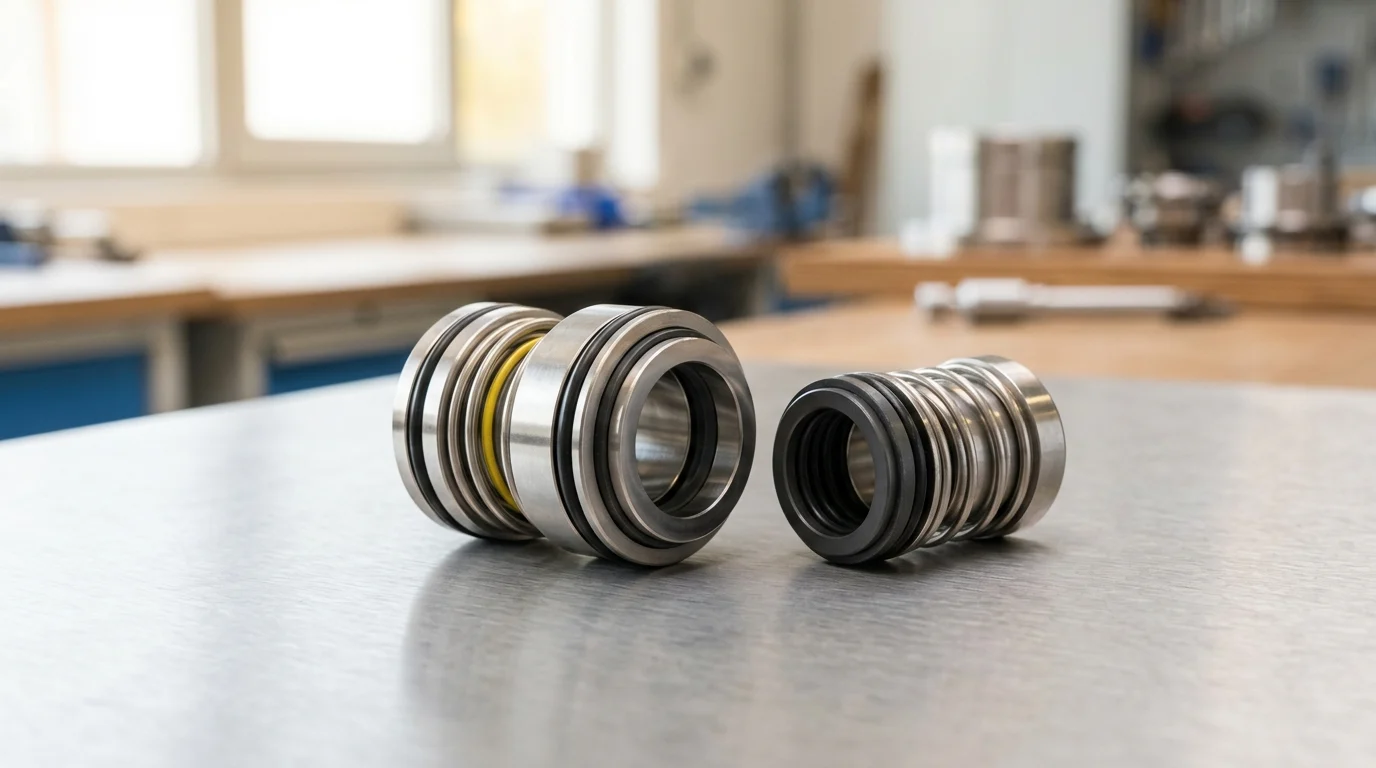
When a mechanical seal needs replacement, the choice between an original branded part and an OEM seal can affect cost, lead time, warranty exposure, and long-term reliability. These terms are often treated as interchangeable, but they do not always mean the same thing in purchasing or maintenance practice. This article explains how OEM mechanical seals differ from original equipment parts, where the components may actually come from, and how those distinctions shape supply-chain decisions. By the end, readers will be better equipped to evaluate fit, quality, documentation, and commercial tradeoffs before selecting a replacement seal.
OEM Mechanical Seals vs Original Parts
The distinction between original equipment (OE) mechanical seals and original equipment manufacturer (OEM) seals is a critical focal point in industrial asset management. For decades, procurement engineers and maintenance reliability professionals have navigated the complex landscape of seal replacement, balancing strict operational tolerances against constrained maintenance budgets. While the terms are frequently used interchangeably in casual industry parlance, their technical and commercial definitions dictate vastly different supply chain strategies. Understanding the precise boundary between a pump manufacturer’s branded seal and the exact same component sourced directly from the seal’s actual manufacturer is the first step in optimizing plant reliability.
How teams define OEM and original parts
In industrial procurement, an Original Equipment (OE) part is formally defined as a component bearing the branding and part number of the top-level equipment manufacturer, such as the company that built a centrifugal pump or compressor. Conversely, an OEM part refers to a component manufactured by the exact same specialized factory that supplied the OE brand, but which is sold directly to the end-user or through independent distribution channels without the pump manufacturer’s markup.
Furthermore, the market includes high-tier aftermarket seals—components engineered by third-party specialists designed to be 100% interchangeable with the OE seal. While aftermarket seals may not originate from the original supply chain, leading providers utilize equivalent or superior metallurgy and elastomers. The primary differentiator lies in the intellectual property chain: the OE holds the top-level assembly drawings, the OEM holds the component-level manufacturing prints, and the aftermarket relies on precision reverse engineering.
Why the distinction affects total cost of ownership
The classification of a mechanical seal directly influences a facility’s Total Cost of Ownership (TCO). Relying exclusively on OE-branded seals typically incurs a price premium ranging from 20% to 40% due to a multi-tiered markup structure. However, this premium often buys perceived risk mitigation, as the OE assumes full liability for the pump’s overall performance and warranty compliance.
When facilities transition to direct OEM or premium aftermarket sourcing, the initial acquisition cost drops significantly. To accurately measure TCO, reliability engineers track the Mean Time Between Failures (MTBF). A plant operating standard API 610 pumps typically targets an MTBF of 36 to 48 months for mechanical seals. If an OEM seal achieves a 42-month MTBF at a 30% lower acquisition cost than the OE equivalent, the lifecycle savings across a facility with 500 active rotating assets can exceed seven figures annually. Conversely, selecting a substandard aftermarket seal that reduces MTBF to 18 months will obliterate any initial cost savings through accelerated labor costs and production downtime.
Technical Performance and Interchangeability
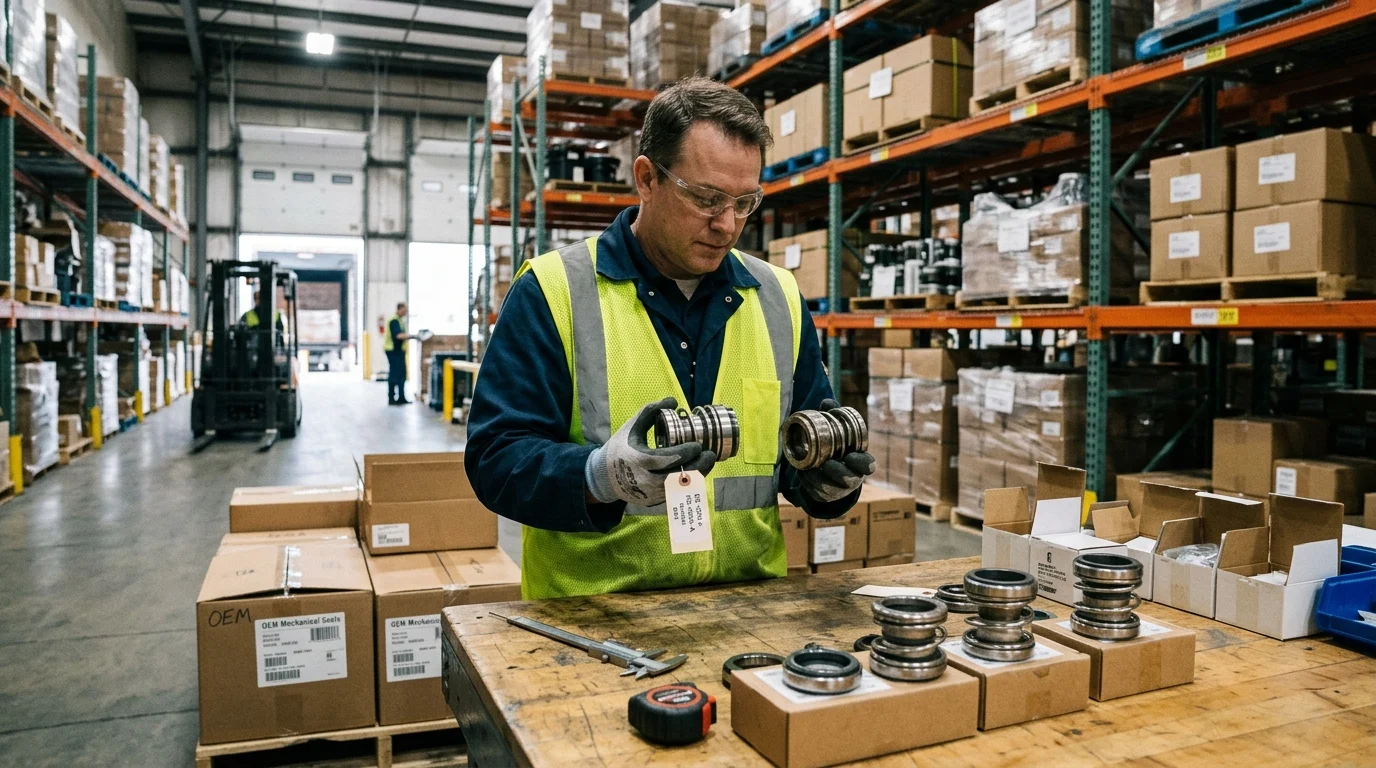
Transitioning away from an OE-branded seal requires rigorous technical validation to ensure operational continuity is never compromised. Mechanical seals are precision-engineered dynamic components where deviations measured in microns can lead to catastrophic leakage, environmental incidents, or premature bearing failure. Evaluating the technical performance and interchangeability of OEM and alternative seals demands a strict comparative framework focusing on tribology, metallurgy, and dimensional accuracy.
Key criteria for comparing seal performance
The performance of a mechanical seal is governed by the micro-topography of its mating faces and the resilience of its secondary sealing elements. Face flatness is a primary criterion, universally measured using monochromatic helium light bands. A premium OEM or OE seal face must maintain a flatness of 1 to 2 light bands, equivalent to 0.29 to 0.58 microns. Any deviation beyond this threshold increases the risk of fluid film collapse and localized thermal expansion.
In addition to face topography, spring tension and elastomer temperature ratings are non-negotiable criteria. For instance, high-temperature applications utilizing perfluoroelastomers (FFKM) require O-rings rated for continuous operation up to 327°C. A comprehensive performance comparison must verify that the alternative seal’s spring rate (measured in N/mm) matches the original design to ensure optimal face closing forces without causing excessive friction and heat generation.
How to evaluate fit, materials, and interchangeability
Evaluating fit and interchangeability begins with dimensional verification. Shaft and stuffing box dimensions must align with tolerances as tight as ±0.001 inches (±0.025 mm) to prevent runout and vibration. When evaluating materials, direct equivalence is paramount. Buyers must request complete material specifications rather than accepting generic terms like “silicon carbide.”
The following table illustrates the critical properties of common seal face materials that must be matched or exceeded when evaluating an OEM or aftermarket alternative:
| Seal Face Material | Max Operating Temp (°C) | PV Limit (bar·m/s) | Typical Hardness (Vickers) | Application Profile |
|---|---|---|---|---|
| Carbon Graphite (Resin Impregnated) | 260 | 350 | 100 – 150 | General water, low-friction needs |
| Silicon Carbide (Reaction Bonded) | 1350 | 1700 | 2500 – 2800 | Abrasives, high-speed, chemicals |
| Tungsten Carbide (Nickel Bound) | 400 | 1000 | 1500 – 1800 | High-torque, severe mechanical shock |
Engineers must ensure that the PV (Pressure-Velocity) limits of the proposed OEM seal materials are fully capable of handling the specific hydraulic conditions of the pump. Upgrading from carbon to silicon carbide during an OEM transition is a common practice to extend MTBF, provided the mating face can accommodate the increased hardness.
Manufacturing Control and Compliance
The fundamental integrity of a mechanical seal is intrinsically linked to the quality management systems and manufacturing controls governing its production. While physical dimensions can be measured, the invisible attributes of a seal—such as material homogeneity, curing processes of elastomers, and weld integrity of metal bellows—rely entirely on the manufacturer’s internal controls and regulatory compliance protocols.
Differences in drawings, reverse engineering, and testing
Original Equipment providers and direct OEMs possess the original intellectual property, including exact dimensional drawings, material specifications, and proprietary manufacturing tolerances. When third-party manufacturers produce alternative seals, they must utilize reverse engineering. Advanced reverse engineering relies on Coordinate Measuring Machines (CMM) and optical comparators capable of measuring geometries down to 0.0001 inches (2.54 microns).
Testing protocols further differentiate the tiers of seal manufacturing. Premium seals destined for the oil and gas sector are subjected to API 682 qualification testing, which mandates 25,000 hours of continuous operation without failure, alongside dynamic testing phases that simulate startup, shutdown, and temperature transients. While OEMs have historical data validating these designs, alternative suppliers must provide documented proof of equivalent hydrostatic and dynamic bench testing to validate their reverse-engineered geometries.
Compliance and documentation requirements for regulated industries
In highly regulated sectors such as pharmaceuticals, food and beverage, and nuclear power, manufacturing control extends heavily into documentation and material traceability. Mechanical seals utilized in food processing must feature elastomers and carbon faces that comply with FDA CFR 21.177.2600 or European EN 1935/2004 standards. Pharmaceutical applications frequently demand USP Class VI certification for all polymer components.
Procurement teams must demand complete Material Test Reports (MTRs), specifically EN 10204 Type 3.1 certificates, which trace the exact chemical composition and mechanical properties of the metal components back to the original foundry heat number. If an OEM or aftermarket supplier cannot produce a 3.1 certificate or proof of FDA compliance with less than a 24-hour turnaround, the associated regulatory risk far outweighs any potential reduction in piece-price.
Sourcing, Lead Times, and Supplier Risk
Global supply chain volatility has forced industrial procurement teams to diversify their mechanical seal sourcing strategies beyond single-channel original equipment providers. Relying solely on the pump manufacturer for seal replacements frequently introduces unacceptable lead times and inflated inventory carrying costs. Consequently, evaluating the commercial realities of sourcing—balancing price, availability, and supplier risk—is as critical as the engineering analysis.
Commercial factors such as price, lead time, and channel risk
The most significant driver for shifting to OEM or aftermarket seals is the reduction of lead times. Original parts for engineered, application-specific seals frequently carry lead times of 12 to 16 weeks, particularly for components requiring exotic alloys like Hastelloy C-276 or Alloy 20. Direct OEM suppliers or agile regional manufacturers can often compress this lead time to 2 to 4 weeks by maintaining localized raw material inventories and bypassing the OE’s administrative bottlenecks.
The following table outlines the typical commercial trade-offs associated with different mechanical seal sourcing channels:
| Sourcing Channel | Typical Lead Time | Cost Index (OE=100) | Commercial Risk Level | Ideal Use Case |
|---|---|---|---|---|
| Original Equipment (OE) Brand | 12 – 16 weeks | 100 | Low | Warranty periods, lethal service |
| Direct OEM Supplier | 4 – 8 weeks | 65 – 80 | Low to Medium | Post-warranty critical assets |
| High-Tier Aftermarket | 2 – 4 weeks | 40 – 60 | Medium | General utility, water processing |
While the cost index demonstrates a potential 40% to 60% savings when utilizing aftermarket channels, buyers must factor in the channel risk. Channel risk includes the potential for inconsistent batch quality, lack of localized technical support during installation, or the financial instability of a smaller supplier.
Practical steps for qualifying seal suppliers
To mitigate these commercial risks, procurement and reliability teams must implement a stringent supplier qualification process. This begins with verifying the supplier’s ISO 9001:2015 certification and requesting historical quality data, specifically targeting a manufacturing scrap rate of less than 1.5% and an on-time delivery (OTD) metric exceeding 95%.
Buyers should also negotiate Minimum Order Quantities (MOQs) and establish consignment inventory agreements. A qualified OEM supplier will often agree to hold safety stock of critical cartridge seals at their facility, reducing the plant’s working capital requirements while guaranteeing a 24-hour dispatch for emergency breakdowns. Auditing the supplier’s supply chain—specifically where they source their raw silicon carbide and elastomers—is a vital step in ensuring long-term sourcing stability.
Selection Framework for Buyers
Establishing a standardized procurement framework enables organizations to objectively categorize when to mandate original branded parts versus when to authorize direct OEM or equivalent aftermarket seals. This framework removes subjective bias from the purchasing process, aligning engineering requirements with commercial realities to maximize plant profitability without compromising safety.
How to weigh application criticality and operating conditions
The primary axis of the selection framework is application criticality. High-pressure, high-temperature (HPHT) applications—such as boiler feed pumps operating above 100 bar and exceeding 200°C—or systems handling lethal, flammable, or highly toxic fluids dictate a highly conservative approach. In these scenarios, the risk of a seal blowout necessitates the use of OE-branded seals or extensively vetted direct OEM seals that carry full API 682 certification and documented historical performance in identical services.
Conversely, for balance-of-plant equipment, utility water, cooling tower pumps, and low-pressure chemical transfers (typically operating below 15 bar and ambient temperatures), the technical barrier to entry is significantly lower. These non-critical applications present the optimal environment for introducing high-tier aftermarket seals, allowing plants to capture immediate cost savings on high-volume replacement parts where a premature failure results in minimal collateral damage.
How buyers should balance technical and commercial tradeoffs
Buyers must balance technical and commercial tradeoffs by implementing a quantifiable risk matrix. For example, if a petrochemical facility experiences a pump failure on a critical distillation column, the resulting downtime can cost the organization upwards of $50,000 per hour in lost production. In this context, saving $5,000 by sourcing a cheaper, unverified aftermarket seal is a severe misallocation of risk.
Ultimately, the selection framework should dictate that OE seals are utilized during the equipment’s warranty period and for lethal services. Direct OEM seals should be the standard for post-warranty critical assets where exact material equivalence is required but lead times must be reduced. High-tier aftermarket seals should be aggressively qualified and deployed across utility and general service applications to drive down the facility’s baseline maintenance expenditure.
Key Takeaways
- The most important conclusions and rationale for OEM Mechanical Seals
- Specs, compliance, and risk checks worth validating before you commit
- Practical next steps and caveats readers can apply immediately
Frequently Asked Questions
What is the difference between an OEM mechanical seal and an original part?
An original part is sold under the pump maker’s brand. An OEM seal is made by the actual seal manufacturer or supplied as an OEM-compatible replacement with matching fit, materials, and performance.
Can OEM-compatible seals match original pump seal performance?
Yes—if face materials, elastomers, spring force, and dimensions match the original specification. Always confirm operating media, temperature, pressure, and shaft size before ordering.
Why do many plants choose OEM seals over original branded parts?
They often reduce purchase cost while maintaining reliability when correctly specified. The key is verifying interchangeability and expected MTBF, not choosing by price alone.
Which pump brands can Victor Seals support with OEM-compatible replacements?
Victor Seals supplies OEM-compatible seals and spare parts for brands including IMO, Alfa Laval, Grundfos, APV, Flygt, Fristam, Lowara, and Allweiler.
How can I choose the right OEM mechanical seal for my pump?
Send the pump brand, model, shaft size, medium, temperature, pressure, and seal photos or part number. Victor Seals can check dimensions and recommend a suitable replacement quickly.
Post time: Jun-11-2026