


Introduction
Choosing between a metal bellows seal and an elastomer bellows seal affects far more than fit or price: it determines how well a pump handles heat, chemical attack, shaft movement, and long service intervals. This article explains the practical differences between the two designs, with a focus on where a metal bellows mechanical seal delivers clear advantages by removing elastomer-related failure points. You will learn which operating conditions favor each option, what performance trade-offs to expect, and how to evaluate reliability, maintenance demands, and lifecycle cost before making a selection.
How to Evaluate a Metal Bellows Mechanical Seal
Selecting the correct sealing technology is a critical engineering decision that dictates the reliability, safety, and maintenance intervals of industrial rotating equipment. At the center of this decision is the choice between traditional elastomer-based seals and the metal bellows mechanical seal. While elastomers serve adequately in standard applications, harsh industrial environments demand a more robust solution.
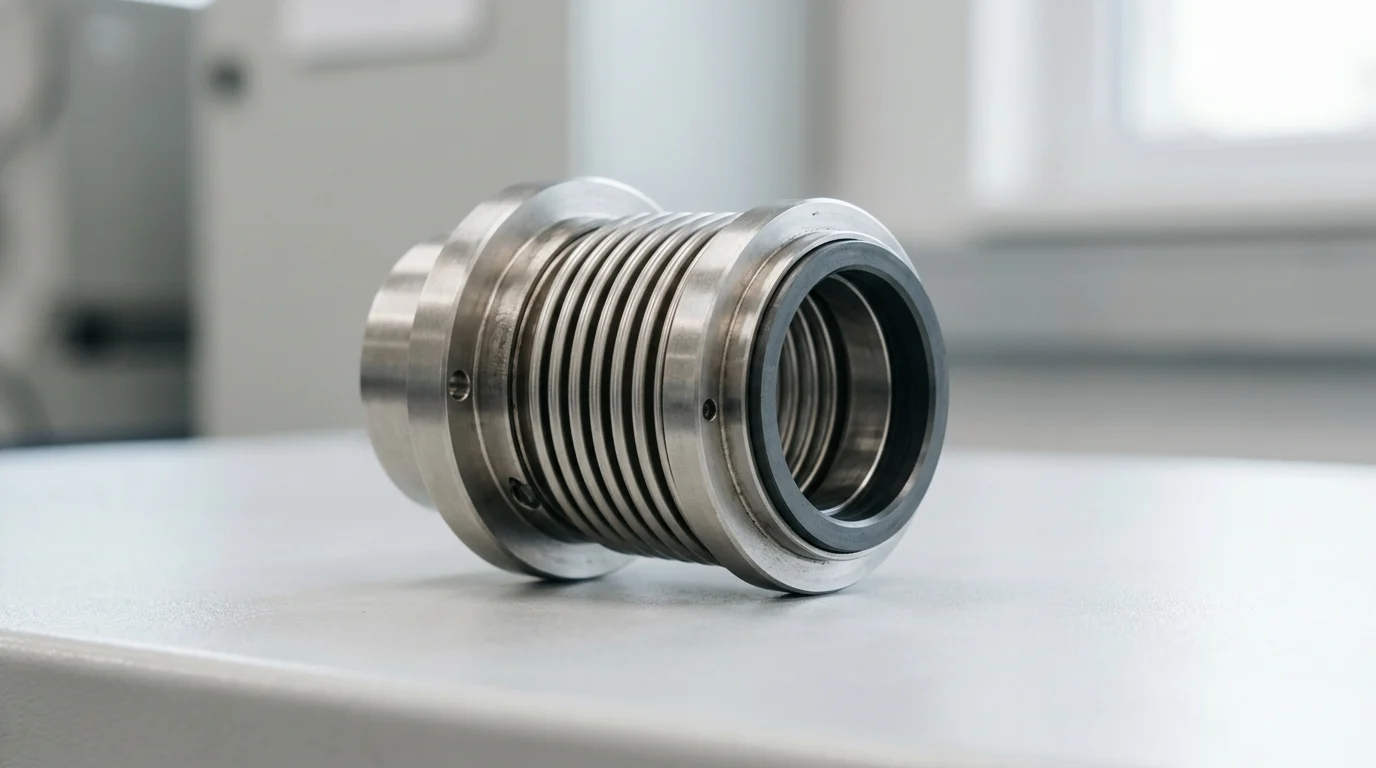
A metal bellows seal replaces the dynamic secondary sealing element—typically an elastomer O-ring—with a continuous, flexible metallic core. This fundamental shift in design eliminates the vulnerabilities associated with elastomer degradation, offering a distinct mechanical advantage in specific fluid handling scenarios.
Why selection affects reliability and lifecycle cost
The correlation between mechanical seal selection and long-term plant reliability cannot be overstated. In demanding process environments, mechanical seal failures account for nearly 70% of total pump downtime. Upgrading to a metal bellows design in applications with aggressive media can significantly shift the Mean Time Between Failures (MTBF).
For instance, centrifugal pumps operating in high-temperature refinery applications often see pusher seal MTBF stagnate at 12 to 18 months due to elastomer hardening. By transitioning to an appropriately specified metal bellows mechanical seal, facilities routinely extend MTBF to over 36 to 60 months. Although the initial capital expenditure for a metal bellows unit is higher, the life cycle cost (LCC) drops precipitously when factoring in the elimination of unplanned outages, reduced maintenance labor, and zero requirement for shaft sleeve replacements.
How operating conditions shape seal choice
Operating parameters—specifically temperature, chemical aggressiveness, and fluid viscosity—are the primary drivers in seal selection. Standard fluoroelastomers (FKM) or perfluoroelastomers (FFKM) typically exhibit thermal degradation or extrusion when continuous operating temperatures exceed 200°C to 260°C (392°F to 500°F).
Conversely, edge-welded metal bellows constructed from high-performance alloys can comfortably withstand continuous operating temperatures exceeding 400°C (750°F) without losing structural integrity or spring tension. Furthermore, operating conditions at the other extreme dictate similar choices; cryogenic applications operating down to -75°C (-103°F) cause elastomers to embrittle and shatter, rendering metal bellows the only viable engineering choice for stable face loading.
Metal Bellows vs Pusher Mechanical Seals
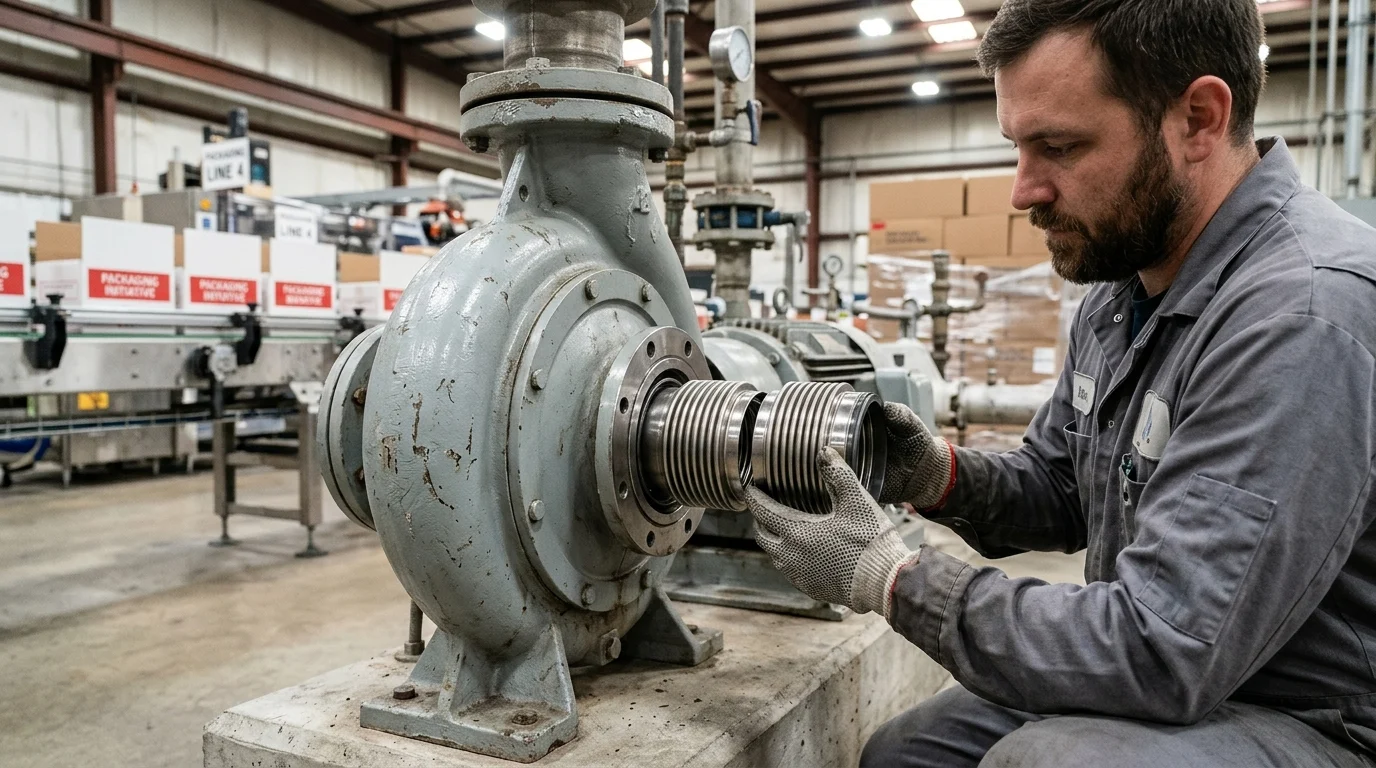
To make an informed specification, engineers must understand the mechanical distinctions between pusher seals and non-pusher metal bellows seals. A pusher seal utilizes a dynamic secondary elastomer that must move, or “push,” along the pump shaft or sleeve to compensate for seal face wear and thermal expansion. A metal bellows seal is inherently a non-pusher design.
In a non-pusher configuration, the bellows unit itself is statically sealed to the shaft or sleeve, usually via a static O-ring or graphite wedge. All axial movement required to maintain face contact is absorbed by the flexing of the metallic convolutions, completely eliminating the need for an elastomer to slide dynamically.
How each design creates flexibility and face loading
Pusher designs rely on single or multiple coil springs to provide the necessary mechanical closing force on the seal faces. As the dynamic O-ring slides to maintain this loading, particulates can build up on the shaft, causing the elastomer to hang up. This hang-up leads to face separation and immediate leakage. Furthermore, the constant micro-movements of the dynamic O-ring against the metal surface often result in severe shaft fretting.
A metal bellows mechanical seal resolves these issues by delivering uniform, 360-degree face loading directly through the metallic convolutions. Because there is no dynamic sliding of a secondary elastomer, shaft fretting is entirely eliminated. The uniform distribution of spring pressure also reduces localized face distortion, maintaining a flatter sealing gap under fluctuating pressures.
Which operating limits matter most
Understanding the exact operating limits of both designs is essential for preventing catastrophic pump failure. Viscosity and particulate concentration are heavily weighted factors. Pusher seal springs are highly susceptible to clogging when fluid viscosity exceeds 1,500 cSt or when suspended solids accumulate in the spring pockets.
| Operational Metric | Pusher Mechanical Seal | Metal Bellows Seal |
|---|---|---|
| Max Temperature (Typical) | 200°C (Limited by elastomer) | 400°C+ (Alloy dependent) |
| Max Viscosity Handling | ~1,500 cSt | ~3,000 cSt |
| Shaft Fretting Potential | High (Dynamic O-ring) | Zero (Static secondary seal) |
| Particulate Tolerance | Low (Springs clog easily) | High (Self-cleaning outer rotation) |
Because metal bellows lack tight spring pockets, they handle viscosities up to 3,000 cSt before requiring specialized adaptations. When configured as a rotating bellows, the centrifugal force actively throws particulates away from the convolutions, providing a self-cleaning effect that pusher seals cannot replicate.
Key Criteria for Seal Comparison
Comparing seal types requires a systematic review of performance thresholds, economic impacts, and environmental compliance standards. Engineering teams must weigh the immediate mechanical capabilities against the long-term operational footprint of the equipment.
While metal bellows excel in harsh conditions, their selection must be justified through rigorous criteria matching, ensuring the technology aligns with both process requirements and plant maintenance strategies.
How to compare performance factors
Performance comparison hinges heavily on pressure limits and shaft speeds. Pusher seals, particularly those with balanced designs, are highly adept at handling extreme pressures, often rated for environments exceeding 100 bar (1,450 psi). Metal bellows, while highly flexible, face structural limitations regarding pressure.
Standard formed metal bellows are typically limited to pressures of around 20 bar (290 psi). High-performance edge-welded metal bellows can extend this limit up to 69 bar (1,000 psi), but they remain more pressure-sensitive than heavy-duty pusher seals. When comparing shaft speeds, high-quality metal bellows can comfortably operate at surface speeds up to 25 m/s, making them highly competitive for standard API pump dimensions.
What cost and lifecycle factors to review
Cost analysis must transition from a CapEx-only viewpoint to a comprehensive total cost of ownership (TCO) model. The initial procurement cost of an edge-welded metal bellows mechanical seal is typically 2.0x to 3.0x higher than a standard elastomer pusher seal due to the complex metallurgy and precision welding required.
However, the lifecycle factors rapidly offset this initial premium. By eliminating the need to replace fretted pump shafts or protective sleeves—which can cost upwards of $2,000 per overhaul on large API pumps—and by extending the MTBF by several years, the return on investment (ROI) for a metal bellows upgrade is frequently realized within the first 12 to 18 months of operation.
Where compliance requirements affect selection
Environmental regulations play a massive role in seal selection, particularly in the chemical and petrochemical sectors. Facilities must comply with strict fugitive emission standards, such as the EPA Method 21, which often mandates equipment leakage to remain below 500 parts per million (ppm) of volatile organic compounds (VOCs).
Metal bellows seals are highly favored in compliance strategies because they eliminate the dynamic O-ring, which is a common failure point for fugitive emissions. In refinery applications governed by API 682 standards, Type B (metal bellows) seals are explicitly specified for Category 2 and Category 3 high-temperature services, ensuring compliance with both environmental mandates and international safety standards.
Practical Selection and Sourcing Guide
Transitioning from theoretical selection to practical sourcing requires a structured approach. Procuring a metal bellows mechanical seal is not a commodity transaction; it demands precise engineering communication between the plant reliability team and the seal manufacturer.
A rigorous screening and qualification process guarantees that the delivered seal will perform to its specified MTBF, preventing costly misapplications.
What screening process should be used
The screening process must begin with a comprehensive fluid and system analysis. Engineers must document the exact chemical composition, including trace elements, to verify metallurgical compatibility. Pumping a fluid with even trace amounts of chlorides can induce stress corrosion cracking in standard 300-series stainless steel bellows.
Next, the application envelope must be defined. This includes plotting the minimum and maximum operating temperatures, continuous and transient pressures, and the percentage of suspended solids. Only after this envelope is established should the screening move to selecting the bellows construction type—choosing between formed bellows for lower-duty applications or edge-welded bellows for maximum performance.
Which specification details are often missed
Several critical specification details are routinely overlooked during the procurement phase, leading to premature fatigue failure. One such detail is the bellows plate thickness. Standard edge-welded plates range from 0.10 mm to 0.15 mm in thickness. Specifying a thicker plate (e.g., 0.20 mm) increases the pressure rating but significantly reduces axial flexibility, requiring precise recalculation of the face loading forces.
| Bellows Metallurgy | Max Operating Temp | Primary Industrial Application |
|---|---|---|
| AM350 Stainless Steel | 315°C (600°F) | General refinery, moderate chemicals |
| Alloy C-276 (Hastelloy) | 425°C (800°F) | Highly corrosive, sour water, acids |
| Inconel 718 | 425°C+ (800°F+) | High-pressure, high-temp, cryogenics |
| Alloy 20 | 150°C (300°F) | Sulfuric acid concentrations |
Alloy selection is another frequently missed nuance. Defaulting to AM350 may save upfront costs, but upgrading to Alloy C-276 or Inconel 718 is mandatory when dealing with severe corrosives or temperatures exceeding 315°C. Failing to specify the correct metallurgy for the specific fluid chemistry is a leading cause of early bellows rupture.
How to qualify suppliers and vendors
Qualifying a vendor for metal bellows requires vetting their manufacturing and quality assurance capabilities. Buyers should mandate ISO 9001 certification and request documentation of in-house metallurgical testing. Because the edge-welding process involves thousands of micro-welds, the vendor must perform rigorous leak testing.
Acceptable vendors should utilize helium mass spectrometry leak testing, guaranteeing a leak rate of less than 1×10^-7 atm cc/sec across the bellows assembly. Furthermore, buyers should expect different supply chain dynamics; while pusher seals are often commercial off-the-shelf (COTS) items, custom edge-welded bellows typically require a Minimum Order Quantity (MOQ) or carry lead times of 6 to 8 weeks. Traceable material certificates (such as EN 10204 3.1) must be a non-negotiable requirement to verify alloy authenticity.
When Metal Bellows Seals Are the Best Fit
Determining the definitive fit for a metal bellows mechanical seal requires matching the technology’s unique strengths to the specific failure modes experienced in the plant. When correctly applied, these seals act as a definitive solution to chronic pump reliability issues.
While they are not a universal replacement for all pusher seals, their application in targeted, high-stress environments yields unparalleled operational stability.
Which applications favor metal bellows
Specific industrial applications inherently favor the metal bellows design. High-temperature hydrocarbon processing, such as hot asphalt or heavy vacuum gas oil (HVGO) pumping, requires seals that will not coke or bind. Heat transfer fluid (hot oil) pumps operating well above 200°C rely exclusively on metal bellows to prevent the catastrophic failure associated with elastomer melting.
Additionally, applications involving abrasive suspended solids up to 5% by weight are prime candidates. In these environments, the dynamic O-rings of pusher seals are rapidly destroyed by particulate scoring, and their coil springs become packed with solids. A rotating metal bellows seal centrifugally expels these solids, maintaining optimal face loading and preventing the seal from hanging up.
What guidance helps teams choose with confidence
To choose with confidence, engineering teams should implement a standardized decision matrix. If an application exceeds 200°C, operates below -40°C, involves aggressive solvents that swell elastomers, or suffers from chronic shaft fretting, the metal bellows mechanical seal should be the default specification.
Teams must prioritize long-term reliability metrics over procurement budgets. Standardizing on API 682 Type B configurations for relevant site assets simplifies inventory and ensures that when harsh conditions arise, the sealing technology is already engineered to withstand the thermal and mechanical stresses, ultimately safeguarding plant production and personnel.
Key Takeaways
- The most important conclusions and rationale for metal bellow mechanical seal
- Specs, compliance, and risk checks worth validating before you commit
- Practical next steps and caveats readers can apply immediately
Frequently Asked Questions
When should I choose a metal bellows mechanical seal instead of an elastomer bellow seal?
Choose metal bellows for high heat, aggressive chemicals, cryogenic duty, or when shaft fretting and O-ring hang-up are risks. Elastomer bellows fit cleaner, moderate-temperature services.
What temperature range makes metal bellows seals the better option?
Metal bellows are typically preferred above 200°C and can handle 400°C+ depending on alloy. They are also suitable for very low temperatures where elastomers can embrittle.
Why do metal bellows seals improve pump reliability?
They use a non-pusher design, so no dynamic elastomer slides on the shaft. This helps prevent hang-up, reduces leakage risk, and eliminates shaft fretting in demanding service.
Can Victor Seals supply metal bellows seals for OEM pump replacements?
Yes. Victor Seals provides OEM-compatible and replacement mechanical seals for brands like IMO, Alfa Laval, Grundfos, APV, Flygt, Fristam, Lowara, and Allweiler.
Are metal bellows seals better for viscous or dirty fluids?
Often yes. Metal bellows designs avoid spring-pocket clogging common in some pusher seals and can handle higher viscosities, making them practical for tougher industrial pump duties.
Post time: Jun-14-2026