


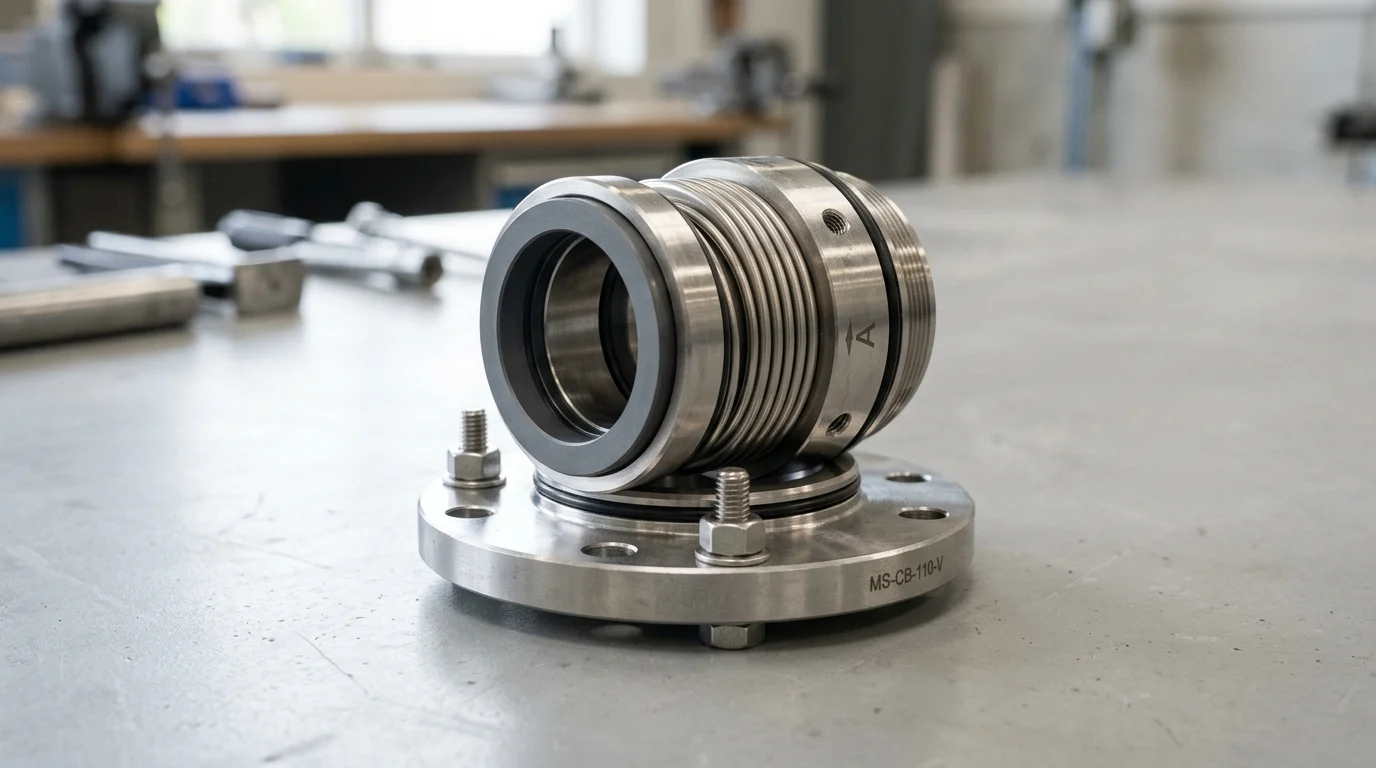
Why a Mechanical Seal RFQ Matters
For industrial procurement teams managing rotating equipment, the mechanical seal is rarely a mere commodity. Although mechanical seals may represent a fraction of the initial capital expenditure for a centrifugal pump or agitator, they historically account for 60% to 70% of all pump maintenance outages. Because these components form the primary barrier between hazardous process fluids and the atmosphere, the procurement process demands rigorous technical and commercial alignment. A poorly executed Request for Quotation (RFQ) often results in mismatched metallurgy, inadequate environmental controls, and drastically reduced Mean Time Between Failures (MTBF).
A structured Mechanical Seal RFQ bridges the gap between plant engineering and supply chain management. By standardizing the data collection and bidding process, procurement teams can evaluate proposals on a normalized basis, ensuring that suppliers are quoting equivalent technologies rather than competing solely on upfront capital cost. Implementing a rigorous RFQ framework not only streamlines the purchasing cycle but also establishes a foundation for lifecycle reliability and regulatory compliance.
Procurement Risks It Helps Reduce
The primary objective of a comprehensive RFQ is to mitigate the operational and financial risks associated with seal failure. When suppliers are forced to make assumptions due to incomplete RFQ data, they typically default to either overly conservative, expensive designs or baseline configurations that may not withstand process upsets. An exact RFQ eliminates these ambiguities. By demanding adherence to standards such as API 682 for oil and gas applications, procurement teams can reduce MTBF variances by up to 40%, ensuring highly predictable maintenance intervals.
Furthermore, a precise RFQ protects the facility from fugitive emission violations. Environmental regulations dictate stringent leak detection and repair (LDAR) thresholds, often limiting volatile organic compound (VOC) emissions to below 500 parts per million (ppm). Sourcing a seal without explicitly defining these regulatory thresholds in the RFQ exposes the plant to severe fines and unplanned shutdowns. The RFQ acts as a binding technical contract that shifts the burden of performance compliance onto the manufacturer.
Key Terms Teams Should Standardize
To ensure all vendors interpret the RFQ identically, procurement teams must standardize the terminology used across the enterprise. Ambiguous terms like “high temperature” or “corrosive” must be replaced with exact operational limits and standardized material nomenclatures. For instance, teams should clearly distinguish between static elastomers (such as O-rings) and dynamic secondary sealing elements, specifying exact grades like FFKM (perfluoroelastomers) rather than generic trade names.
Standardizing terms also facilitates inventory rationalization. A well-constructed RFQ strategy can identify overlapping seal specifications across different plant units. By standardizing shaft sizes, seal chamber dimensions, and material combinations in the RFQ template, procurement can often consolidate mechanical seal inventory, sometimes reducing active SKUs from 50 distinct part numbers down to 15 modular configurations. This standardization directly reduces carrying costs while increasing purchasing leverage through higher volume commitments.
Technical Data to Include in the RFQ

The technical datasheet is the absolute core of the Mechanical Seal RFQ. Without exhaustive process and equipment data, seal manufacturers cannot perform the necessary thermodynamic and tribological calculations to select the correct seal faces and support systems. Procurement teams must collaborate closely with process engineers to populate the RFQ with both nominal operating data and maximum upset conditions, as a seal designed only for steady-state operation will likely fail during startup or system flushes.
Operating Conditions
Operating conditions dictate the fundamental design of the mechanical seal. The RFQ must capture the exact fluid composition, including the percentage of entrained solids and specific gravity. Temperature profiles are critical; the RFQ should state the normal operating temperature alongside minimum and maximum limits (e.g., -40°C to 400°C). Pressure data must include suction pressure, discharge pressure, and the specific seal chamber pressure, which can exceed 150 bar in high-energy pipeline pumps.
Additionally, the vapor pressure margin must be explicitly stated. If the fluid’s vapor pressure at operating temperature is too close to the seal chamber pressure, the fluid will vaporize between the seal faces, leading to dry running and catastrophic failure. Industry best practices dictate specifying a minimum vapor pressure margin of 1.5 bar or 10% above the fluid’s vapor pressure, whichever is greater, ensuring the vendor supplies the appropriate cooling or pressurization flush plan.
Pump and Equipment Interface Data
A mechanical seal must physically fit into the host equipment, making dimensional and interface data paramount. The RFQ must specify the exact equipment make, model, and frame size. Critical dimensions include the shaft or sleeve outer diameter (typically ranging from 25mm up to 150mm for standard process pumps), the stuffing box bore, and the available axial depth.
Beyond static dimensions, the RFQ should define the acceptable mechanical condition of the pump. Suppliers need to know the radial and axial runout limits to select the correct spring mechanisms and clearances. For example, standard API pumps generally maintain a maximum shaft deflection of 0.05 mm Total Indicator Reading (TIR) at the seal faces. If the equipment exceeds these tolerances, the vendor may need to quote a heavy-duty stationary seal design rather than a standard rotating configuration to absorb the excessive vibration.
Materials, Seal Types, and Arrangements
The RFQ must outline the required seal arrangement and preferred metallurgy, often referencing API 682 or ISO 21049 standards. Procurement must specify whether a single seal (Arrangement 1) is sufficient, or if the hazard level of the fluid dictates a dual unpressurized (Arrangement 2) or dual pressurized (Arrangement 3) configuration. Material selection for the seal faces—such as Reaction Bonded Silicon Carbide versus Nickel-Bound Tungsten Carbide—must be clearly defined to ensure chemical compatibility.
| API 682 Arrangement | Configuration | Typical Application | Target Emission Limit |
|---|---|---|---|
| Arrangement 1 | Single Seal | Non-hazardous, lubricating fluids | < 1,000 ppm |
| Arrangement 2 | Dual Unpressurized | Hazardous fluids, moderate vapor pressure | < 500 ppm |
| Arrangement 3 | Dual Pressurized | Highly toxic, abrasive, or flashing fluids | 0 ppm (to atmosphere) |
Elastomer selection is another critical cost driver that must be specified. Upgrading from standard FKM (fluoroelastomer) to high-performance FFKM can add a $200 to $500 premium per seal, depending on the shaft size. If the process requires exotic metallurgy for the wetted metal parts, such as Alloy C-276 or Titanium, the RFQ must explicitly mandate these materials to prevent vendors from quoting cheaper, non-compliant 316 Stainless Steel alternatives.
How to Compare Supplier Responses
Receiving quotations from multiple seal manufacturers often presents a challenge in normalization. Because mechanical seal designs are highly proprietary, vendors rarely quote identical internal geometries. Procurement professionals must strip away marketing terminology and evaluate the underlying engineering principles, lifecycle economics, and commercial conditions to determine the true value of each proposal.
Technical Evaluation Criteria
Technical evaluation begins by verifying that the vendor has met the fundamental constraints of the RFQ, particularly regarding Pressure-Velocity (PV) limits. The PV value represents the frictional heat generated at the seal faces. If a vendor proposes a design where the operating conditions exceed typical PV limits (e.g., approaching 100,000 psi-ft/min for standard materials), the evaluator must look for specialized face treatments or advanced cooling plans to justify the design.
The balance ratio of the proposed seal is another critical technical metric. For high-pressure applications, seals must be hydraulically balanced to reduce face loading and heat generation. A standard balanced seal typically features a balance ratio between 0.75 and 0.85. If a vendor quotes an unbalanced seal for a high-pressure application to lower the initial price, the technical evaluation should flag this as a severe reliability risk that invalidates the cost savings.
Price, Performance, and Service Comparison
Price comparison must be inextricably linked to performance guarantees and service support. A quotation for a basic pusher seal at $2,500 cannot be directly compared to a sophisticated metal bellows seal priced at $4,000 without considering the expected lifecycle. The evaluator must analyze the proposed MTBF; if the $4,000 seal is engineered to run for 60 months without intervention, while the $2,500 seal typically requires replacement every 24 months, the higher upfront cost yields a superior return on investment.
Service capabilities also differentiate supplier proposals. Bidders should be evaluated on their localized support infrastructure. A vendor offering a slightly higher initial capital cost but providing localized failure analysis, a dedicated reliability engineer, and onsite installation supervision often delivers better long-term value than a low-cost supplier with no regional service center.
Warning Signs in Supplier Quotations
Procurement teams must be vigilant in identifying warning signs within supplier quotations that indicate hidden risks. One major red flag is the use of vague material descriptions. If a quotation lists “Carbon” for a seal face without specifying whether it is resin-impregnated or antimony-impregnated, the supplier is leaving room to substitute lower-grade materials post-award. Exact material grades and internationally recognized standards (such as ASTM designations) must be present.
Another warning sign involves unexplained deviations in lead times. If the RFQ requires exotic alloys like Super Duplex stainless steel, standard industry lead times generally range from 12 to 16 weeks due to raw material sourcing and machining constraints. If a vendor quotes a 4-week lead time for a custom exotic seal without explicitly stating they hold the specific raw material in stock, it often indicates a fundamental misunderstanding of the material requirement or an overly optimistic production schedule that will result in severe delivery delays.
Commercial, Quality, and Compliance Requirements
While technical specifications ensure the mechanical seal will function within the pump, the commercial, quality, and compliance requirements dictate the long-term viability of the supplier relationship. Mechanical seals are not “fit-and-forget” components; they require continuous support, traceable manufacturing processes, and a clear understanding of the total financial impact on the plant’s operational budget.
Total Cost of Ownership
The initial purchase price of a mechanical seal typically represents only 10% to 15% of its Total Cost of Ownership (TCO) over a five-year lifecycle. Procurement teams must mandate that suppliers provide the necessary data to calculate TCO within the RFQ response. This includes the cost of barrier fluids, the utility costs for cooling water, and the energy consumed by seal face friction, which can draw between 1 to 3 kW of power per seal depending on the size and speed.
| Cost Category | Typical Percentage of TCO | Key Drivers to Evaluate in RFQ |
|---|---|---|
| Initial Capital Cost | 10% – 15% | Hardware, metallurgy, engineering overhead |
| Operating Utilities | 30% – 40% | Cooling water, barrier fluid (e.g., 2 liters/month), frictional energy |
| Maintenance & Repair | 35% – 45% | Seal repair kits, labor, decontamination processes |
| Inventory Carrying Cost | 10% – 15% | Spares stocking, warehousing, obsolescence |
For dual pressurized seals (Arrangement 3), the required seal support system (e.g., API Plan 53B or 54) heavily impacts TCO. The RFQ should require vendors to quote the support system alongside the seal, detailing nitrogen consumption rates, accumulator bladder replacement intervals, and barrier fluid top-up frequencies. Ignoring these peripheral costs during the RFQ stage will result in severely skewed budget projections.
Quality Standards and Certifications
Quality assurance and compliance documentation must be explicitly requested in the RFQ. For general industrial applications, ISO 9001 certification is the baseline. However, for critical sectors like oil refining or chemical processing, compliance with API 682 4th Edition is mandatory. The RFQ must state whether the seal requires specific testing, such as hydrostatic pressure testing of the gland plate or dynamic performance testing prior to shipment.
Material traceability is equally critical. The RFQ should mandate the provision of Material Test Reports (MTRs), specifically EN 10204 Type 3.1 certificates, for all pressure-retaining and wetted metallic components. For pharmaceutical or food and beverage applications, the elastomers and face materials must carry FDA compliance and USP Class VI certifications. Failure to secure these documents at the time of order can render the seal unusable in regulated environments, forcing costly repurchases.
Lead Time, Spares, and Supply Support
Supply chain resilience is a critical factor in mechanical seal procurement. The RFQ must require vendors to clearly state their lead times for the initial complete seal assembly, as well as the lead times for standard repair kits (which typically include replacement elastomers, springs, and faces). Procurement should establish expectations for Minimum Order Quantities (MOQs), ensuring that the plant is not forced to buy excessive inventory just to secure a single critical O-ring.
Furthermore, the RFQ should outline expectations for repair turnaround times. A standard factory repair for a cartridge seal might take 14 to 21 days, but plants often require expedited services during unplanned outages. Procurement should ask vendors to define their expedited repair capabilities (e.g., 48-hour turnarounds) and explicitly state the percentage premium charged for these emergency services. Securing these commercial terms during the competitive RFQ phase prevents price gouging during a crisis.
How to Finalize the Mechanical Seal RFQ
Finalizing the mechanical seal RFQ transitions the process from theoretical evaluation to a binding commercial contract. This phase requires meticulous attention to detail, ensuring that the preferred supplier’s proposal perfectly aligns with the plant’s operational needs, legal requirements, and delivery schedules. A structured finalization workflow prevents costly miscommunications and sets the stage for successful installation and commissioning.
RFQ Workflow from Data Collection to Award
The end-to-end RFQ workflow for an engineered mechanical seal typically spans 4 to 6 weeks. It begins with the consolidation of process data and the issuance of the RFQ package. Once bids are received, procurement and engineering teams conduct a preliminary review to weed out non-compliant proposals. This is followed by Technical Clarification Meetings (TCMs) with the shortlisted vendors. During TCMs, engineers interrogate the proposed seal face technologies, flush plans, and thermal calculations.
After technical alignment is achieved, procurement leads the commercial negotiation phase. This involves finalizing payment terms, warranty durations, and performance guarantees. The workflow concludes with a formal commercial evaluation report that documents the justification for the final supplier selection, creating a transparent audit trail that satisfies internal governance and quality management systems.
Decision Matrix for Supplier Selection
To remove subjective bias from the award process, procurement teams should utilize a weighted decision matrix. A standard industrial matrix might allocate 40% of the total score to Technical Compliance (evaluating PV limits, material suitability, and API compliance). Commercial factors, including the initial purchase price and payment terms, typically account for 30%.
The remaining 30% is often split between Lifecycle/TCO considerations (20%) and Delivery/Support (10%). By quantifying variables such as the cost of barrier fluid consumption, the proximity of the vendor’s repair facility, and the guaranteed lead time, the decision matrix mathematically highlights the proposal that offers the most robust long-term value, rather than simply defaulting to the lowest initial bidder.
Final Checks Before Purchase Order
Before issuing the final Purchase Order (PO), several critical checks must be completed. First, procurement must verify the General Arrangement (GA) drawing approval workflow. The PO should explicitly state that manufacturing cannot commence until plant engineering has signed off on the vendor’s GA drawings, ensuring all dimensional interfaces and flush port orientations match the physical pump.
Finally, commercial terms must be cross-checked against the plant’s corporate liability policies. The PO must clearly define the warranty start date—whether it begins upon shipment, installation, or commissioning (often capped at 18 months from shipment or 12 months from installation). Additionally, liability limits for consequential damages, such as lost production due to a seal failure, must be negotiated. While vendors typically exclude consequential damages, procurement must ensure direct liability is capped appropriately, often at 100% of the PO value, to protect the facility’s financial interests.
Key Takeaways
- The most important conclusions and rationale for Mechanical Seal RFQ
- Specs, compliance, and risk checks worth validating before you commit
- Practical next steps and caveats readers can apply immediately
Frequently Asked Questions
What should buyers compare first when sourcing Mechanical Seal RFQ?
Start with airflow/spec range, compliance requirements, installation constraints, and after-sales spare-part policy. These four factors usually determine total risk and margin quality.
How can readers control landed cost for Mechanical Seal RFQ?
Break down unit FOB, packaging volume, container utilization, duty/tax, and expected return rate. A simple landed-cost model by SKU tier helps avoid margin surprises.
Which certifications are commonly required for Mechanical Seal RFQ in key markets?
Requirements vary by destination market; verify applicable electrical/safety and material compliance standards before PO confirmation, and keep lab reports tied to exact SKU versions.
How should distributors set MOQ and inventory targets for Mechanical Seal RFQ?
Use channel demand split and lead time to set tiered MOQ. Keep fast-moving SKUs deeper in stock while limiting long-tail variants with slower turns and higher holding costs.
What is a practical quality-control checklist for Mechanical Seal RFQ orders?
Define AQL, critical defect list, function tests, and packaging drop checks. Run pre-shipment inspection and keep a traceable defect feedback loop with the factory.

Post time: Aug-29-2026