


Introduction
Choosing between a mechanical seal manufacturer and a supplier affects more than purchase price. It shapes product fit, lead times, technical support, quality control, and the long-term reliability of pumps and rotating equipment. The better option depends on how you buy: OEMs often need customization, volume consistency, and engineering collaboration, while MRO teams may value fast stock availability and easier sourcing across multiple brands. This article explains the practical differences between working directly with a mechanical seal manufacturer and buying through a supplier, including cost, risk, service, and application suitability, so you can match your sourcing strategy to your operating priorities.
Why choosing the right mechanical seal partner matters
The selection of a sourcing partner for mechanical seals dictates far more than initial capital expenditure; it fundamentally influences plant reliability, environmental compliance, and overall maintenance budgets. In critical fluid-handling operations, mechanical seal failure is often the primary cause of pump downtime. Consequently, whether an organization engages directly with a mechanical seal manufacturer or procures through an industrial supplier requires strategic alignment with the facility’s operational objectives.
Procurement priorities by use case
Procurement priorities shift drastically depending on the end-user’s position in the industrial lifecycle. Original Equipment Manufacturers (OEMs) typically prioritize unit cost scaling, design standardization, and strict delivery schedules to maintain production lines. Conversely, Maintenance, Repair, and Operations (MRO) buyers prioritize immediate availability and Mean Time Between Failures (MTBF).
For an MRO facility operating under API 682 standards, extending seal MTBF from three to five years yields massive dividends. Unscheduled pump downtime in sectors like petrochemical processing or power generation can incur staggering costs, frequently ranging from $10,000 to $50,000 per hour. Therefore, the sourcing partner must align with the specific urgency and scale required by the buyer’s use case.
Commercial and operational risks
Relying on an unverified sourcing channel introduces severe commercial and operational risks. Counterfeit elastomers or substandard silicon carbide faces can lead to catastrophic leakage, hazardous material exposure, and severe regulatory fines. Furthermore, supply chain opacity can mask a vendor’s inability to scale during peak demand.
A robust procurement strategy must account for defect rates, aiming for a threshold of less than 0.5% non-conformance across delivered batches. Simultaneously, buyers must mitigate the risk of single-source bottlenecks during macroeconomic disruptions by ensuring their chosen partner has redundant manufacturing or stocking capabilities.
Mechanical seal manufacturer vs supplier
Distinguishing between a direct manufacturer and a specialized supplier is the first step in optimizing the supply chain. While these terms are occasionally used interchangeably in broader industrial procurement, they represent distinct operational models with differing capabilities, overhead structures, and value propositions.
Manufacturer capabilities and control
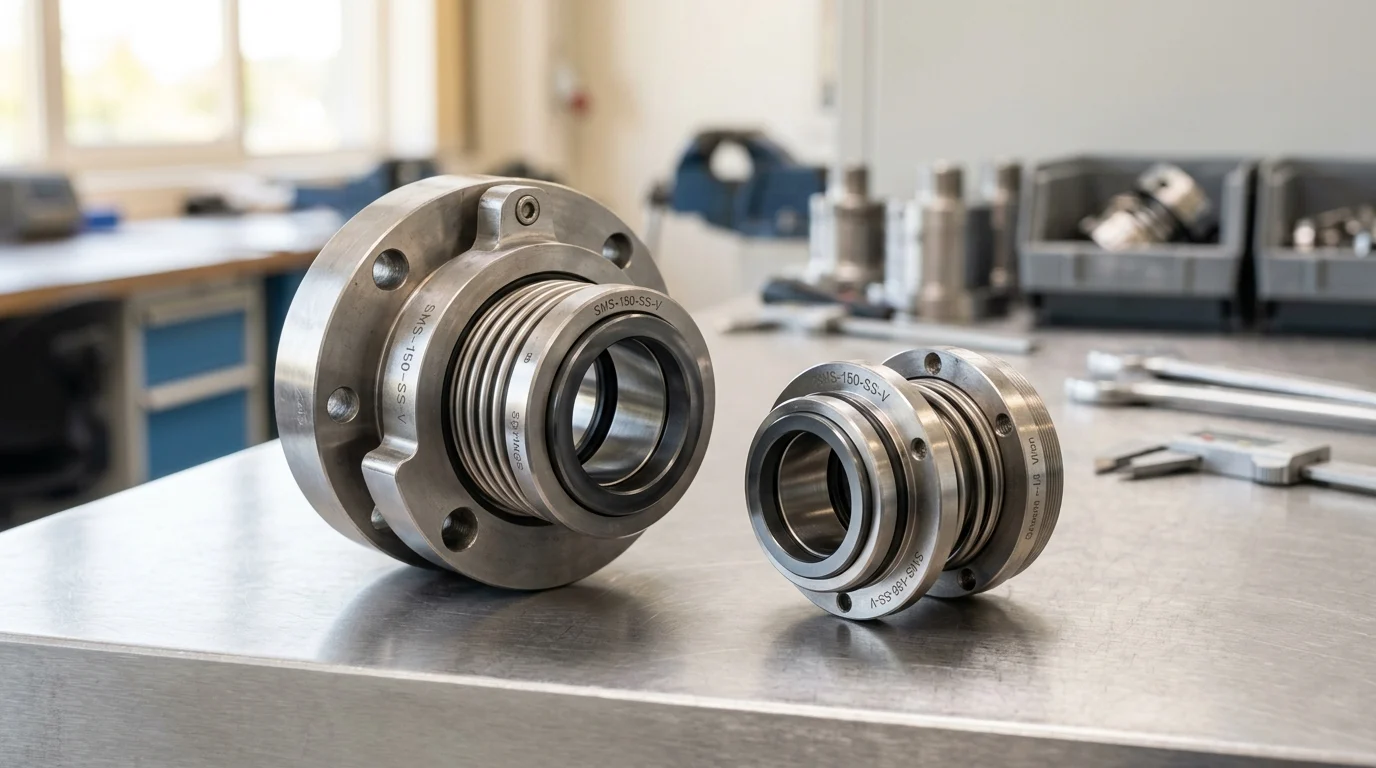
A mechanical seal manufacturer owns the production infrastructure, encompassing CNC machining, elastomer molding, face lapping, and dynamic testing. Engaging directly with the factory grants buyers unfiltered access to application engineers and metallurgists. This direct line is crucial when specifying custom face combinations, such as sintered silicon carbide against tungsten carbide, for highly abrasive slurries.
Direct manufacturers also control their production queues, allowing them to engineer bespoke sealing solutions from raw bar stock. However, custom engineering projects and factory-direct runs require planning, as custom seal fabrications often carry lead times of 8 to 12 weeks, depending on specialized material availability.
When a supplier adds value
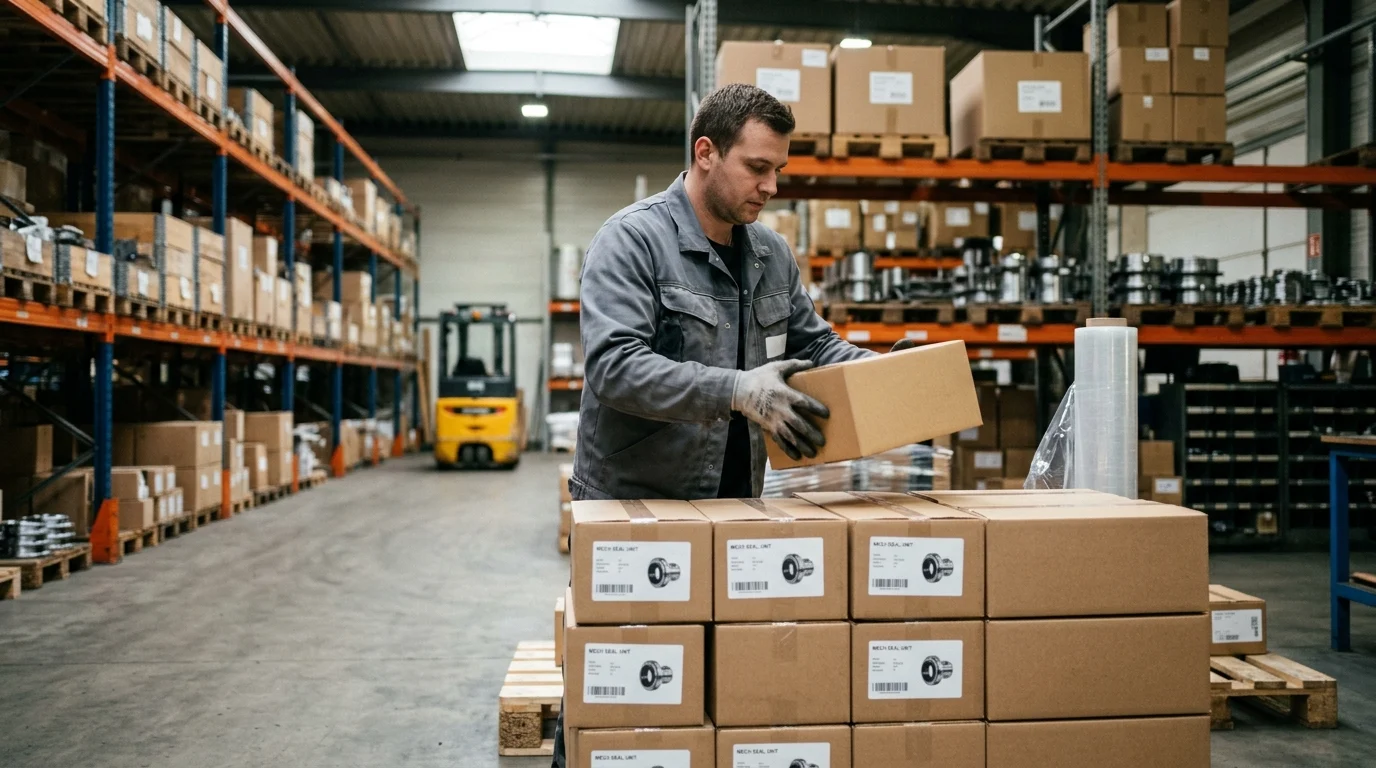
Industrial suppliers and distributors do not fabricate the seals but excel in logistics, inventory management, and vendor consolidation. A high-tier supplier adds immense value by holding local stock of high-turnover component seals, absorbing the inventory carrying costs on behalf of the buyer.
By maintaining automated Vendor Managed Inventory (VMI) systems and stocking over 1,000 unique SKUs regionally, suppliers can shield facilities from international freight delays and factory lead times. This localized buffering ensures that standard replacement parts are available for same-day or next-day delivery, drastically reducing inventory overhead for the end-user.
Best fit for OEM, MRO, and EPC buyers
The optimal partner depends heavily on the buyer’s organizational archetype and daily operational demands. Understanding these profiles ensures that procurement resources are directed efficiently.
| Buyer Type | Primary Sourcing Goal | Preferred Partner | Typical Order Profile |
|---|---|---|---|
| OEM | Margin control, custom branding, high volume | Direct Manufacturer | Scheduled blanket orders, >500 units/year |
| MRO | Speed, MTBF optimization, local support | Supplier/Distributor | Spot buys, emergency replacements, 1-10 units |
| EPC | Project compliance, bulk pricing, documentation | Hybrid / Direct | Large batch orders tied to capital projects |
How to compare manufacturers and suppliers
Evaluating potential partners requires a standardized framework that isolates technical competence from commercial agility. Procurement teams must move beyond simple unit price comparisons to assess the structural integrity of the vendor’s operations and their ability to sustain quality over time.
Technical and commercial evaluation criteria
Technical evaluation must scrutinize the vendor’s quality management systems and testing infrastructure. A baseline requirement is ISO 9001 certification, but advanced applications demand more rigorous validation. Auditors should verify if the manufacturer performs dynamic spin testing and hydrostatic pressure testing at 1.5x the maximum design pressure to ensure seal integrity under surge conditions.
Commercially, buyers must evaluate payment terms, warranty conditions, and the vendor’s financial stability. A technically brilliant manufacturer is only viable if its commercial framework can support long-term operational contracts without demanding prohibitive upfront capital.
Documentation, traceability, and compliance
In heavily regulated industries such as pharmaceuticals, food and beverage, and oil and gas, documentation is as critical as the physical hardware. Sourcing partners must be capable of providing comprehensive, tamper-proof traceability.
This includes EN 10204 3.1 Material Test Reports (MTRs) for all metallic components, FDA or USP Class VI certificates for secondary elastomers, and ATEX certifications for explosive atmospheres. Manufacturers typically have direct access to raw material heats, making them inherently better suited for rigorous compliance tracing compared to suppliers, who must chase documentation down a complex supply chain.
Lifecycle cost beyond unit price
Procurement professionals often fall into the trap of selecting a mechanical seal partner based solely on the lowest initial purchase price. However, the unit price typically represents only 15% to 20% of the Total Cost of Ownership (TCO) over the seal’s operational lifecycle.
The remainder of the TCO consists of installation labor, energy consumption due to friction, barrier fluid system maintenance, and the opportunity cost of potential failures. A technically proficient manufacturer might charge a 30% premium upfront for an optimized, pre-assembled cartridge seal. Yet, if that design reduces installation time and doubles the MTBF, the lifecycle savings will heavily outweigh the initial capital outlay.
When to buy direct vs through a supplier
The decision to bypass a local supplier in favor of a direct manufacturer—or vice versa—hinges on the specific demands of the pumping application, the volume of the procurement contract, and the geographic distribution of the end-user’s assets.
Applications suited to direct sourcing
Direct sourcing is the undisputed choice for highly engineered, mission-critical applications. When dealing with API 682 Category 2 or 3 seals, dry gas seals, or applications involving extreme operational parameters—such as pressures exceeding 60 bar or temperatures soaring above 260°C—the technical risk necessitates direct factory engagement.
Direct sourcing is also optimal for OEMs purchasing standard seals in massive volumes. By cutting out the distributor’s markup, OEMs can realize significant competitive advantages in their final equipment pricing, provided they can absorb the logistical responsibilities of bulk freight.
Situations where suppliers are better
Suppliers shine in heterogeneous environments where a single plant operates hundreds of different pump brands and models. Instead of managing dozens of direct accounts with various mechanical seal manufacturers, a procurement team can consolidate spend through a single distributor.
Suppliers are inherently the superior choice for standard ANSI or DIN pump component seals, municipal water and wastewater applications, and scenarios where the technical complexity is low but the demand for rapid, unpredictable replenishment is high.
Logistics and after-sales considerations
After-sales support dictates long-term success. While manufacturers offer deep technical troubleshooting, their physical service centers are often centralized. Local suppliers frequently operate regional repair centers capable of relapping seal faces and replacing elastomers within a 24- to 48-hour turnaround window. Conversely, returning a specialized cartridge seal to an overseas factory for refurbishment can incur lead times of four to six weeks.
| Consideration | Direct Manufacturer | Local Supplier |
|---|---|---|
| Unit Cost (High Volume) | Lowest | Moderate (includes markup) |
| Engineering Support | Deep, authoritative | General, reliant on factory |
| Delivery (Standard) | 2-4 weeks | 1-2 days (from stock) |
| Repair Turnaround | 4-6 weeks | 24-48 hours (if equipped) |
Decision framework for buyers
Establishing a resilient mechanical seal supply chain requires a methodical decision-making framework. By systematically filtering candidates based on technical capacity, logistical reach, and commercial alignment, procurement teams can secure partnerships that drive long-term reliability and cost efficiency.
Step-by-step evaluation process
The evaluation process should begin with a comprehensive audit of the facility’s historical seal failure data to define exact technical specifications. Next, issue a Request for Information (RFI) to screen out vendors lacking necessary certifications.
For shortlisted manufacturers, conduct a virtual or physical supply chain audit, examining their CNC machining tolerances and raw material inventory. Finally, execute a trial run. For OEMs, this may involve negotiating Minimum Order Quantities (MOQs) of 50 to 100 units to test production consistency, whereas MROs might trial a vendor on a specific troublesome pump before awarding a broader plant-wide contract.
Key questions to ask
During the vetting phase, buyers must ask targeted questions to reveal the true capabilities of the partner. Ask manufacturers: “What percentage of your components are machined in-house versus outsourced?” and “Can you provide MTBF data for this specific face material combination in our exact fluid application?”
For suppliers, critical questions include: “What is the exact dollar value of mechanical seal inventory held within a 100-mile radius of our plant?” and “Do you employ dedicated rotating equipment specialists, or are your representatives general industrial sales staff?” The answers to these questions will quickly separate tier-one partners from standard catalog resellers.
Final selection guidance
Ultimately, the choice between a mechanical seal manufacturer and a supplier is not a binary mandate but a strategic allocation of resources. High-volume, highly engineered, or compliance-heavy requirements naturally gravitate toward direct manufacturers to ensure control and minimize unit costs.
Conversely, volatile MRO environments requiring rapid replenishment, vendor consolidation, and localized repair lean heavily toward specialized suppliers. By applying this framework, industrial buyers can optimize their procurement strategy, balancing upfront capital expenditures against the paramount need for continuous, leak-free operations.
Key Takeaways
- The most important conclusions and rationale for mechanical seal manufacturer
- Specs, compliance, and risk checks worth validating before you commit
- Practical next steps and caveats readers can apply immediately
Frequently Asked Questions
When should I buy directly from a mechanical seal manufacturer?
Buy direct when you need custom designs, OEM-compatible parts, better unit pricing at volume, or engineering input on materials and seal faces.
When is a supplier better than a manufacturer?
A supplier is better for urgent MRO needs, small orders, and local stock availability when downtime matters more than factory-direct customization.
What advantages does Victor Seals offer as a manufacturer?
Victor Seals provides factory-based production, 20+ years of experience, OEM-compatible replacements, and a broad range of standard and custom mechanical seals.
Can Victor Seals supply replacements for major pump brands?
Yes. Victor Seals offers replacement and OEM-compatible seals for brands like Grundfos, IMO, Alfa Laval, APV, Flygt, Fristam, Lowara, and Allweiler.
How should industrial buyers compare seal manufacturers and suppliers?
Check quality consistency, material traceability, lead time, technical support, brand compatibility, and whether the partner can meet your volume or emergency needs.
Post time: Jun-20-2026