


Introduction
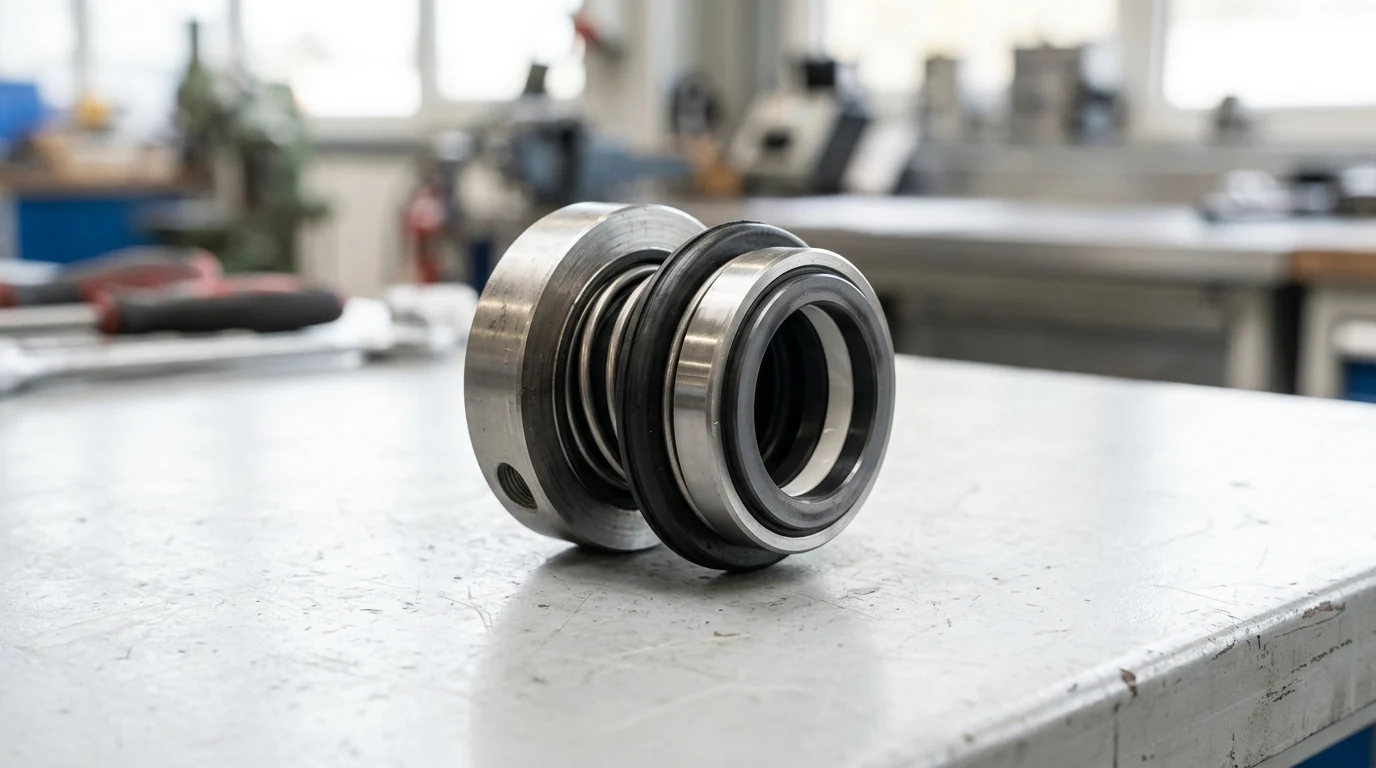
Selecting a pump shaft seal affects far more than leakage at the shaft. The right choice influences equipment uptime, maintenance frequency, energy use, safety, and compliance with emission standards. Because seal performance depends on operating pressure, temperature, fluid properties, shaft speed, and pump design, a suitable option in one system may fail quickly in another. This article explains the key factors that guide seal selection, compares common seal types and materials, and shows how to match them to real operating conditions. By the end, readers will have a practical framework for choosing a seal that improves reliability and lowers total operating cost.
Why Choosing the Right Pump Shaft Seal Matters
In the architecture of rotating equipment, the pump shaft seal represents the primary defense against fluid loss, atmospheric contamination, and catastrophic mechanical failure. Despite its relatively small physical footprint within a centrifugal or positive displacement pump, the shaft seal is historically responsible for the highest percentage of pump downtime. Industry reliability studies consistently indicate that seal failures account for 65% to 70% of all pump maintenance interventions.
Selecting the correct sealing mechanism is not merely a matter of hardware compatibility; it is a complex engineering decision that directly dictates the operational lifecycle of the asset. An optimized seal configuration maximizes the Mean Time Between Failures (MTBF), safeguards environmental compliance, and reduces continuous operational expenditures associated with product loss and maintenance labor.
Impact on uptime and leakage
The direct correlation between seal selection and facility uptime is measured through MTBF and volumetric leakage rates. A highly optimized mechanical seal operating under ideal conditions can extend a pump’s MTBF from a baseline of 12 months to over 36 months. Conversely, a misapplied seal will suffer from rapid face wear, thermal distortion, or elastomer degradation, forcing premature shutdowns.
Modern emission regulations demand stringent leakage control. For instance, mechanical seals designed to API 682 standards are typically engineered to restrict volatile organic compound (VOC) emissions to less than 500 parts per million (ppm), with maximum allowable liquid leakage rates often capped at 5.6 grams per hour for standard hydrocarbon applications. Maintaining these microscopic leakage tolerances is what keeps continuous processing plants running without regulatory interruption.
Consequences of incorrect seal selection
Failing to specify the correct pump shaft seal triggers a cascade of negative consequences. The most immediate impact is financial: in high-capacity petrochemical or refining operations, unplanned pump downtime can incur costs ranging from $10,000 to $50,000 per day in lost production alone.
Beyond lost revenue, incorrect selection compromises safety. A seal incapable of handling unexpected pressure spikes or high-temperature transients may experience catastrophic face blowout, releasing hazardous, flammable, or toxic fluids into the atmosphere. Additionally, poor seal choices often lead to secondary equipment damage, such as severe shaft fretting, bearing contamination, and motor failure due to fluid ingress, multiplying the baseline repair costs by a factor of three to five.
Pump Shaft Seal Basics and Main Types

Industrial pump shaft seals operate on the principle of controlling the clearance between a rotating shaft and a stationary pump casing. While the fundamental goal remains constant, the mechanical approach varies significantly based on the fluid’s aggression, the required leak rate, and the available maintenance budget. The two dominant categories are traditional compression packing and precision mechanical seals.
Packing vs mechanical seals
Compression packing, historically known as gland packing, utilizes braided materials (such as PTFE, graphite, or aramid) compressed around the shaft to restrict fluid flow. It requires deliberate, continuous leakage—typically around 40 to 60 drops per minute—to lubricate and cool the shaft. While packing offers low initial procurement costs and can be repacked without fully disassembling the pump, it consumes up to six times more frictional power than alternative methods.
Mechanical seals utilize two extremely flat mating faces (one rotating, one stationary) pressed together by spring tension and fluid pressure. A microscopic fluid film, often less than 1 micron thick, separates the faces, resulting in near-zero visible leakage. Though the initial investment is higher, mechanical seals eliminate shaft fretting and drastically reduce product loss.
| Feature | Compression Packing | Mechanical Seal |
|---|---|---|
| Visible Leakage Rate | 40 – 60 drops/min | < 5.6 g/hr (near zero) |
| Friction Power Loss | High (continuous drag) | Low (fluid film lubricated) |
| Initial Procurement Cost | Low ($50 – $200) | High ($500 – $5,000+) |
| Shaft/Sleeve Wear | High (fretting is standard) | None (wear is isolated to faces) |
Single, double, and cartridge seals
Mechanical seals are further categorized by their configuration. Single seals consist of one pair of mating faces and are generally suitable for non-hazardous fluids up to 300 psi. They rely entirely on the pumped fluid for lubrication.
Double seals utilize two pairs of faces and a barrier or buffer fluid system. In a pressurized double seal arrangement, the barrier fluid is maintained at a pressure 10% to 15% higher than the pump’s stuffing box pressure, ensuring that if the inner seal fails, the barrier fluid leaks into the process, rather than the hazardous process fluid leaking into the atmosphere.
Cartridge seals are pre-assembled units containing the seal faces, gland plate, sleeve, and dynamic elastomers in one package. By eliminating the need to manually set the seal spring compression (working length) on the shaft, cartridge seals reduce installation errors by an estimated 40% and significantly accelerate maintenance turnaround times.
Best fits for clean, abrasive, or hazardous fluids
Matching the seal type to the fluid state is the cornerstone of reliability. For clean, non-hazardous fluids like cooling water or light solvents, a single cartridge seal provides the most cost-effective performance.
Abrasive applications, such as mining slurries or wastewater containing high silica levels, demand robust solutions. Hard-on-hard face combinations (e.g., Silicon Carbide against Silicon Carbide) are mandatory, often paired with an external clean flush (API Plan 32) to keep particulates away from the critical sealing gap.
For highly hazardous, toxic, or lethal fluids, double pressurized seals (supported by API Plan 53A, 53B, or 54 barrier fluid systems) are legally and operationally required. These configurations guarantee zero process emissions to the atmosphere, a strict requirement under EPA and international environmental directives.
Operating Conditions and Specifications That Drive Selection
Engineering a pump shaft seal requires evaluating the precise physical and thermodynamic conditions of the pumping application. The overarching metric used to determine mechanical seal viability is the PV (Pressure-Velocity) value, which calculates the load on the seal faces combined with the sliding velocity. Exceeding the manufacturer’s PV limit guarantees premature vaporization of the fluid film and rapid face destruction.
Pressure, temperature, speed, and fluid properties
Pressure limits dictate the structural integrity of the seal. Standard unbalanced mechanical seals are typically limited to stuffing box pressures of 150 psi, whereas balanced seals can handle pressures up to 400 psi, and highly engineered custom seals can withstand up to 3,000 psi in pipeline applications. Temperature profiles dictate the thermal expansion tolerances; seals must operate safely across a vast spectrum, commonly ranging from -40°C in cryogenic services to over 400°C in hot oil refineries.
Shaft rotational speed directly influences the centrifugal forces and frictional heat generation at the seal faces. Most standard seals are rated for face speeds up to 25 meters per second (m/s). Additionally, fluid properties such as viscosity heavily influence the seal’s hydrodynamic lift. High-viscosity fluids (above 3,000 centipoise) increase shear stress on the rotating components, often requiring specialized drive pins or robust torque transmission mechanisms to prevent the seal from twisting apart.
Material compatibility for faces, elastomers, and metal parts
Material selection is a rigorous process of matching metallurgies and elastomers to the chemical aggressiveness of the process fluid. For the primary sealing faces, engineers balance hardness, thermal conductivity, and chemical inertness.
Elastomers (O-rings) are equally critical. Standard Nitrile (NBR) is limited to 90°C and basic water/oil duties. Fluoroelastomers like FKM (Viton) extend thermal limits to 204°C and offer broad chemical resistance, while Perfluoroelastomers like FFKM (Kalrez) are reserved for extreme chemicals and temperatures up to 327°C. The structural metal components—springs, glands, and sleeves—are typically machined from 316 Stainless Steel, though highly corrosive environments may necessitate Alloy 20, Hastelloy C-276, or Titanium.
| Face Material | Hardness (Knoop) | Thermal Conductivity (W/mK) | Primary Application Profile |
|---|---|---|---|
| Carbon Graphite | 100 – 150 | 10 – 15 | Clean water, low-friction needs |
| Silicon Carbide (SiC) | 2,500 – 2,800 | 120 – 130 | Abrasives, high-temperature fluids |
| Tungsten Carbide (WC) | 1,800 – 2,200 | 80 – 100 | High-impact, heavy physical shock |
| Alumina Ceramic | 2,000 | 20 – 30 | Highly corrosive chemicals |
Seal selection checklist
A comprehensive seal selection checklist must capture parameters beyond basic temperature and pressure. Engineers must evaluate the fluid’s specific gravity and vapor pressure margin. If the Net Positive Suction Head available (NPSHa) is too close to the vapor pressure, the fluid may flash to gas across the seal faces, causing catastrophic dry running.
The checklist must also quantify the solids content. Applications with greater than 2% solids by weight typically require specialized seal face topographies or heavy-duty single-spring designs that resist clogging, as multiple small coil springs will rapidly foul in particulate-heavy streams.
How to Compare Suppliers, Standards, and Total Cost
Procuring a pump shaft seal involves balancing technical specifications with commercial realities. Industrial buyers must evaluate manufacturers not just on the physical product, but on their adherence to global engineering standards, their supply chain resilience, and the long-term financial implications of the chosen sealing technology.
Relevant standards and compliance requirements
Regulatory and industry standards form the baseline for supplier evaluation. In the oil, gas, and petrochemical sectors, the American Petroleum Institute’s API 682 (co-published as ISO 21049) is the definitive standard, dictating rigorous qualification testing, default material clearances, and standardized piping plans for mechanical seals. For general chemical processing, seals must often conform to ANSI B73.1 or DIN/ISO 2858 dimensional envelopes to ensure they fit standard pump housings.
In the pharmaceutical and food processing industries, compliance shifts toward sanitary requirements. Suppliers must provide seals that meet FDA material guidelines, United States Pharmacopeia (USP) Class VI elastomer certifications, and European Hygienic Engineering & Design Group (EHEDG) standards, ensuring the seal design contains no dead spaces where bacterial growth could occur.
Supplier capability, lead time, and support
Supplier capability directly impacts plant downtime. For standard dimensional cartridge seals, top-tier suppliers typically maintain a lead time of 1 to 2 weeks. However, custom-engineered seals for high-energy pumps may require 8 to 14 weeks for metallurgical casting, precise face lapping, and dynamic gas testing. Buyers must also consider Minimum Order Quantities (MOQs); while large shaft seals (over 2 inches) are usually available with an MOQ of 1, sub-1-inch specialty seals may require bulk purchasing.
Technical support infrastructure is another critical differentiator. A capable supplier will offer localized repair and face-lapping facilities, failure analysis reporting, and on-site engineering support to assist with complex installations and piping plan commissioning.
Upfront price vs lifecycle cost
Focusing solely on the initial purchase price is a common procurement error. The upfront cost of a mechanical seal typically represents only 15% to 20% of its Total Cost of Ownership (TCO) over a five-year lifecycle.
A comprehensive TCO analysis must account for operational utilities. For example, while compression packing is inexpensive, the cost of the treated flush water required to cool it—often exceeding 1 million gallons per year per pump—can vastly outweigh the cost of upgrading to a mechanical seal. Similarly, for double mechanical seals, the ongoing maintenance, nitrogen supply, and barrier fluid top-offs for an API Plan 53B accumulator system must be factored against the financial risk of a potential process leak.
Step-by-Step Pump Shaft Seal Selection Process
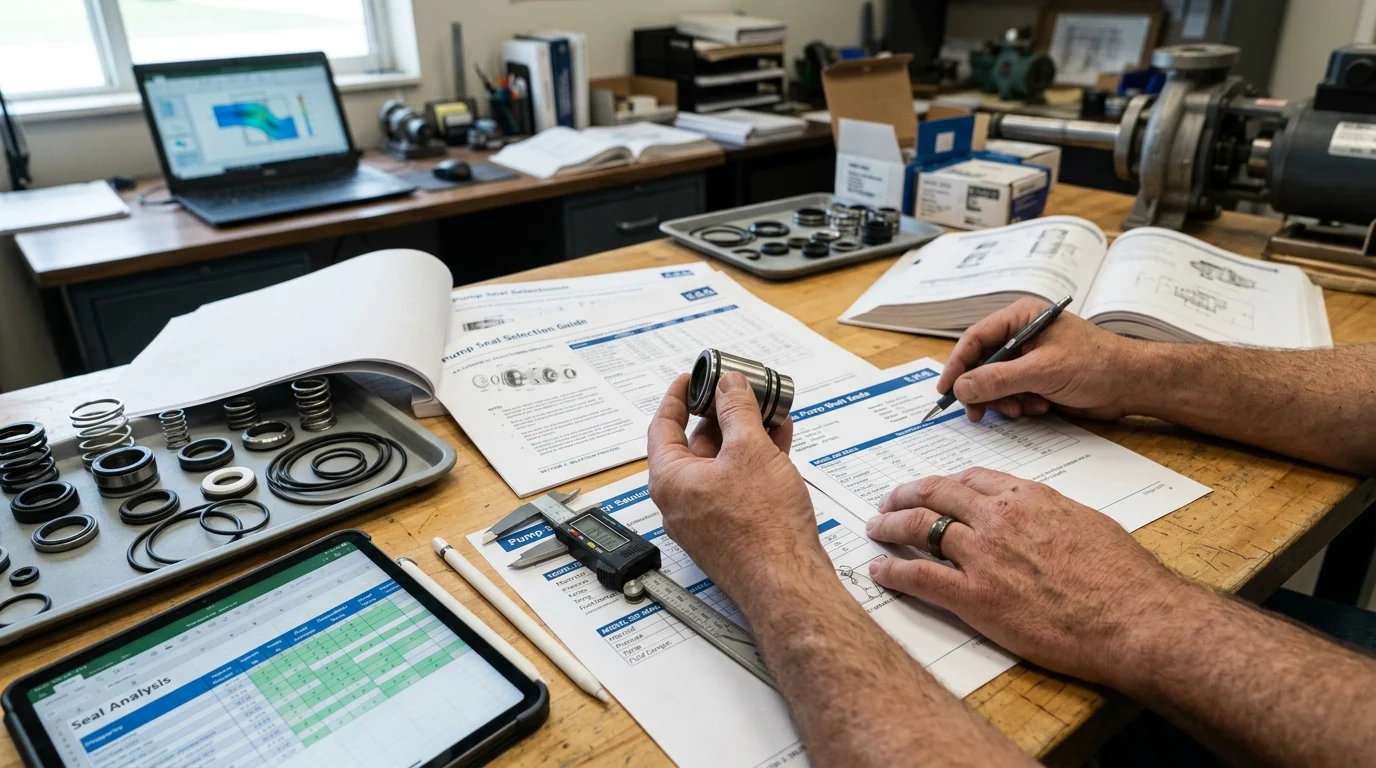
Selecting the optimal pump shaft seal requires a methodical, step-by-step approach that bridges process engineering, maintenance history, and procurement strategy. By following a structured decision matrix, industrial operators can eliminate guesswork, prevent misapplication, and establish a reliable baseline for rotating equipment performance.
Decision sequence from duty review to final choice
The selection sequence begins with a rigorous duty review. Step one is mapping the process fluid’s chemical composition, concentration, and phase state at the specific pumping temperature. Step two involves calculating the dynamic operating envelope, determining the maximum stuffing box pressure, and verifying that the shaft speed falls within the safe PV limits of the proposed face materials.
Step three requires identifying the environmental controls.
Key Takeaways
- The most important conclusions and rationale for Pump Shaft Seal
- Specs, compliance, and risk checks worth validating before you commit
- Practical next steps and caveats readers can apply immediately
Frequently Asked Questions
When should I choose a mechanical seal instead of packing?
Choose a mechanical seal when you need low leakage, less shaft wear, and longer pump uptime. Packing suits low-cost, non-critical service but needs regular adjustment and controlled leakage.
How do I select the right pump shaft seal material?
Match materials to the fluid, temperature, and pressure. For corrosive chemicals, use compatible elastomers and face materials like SiC or carbon; for hot or abrasive service, confirm with the seal supplier.
What is the difference between single and double pump shaft seals?
A single seal is common for non-hazardous clean fluids. A double seal is better for toxic, flammable, abrasive, or poor-lubricity media because it improves containment and seal life.
Can Victor Seals provide OEM-compatible pump shaft seals?
Yes. Victor Seals supplies OEM-compatible and replacement seals for brands such as Grundfos, Flygt, IMO, Alfa Laval, APV, Lowara, Fristam, and Allweiler.
What information should I prepare before requesting a seal quote?
Provide pump model, shaft size, fluid name, temperature, pressure, speed, and whether solids are present. Photos or old seal dimensions also help Victor Seals recommend the correct replacement quickly.
Post time: Jun-07-2026