


Introduction
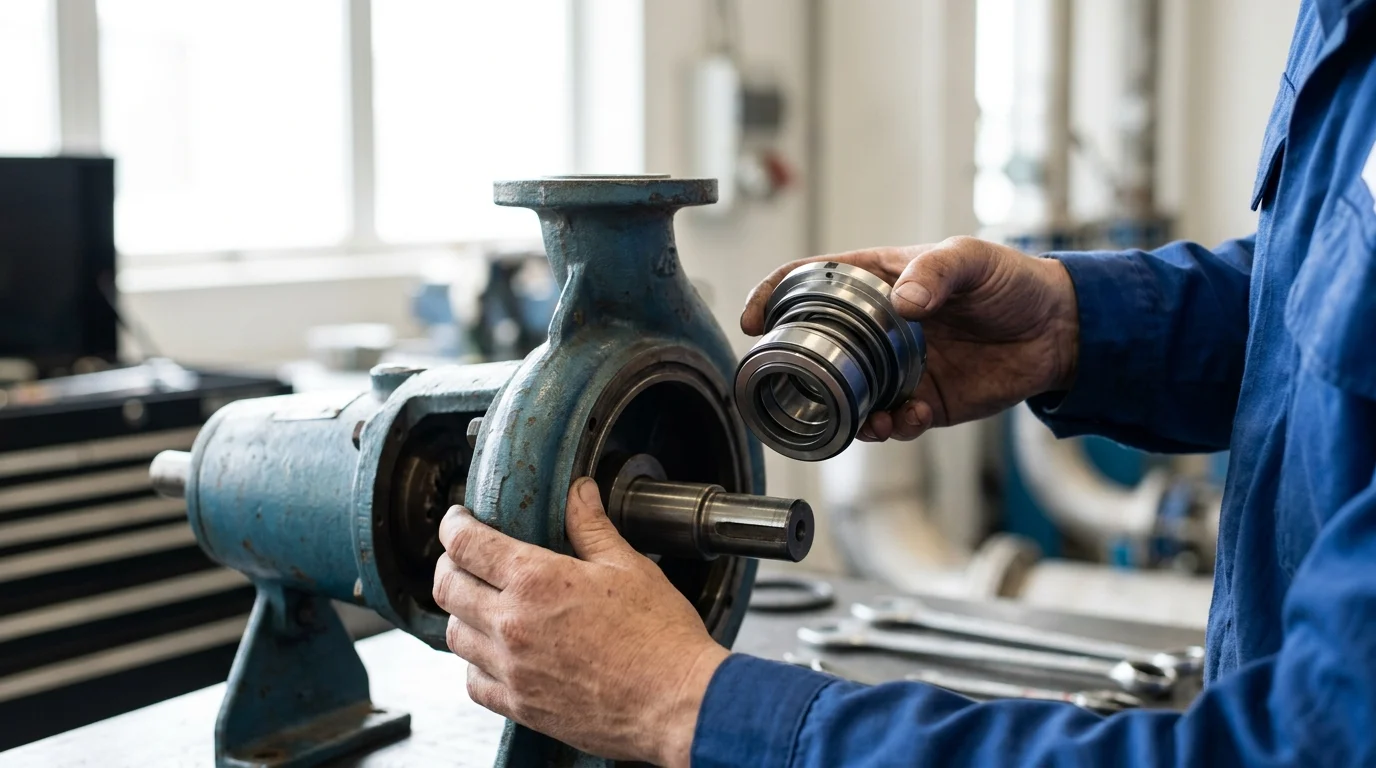
Pump reliability often depends on a small set of components, and the mechanical seal is one of the most critical. When seals are difficult to install, sensitive to alignment, or prone to leakage, unplanned downtime and maintenance costs rise quickly. A cartridge mechanical seal improves this weak point by combining sealing elements into a pre-set unit that reduces installation error, stabilizes seal face loading, and supports more consistent operation. This article explains how that design improves leakage control, extends service life, and helps pumps run longer between failures, giving readers a clear view of why cartridge seals are widely used in demanding fluid-handling systems.
Why Cartridge Mechanical Seals Improve Pump Reliability
The transition from standard packing and component seals to cartridge mechanical seals [https://www.victor-seals.com]s represents a fundamental shift in fluid handling reliability. By encapsulating all critical sealing elements into a single, pre-set unit, industrial facilities routinely extend Mean Time Between Failures (MTBF) from an average of 12 months to well over 36 months in highly demanding applications.
Reliability in centrifugal pumps is inextricably linked to the integrity of the mechanical seal. When a seal fails, the pump must be taken offline, leading to process interruptions, environmental hazards, and costly maintenance interventions. Cartridge seals address the root causes of these failures by engineering out the variables associated with manual assembly and installation.
Leakage control and installation accuracy
The primary driver of cartridge seal reliability is the complete elimination of installation variables. Component seals require technicians to manually calculate and set spring compression on the shaft by measuring the critical working length. This manual process is highly prone to human error, often resulting in uneven face loading or excessive wear.
Cartridge seals arrive from the manufacturer fully assembled, with the spring tension pre-set using removable setting clips. This integrated design guarantees optimal face loading from the moment of installation and easily accommodates standard shaft runout tolerances of less than 0.05 mm (0.002 inches). By removing the need for precision measurements on the shop floor, facilities can reduce installation-induced seal failures by up to 75%, effectively mitigating the risk of immediate startup leakage.
Reduced downtime and maintenance effort
Industrial downtime carries a severe financial penalty, often exceeding tens of thousands of dollars per hour in continuous process industries. Upgrading to cartridge seals drastically reduces the Mean Time To Repair (MTTR) for critical pumping assets.
Replacing a traditional component seal can consume 4 to 6 hours of skilled labor, largely due to the meticulous handling required for individual rotating faces, stationary seats, and dynamic O-rings. In contrast, a cartridge seal can typically be slid onto the shaft, bolted to the gland, and secured in under 90 minutes. This streamlined maintenance effort not only returns the pump to service faster but also reduces the facility’s reliance on highly specialized mechanical seal technicians.
Cartridge vs Component Mechanical Seals
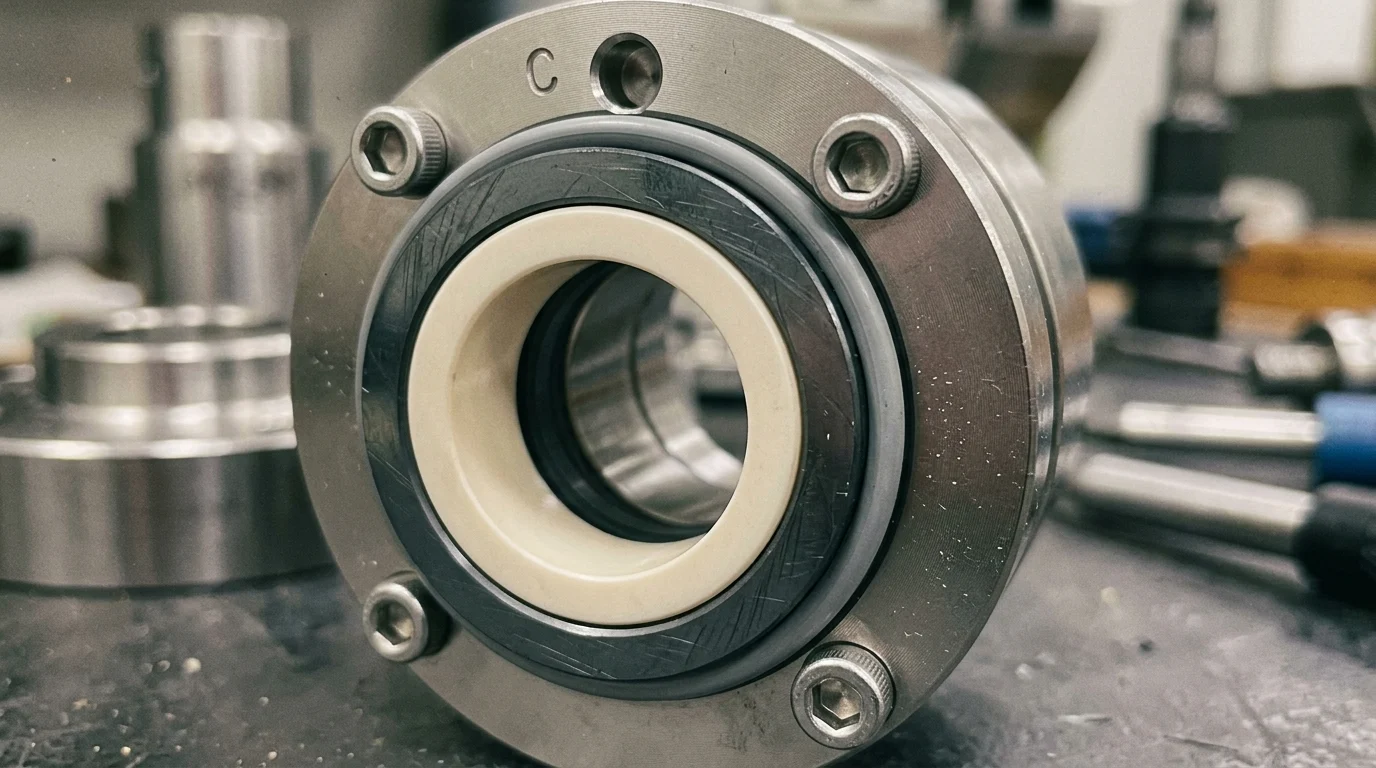
Understanding the structural differences between cartridge and component mechanical seals is critical for plant engineers looking to optimize equipment lifecycle costs. The fundamental divergence lies in how the sealing elements interface with the pump shaft and the stuffing box.
While both designs rely on a microscopically thin fluid film between a rotating and a stationary face to prevent leakage, the mechanical execution of this principle dictates the seal’s overall vulnerability to operational stress.
Design features that improve reliability
Cartridge seals integrate the shaft sleeve, seal faces, energizing springs, and the gland plate into one cohesive, factory-tested assembly. This integration prevents the highly lapped seal faces from being exposed to dirt, grease, or impact damage during transport and handling.
Furthermore, advanced cartridge designs often utilize stationary springs rather than rotating springs. Stationary springs are isolated from the process fluid, preventing them from clogging in highly viscous or crystallizing applications. This design choice maintains a consistent closing force of approximately 15 to 25 psi on the seal faces, ensuring stable operation even under fluctuating pressure conditions.
Differences in leakage risk and alignment sensitivity
Component seals are highly sensitive to axial shaft movement and thermal expansion. Any shift in the shaft can easily alter the critical working length, leading to either face separation (catastrophic leakage) or excessive compression (rapid heat generation and face destruction). Cartridge designs inherently tolerate standard shaft end-play, often accommodating axial movements up to 0.13 mm (0.005 inches) without compromising the precise face contact.
| Characteristic | Cartridge Mechanical Seal | Component Mechanical Seal |
|---|---|---|
| Installation Method | Pre-assembled, slides onto shaft directly | Individual parts installed and measured sequentially |
| Alignment Sensitivity | Low (pre-set by manufacturer clips) | High (requires manual measurement and marking) |
| Shaft Fretting Risk | Eliminated (uses an integrated protective sleeve) | High (dynamic O-ring moves directly on the bare shaft) |
| Average Labor Requirement | 1 to 2 hours (standard maintenance technician) | 4 to 6 hours (highly trained rotating equipment specialist) |
Technical Factors That Affect Seal Performance
A mechanical seal’s operational lifespan is heavily governed by the operating environment and the precise specification of its internal components. Selecting the right technical parameters is non-negotiable for achieving high reliability and preventing premature catastrophic failures.
Operators must carefully evaluate the chemical and physical properties of the pumped fluid, as these variables dictate everything from the metallurgy of the gland to the specific elastomers used for secondary sealing.
Seal face materials and elastomer compatibility
The tribological pairing of seal faces dictates wear rates, friction coefficients, and heat generation. Common pairings include Silicon Carbide (SiC) against Carbon for general water and light hydrocarbon applications, offering excellent lubricity. For abrasive slurries, a harder pairing of SiC versus Tungsten Carbide (TC) is required to resist scoring.
Elastomer selection is equally critical to prevent chemical degradation. Standard FKM (Viton) O-rings perform exceptionally well in general services but degrade rapidly above 204°C (400°F). In contrast, FFKM (Kalrez) compounds can maintain their elasticity and chemical resistance at extreme temperatures up to 327°C (620°F), making them an essential specification for high-temperature refinery services.
Pressure, temperature, and flush plan requirements
Process pressure and temperature dictate the necessity of environmental controls, which are standardized globally under API 682 flush plans. A standard single cartridge seal can typically handle stuffing box pressures up to 20 to 25 bar (300 to 360 psi) without issue.
Beyond this pressure threshold, or when handling highly volatile and toxic fluids, dual cartridge seals utilizing a Plan 53A or Plan 53B pressurized barrier fluid system become mandatory. These systems maintain a barrier fluid pressure that is typically 1.5 to 2 bar (20 to 30 psi) higher than the internal process pressure. This positive pressure differential ensures that any potential leakage occurs inward into the pump rather than outward into the atmosphere, guaranteeing zero atmospheric emissions.
Common failure modes and prevention
Even the most robust cartridge seals will fall victim to poor operational practices or system upsets. Dry running remains the leading cause of catastrophic seal failure, causing rapid thermal shock and radial cracking in hard faces within seconds of losing fluid film.
| Failure Mode | Primary Indicator | Preventive Action |
|---|---|---|
| Dry Running | Heat checking, cracked SiC faces, thermal discoloration | Implement API Plan 11 flush, ensure proper pump casing venting |
| Chemical Attack | Swollen, sticky, or extruded O-rings | Upgrade elastomer material to FFKM or PTFE-encapsulated O-rings |
| Abrasive Wear | Deeply grooved seal faces, steady high leakage | Utilize a cyclone separator (Plan 31) or specify hard face pairings (SiC/TC) |
| Thermal Distortion | Uneven 360-degree wear track on the carbon face | Increase flush flow rate, verify cooling jacket operation |
How to Select and Implement Cartridge Seals
Transitioning a facility to cartridge mechanical seals requires methodical engineering verification and strict adherence to implementation protocols. A poorly specified or improperly commissioned cartridge seal will fail just as rapidly as a legacy component seal.
Successful implementation bridges the gap between theoretical seal design and the physical realities of the plant floor, ensuring that the upgraded equipment integrates seamlessly with existing pump dimensions.
Seal selection and application checks
Engineers must rigorously verify the physical envelope of the pump’s stuffing box before specifying a cartridge unit. The radial clearance between the shaft and the stuffing box bore must typically provide a minimum of 3.175 mm (0.125 inches) to accommodate the cartridge sleeve and ensure adequate fluid circulation for cooling the seal faces.
Additionally, the bare shaft must be inspected for fretting, scoring, or runout issues caused by previous component seals. While cartridge sleeves are designed to slide over and cover existing shaft damage, excessive wear or a shaft runout exceeding 0.08 mm (0.003 inches) can compromise the internal O-ring seal between the sleeve and the shaft, necessitating shaft replacement or remachining prior to seal installation.
Installation and commissioning best practices
Commissioning a cartridge seal relies heavily on executing the installation sequence flawlessly. Gland bolts must be torqued evenly in an alternating cross-pattern to the manufacturer’s exact specification—typically between 20 and 40 Nm depending on the stud diameter—to prevent gland distortion and subsequent face misalignment.
Crucially, the external centering clips must only be removed after the gland is securely bolted to the pump casing and the sleeve set screws are firmly locked into the shaft. Removing these clips too early will instantly ruin the pre-set spring tension. Finally, operators must thoroughly vent the seal chamber prior to motor startup; failing to purge trapped air will result in immediate dry running and irreversible face damage.
Cost justification and upgrade planning
While the initial procurement cost of a pre-assembled cartridge seal is generally 200% to 300% higher than a comparable component seal, the cost justification for plant management is straightforward and highly favorable.
When factoring in the massive reduction in specialized installation labor, the total elimination of shaft fretting (which saves the capital cost of replacing expensive pump shafts), and the minimized production downtime, facilities typically realize a full Return on Investment (ROI) within 12 to 18 months. To maximize this financial benefit, bulk seal upgrades should be strategically planned during scheduled plant turnarounds to completely eliminate disruption to active production schedules.
Decision Framework for Seal Upgrades

Facilities operating hundreds or thousands of centrifugal pumps cannot feasibly upgrade all rotating equipment simultaneously. A strategic, data-driven decision framework is required to allocate capital where it will yield the highest immediate reliability dividends.
By analyzing historical maintenance logs and failure rates, plant managers can identify which pumping systems are draining maintenance budgets and prioritize them for cartridge seal conversions.
Which pump services to prioritize
Priority must be given to documented “bad actor” pumps—specifically those exhibiting an MTBF of less than 12 months. Converting these frequent-failure assets provides the fastest relief to over-burdened maintenance teams.
Additional priority tiers must include pumps handling hazardous, toxic, or highly flammable fluids where any external leakage poses an immediate safety risk or environmental compliance violation. Furthermore, services operating at extreme process temperatures (exceeding 150°C) or continuous-duty process pumps where unplanned downtime incurs financial penalties exceeding $10,000 per hour are prime candidates for immediate conversion to highly reliable dual cartridge seals.
How to balance upfront cost with lifecycle value
Balancing the upfront expenditure of a cartridge seal upgrade against its long-term lifecycle value requires a comprehensive Lifecycle Cost (LCC) analysis. The true LCC of a mechanical seal encompasses the initial purchase price, routine installation labor, barrier fluid consumption, and continuous energy losses due to mechanical friction.
Although cartridge seals demand higher initial capital, their optimized face loading, superior heat dissipation, and integrated protective sleeves consistently yield a 30% to 40% reduction in total LCC over a standard 5-year operational window compared to legacy seals. By standardizing on specific cartridge designs across a plant, operators can also drastically reduce spare parts inventory complexity, further enhancing long-term operational profitability.
Key Takeaways
- The most important conclusions and rationale for How Cartridge Mechanical Seal Improves Pump Reliability
- Specs, compliance, and risk checks worth validating before you commit
- Practical next steps and caveats readers can apply immediately
Frequently Asked Questions
How does a cartridge mechanical seal improve pump reliability?
It comes pre-set and factory-assembled, which reduces installation errors, startup leakage, and uneven face loading. This helps extend seal life and pump uptime.
Why is a cartridge seal more reliable than a component seal?
A cartridge seal includes the sleeve, faces, springs, and gland in one unit. That design lowers alignment sensitivity, protects seal faces, and reduces shaft fretting risk.
How much maintenance time can cartridge seals save?
In many pump repairs, cartridge seals can be installed in under 90 minutes, versus 4 to 6 hours for component seals. That means faster return to service and lower labor demand.
Can Victor Seals supply cartridge seals for OEM pump replacements?
Yes. Victor Seals provides cartridge and OEM-compatible mechanical seals for brands such as Grundfos, IMO, Alfa Laval, Flygt, Lowara, APV, Fristam, and Allweiler.
Which industries benefit most from cartridge mechanical seals?
They are especially useful in chemical, mining, oil and gas, petrochemical, power, pulp and paper, marine, and water applications where leakage control and uptime are critical.
Post time: Jun-08-2026