


Introduction
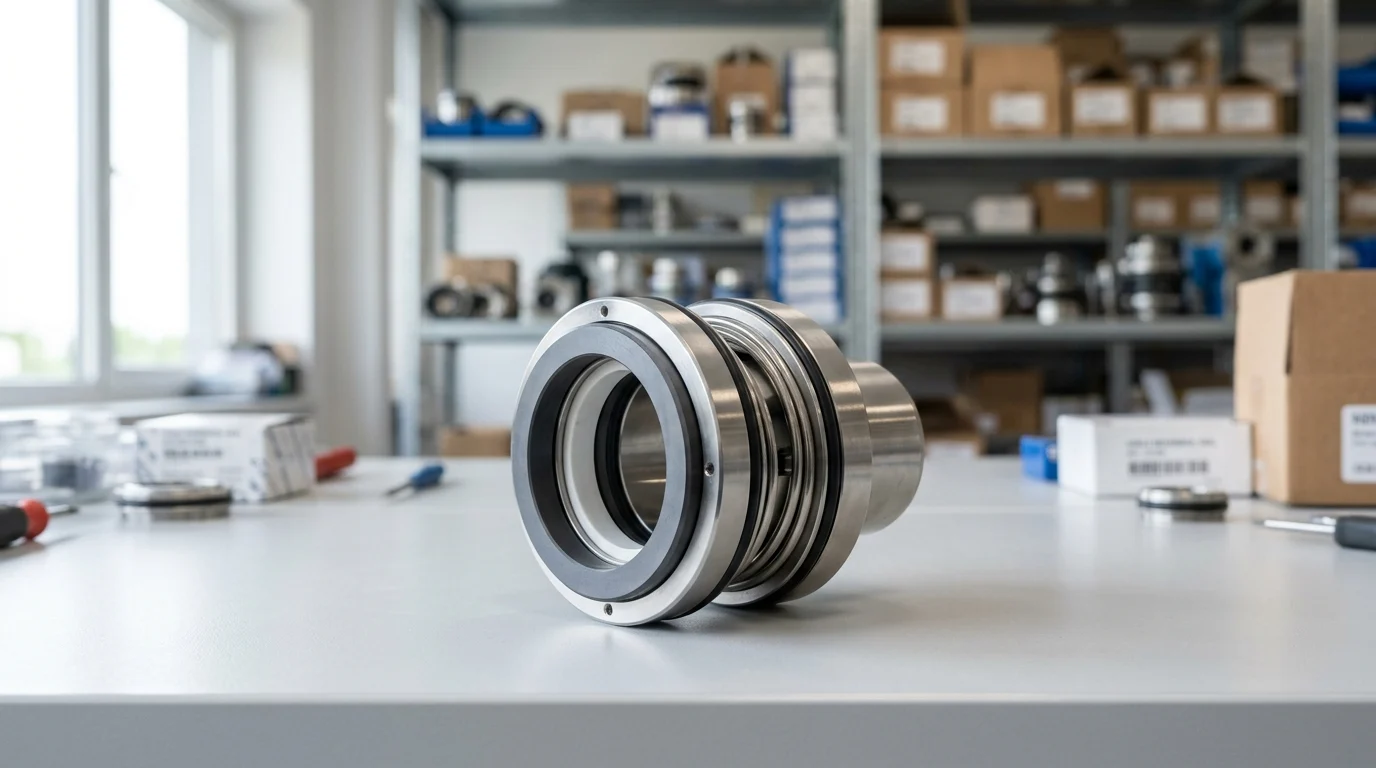
Choosing a mechanical seal supplier in China is no longer just a price exercise. Buyers now weigh manufacturing capability, material consistency, quality control, certifications, lead times, and technical support against the real cost of seal failure in service. A lower unit price can look attractive until downtime, maintenance labor, and replacement frequency are factored into total ownership cost. This article explains how procurement teams and engineers compare suppliers more systematically, what criteria matter most for different operating conditions, and how to distinguish a low-cost quote from a dependable sourcing partner.
Why Buyers Compare Mechanical Seal Suppliers in China
Sourcing mechanical seals from China offers significant leverage for global procurement teams, provided they can effectively navigate a highly fragmented supplier base. While Chinese manufacturers historically competed primarily on cost—often delivering unit price reductions of 20% to 40% compared to Western OEMs—the market has heavily matured. Today, top-tier Chinese facilities utilize advanced CNC machining and proprietary elastomer formulations, forcing buyers to adopt sophisticated comparative matrices rather than relying solely on the lowest bid.
Price Pressure, Uptime Risk, and Total Cost
The tension between upfront procurement savings and potential operational downtime dictates the sourcing strategy. A standard cartridge seal might cost $150 from a Chinese supplier compared to $400 domestically, but premature failure in a critical centrifugal pump can halt production lines, incurring downtime costs that frequently exceed $10,000 per hour. Consequently, expert buyers evaluate the Total Cost of Ownership (TCO), factoring in mean time between failures (MTBF), installation time, and secondary damage to pump shafts when calculating true supplier value.
Buyer Profiles and Sourcing Priorities
A buyer’s organizational profile fundamentally alters their supplier evaluation criteria. Original Equipment Manufacturers (OEMs) purchasing seals for new pump assemblies prioritize strict dimensional consistency across high volumes, often demanding defect rates below 500 Parts Per Million (PPM). In contrast, Maintenance, Repair, and Operations (MRO) buyers managing aftermarket replacements prioritize rapid availability, broad catalog compatibility, and the ability to reverse-engineer obsolete designs within a 7- to 14-day turnaround window.
What to Verify First When Screening a Mechanical Seal Supplier

Effective screening begins long before a Request for Quotation (RFQ) is issued. Procurement professionals must first distinguish between high-capability direct manufacturers and trading companies that mask their outsourced supply chains. This ensures the chosen partner possesses the specific metallurgical and elastomeric expertise required for the intended application.
Seal Type, Operating Conditions, and Material Fit
Mechanical seals operate across diverse and punishing environments, making material compatibility a non-negotiable screening metric. Buyers must verify a supplier’s capability to source and machine premium face materials such as reaction-bonded silicon carbide (SiC), nickel-bound tungsten carbide (TC), and high-performance secondary elastomers like perfluoroelastomers (FFKM), which are critical for applications exceeding 250°C.
| Material | Hardness (Vickers) | Thermal Conductivity | Typical Application Profile |
|---|---|---|---|
| Carbon Graphite | 100 – 300 | Low | General water pumps, low-friction needs |
| Silicon Carbide (SiC) | 2500 – 2800 | High (120 W/mK) | Highly abrasive chemical processing |
| Tungsten Carbide (TC) | 1500 – 1800 | Moderate (80 W/mK) | High-impact, high-torque environments |
Company Qualifications and Manufacturing Capabilities
Beyond material selection, the physical manufacturing infrastructure determines a supplier’s quality ceiling. Expert auditors look for multi-axis CNC lathes capable of holding tolerances tighter than 0.005 mm. Furthermore, the lapping process—which dictates the flatness of the seal faces—must be scrutinized. Tier 1 suppliers utilize monochromatic light band testing to guarantee face flatness within 1 to 2 light bands (approximately 0.3 to 0.6 microns), preventing microscopic fluid bypass under high-pressure conditions up to 40 bar.
How to Compare Quality and Technical Support
Transitioning from theoretical capabilities to consistent, measurable output requires a deep dive into a supplier’s quality management system (QMS). Technical support and stringent quality control are the primary differentiators separating reliable partners from high-risk vendors.
Quality Control, Testing, and Traceability
Robust quality control extends beyond final inspection; it must be integrated into every production phase. Buyers should mandate traceability protocols where material test reports (MTRs) are linked to specific production batches. Furthermore, hydrostatic pressure testing is mandatory for critical applications. Premium suppliers routinely pressure-test assembled cartridge seals at 1.5 times their maximum rated operating pressure for a minimum of 15 minutes to verify dynamic and static O-ring integrity before shipment.
Certifications, Standards, and Documentation
Compliance with international engineering standards provides a baseline for technical parity. For oil, gas, and petrochemical applications, suppliers must demonstrate strict adherence to API 682 specifications, encompassing specific flush plans and metallurgical requirements. For standard industrial pumps, dimensional compliance with DIN 24960 or EN 12756 is critical for drop-in replacement capability. Additionally, facilities should maintain active ISO 9001:2015 certifications, verified through third-party audits rather than merely self-reported.
Engineering Response and Failure Analysis Support
Post-sale technical support is equally critical, particularly when unanticipated seal failures occur in the field. A highly capable Chinese supplier will offer comprehensive failure analysis, utilizing scanning electron microscopy (SEM) to identify blistering, heat checking, or chemical attack on seal faces. Procurement teams should expect initial engineering feedback, including 3D CAD modeling adjustments or Finite Element Analysis (FEA) reports, within 48 to 72 hours of reporting a failure.
Which Commercial and Supply Chain Factors Matter Most
Even when a supplier meets all technical prerequisites, aggressive commercial terms or fragile supply chains can erode the anticipated ROI. Evaluating logistics, minimums, and financial terms is essential for securing a sustainable global pipeline.
Quotations, Tooling, and Minimum Order Quantity
Quotation structures reveal a supplier’s true target market. Standardized seals may carry Minimum Order Quantities (MOQs) as low as 10 to 50 units, making them accessible for MRO buyers. However, custom designs require dedicated tooling for stamped metal components or molded elastomers. Buyers must evaluate tooling amortization; custom mold fees typically range from $300 to $2,500 depending on complexity. Favorable suppliers will waive these fees if annual production volumes exceed a negotiated threshold, typically 5,000 units.
Logistics, Lead Time, Packaging, and Inventory Risk
Trans-Pacific or Eurasian logistics introduce significant inventory risk. While production lead times for standard mechanical seals in China average 4 to 6 weeks, ocean freight adds an additional 30 to 45 days. Buyers must assess how suppliers mitigate this through buffer stock agreements. Additionally, packaging protocols must be evaluated; carbon and metal components require vacuum-sealed, anti-corrosive packaging (VCI bags) to prevent oxidation during transit through high-humidity maritime environments.
Supplier Comparison Criteria for Procurement Teams
To standardize the evaluation process, procurement teams frequently deploy weighted matrices that score suppliers across multiple commercial dimensions.
| Evaluation Criteria | Tier 1 Supplier Profile | Tier 2/3 Supplier Profile |
|---|---|---|
| Lead Time (Standard) | 3 – 4 weeks | 6 – 8 weeks |
| Tooling Cost Ownership | Co-owned or waived at volume | Fully paid by buyer upfront |
| Payment Terms | Net 30/60 for established accounts | 30% Advance, 70% Before Shipment |
| Buffer Inventory | Will hold 3 months of safety stock | Produces strictly to order |
How to Make the Final Supplier Decision
The culmination of the screening, auditing, and quoting phases is the final supplier selection. This process demands a structured transition from theoretical evaluation to physical validation, ensuring the chosen partner can scale without compromising precision.
A Step-by-Step Sourcing Process
A disciplined, step-by-step validation process mitigates onboarding risks. Following the initial RFI and RFQ stages, buyers should procure 5 to 10 prototype samples for rigorous bench testing. These samples typically undergo 1,000-hour continuous operation tests to monitor leakage rates and face wear. Upon successful validation, a limited trial order—usually 10% to 20% of the projected annual volume—is placed to stress-test the supplier’s production consistency, packaging durability, and adherence to agreed-upon lead times before committing to mass production.
Balancing Technical Fit, Cost, and Supply Reliability
Ultimately, the final decision requires balancing competing priorities. Industry experts frequently apply a weighted scoring model: 60% allocated to technical capability and quality control, 30% to total cost (including freight and tooling), and 10% to commercial flexibility and communication. By avoiding the trap of chasing the absolute lowest unit price, buyers can forge resilient partnerships with Chinese mechanical seal manufacturers that deliver long-term reliability, continuous engineering support, and sustainable cost advantages.
Key Takeaways
- The most important conclusions and rationale for mechanical seal supplier
- Specs, compliance, and risk checks worth validating before you commit
- Practical next steps and caveats readers can apply immediately
Frequently Asked Questions
What should buyers verify first when comparing a mechanical seal supplier in China?
Confirm the supplier is a real manufacturer, not just a trader, and check material capability, machining tolerance, and seal application experience.
Why is total cost more important than unit price for mechanical seals?
A cheaper seal can cause early failure, shaft damage, and costly pump downtime. Compare lifespan, fit accuracy, and support, not just price.
Can Victor Seals provide OEM-compatible replacement seals for major pump brands?
Yes. Victor Seals supplies OEM-compatible replacements for brands such as IMO, Alfa Laval, Grundfos, APV, Flygt, Fristam, Lowara, and Allweiler.
Which industries commonly need reliable mechanical seal suppliers?
Typical buyers include chemical, mining, oil and gas, petrochemical, power plant, pulp and paper, shipbuilding, and water treatment operations.
What product range does Victor Seals offer for pump maintenance needs?
Victor Seals supplies standard, cartridge, metal bellow, elastomer bellow, single spring, multi spring, OEM seals, spare parts, rotor sets, and marine sealing parts.
Post time: Jun-21-2026