


How Replacement Mechanical Seals Affect Warranty Risk
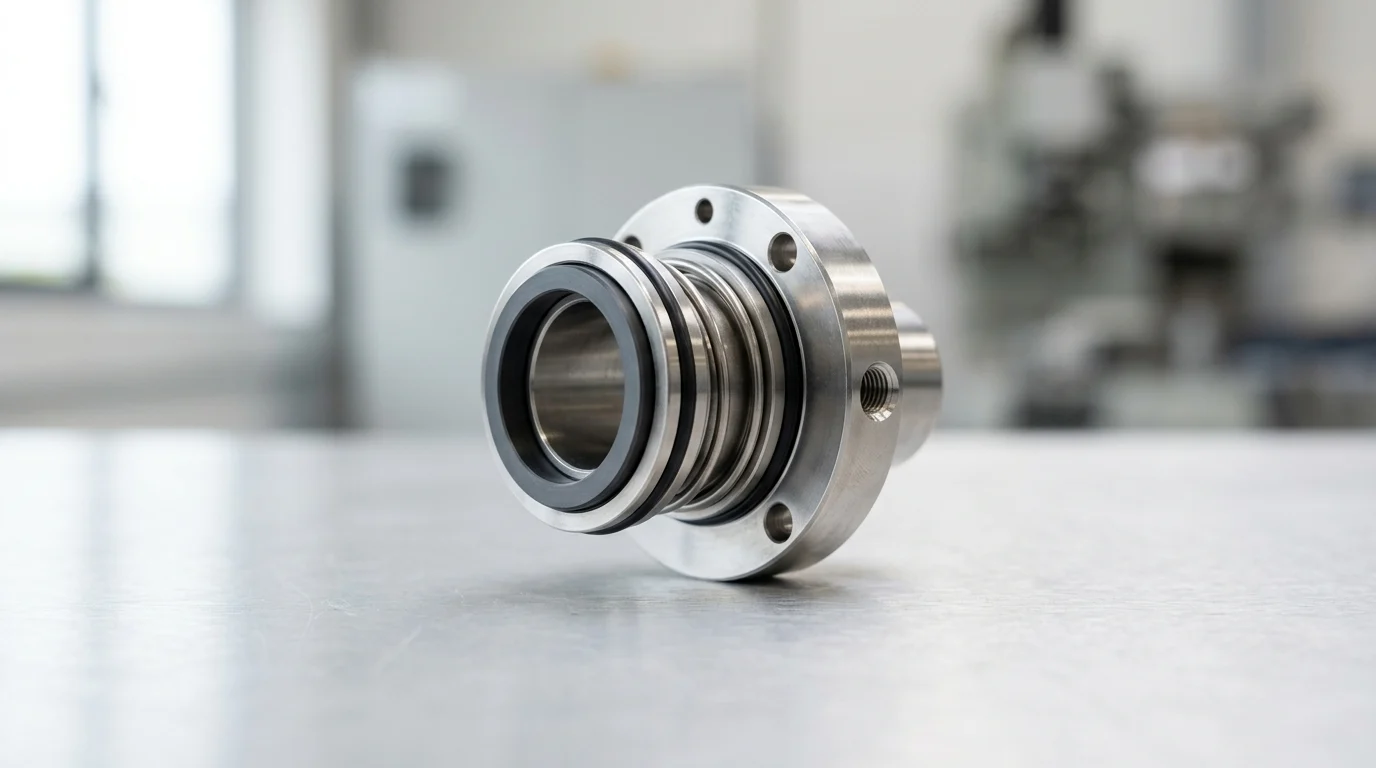
Mechanical seals represent a critical failure point in rotating equipment, serving as the primary barrier between process fluids and the atmosphere. When operators replace these components during the active warranty period of a pump or compressor, the decision introduces complex liability and compliance considerations. Navigating these risks requires a thorough understanding of industrial warranty mechanics, component lifecycles, and the legal frameworks that govern aftermarket parts.
Why Mechanical Seals Become a Warranty Issue
Industry data consistently indicates that mechanical seals account for approximately 65% to 70% of all centrifugal pump failures. Because they operate as sacrificial or wear components, original equipment manufacturers (OEMs) typically exclude seals from long-term comprehensive warranties. Standard OEM contracts usually limit seal coverage to initial manufacturing defects discovered within the first 90 to 180 days of operation. However, if a replacement seal fails and causes secondary damage—such as shaft fretting, bearing collapse, or motor overload—the warranty status of the entire capital asset is immediately called into question.
When Replacement Seals Protect Uptime
The decision to utilize non-OEM replacement mechanical seals is frequently driven by operational urgency. In continuous process industries, unplanned downtime can incur costs ranging from $10,000 to over $50,000 per hour depending on production volumes. If an OEM quotes a lead time of six to eight weeks for a replacement cartridge seal, facility operators are financially compelled to source equivalent aftermarket seals that can be delivered within 24 to 48 hours. In these scenarios, protecting plant uptime takes precedence, forcing reliability teams to accept and proactively manage the associated warranty risks.
Where Warranty Risk Typically Starts
Warranty risk typically originates at the intersection of component failure and root cause analysis. Under legal frameworks such as the Magnuson-Moss Warranty Act in the United States, and similar fair-competition statutes globally, an OEM cannot summarily void an equipment warranty simply because a third-party replacement part was installed. The risk materializes when the OEM asserts that the aftermarket seal directly caused the subsequent equipment failure. Proving or disproving this assertion becomes a highly technical dispute over fluid dynamics, installation procedures, and metallurgical compatibility, shifting the burden of documentation heavily onto the facility operator.
Warranty Terms That Determine Coverage
Equipment warranties are legally binding contracts defined by strict operational and maintenance clauses. Understanding the specific terminology within these agreements is essential for operators who intend to use non-OEM replacement mechanical seals without jeopardizing their capital asset coverage.
How OEM Clauses Define Approved Seals
OEM clauses regarding replacement parts generally fall into distinct categories of restrictiveness. Strict “genuine parts only” clauses attempt to mandate OEM sourcing, while more flexible agreements allow for “technically equivalent” components.
| Warranty Clause Type | OEM Stance on Replacement Seals | Operator Risk Level | Typical Application |
|---|---|---|---|
| Strict Genuine Parts | Mandates OEM seals; threatens total voiding of warranty. | High | Highly engineered, custom API pumps. |
| Authorized Equivalent | Permits third-party seals if sourced from pre-approved vendors. | Medium | Standard ANSI/ASME chemical pumps. |
| Consumable Exclusion | Explicitly excludes seals; covers core equipment unless seal causes damage. | Low to Medium | Water/wastewater and utility pumps. |
Navigating these clauses requires procurement and reliability engineers to carefully audit the initial purchase agreement before initiating any aftermarket sourcing strategy.
Why Failure Causation Matters
When a catastrophic failure occurs, such as a thrust bearing failing at 2,000 operating hours well short of its 50,000-hour L10 life expectancy, the burden of proof becomes the central issue. If a non-OEM seal is present, the OEM will likely perform a root cause analysis (RCA). To deny the warranty claim, the OEM must demonstrate causation—for example, proving that the third-party seal generated excessive friction, resulting in vibration exceeding 0.15 in/sec RMS, which subsequently destroyed the bearing. Without definitive evidence of causation, the warranty for the core equipment remains legally intact.
What Documentation Helps Prove Compliance
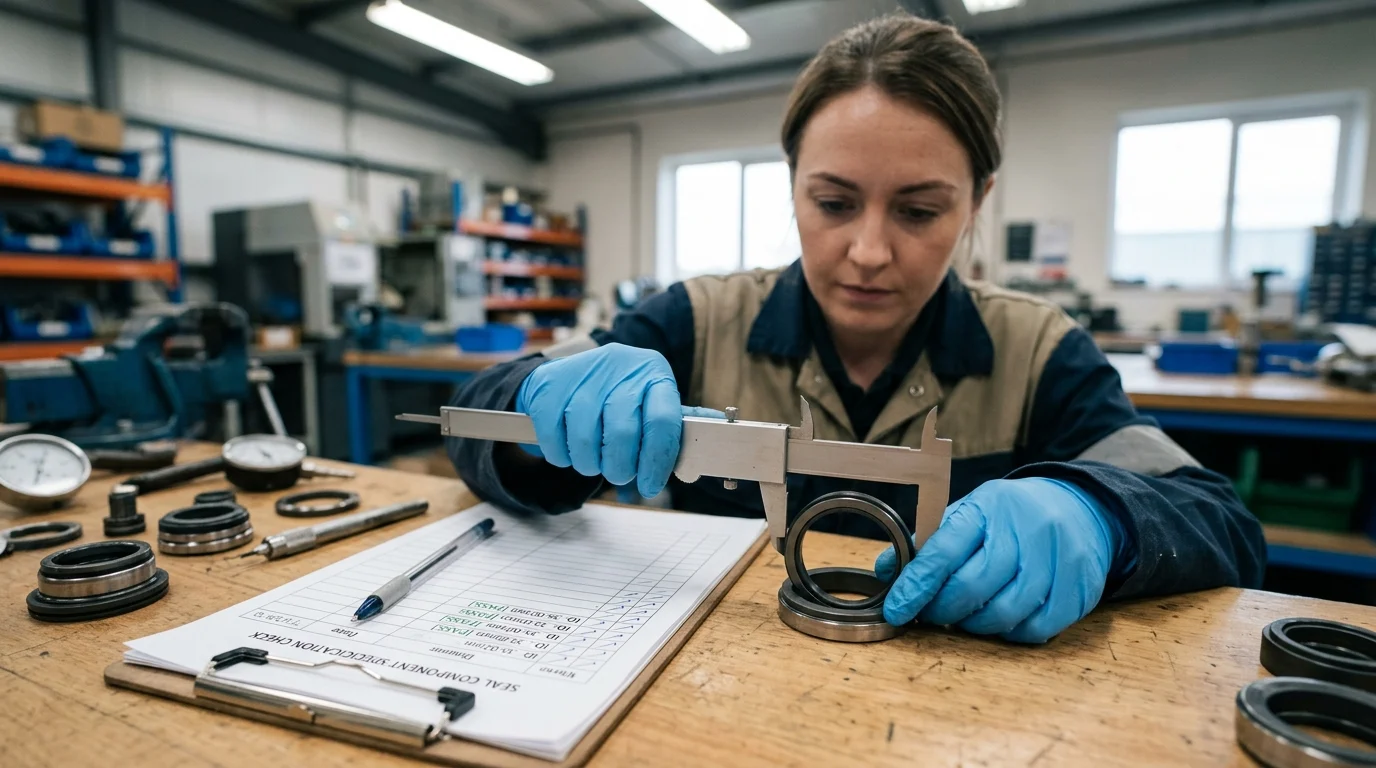
Defending against a denied warranty claim requires meticulous documentation. Operators must prove that the replacement seal was installed correctly and operated within the equipment’s design envelope. Crucial documentation includes laser alignment reports verifying offset limits below 0.002 inches, optical flat measurements confirming seal face flatness to within 2 to 3 helium light bands, and torque logs for gland bolts. Furthermore, maintaining continuous SCADA logs showing that flush fluid temperature and pressure remained within OEM tolerances provides an irrefutable defense against claims of operational abuse.
Steps to Reduce Warranty Disputes
Mitigating warranty disputes requires a structured, proactive approach to component replacement. By standardizing procurement and maintenance procedures, industrial facilities can utilize replacement mechanical seals while maintaining a robust defense against arbitrary warranty voidance.
How to Confirm Seal Specifications
The first step in risk reduction is rigorously confirming seal specifications against recognized industry standards. For critical applications, reliability engineers must ensure the replacement seal complies with API 682 (for oil and gas) or ANSI/ASME standards (for chemical processing). This includes verifying the seal arrangement, such as single versus dual unpressurized, and the specific piping flush plan, like API Plan 11 or Plan 53A. If the pump operates at a maximum pressure of 300 psi and a temperature of 400°F, the replacement seal’s dynamic operating envelope must explicitly cover these parameters with an adequate safety margin.
What to Record During Installation
Installation errors are a leading cause of premature seal failure and a primary loophole used by OEMs to deny warranty claims. Technicians must document every phase of the installation process. Critical records include shaft runout measurements, which should typically be less than 0.0015 inches Total Indicator Reading (TIR), concentricity of the stuffing box, and verification that the seal was not subjected to axial shock during mounting. Utilizing digital maintenance platforms to store photographic evidence and timestamped calibration logs of the torque wrenches used on the seal gland provides a verifiable audit trail.
How Maintenance and Procurement Should Coordinate
Warranty risks often escalate due to a disconnect between maintenance teams and procurement departments. Procurement may prioritize a supplier offering a minimum order quantity (MOQ) of one unit and a 48-hour lead time to reduce costs, while maintenance requires absolute assurance of material quality to protect the equipment warranty. To align these objectives, organizations should establish a pre-approved vendor list (AVL) strictly for mechanical seals. Suppliers on this AVL must be vetted for ISO 9001 compliance, material traceability through mill test reports, and a proven track record of component defect rates below 1%.
How to Decide if Replacement Seals Are Worth the Risk
Ultimately, the decision to install a replacement mechanical seal during an active warranty period is an exercise in risk management. Facility leaders must weigh the immediate operational benefits against the potential long-term liabilities associated with capital equipment coverage.
How to Balance Cost, Uptime, and Coverage
Balancing cost, uptime, and warranty coverage requires a formalized risk matrix. For low-criticality assets, such as standard utility water pumps where the cost of a replacement seal is $500 and the total pump replacement cost is under $5,000, the financial risk of voiding the warranty is negligible compared to the cost of prolonged downtime. Conversely, for highly engineered boiler feed pumps or hydrocarbon processing equipment, the calculus changes. Operators must conduct financial modeling that compares the hourly cost of lost production against the potential liability of a $150,000 to $500,000 equipment warranty void, factoring in the historical reliability of the chosen aftermarket seal supplier.
When to Escalate High-Criticality Equipment Decisions
Decisions regarding high-criticality equipment must be escalated beyond standard procurement channels. For API-compliant pumps handling toxic, flammable, or hazardous fluids at pressures exceeding 500 psi, any deviation from OEM-specified components during the warranty period should trigger a formal Management of Change (MOC) process. This process requires sign-off from the plant reliability manager and often the facility director. By formally documenting the technical justification, risk mitigation strategies, and supplier validation, the organization ensures that the decision to use a non-OEM replacement mechanical seal is a calculated engineering choice rather than an unmanaged liability.
Key Takeaways
- Review the equipment warranty before installing any replacement mechanical seal, especially clauses requiring genuine parts or technically equivalent components.
- Document seal selection, materials, installation steps, and operating conditions because the warranty dispute often depends on proving the replacement did not cause the failure.
- Treat mechanical seals as high-risk components because they are associated with about 65% to 70% of centrifugal pump failures.
- Balance warranty exposure against downtime costs, which can range from $10,000 to more than $50,000 per hour in continuous process operations.
- Use technically equivalent replacement seals only after confirming dimensional fit, material compatibility, pressure limits, temperature range, and application conditions.
Frequently Asked Questions
Can an OEM void my equipment warranty for using a non-OEM mechanical seal?
Not automatically. The OEM generally must show that the replacement seal caused the failure. Warranty language, local law, installation records, and seal compatibility documentation all affect the outcome.
Are mechanical seals usually covered for the full equipment warranty period?
Often no. Many OEMs treat mechanical seals as wear components and limit coverage to manufacturing defects, commonly within the first 90 to 180 days of operation.
Why do operators choose aftermarket replacement mechanical seals?
Availability is a major reason. If an OEM seal lead time is six to eight weeks, an equivalent replacement available in 24 to 48 hours can prevent costly production downtime.
What documentation helps protect warranty coverage after seal replacement?
Keep seal specifications, material compatibility data, installation records, operating conditions, photos, and root cause analysis reports. These records help prove the replacement was technically suitable.
When does a replacement seal create the highest warranty risk?
Risk rises when a seal failure causes secondary damage, such as shaft wear, bearing failure, motor overload, or contamination. The OEM may then argue the seal caused the broader equipment failure.

Post time: Sep-01-2026