


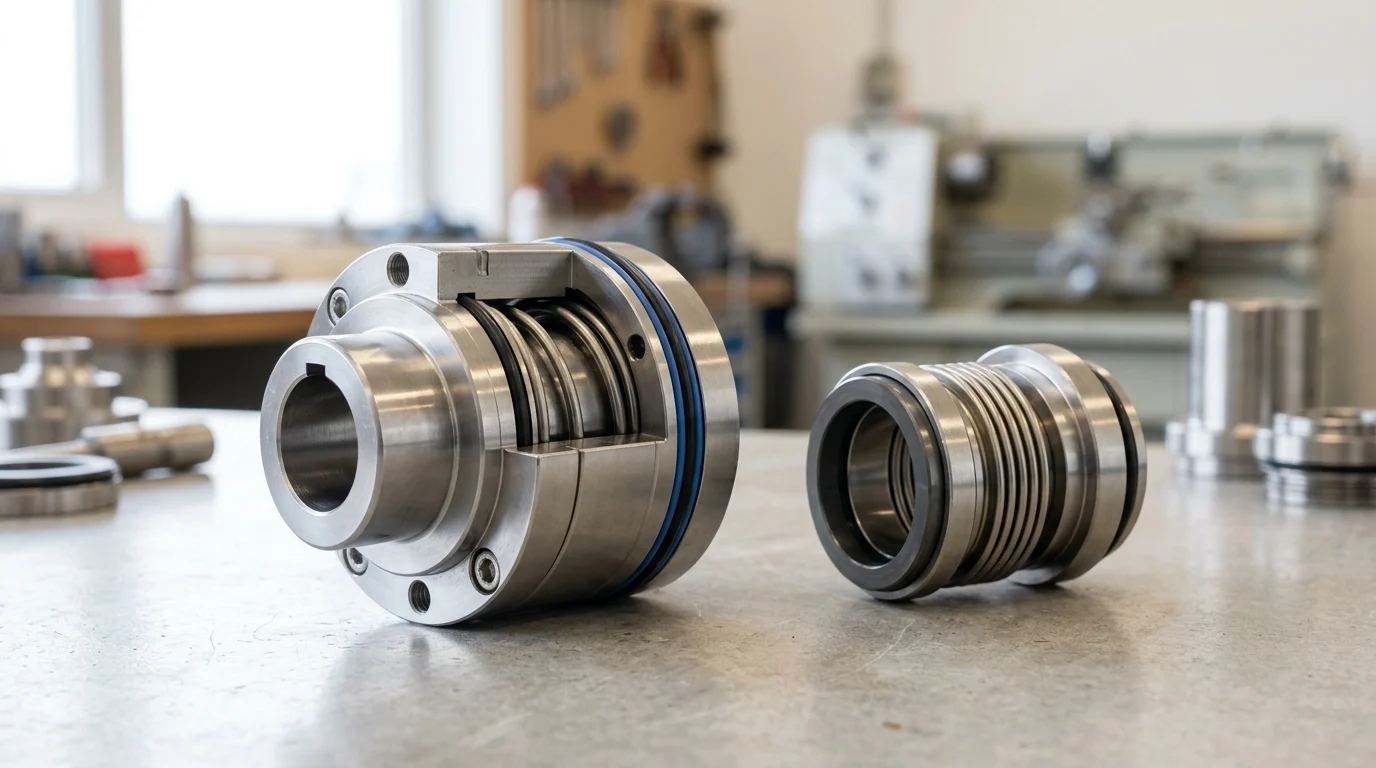
Why Mechanical Seals Matter in Wastewater
Wastewater treatment plants (WWTPs) operate under some of the most demanding fluid-handling conditions in the industrial sector. Pumps are subjected to highly variable flow rates, abrasive suspended solids, and chemically aggressive media. The transition from traditional gland packing to advanced mechanical sealing systems represents a critical evolution in modern fluid management. Selecting the best mechanical seals for these applications is not merely a maintenance upgrade—it is a strategic necessity for optimizing plant efficiency, ensuring environmental compliance, and protecting capital equipment.
The fundamental mechanism of a mechanical seal relies on two highly polished faces—one stationary and one rotating—pressed together by a spring mechanism to prevent fluid from escaping the pump casing along the drive shaft. In the harsh environment of wastewater treatment, the precision of this interface dictates the operational lifespan of the entire pumping system.
Leakage Control and Reliability Goals
The primary objective of upgrading to mechanical seals in wastewater applications is achieving superior leakage control and extending the Mean Time Between Failures (MTBF). Traditional braided packing requires a continuous, controlled leak rate—typically 10 to 60 drops per minute—to lubricate and cool the shaft. Over a single month, this engineered leakage translates to approximately 15 to 90 gallons of contaminated wastewater or clean flush water entering the plant’s drainage system per pump. This continuous fluid loss not only increases the volume of water requiring reprocessing but also accelerates shaft sleeve wear, leading to frequent and costly maintenance interventions.
By contrast, the best mechanical seals are engineered to operate with virtually zero visible leakage. They utilize microscopic fluid films between the seal faces for lubrication, drastically reducing friction while maintaining a hermetic boundary. Implementing high-quality mechanical seals can push pump MTBF from a historical average of 6 to 9 months with packing to 36 to 60 months, depending on the fluid duty. This reliability leap reduces routine maintenance labor, mitigates housekeeping hazards associated with pooling wastewater, and prevents corrosive fluids from attacking external bearing housings and motor components.
High-Risk Wastewater Pump Duties
Wastewater processing involves distinct zones of operation, each presenting unique risks to pump integrity. Lift stations and raw sewage influent pumps face massive influxes of unpredictable solids, including grit, rags, and fibrous materials. If these solids penetrate the seal chamber, they can pack around the springs, causing the seal faces to hang up and ultimately fail catastrophically. Consequently, mechanical seals in these high-risk duties must feature robust, non-clogging designs, often utilizing single-coil springs or elastomer bellows that resist fouling.
Downstream processes, such as primary clarification and sludge transfer, introduce different mechanical stressors. Sludge pumps routinely handle media containing 8% to 12% solids by weight, characterized by high viscosity and significant abrasive potential. The pressures in sludge force mains can easily exceed 100 PSI (6.8 bar), imposing high axial loads on the seal faces. In these high-risk duties, mechanical seals must maintain strict dimensional stability. Deflection of the seal faces under high pressure, combined with the scouring action of abrasive sludge, necessitates specialized metallurgical configurations and rigorous environmental controls within the seal chamber.
Mechanical Seal Designs for Wastewater Pumps
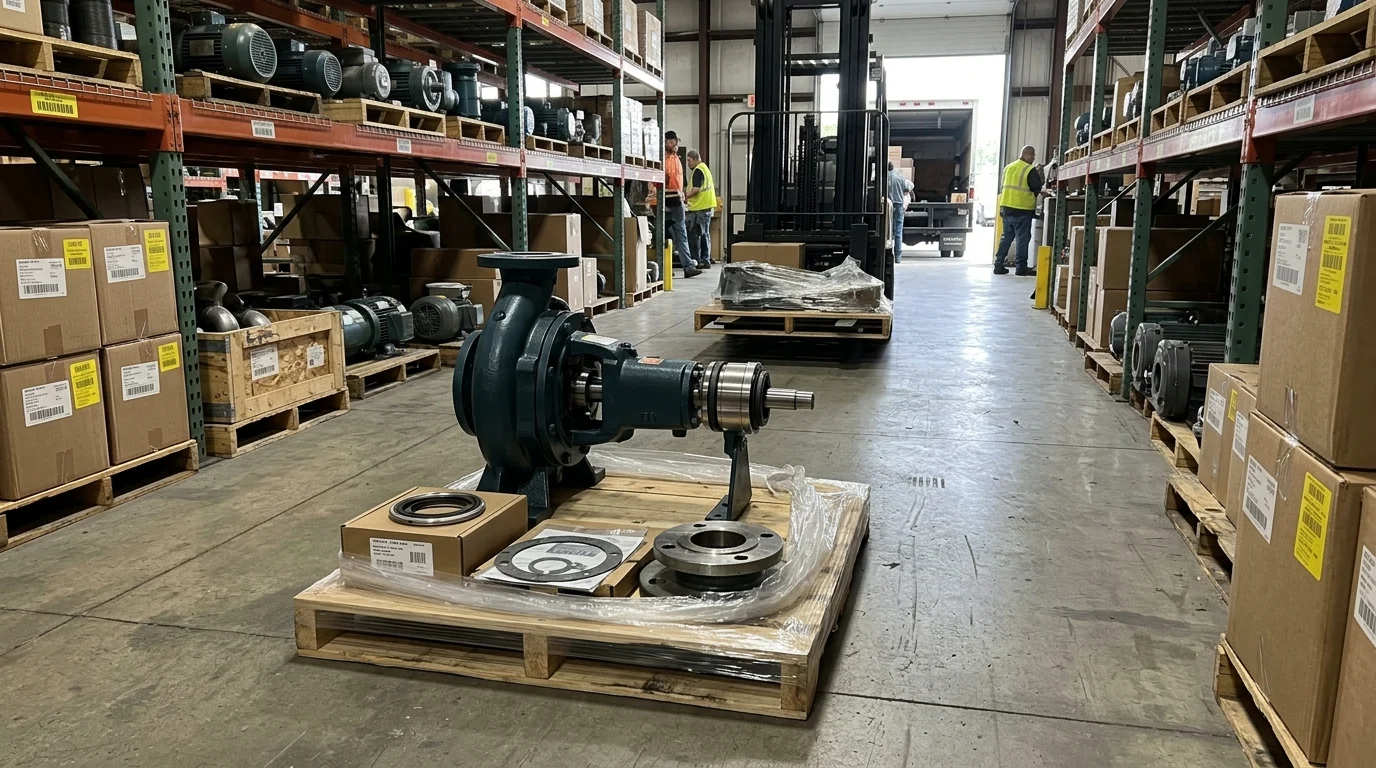
Selecting the optimal mechanical seal design requires a precise understanding of the pump’s operational profile and the fluid’s rheology. The wastewater industry utilizes a diverse spectrum of seal configurations, each engineered to address specific failure modes such as dry running, abrasive wear, or chemical degradation. The architectural design of the seal, combined with the metallurgical and elastomeric composition of its components, dictates its performance envelope.
Single, Double, Cartridge, Split, and Slurry Seals
Component seals, which require manual assembly of individual parts on the pump shaft, have largely been superseded by cartridge seals in modern wastewater facilities. Cartridge seals are pre-assembled, pre-set units containing the rotating elements, stationary faces, gland plate, and sleeve. This design eliminates installation measurement errors and incorrect spring tensioning, which historically accounted for up to 30% of premature seal failures. For critical, large-diameter pumps where dismantling the equipment is prohibitively expensive, split mechanical seals offer a significant advantage. Split seals can be installed around the shaft without removing the pump casing or motor coupling, reducing maintenance labor hours by as much as 70%.
When handling highly hazardous or toxic wastewater streams, double (or dual) mechanical seals are necessary. These seals utilize two sets of faces and require an external barrier fluid system. The barrier fluid is pressurized to typically 15 to 25 PSI (1 to 1.7 bar) above the pump’s stuffing box pressure, ensuring that any leakage across the inner seal faces consists of clean barrier fluid entering the pump, rather than hazardous wastewater escaping into the atmosphere. Conversely, heavy-duty slurry seals are deployed in the most abrasive environments, such as grit removal. These seals are specifically engineered to operate in fluids with greater than 10% solids concentration without the need for external flush water, utilizing large clearances and robust rotary profiles to deflect particulates.
Seal Face, Elastomer, and Spring Material Selection
The longevity of any mechanical seal in wastewater is inextricably linked to the materials chosen for the primary sealing faces, secondary sealing elastomers, and the energizing mechanism. Silicon carbide (SiC) and tungsten carbide (WC) are the premier choices for seal faces in abrasive environments due to their extreme hardness and thermal conductivity. Reaction-bonded silicon carbide offers exceptional wear resistance with a Knoop hardness exceeding 2500, making it virtually impervious to typical wastewater grit.
Elastomer selection is equally critical for preventing chemical attack and thermal degradation. While standard nitrile (Buna-N) is sufficient for ambient, neutral-pH water, industrial wastewater often contains solvents, hydrocarbons, or elevated temperatures that require advanced polymers. Fluoroelastomers (FKM/Viton) are standard for broad chemical resistance up to 400°F (204°C), whereas ethylene propylene diene monomer (EPDM) is preferred for applications involving caustics or hot water. The energizing springs, which maintain face contact, must be manufactured from corrosion-resistant alloys; standard 304 stainless steel is prone to pitting in chloride-rich wastewater, making 316SS or Hastelloy C-276 the industry standards for reliable spring performance.
| Material Component | Common Options | Typical Hardness / Temp Limit | Primary Wastewater Application |
|---|---|---|---|
| Seal Faces | Silicon Carbide (SiC) | > 2500 Knoop | Highly abrasive sludge, grit |
| Seal Faces | Tungsten Carbide (WC) | ~1800 Knoop | High-torque, rugged duties |
| Elastomers (O-Rings) | FKM (Viton) | 400°F (204°C) | Hydrocarbons, general industrial |
| Elastomers (O-Rings) | EPDM | 300°F (149°C) | Caustic environments, hot water |
| Springs/Hardware | Hastelloy C-276 | N/A (Corrosion Focus) | High-chloride or acidic streams |
How to Compare Mechanical Seal Performance
Evaluating and comparing mechanical seal performance requires moving beyond basic dimensional compatibility. Facility engineers must analyze the operational limits of different seal architectures against the specific hydraulic and environmental demands of the pumping system. An objective comparison relies on quantitative metrics, including pressure-velocity (PV) limits, solids-handling thresholds, and strict adherence to environmental regulations.
Seal Type Comparison by Solids, Pressure, and Duty
The functional capacity of a mechanical seal is heavily dictated by its ability to manage the dynamic forces generated during pump operation. Single cartridge seals are highly effective for clean to moderately dirty water applications but may experience accelerated face wear when solids concentrations exceed 2% to 3% by weight. In contrast, engineered slurry seals utilize specialized face geometries and heavy-duty springs located outside the fluid path, allowing them to handle dense sludges with solids concentrations up to 40% by weight without clogging.
Pressure-handling capabilities also differentiate seal classes. Unbalanced mechanical seals are generally limited to applications under 150 PSI (10 bar) because higher pressures force the seal faces together too tightly, squeezing out the lubricating fluid film and causing rapid thermal destruction. Balanced mechanical seals alter the geometric ratio of the seal face area exposed to hydraulic pressure, reducing the closing force. This balancing allows the seal to maintain a stable fluid film at pressures exceeding 400 PSI (27.5 bar), which is frequently encountered in deep-well submersible pumps and high-head force mains.
| Seal Configuration | Max Solids Capacity (% by weight) | Typical Pressure Limit (Balanced) | Ideal Wastewater Duty |
|---|---|---|---|
| Single Cartridge | < 3% | Up to 400 PSI (27.5 bar) | Effluent, secondary clarification |
| Split Seal | < 2% | Up to 150 PSI (10 bar) | Large raw water intake, clean transfer |
| Double (Dual) Seal | < 10% (with barrier fluid) | Up to 400 PSI (27.5 bar) | Toxic chemicals, dry-run protection |
| Heavy-Duty Slurry | Up to 40% | Up to 400 PSI (27.5 bar) | Primary sludge, grit pumps |
Regulatory and Environmental Requirements
Modern wastewater treatment is heavily regulated, and mechanical seals play a pivotal role in a facility’s environmental compliance strategy. Fugitive emissions—unintended leaks of volatile organic compounds (VOCs) or hazardous air pollutants (HAPs)—are strictly monitored by environmental protection agencies. While municipal wastewater may pose lower VOC risks than petrochemical processing, industrial wastewater effluent often contains hazardous solvents.
The best mechanical seals are designed to meet stringent emission standards, frequently drawing upon API 682 guidelines, which mandate leakage rates below 500 parts per million (ppm) for volatile fluids. Furthermore, the transition to dual mechanical seals with pressurized barrier fluid systems (API Plan 53A or 54) ensures zero emissions of the process fluid to the atmosphere. Compliance with ISO 14001 environmental management standards also drives facilities to minimize flush water consumption. Traditional packing or single seals utilizing single-pass external flush systems (API Plan 32) can consume millions of gallons of clean municipal water annually. Upgrading to advanced seal support systems drastically reduces this water footprint, aligning mechanical reliability with corporate sustainability goals.
Specification and Installation Best Practices
Even the most technologically advanced mechanical seal will suffer premature failure if installed in compromised equipment or subjected to improper operational procedures. The interface between the rotating shaft and the stationary pump casing demands microscopic precision. Consequently, rigorous specification, meticulous equipment inspection, and controlled commissioning protocols are non-negotiable best practices for maximizing seal longevity in wastewater applications.
Shaft and Equipment Condition Checks
Before a mechanical seal is installed, the mechanical integrity of the pump must be thoroughly validated using precision dial indicators. The primary culprit behind early seal failure is excessive shaft movement, which prevents the seal faces from maintaining parallel alignment. Shaft runout—the measure of the shaft’s deviation from true circular rotation—must not exceed 0.002 inches (0.05 mm) Total Indicator Reading (TIR) at the seal face location. Excessive runout causes the energizing springs to cycle rapidly with every shaft revolution, leading to fatigue and eventual breakage.
Furthermore, the pump bearings must rigidly support the shaft to prevent axial and radial play. Axial end play, which alters the working length and spring compression of the seal, should be restricted to a maximum of 0.001 to 0.002 inches (0.025 to 0.05 mm). Radial deflection, often caused by operating the pump far from its Best Efficiency Point (BEP), bends the shaft and damages the internal seal components. Beyond dimensional checks, the surface finish of the shaft or sleeve where secondary elastomers seat is critical. O-rings require a smooth, polished surface—typically 32 RMS (Root Mean Square) microinches—to seal dynamically without suffering abrasive fretting or extrusion.
Commissioning, Monitoring, and Maintenance
Commissioning a newly sealed wastewater pump requires strict adherence to venting and environmental control procedures. A mechanical seal must never be run dry. Before energizing the motor, the seal chamber must be thoroughly vented to expel trapped air, ensuring the seal faces are completely submerged in the lubricating fluid. For dual seals, the barrier fluid system must be pressurized and circulated prior to introducing process fluid to the pump, establishing the necessary pressure differential to prevent wastewater ingress.
Ongoing condition monitoring is essential for predictive maintenance. Utilizing environmental controls, such as API flush plans, dictates specific monitoring requirements. For example, a Plan 53A barrier fluid reservoir should be monitored for pressure drops, which indicate inner seal face wear, or fluid level increases, which signal a breach allowing process fluid into the barrier loop. Additionally, vibration analysis should be routinely conducted on the pump bearing housings. Vibration velocities exceeding 0.15 inches per second (in/sec) peak generally indicate underlying mechanical issues—such as impeller imbalance or cavitation—that will eventually transmit destructive forces to the mechanical seal faces.
How to Choose a Mechanical Seal Supplier
Procuring the best mechanical seals extends beyond evaluating technical specifications; it requires partnering with a manufacturer capable of delivering consistent quality, rapid availability, and comprehensive engineering support. The wastewater industry operates continuously, meaning that supply chain reliability and post-installation troubleshooting are just as critical as the metallurgical composition of the seal faces.
Manufacturing Quality and Technical Support Questions
When evaluating potential mechanical seal suppliers, facility managers must interrogate the vendor’s manufacturing capabilities and quality assurance protocols. Precision engineering is foundational to seal performance. Suppliers should employ advanced CNC machining centers capable of maintaining microinch tolerances for face flatness, often verified using optical monochromatic light bands. Facilities should request documentation of these tolerances, alongside Material Test Reports (MTRs) to guarantee the metallurgical integrity of stainless steel and exotic alloy components.
Technical support and logistical agility are equally vital. Wastewater emergencies do not adhere to standard business hours, necessitating suppliers with robust inventory networks and rapid manufacturing capabilities. A premier supplier should be capable of delivering standard cartridge seals within 48 hours and offer expedited engineering for custom slurry or split seals. Furthermore, comprehensive testing protocols must be established. Reputable manufacturers will subject every assembled cartridge seal to a static air test—typically at 25 to 30 PSI (1.7 to 2.0 bar)—to verify O-ring integrity and face seating prior to dispatch, ensuring the seal is leak-free upon arrival.
Balancing Cost, Leakage Control, and Lifecycle Value
The ultimate metric for a successful mechanical seal implementation is the Lifecycle Cost (LCC). Procurement strategies focused solely on minimizing initial capital expenditure frequently result in vastly inflated operational costs. For instance, purchasing a basic component seal for $500 may seem economically advantageous compared to a $2,000 engineered cartridge seal. However, if the component seal fails every 6 to 8 months in a harsh sludge application, the cumulative costs of replacement parts, maintenance labor (often exceeding $1,500 per intervention), and operational downtime will rapidly eclipse the initial savings.
A strategic approach to supplier selection balances the upfront cost against guaranteed leakage control and extended MTBF. The best mechanical seals, backed by a competent supplier’s application engineering, should target an MTBF of greater than 3 years (approximately 26,000 operational hours) in standard wastewater duties. Suppliers who offer repair and refurbishment programs for their cartridge seals provide additional lifecycle value. By replacing only the consumable wear parts—such as the seal faces, springs, and elastomers—while reusing the heavy metal hardware, facilities can restore seals to factory-new condition for roughly 40% to 50% of the cost of a new unit, optimizing long-term maintenance budgets.
Key Takeaways
- Replacing gland packing with mechanical seals can reduce visible leakage from 10–60 drops per minute to virtually zero when seals are properly selected and installed.
- In wastewater pump systems, seal selection must account for abrasive grit, rags, fibrous solids, chemical exposure, and variable flow conditions.
- High-solids sludge duties containing 8%–12% solids by weight require mechanically stable seal designs with abrasion-resistant face materials.
- For raw sewage and lift station pumps, non-clogging single spring or elastomer bellow seals help prevent solids from packing around the spring mechanism.
- A well-matched mechanical seal can improve pump mean time between failures from 6–9 months to as much as 36–60 months, depending on service conditions.
Frequently Asked Questions
What type of mechanical seal is best for wastewater pumps?
The best choice depends on duty conditions, but wastewater pumps often benefit from non-clogging single spring, elastomer bellow, cartridge, or double mechanical seals designed to handle solids, abrasion, and chemical exposure.
Why are mechanical seals preferred over gland packing in wastewater treatment?
Mechanical seals can operate with virtually zero visible leakage, while packing typically requires 10 to 60 drops per minute for cooling and lubrication. This reduces wastewater loss, cleanup, sleeve wear, and maintenance frequency.
How long can a mechanical seal last in wastewater service?
With proper selection, installation, and operating conditions, a quality wastewater pump seal can help extend MTBF from 6–9 months with packing to around 36–60 months, depending on solids, pressure, temperature, and flushing practices.
When should a double mechanical seal be used?
A double mechanical seal is recommended for hazardous, abrasive, high-solids, or dry-running-risk applications where added protection is needed. It uses a barrier or buffer fluid to protect seal faces and improve reliability.
Are cartridge seals better for wastewater treatment plants?
Cartridge seals are often preferred because they are pre-assembled and factory-set, reducing installation errors. They are especially useful where maintenance teams need faster replacements and more consistent seal face alignment.

Post time: Oct-28-2026