


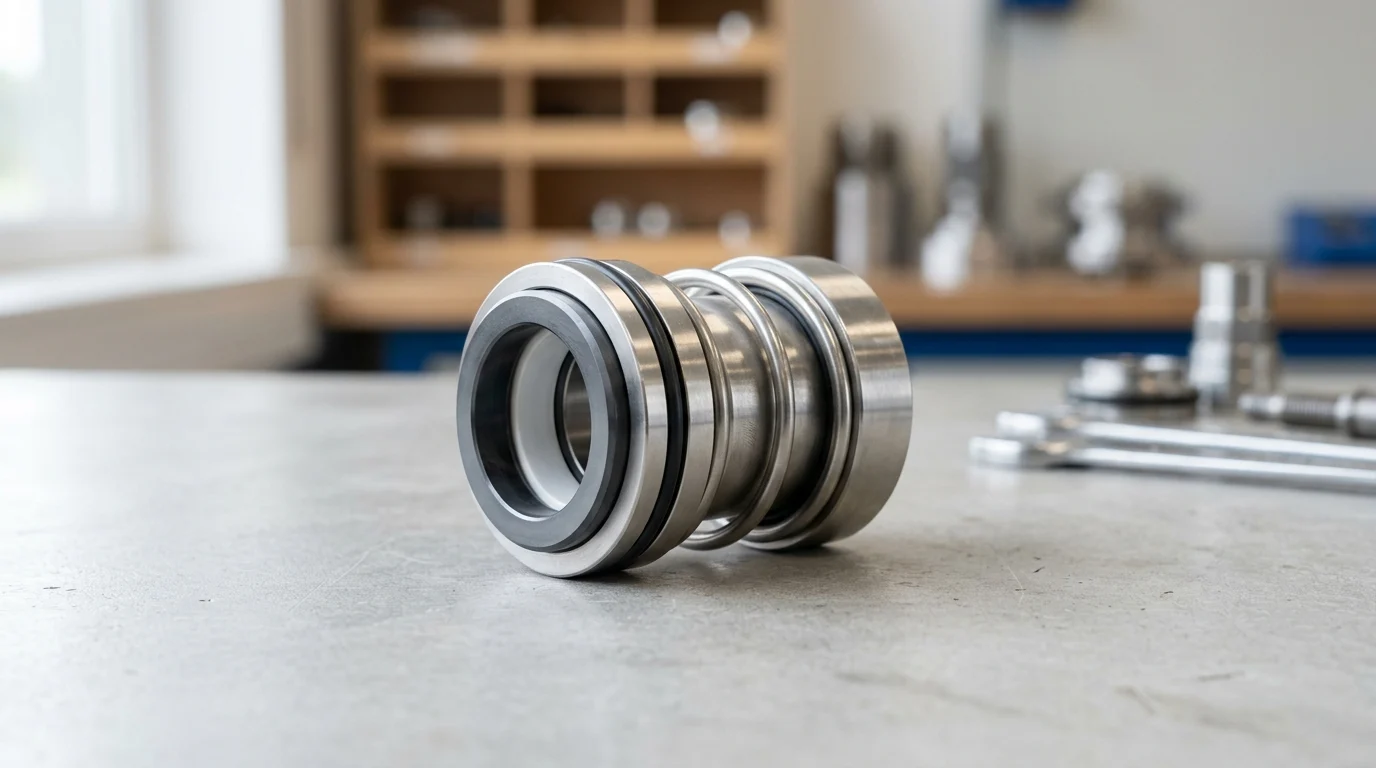
Why Mechanical Seal Supplier Evaluation Matters
Evaluating a mechanical seal supplier is a critical procurement function for industries relying on continuous fluid handling. In sectors such as petrochemicals, mining, power generation, and marine shipbuilding, a seal is not merely a consumable component; it is the primary barrier preventing catastrophic fluid leaks. Selecting the right manufacturing partner ensures operational continuity, regulatory compliance, and predictable maintenance schedules.
A rigorous evaluation process moves beyond surface-level pricing to examine a supplier’s engineering tolerances, material sourcing, and quality assurance protocols. For B2B buyers, distributors, and OEM procurement teams, establishing a strict vetting protocol is the most effective way to mitigate supply chain disruptions and protect the integrity of high-value pumping equipment.
Impact on total cost
The initial procurement cost of a mechanical seal typically represents less than 15% of its total lifecycle cost. The remaining 85% is absorbed by installation labor, routine maintenance, and the severe financial impact of equipment downtime. For example, a premature seal failure in a high-capacity chemical processing plant can result in $10,000 to $50,000 per hour in unplanned production halts, dwarfing the initial $300 saved by selecting a substandard vendor.
Furthermore, poor-quality seals lead to hidden costs such as fluid loss, environmental cleanup fines, and accelerated wear on adjacent pump components like rotor sets and spindles. Evaluating a supplier’s ability to deliver consistent, high-durability seals directly influences the Total Cost of Ownership (TCO) of the entire fluid handling system.
When deeper supplier screening is needed
Standardized supplier checks may suffice for low-duty water applications, but deeper screening becomes mandatory when operating parameters escalate or when historical defect rates exceed the industry baseline of 0.5%. Applications involving aggressive chemicals, abrasive slurries, or pressures exceeding 20 bar demand rigorous vetting of a supplier’s manufacturing capabilities.
Deeper screening is also essential when sourcing OEM-compatible replacement seals for major pump brands such as Alfa Laval, Grundfos, Flygt, or Fristam. In these scenarios, dimensional tolerances must be held within 0.01 mm to ensure drop-in compatibility. If a supplier is providing critical marine-industry sealing parts or specialized metal bellow seals, procurement teams must initiate comprehensive audits of the vendor’s technical documentation and raw material traceability.
Technical and Manufacturing Criteria for Supplier Comparison
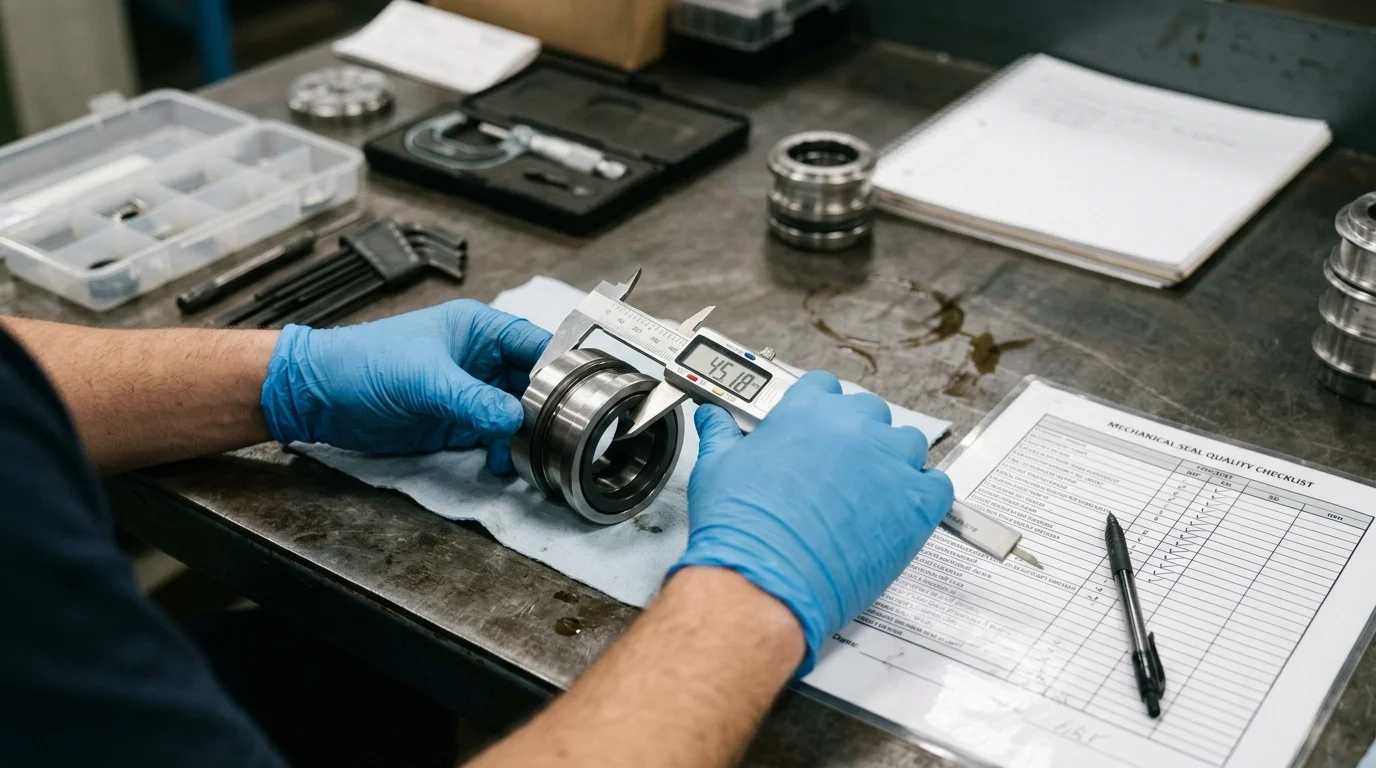
A comprehensive evaluation of a mechanical seal manufacturer must center on their engineering breadth and manufacturing precision. A supplier’s ability to produce reliable seals depends heavily on their mastery of metallurgy, elastomer compounding, and precision machining. Buyers must scrutinize both the diversity of the product catalog and the specific quality control mechanisms employed on the factory floor.
Product range and material specifications
Buyers must assess whether a supplier’s catalog covers the necessary architectures required by their industry, including single spring, wave spring, elastomer bellow, metal bellow, multi-spring, and pre-assembled cartridge seals. A broad product range indicates mature engineering capabilities and allows procurement teams to consolidate their vendor base.
Material specifications are equally critical. Suppliers must offer diverse face materials to handle varying pH levels, temperatures, and abrasives. The table below outlines standard material expectations a qualified supplier should support:
| Primary Face Material | Mating Ring Material | Max Temperature Limit | Typical Industrial Application |
|---|---|---|---|
| Carbon Graphite | Silicon Carbide (SiC) | 200°C (392°F) | General water, light chemicals, low abrasives |
| Silicon Carbide (SiC) | Silicon Carbide (SiC) | 300°C (572°F) | Highly abrasive slurries, mining, pulp and paper |
| Tungsten Carbide (TC) | Tungsten Carbide (TC) | 400°C (752°F) | High-pressure oil and gas, petrochemicals |
| Ceramic (Alumina) | Carbon Graphite | 150°C (302°F) | Cost-sensitive OEM water pumps, marine cooling |
In addition to face materials, the supplier must provide high-grade secondary sealing elastomers, such as Viton (FKM), EPDM, and Kalrez (FFKM), with clearly documented temperature and chemical resistance ratings.
Factory capacity and quality control
A supplier’s production environment directly dictates product consistency. Procurement teams should verify factory capacity—often looking for established facilities exceeding 3,000 to 4,000 square meters—to ensure the vendor can handle scalable OEM production runs without bottlenecking. A robust workforce of specialized technicians and engineers is required to maintain output quality.
Quality control during the lapping process is the most critical manufacturing metric. The primary sealing faces must be lapped to near-perfect flatness to prevent microscopic leak paths. Auditors should verify that the factory uses monochromatic light and optical flats to measure surface flatness, demanding results of 1 to 2 light bands (approximately 0.29 to 0.58 microns). Additionally, surface roughness (Ra) for hard faces like Silicon Carbide must consistently test below 0.2 microns. Suppliers lacking dedicated testing rigs for hydrostatic pressure and dimensional precision should be disqualified.
How to Audit Commercial Terms
While technical capabilities define product performance, commercial terms dictate the financial viability and agility of the supply chain. B2B buyers must audit a supplier’s commercial framework to ensure it aligns with their inventory strategies, cash flow requirements, and logistical constraints. Transparent and flexible commercial terms are hallmarks of a mature, export-ready manufacturer.
MOQ, pricing, and tooling terms
Minimum Order Quantities (MOQs) and tiered pricing structures vary significantly based on seal complexity and standardization. Standard elastomer bellow seals or common water pump seals may carry MOQs of 100 to 500 units. Conversely, highly complex metal bellow seals or custom-engineered cartridge seals should feature accessible MOQs of 5 to 10 units to accommodate specialized maintenance repairs without forcing buyers into excessive inventory investments.
When auditing pricing, buyers must also clarify tooling terms for custom designs. If an OEM requires a proprietary stamping die or a specific elastomer mold, tooling costs can range from $500 to $3,000. Leading suppliers often amortize these tooling costs or offer rebates once cumulative order volumes surpass a predefined threshold, such as 10,000 units. Clear documentation of tooling ownership is mandatory to prevent future intellectual property disputes.
Packaging, lead times, and inventory support
Mechanical seal faces are highly susceptible to micro-abrasions and impact damage during transit. Suppliers must utilize robust packaging protocols; bulk-dumping seals into a single cardboard box is unacceptable. Qualified vendors use vacuum-sealed blister packs, individual foam-lined enclosures, or custom plastic tubing to separate and protect seal faces during international shipping.
Lead times are another critical commercial metric. Standard catalog seals should consistently ship within 15 to 30 days. However, custom seals or those requiring specialized exotic alloys may extend lead times to 45 to 60 days. To mitigate these delays, top-tier suppliers offer inventory support programs, such as holding safety stock of common OEM-compatible components (e.g., for IMO or Allweiler pumps) to facilitate rapid 48-hour dispatch for emergency breakdown orders.
Compliance and Supply Chain Risk Checks
Supply chain resilience relies heavily on a vendor’s adherence to international standards and their ability to provide long-term aftermarket support. Evaluating compliance and risk factors protects buyers from legal liabilities, premature equipment failure, and sudden disruptions in parts availability. This phase of the audit focuses on documentation, traceability, and corporate stability.
Certifications, test records, and traceability
Baseline compliance begins with ISO 9001:2015 certification, which ensures the supplier operates under a formalized quality management system. However, specialized industries require more stringent documentation. Food, beverage, and pharmaceutical applications necessitate FDA-approved or EHEDG-compliant elastomers and carbon faces. For marine and shipbuilding applications, materials often require class approvals from bodies like DNV or ABS.
Traceability is a non-negotiable requirement for high-risk applications. Suppliers must maintain comprehensive test records and material certificates (such as EN 10204 3.1 for metals). A reliable manufacturer will stamp batch codes on their products, allowing them to trace the exact heat number of the raw metal and the curing batch of the elastomer for a minimum of 5 to 10 years after production. This traceability is vital for root-cause analysis in the event of a field failure.
Business legitimacy and replacement part support
Assessing the operational history of a manufacturer provides a strong indicator of business legitimacy and market survival. Suppliers with over 20 years of dedicated experience in mechanical seal manufacturing demonstrate a proven ability to navigate raw material shortages and evolving industrial standards. Buyers should verify business licenses, export credentials, and actual factory ownership to avoid trading companies masquerading as direct manufacturers.
Furthermore, buyers must evaluate the supplier’s capacity for comprehensive replacement part support. A high-value partner will not only supply the primary mechanical seal but also offer supplementary components such as pump rotor sets, spindle sets, and stationary seats. The ability to supply a full ecosystem of OEM-compatible replacement parts for major industrial pumps consolidates the supply chain and significantly reduces the buyer’s vendor management overhead.
Build a Practical Supplier Evaluation Framework
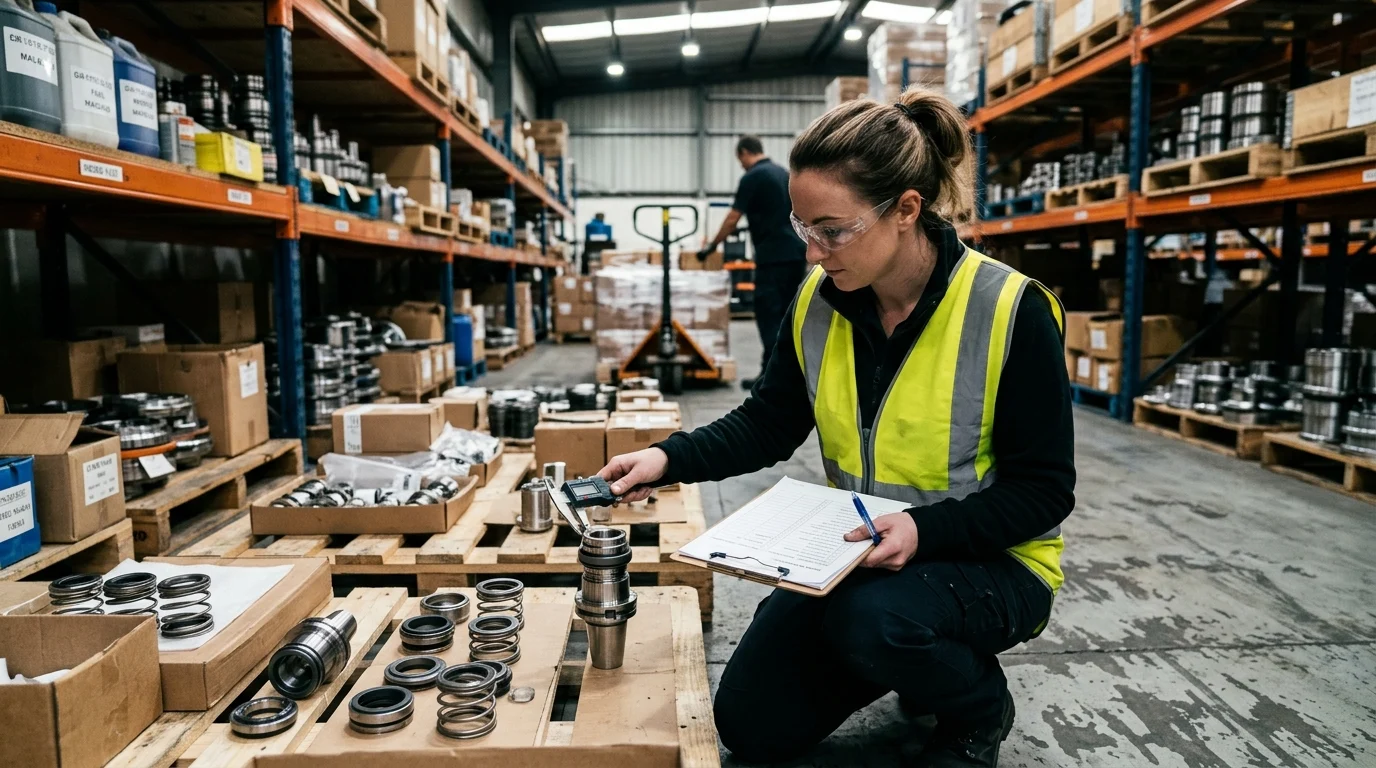
Transitioning from theoretical criteria to actionable procurement requires a structured, repeatable evaluation framework. Establishing a standardized auditing process ensures that all potential mechanical seal suppliers are measured against the same objective metrics, eliminating subjective bias and streamlining the final vendor selection.
Step-by-step evaluation workflow
A robust evaluation workflow follows a phased approach to minimize risk and resource expenditure. Phase one involves issuing a detailed Request for Information (RFI) to screen baseline capacities, ISO certifications, and material capabilities. Suppliers failing to meet minimum facility size or certification thresholds are immediately disqualified.
Phase two requires sample testing. Procurement teams should order 3 to 5 units of a standard seal to conduct in-house dimensional verification, surface roughness checks, and hydrostatic pressure testing. If the samples pass, phase three involves a virtual or on-site factory audit focusing heavily on the lapping stations, CNC machining centers, and raw material quarantine areas. The final phase is a trial order—typically a small batch of 50 to 100 units—to evaluate the supplier’s packaging integrity, adherence to the promised 30-day lead time, and commercial communication.
Comparison table and weighted scorecard
To quantify the results of the evaluation workflow, procurement teams should implement a weighted scorecard. This tool assigns numerical values to critical business and technical dimensions, ensuring that a supplier offering rock-bottom prices does not win if their quality control is severely lacking.
| Evaluation Category | Key Metrics Assessed | Suggested Weighting | Minimum Acceptable Score (Out of 10) |
|---|---|---|---|
| Quality & Technical Capability | Lapping precision (<0.58μm), Material range, QC testing rigs | 40% | 8/10 |
| Commercial Terms | MOQs, Tooling costs, Pricing competitiveness | 25% | 7/10 |
| Logistics & Lead Times | 15-30 day standard delivery, Protective packaging, Safety stock | 20% | 7/10 |
| Compliance & Risk Management | ISO 9001, Material traceability, Years in business (20+ preferred) | 15% | 8/10 |
By populating this scorecard during the factory audit and sample testing phases, buyers generate a clear, data-driven ranking of potential suppliers. Partners who score above the minimum thresholds across all weighted categories can confidently be integrated into the approved vendor list, securing a reliable, long-term pipeline for critical mechanical seals.
Key Takeaways
- Wholesale sourcing and supply-chain implications for Mechanical Seal Supplier
- Specifications, compliance, and commercial terms buyers should validate
- Actionable recommendations for distributors and procurement teams
Frequently Asked Questions
What should I check first when evaluating a mechanical seal supplier?
Start with product fit, material options, and QC records. Confirm the supplier can meet your pump model, operating pressure, temperature, and media requirements consistently.
Why is supplier quality more important than the lowest seal price?
Because seal price is usually a small part of total cost. A poor seal can cause leakage, downtime, labor expense, and damage to pump parts.
Can Victor Seals supply OEM-compatible replacement seals for major pump brands?
Yes. Victor Seals provides OEM-compatible seals for brands like IMO, Alfa Laval, Grundfos, APV, Flygt, Fristam, Lowara, and Allweiler.
Which material details should buyers request from a mechanical seal supplier?
Ask for face material pairs, elastomer grade, temperature limits, chemical compatibility, and raw material traceability. These details help match the seal to your actual service conditions.
How can I verify a supplier has enough manufacturing capacity?
Review factory size, workforce, product range, and delivery performance. For example, Victor Seals reports a 3,800 m² factory, 40+ employees, and over 20 years of manufacturing experience.
Post time: May-13-2026