



A gasket is designed for static sealing between non-moving parts, while a Mechanical Seal is engineered for dynamic sealing. The global gaskets and seals market size reached USD 66.1 billion in 2024. Industries widely use pump mechanical seals to prevent leakage in rotating equipment. Understanding how do pump mechanical seals work is crucial. A Water Pump Mechanical Seal ensures reliable performance, and knowing how to choose pump mechanical seals for industrial pumps is vital. Our brand “victor” offers a comprehensive range of Mechanical Seals, including cartridge seals, rubber bellow seals, metal bellow seals, and O-ring seals, applicable to diverse working conditions. We also provide OEM pump mechanical seal solutions for specialized requirements.
Key Takeaways
- Gaskets stop leaks between parts that do not move. They are good for sealing pipes or engine parts that stay still.
- Mechanical seals stop leaks in machines that have spinning parts, like pumps. They work well when parts are always moving.
- Choose a gasket for still parts and a mechanical seal for moving parts. This helps your machines work right and last longer.
Understanding Gaskets
Gasket Definition and Primary Function
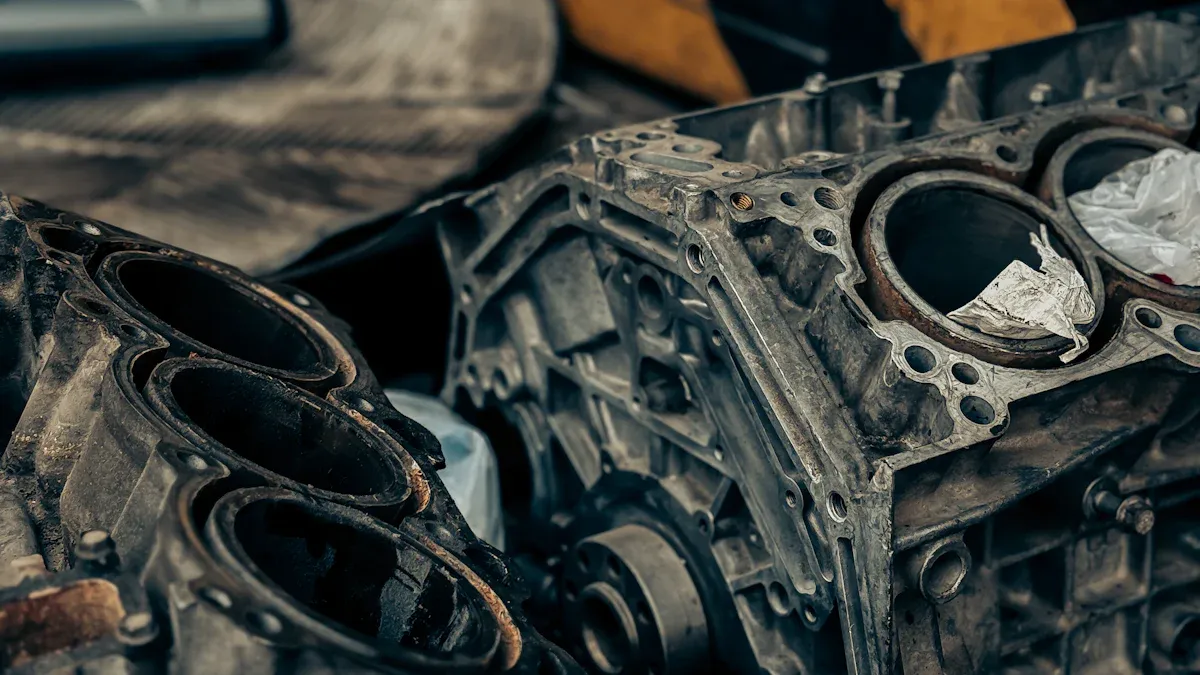
A gasket is a mechanical seal that fills the space between two or more mating surfaces, generally to prevent leakage from or into the joined objects while under compression. Gaskets perform several critical functions in industrial applications. They primarily prevent leaks, maintaining pressure within systems and protecting them from external contaminants. Beyond sealing, gaskets also provide insulation, minimizing heat transfer, electrical conductivity, and noise transmission. They effectively damp vibrations, absorbing and reducing impact from moving parts or external forces, which improves overall equipment performance by reducing friction and preventing wear.
Common Applications of Gaskets
Industries widely use gaskets across numerous applications. For instance, they are crucial in exposed, demanding offshore, energy supply, and chemical industry applications for flange sealing. Gaskets also play a vital role in anti-vibration, used in machines that produce frequency and vibration to muffle sound and limit wasted energy. In environmental sealing, gaskets protect critical industrial equipment by sealing against dirt, dust, or small particles. Automotive applications use gaskets on doors and trunk lids to seal out moisture and between engine blocks and cylinder heads to prevent water intrusion. Furthermore, gaskets are essential in food processing plants to ensure sanitation and safety, protecting against cross-contamination and preventing leaks in beverage bottling.
Types of Gasket Materials
The selection of gasket material depends heavily on the application’s specific requirements, especially temperature and media. For high-temperature applications, materials like silicone offer exceptional heat resistance, enduring up to 500 °F and even 600 °F for short periods. Graphite and various metal alloys are also capable of withstanding extreme conditions, providing reliable seals for high-temperature, high-pressure, and hazardous services. Other common materials include vermiculite, which is effective above 750 °F, and PTFE, with a limit of 600 °F. Composite graphite and multi-layer steel (MLS) gaskets are frequently used in heavy-duty diesel engines and exhaust systems due to their robust properties.
Understanding Mechanical Seals
Mechanical Seal Definition and Primary Function
A mechanical seal is a device that prevents fluid leakage between a rotating shaft and a stationary housing in equipment like pumps, compressors, and mixers. It creates a tight seal between the rotating shaft and the stationary pump housing. The primary function of Mechanical Seals is to control fluid movement by creating a tight seal between rotating and stationary faces. This allows the shaft to rotate while preventing fluid escape. They reduce friction and prevent leaks through a thin lubrication film, ensuring minimal leakage, better equipment longevity, and improved performance.
Common Applications of Mechanical Seals
Industries widely use mechanical seals across various demanding applications.
- Oil & Gas: They handle high-pressure, hazardous fluids, with specialized seals managing fluid pressure and preventing accidents.
- Chemical Processing: Mechanical seals are essential for managing corrosive, abrasive, or toxic substances. They resist chemical attack and prevent leaks, often using double or non-pusher seals.
- Food & Beverage: These seals maintain sanitary operations and compliance, ensuring no contamination of food products. Dry gas seals and cartridge seals are preferred for their cleanliness and ease of maintenance.
- Pharmaceuticals: They meet sterile processing requirements in medicine factories, where even small leaks can spoil products. Dry-running and double seals maintain cleanliness and safety.
- Water & Wastewater Treatment: Employed in large-scale pumping systems, these seals require durability. Balanced seals reduce wear and extend equipment life.
- Power Generation: Systems such as steam turbines and cooling systems utilize these seals.
Types of Mechanical Seals
Mechanical seals come in various configurations, each designed for specific operational needs.
- Single Mechanical Seals: These are common, featuring one stationary and one rotating sealing face. They suit clean liquids and moderate pressures, offering moderate leakage and lower cost.
- Double Mechanical Seals: These seals have two sets of sealing faces with a barrier fluid. They enhance safety and minimize leakage, especially for toxic or flammable liquids and high-temperature services. They offer very low leakage but come at a higher cost.
- Balanced vs. Unbalanced Seals: Balanced seals reduce closing forces on seal faces, allowing efficient operation at higher pressures and increasing seal life. Unbalanced seals are simpler and more cost-effective for lower pressures.
- Cartridge Mechanical Seals: These are pre-assembled units containing all seal components within a single housing. They reduce installation errors, shorten downtime, and improve reliability.
- Metal Bellows Seals: These offer enhanced resistance to temperature and chemical attack, ideal for extreme conditions.
- Gas Seals and Dry Gas Seals: Gas seals handle gas media. Dry gas seals are non-contact with hydrodynamic lift profiles that create a gas cushion, reducing wear and preventing contamination.
Static vs. Dynamic Sealing: The Core Distinction
Sealing solutions are fundamentally categorized by the presence or absence of movement between the sealed surfaces. This distinction defines whether an application requires a static or a dynamic seal. Static seals operate between two fixed surfaces that have no relative motion. In contrast, dynamic seals function where surfaces are in constant relative motion. This core difference dictates the design, material selection, and operational principles of each sealing component.
Gaskets for Stationary Connections
Gaskets are the primary choice for stationary connections. They create a seal between two non-moving parts. Engineers use gaskets in applications like flange seals and housing seals. The sealing mechanism relies on compressing the gasket material. This compression fills any gaps and irregularities between the mating surfaces. The material’s elasticity helps maintain the seal under pressure.
Gaskets face challenges related to material compatibility, temperature, pressure, and the surface finish of the static components. Material selection is crucial for chemical resistance and temperature tolerance. For example, different gasket materials offer varying temperature resistances:
| Product | Temperature Range |
|---|---|
| Nylon Gaskets | -70°F to 250°F (-57°C to 121°C) |
| Polytetrafluoroethylene (PTFE) Gaskets | -103°F to 500°F (-75°C to +260°C) |
| HDPE Gaskets | -58°F to 176°F (-50°C to 80°C) |
| LDPE Gaskets | -58°F to 149°F (-50°C to 65°C) |
| Silicone Gaskets | -67°F to 392°F (-55°C to 200°C) |
| EPDM Gaskets | -40°F to 200°F (-40°C to 93°C) |
| Neoprene Gaskets | -40°F to 230°F (-40°C to 110°C) |
| Bisco Silicone Foam | -67°F to 392°F (-55°C to 200°C) |
| Bisco Bun Silicones | -67°F to 392°F (-55°C to 200°C) |
| Rogers PORON® Foam | -40°F to 194°F (-55°C to 90°C) |
| Neoprene Foam | -40°F to 200°F (-55°C to 93°C) |
| Nitrile Rubber | -40°F to 250°F (-40°C to 121°C) |
Leakage in static applications typically occurs due to improper compression, material degradation over time, or imperfections in the surface. Gaskets generally require less frequent replacement unless the material degrades or technicians disassemble the joint.
Mechanical Seals for Rotating Equipment
Mechanical Seals are specifically engineered for rotating equipment. They manage fluid leakage between a rotating shaft and a stationary housing. This includes pumps, compressors, and mixers. These seals must maintain integrity while accommodating continuous movement. Their design often involves a sealing lip or face that stays in contact with the moving surface.
Dynamic seals face unique challenges. These include friction, wear, heat generation, and the need for proper lubrication. Maintaining sealing integrity during motion is critical. Engineers focus on material hardness, elasticity, friction characteristics, pressure ratings, speed limits, and lubrication requirements during design.
Mechanical seals can handle a wide range of rotational speeds.
- Soft seals typically operate at lower speeds, limited to 250-300 rpm. Higher speeds cause rapid wear.
- Balanced mechanical seals are suitable for high-speed applications. They can handle speeds up to 60,000 rpm. This is common in through-spindle coolant transfer systems in machine tools.
- Mixer seals usually operate at low speeds, ranging from 5 to 300 rpm.
Leakage in dynamic applications can occur due to wear from continuous movement, inadequate lubrication, high operating speeds, pressure fluctuations, or damage to the seal from dynamic stresses. These seals often require more frequent inspection and replacement compared to static seals due to the constant wear they experience.
Leakage Prevention Mechanisms
How Gaskets Prevent Leaks
Gaskets prevent leaks by creating a tight barrier between two static surfaces. When technicians compress a gasket, its material fills microscopic irregularities on the mating surfaces. This compression forms a seal that stops fluid or gas from escaping. The gasket’s elasticity helps it maintain this seal even under varying pressures. However, gaskets can fail, leading to leaks. For example, chemical swell occurs when the gasket material reacts with the fluid, causing it to expand and lose its physical properties. Compression set happens when the gasket permanently deforms, no longer rebounding to fill the space. Extrusion and nibbling describe the gasket material being forced out of its groove, often due to excessive pressure or an overfilled gland. Installation damage, such as pock marking or large notches, also compromises the seal’s integrity. Thermal degradation, characterized by radial cracks or hardening, results from operating temperatures exceeding the material’s limits.
How Mechanical Seals Prevent Leaks
Mechanical Seals prevent leaks in dynamic applications by maintaining a precise gap between a rotating primary ring and a stationary seat. A thin film of fluid lubricates these faces, preventing direct contact and reducing friction while still blocking leakage. This design allows the shaft to rotate freely without fluid escaping the system. However, several factors can compromise this delicate balance, leading to leaks. Improper installation, such as incorrect spring tension or misaligned faces, can cause immediate leakage or premature wear. Misalignment and shaft movement, often from vibration or thermal expansion, put strain on the seal faces, leading to uneven wear. Excessive wear and friction, caused by continuous high-speed rotation or abrasive media, also degrade the seal’s effectiveness. Contamination from external particles like dirt or dust can accumulate on seal faces, causing scarring or uneven wear. Temperature and pressure fluctuations can cause thermal expansion, affecting the seal’s fit and function, potentially leading to cracking or a failure to maintain a tight seal.
Installation and Maintenance Considerations
Gasket Installation and Replacement
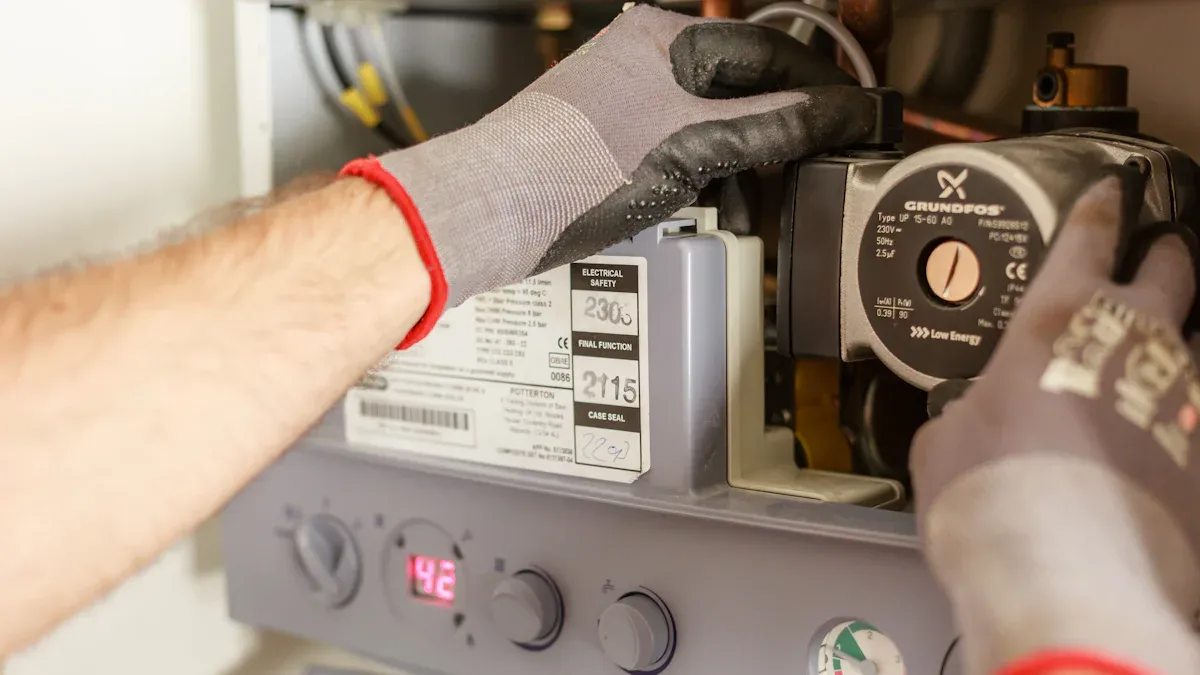
Proper installation is crucial for gaskets to achieve optimal sealing performance. Technicians must carefully prepare the surfaces. They clean and examine flange surfaces, fasteners, nuts, and washers. All foreign materials and debris require removal. Workers ensure the gasket is the correct size and material. They store it properly to avoid damage. When installing the gasket, they carefully insert it between dry flanges. They ensure it is centered and not pinched or damaged. Manufacturers advise against using joint compounds or release agents unless specified. Uniformly applying lubricant to bolt and nut threads reduces friction during tightening. Workers avoid contaminating the gasket or flange surfaces with lubricant. They tighten all nuts initially by hand. Using a calibrated torque wrench and a crisscross bolt pattern, they perform three passes to reach the required torque. For safety, never reuse a gasket. Common causes of leakage include low bolt load, over-compression, and installation mistakes.
Mechanical Seals Installation and Maintenance
Correct installation is vital for mechanical seals to function effectively and last long. Manufacturers’ guidelines must be followed precisely, using proper tools and torque specifications. Maintaining cleanliness in seal environments during installation and operation is also important. Filtering process fluids helps prevent contamination. Regular maintenance procedures maximize the operational lifespan of seals. Technicians perform visual inspections for leaks, wear, or scoring on seal faces and shaft sleeves. They check the seal environment for cleanliness and proper functioning of cooling or flushing systems. They confirm correct pump and motor alignment and inspect for vibration or imbalance. Monitoring operating conditions, such as pressure, temperature, and flow rates, ensures operation within design parameters. Implementing and maintaining quality seal support systems, like flush plans or barrier systems, also extends seal life. Training maintenance staff on seal handling and care helps prevent issues.
Cost Implications and Lifespan
Gasket Cost and Expected Lifespan
Gaskets generally offer a cost-effective sealing solution. Their initial purchase price is typically lower compared to more complex sealing devices. The expected lifespan of gaskets varies significantly based on material and operating conditions. Some gaskets have remained in service for extended periods, ranging from 20 to 40 years. Rubber gaskets typically last from 5 to 10 years. Silicone gaskets can last up to 15 years or more in certain applications. This longevity comes from their durability and resistance to wear and tear. Factors like the type of rubber used, extreme temperatures, pressure, or chemicals can accelerate deterioration. Proper maintenance, including regular inspection, cleaning, and correct installation, extends their lifespan. For instance, avoiding over-tightening prevents premature failure.
Mechanical Seals Cost and Longevity
Mechanical seals represent a more significant investment than gaskets. Their advanced design and precision manufacturing contribute to higher costs. The average price range for standard industrial mechanical seals varies by type and region:
| Type | Average Price Range (USD per Unit) |
|---|---|
| Cartridge | $4,500 – $6,500 |
| Bellows | $3,800 – $5,800 |
| Pusher | $3,000 – $5,000 |
| Ceramic | $4,000 – $6,000 |
| Others | $3,500 – $5,500 |
Ceramic seals are typically more expensive due to their superior durability and resistance to wear. Regional pricing variations are influenced by factors such as local manufacturing costs, demand, and import tariffs.
The longevity of these seals also differs by type:
| Type of Mechanical Seal | Expected Lifespan Range |
|---|---|
| Single Spring | 1 – 2 years |
| Cartridge | 2 – 4 years |
| Bellows | 3 – 5 years |
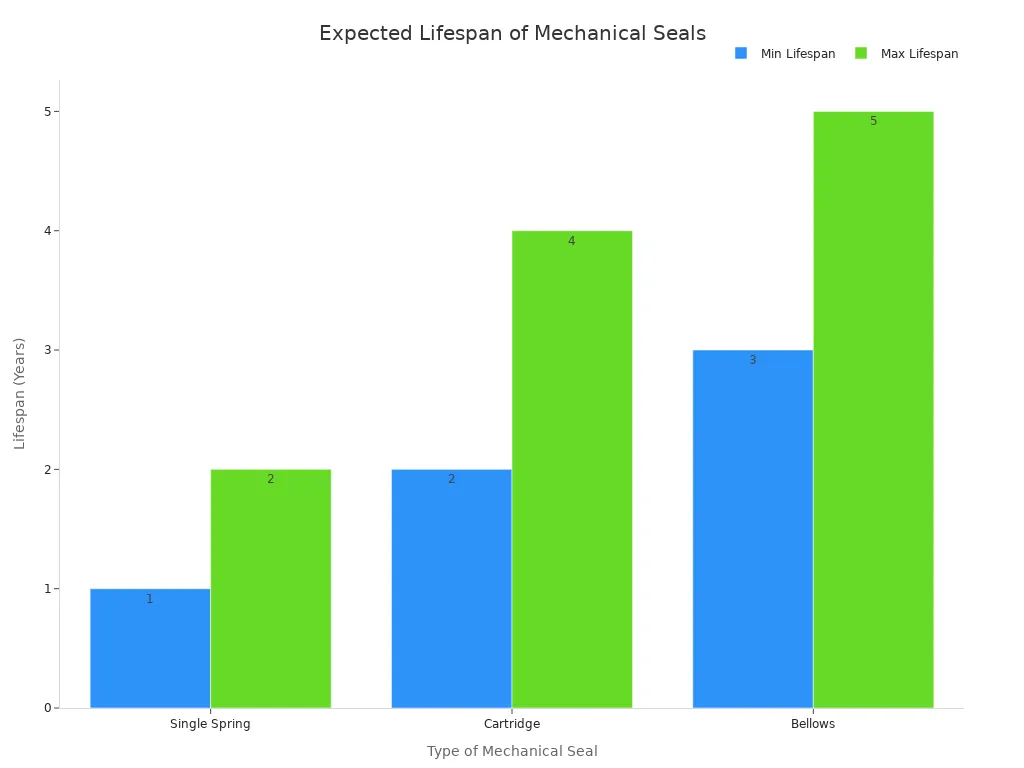
Cartridge seals generally offer a longer service life. Their pre-assembled nature reduces installation errors. Component seals, like single spring types, have shorter lifespans. Their durability highly depends on precise installation. Balanced seals are designed for high-pressure systems. They offer extended life due to even distribution of hydraulic forces. Unbalanced seals are more cost-effective but have reduced lifespans in demanding scenarios. Metal bellows seals show enhanced resilience in high-temperature environments. Mixer seals have highly variable lifespans. This depends on mixing intensity and the abrasiveness of materials.
Material Selection for Sealing Components
Gasket Material Choices
Selecting the correct gasket material is crucial for effective sealing. Engineers must consider the specific application requirements. Chemical compatibility is a primary gasket performance factor. The gasket material must be compatible with the fluid or gas it will contact. For long-term performance, the material must resist chemical reactions. It should also resist fluid absorption, swelling, or degradation over time. The media the gasket will be exposed to is a critical consideration. Chemical resistance of the gasket material is paramount. Chemicals can impact the functional properties and structural integrity of the material. It is also important to consider the effect temperature will have on chemical resistance. Many fluids can be more aggressive at higher temperatures.
Mechanical Seals Material Choices
Material selection for mechanical seals is equally important, especially in challenging environments. For abrasive media, the hardness of seal face materials is critical for resisting wear. Tungsten carbide and silicon carbide are preferred due to their exceptional hardness and wear resistance. Silicon Carbide is extremely hard and wear-resistant, making it suitable for abrasive applications. Fillers can enhance lubricity and heat dissipation. Tungsten Carbide is a hard and robust material, also suitable for demanding environments. It is less brittle than Silicon Carbide. However, their brittle nature requires careful consideration of abrasive particle size and concentration. This prevents chipping or cracking. When chemical attack is also present, materials must offer both chemical and wear resistance. This sometimes requires specialized coatings or surface treatments.
When to Choose a Gasket
Ideal Scenarios for Gasket Use
Gaskets are the preferred sealing solution in many applications. They excel in systems with specific pressure and temperature needs. For example, robust metal gaskets suit high-pressure systems. Silicone or fluorosilicone seals work well in high-temperature settings. Chemical compatibility is also key. The gasket material must resist specific chemicals. Fluorosilicone is good for fuel systems. FDA-approved silicone is ideal for food and pharmaceutical uses. Customization needs often call for custom gaskets. This ensures a proper fit and optimal performance.
Industries widely use gaskets. The automotive industry uses them in engines, fuel systems, and transmissions. They prevent leaks of oil, fuel, and coolant. In aerospace, seals maintain critical system integrity. They function in high-pressure and extreme temperature conditions. This ensures reliable aircraft engine and hydraulic system operation. The oil and gas industry uses gaskets in pipelines and machinery. They prevent dangerous leaks during fuel, gas, and liquid transport. Manufacturing uses gaskets to reduce vibration and ensure precise alignment. This improves system efficiency and reduces maintenance. NBR gaskets are common in automotive engine components and fuel systems. They resist oil and fuel. They also appear in oil and gas equipment and industrial machinery.
| Operating Condition | Material Considerations | Gasket Type Examples |
|---|---|---|
| Temperature | High-temperature (above 400°F): Graphite, PTFE. Lower temperature: EPDM, silicone. | N/A |
| Pressure | High-pressure: Metallic gaskets. Lower-pressure: Elastomeric or non-metallic options. | Spiral Wound Gaskets (high pressure, uneven flanges), Ring Joint Gaskets (superior sealing under high pressure/temperature) |
| Fluids | Corrosive fluids: Stainless steel, PTFE. Solvents, hydrocarbons, oils: Viton, Buna-N. | N/A |
| Vacuum | Prevent outgassing: Viton, PTFE, silicone. | N/A |
Limitations of Gaskets
Gaskets have specific limitations. Temperature is a major factor. Materials like PTFE in modular seals have temperature limits. These limits can decrease as pressure rises. For applications above 500°F, all-welded diaphragm seals are better than modular seals with PTFE gaskets. High temperatures also reduce the maximum pressure limits of flanged installations. Engineers must consider the pressure and temperature limits of various components. This includes plastics, elastomers, and hardware.
Pressure also limits gaskets. Softer gaskets, like BISCO silicone foam, work well on irregular surfaces. However, denser materials, such as solid rubber (70–90 Shore A), are necessary for high-pressure applications. Motion introduces another limitation. This relates to a gasket’s ‘compression set.’ Compression set is the gasket’s ability to return to its original shape after compression. Gaskets with a high compression set can create gaps and leaks over time. This is especially true in dynamic applications. Materials like PORON® polyurethane, known for their low compression set, are ideal for such scenarios.
When to Choose a Mechanical Seal
Ideal Scenarios for Mechanical Seals Use
Engineers select seals for applications requiring superior leakage control and reliability. These seals offer a modern solution, addressing issues with traditional packing methods. They create a more reliable seal by using a combination of rotating and stationary elements that come into contact under controlled conditions. This design minimizes wear and tear, reducing friction and heat generation. Ultimately, this leads to a longer lifespan for the equipment.
These seals are used across a wide range of industries. This includes oil and gas, chemical processing, water and wastewater management, power generation, food and beverage, and pharmaceuticals. In the oil and gas industry, seals must withstand extreme temperatures and pressures, as well as corrosive and abrasive fluids. In the food and beverage industry, seals must comply with stringent hygiene standards and operate effectively in clean, low-temperature environments.
Consider process fluid characteristics when choosing seals. Corrosive fluids require chemically resistant materials. Abrasive slurries need hard, wear-resistant seal faces. Fluid temperature and pressure also play crucial roles. Seals need to withstand ranges from -40°C to 200°C in applications like chemical processing plants. They are ideal for applications with extreme temperatures or rapid temperature changes. They prevent degradation, deformation, and loss of elasticity in elastomers. They also maintain mechanical strength in metals. Proper material selection and cooling are essential to avoid localized heating, material degradation, and thermal shock.
For applications with varying pressure requirements, from low to high, seals are preferred. High-pressure applications, such as industrial pumps in oil fields, necessitate seals capable of withstanding significant force. Specialized designs reach up to 10,000 psi (700 bar) for high-pressure rotary seals. Dual seal arrangements are preferred for process safety when dealing with toxic or hazardous fluids. They offer greater protection against leaks and environmental contamination. Tandem arrangements are recommended for toxic or hazardous applications, with the outboard seal acting as a full pressure backup. Double cartridge seals are favored for critical applications where reliability and safety are paramount. Balanced seals are recommended for systems with high-pressure pumps operating at 10 barg or more. They offer greater reliability and long-term cost savings by distributing pressure more evenly. This minimizes friction and heat production, preventing damage to seal faces and materials. This leads to reduced wear and tear and an increased operational lifespan.
Limitations of Mechanical Seals
Despite their advantages, seals have limitations. Fluid compatibility presents significant challenges. This includes abrasive slurries, corrosive chemicals, and viscous oils. Abrasive particles can accelerate wear. Chemical reactivity can degrade seal materials. This necessitates careful material selection and specialized configurations.
Design complexity is another factor. The intricate nature of seals, involving multiple sealing interfaces and support systems, complicates their design and assembly. This complexity impacts ease of installation and operational reliability. Engineers must balance performance with practical considerations like space limitations.
Cost is also a consideration. A single-seal arrangement is generally less expensive to install and maintain. However, a double seal arrangement, which is more costly, is necessary when a separate lubrication system is required to ensure reliability. Installation complexity is a factor. Component seals demand experienced technicians for installation. While cartridge seals are simpler to install, they are still susceptible to errors. This emphasizes the need to meticulously follow manufacturer instructions.
Gaskets are essential for static sealing applications. They prevent leaks between non-moving parts. Mechanical seals are critical for dynamic sealing. They manage fluid leakage in rotating equipment. Selecting the appropriate sealing component is vital. This ensures system integrity, efficiency, and safety. It also optimizes operational performance.
FAQ
What is the primary distinction between a gasket and a mechanical seal?
Gaskets provide static sealing between non-moving parts. Mechanical seals offer dynamic sealing for rotating equipment. They prevent fluid leakage during continuous motion.
When should engineers select a gasket instead of a mechanical seal?
Engineers select gaskets for stationary connections. They are cost-effective for flange seals or housing seals. Gaskets perform well where no relative motion occurs between components.
What factors significantly influence a mechanical seal’s lifespan?
Proper installation, material selection, and operating conditions influence longevity. Abrasive media, high temperatures, and pressure fluctuations reduce a seal’s lifespan.
Post time: Feb-22-2026