


Selecting the appropriate seal face material is crucial for optimizing performance in industrial applications. For instance, Silicon Carbide excels in high-temperature and chemically aggressive environments, making it ideal for pumps and compressors. Conversely, Tungsten Carbide offers superior abrasion resistance of mechanical seals, making it suitable for mixers and automotive applications. Additionally, our OEM mechanical seal options allow for customization based on specific operational needs. Understanding the unique properties of these seal face materials ensures reliability and efficiency in operations across various sectors, including aerospace and manufacturing. It’s also important to consider why do mechanical seal faces develop thermal cracks, as this can impact the longevity of the seals. Furthermore, the thermal shock resistance in pump seals is a critical factor that contributes to their overall performance, ensuring they can withstand sudden temperature changes without failure.
Key Takeaways
- Silicon Carbide is ideal for high-temperature and chemically aggressive environments, making it perfect for pumps and compressors.
- Tungsten Carbide offers superior toughness and impact resistance, making it suitable for heavy-duty applications like mixers and automotive uses.
- Understanding the hardness and wear resistance of each material helps in selecting the right seal face for specific industrial needs.
- Silicon Carbide’s exceptional thermal conductivity prevents overheating, while Tungsten Carbide’s durability can lead to lower long-term maintenance costs.
- Choosing the right seal face material can enhance performance and longevity, ensuring reliability in various industrial operations.
Overview of Seal Face Material
Seal face materials play a vital role in the performance and longevity of mechanical seals. Two of the most prominent materials used in industrial applications are Silicon Carbide and Tungsten Carbide. Each material possesses unique properties that cater to different operational needs.
- Silicon Carbide ranks 9.5 on the Mohs scale, making it harder than Tungsten Carbide, which ranks between 8.5 and 9. This hardness translates to excellent scratch resistance and minimal wear, ensuring longer service life in demanding environments.
- Thermal conductivity is another critical factor. Silicon Carbide exhibits superior thermal conductivity compared to Tungsten Carbide. This property allows it to operate effectively at higher temperatures, making it suitable for applications involving aggressive fluids and extreme conditions.
- Chemical resistance is a significant advantage of Silicon Carbide. It remains chemically inert, providing better resistance to acidic and alkaline solutions than Tungsten Carbide. This characteristic makes Silicon Carbide the preferred choice in industries such as petrochemicals and pharmaceuticals, where exposure to harsh chemicals is common.
On the other hand, Tungsten Carbide excels in impact resistance. Its density allows it to withstand extreme pressure conditions, making it ideal for heavy-duty applications. While it may not match Silicon Carbide in hardness, its durability and ability to handle mechanical stress make it a reliable option for various industrial settings.
Hardness Comparison
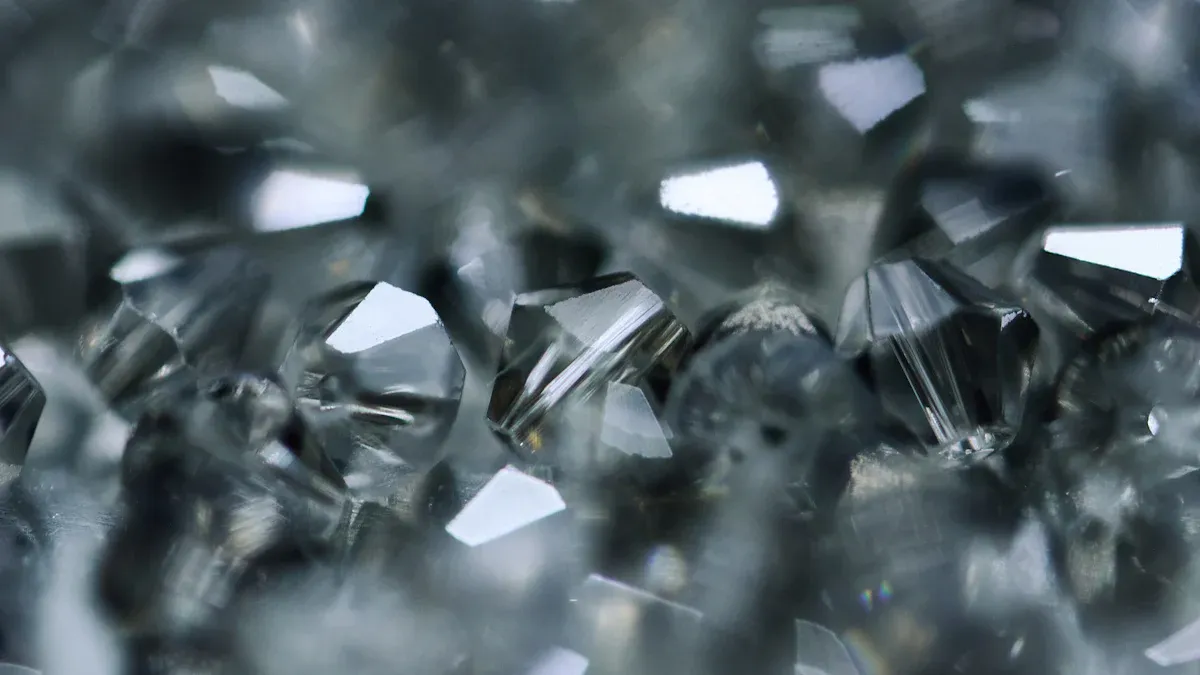
Hardness is a critical factor when evaluating seal face materials. It directly influences the performance and longevity of mechanical seals in various industrial applications.
Silicon Carbide exhibits remarkable hardness, ranking between 9.0 and 9.5 on the Mohs scale. This exceptional hardness translates to outstanding resistance against abrasion, making it ideal for high-wear environments. The Vickers hardness values for Silicon Carbide are as follows:
| Type of Silicon Carbide | Vickers Hardness (GPa) |
|---|---|
| Black Silicon Carbide | 28-32 |
| Green Silicon Carbide | 33-34 |
In contrast, Tungsten Carbide has a Vickers hardness of approximately 2,400 Hv. While it ranks slightly lower on the Mohs scale, between 8.5 and 9.0, its toughness characteristics make it a formidable competitor.
| Material | Hardness (Mohs) | Toughness Characteristics |
|---|---|---|
| Silicon Carbide (SiC) | 9.0–9.5 | Highly resistant to abrasion, ideal for high-wear applications. |
| Tungsten Carbide (WC) | 8.5–9.0 | Tougher and less brittle, better resistance to impact and deformation. |
Tungsten Carbide’s toughness provides better resistance to impact and deformation. This quality is crucial in environments subjected to shock loads or heavy-duty mechanical stress. Therefore, while Silicon Carbide may excel in hardness, Tungsten Carbide offers a balance of hardness and toughness, making it suitable for applications where both properties are essential.
Wear Resistance
Wear resistance is a critical factor in determining the longevity and performance of seal face materials. In industrial applications, the ability of a material to withstand wear directly impacts maintenance costs and operational efficiency.
Silicon Carbide demonstrates superior wear resistance compared to Tungsten Carbide. Its hardness allows it to outperform Tungsten Carbide by over three times in certain abrasive environments. This exceptional property makes Silicon Carbide an ideal choice for applications involving high wear, such as heat exchangers and pumps handling aggressive fluids.
The following table summarizes the wear resistance characteristics of both materials:
| Material | Wear Resistance | Hardness (Mohs) | Chemical Stability | Applications |
|---|---|---|---|---|
| Silicon Carbide | Superior | 9.5 | High | Abrasive environments, heat exchangers |
| Tungsten Carbide | Moderate | 8.5-9 | Moderate | High-pressure applications |
Silicon Carbide’s high wear resistance leads to improved performance and increased seal life. This results in lower maintenance costs, particularly in pumps where reliability is paramount. In contrast, Tungsten Carbide offers moderate wear resistance, making it suitable for applications like compressors and agitators, where good abrasion resistance is necessary but not as critical.
Thermal Conductivity
Thermal conductivity plays a significant role in the performance of seal face materials in high-temperature applications. It affects how heat transfers between seal components, which is crucial for maintaining seal integrity.
Silicon Carbide exhibits impressive thermal conductivity, typically ranging from 3 to 4.9 watts per meter-kelvin (W/m-K). The following table summarizes the thermal conductivity of different polytypes of Silicon Carbide:
| Polytype | Thermal Conductivity (W/m-K) |
|---|---|
| 3C | 320 |
| 4H | 348 |
| 6H | 325 |
This high thermal conductivity allows Silicon Carbide to manage heat effectively, especially in applications involving aggressive fluids. The ability to dissipate heat at the interface between the primary and mating rings is essential for preventing seal failure.
In contrast, Tungsten Carbide has a lower thermal conductivity, typically between 85 and 100 watts per meter-kelvin. While this value is adequate for many applications, it does not match the efficiency of Silicon Carbide in high-temperature environments.
- Effective heat dissipation is necessary to maintain seal integrity.
- High heat transfer rates occur between the primary and mating rings.
- Poor thermal conductivity can lead to overheating and premature seal failure.
Cost Analysis
When evaluating the cost of seal face materials, both Silicon Carbide and Tungsten Carbide present distinct financial implications for industrial applications. Understanding these costs helps businesses make informed decisions.
Silicon Carbide typically ranges from $13.00 to $15.50 per kilogram for standard grades. Higher-grade Silicon Carbide, with a purity of 99%, can cost between $16.50 and $18.50 per kilogram. Lower-grade options, at 90% purity, are priced from $13.00 to $15.00 per kilogram. This pricing structure makes Silicon Carbide a more economical choice for many applications.
In contrast, Tungsten Carbide has a higher average cost. The annual average price stands at approximately $37.85 per kilogram. Specific product types, such as carbide rods with 10% cobalt, range from $49 to $52 per kilogram. The following table summarizes the costs associated with various Tungsten Carbide products:
| Product Type | Price Range (USD/kg) |
|---|---|
| Annual average price | $37.85 |
| Carbide rods with 10% cobalt | $49 – $52 |
| Carbide buttons with 6% cobalt | $44 – $45.5 |
| Carbide anvils (diameter < 190mm) | $57 – $60 |
| Carbide roll rings | $49 – $52 |
| Carbide EDM blocks with 20% cobalt | $63 – $70 |
| Wire drawing dies with 6% cobalt | $50 – $55 |
| Tungsten Carbide Sheet | $42 – $58 |
While Tungsten Carbide has a higher upfront cost, it often boasts a lifespan that is 5 to 10 times longer than that of Silicon Carbide. This durability can lead to lower maintenance and replacement costs over time. The following table illustrates the cost comparison between the two materials:
| Seal Type | Manufacturing Cost | Lifespan | Maintenance Cost | Replacement Cost |
|---|---|---|---|---|
| Silicon Carbide | Cheaper | Longer | Lower | Lower |
| Tungsten Carbide | More expensive | Shorter (but durable) | Higher | Higher |
Advantages of Silicon Carbide
Silicon Carbide (SiC) offers numerous advantages that make it a preferred choice for seal face materials in various industrial applications. Its unique properties contribute to enhanced performance, reliability, and longevity in demanding environments. Here are some key benefits:
- Exceptional Hardness: Silicon Carbide ranks between 9.0 and 9.5 on the Mohs scale, making it one of the hardest materials available. This hardness translates to outstanding resistance against wear and abrasion, ensuring longer service life in high-wear applications.
- Corrosion Resistance: SiC exhibits excellent corrosion resistance, particularly in chemical processing environments. It withstands strong acids, alkalis, and other aggressive chemicals, making it ideal for applications in petrochemicals and pharmaceuticals. The material’s ability to resist corrosion ensures that it meets strict leakage requirements in agitators, reactors, and sealing pumps.
- Low Friction Coefficient: Silicon Carbide has a low friction coefficient of approximately 0.02–0.1. This property enhances operational efficiency, especially in high-speed rotating equipment. It allows for effective performance even under dry-running conditions, reducing the risk of seal failure.
- Thermal Stability: The thermal stability of Silicon Carbide is another significant advantage. It can endure rapid temperature changes without cracking or degrading. This capability is essential for seals in environments with sudden thermal fluctuations. Additionally, its high thermal conductivity helps dissipate heat, preventing thermal distortion and maintaining the integrity of mechanical seals.
- Durability and Longevity: Silicon Carbide seals can exceed three years of service life in many applications. A common seal face combination involves a softer carbon face against a harder Silicon Carbide face, effectively preventing excess heat generation that can reduce seal life. This durability leads to lower maintenance costs and fewer replacements over time.
- Strength in High-Temperature Applications: SiC performs exceptionally well in high-strength, wear-resistant environments. Its thermal stability is beneficial for parts exposed to high temperatures for extended periods, making it suitable for industrial tooling and other demanding applications.
Advantages of Tungsten Carbide
Tungsten Carbide (WC) offers several advantages that make it a preferred choice for seal face materials in various industrial applications. Its unique properties contribute to enhanced performance, durability, and reliability in demanding environments. Here are some key benefits:
- High Toughness: Tungsten Carbide exhibits exceptional toughness, allowing it to withstand significant impact and mechanical stress. This property makes it ideal for heavy-duty applications, such as those found in the oil and gas industry, where seals often face shock loads and vibrations.
- Excellent Wear Resistance: Tungsten Carbide demonstrates excellent wear resistance, making it suitable for applications involving abrasive materials. In mining and slurry applications, for instance, it outperforms many other materials. A study on HVOF-sprayed WC coatings revealed a 46% reduction in weight loss during slurry erosion tests compared to uncoated materials, showcasing its superior protective capabilities.
- Resistance to Deformation: Tungsten Carbide’s hardness levels can reach up to 2000 HV, ensuring that seal rings maintain precise dimensions over millions of operational cycles. This resistance to deformation under pressure is crucial for maintaining tight tolerances in seal applications, preventing leaks and ensuring reliable operations.
- Versatile Grades: Various grades of Tungsten Carbide are available, including submicron, fine, medium, and coarse-grained options. The balance of hardness, toughness, and corrosion resistance is determined by the binder percentage and grain size. Higher binder content or coarser grains generally results in lower hardness but increased strength, allowing for tailored solutions based on specific application needs.
- Pressure Resistance: The exceptional compressive strength of Tungsten Carbide ensures reliable and leak-free operations in high-pressure systems. Its outstanding pressure resistance prevents deformation under extreme conditions, maintaining sealing integrity and enhancing overall system reliability.
- Cost-Effectiveness: While Tungsten Carbide may have a higher initial cost compared to Silicon Carbide, its durability often leads to lower maintenance and replacement costs over time. The longevity of Tungsten Carbide seals can significantly reduce operational downtime and enhance productivity.
Disadvantages of Silicon Carbide
While Silicon Carbide (SiC) offers numerous advantages, it also has notable disadvantages that can limit its application in certain industrial settings. Understanding these limitations is essential for making informed decisions regarding seal face materials.
- Brittleness: Silicon Carbide is inherently brittle. This brittleness makes it prone to cracking under impact or mechanical stress. If a SiC component cracks, it cannot be welded, which complicates repairs. This characteristic necessitates careful handling during installation and loading, limiting its use in environments where mechanical shock is common.
- Corrosive Limitations: SiC can react adversely in certain corrosive environments, particularly with acidic substances. The following table summarizes the corrosive effects of various ash compositions on Silicon Carbide:
| Ash Composition Type | Corrosive Effects on SiC |
|---|---|
| Acidic Ashes | Strongly react with basic refractories like MgO or spinel |
| Basic Ashes | High corrosion risk even at low temperatures due to high reactivity with oxide refractories |
| Neutral Ashes | Less corrosive compared to acidic and basic ashes |
- Cost Considerations: Although Silicon Carbide is generally more economical than Tungsten Carbide, its higher-grade variants can be costly. For applications requiring premium materials, the price may become a significant factor.
- Limited Impact Resistance: Due to its brittleness, Silicon Carbide may not perform well in applications that experience frequent impacts or vibrations. Industries that require robust materials for heavy-duty applications may find Tungsten Carbide to be a more suitable option.
Disadvantages of Tungsten Carbide
Tungsten Carbide (WC) has several disadvantages that can limit its effectiveness in certain industrial applications. Understanding these limitations is crucial for making informed decisions regarding seal face materials.
- Corrosion Vulnerability: Tungsten Carbide is not ideal for strong acidic environments. The cobalt binder used in many Tungsten Carbide formulations can leach out, compromising the material’s structural integrity. This leaching occurs particularly in high humidity and acidic conditions, leading to degradation over time.
- Oxidation Susceptibility: Tungsten Carbide exhibits moderate resistance to corrosion but is prone to oxidation in harsh chemical environments. This susceptibility can negatively impact its performance in industrial seals, especially in corrosive settings.
- Cost of Protective Measures: While protective coatings can enhance the durability of Tungsten Carbide, they can also be expensive and complex to apply. These coatings may not always provide the desired level of protection, leading to potential failures in critical applications.
- Limited Chemical Resistance: The cobalt binder is particularly susceptible to chemical attack, causing pitting and weakening of the material. In contrast, alternatives like Nickel binders offer better resistance in acidic environments, making them a more suitable choice for specific applications.
Application Suitability for Silicon Carbide
Silicon Carbide (SiC) serves as an excellent choice for various industrial applications due to its unique properties. Its exceptional hardness, thermal conductivity, and chemical resistance make it suitable for demanding environments. Industries that frequently utilize Silicon Carbide seal faces include:
| Industry | Reason for Use |
|---|---|
| Chemical Processing | Exceptional corrosion resistance against strong acids, alkalis, and chemicals. |
| Oil and Gas Production | Superior stiffness and low deformation under high pressure, suitable for drilling equipment. |
| Water and Wastewater Treatment | Hardness resists damage from abrasive particles and chemicals. |
| Food and Pharmaceutical Industries | Chemical inertness and high purity reduce contamination risk significantly. |
| Industrial Machinery | High thermal conductivity and shock resistance allow reliable operation under extreme conditions. |
Silicon Carbide excels in specific operating conditions that favor its use over Tungsten Carbide. For instance, in high-temperature environments, Silicon Carbide’s superior thermal conductivity prevents thermal damage and face separation during cycling. In contrast, Tungsten Carbide is prone to thermal damage under such conditions.
Additionally, Silicon Carbide remains chemically inert, making it ideal for corrosive environments. It resists strong acids and aggressive chemicals, while Tungsten Carbide can suffer oxidation and corrosion. In abrasive applications, the extreme hardness of Silicon Carbide reduces wear and extends seal life, whereas Tungsten Carbide is less resistant to scoring from solid particles.
Overall, Silicon Carbide stands out as a reliable seal face material in industries that demand durability and performance under challenging conditions.
Application Suitability for Tungsten Carbide
Tungsten Carbide (WC) serves as an excellent choice for various industrial applications due to its unique properties. Its hardness, strength, and chemical resistance make it suitable for demanding environments. Industries that commonly utilize Tungsten Carbide seal faces include:
- Pumps
- Compressors
The following table summarizes the key properties that enhance the application suitability of Tungsten Carbide:
| Property | Description |
|---|---|
| Hardness | Extremely hard, providing excellent resistance to wear and abrasion. |
| Strength | High strength and toughness, suitable for challenging mechanical conditions. |
| Chemical Inertness | Resistant to many chemicals, enhancing corrosion resistance. |
| Temperature Stability | Can withstand high temperatures, maintaining properties under extreme heat. |
| Versatility | Usable in various seal applications, from pumps to compressors. |
Tungsten Carbide is particularly ideal for high-pressure applications. Its high modulus of elasticity helps prevent face distortion, ensuring reliable performance. Additionally, it can be re-lapped and polished for reuse, which adds to its cost-effectiveness.
Silicon Carbide and Tungsten Carbide each offer unique advantages as seal face materials. Silicon Carbide excels in high-temperature and chemically aggressive environments, while Tungsten Carbide provides excellent toughness and wear resistance.
For applications requiring high durability and chemical resistance, Silicon Carbide is the preferred choice. Conversely, Tungsten Carbide suits heavy-duty applications where impact resistance is crucial.
Selecting the right seal face material is vital for ensuring optimal performance and longevity in industrial operations.
FAQ
What is the main difference between Silicon Carbide and Tungsten Carbide?
Silicon Carbide excels in chemical resistance and high-temperature applications, while Tungsten Carbide offers superior toughness and impact resistance. Each material suits different industrial needs based on these properties.
Which material is more cost-effective for long-term use?
While Silicon Carbide has a lower initial cost, Tungsten Carbide often lasts longer, leading to reduced maintenance and replacement costs over time. The choice depends on specific application requirements.
Can Silicon Carbide be used in high-pressure environments?
Yes, Silicon Carbide can withstand high pressures, but its brittleness may limit its effectiveness in applications with frequent mechanical shocks. Careful consideration of the operating conditions is essential.
Is Tungsten Carbide suitable for corrosive environments?
Tungsten Carbide is less ideal for strong acidic environments due to its cobalt binder, which can leach out. For corrosive applications, Silicon Carbide is generally the better choice.
How do I choose the right seal face material for my application?
Consider factors such as temperature, chemical exposure, wear resistance, and mechanical stress. Evaluating these aspects will help determine whether Silicon Carbide or Tungsten Carbide is more suitable for your needs.
Post time: Apr-19-2026